
Lecture
Depression (from Latin deprimo, "to press down, suppress") is a mental disorder whose main features are a lowered — depressed, oppressed, gloomy, anxious, fearful, or indifferent — mood and a decreased or lost ability to experience pleasure (anhedonia). Some of the following symptoms are usually also present: low self-esteem, inappropriate feelings of guilt, pessimism, impaired concentration, fatigue or lack of energy, sleep and appetite disturbances, and suicidal tendencies. Severe forms of depression are characterized by the so-called "depressive triad": lowered mood, slowed thinking, and motor retardation.
A depressed mood can in some cases be a normal, temporary reaction to life events, such as the loss of a loved one. Depression can be a symptom of certain physical illnesses and a side effect of certain medications and treatments; when the cause of depression is not obvious and the depressive disorder arises without external influences, such depression is called endogenous. In depression, self-esteem is lowered, and there is a loss of interest in life and one's usual activities. In some cases, a person suffering from it may begin to abuse psychoactive substances.
Various self-assessment tests are used to screen for depression, such as the Zung Self-Rating Depression Scale and the Beck Depression Inventory . A diagnosis of depression is established by a physician based on the diagnostic criteria for depressive disorder .
It is a type of affective (mood) disorder. Depression is treatable, but at present it is the most common mental disorder.
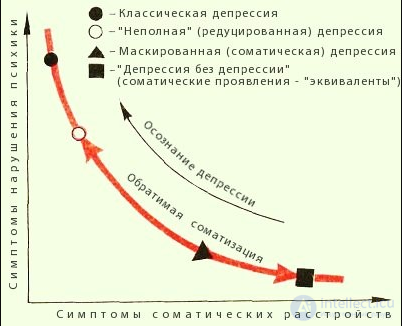
In a clinical context, the concept of depression is considered at three levels of abstraction:
In Russian psychiatry, it is customary to distinguish between simple and complex depressions.
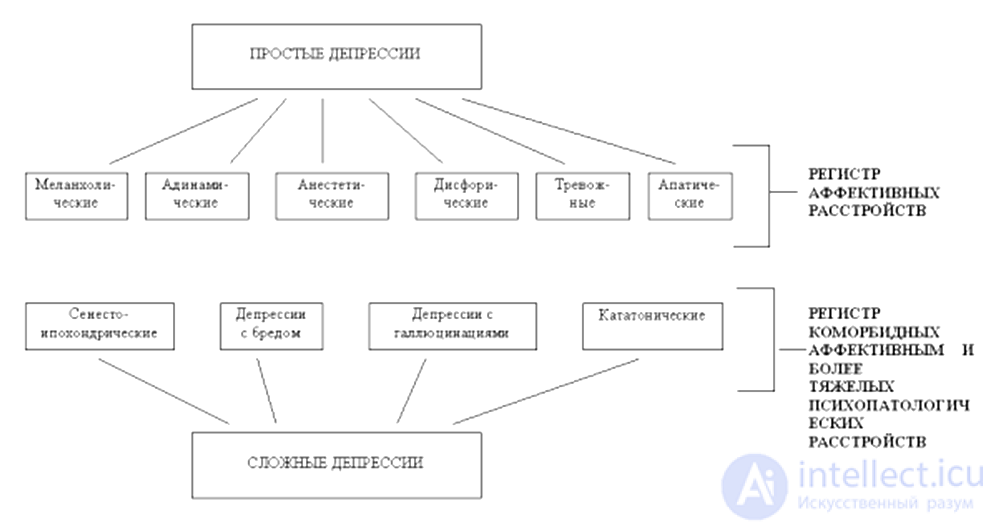
However, all of these classifications are built on the principle of which particular disorders predominate in the clinical picture of depression. At the same time, the structure of depression often contains various types of disturbances that are included, in different classifications, under different types of states.
The difficulties in defining and classifying depressions are related to assessing the depth of the depression, the degree of severity of its individual components, the presence of features of different types of depression and only a relative predominance of one of them in the patient's condition, as well as the uneven severity of the various manifestations of depressionMany people believe that depression is an illness that spread and acquired such great social significance only in our time, and that it was unknown earlier. But this is not so: depression has been known to physicians since antiquity. The famous ancient Greek physician Hippocrates already described in detail, under the name "melancholia," states very reminiscent of our present-day definition of depression, and even recommended treatment within the possibilities of ancient medicine .
In particular, Hippocrates noted the dependence of the condition of many depressed patients on weather and season, the seasonal periodicity of depression in many patients, and the improvement in the condition of some patients after a sleepless night. Thus, although he did not discover the therapeutic effect of sleep deprivation and light therapy (phototherapy), he came very close to it.
The Ebers Papyrus, one of the most important medical treatises of ancient Egypt, also contains a brief description of depression. Although the information in the papyrus is full of ritual practices and convoluted recipes for driving out the demons and other evil spirits that cause illness, it also testifies to long empirical practice and observation .
The Bible relates that King Saul was afflicted with depression .
In the Russian Empire in the early 1900s, heroin was used with some success to treat depression .
Depression can be the result of dramatic experiences, such as the loss of a loved one, a job, or social status. In such cases, we speak of reactive (psychogenic) depression . It develops as a reaction to some external event or situation. According to some theories, depression sometimes arises from excessive strain on the brain as a result of stress, which may be based on both physiological and psychosocial factors.
A risk factor for the development of depression in adults may also include severe experiences in childhood: for example, child abuse may serve as a precondition for the emergence of depression later in life . It has been suggested (M. Kovacs, 1976) that factors such as the loss of a father or mother in childhood; having a parent who feels inferior or holds excessively rigid, inflexible beliefs; a lack of social experience or social skills; negative experiences in a child's relationships with peers or siblings; and the presence of a physical defect in the child may all contribute to the development and reinforcement of depressogenic beliefs[10].
Certain personality traits may also predispose a person to depression — for example, perfectionism[11].
But if psychological, iatrogenic, or somatic (see below) causes of depression are absent or not obvious, such depression is called endogenous, that is, as if «originating from within» (the organism, the psyche). In approximately one third (about 35%) of cases, manifest depressions arise autochthonously, that is, without any external influences. Structurally, such depressions are endogenous from the very outset[12].
At present, there is no clear understanding of the neurobiological causes of clinical depression (major depressive disorder). Within the scientific community there are a number of hypotheses on this matter, none of which has yet received convincing proof. It is evident that depression is a clinically and etiologically heterogeneous disorder[13]. The monoamine theory links the development of depression to a deficiency of biogenic amines, namely serotonin, norepinephrine, and dopamine[14]. Some researchers have concluded that this theory is insufficiently broad, since it does not explain the limited effectiveness of antidepressants or the slow onset of their therapeutic effect[15]. Although the serotonin hypothesis is widely held, there is no rigorous confirmation of it: modern neuroscience research has failed to confirm the assumption that depression is based on a deficiency of serotonin in the central nervous system[16].
In many people, in sunless weather or among those who spend time in darkened rooms, depression can arise from a lack of bright light. This form is called seasonal depression or seasonal affective disorder, since it is most often observed in patients during autumn and winter[17][18]. Seasonal depression is treated with walks in sunny weather or light therapy. However, a study conducted on a large sample (34,294 people) failed to find any relationship between depression and time of year. Depression was not associated either with the latitude at which a person lives or with the amount of sunlight[19]. But this study has important limitations — in particular, the survey of these 34,294 people was conducted by telephone, which makes it impossible to diagnose the presence or absence of clinical depression in respondents[20].
Depression can result from the side effects of many medications (for example, levodopa, corticosteroids, benzodiazepines[21]) — the so-called iatrogenic, or pharmacogenic, depression. Most often, such depression resolves quickly on its own or is cured after discontinuation of the corresponding drug. Neuroleptic depressions (arising as a result of taking antipsychotics) can last from several months to 1.5 years and often have a vital character[22]. In some cases, the cause of depression is also abuse of sedatives or hypnotics, alcohol, cocaine and other psychostimulants[21], or opiates[23]. Depression can also be somatic, or more precisely somatogenic, that is, manifesting as a consequence of somatic illnesses (for example, Alzheimer's disease, atherosclerosis of the cerebral arteries, traumatic brain injury, or even the common flu). In addition, risk factors for the development of depression include pregnancy and childbirth — up to 10% of women experience depression during pregnancy, and postpartum depression is observed in 12—16% of women who have given birth[24].
Scientists also view depression as an evolutionarily entrenched mechanism of thinking. According to the analytical rumination hypothesis, depression became entrenched during evolution as a mechanism allowing an individual to focus on solving complex problems[25]. Avoidant behavior in depression, firstly, allows one to bypass the process by which people learn to tolerate painful feelings that persist when taking a slow, analytical approach to problem-solving and that arise from weighing options and making trade-offs. Secondly, it is a poorly adapted byproduct of an evolved tendency toward action that quickly reduces pain. Thirdly, it occurs in those social environments where the means for engaging in avoidant behavior are available[26].
Existential analysis offers an ontological interpretation of the psychological suffering involved in depression. According to this interpretation, depression is associated with the disillusioning exposure of the nothingness of human existence, while in ordinary life a person leads an inauthentic existence (authentic and inauthentic life being defined within Heidegger's philosophical anthropology). The experience of depressive emotional suffering is thus viewed as a disillusioning encounter with the reality of existence[27].
The factors presumed to underlie somatogenic depression are numerous:
| List of possible somatic causes of depression | ||
|---|---|---|
| Neurological diseases | Endocrine diseases | Other somatic diseases and conditions |
|
|
|
In clinical practice, cases of misdiagnosis and inadequate treatment of depression in people with somatic diseases are not uncommon, when the cause of the depression—that is, the somatic illness itself or its treatment—is not taken into account[29].
Among patients with neurological disorders, the incidence of depression reaches 40—50%; depression is frequently found in patients with medical conditions that directly affect the CNS (for example, in Cushing's disease depression develops in 60% of cases)[29].
Patients with hypothyroidism are highly predisposed to developing depression. The prevalence of depression in cases of insufficient thyroid function reaches 50%, and the lifetime risk of developing depressive disorders in patients suffering from hypothyroidism is 7 times higher than in healthy individuals. Symptoms of depression often come to the fore, appearing several years before the overt clinical picture of hypothyroidism develops, and dominate the patient's complaints. Among individuals with treatment-resistant depression, the prevalence of hypothyroidism is especially high, reaching 50%[42].
According to proponents of cognitive psychotherapy, depression in many cases is caused and sustained by dysfunctional beliefs that typically arise in childhood and become activated in adulthood as a result of some specific life event that serves as the trigger for the development of depression. These dysfunctional beliefs predispose patients to characteristic distortions of thinking underlying the "cognitive triad of depression": a person suffering from depression, as a rule, holds a low opinion of themselves, their surroundings, and their future. Depressive patients systematically distort their perception of events, finding in them confirmation of their beliefs about their own worthlessness, negative views of the surrounding reality, and their future. Characteristic distortions of thinking may occur, such as arbitrary inference, all-or-nothing thinking, overgeneralization, selective abstraction, and magnification
In addition to the «negative triad» — a negative view of oneself, one's future, and the world — people with depression show a fixation on the theme of loss, whether real or imagined (thoughts of the death of loved ones, of a breakup, of shattered hopes, of the inability to achieve meaningful goals). Depressive patients are also characterized by rigid, imperative beliefs, using speech forms such as «should» and «must» more often than healthy people: the founder of cognitive therapy, Aaron Beck, called such beliefs the «tyranny of shoulds» (for example, a depressive patient may believe that they «must quickly and without anyone's help find a solution to any problem», «must understand everything, know everything, and foresee everything», «must never suffer, and must always be happy and serene», and so on)[10].
According to the cognitive model, in depressive disorders beliefs and behavior are equally significant alongside biochemical processes — these components reflect different levels of analysis, and none of them takes priority. Each therapeutic approach has its own point of application: the pharmacologist intervenes at the biochemical level, while the cognitive therapist works at the cognitive, affective, and behavioral levels. At the same time, changing depressive beliefs is associated with changes in prevailing mood, behavior, and, as some data confirm, the biochemistry of depression
As a 2011 study showed, detecting cases of depression is difficult for general practitioners because in nearly half of cases patients try to conceal their symptoms of depression. Many are afraid of being prescribed antidepressants and of their side effects; some believe that keeping their emotions under control is their own personal matter and not the doctor's concern; there are also fears that a mention of depression will end up in the medical record and somehow become known to the employer; finally, some are afraid of being referred to a psychiatrist for treatment. This shows that physicians should make greater use of screening tools, including brief questionnaires, in cases where depression cannot be ruled out. It is advisable to conduct such screening for all pregnant women .
The Zung scale and the Major Depression Inventory are often used for screening and determining the severity of depression.
Several fundamentally different tasks are distinguished within the diagnosis of depression: screening for the presence of depression, clinical assessment of depression (both by testing and by physician evaluation), and measurement of individual symptoms associated with depression, such as anxiety, anhedonia, suicidal activity, and so on.
Today, diagnostic capabilities, which largely determine treatment choice (antidepressants, psychotherapy, etc.), rely more on clinical experience and the use of questionnaires (a non-instrumental method) than on objective, quantitatively measurable criteria.
In all patients with mood disorders, it is advisable to conduct an examination to rule out somatic causes of depression, in particular an assessment of thyroid function, which can reveal hypothyroidism or hyperthyroidism[42].
Depressive symptoms are divided into typical (core) and additional symptoms. For depression to be present, according to ICD-10, at least two core symptoms and at least three additional symptoms must be present .
The typical (core) symptoms of depression include:
Additional symptoms:
According to the ICD-10 diagnostic criteria, a diagnosis of depressive disorder is made if the symptoms last at least 2 weeks. However, the diagnosis can also be made for shorter periods if the symptoms are unusually severe and have a rapid onset.
Depression in children occurs less often than in adults. Symptoms in children are as follows :
According to the DSM-IV-TR diagnostic criteria, over a period of 2 weeks, 5 or more of the following 9 symptoms must be present (and these symptoms must include at least 1 of the two core symptoms: depressed mood and/or loss of interest or pleasure)[50]:
A distinction is drawn between unipolar depression, in which mood remains within a single, lowered, «pole», and bipolar depression, which is a component of bipolar disorder and alternates with manic, hypomanic, or mixed affective episodes[51]. Depressive episodes of mild severity may also occur in cyclothymia.
One variety of mixed affective episode is mixed depression — depression in whose structure increased motor and speech activity is observed. As a rule, mixed depression is understood to mean major depressive disorder combined with some symptoms of mania or hypomania[52]. Mixed depression is a common phenomenon among patients suffering from depressive disorders[53]. It occurs both in bipolar disorder and in unipolar depression[54] (although more often in bipolar disorder[53]), and in many cases is caused by the use of antidepressants[54].
The following forms of unipolar depression can be distinguished (according to DSM-IV):
Other depressive disorders (DD-NOS), according to the DSM, are coded 311 and include depressive disorders that cause impairment but do not fit officially defined diagnoses, that is, «do not meet the criteria for any specified disorder».
In Russian-language medicine the expression vital depression is often used. It denotes above all the «vital» («life-related») character of the depression — with pronounced anguish and anxiety that patients experience at a physical level[61]; for example, the anguish may be felt as pain in the area of the solar plexus. It was believed that «vital» depression was caused by a disturbance of «vital processes», developed cyclically, was inaccessible to external influences, and arose without cause, inexplicably to the patient themselves[62]. This character is often typical, in particular, of «bipolar» depression in bipolar affective disorder[62] and of endogenous depressions in general[63]. In a narrower sense, vital refers primarily to «melancholic depression», in which manifestations of anguish and despair are most pronounced, as well as to depressions with disturbances in the «vital sphere» — with disruptions of the need for food, sleep, and so on.[64] Vital depressions are classified as a severe depressive episode without psychotic symptoms (F31.2)[65]. Despite the severity of the condition, such depressions have a favorable prognosis, as they respond well to treatment with antidepressants.
In addition, "vital depressions" are sometimes used to describe depressive states in cyclothymia (according to Schneider's classification, 1959), with muted manifestations of melancholia, pessimism, dejection, and low mood, and with a strong dependence of symptoms on the daily rhythm]. This terminology is not widely used.
At first, mild signals are felt in the form of sleep problems, irritability, and refusal to perform normal duties. If these symptoms intensify over the course of two weeks, this usually indicates the onset of the illness or its relapse, although it will fully manifest only after two months , or even later. Isolated episodes occur. Without treatment, depression can lead to a suicide attempt, alienation from others, refusal to perform most of life's functions, and family breakdown.
Depression can be caused by, and can accompany, other mental disorders, in particular neurosis.
A link has been established between depression and shortening of telomere length, which is also associated with the processes of bodily aging.
Also, according to a recent study by scientists, it turned out that depression affects wound healing. In patients with depression, wounds heal with greater difficulty, and they are more prone to repeat hospitalization. Moreover, the more severe the form of the disorder, the worse the outcome. Lead researcher Philip Britteon believes that special attention should be paid to a patient's psychological state before surgery so that the patient recovers as quickly as possible.
The average duration of the illness is from 6 to 8 months[69], but in some patients depression becomes chronic. Chronic depression is depression that lasts more than two years
Treatment-resistant depression is depression in which, over the course of two consecutive courses of adequate monotherapy with pharmacologically different drugs conducted for a sufficiently long time, there is an absence or insufficiency of clinical effect (a reduction in symptoms on the Hamilton Scale or the Montgomery Scale of less than 50%) . 40—60% of patients turn out to be resistant to the first antidepressant; according to other data — about a third . There are various methods of overcoming resistance — both pharmacological and non-pharmacological.
At present, depression is the most common mental disorder. It affects one in ten people over the age of 40, two-thirds of whom are women. Among people over 65, depression occurs three times more often. Also, about 5% of children and adolescents aged 10—16 are subject to depression and depressive states . According to the World Health Organization, depression is the leading cause of morbidity and disability among adolescents . The overall prevalence of depression (of all kinds) in adolescence ranges from 15 to 40% . Many studies emphasize that a higher prevalence of affective disorders at this age corresponds to a higher frequency of suicides .
Not every patient requires hospitalization; treatment is often carried out on an outpatient basis. The main areas of depression therapy are pharmacotherapy, psychotherapy, and social therapy[30]:49. The most important criterion for successful antidepressant therapy is correct clinical diagnosis: the approach to treating depression should depend on its cause. Thus, in somatogenic depressions, treatment of the somatic illness is necessary first and foremost, and only secondarily — symptomatic psychopharmacotherapy and psychotherapy. In endogenous depressions, psychopharmacotherapy is the primary method, with psychotherapy used as a supplement to it; in psychogenic (neurotic and reactive) depressions, psychotherapy is no less important than psychopharmacotherapy[70]:98—99.
Even in cases where somatic pathology is not the cause of a depressive disorder, the presence of certain somatic illnesses (for example, subclinical hypothyroidism, Cushing's disease, polycystic ovary syndrome, coronary heart disease, oncological pathology, chronic infections, vitamin or trace element deficiency, etc.) in depressive patients can often complicate the course of depression and lead to the development of resistance. In such cases, in addition to therapy with psychopharmacological drugs, treatment of the somatic illness is necessary, which makes it possible to overcome resistance to therapy[33].
As Professor Dr. Paul Kidwell, an expert in mental disorders from Cardiff University, warns, antidepressants are powerless against depression if a person does not give up the lifestyle that causes it[77].
In a 2009 meta-analysis comparing 12 new-generation antidepressants, mirtazapine, escitalopram, venlafaxine, and sertraline were found to be significantly superior to the others[78].
If an antidepressant is chosen incorrectly, without taking into account the predominance of a stimulating or sedative component in its action, taking the drug can lead to a worsening of the condition: prescribing a stimulating antidepressant — to an exacerbation of anxiety and increased suicidal tendencies; prescribing a sedative drug — to the development of psychomotor retardation (lethargy, drowsiness) and reduced concentration[79].
Antidepressants do not act immediately — most often the antidepressant effect appears after 2—3 weeks, unlike the sedative or stimulating effect[80]. In some cases it develops only after 6—8 weeks of taking the drug[80], and sometimes after 10—16[56]. The drug and its dosage are determined individually for each patient.
After the depressive symptoms have been relieved, taking the drug continues for at least 4—6 months (and sometimes even several years), which is due to the high probability of relapse during this period[80]. In addition, in some cases, abrupt discontinuation of an antidepressant may cause a discontinuation syndrome[81].
Antidepressants have a complex chemical composition and act in different ways. Taking them weakens the feeling of fear, but most often does not affect reaction speed. The popular antidepressant fluoxetine prevents the loss of serotonin; newer-generation drugs have a tonic effect on the levels of two or even three neurotransmitters. All drugs used to treat depression have certain side effects, and their use without a doctor's prescription is not recommended. Modern antidepressants lead to remission in only 40—60%[55] of cases (according to other data — 60—70%[72]). Sometimes the effectiveness of antidepressants as such is called into question[82] — in particular, some studies have concluded that antidepressants are effective primarily not for mild or moderate depression, but only for the most severe forms of depression[83][84].
In the absence of a sufficient antidepressant response (despite adequately prescribed therapy), the duration of treatment and the adequacy of dosages should be assessed, the diagnosis clarified, and comorbid somatic or mental illnesses ruled out. In doubtful cases, therapeutic drug monitoring should be performed to determine the adequate level of the drug in the blood. It may be necessary to assess factors (clinical, social, etc.) that impede the therapeutic response. There is evidence regarding the effectiveness of strategies such as switching drugs or increasing the dosage, especially in the case of a partial response to treatment[30]:78—79.
When monotherapy is ineffective, as well as in severe, treatment-resistant depressions, a simultaneous combination of several antidepressants is used (in cases of unipolar depression). For example, there is evidence from a small study according to which a combination of two antidepressants (for example, mirtazapine with fluoxetine, venlafaxine, or bupropion) can double the number of remissions compared to therapy with a single drug[85]. There are other effective combination options, but only drugs from different pharmacological groups of antidepressants can be used.
A potentiation strategy (that is, adding another substance that is not itself used as a specific drug for treating depression, but is able to enhance the response to the antidepressant being taken) can also be effective in resistant depression[30]:79—80. There are many drugs that can be used for potentiation, but most of them do not have an adequate level of evidence for their use. Lithium salts, certain antiepileptic drugs, and atypical antipsychotics[33] (mainly aripiprazole, olanzapine, quetiapine, and risperidone among the latter, although all of them carry a significant risk of side effects[86][87]) have the highest degree of evidence, and together with triiodothyronine, melatonin, testosterone, clonazepam, scopolamine, and buspirone are first-line potentiating agents. Nevertheless, drugs with a low level of evidence may also find use in resistant depression if first-line potentiating agents are ineffective[33].
In all affective disorders, treatment with lithium preparations has been shown to reliably reduce the frequency of suicide, as confirmed by a meta-analysis of 48 randomized trials[88]. This occurs not only through treatment of the illness itself but also because lithium reduces aggressiveness and, possibly, impulsivity . In addition, lithium treatment is associated with a lower suicide rate compared with treatment using other drugs, and overall mortality is also reduced
During antidepressant therapy, an affective inversion (development of mania or hypomania) is possible. The risk of affective inversion is especially high in bipolar depression; in unipolar depression, phase switching (usually the development of hypomania) occurs rarely[90]. In addition, antidepressants in bipolar depression can cause mixed states (the coexistence of mania and depression), and in some cases may predispose to the development of severe depressive states that are difficult to treat. Overall, antidepressants can negatively affect the course of illness in patients with bipolar depression[91]:320, causing treatment resistance, worsening of depression, mixed depression and agitation, chronic dysphoria, and an increased risk of suicide[92].
To prevent affective inversion in bipolar depression, antidepressants may be prescribed in combination with mood stabilizers[79]; however, mood stabilizers remain the "gold standard" in the treatment of bipolar depression, and when depressive symptoms appear in a patient with bipolar disorder, it is recommended to first optimize their dosage rather than prescribe antidepressants[93]. The results of studies on the effectiveness of antidepressants in bipolar depression are contradictory: alongside positive results, there is a growing body of data on the insufficient efficacy of antidepressants in this disorder, or even on the absence of any advantage over placebo[94]. Some authors recommend the use of antidepressants in bipolar depression only in cases where the depression does not resolve despite therapy with mood stabilizers[43].
Antidepressant-induced affective inversion is considered an unfavorable factor that worsens the overall course of bipolar disorder. According to current views, the number of prior episodes may determine the degree of risk of subsequent exacerbations — in other words, "phase provokes phase." The frequency of antidepressant-induced inversions is dose-dependent: it is higher the higher the dosages used[95]. Tricyclic antidepressants can shorten the symptom-free intervals between exacerbation episodes of the illness[96]. In approximately 25% of patients with bipolar disorder, uncontrolled use of antidepressants can lead to the formation of a rapid-cycling and continuous course[94].
In the treatment of depression caused by hypothyroidism or hyperthyroidism (thyrotoxicosis), in most cases it is sufficient to prescribe adequate therapy to normalize hormonal balance, which leads to the disappearance of depressive symptoms. Antidepressant therapy in hypothyroidism is, as a rule, ineffective; moreover, patients with thyroid dysfunction have an increased risk of developing adverse effects of psychotropic drugs. Tricyclic antidepressants (and, less often, MAO inhibitors) can lead to rapid cycling in patients with hypothyroidism; the use of tricyclic antidepressants in thyrotoxicosis increases the risk of anticholinergic and adrenergic side effects and cardiotoxicity.[42]
The prescription of lithium preparations in thyrotoxicosis can lead to short-term symptomatic improvement followed by a worsening of hyperthyroid symptoms and the development of ophthalmopathy. Thyroid dysfunction also increases the risk of antipsychotic side effects — including the risk of arrhythmias and dystonic reactions (in hyperthyroidism), and coma and severe arrhythmias (in hypothyroidism).[42]
In mild-to-moderate depression, not only psychotropic agents but also non-biological forms of therapy may be used as first-line treatment. For example, psychotherapy may be used as the primary method, without the use of psychotropic agents[30]:18. Psychotherapy and pharmacotherapy can also be used in combination. It is believed that in severe depression, either pharmacotherapy or a combination of pharmacotherapy and psychotherapy is indicated[97], although there is also evidence that cognitive psychotherapy is no less effective than antidepressants even in severe depression[98]. According to research data, the combination of antidepressants and psychotherapy represents the most comprehensive and effective approach to treating an acute depressive episode[91] and is also highly significant in the treatment of resistant depression with a tendency toward chronic course and frequent relapses. A number of studies have shown greater effectiveness of combination therapy for depressive disorders than the use of either method alone[99].
In patients with mild to moderate depression, psychotherapy can be beneficial, in particular for psychosocial or interpersonal problems, intrapersonal conflict, or comorbid Axis II disorders[97]. Overall, in moderate and mild depression, psychotherapy may be even more effective than classical pharmacotherapy[33], or at least as effective as pharmacotherapy[100].
The specialized literature notes that depressed patients receiving drug therapy usually, it appears, seek the cause of their problems solely in a chemical imbalance and attribute improvement in their condition only to the action of medications; as a result, the patient becomes less inclined to employ or develop their own coping mechanisms for depression. Meanwhile, the experience of psychotherapy has an educational significance for the patient, who as a result develops effective ways of overcoming depression[101], learns skills for overcoming it in the future, and learns to recognize the symptoms of approaching depression and to prevent its relapse[99].
The most common methods of psychotherapy for depression are cognitive-behavioral, interpersonal, existential, psychodynamic, and client-centered therapy. Less well-known methods include reminiscence therapy, problem-solving therapy, role-playing therapy, and others, most of which are eclectic variants of psychotherapy for depression[99]. Group cognitive therapy may also be used in the treatment of depression as an alternative to individual cognitive therapy[101].
Behavioral psychotherapy for depression helps patients plan pleasant activities and avoid unpleasant, distressing activities[30]:200. The goal is to increase activity, train self-control, and help the patient acquire social competence. The patient is helped to cope with everyday tasks and to break down the behavioral patterns that sustain depression[32]. Cognitive psychotherapy helps identify cognitive distortions of a depressive nature — thoughts that are excessively painful and pessimistic and that hinder potentially beneficial activity[30]:200. It reduces the severity of a person's negative views of themselves, the surrounding world, and the future, and corrects features of their thinking, which makes it possible to prevent the recurrence of depression in the future as well. The high effectiveness of cognitive psychotherapy for depression has been demonstrated in many studies. The effectiveness of psychotherapy for depression is especially high when the cognitive approach is combined with behavioral treatment methods[99]. Unlike cognitive therapy, the effectiveness of another widely used psychotherapeutic treatment method — psychoanalysis — only slightly exceeds the effectiveness of pharmacological placebo (both placebo and psychoanalysis fall within the effectiveness range of 30% to 37—38%)[102]. On the other hand, there is also evidence in favor of the effectiveness of psychoanalysis: in a meta-analysis of three controlled trials, psychodynamic therapy proved to be just as effective as pharmacotherapy in moderate and mild depression[100].
Interpersonal psychotherapy views clinical depression as a combination of symptom formation, social activity, and the personality of the patient[99], focuses on the connection between mood and social situations or life circumstances, and teaches patients social skills[30]:200; the patient trains in various current social roles, the performance of which previously caused difficulties. Interpersonal therapy is focused on patients' disappointments in personal expectations, as well as on conflicts with others. Behavior and emotions are considered within the framework of interpersonal relationships. This method of psychotherapy is especially effective for dysthymia[99]. The effectiveness of interpersonal therapy, both in acute and maintenance treatment, has been demonstrated in many RCTs. There is evidence that it is also effective for bipolar disorder as an adjunctive treatment, and that interpersonal counseling (a brief, abbreviated version of interpersonal therapy) reduces the symptoms of subsyndromal depression[30]:114.
Family therapy is a method of psychotherapy aimed at changing the interaction between two or more family members and at improving the functioning of the family as a whole or of its subsystems and/or the functioning of individual family members. The goal of family therapy for depression is to help family members move away from destructive forms of communication and, in the process, reduce the symptoms of depression. As systematic reviews have shown, there is too little data to allow a conclusion about the effectiveness of family therapy for depression, despite the existence of numerous high-quality studies[100].
Studies show comparable effectiveness of cognitive and interpersonal psychotherapy relative to pharmacotherapy[102][103]. According to a number of other studies, cognitive therapy is more effective than pharmacotherapy in treating depression, although these findings are not always confirmed[43]:394. Cognitive-behavioral and interpersonal therapy can provide relapse prevention outside the acute period as maintenance therapy[30]:200. Patients with depression treated with cognitive therapy are less likely to relapse than those treated with antidepressants[43]:395[104], and they exhibit resistance to tryptophan depletion, a precursor of serotonin[105]. There is also evidence showing the effectiveness of computerized cognitive-behavioral therapy in treating depression[106].
Whereas antidepressants can prevent relapses of depression only with continuous prophylactic use, cognitive-behavioral therapy can prevent relapses over the long term even after short-term application[43]:397. According to Fava, Rafanelli, Grandi, Conti, and Belluardo (1998), short-term cognitive-behavioral therapy prevented relapse after successful pharmacotherapy with antidepressants and discontinuation of drug treatment: the relapse rate was 25% over two years of prospective follow-up, compared with 80% among patients who simply received clinical monitoring. The anti-relapse effect of cognitive psychotherapy persisted at four-year prospective follow-up, although it was no longer observed after six years (Fava, Rafanelli, Grandi, Canestrari, Morphy, 1998). According to Williams (1997), only 5% of patients who underwent cognitive-behavioral therapy sought additional intervention, compared with 39% of those in the group receiving antidepressants[43]:396.
In 2013, The Lancet published the results of a study showing that in patients who did not respond to antidepressant treatment, cognitive-behavioral therapy used in addition to drug therapy can reduce symptoms of depression and improve patients' quality of life[107].
A significant problem with pharmacotherapy for depression is also the presence of residual symptoms in many patients even after successful therapeutic intervention — most patients retain some symptoms of depression even when antidepressants are helping. Cognitive psychotherapy helps reduce residual symptoms after successful pharmacotherapy for depression[43]:396. Reduction of residual symptoms in patients in remission is also aided by cognitive training (Eng.)Rus. (attention bias modification training); moreover, cognitive training may reduce the risk of future depressive episodes[108].
Psychotherapy also enables patients with depression to adapt to real life in cases where disturbances of the affective sphere, thinking, and attitudes persist despite treatment[99].
The importance of psychotherapy in working with suicidal patients is widely recognized. Since the psychological core of a patient with suicidal thoughts and intentions is a sense of hopelessness or pervasive negative expectation, psychotherapy appears to be more effective than pharmacotherapy in treating such patients[99].
Psychotherapy is recommended as first-line therapy for outpatients with depression, alongside antidepressants; for mild and moderate depression, especially when the patient refuses antidepressants, tolerates them poorly, or there are clear external causes of depression (reactive, psychogenic, and situational depression, the aftermath of psychological trauma, psychogenic reactions to severe somatic illness, etc.), in unfavorable family and social circumstances, pronounced social maladjustment, problems in interpersonal relationships, the presence of comorbid personality pathology or comorbid anxiety disorders, OCD, panic disorder, or social phobia[33].
Based on research into the effectiveness of depression therapy, the NICE (Eng.)Rus. protocol (National Institute for Health and Care Excellence) recommended in 2004[100]:
Physical exercise has also demonstrated some effectiveness in the treatment of depression: it can be used for mild and moderate depression either instead of psychotropic medications or as an addition to them[109]. A meta-analysis of 12 randomized controlled trials (RCTs) demonstrated the overall effectiveness of physical exercise in treating depression. Another meta-analysis of 25 studies involving 907 patients also demonstrated a significant clinical effect of physical activity in the treatment of depressive disorders. However, there are also studies that did not show the effectiveness of physical exercise. For example, the authors who analyzed 14 studies on the effectiveness of this method in treating depression could not reach a positive verdict due to the unsatisfactory quality of the RCTs conducted. There is evidence of the effectiveness of physical activity as an augmentation agent in treatment-resistant depression[33].
According to a Cochrane review, physical exercise is somewhat more effective at reducing symptoms of depression than no treatment, but this difference decreases when only high-quality studies are considered. Physical exercise is no more effective than antidepressants or psychotherapy in reducing symptoms of depression, although this conclusion is based on a small number of studies. The evidence on whether physical exercise improves quality of life in depression is inconclusive[110].
The effectiveness of physical activity in treating depression can be explained by three existing hypotheses[33]:
A patient with depression should be encouraged toward physical exercise only if they are ready for it and feel a desire to do so. Meanwhile, patients with severe depression are usually not inclined toward such activities, and it is not possible to motivate them to do so; the desire to engage in physical exercise arises in the patient only on the path to recovery. Physical exercise can also be beneficial for patients in remission: it can prevent the emergence of new depressive episodes (in some patients, however, it can only prevent the development of relapses in combination with other methods)[111]:190—191.
For a sufficient therapeutic effect, exercise sessions need to occur regularly — at least 2—3 times a week. It is desirable for relatives or friends to provide the patient with support: for example, by engaging in physical activity together with them[111]:191.
In cases of prolonged and treatment-resistant depression, electroconvulsive therapy (ECT) is used. Its essence lies in inducing controlled seizures by passing an electric current through the brain for 1—2 seconds. As a result of chemical changes in the brain, substances that improve mood are released. This procedure is performed under anesthesia. In addition, to avoid injury, the patient receives muscle relaxants. Typically, 6—10 sessions are prescribed. The negative consequences of ECT are memory loss and disorientation, usually temporary. According to studies conducted in the 2000s, in some cases the memory and cognitive impairments arising from the use of ECT can become irreversible[112][113]. Comparisons of ECT to medieval torture attest to the persistence of widespread stereotypes. According to existing estimates, the effectiveness of ECT is significantly higher compared to the effectiveness of antidepressants.
An effective method for treating any type of depression is light therapy[114][115][116]. It is used for seasonal affective disorder as monotherapy, while for non-seasonal depression it is preferable to use this method not as monotherapy but as an augmenting agent in combination with traditional methods. The duration of treatment is from 30 minutes to 1 hour, preferably in the morning after waking. In addition to artificial lighting (a special light box), going outside into natural sunlight can also be effective, in good weather favorable for observing the morning sunrise. For seasonal affective disorder, treatment needs to be extended throughout the entire dark season to prevent worsening, while for non-seasonal depression light therapy should be applied until remission is achieved and continued for at least another 8—12 weeks daily. In patients with bipolar affective disorder, light therapy should be used only in combination with mood stabilizers.
One of the non-pharmacological methods for treating certain types of depression (particularly those with elements of apathy ) is sleep deprivation. Total sleep deprivation (the patient stays awake all night and the following day) is effective in 60—70% of depressed patients, while late-night sleep deprivation (the patient is woken between 1 and 2 a.m. and remains awake for the rest of the day) is also an effective treatment method and is easier to tolerate. Nevertheless, most patients experience frequent relapses after sleep deprivation; in a significant number of patients, depressive symptoms return once normal sleep is restored. Therefore, wake therapy alone is often insufficient; nonetheless, sleep deprivation is still used in some countries as a standard treatment for depression, but in combination with antidepressants, lithium, bright light therapy, etc. The incidence of mania developing in bipolar
продолжение следует...
Часть 1 Depression: Causes, Diagnosis, Prevention and Treatment; Depression in Neurology and Neurosurgery, and During Pregnancy, Childbirth,
Часть 2 Depression during pregnancy, childbirth, and menopause - Depression: Causes, Diagnosis,
Часть 3 The «ideal» drug - Depression: Causes, Diagnosis, Prevention and Treatment;

Comments