
Lecture
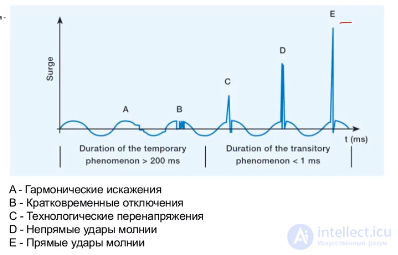
Surge overvoltages are voltage spikes with a maximum duration of less than 1 millisecond
Surge protective devices form a broad, general category. This category of devices can be divided into classes:
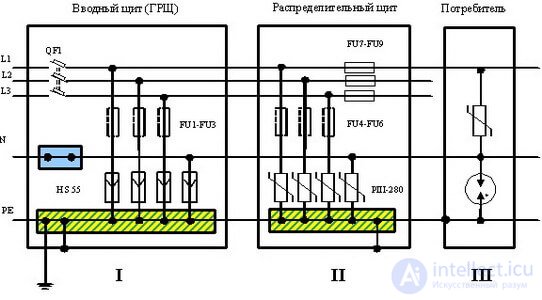
All devices that provide protection against surge overvoltages are divided into two types, which differ in design and operating principle. Let's look at how different kinds of SPDs work.
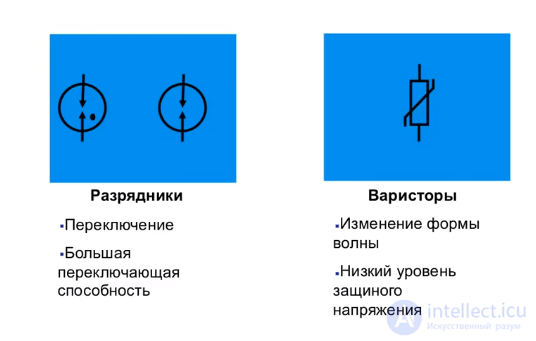
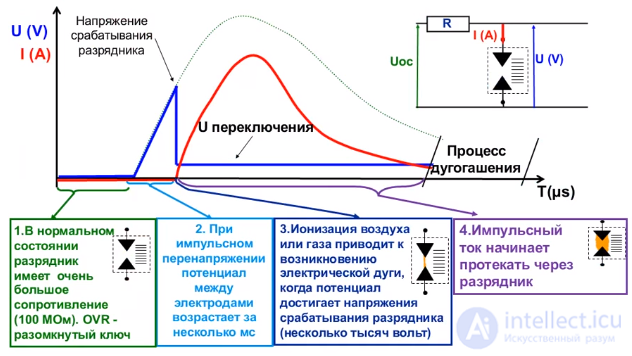
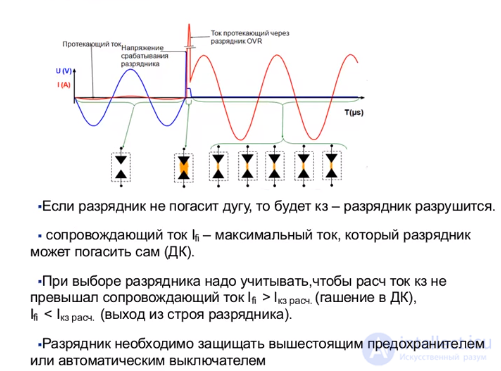
Valve and spark-gap arresters. The operating principle of arresters is based on the spark-gap effect. Their design incorporates an air gap in the link connecting the power line phases to the grounding loop. At the rated voltage, the circuit in this link is broken. When a lightning strike causes overvoltage on the power line, the air gap breaks down, the circuit between phase and ground closes, and the high-voltage pulse is discharged directly to ground. The design of a valve arrester with a spark gap in the circuit includes a resistor across which the high-voltage pulse is dissipated. Arresters are most commonly used in high-voltage networks.
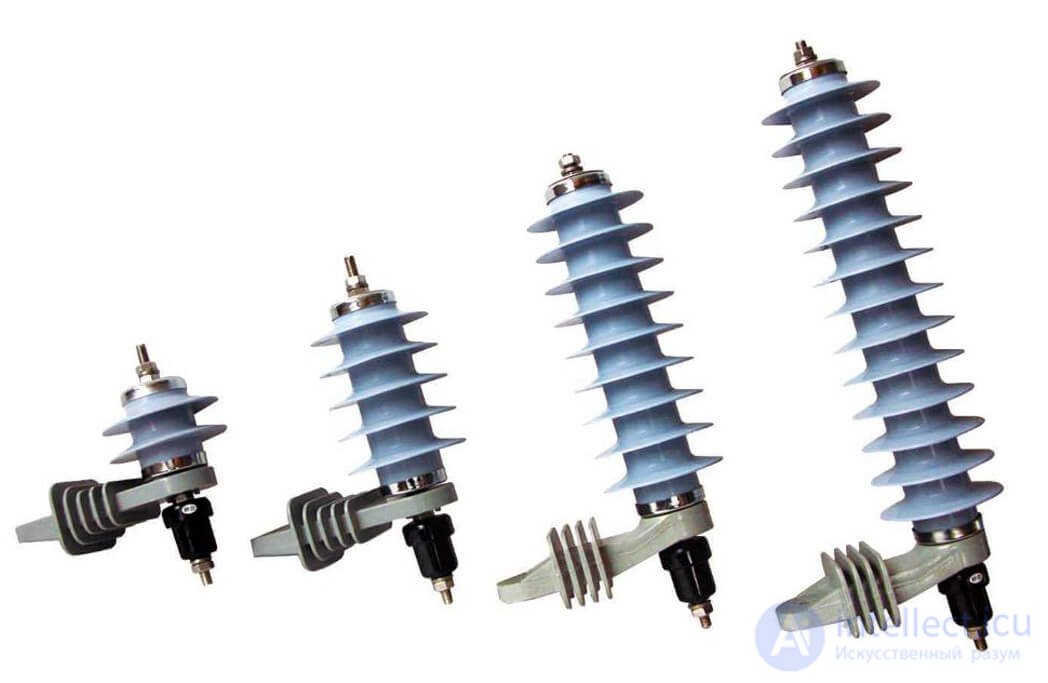
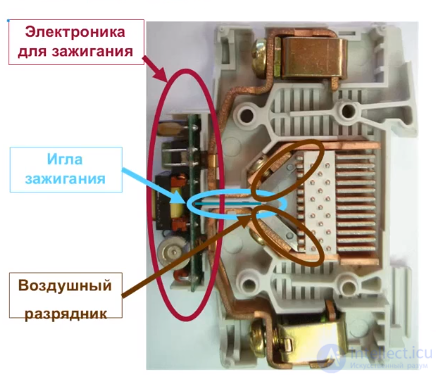
Design of an arrester
Operating principle of an arrester
Surge arresters (metal oxide surge arresters, MOSAs). These devices have replaced the outdated and bulky spark-gap arresters. To understand how a surge arrester works, one needs to recall the properties of nonlinear resistors, since the operating principle of an MOSA is based on their current-voltage characteristics. A varistor is used as the nonlinear resistor in an SPD. For those not well versed in the finer points of electrical engineering, here is some information on what it consists of and how it works. The main material used to make varistors is zinc oxide. Mixed with oxides of other metals, it forms an assembly consisting of p-n junctions with characteristic current-voltage properties. When the mains voltage is within its rated parameters, the current through the varistor is close to zero. The moment an overvoltage occurs, the current through the p-n junctions rises sharply, which brings the voltage back down to its rated value. Once the network parameters return to normal, the varistor reverts to a non-conducting state and has no effect on the operation of the device.
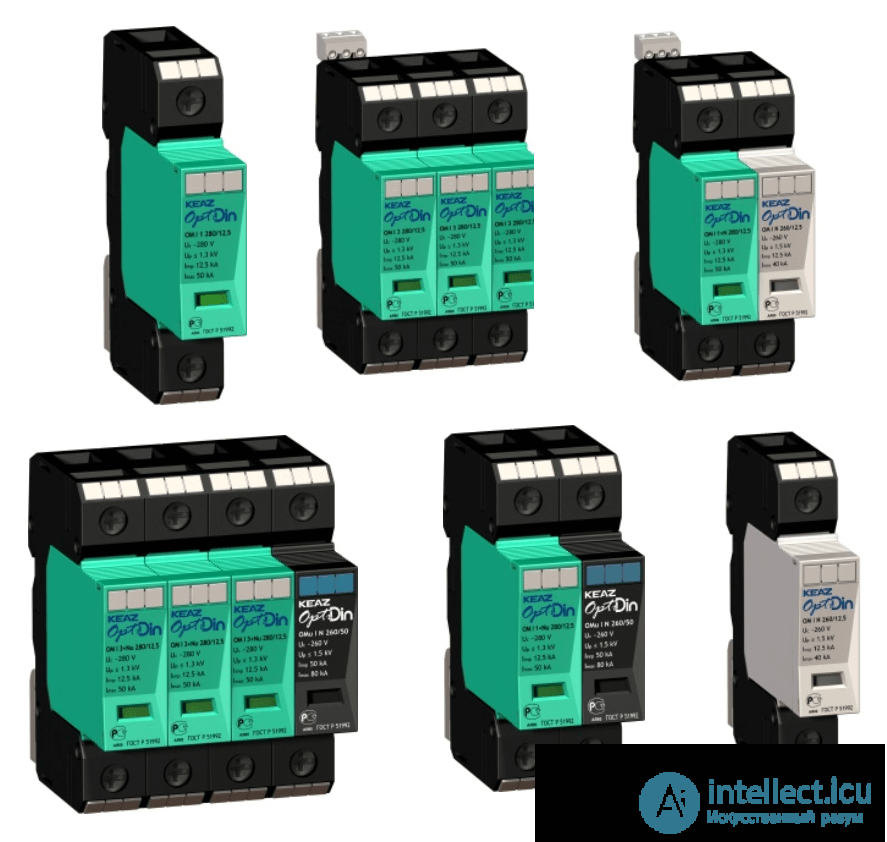
The compact size of MOSAs and the wide variety of these devices have made it possible to significantly expand their range of applications; it has become possible to use SPDs as overvoltage protection for private houses or apartments. However, varistor-based surge limiters, despite all their advantages over spark-gap arresters, have one significant drawback: a limited operating life. Because of their built-in thermal protection, the device remains inoperative for some time after tripping, which is why the SPD housing includes a quick-release mechanism that allows the module to be replaced quickly.
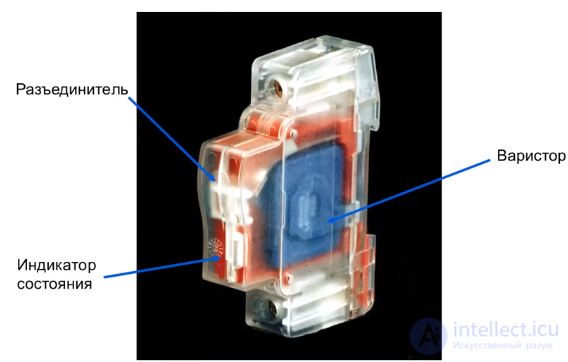
Design of a varistor-based SPD
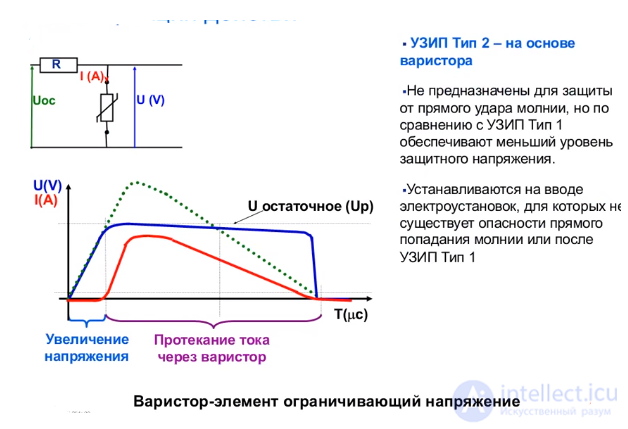
Operating principle of a varistor-based SPD
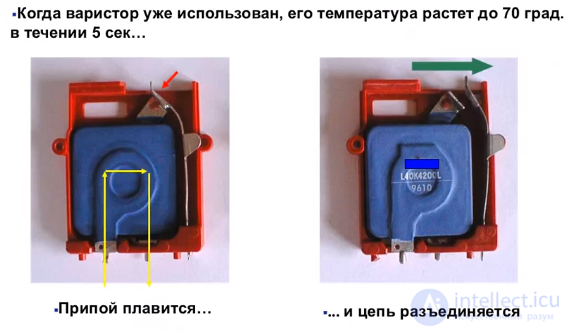
Purpose of the thermal protection in a degrading varistor
Overvoltages in the mains pose a serious threat to electrical equipment. They can be caused by lightning strikes, short circuits, or faults or switching events in the power supply system. SPDs — surge protective devices — are used to protect the network and the equipment connected to it.
A distinction is made between direct lightning strikes, when lightning hits a building or its utility lines, and indirect strikes — discharges near electrical infrastructure facilities. In turn, SPDs come in three types (also called classes):
SPDs protect against surge current, but they themselves need protection in case the electrical network fails. For this reason, circuit breakers, including molded-case circuit breakers, are placed in the circuit ahead of the SPD. Standard fused devices can be used as backup fuses for SPDs.
AC SPDs are by far the most widely available on the market. DC SPDs also exist, but so far they have found only limited use, for example in networks powered by solar panels.
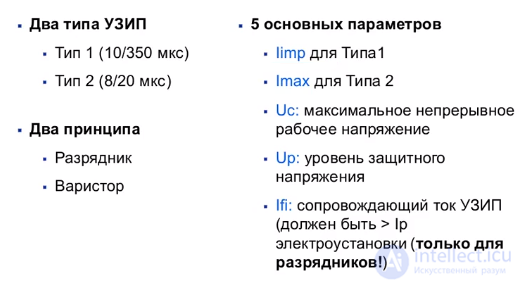
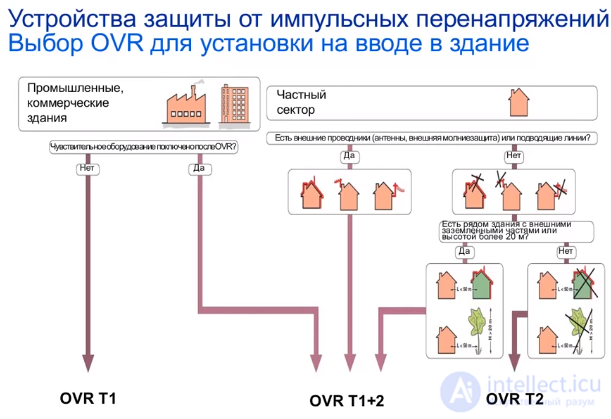
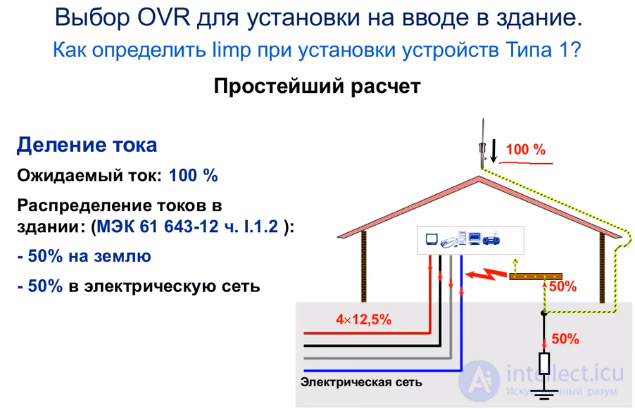
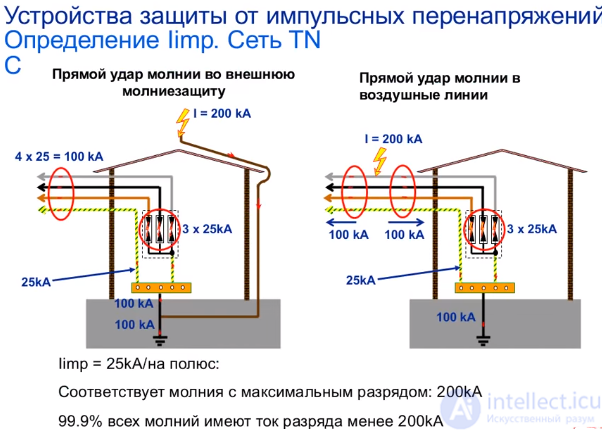
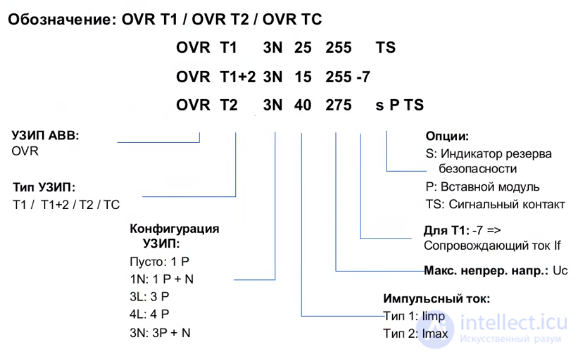
Designations and markings
Before installing and connecting surge protection devices, grounding must be installed in the house, otherwise all the work of setting up the SPDs will lose all its meaning. The classic scheme provides for 3 levels of protection. Arresters (Class I SPDs) providing lightning protection are installed at the incoming supply. The next protective device, Class II, usually an MOSA, is connected in the building's distribution panel. Its degree of protection should reduce the overvoltage to levels safe for household appliances and the lighting network. Close to electronic products sensitive to current and voltage fluctuations, it is advisable to connect a Class III SPD.
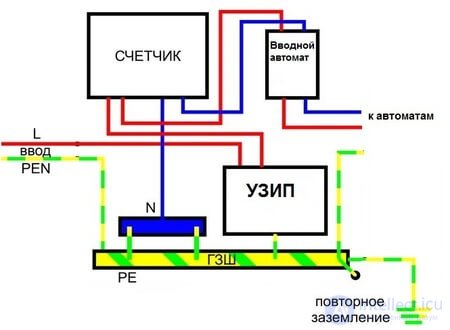
When connecting an SPD, current protection and short-circuit protection must be provided by means of an input circuit breaker or fuses. We will cover the installation of these protective devices in more detail in a separate article.
So we have covered how SPDs work, their classes, and the differences between them. We hope this information has been useful to you!

Comments