
Lecture
Это окончание невероятной информации про теория атома.
...
scalar product S·L. To make it easier to apply Hund's rule, it is useful to remember that:
As an example of applying these rules, let us consider the sulfur atom. Its atomic number is Z = 16, and consequently its ground-state electron configuration has the form 1s2 2s2 2p6 3s2 3p4. The superscript indices on the right denote the numbers of electrons in the indicated states. We see that the last subshell remains unfilled, containing four electrons with orbital moments equal to one. For a given L = 1, according to the Pauli principle, the spins of only three electrons, differing in the values m = –1, 0, +1, can be parallel. The spin of the fourth electron must be directed the opposite way, and so the maximum possible value of the total spin for this configuration is equal to
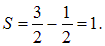
For this value of S, the sum of the projections of the orbital moments of the electrons with identically directed spins is zero, and therefore the maximum possible value of the projection of the total orbital moment is determined by the fourth electron and equals one. Hence L = 1. Since the outer subshell is filled more than half, J = L + S = 2. We arrive at the conclusion that the ground state of the sulfur atom is  .
.
For comparison, let us find the ground state of the silicon atom (Z = 14). It differs from the sulfur atom in that its outer subshell contains two, not four, p-electrons. Four electrons are lacking to fill it, that is, exactly as many as sulfur has. Therefore, for the silicon atom we obtain the same values S = 1 and L = 1. The outer subshell is filled less than half, whence J = |L – S| = 0. Hence the ground state of silicon is  .
.
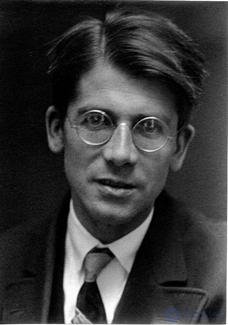
Fig. 5.32. Friedrich Hund, 1896–1997
Часть 1 5. The theory of the atom
Часть 2 5.6. The Pauli Principle and the Valence of Elements -
Часть 3 - 5. The theory of the atom

Comments