
Lecture
This chapter deals with the physical principles behind the operation of quantum amplifiers and generators of optical radiation. The fundamental possibility of such devices was first noted in 1939 by V. A. Fabrikant, who drew attention to the ability of a medium with an inverted population of levels to amplify radiation passing through it. The first quantum generators, operating in the centimeter-wave range (masers), were created in 1953, and in 1960 the first analogous device, operating in the optical range of wavelengths, was created (laser). The name of these devices comes from the initial letters of the English words: «maser» — Microwave Amplification by Stimulated Emission of Radiation (amplification of microwaves by means of stimulated emission), «laser» — Light Amplification by Stimulated Emission of Radiation (amplification of light by means of stimulated emission). In 1964, N. Basov, A. Prokhorov, and C. Townes were awarded the Nobel Prize for fundamental work in the field of quantum electronics that led to the development of a new type of generators and amplifiers — masers and lasers.
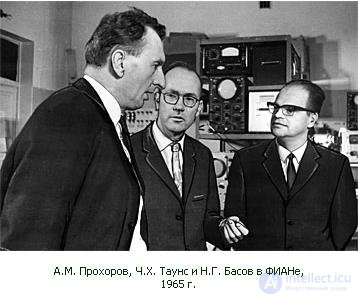
Fig. 6.1. Nobel Prize laureates in Physics, 1964
Earlier we discussed that atoms and ensembles of atoms can exist in various states, characterized by a set of quantum numbers. A transition from one energy state En to another Em is accompanied by the absorption or emission of a quantum of electromagnetic radiation — a photon, possessing energy
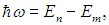
where  — is the frequency of the radiation. If En > Em, then we are dealing with a spontaneous (self-initiated) transition of the atom from a higher to a lower level, as a result of which a photon is emitted with energy
 .
.
Schematically, this process of spontaneous emission can be depicted in the form of a «reaction»

where the asterisk indicates the excited state of atom A.
If, on the other hand, En < Em, then we are dealing with a stimulated transition, accompanied by the absorption of a photon, the energy

of which goes toward increasing the energy of the atom (raising it to a higher, excited level):

In 1918, A. Einstein drew attention to the fact that there also exist «emissive» transitions of another type, which occur under the action of external electromagnetic radiation and whose probability increases with increasing intensity of the radiation. In such a process, a photon strikes an excited atom and causes it to transition to a lower state with the emission of another photon. In the end, the system contains two photons — the initial one and the emitted one (Fig. 6.2):

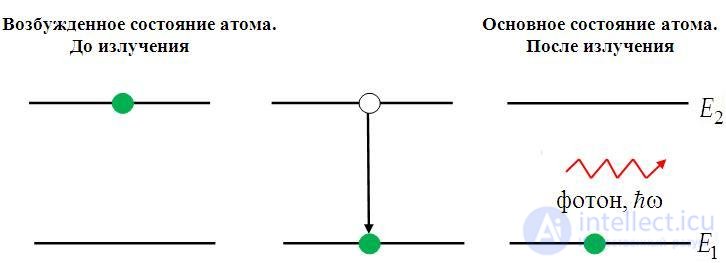
Fig. 6.2 Diagram of induced emission
The radiation arising as a result of such transitions is called stimulated or induced emission. Spontaneous emission is random in the directions and phases of the emitted photons, since the radiating atoms are independent. Induced emission, on the other hand, must be identical in its characteristics to the external radiation which, in passing through the substance, gave rise to it. Namely: induced emission has the same frequency, direction, and polarization as the forcing external radiation. The phases of the emitted photons are correlated with the forcing oscillations, that is, induced emission is coherent with the radiation that forces it.
Probabilities of all three types of processes (absorption, spontaneous emission, and stimulated emission) are calculated in quantum electrodynamics. In Einstein's time this theory had not yet been created, and he applied intuitive thermodynamic considerations to analyze the problem. Next, for simplicity, we shall consider a set of N atoms having only two non-degenerate energy levels E1 and E2 (E2 > E1) — the so-called two-level medium. Suppose that at time t some N2 of the total number of atoms are in the higher energy state 2, and suppose that the probability of spontaneous emission of an individual atom per unit time equals A21. Then the change in the number of atoms in state 2 over a small time dt will be
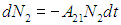
The minus sign indicates the decrease in the number of atoms in level 2. The quantity A21 is called the Einstein coefficient for spontaneous emission. Now, by integration, we easily obtain
|
|
|
(6.1) |
where N2(0) — is the number of atoms in state 2 at the initial moment of time. According to the meaning of the formula, the quantity

is the mean lifetime of the atom in the excited state (that is, the time during which the number of excited atoms decreases by a factor of e). This parameter determines the probability of the spontaneous emission process for a given type of atom.
Let us now suppose that the atoms are in equilibrium with radiation of frequency

and spectral energy density u(, T) (the energy density per unit frequency interval). The spectral energy density is proportional to the number of photons of a given frequency. The more photons there are, the more likely it is that one of them will be absorbed by an atom. Therefore, for the probability of the process of stimulated absorption of radiation by an atom per unit time, we can write the expression
|
|
|
(6.2) |
where the Einstein coefficient B12 characterizes the properties of the given atom. For the number of transitions to the excited state over the time dt we have
|
|
|
(6.3) |
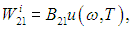
For the probability of induced emission, Einstein proposed using an analogous formula
|
|
|
(6.4) |
with some other, generally speaking, coefficient B21. Adding W21 to the probability of spontaneous transition, we obtain the total probability of transition from state 2 to state 1 per unit time
|
|
|
(6.5) |
so that the number of transitions from the excited state over the time dt equals
|
|
|
(6.6) |
In thermodynamic equilibrium between a substance and the electromagnetic field, a balance must be maintained between the processes of light emission and absorption, that is, equality between the total number of acts of light emission and the acts of its absorption. Such an equilibrium is established in a closed cavity whose wall temperature T is kept constant. If, in the state of equilibrium, the numbers of transitions 2–1 and 1–2 are equal
|
|
|
(6.7) |
then we obtain
|
|
|
(6.8) |
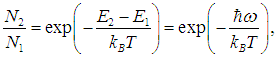
The distribution of atoms over energies in thermodynamic equilibrium obeys the Boltzmann law (levels  and
and  are assumed to be non-degenerate)
|
|
|
(6.9) |
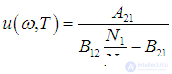
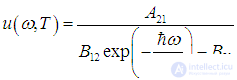
from which
|
|
|
(6.10) |
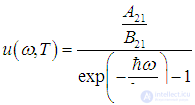
As the temperature increases, the spectral energy density must increase without bound. This will happen only under the condition B21 = B12, that is, we find that the Einstein coefficients for stimulated absorption and induced emission of light are equal. From this
|
|
|
(6.11) |
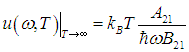
Let us also note that the Einstein coefficients do not depend on temperature, since they relate to individual acts of absorption-emission of photons by an atom, whereas temperature is a characteristic of an ensemble of atoms. Then, in the limit of high temperatures, we obtain from (6.11) the expression
|
|
|
(6.12) |
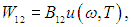
From comparison of the preceding formula with the Rayleigh-Jeans law, it follows that
|
|
|
(6.13) |
Substituting (6.13) into (6.11), we obtain Planck's formula (27.26) for the spectral density of blackbody radiation. The relations between the Einstein coefficients, derived by him from simple thermodynamic considerations, were subsequently confirmed by exact calculations.
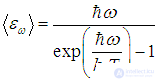
Dividing u(, T) by the number (2/p2c3) of oscillation types per unit volume in a unit frequency interval, we obtain the average energy of one type of oscillation (photon) of frequency  :
:
|
|
|
(6.14) |
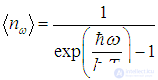
Dividing, in turn, this expression by the energy of a photon, we find the average number of photons of a given frequency in equilibrium:
|
|
|
(6.15) |
We shall encounter this formula and its analogues again in our course.
Passage of Radiation Through Matter. Population Inversion of Levels. Let us again consider a two-level medium with energy levels E2 and E1 (E2 > E1). If monochromatic radiation falls on this medium with frequency

then, as it propagates over a distance dx, the change in spectral energy density duw will be related both to resonant absorption and to induced (stimulated) emission by the atoms of the system. Owing to induced emission, the spectral energy density uw = u in the beam increases, and this increase in energy du+ must be proportional to:
that is

Here  — is a dimensional coefficient of proportionality.
Similarly, owing to processes of photon absorption, the spectral energy density in the beam decreases:

Adding du+ and du-, we find the total change du in the energy density:
|
|
|
(6.16) |
Taking into account the equality of the Einstein coefficients B21 = B12 and introducing the absorption coefficient a, we write this equation in the form
|
|
|
(6.17) |
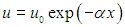
The solution of this differential equation has the form
|
|
|
(6.18) |
This formula gives the spectral energy density u in the beam of photons after they pass through a layer of substance of thickness x, where u0 corresponds to the point x = 0.
Under conditions of thermodynamic equilibrium, in accordance with the Boltzmann distribution, n2 < n1, therefore the absorption coefficient a is positive (E2 > E1):
|
|
|
(6.19) |
Thus, the radiation energy density, as can be seen from (6.18), decreases as it passes through the substance, that is, the light is absorbed. However, if a system is created in which n2 > n1, then the absorption coefficient a becomes negative, and instead of attenuation there occurs an increase in the intensity of the light. The state of the medium in which n2 > n1 is called a state with population inversion of levels (Fig. 6.3), and the medium itself is then called an active medium. Population inversion of levels contradicts the equilibrium Boltzmann distribution and can be created only artificially, if the system is driven out of a state of thermodynamic equilibrium.
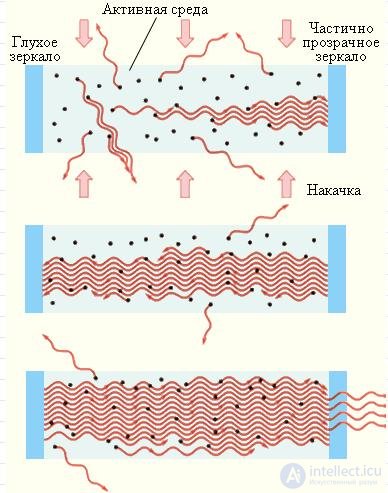
Fig. 6.3. State of a medium with population inversion of levels
This creates the fundamental possibility of amplification and generation of coherent optical radiation and is used in practice in the development of sources of such radiation — lasers.
Principle of Operation of the Laser. The creation of the laser became possible after methods were found for achieving population inversion of levels in certain substances (active media). The first practical generator in the visible region of the spectrum was created in the (USA by Maiman (1960)) based on ruby. Ruby is a crystal lattice of Al2O3, containing a small (0.03% – 0.05%) admixture of chromium ions (Cr). Fig. 6.4 shows the diagram of the energy levels of chromium (three-level medium). The broad level E3 is used for excitation of the chromium ions by light from a powerful gas-discharge lamp with a broad frequency band in the green-blue region of visible light — the pump lamp. The excitation of the chromium ions Cr+++ by pump energy from the external source is depicted by the arrow B13.
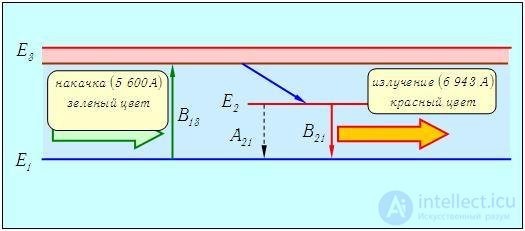
Fig. 6.4. Diagram of an active three-level medium (ruby)
Electrons from the short-lived level E3 undergo a rapid (10–7–10–8 s) non-radiative transition to level E2 (shown by the blue arrow). The energy released in this process is not emitted in the form of photons but is transferred to the ruby crystal. As a result, the ruby heats up, so the laser design provides for cooling.
The lifetime of the long-lived narrow level E2 is 10–3 s, that is, 5 orders of magnitude greater than that of the broadband level E3. At sufficient pump power, the number of electrons at level E2 (called metastable) becomes greater than at level E1, that is, a population inversion is created between the «working» levels E2 and E1.
The photon emitted in a spontaneous transition between these levels (shown by the dashed arrow A21) induces the emission of additional (stimulated) photons — (the transition is shown by the arrow B21), which in turn cause induced emission of an entire cascade of photons with wavelength l = 6 943 Å.
Example 1. Let us determine the relative population n2/n1 of the working levels in a ruby crystal at room temperature under conditions of thermodynamic equilibrium.
Based on the wavelength emitted by the ruby laser, we find the energy difference:
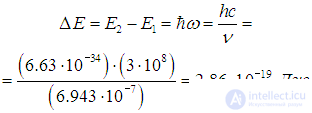
At room temperature T = 300 K we have:

It now follows from the Boltzmann distribution that
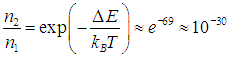
Creating an active medium with population inversion between levels is only half the task. For a laser to operate, conditions must also be created for light generation, that is, positive feedback. The active medium by itself is only capable of amplifying passing radiation. To achieve generation mode, the amplification of stimulated emission must be sufficient to compensate for all losses in the system. For this purpose the active substance is placed in an optical resonator, formed, as a rule, by two parallel mirrors, one of which is semi-transparent and serves to couple radiation out of the resonator. Structurally, the first ruby lasers used cylindrical crystals 40 mm long and 5 mm in diameter. The end faces were polished parallel to one another and served as the resonator mirrors. One of the end faces was silvered so that its reflectance was close to unity, while the other end face was semi-transparent, that is, had a reflectance less than unity, and was used to couple radiation out of the resonator. The excitation source was a powerful pulsed xenon lamp coiled around the ruby in a spiral. The design of the ruby laser is shown schematically in Fig. 6.5.
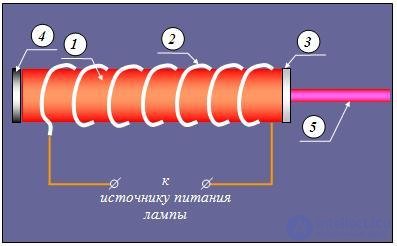
Fig. 6.5. Design of a ruby laser: 1 — ruby rod; 2 — pulsed gas-discharge lamp; 3 — semi-transparent mirror; 4 — mirror; 5 — stimulated emission
At sufficient pump lamp power, the majority (about half) of the chromium ions are transferred to the excited state. Once population inversion is achieved for the working levels with energies E2 and E1, the first spontaneously emitted photons corresponding to a transition between these levels have no preferred direction of propagation and induce stimulated emission that likewise propagates in all directions within the ruby crystal. Recall that photons produced by stimulated emission travel in the same direction as the incident photons. Photons whose direction of travel makes a small angle with the axis of the crystal rod undergo multiple reflections from its end faces. Photons propagating in other directions, however, leave the ruby crystal through its side surface and do not contribute to the formation of the output radiation. In this way a narrow beam of light is generated in the resonator, and repeated passage of photons through the active medium induces the emission of ever more photons, amplifying the intensity of the output beam.
The generation of light radiation by a ruby laser is shown in Fig. 6.6.
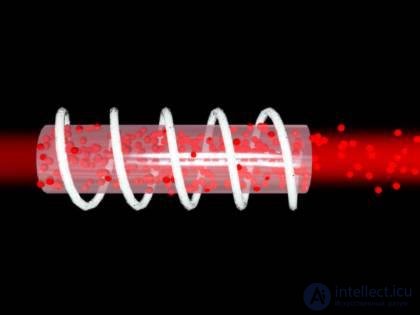
Fig. 6.6. Generation of radiation by a ruby laser
Thus, the optical resonator performs two functions: first, it creates positive feedback, and second, it forms a narrow directed beam of radiation with a definite spatial structure.
In the three-level scheme considered above, creating population inversion between the working levels requires exciting a sufficiently large fraction of the atoms, which demands considerable energy expenditure. A more efficient approach is the four-level scheme, which is used in solid-state lasers, for example with neodymium ions Nd3+. In the most common gas laser using neutral atoms — the helium-neon laser — the conditions for generation according to the four-level scheme are likewise satisfied. The active medium in such a laser is a mixture of inert gases — helium and neon, with the ground-state energy E1 (which we take as the zero level, E1 = 0). Pumping is carried out by means of an electrical gas discharge, owing to which atoms are transferred to the excited state with energy E3. The level E4 in neon atoms (Fig. 6.7) is close to the level E3 in helium, and when helium atoms collide with neon atoms, the excitation energy can be efficiently transferred to the latter without radiation.
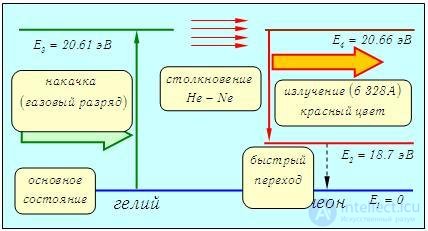
Fig. 6.7. Energy level diagram of the He-Ne-laser
Thus, the neon level E4 turns out to be more populated than the lower level E2. The transition between these working levels is accompanied by radiation with wavelength 632.8 nm, which is the principal wavelength in commercial He-Ne-lasers. Neon atoms do not remain long at level E2 , quickly returning to the ground state. Note that level E2 in neon is populated only very slightly, and therefore only a small number of helium atoms need to be excited in order to create population inversion between E4 and E2. This requires much lower energy expenditure both for pumping and for cooling the setup, which is characteristic of the four-level generation scheme. Other neon levels (not shown in Fig. 6.7) can also be used for laser generation, giving radiation in both the visible and IR ranges, with helium used only for the pumping process.
Example 2. Let us find the relative equilibrium population of level E2 in neon at room temperature.
This problem differs from the previous one only in its numerical values. For variety, let us carry out the calculation in electron-volts. Let us first express the Boltzmann constant in these units:

so that at room temperature

Now we easily find

Such a small number is, from a practical standpoint, indistinguishable from zero, so even with weak pumping a population inversion is created between levels E4 and E2.
Laser radiation is distinguished by the following characteristic features:
The characteristics of the radiation depend on the type of laser and its operating mode; however, some near-limiting parameter values can be noted:
Short (picosecond) laser pulses are indispensable for studying fast processes. Within a pulse, extremely high peak power can develop (up to several GW), equal to the power of several nuclear power plant units of a million kW each. At the same time, the radiation can be concentrated into a narrow cone. Such beams make it possible, for example, to «weld» the retina to the fundus of the eye.
Types of lasers. Within the scope of a general physics course we cannot dwell in detail on the specific features and technical applications of the various types of lasers because of their extreme diversity. We will limit ourselves to a fairly brief overview of laser types, which differ in the characteristics of their active medium and pumping methods.
Solid-state lasers. These are usually pulsed; the first such laser was the ruby laser described above. Lasers using neodymium-doped glass as the working substance are popular. They generate light with a wavelength of about 1.06 μm, are large in size, and have peak power up to the TW range. They can be used for experiments in controlled thermonuclear fusion. An example is the huge «Shiva» laser at the Lawrence Livermore Laboratory in the USA.
Neodymium-doped yttrium aluminum garnet lasers (Nd:YAG), emitting in the IR range at a wavelength of l = 1.064 μm, are very widespread. They can operate either in continuous generation mode or in pulsed mode, with pulse repetition rates of up to several kHz (for comparison, a ruby laser produces one pulse every few minutes). They have a wide range of applications in electronics (laser technology), optical ranging, medicine, and other fields.
Gas lasers. These are usually continuous-wave lasers. They are distinguished by a well-defined spatial beam structure. Example: the helium-neon laser, generating light at wavelengths of 0.63, 1.15, and 3.39 μm and having a power on the order of mW. In technology, the CO2-laser is widely used, with power on the order of kW and wavelengths of 9.6 and 10.6 μm. One of the pumping methods for gas lasers is electrical discharge. A variety of laser with an active gaseous medium is the chemical and excimer lasers. Figure 6.8 shows a helium-neon laser.
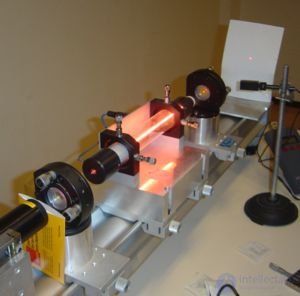
Fig. 6.8. Helium-neon laser
Chemical lasers. Population inversion is created in the course of a chemical reaction between two gases, for example hydrogen (deuterium) and fluorine. The basis is exothermic reactions
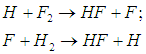
Molecules of HF are born already vibrationally excited, which immediately creates population inversion. The resulting working mixture is passed at supersonic speed through an optical resonator, in which part of the accumulated energy is released in the form of electromagnetic radiation. With the help of the resonator's mirror system, this radiation is focused into a narrow beam. Such lasers emit a large amount of energy (more than 2 kJ), a pulse duration of 30 ns, and power up to 2·1011 W. The (chemical) efficiency reaches 10 %, whereas for other types of lasers it is usually only a fraction of a percent. The generated wavelength is 2.8 μm (3.8 μm for lasers using DF).
Of the many types of chemical lasers, hydrogen fluoride (deuterium) lasers are recognized as the most promising. Problems: radiation from hydrogen fluoride lasers at the stated wavelength is strongly scattered by water molecules, which are always present in the atmosphere. This considerably reduces the brightness of the radiation. The deuterium fluoride laser operates at a wavelength for which the atmosphere is practically transparent. However, the specific energy release of such lasers is one and a half times lower than that of HF lasers. This means that using them in space would require carrying a much larger quantity of chemical fuel.
Excimer lasers. Excimer molecules are diatomic molecules (for example, Xe2) that can exist only in an excited state — their unexcited state turns out to be unstable. This is related to the main feature of excimer lasers: the ground state of excimer molecules is unpopulated, that is, the lower working laser level is always empty. Pumping is accomplished by a pulsed electron beam, which transfers a significant fraction of the atoms into an excited state, in which they then combine into excimer molecules.
Since the transition between the working levels is broadband, the generation frequency can be tuned. The Xe2 laser produces tunable radiation in the UV region (l = 173 nm) and has a high energy-conversion efficiency (20 %). At present, excimer ArF-lasers with a wavelength of 193 nm are used in ophthalmic surgery for the surface evaporation (ablation) of the cornea.
Liquid lasers. The active substance in a liquid state is homogeneous and allows circulation for cooling purposes, which gives it advantages over solid-state lasers. This makes it possible to obtain large energies and powers in both pulsed and continuous modes. The first liquid lasers (1964–1965) used compounds of rare-earth elements. They were later replaced by lasers using solutions of organic dyes.
Such lasers usually employ optical pumping by the radiation of other lasers in the visible or UV range. An interesting property of dye lasers is the possibility of tuning the generation frequency. By choosing the appropriate dye, generation can be obtained at any wavelength from the near-IR to the near-UV range. This is due to the broad, continuous vibrational-rotational spectra of the liquid's molecules.
Semiconductor lasers. Solid-state lasers based on semiconductor materials form a separate class. Pumping is carried out by electron-beam bombardment, powerful laser irradiation, but more often by electronic methods. Semiconductor lasers use transitions not between discrete energy levels of individual atoms or molecules, but between allowed energy bands, that is, sets of closely spaced levels (energy bands in crystals are discussed in more detail in later sections). The use of various semiconductor materials makes it possible to obtain radiation at wavelengths from 0.7 to 1.6 μm. The dimensions of the active element are extremely small: the resonator length can be less than 1 mm.
Typical power is on the order of several kW, pulse duration about 3 ns, efficiency reaches 50 %, and they have wide application (fiber optics, communications). They can be used to project a television image onto a large screen.
Free-electron lasers. A beam of high-energy electrons is passed through a «magnetic comb» — a spatially periodic magnetic field that forces the electrons to oscillate at a given frequency. The corresponding device — an undulator — consists of a series of magnets placed between sections of the accelerator, so that relativistic electrons move along the undulator's axis and undergo transverse oscillations, emitting a primary («spontaneous») electromagnetic wave. In the open resonator, into which the electrons subsequently enter, the spontaneous electromagnetic wave is amplified, creating coherent, directed laser radiation. The main feature of free-electron lasers lies in the possibility of smoothly tuning the generation frequency (from the visible to the IR range) by varying the kinetic energy of the electrons. The efficiency of such lasers is 1 % at an average power of up to 4 W. Using devices that return the electrons to the resonator, the efficiency can be increased to 20–40 %.
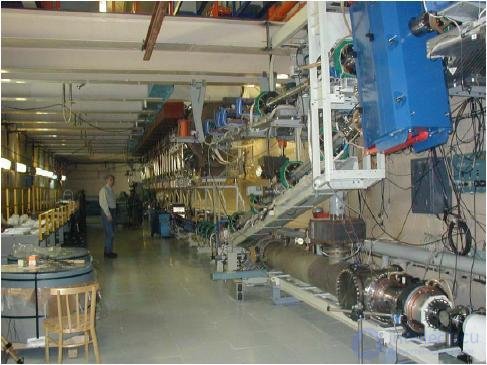
Fig. 6.9. Photograph of the first stage of the FEL
The X-ray laser with nuclear pumping. This is the most exotic type of laser. Schematically, it consists of a nuclear warhead, on whose surface up to 50 metal rods, oriented in various directions, are mounted. The rods have two degrees of freedom and, like gun barrels, can be aimed at any point in space. Along the axis of each rod runs a thin wire of a high-density material (on the order of the density of gold) — the active medium. The source of the laser's pump energy is a nuclear explosion. During the explosion, the active substance is transformed into a plasma state. Cooling instantaneously, the plasma emits coherent radiation in the soft X-ray range. Because of the high energy concentration, the radiation, upon striking the target, causes explosive vaporization of the material, the formation of a shock wave, and destruction of the target.
Thus, the operating principle and design of the X-ray laser make its area of application obvious as well. The laser described does not have resonator mirrors, since their use in the X-ray range is not feasible.
Some types of lasers are shown in Fig. 6.10.
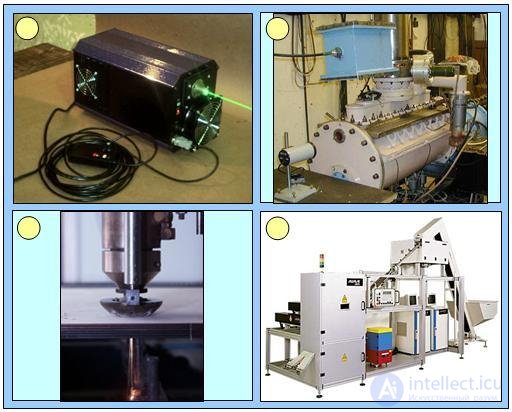
Fig. 6.10. Some types of lasers: 1 — laboratory laser; 2 — continuous-wave CO2 laser; 3 — technological laser for drilling holes; 4 — high-power technological laser
The propagation of light waves in a medium, emitted by ordinary light sources, is described by linear differential equations (linear optics), which means the optical characteristics of the medium are independent of light intensity. The creation of lasers has made it possible to obtain light waves with an electric field strength comparable in magnitude to the strength of the microscopic intra-atomic field (on the order of 1010 V/m). In such fields, the refractive index and other optical characteristics of the medium exhibit a dependence on the field strength E of the light wave. In this case, the principle of superposition of fields is violated, that is, the principle of independent propagation of electromagnetic waves in matter, and the corresponding differential equations become nonlinear. This leads to a substantial change in the character of known optical phenomena in the medium, as well as to the emergence of entirely new ones, the so-called nonlinear effects in optics. These include:
The nonlinear effect of saturation of light absorption was observed long before the advent of lasers. In 1923, S.I. Vavilov and V.L. Levshin discovered a decrease in the light absorption coefficient of uranium glass with increasing irradiation intensity. This first nonlinear-optical effect is explained by the fact that, owing to strong irradiation, a significant fraction of the absorbing particles of the medium are transferred to an excited state and can no longer absorb light.
The nonlinear effects of frequency conversion and self-action of light arise because a nonlinear component appears in the polarization of the medium, growing with increasing intensity of the electromagnetic wave. The presence of such a nonlinear component is explained by the anharmonicity of the oscillations of the medium's particles in the field of a powerful light wave. Because of this anharmonicity, the medium's response to a harmonic external electric field becomes nonlinear, that is, it ceases to reproduce the shape of the external action. Thus, new harmonic components appear in the electric field re-radiated by the atoms and molecules of the substance — that is, generation of higher optical harmonics of the optical radiation incident on the medium takes place. The most widespread process in practical applications is second-harmonic generation in «nonlinear crystals» with specially selected properties. Thus, for example, the IR radiation of an Nd:YAG laser, invisible to the eye, with wavelength l = 1.064 μm is converted in a KDP (potassium dihydrogen phosphate) crystal into green light with wavelength l/2 = 0.532 μm.
Nonlinear polarization of the medium is also the reason for the dependence of the refractive index on the intensity of the electromagnetic wave. If the refractive index increases with increasing intensity of the light wave, the rays bend toward the axis of the beam, and when a certain critical power is exceeded, the phenomenon of self-focusing of light — a diverging light beam becomes a converging one — is observed. The opposite process of self-action of light is also possible — self-defocusing of the beam, if the refractive index decreases with increasing wave intensity.
In multiphoton processes of nonlinear interaction between optical radiation and matter, the simultaneous absorption (or emission) of two or more photons occurs in a single elementary act. The probability of such processes increases with increasing wave intensity. The multiphoton photoelectric effect or photoionization is accompanied by the absorption of several photons, the energy of each of which is less than the work function or the ionization energy, respectively. The phenomenon of Raman scattering of light also belongs to the nonlinear processes of interaction with a medium.
One could continue listing processes such as nonlinear scattering of light and so on, occurring during the interaction of powerful laser radiation with a medium. Thus, with the advent of lasers, a new field of physics arose — nonlinear optics.










Comments