
Lecture
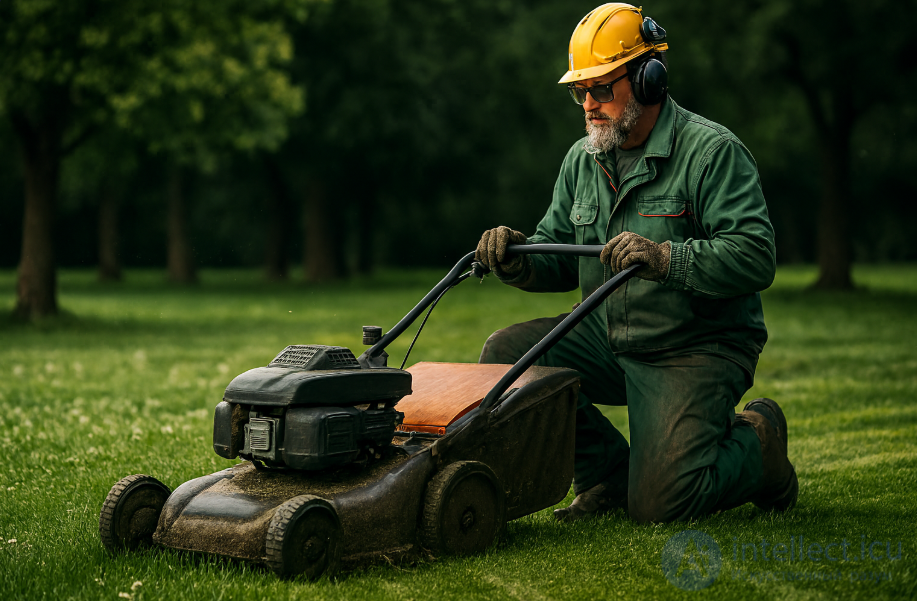
A lawn mower operator is a specialist who takes care of lawns and green spaces. Their tasks include mowing grass, watering, fertilizing, sowing seeds, mechanical soil treatment, and repairing damaged areas of the lawn. The work can be done by hand or using specialized equipment: trimmers, lawn mowers, and walk-behind tractors.
Lawn mower operators are in demand in:
gardening and park services,
municipal utility services,
private landscaping companies,
sports complexes and golf clubs.
To work successfully as a lawn mower operator, you need:
good general physical health,
no serious disorders of the musculoskeletal system,
normal vision (for safe operation of equipment),
the ability to tolerate noise, vibration, and weather-related strain.
Candidates are accepted with:
hearing impairments,
mild intellectual disabilities,
general somatic illnesses that do not interfere with physical activity.
The work requires:
stamina and patience (monotonous labor),
a preference for working outdoors,
the ability to concentrate and follow safety rules,
independence and responsibility,
the ability to work with machinery and tools.
Formal higher education is not required. Training is possible:
at vocational schools (duration — from 2 months),
through courses at municipal enterprises or landscaping companies.
Qualifications may include:
knowledge of agricultural techniques,
skills in operating lawn mowing equipment,
basics of botany and soil science,
compliance with occupational safety and environmental standards.
| Country | Average salary/month |
|---|---|
| USA | $2,500–$3,500 |
| China | $600–$1,000 |
| Russia | $400–$700 |
| Ukraine | $300–$500 |
| India | $200–$400 |
| South Africa | $500–$800 |
| Egypt | $250–$400 |
| Israel | $1,500–$2,500 |
Note: salaries depend on the region, experience, season, and employer. In some countries (for example, Lithuania), a lawn mower operator's salary can exceed a doctor's income.
Lawn mower operators are prone to:
hearing impairment (from equipment noise),
vibration disease (from prolonged work with motorized equipment),
allergic reactions (pollen, fertilizers),
musculoskeletal disorders (strain on the back and legs),
heat stroke and hypothermia (working outdoors).
Landscape gardener
Landscape designer
Gardening and park maintenance worker
Agronomist
Garden equipment maintenance technician
Municipal utility worker
Grounds improvement specialist

Comments