
Lecture
A fitness trainer is a specialist who helps people achieve physical goals: improving health, losing weight, building muscle mass, increasing endurance. They develop individual training programs, monitor exercise technique, motivate clients, and provide guidance on nutrition and lifestyle.
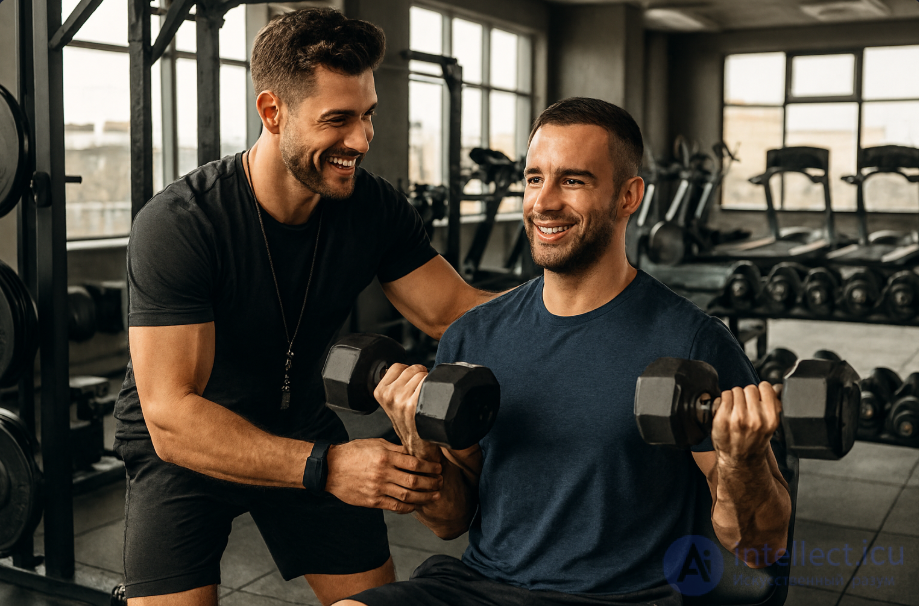
A fitness trainer must:
Have basic knowledge of anatomy, physiology, and biomechanics.
Be able to assess a client's physical condition (pulse, blood pressure, body mass index).
Be capable of providing first aid in case of injuries.
Have no contraindications to physical activity: chronic illnesses, cardiovascular conditions, musculoskeletal disorders.
A successful fitness trainer possesses:
Empathy and the ability to listen.
Motivational skills.
Stress resilience.
The ability to work with different types of clients: from teenagers to the elderly.
Persistence and patience — a client's progress takes time.
According to the order of the Ministry of Labor, a fitness trainer is required to have specialized education:
Secondary vocational or higher education (physical culture, sports).
Professional retraining courses (from 4 to 6 months).
Certificates from international organizations: NASM, ACE, ISSA, REPS — especially relevant for working abroad.
| Country | Average salary/month |
|---|---|
| USA | $3,000–$5,000 |
| China | $1,200–$2,500 |
| Russia | $600–$1,500 |
| Ukraine | $400–$1,000 |
| India | $300–$800 |
| South Africa | $800–$1,800 |
| Egypt | $400–$900 |
| Israel | $2,000–$3,500 |
Salary depends on experience, place of work (fitness club, private practice), possession of certificates, and the trainer's popularity.
Fitness trainers are prone to:
Joint and spine injuries (from demonstrating exercises).
Varicose veins (prolonged standing).
Overwork and emotional burnout.
Increased risk of infections (when working in public gyms).
Group program instructor (aerobics, yoga, Pilates).
Personal trainer.
Sports nutritionist.
Rehabilitation specialist.
Massage therapist.
Sports psychologist.
CrossFit, TRX, and functional training coach.

Comments