
Lecture
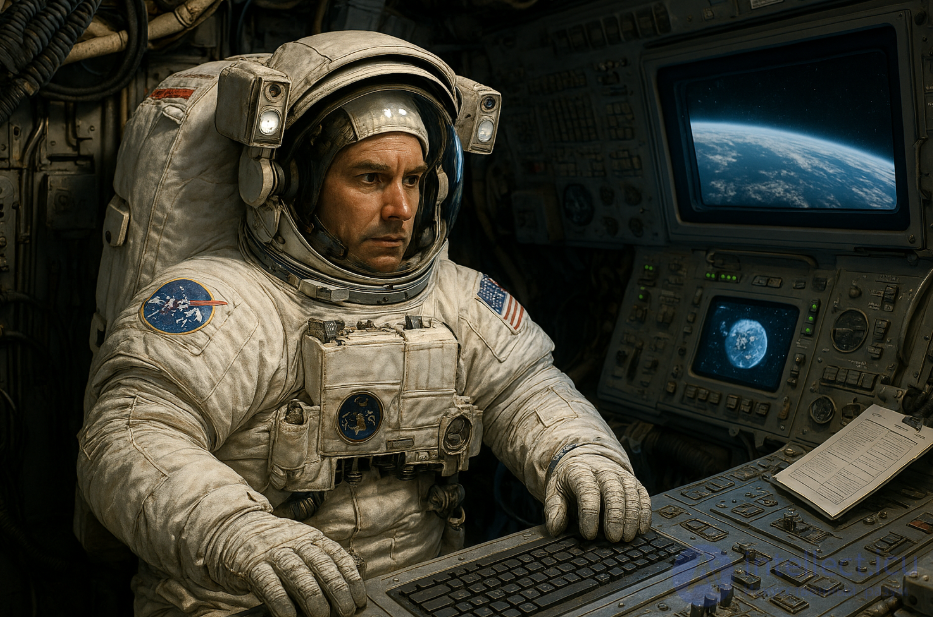
A cosmonaut is a specialist trained to take part in crewed space missions. The term comes from the Greek words «cosmos» (universe) and «nautes» (sailor), literally — «sailor of the cosmos». Different countries use different terms: in the USA — «astronaut», in Russia — «cosmonaut», in China — «taikonaut».
Cosmonauts can be scientists, engineers, doctors, or military pilots — the main thing is that they possess the necessary knowledge, physical fitness, and psychological resilience to work in the extreme conditions of space.
Cosmonauts perform a wide range of tasks:
Mission preparation: training, flight simulation, studying the spacecraft's systems.
Operating the spacecraft: piloting, monitoring systems, communicating with Mission Control.
Scientific research: conducting experiments in microgravity conditions.
Extravehicular activity (EVA): spacewalks for repairs and installing equipment.
Station maintenance: monitoring life support and performing technical servicing.
Public activity: participating in educational projects, interviews, and presentations.
Candidates must meet strict medical standards:
Excellent vision (correctable to 20/20)
Normal blood pressure (no higher than 140/90)
Height — from 157 to 190 cm (depending on the type of spacecraft)
No chronic diseases
A high level of physical endurance
Psychological resilience — a key factor:
The ability to work in isolation and in confined spaces
The ability to cope with stress and uncertainty
Teamwork and communication skills
Emotional stability
Rapid adaptation to new conditions
To be selected as a cosmonaut, the following is required:
A master's degree or higher in a STEM field (science, technology, engineering, mathematics)
Alternatives: a doctoral degree (PhD, MD), or graduation from a test pilot school
Work experience: a minimum of 2 years of professional experience or 1,000 flight hours (for pilots)
Additional skills: leadership, teamwork, knowledge of the English language
| Country / Agency | Official Salary (per year, USD) | Unofficial Data / Comments |
|---|---|---|
| NASA (USA) | $84,000 – $160,000 | GS-12/13/14; experienced ones can earn up to $161,000 |
| Roscosmos (Russia) | $47,000 – $78,000 | Candidates: ~$1,200/month; pilots: ~$6,500/month |
| ESA (Europe) | $77,000 – $81,000 | Depends on the country; salary is not subject to tax |
| CNSA (China) | Not disclosed | Salaries are classified; estimated at $30,000 per year |
| ISRO (India) | $14,000 – $24,000 | Rs 12–20 lakh/year; mission allowances possible |
| UKSA (United Kingdom) | $50,000 – $110,000 | £40,000 – £86,000; depends on rank and experience |
| SpaceX / Axiom | Individual contracts | Private missions may pay more, but the data is not disclosed |
Salaries depend on rank, experience, number of flights, and country. In addition, cosmonauts receive bonuses, insurance, and a pension.
Working in space involves a number of risks:
Space adaptation syndrome (nausea, dizziness) (due to spending time in microgravity environments)
Musculoskeletal problems (muscle atrophy, loss of bone mass) (due to spending time in microgravity environments)
Sleep disturbances and psycho-emotional disorders
Radiation exposure — an increased risk of cancer (due to being in spaces unprotected from radiation, at an altitude above 100 km above sea level)
Visual impairment — intracranial pressure syndrome (due to spending time in microgravity environments)
Kidney stones, arrhythmias, infections
There is a slight risk of dying during a flight (launch, landing, or the mission itself)
NASA continuously monitors the health of cosmonauts as part of the LSAH (Lifetime Surveillance of Astronaut Health) program.
If you are interested in space but do not aspire to become a cosmonaut, consider related professions:
Aerospace engineer
Astrophysicist
Robotics specialist
Space medical researcher
Navigation and communications specialist
Test pilot
Mission Control operator
Biologist or chemist in space projects

Comments