
Lecture
A plasterer is a construction specialist who applies levelling and decorative layers of plaster to walls, ceilings and other surfaces of buildings. The work can be performed by hand or with the help of mechanized tools. Plaster not only improves the appearance but also enhances thermal and sound insulation, protecting structures from moisture and weather exposure.
Surface preparation:
Checking the condition of the base
Cleaning, degreasing and moistening surfaces
Installing beacons and reinforcing meshes
Preparing mixtures:
Mixing dry blends with water
Monitoring the consistency and quality of the mixture
Plastering:
Applying plaster by hand or by mechanized methods
Levelling and smoothing the surface
Applying decorative layers (textured, Venetian, bas-relief, etc.)
Repair work:
Restoring damaged areas
Eliminating defects in the plaster layer
Priming and preparation for the finishing coat:
Applying primer compounds
Preparation for painting, cladding or wallpaper
Compliance with safety standards:
Working with protective equipment
Compliance with fire and occupational safety rules
Care of tools and the workplace:
Cleaning and storing tools
Keeping the work area tidy
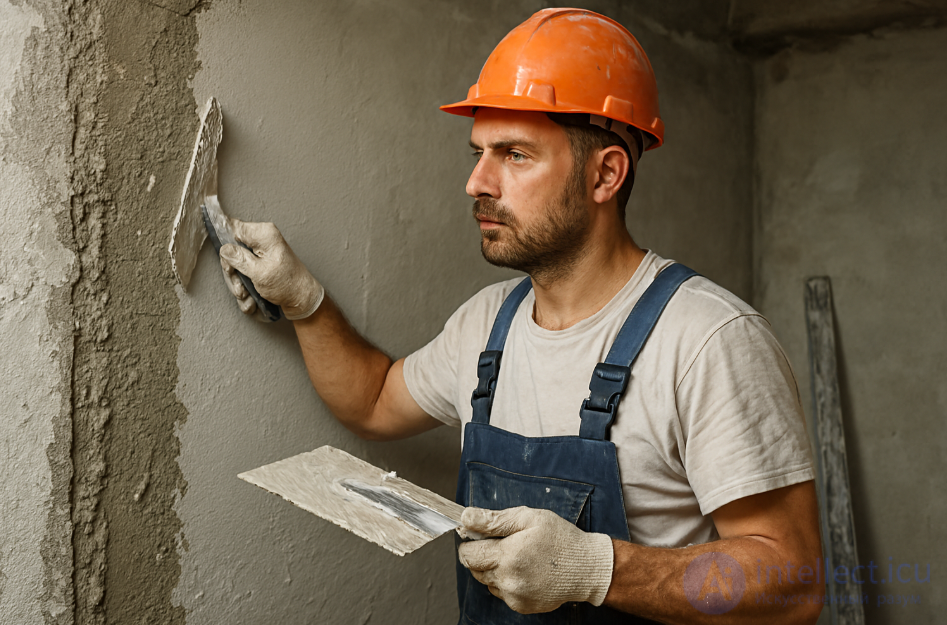
Working as a plasterer requires good physical fitness and the absence of a number of illnesses. Contraindications include:
Diseases of the central and peripheral nervous system
Epilepsy, narcolepsy, mental disorders
Chronic respiratory diseases
Serious impairments of vision, hearing and the vestibular apparatus
Allergies to construction materials
Diseases of the musculoskeletal system and cardiovascular system
A successful plasterer must possess:
Technical thinking and spatial imagination
Good hand-eye coordination
Patience, precision and composure
The ability to concentrate for long periods
A sense of colour and artistic taste (for decorative finishing)
The ability to work in a team and interact with the client
Basic or complete secondary education is required
Training takes place at vocational schools, colleges or on courses
Qualification grades are assigned (usually from II to IV)
A plasterer must know:
Types of plaster mixtures and methods of preparing them
Technologies for application, levelling and finishing
The design and maintenance of mechanized tools
The basics of labour protection and safety practices
| Country | Average salary/month |
|---|---|
| USA | $3,500–$5,000 |
| Germany | $2,800–$4,000 |
| Canada | $3,200–$4,500 |
| Poland | $1,200–$2,000 |
| Russia | $800–$1500 |
| Ukraine | $400–$700 |
| UAE | $1,500–$2,500 |
Salary depends on qualifications, experience, region and the type of work (interior/facade, decorative, etc.)
Dust-related bronchitis and allergies (from inhaling construction dust and dry building mortars)
Radiculitis, osteochondrosis, arthrosis (due to physical strain)
Impairments of vision and hearing (due to high noise from construction machinery and power tools)
Skin diseases (contact with chemicals)
Varicose veins (from prolonged standing work)
Construction painter
Tiler
Mosaic layer
Master of finishing construction works
Master of drywall construction

Comments