
Lecture
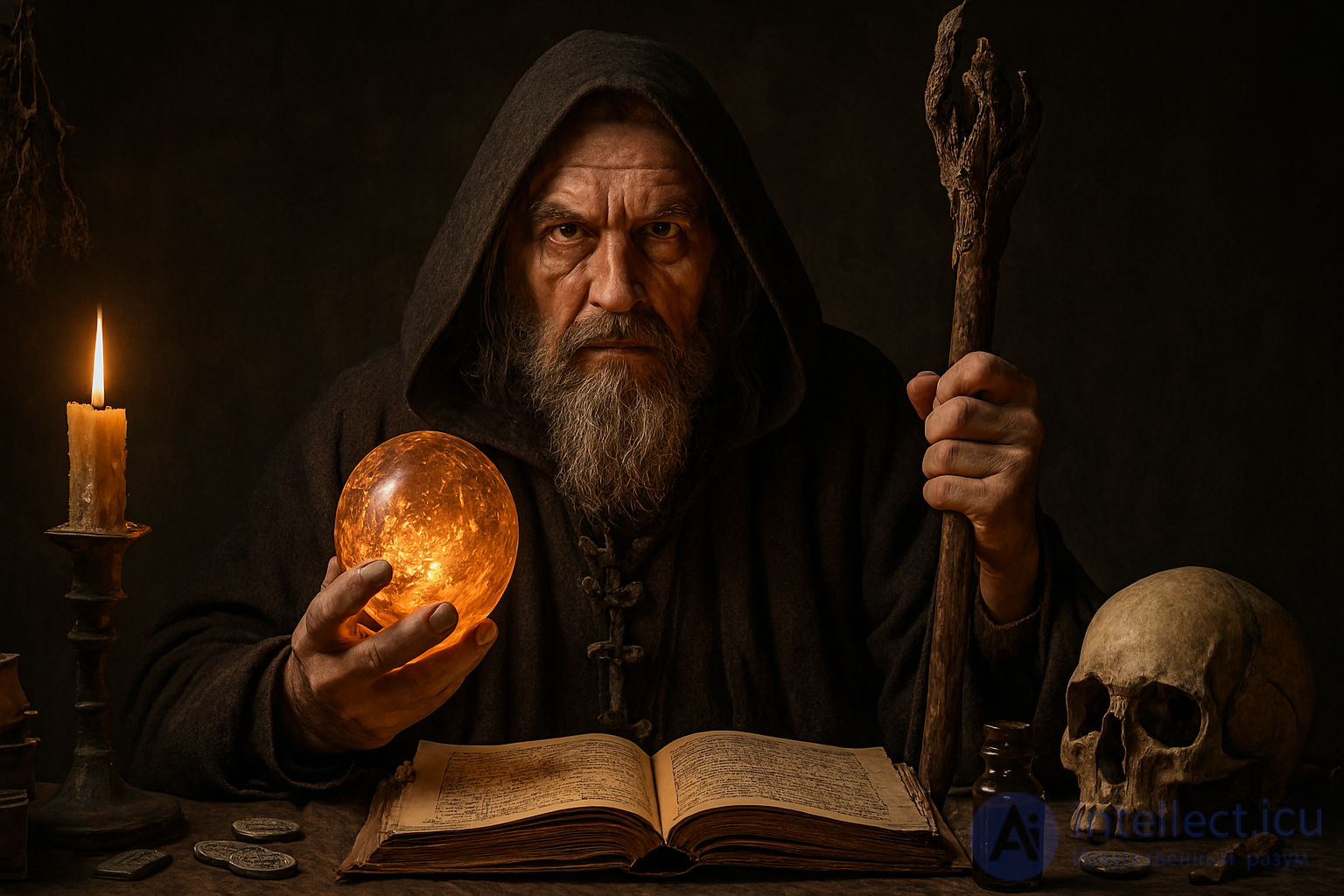
A sorcerer is a practitioner of magical, esoteric, or occult arts who uses knowledge of rituals, symbols, energy, psychology, and traditions to influence events, people, or their own state of being. In the modern world, the word «sorcerer» often encompasses several fields:
practicing mages and esotericists
tarot readers, rune readers, astrologers
shamans and practitioners of traditional beliefs
energy healers, bioenergy therapists
specialists in ritual magic
Despite its mystical aura, the profession requires discipline, knowledge, and well-developed intuition.
A sorcerer, also a wizard, enchanter, wiseman, or mage (Greek μάγος), originally a spell-caster or incanter, is a person who practices sorcery (witchcraft, magic) to influence people or nature, or to obtain knowledge or wisdom through supernatural phenomena. According to some beliefs, they possess special supernatural powers either from birth or as a result of a pact with evil forces.
Some researchers suggest that the word «sorcerer» (koldun) shares the same root as the word «Kolyada». The original meaning of the word sorcerer (spell-caster, incanter) brings it close to the word healer (one who charms away, a wizard). The word ved'un (the knowing one, that is, a «knowledgeable» person gifted with supernatural wisdom) originally denoted priests and clergy of ancient paganism, but later came to be applied to all sorcerers, that is, to mysterious people who, in the opinion of Christians, were predominantly inclined toward evil.
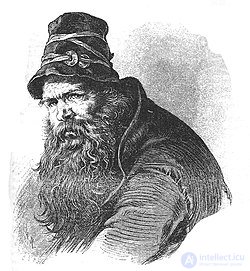
«The Sorcerer». A. O. Orlowski
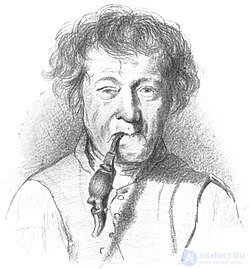
«The Sorcerer».
Drawing by Willibald von Schulenburg, 1877
A woman who practices magic is called a wizardess, a sorceress, an enchantress, a wisewoman, or a witch. According to court documents of the 15th—18th centuries, during the so-called «witch hunt» sorcerers, like witches, were persecuted and executed, including being burned at the stake. This took place both in Western Europe and in the Russian state.
A wizard is a fairy-tale hero who performs miracles. The image of the wizard appears in the folklore of virtually all peoples. An archetypal wizard is, for example, Merlin from the cycle of legends about King Arthur.
In addition to wizards of this kind, fairy tales feature so-called magical helpers who aid the main character (for example, the Grey Wolf from the tale of Ivan Tsarevich and the Grey Wolf). In the 20th century, authors of literary fairy tales and fantasy used the image of the magical helper, but with significant changes. In such an interpretation, the helper ceased to be a powerless being, a tool appearing at the right moment — instead, it actively drew the hero into adventures and subsequently turned out to be almost one of the most important characters.
Novels about wizards for a young-adult audience became popular in the 1950s, associated with the names of writers such as Clive Lewis, Ursula Le Guin, Diana Wynne Jones, and Robert Asprin. This was also aided by the support of the film industry, which brought the image of the wizard to the screen.
Whereas earlier the characteristic plots were about «experienced» wizards and their adventures, in the late 1990s and early 21st century plots about «how to become a wizard» became popular. Their hero became an ordinary child who is trained in special schools of magic (Joanne Rowling's cycle of novels about Harry Potter, Nikos Zervas's trilogy «The Science of Winning»).
There are no formal medical requirements, but for a sustainable practice the following are important:
a healthy nervous system — the work involves emotional strain
good eyesight and motor skills — for rituals and working with small objects
resilience to stress
a normal sleep schedule — many practitioners work at night
This activity is contraindicated for people with pronounced mental disorders, epilepsy, or a tendency toward hallucinations.
The psychological profile of a successful sorcerer includes:
well-developed intuition
the ability for deep concentration
empathy and the ability to work with people
self-discipline
resilience to criticism and skepticism
the ability to maintain emotional distance
Also important is the ability to analyze information and not give in to one's own fantasies.
There are no official state standards, but the following exist:
esoteric schools
courses in tarot, runes, astrology
training in shamanic practices
schools of bioenergetics
Most practitioners study:
mythology
psychology
symbolism
religious studies
the history of magical traditions
Usually confirmed by:
certificates from private schools
client reviews
experience and reputation
Sorcerers' incomes depend heavily on:
popularity
specialization
country
work format (online/offline)
Below are the averaged income ranges of practicing esotericists and mages.
| Country | Average monthly income |
|---|---|
| USA | $2,000 – 12,000 |
| China | $800 – 4,000 |
| Russia | $300 – 2,000 |
| Ukraine | $200 – 1,500 |
| India | $150 – 1,200 |
| South Africa | $300 – 2,500 |
| Egypt | $150 – 1,000 |
| Israel | $1,000 – 6,000 |
In the USA and Israel, the esoteric market is developed and commercialized. In India and Egypt, some practices belong to traditional religious functions, which reduces profitability. In the CIS countries, incomes depend heavily on reputation and media presence.
Although the profession is unofficial, typical problems occur frequently:
emotional burnout
depression and anxiety
sleep disorders
psychosomatic disorders
dependence on client approval
loss of boundaries and personal energy
Practitioners who work with people often develop a «rescuer syndrome».
The profession of sorcerer is one of the oldest in human history. Its origins go back to the Paleolithic era, when the first shamans served the role of:
intermediaries between people and spirits
healers
keepers of tribal knowledge
soothsayers
Archaeologists find evidence of shamanic practices 20–30 thousand years old: ritual masks, drums, figurines, cave depictions of people in «trance-like» poses.
In ancient times, the sorcerer was not merely a specialist — he was the center of the social structure, a person who explained the world, healed, protected, and guided.
In the ancient world, sorcerers existed alongside priests and philosophers. They were called:
mages (from Persian magush)
magi (volkhvy)
druids
diviners
They engaged in:
astrology
herbalism
ritual magic
fortune-telling
alchemy
In the Middle Ages, the profession became dangerous: the church declared magic to be heresy. But despite persecution, sorcerers continued to exist — in villages, secret societies, and among alchemists and mystics.
With the development of science, sorcery did not disappear but was transformed:
the occult movement of the 19th century emerged (Theosophy, the Hermetic Order of the Golden Dawn)
magic became part of cultural and philosophical currents
in the 20th century, the modern witchcraft tradition — Wicca — arose
esotericism became a commercial field: fortune-tellers, astrologers, bioenergy therapists
The sorcerer ceased to be a secret figure and became a public consultant.
Here I list people who, in culture and history, are associated with magical practices — regardless of how real or mythologized their activities were.
French astrologer and physician, author of the famous «Centuries». He was regarded as a prophet, and he became a symbol of predictive magic.
Mystic, healer, and political advisor at the court of the Romanovs. His influence and the legends surrounding him made him one of the most famous «sorcerers» of the 20th century.
Occultist, creator of the philosophy of Thelema, member of the Hermetic Order of the Golden Dawn. One of the most influential mages of modern times.
A collective image of the priests and mages of the pre-Christian era. They were keepers of knowledge, soothsayers, and healers.
Their traditions are among the most ancient and best-preserved. They are still considered bearers of magical practices.
Will the profession of sorcerer disappear?
No. And here is why.
A sorcerer works with:
human fears
hopes
symbols
archetypes
AI can analyze, but it will not replace the emotional and symbolic component.
Even in technologically advanced countries, interest is growing in:
astrology
tarot
meditation
energy practices
The more technology there is, the stronger the pull toward the irrational.
The sorcerers of the future will use:
AI for analyzing natal charts
neural networks for creating ritual visualizations
digital oracles
virtual ritual spaces
This will not abolish the profession, but will change it.
The sorcerer of the future is a hybrid of:
an esotericist
a psychologist
a coach
a mediator
a specialist in symbolic systems
The sorcerer as an image unites many fields. Related professions:
tarot reader
astrologer
rune reader
shaman
wiseman / wisewoman
bioenergy therapist
psychic
medium
occultist
specialist in ritual magic
parapsychologist
hypnologist
spiritual mentor

Comments