
Lecture
A footballer is a professional athlete who plays as part of a football team. Their main task is to help the team win by scoring goals into the opponent's net and defending their own. This is one of the most popular and prestigious professions in the world of sport, requiring exceptional physical and psychological qualities, as well as complete dedication.
Depending on their position on the pitch, a footballer's responsibilities include:
Goalkeeper: defending the goal, coordinating the defence, dealing with balls out of the box.
Defender: blocking the opponent's attacks, covering teammates, initiating attacks.
Midfielder: organising attacks, helping in defence, controlling the tempo of the game.
Forward: creating goal-scoring opportunities, finishing attacks, putting pressure on the opponent's defence.
Additionally:
Taking part in training and tactical sessions.
Maintaining a sporting regimen (sleep, nutrition, recovery).
Representing the club at events and in the media.
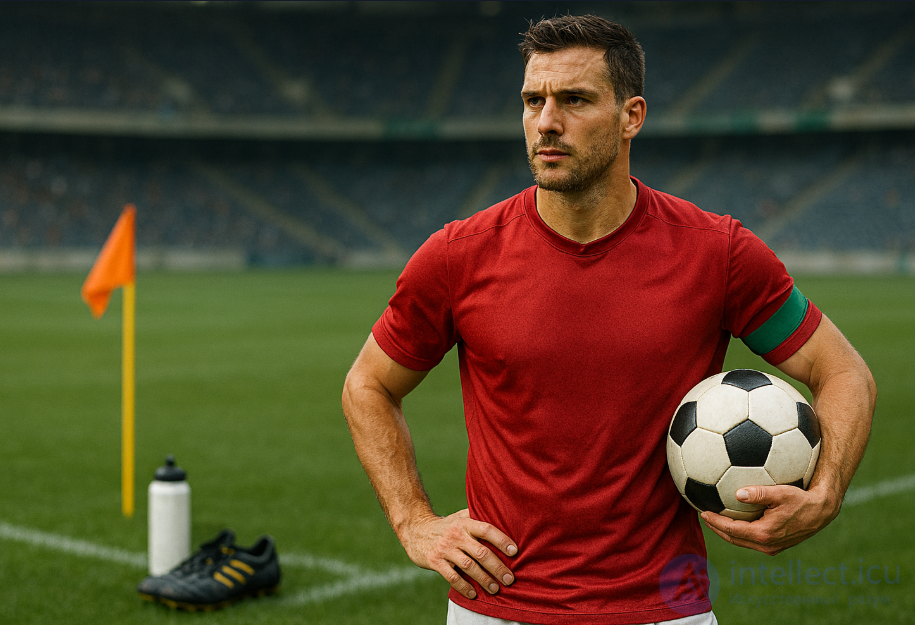
A footballer must have:
Excellent endurance and cardiorespiratory system.
Healthy joints, especially the knees and ankles.
Good coordination, reflexes and vision.
No chronic illnesses that interfere with intense physical exertion.
Young age
Regular medical check-ups and physical fitness tests are mandatory.
Stress resistance: the ability to maintain concentration under pressure.
Team spirit: the ability to work within a group.
Motivation and discipline: daily training requires inner strength.
The ability to cope with setbacks: defeats are part of the career.
No formal higher education is required, but a footballer's path usually begins with:
Children's and youth football schools.
Academies attached to professional clubs.
Participation in competitions and tournaments.
For a coaching or managerial career after finishing playing, it is advisable to obtain specialised education (for example, sports management or a coaching licence).
| Region | Average annual salary | Note |
|---|---|---|
| England (Premier League) | $2,000,000 – $5,000,000 | Stars earn more |
| Germany (Bundesliga) | $1,000,000 – $3,000,000 | Depends on the club |
| USA (MLS) | $300,000 – $1,500,000 | Growing market |
| Russia (RPL) | $500,000 – $3,000,000 | Top clubs pay more |
| South America | $100,000 – $500,000 | Varies by country |
| Africa/Asia | $50,000 – $300,000 | Depends on the league |
Superstars such as Cristiano Ronaldo can earn more than $200 million a year, including advertising and bonuses.
Footballers are prone to:
Knee injuries (ligament tears, meniscus).
Ankle and muscle injuries.
Chronic pain in the back and pelvis.
Psychological overload (depression, anxiety).
Post-traumatic arthritis.
After finishing their career or in adjacent fields, a footballer can become:
A coach (youth, club, national).
A football analyst or commentator.
A sports manager or agent.
A scout — a talent-spotting specialist.
A physiotherapist or sports doctor.
A marketer in the sports industry.

Comments