
Lecture
Neuroses (neurotic disorders) are a large group of psychogenic disorders that include symptoms of depression, anxiety, obsessive states, and somatic changes. All of these symptoms have a chronic, relapsing (wave-like) course, with periods of exacerbation and improvement.
Classification
With the introduction into practice of the 10th revision of the International Classification of Diseases (ICD-10), the nomenclature of borderline mental disorders underwent substantial changes. Perhaps the most difficult to understand and the most debatable was the removal from the classification of the concept of "neurosis," which had existed in psychiatry for over 200 years, while the definitions "neurotic" and "neurosis-like" were retained. Nevertheless, the absence of the traditional division into neuroses and psychoses, the considerable attention given to behavioral disorders, and the presentation of most disorders as syndromic categories contributed to a significant expansion of the diagnostic capabilities of borderline psychiatry, and to the clarification and delineation of its concepts. At the same time, this made the already hard-to-distinguish boundaries between "major" and "minor" psychiatry even less definable, and created difficulties in designating the endogenous and the psychogenic. In particular, when diagnosing a depressive episode, ICD-10 proposes that the so-called somatic symptom be recorded by those who wish to do so, allowing for the possibility of disregarding it without losing other information. In practice, distinguishing schizotypal personality disorder both from schizoid personality disorder and from various forms of slow-progressing (sluggish) schizophrenia also proves quite difficult.
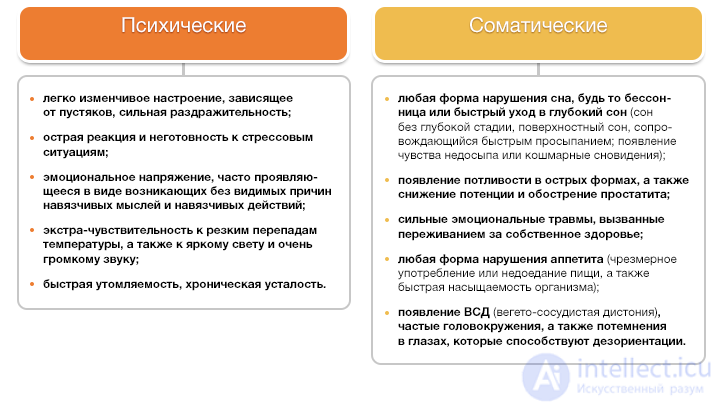
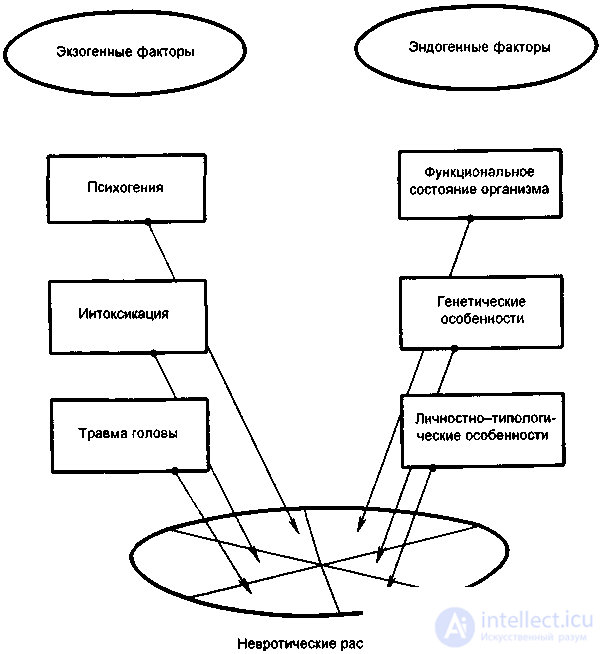
The foregoing predetermined the emergence of numerous and at times heated discussions, both at various scientific forums and in the professional press, including in "MG" [Meditsinskaya Gazeta], concerning the imperfection and "Americanization" of ICD-10 and the need to develop a domestic psychiatric classification. Nevertheless, given that ICD-10 is the classification currently in force and that no domestic classification exists, we present our view of borderline mental pathology in accordance with the former. Based on the above, borderline mental disorders may include the following:
1. Organic, including symptomatic, mental disorders (F-06):
2. Mood disorders (affective disorders) (F-3):
3. Neurotic, stress-related, and somatoform disorders (F-4):
4. Behavioral syndromes associated with physiological disturbances and physical factors (F-5):
5. Disorders of adult personality and behavior (F-6).
Course
Borderline mental disorders may arise acutely or develop gradually, and their duration may be limited to a brief reaction, a prolonged state, or a chronic course. Most patients recover as a result of treatment or, in the case of reactions, even without it. However, in 20-40% of patients the course of the illness may become remitting and recurrent, substantially reducing patients' level of social functioning, though it never leads to disability.

Comments