Preparing for a psychiatry test or exam can be a challenge that requires systematic study and self-assessment. In this article, we invite you to review 100 tests and diagram-based cheat sheets on psychiatry, complete with answers, to help you strengthen and check your preparation for the test or exam. Studying and understanding your own psychological makeup is an important aspect of self-development and self-awareness. In our complex and rapidly changing world, mental health is becoming an increasingly relevant topic. One way to gain a deeper understanding of yourself and your mental state is by taking psychiatry tests. In this article, we invite you to explore 100 psychiatry tests with corresponding answers to help you become aware of your emotions, thoughts, and behavior.
-
The value of psychiatry tests: Psychiatry tests are a valuable tool for self-checking and reinforcing what you have learned. They help you assess your knowledge and identify areas that require additional preparation.
-
The testing process: Taking psychiatry tests should be viewed as an individual investigative process. It is important to answer the questions honestly and openly in order to get more accurate results. Write down your answers so that you can later analyze them.
-
Main areas covered by the tests: Psychiatry tests can cover a wide range of mental states and disorders, such as anxiety, depression, stress, psychoses, and others. They may also address personality traits, behavioral patterns, and stress resilience levels.
-
Interpreting the results: After taking the tests, it is important to carefully analyze your answers and their results. Pay attention to the areas where you may be experiencing difficulties. Test results are not a final diagnosis, but they can serve as a starting point for further self-observation and discussion with a qualified specialist.
-
Seeking professional help: If the test results cause you concern or you feel significant difficulties in everyday life, it is recommended that you consult a professional psychiatrist or psychologist. They will be able to analyze your situation more thoroughly, make a diagnosis, and offer appropriate help.
-
Working with practical assignments: In addition to theoretical tests, pay attention to practical assignments, which may include analyzing clinical cases, drawing up treatment plans, or differential diagnosis. Practical assignments will help you apply theoretical knowledge in practice.
1. Exogenous-organic mental illnesses include:
- 1) Mental disorders in cardiovascular diseases
- 2) Mental disorders in cerebrovascular diseases
- 3) Mental disorders in gastrointestinal diseases
- 4) Mental disorders in traumatic brain injuries
- 5) Mental disorders in brain tumors
- 6) Mental disorders in infectious diseases
- 7) Mental disorders in neuroinfections
answer 2,4,5,7
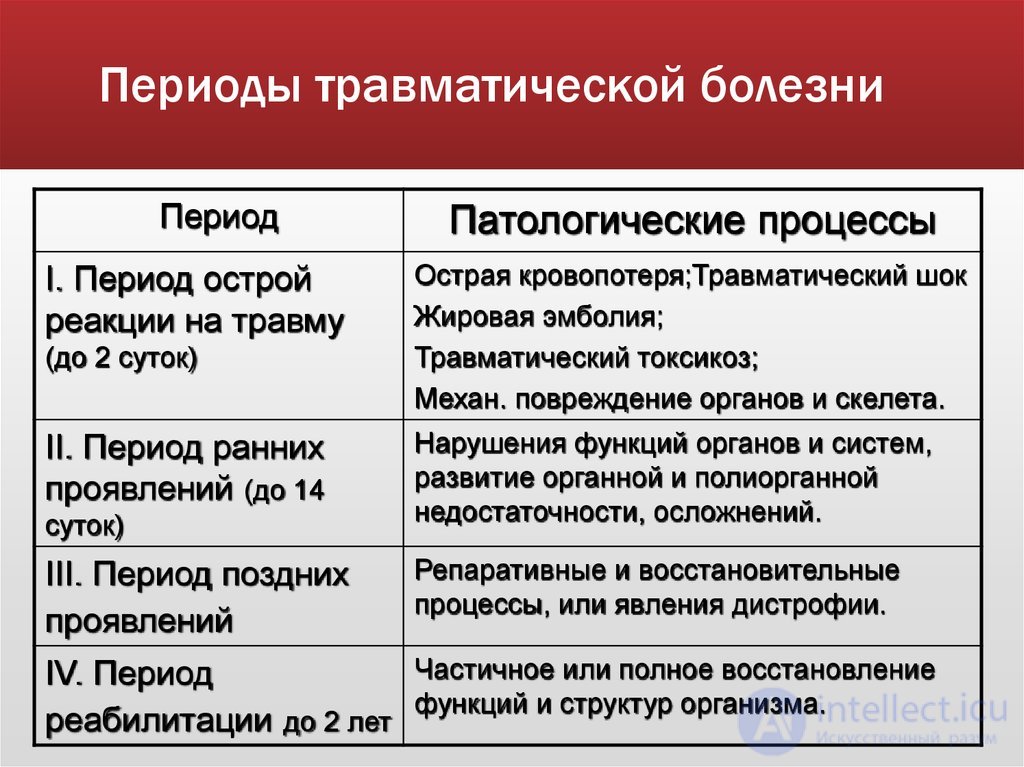
2. The course of traumatic disease includes the following periods:
- 1. Initial, late
- 2. Initial, acute, remote consequences
- 3. Initial, subacute, late
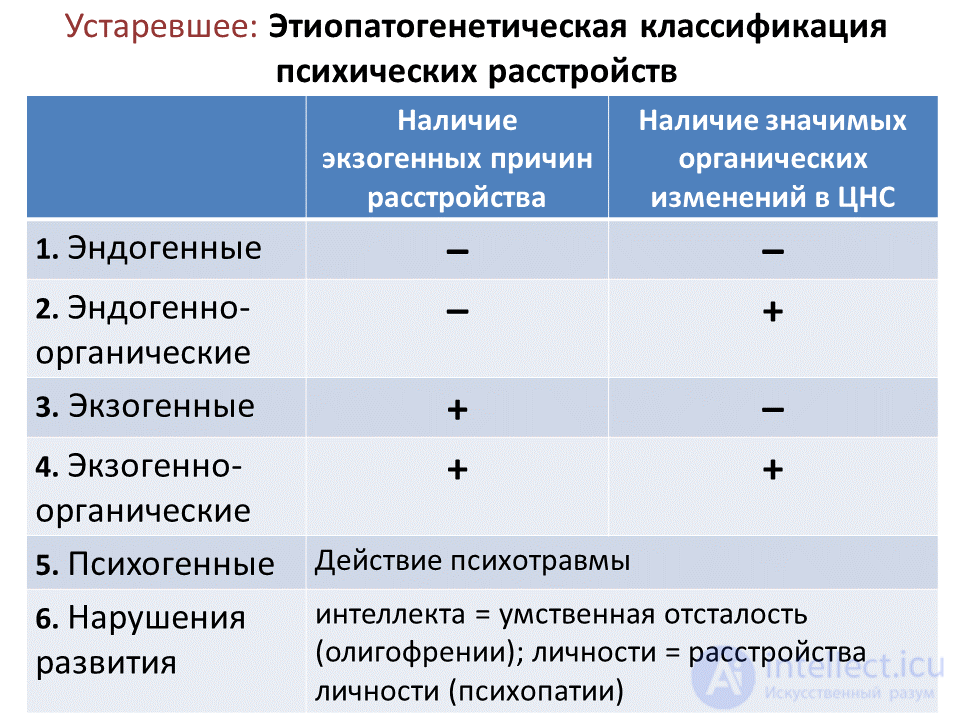
- 4. Acute, late, remote consequences
- 5. Initial, acute, late, remote consequences
- 6. Initial, acute, subacute
answer: 5
3. The cross-cutting mental disorders in traumatic brain injury are:
- 1. General cerebral
- 2. Twilight state
- 3. Asthenic
- 4. Delirious
- 5. Delusional
- 6. Psychoorganic
- 7. Hallucinatory-delusional
answer: 3
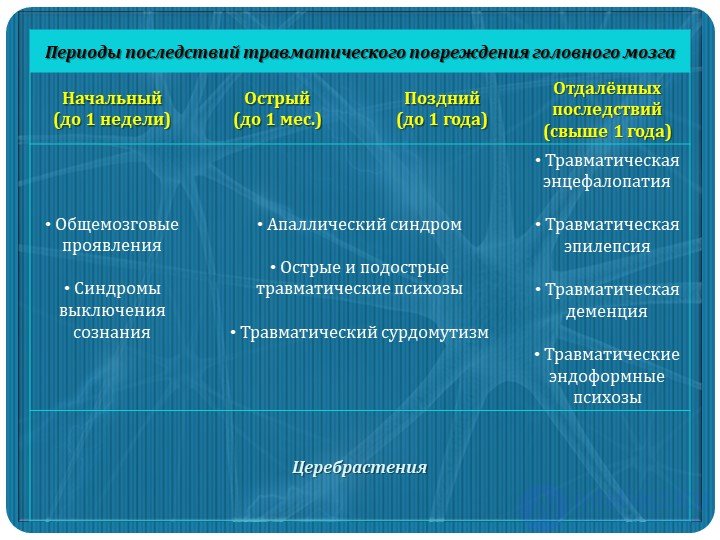
4. The following mental disorders (syndromes) are most characteristic of the initial period of traumatic brain injury:
- 1. Organic brain damage
- 2. General cerebral
- 3. Hallucinatory-delusional
- 4. Loss of consciousness
- 5. Clouding of consciousness
answer: 2 5
5. Acute (subacute) traumatic psychoses include:
- 1. Twilight state of consciousness
- 2. Delirium
- 3. Amentia
- 4. Reactive psychosis
- 5. Korsakoff's psychosis
- 6. Paraphrenic psychosis
answer: 1 2 3 5
6. The most common traumatic psychosis of the acute period is:
- 1. Twilight state of consciousness*
- 2. Delirium
- 3. Amentia
- 4. Oneiroid
- 5. Korsakoff's psychosis
- 6. Affective psychoses
- 7. Hallucinatory-delusional psychoses
answer: 1
7. In injury from an air blast wave, the most specific mental disorders are
- 1. Traumatic encephalopathy
- 2. Traumatic epilepsy
- 3. Traumatic dementia
- 4. Traumatic endoform psychoses
- 5. Traumatic surdomutism*
- 6. Traumatic cerebrasthenia
answer:5
8. For all patients with traumatic brain injury, it is mandatory to prescribe:
- 1. Bed rest*
- 2. Antibiotics
- 3. Tranquilizers
- 4. Antihypertensive agents
- 5. Psychotherapeutic procedures
- 6. Physiotherapeutic procedures
answer:1
9. Epilepsy belongs to:
- 1. Endogenous diseases
- 2. Endogenous-organic diseases*
- 3. Exogenous diseases
- 4. Exogenous-organic diseases
answer:2
10. An aura is:
- 1. A precursor of a convulsive seizure
- 2. The initial stage of a seizure*
- 3. A complication of a seizure
- 4. A minor epileptic seizure
answer:2
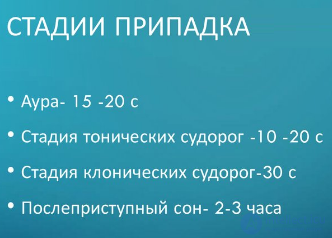
11. The sequence of stages of a grand mal seizure is as follows:
- 1. Aura, tonic phase, clonic phase, phase of generalization of convulsions, postictal sleep
- 2. Aura, clonic phase, tonic phase, postictal sleep
- 3. Aura, tonic phase, clonic phase, postictal sleep*
- 4. Aura, clonic phase, tonic phase, phase of generalization of convulsions, sleep
answer:3
12. A Jacksonian seizure belongs to:
- 1. Grand mal seizures
- 2. Petit mal seizures
- 3. Focal seizures*
- 4. Nonconvulsive paroxysms
answer:3
13. Patients with epilepsy are characterized by:
- 1. Viscosity and circumstantiality of thinking*
- 2. Rambling reasoning and inconsistency of judgment
- 3. Fragmentation of thinking
- 4. Acceleration of the pace of thinking
answer:1
14. Status epilepticus is ...
- 1. A mental state of a patient with epilepsy
- 2. The patient's state during a seizure
- 3. A series of seizures following one another continuously*
answer:3
15. Paroxysmal disorders are subdivided into:
- 1. prodromal, convulsive, generalized
- 2. prodromal, convulsive, nonconvulsive
- 3. prodromal, convulsive, nonconvulsive, generalized*
- 4. prodromal, generalized
- 5. convulsive, nonconvulsive
- 6. convulsive, generalized
answer:3
16. A petit mal seizure belongs to:
- 1. generalized convulsive paroxysms*
- 2. focal convulsive paroxysms
- 3. nonconvulsive paroxysms
answer:1
17. Name the date the Department of Mental Diseases of the St. Petersburg Medical-Surgical Academy was established:
answer:2
18. Who is the founder of the first Russian department of psychiatry?:
- 1. Balinsky I.M.*
- 2. Bekhterev V.M.
- 3. Osipov V.P.
answer:1
19. Indicate the date the specially built clinic building for mental diseases of the Military Medical Academy was opened:
answer:2
20. Who headed the Department of Psychiatry of the Military Medical Academy during the years of the Great Patriotic War?:
- 1. Osipov V.P.
- 2. Timofeev N.N.
- 3. Chistovich A.S.
answer:
21. Since what time was the course of psychiatry taught at the Medical-Surgical Academy by P.D. Shipulinsky?:
answer:1
22. Who compiled the first psychiatry textbook for students of the Medical-Surgical Academy (1859) - lectures on mental diseases?:
- 1. Balinsky I.M.*
- 2. Merzheevsky I.P.
- 3. Shipulinsky P.D.
answer:1
23. On the basis of which psychiatric institution was the teaching of mental diseases at the Medical-Surgical Academy first organized?:
- 1. Hospital of St. Nicholas the Wonderworker
- 2. Admiralty Hospital
- 3. 2nd Military Land Hospital*
answer:3
24. Which outstanding scientists have memorial plaques installed on the facade of the building of the Department and Clinic of Psychiatry of the Military Medical Academy?:
- 1. Osipov V.P.*
- 2. Kandinsky V.Kh.
- 3. Bekhterev V.M.*
- 4. Balinsky I.M.
- 5. Korsakov S.S.
- 6. Pavlov I.P.
answer:1 3
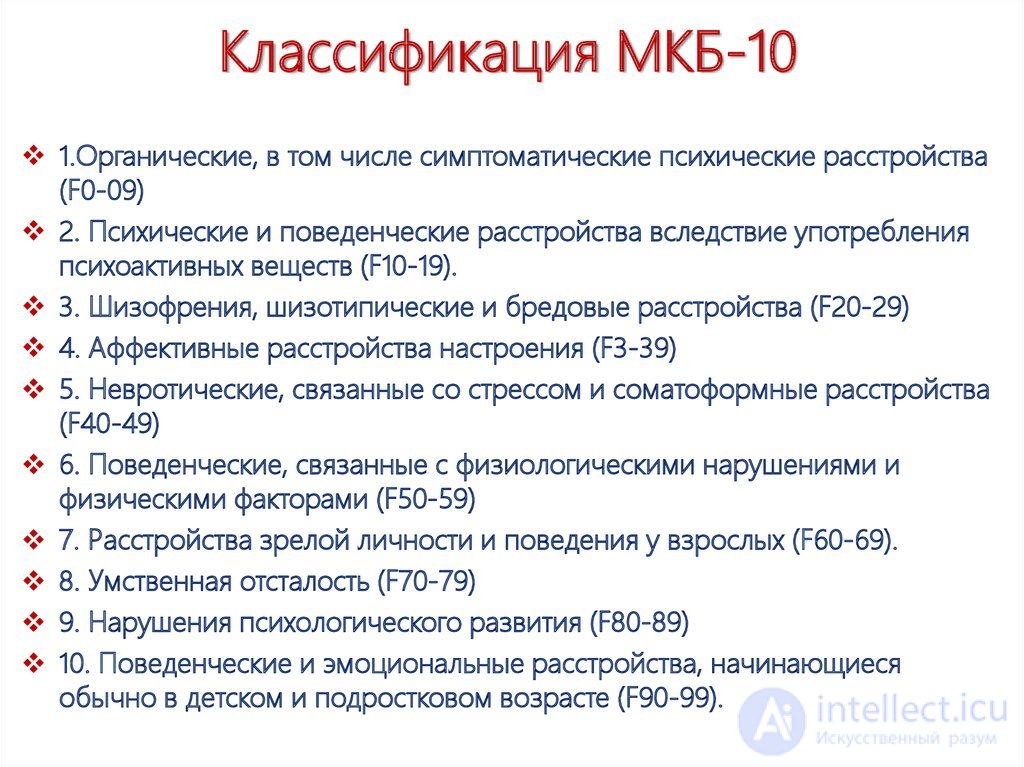
25. At present, the main classification of mental illnesses in our country is considered to be:
- 1. Etiopathogenetic classification of diseases.
- 2. DSM-IV classification.
- 3. Clinical classification of diseases.
- 4. ICD-10 classification.*
- 5. ICD-9 classification.
answer:4
26. The classifying features in the etiopathogenetic classification of mental illnesses are:
- 1. The presence (or absence) of a morphological substrate of brain damage.
- 2. The etiological factor of the onset of a mental illness.
- 3. The presence (or absence) of an etiopathogenetically significant external influence.
- 4. Features of the pathogenesis of the formation of a mental illness.
- 5. The presence (or absence) of a morphological substrate of brain damage and of an etiopathogenetically significant external influence.*
answer:5
27. Endogenous mental illnesses are characterized by:
- 1. The presence of a morphological substrate of brain damage and of an etiopathogenetically significant external influence.
- 2. The absence of a morphological substrate of brain damage and of an etiopathogenetically significant external influence.*
- 3. The presence of a morphological substrate of brain damage, but the absence of an etiopathogenetically significant external influence.
- 4. The absence of a morphological substrate of brain damage, but the presence of an etiopathogenetically significant external influence.
answer:2
28. Exogenous mental illnesses are characterized by:
- 1. The presence of a morphological substrate of brain damage and of an etiopathogenetically significant external influence.
- 2. The absence of a morphological substrate of brain damage and of an etiopathogenetically significant external influence.
- 3. The presence of a morphological substrate of brain damage, but the absence of an etiopathogenetically significant external influence.
- 4. The absence of a morphological substrate of brain damage, but the presence of an etiopathogenetically significant external influence.*
answer:4
29. Endogenous-organic mental illnesses are characterized by:
- 1. The presence of a morphological substrate of brain damage and of an etiopathogenetically significant external influence.
- 2. The absence of a morphological substrate of brain damage and of an etiopathogenetically significant external influence.
- 3. The presence of a morphological substrate of brain damage, but the absence of an etiopathogenetically significant external influence.*
- 4. The absence of a morphological substrate of brain damage, but the presence of an etiopathogenetically significant external influence.
answer:3
30. Exogenous-organic mental illnesses are characterized by:
- 1. The presence of a morphological substrate of brain damage and of an etiopathogenetically significant external influence.*
- 2. The absence of a morphological substrate of brain damage and of an etiopathogenetically significant external influence.
- 3. The presence of a morphological substrate of brain damage, but the absence of an etiopathogenetically significant external influence.
- 4. The absence of a morphological substrate of brain damage, but the presence of an etiopathogenetically significant external influence.
answer:1
31. Which of the following illnesses are usually classified as endogenous?
- 1. Oligophrenias
- 2. Substance addictions
- 3. Manic-depressive psychosis*
- 4. Reactive psychoses
- 5. Schizophrenia*
- 6. Epilepsy
- 7. Alcoholism
- 8. Psychopathies
- 9. Neurotic states
answer:3 5
32. Which of the following illnesses are usually classified as exogenous?
- 1. Oligophrenias
- 2. Substance addictions*
- 3. Manic-depressive psychosis
- 4. Reactive psychoses
- 5. Schizophrenia
- 6. Epilepsy
- 7. Alcoholism*
- 8. Psychopathies
- 9. Neurotic states
answer:2 7
33. Which of the following illnesses are usually classified as psychogenic?
- 1. Oligophrenias
- 2. Substance addictions
- 3. Manic-depressive psychosis
- 4. Reactive psychoses*
- 5. Schizophrenia
- 6. Epilepsy
- 7. Alcoholism
- 8. Psychopathies
- 9. Neurotic states*
answer: 4 9
34. Which of the following illnesses are usually classified as endogenous-organic?
- 1. Oligophrenias
- 2. Substance addictions
- 3. Manic-depressive psychosis
- 4. Reactive psychoses
- 5. Schizophrenia
- 6. Epilepsy*
- 7. Alcoholism
- 8. Psychopathies
- 9. Neurotic states
answer: 6
35. The tiered classification of mental health adopted in our country provides for dividing military personnel into:
- 1. 3 mental health groups.
- 2. 4 mental health groups.
- 3. 5 mental health groups.*
- 4. 6 mental health groups.
answer:3
36. General psychopathology is:
- 1. Part of the section "General Psychiatry"*
- 2. An independent branch of clinical psychiatry
- 3. Includes the section "General Psychiatry"
- 4. Part of medical psychology
answer:1
37. General psychiatry is:
- 1. A branch of the physiology of higher nervous activity
- 2. A branch of general pathology*
- 3. A branch of medical psychology
- 4. An independent philosophical discipline
answer:2
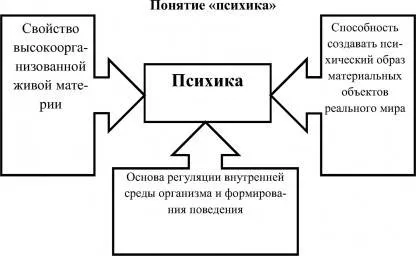
38. The psyche is defined as:
- 1. A state of the soul
- 2. A special property of highly organized matter*
- 3. The result of environmental influence
answer:2
39. A psychopathological symptom is:
- 1. An unambiguous, one-dimensional sign
- 2. An ambiguous, multidimensional sign*
answer:2
40. A psychopathological syndrome is defined as:
- 1. A combination of symptoms
- 2. A typical set of regularly interrelated symptoms*
- 3. A dynamic set of individual signs
answer:2
41. In humans, the psyche is manifested in the following forms:
- 1. Mental properties of personality*
- 2. Psychodiagnostics
- 3. Mental states*
- 4. Psychoprophylaxis
- 5. Mental processes*
- 6. Psychotherapy
answer:1 3 5
42. Mental status represents:
- 1. A set of signs of mental disorders
- 2. A characterization of the preserved elements of mental activity
- 3. An overall assessment of mental activity as a whole
- 4. A description of the patient's current mental state.*
answer:4
43. Sensopathies belong to:
- 1. Pathology of emotions
- 2. Pathology of drives
- 3. Psychosensory disorders
- 4. Pathology of sensations*
answer:4
44. Senestopathies are characterized by:
- 1. Impairment of consciousness
- 2. The unusual character of the sensations experienced*
- 3. The experience of distorted perception of external objects
- 4. Distressing, agonizing, unpleasant sensations*
- 5. A stable mood background
- 6. The presence of pronounced somato-neurological pathology
answer:2 4
45. Illusions occur in:
- 1. Mentally healthy people
- 2. In various mental disorders
- 3. Both mentally healthy and mentally ill persons*
answer:3
46. Affective illusions belong to:
- 1. Sensopathies
- 2. Pathological illusions*
- 3. Psychosensory disorders
- 4. Functional hallucinations
answer:2
47. Prognostically favorable are hallucinations that are:
- 1. Visual*
- 2. Olfactory
- 3. Pseudohallucinations
- 4. Gustatory
- 5. True*
- 6. Tactile
answer:1 5
48. True hallucinations are characterized by:
- 1. Projection of hallucinatory images "inward"
- 2. Sensory vividness, liveliness*
- 3. The presence of a critical attitude
- 4. Mnestic disorders
answer:2
49. The classic description of pseudohallucinations belongs to:
- 1. I.M. Balinsky
- 2. V.Kh. Kandinsky*
- 3. V.P. Osipov
- 4. S.S. Korsakov
answer:2
50. Pseudohallucinations are characterized by:
- 1. Projection of hallucinatory images "outward"
- 2. A feeling of "forcedness", "made-ness"*
- 3. Sensory vividness, liveliness
- 4. Pronounced asthenic manifestations
answer:2
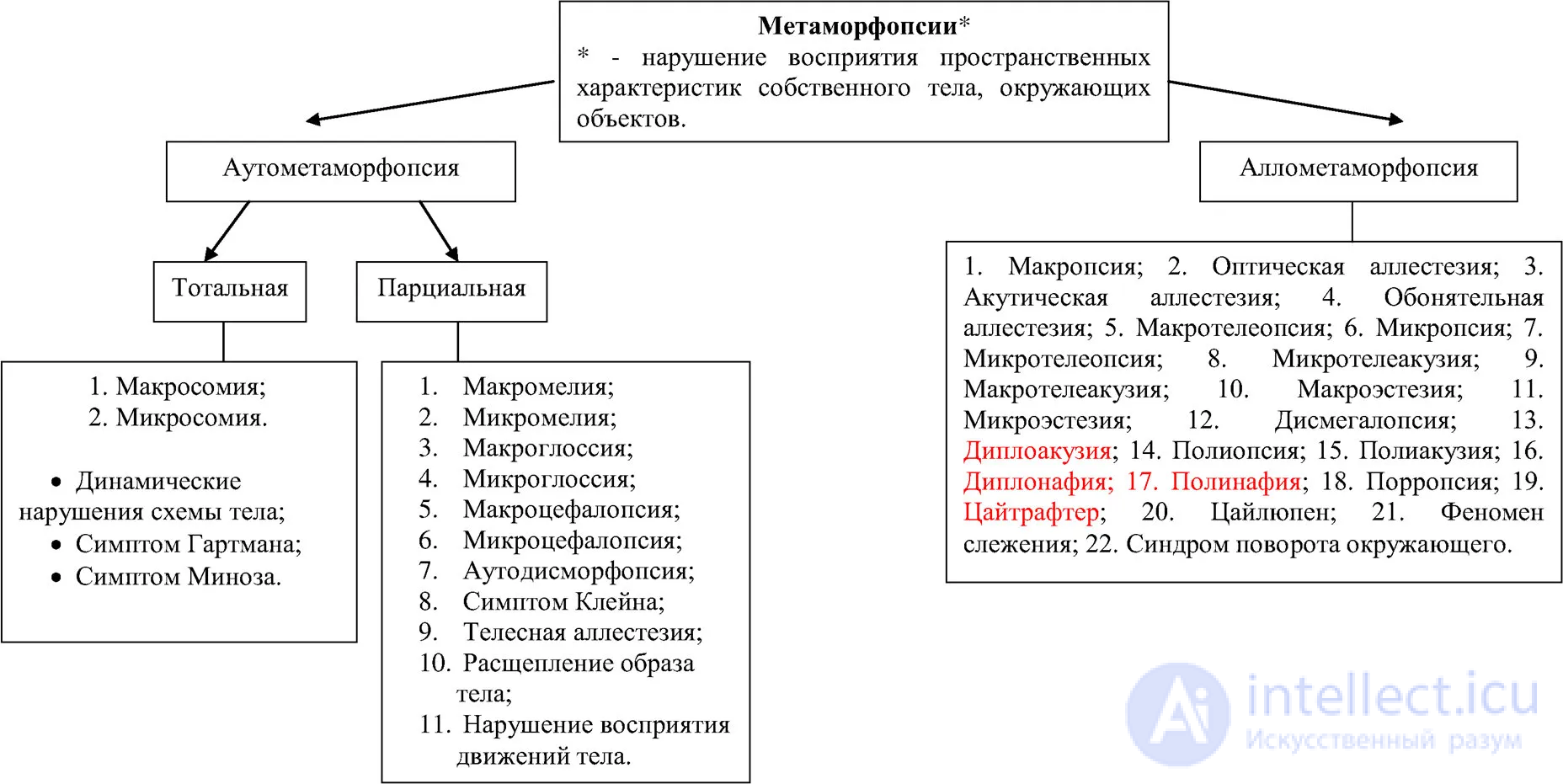
51. Autometamorphopsias belong to:
- 1. Sensopathies
- 2. Dementia
- 3. Psychosensory disorders*
- 4. Pseudohallucinations
- 5. Memory disorders
answer: 3
52. Metamorphopsias are:
- 1. Distortion of the perception of the shape or size of one's own body
- 2. Impairment of orientation with respect to one's own personality
- 3. Impairment of the perception of the size and shape of objects and space*
answer: 3
53. Incoherence and fragmentation of thinking belong to:
- 1. Delusional ideas
- 2. Disorders of thinking in terms of the tempo of the associative process
- 3. Obsessions
- 4. Disorders of thinking in terms of the coherence of the associative process*
- 5. Overvalued ideas
answer: 4
54. Circumstantiality of thinking and thought blocking (sperrung) belong to:
- 1. Overvalued ideas
- 2. Disorders of thinking in terms of the tempo of the associative process*
- 3. Obsessive ideas
- 4. Delusional ideas
- 5. Disorders of thinking in terms of the coherence of the associative process
answer: 2
55. Delusional ideas are a sign of:
- 1. Disorders of the neurotic level
- 2. Disorders of the psychotic level*
- 3. May be observed at any of the above levels
- 4. May be observed both in mentally healthy and mentally ill persons
answer: 2
56. By content, delusional ideas of influence and poisoning belong to the group of delusional ideas of:
- 1. Grandeur
- 2. Self-abasement
- 3. Persecution*
answer: 3
57. By the mechanism of delusion formation, the following are distinguished:
- 1. Paralogical delusion- absurd delusion
- 2. Interpretive delusion- imagistic delusion*
- 3. Fragmentary delusion- systematized delusion
answer: 2
58. Hypsophobia is a fear of:
- 1. Sharp objects
- 2. Contamination
- 3. Heights*
- 4. Enclosed spaces
- 5. Water
answer: 3
59. Obsessive memories belong to the group of:
- 1. Obsessive fears
- 2. Obsessive urges
- 3. Ideomotor obsessions*
- 4. Compulsive actions
answer: 3
60. The main features of delusional ideas are:
- 1. False content*
- 2. Conviction in their correctness*
- 3. Duration of course
- 4. Absurd hallucinations
- 5. Inaccessibility to correction*
- 6. Pronounced affective disorders
- 7. Memory impairment
answer: 1 2 5
61. The main features of obsessive ideas are:
- 1. Disturbances of consciousness
- 2. Involuntary occurrence*
- 3. Attention disorder
- 4. Signs of dementia
- 5. Preservation of a critical attitude toward the obsessions*
answer: 2 5
62. The main features of overvalued ideas are:
- 1. Presence of hallucinations
- 2. Connection of onset with real events*
- 3. Absurd content
- 4. One-sided reflection of real circumstances*
- 5. Duration of course
answer: 2 4
63. Reasoning (rezonerstvo), diversity of planes, and fragmentation of thinking are characteristic of:
- 1. Psychopathies
- 2. Manic-depressive psychosis
- 3. Epilepsy
- 4. Schizophrenia*
- 5. Neurotic states
- 6. Oligophrenia
answer: 4
64. Fixation amnesia is the loss of memory for:
- 1. Events preceding the unconscious state, mental or somatic illness
- 2. Events immediately following the period of illness
- 3. Events that took place during the period of impaired consciousness
- 4. Current events*
answer: 4
65. Hypermnesia is characteristic of the following psychopathological syndromes:
- 1. Delirious*
- 2. Asthenic
- 3. Manic
- 4. Korsakoff*
- 5. Paranoiac
- 6. Depressive
answer: 1 4
66. Confabulations are characterized by the following features:
- 1. Persistence*
- 2. Critical attitude
- 3. Transfer of real events in time
- 4. Fantastical, implausible content*
- 5. Simplicity, uncomplicated structure
answer: 1 4
67. Cryptomnesias represent:
- 1. Transfer in time of events that actually took place
- 2. False memories
- 3. Erasure of the boundary between real events and events heard, seen, or read*
- 4. Loss of memory for events of a certain period of time
answer: 3
68. Pronounced memory disorders are characteristic of:
- 1. Manic-depressive psychosis
- 2. Psychopathies
- 3. Organic brain damage with mental disorders*
- 4. Neuroses
- 5. Schizophrenia
answer: 3
69. Fixation amnesia is characteristic of the following psychopathological syndrome:
- 1. Paranoiac
- 2. Manic
- 3. Delirious
- 4. Korsakoff syndrome*
- 5. Asthenic
- 6. Obsessive
answer: 4
70. Aprosexia, hypoprosexia, and hypermetamorphosis belong to the pathology of
- 1. Memory
- 2. Sensations
- 3. Will
- 4. Attention*
- 5. Perception
answer: 4
71. Aprosexia is:
- 1. Inability to concentrate for a long time
- 2. Increased switchability of attention
- 3. Narrowing of the "field of attention"
- 4. Complete absence ("dropping out") of attention*
answer: 4
72. Hypermetamorphosis is:
- 1. "Dropping out" of attention
- 2. Narrowing of the "field of attention"
- 3. Increased switchability of attention, distractibility*
- 4. Decreased switchability of attention
answer: 3
73. A melancholic-hostile character of mood is designated as:
- 1. Dysthymia
- 2. Hypothymia
- 3. Dysphoria*
answer:3
74. Anguish and anxiety belong to the groups of symptoms of:
- 1. Instability of the emotional sphere
- 2. Decreased mood*
- 3. Qualitative distortion of emotions
answer: 2
75. Hyperthymia is characteristic of the following psychopathological syndrome:
- 1. Paranoid
- 2. Catatonic
- 3. Manic*
- 4. Asthenic
answer: 3
76. Emotional dullness is observed in:
- 1. Psychopathies
- 2. Alcoholic delirium
- 3. Schizophrenia*
- 4. Manic-depressive psychosis
- 5. Neuroses
answer: 3
77. Apathy belongs to the group of symptoms of:
- 1. Decreased mood
- 2. Qualitative distortion of emotions*
- 3. Instability of the emotional sphere
answer: 2
78. Emotional lability (weak-mindedness) is characteristic of:
- 1. Schizophrenia
- 2. Alcoholic psychoses
- 3. Oligophrenia*
- 4. Vascular diseases of the brain
answer: 3
79. Abulia is characteristic of:
- 1. Psychopathies
- 2. Schizophrenic defect*
- 3. Alcoholic psychoses
- 4. Cyclophrenia
- 5. Organic lesions of the frontal lobes of the brain*
answer: 2 5
80. Pyromania is a morbid urge to:
- 1. Vagrancy
- 2. Theft
- 3. Arson*
- 4. Suicide
answer: 3
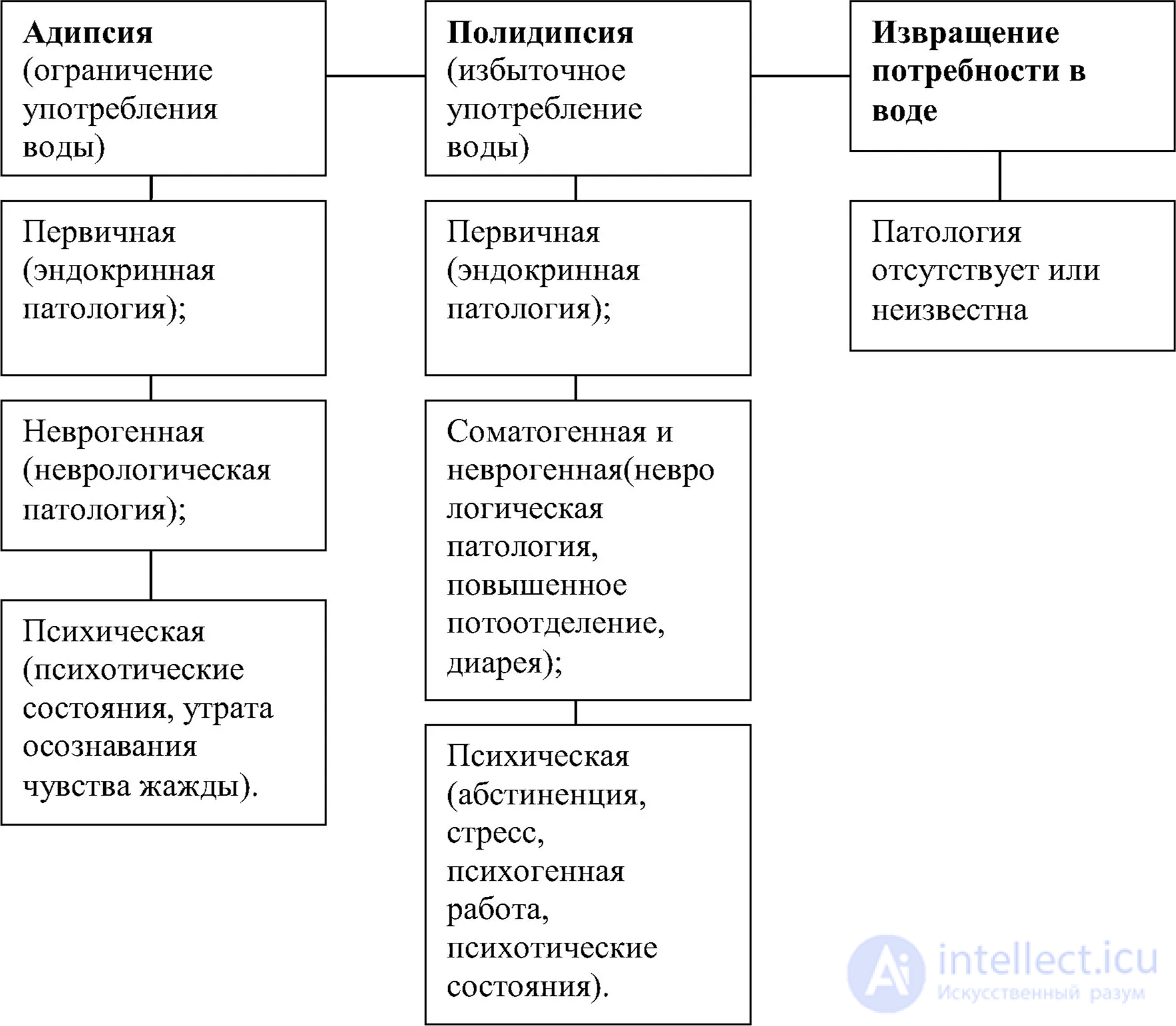
81. Polydipsia is a pathological increase in:
- 1. Appetite
- 2. Thirst*
- 3. Sexuality
- 4. Volitional impulses
answer: 2
82. Depressive stupor is observed in:
- 1. Schizophrenia
- 2. Neuroses
- 3. Manic-depressive psychosis*
- 4. Alcoholism
- 5. Psychopathies
answer: 3
83. Catatonic stupor is observed in:
- 1. Psychogenias
- 2. Oligophrenia
- 3. Manic-depressive psychosis
- 4. Schizophrenia*
- 5. Psychopathies
answer: 4
84. Psychoorganic syndrome is characterized by:
- 1. Delusional ideas
- 2. Intellectual decline*
- 3. Impaired consciousness
- 4. Loss of affective control*
- 5. Hallucinations
- 6. Mnestic disorders*
- 7. Obsessive experiences
- 8. Reasoning tendency (resonerstvo)
answer: 2 4 6
85. Clinical variants of psychoorganic syndrome include:
- 1. Asthenic*
- 2. Hallucinatory
- 3. Explosive*
- 4. Apathetic*
- 5. Depressive
- 6. Delusional
- 7. Euphoric*
- 8. Obsessive-phobic
answer: 1 3 4 7
86. Psychoorganic syndrome is observed in:
- 1. Alcoholism*
- 2. Schizophrenia
- 3. Psychopathies
- 4. Atrophic diseases of the brain*
- 5. Psychogenias
- 6. Brain tumors*
- 7. Manic-depressive psychosis
answer: 1 4 6
87. The main disturbances in Korsakoff's syndrome are observed in the sphere of:
- 1. Perception
- 2. Thinking
- 3. Attention
- 4. Memory*
- 5. Emotions
answer: 4
88. Korsakoff's syndrome is characterized by:
- 1. Anxiety
- 2. Euphoria*
- 3. Progressive amnesia
- 4. Fixation amnesia*
- 5. Hallucinations
- 6. Retrograde and anterograde amnesia*
- 7. Delusions
- 8. Confabulations*
- 9. Senestopathies
answer: 2 4 6 8
89. Epileptiform syndrome occurs more often in:
- 1. Schizophrenia
- 2. Psychogenias
- 3. Alcoholism*
- 4. Remote consequences of traumatic brain injury*
- 5. Cyclophrenia
- 6. Psychopathies
answer: 3 4
90. Schizophrenic dementia is regarded as:
- 1. Congenital feeble-mindedness
- 2. A partial variant of acquired dementia
- 3. A special type of dementia*
- 4. A total variant of acquired dementia
answer: 3
91. The main features of clouding of consciousness were described by:
- 1. V.P. Osipov
- 2. V.M. Bekhterev
- 3. E. Kraepelin
- 4. K. Jaspers*
- 5. E. Bleuler
answer: 4
92. K. Jaspers' tetrad includes:
- 1. Attention disturbances
- 2. Memory disturbances*
- 3. Volitional disturbances
- 4. Thought disturbances*
- 5. Disturbance of orientation*
- 6. Disturbance of drives
- 7. Perceptual disturbances*
- 8. Motor disturbances
answer: 2 4 5 7
93. Obnubilation belongs to the syndromes of:
- 1. Clouding of consciousness
- 2. Disturbance of self-awareness
- 3. Disconnection (switching off) of consciousness*
- 4. Hallucinatory-delusional syndromes
- 5. Affective syndromes
answer: 3
94. The absence of verbal contact and reflexes is characteristic of:
- 1. Sopor
- 2. Coma*
- 3. Obtundation (dulling of consciousness)
- 4. Stupor
answer: 2
95. The syndromes of clouding of consciousness include:
- 1. Hallucinosis
- 2. Twilight state of consciousness*
- 3. Psychoorganic syndrome
- 4. Syndrome of mental automatism
- 5. Amentia*
- 6. Depressive syndrome
- 7. Delirium*
- 8. Korsakoff's syndrome
- 9. Depersonalization
- 10. Oneiroid*
- 11. Catatonic syndrome
- 12. Paraphrenic syndrome
answer: 2 5 7 10
96. Delirium occurs more often in:
- 1. Schizophrenia
- 2. Neuroses
- 3. Alcoholism*
- 4. Cyclophrenia
- 5. The acute period of traumatic brain injury*
- 6. Psychopathies
answer: 3 5
97. Twilight clouding of consciousness is characteristic of:
- 1. Schizophrenia
- 2. Cyclophrenia
- 3. Epilepsy*
- 4. Psychopathies
- 5. Alcoholism
answer 3
98. Amentia is characterized by:
- 1. Paroxysmal onset and termination
- 2. The presence of prolonged, exhausting somatic illnesses*
- 3. Full-blown hallucinatory-delusional experiences
- 4. Affect of bewilderment, confusion*
- 5. Complete amnesia of the experience*
- 6. Euphoria
- 7. The presence of mental automatisms
answer: 2 4 5
99. Derealization and depersonalization belong to which group of syndromes:
- 1. Neurotic
- 2. Hallucinatory-delusional
- 3. Clouding of consciousness
- 4. Affective
- 5. Disturbances of self-awareness*
- 6. Organic brain damage
answer: 5
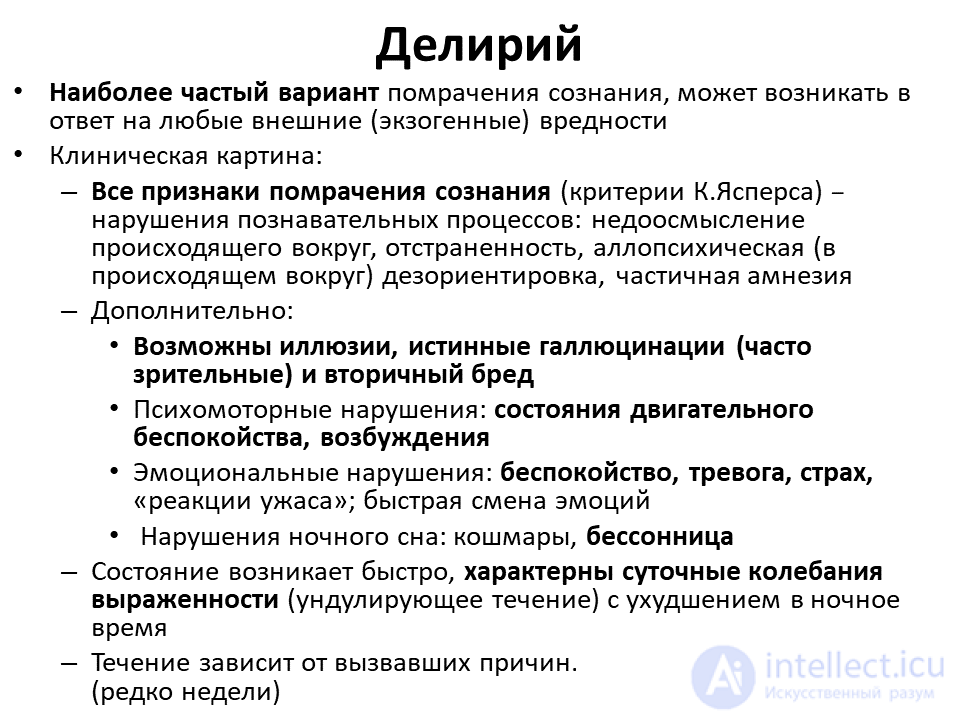
100. Delirium is characterized by:
- 1. Endogenous etiology
- 2. Exogenous etiology*
- 3. Stable course
- 4. Fluctuating course*
- 5. Predominance of true hallucinations*
- 6. Predominance of pseudohallucinations
- 7. Euphoria
- 8. Fear, anxiety*
- 9. Dissociation between behavior and inner experience
answer: 2 4 5 8
Taking 100 psychiatry tests with answers is a unique opportunity for self-exploration and increased self-awareness. The tests help you more clearly understand your emotions, thoughts, and behavior, and can serve as a starting point for better managing your mental health. However, remember that these tests do not replace professional consultation. If you have serious problems or questions, please consult experienced specialists who can provide you with the necessary support and assistance.
See also
- [[b7347]]
- [[b7238]]
- [[b6944]]
See also





Comments