
Lecture
Antipsychiatry — an international movement and set of theoretical concepts that formed against the backdrop of social instability in the early 1960s and represented radical opposition to psychiatry ; an interdisciplinary phenomenon of Western science and culture in the second half of the 20th century Antipsychiatry is aimed at demythologizing, exposing, and radically restructuring modern psychiatry as a mass form of violence .
The development of antipsychiatry is more a part of the historical upheavals of this period than a result of the evolution of scientific ideas ; according to some assessments, antipsychiatric models are not confirmed by empirical evidence and at times even contradict it, lack scientific confirmation and do not correspond to the methods of medical diagnosis, treatment, and rehabilitation of the mentally ill .
The views of the antipsychiatrists were the subject of heated debate and criticism, whose sharply negative character was due to the radicalism of this movement, but despite the questionable and poorly substantiated nature of the antipsychiatrists' proposals, many of their critical remarks were assessed as correct and deserving of deeper consideration .
The antipsychiatric movement contributed to increased attention among psychiatrists to the personality, fate, and rights of the mentally ill :18; it significantly influenced the organization and quality of psychiatric care , representatives of the antipsychiatric movement did much for its humanization . It was a forerunner of the radical changes of the 1970s–80s and of increased attention to the legal aspects of psychiatry[11], and contributed to shifting the emphasis toward outpatient care and to the creation of networks of social support for people with mental disorders :18.
Antipsychiatry contains ideas from phenomenological psychiatry, existentialism, hermeneutics, structuralism, neo-Kantianism, Marxism, and radical politics . The ideology of antipsychiatry is based on a psychoanalytic approach to psychiatry, as opposed to the biological one, which holds that mental illnesses are rooted in a disruption of brain function and which is adhered to by biopsychiatry. Antipsychiatry asserts that inner reality and personal freedom must be independent of any criteria of mental health and mental illness that psychiatrists attempt to develop[12].
Its founder is considered to be the English psychiatrist Ronald Laing . Among the most well-known representatives of antipsychiatry are also Michel Foucault in France, David Cooper in Great Britain, Thomas Szasz and Erving Goffman in the United States, Franco Basaglia in Italy . Antipsychiatry is most often regarded as one of the branches of psychiatry or psychotherapy :8; the most authoritative critics of psychiatry in the second half of the 20th century were themselves psychiatrists .
Two currents of antipsychiatry are distinguished: one aimed at abolishing clinical psychiatry, and one aimed at reforming and supplementing clinical psychiatry. In the 1960s–70s, actions against psychiatric clinics were carried out in cooperation with various groups, and an "international network" of antipsychiatry arose and continues to operate, with the goal of eliminating psychiatric clinics and a number of medical institutions. Antipsychiatry unites several thousand psychiatrists, medical workers, former patients, and others
Antipsychiatry, criticism, and attacks on psychiatry are linked to the activities of the Church of Scientology and of the one established by it jointly with Thomas Szasz , the Citizens Commission on Human Rights (CCHR)[
The antipsychiatric movement arose against the backdrop of widespread public discontent over abuses and unsatisfactory conditions for patients held in psychiatric hospitals, and in a number of Western countries it led to the deinstitutionalization of psychiatric services. Noting that not all of antipsychiatry was useless and merely sarcastic in tone, and that one can appreciate the contribution it made to defending the interests of the mentally ill, Singh writes that antipsychiatry essentially defended individual reality and freedom, and that this is a commendable approach[14]. The concept of "antipsychiatry" emerged and became firmly established in everyday language thanks to the political activism of David Cooper. In the late 1960s the gay movement, which advocated for an end to discrimination against sexual minorities and in April 1974 achieved the removal of homosexuality from the list of mental disorders in the second edition of the Diagnostic and Statistical Manual of Mental Disorders (DSM-II), joined the antipsychiatric movement.
As the president of the World Psychiatric Association, Mario Maj, noted in 2008:
Antipsychiatry is still a reality in some countries, and our profession is unique in that it can produce «its own antibodies»[19].
M. S. Kelner and K. E. Tarasov noted that «in the philosophical aspect, antipsychiatry represents a fusion of the most diverse worldview orientations» — existentialism, psychoanalysis, structuralism, and fragments of Marxist theory interpreted in the spirit of anarchist leftism
As A. Jakubik notes, three variants of antipsychiatry are currently distinguished, although none of them has developed a complete theoretical system or created an independent school:
According to Olga Vlasova, a researcher of the antipsychiatric movement, the term «antipsychiatry» can be understood :7:
Researchers also distinguish various branches of antipsychiatry by nationality: English antipsychiatry, American, French, Italian, and so on. According to M. T. Berlim, M. P. Fleck, and E. Shorter, «the so-called antipsychiatrists are a group of people who have almost nothing in common with each other except that all of them, for various reasons, held a critical stance toward psychiatry and psychiatrists»
According to O. Vlasova, the key issues raised by antipsychiatry in its various forms can be named as follows :7:
The theoretical aspects of the antipsychiatric movement are reflected in David Cooper's book «Psychiatry and Anti-Psychiatry»[21] and Ronald Laing's book «The Politics of Experience»[22], which appeared in 1967, as well as in the book «Reason and Violence»[23], which appeared in 1964 as a result of their joint work. A little later, Michel Foucault's book «History of Madness in the Classical Age»[24] and Thomas Szasz's book «The Myth of Mental Illness»[25][26] were also published, making a significant contribution to the antipsychiatric movement.
The antipsychiatric movement raised two fundamental questions:
The antipsychiatric movement contributed to the emergence of criticism directed at psychiatry. In particular, the following were criticized:
The antipsychiatry movement contributed to limiting the use of inhumane treatment methods and developed thanks to people with negative experiences of being held in psychiatric institutions. Among those who were hospitalized in psychiatric institutions involuntarily (including through the use of physical force) and subjected to involuntary treatment or physical restraint, there were also those who believed that they had been harmed or that they could have received a different, more effective type of care. As the movement of people who had passed through psychiatric institutions or been harmed in them took shape, it sought to have them recognized as mentally healthy, to have their rights restored, and to be granted the opportunity to independently manage their own lives or full freedom. Attempts were made to overcome the stigmatization and discrimination associated with restrictions on legal capacity, and to provide assistance and support to people with mental health problems so that they could take a more active part in work and social life (for example, through public organizations), in the work of the psychiatric service, and in its evaluation.
Kittrie studied a number of deviant manifestations, such as drug addiction, homosexuality, alcoholism, and mental illness, and demonstrated that such manifestations were first considered problems of a moral, then of a legal nature, and are now considered problems of a medical nature[32]:1[33]. As a result of this perception, extraordinary people with deviations from the norm were subjected to social control of a moral, legal, and then medical nature[32]:1. Similarly, Conrad and Schneider conclude their review of the medicalization of deviance with the view that three main paradigms can be identified, upon which the meanings of the concept of deviance depended in different historical periods: deviance as sin, deviance as crime, and deviance as illness[32]:1[34]:36.
Two books are devoted to the institutionalization of psychiatry — the book by the French philosopher and humanities scholar Michel Foucault, «History of Madness in the Classical Age»[24], and the book by the German psychiatrist Klaus Dörner, «Citizen and Madness»[35].
As Dörner shows, the emergence of psychiatry coincided with the period of the birth of industrial capitalism, marked by industrialization — the shift of production from manufactories to factories and the transition from manual labor to machine production. This process led to the stratification of civil society, when one part of its middle stratum grew richer while another grew poorer. On the one hand, industrialization destroyed the foundations of existence for many people who had lost their former jobs under the new conditions. On the other hand, there arose a need to attract as cheap and available a workforce as possible to the factories[35]. Dörner writes:
The industrial revolution needs a new type of person — the industrial worker, and it seeks to find such people and separate them from the rest. Therefore, it now becomes necessary to separate the poor from the mad, and consequently to create special institutions for both groups, factories and psychiatric hospitals. The new human type of the industrial worker must possess the following qualities: he must be poor, and therefore undemanding and cheap; free, that is, having obligations only to the industrial enterprise; faceless, that is, devoid of significant individual characteristics; reliable, that is, capable of performing monotonous work; predictable in his actions, which allows for long-term industrial calculations, as with machines. It is precisely because of the multitude of individual differences and peculiarities of the mad, and the impossibility of predicting their behavior, that they are unsuitable, from the entrepreneurs' point of view, for factory work and do not meet the requirement of absolute fitness, and are therefore excluded from the sphere of industrial production[35].
Thus, the exclusion of the mad from the sphere of industrial production inevitably leads them into the sphere of psychiatry — within the walls of psychiatric hospitals
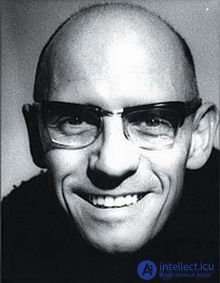
Michel Foucault's book «History of Madness in the Classical Age», whose first edition was published under the title «Madness and Unreason: History of Madness in the Classical Age»[36] by the Parisian publishing house «Plon» in May 1961, gave a significant impetus to the development of the antipsychiatry movement and the emergence of critical attitudes toward psychiatry, immediately becoming the focus of attention of Laing and Cooper. As a result of their joint persistent efforts, an English translation was made of its abridged version, published in French in 1964 with its release in pocket format. The English translation appeared in 1965 under the title «Madness and Civilization: A History of Insanity in the Age of Reason»[37] in the series «Studies in Existentialism and Phenomenology», compiled by Laing. The foreword to the book was written by Cooper[38].
In his book, drawing on an extensive body of documentary material, Foucault examines the social processes, economic conditions, and cultural context within which psychiatry emerged and took shape — in particular, the formation of institutions that were the direct historical predecessors of modern psychiatric hospitals. Foucault analyzes the prevailing conceptions, political ideas, legal acts, social institutions, cultural traditions, visual art, and literature that existed in Western history and bore on the formation within it of the concept of madness.
Foucault begins his narrative with the history of the Middle Ages, focusing his attention on the social and physical isolation of lepers. He shows that as leprosy gradually disappeared, madness took its place.
From the era of the High Middle Ages until the end of the Crusades, the number of accursed settlements — leper colonies — steadily grew throughout Europe. According to Matthew Paris, there were as many as 19,000 of them across Christendom as a whole […]. By the close of the Middle Ages, the Western world rid itself of leprosy […]. At first, leprosy passed the baton to venereal diseases. At the end of the 15th century they, like legitimate heirs, came to replace leprosy […]. In truth, however, the real heirs of leprosy were not these diseases but another, far more complex phenomenon that would not enter the sphere of medical concern for a long time yet. This phenomenon is madness. But for this new specter to take leprosy’s place among age-old fears and, like leprosy, to provoke a reaction of rejection, exclusion, and purification — a reaction to which it was, moreover, evidently akin — a long latent period lasting about two centuries would be required[24].
One such practice of segregation, described in literature, is the ship of fools, since it was on ships that the insane were sent out to sea, in order to be rid of them. In the 17th century, in the period Foucault aptly called the Great Confinement, the "unreasonable" segment of the population was subjected to social rejection and isolation. In the 18th century madness came to be regarded as a deviation from the norms dictated by Reason, and finally, in the 19th century, as a mental illness. As Foucault explains, confinement arose as a phenomenon on the scale of all Europe, generated by the classical age (the early modern period) and becoming one of its defining features:
The classical age invented confinement, just as the Middle Ages had invented the exclusion of lepers; the place left vacant by their disappearance was occupied by figures new to the European world — the "confined" […]. For confinement proved to be a phenomenon on a European scale […]. The vast almshouses and houses of correction — offspring of religion and public order, of support and punishment, of charity and the foresight of the authorities — are a defining feature of the classical age: like the age itself, they are a pan-European phenomenon and arise almost simultaneously with it[24].
Foucault then outlines the preconditions for the emergence of confinement, linking them above all to the task that confronted the authorities of compelling the confined to labor and ensuring proper public order:
Before confinement acquired the medical meaning we now attach to it — or, at any rate, that we find it convenient to attribute to it — it pursued aims quite remote from healing. The need for it was dictated by the imperative of compulsory labor. Where our philanthropic soul longs to see signs of kindness and concern for the sick, in reality one finds only one thing — the condemnation and accusation of the idle. Let us return to the very beginning of the "Confinement," to the royal edict of 27 April 1656 that established the Hôpital Général. This institution was immediately charged with the task of preventing "begging and idleness as the source of all manner of disorders"[24].
According to Foucault, confinement was used for two different purposes, purposes dictated by socio-economic causes, yet neither of which was ever achieved:
The classical age used confinement in two ways, assigning it a dual role: on the one hand, it was meant to help eliminate unemployment, or at least its most obvious social consequences, and on the other, to restrain prices when their rise became threatening. Confinement was intended to act alternately on the labor market and on the price of goods. In reality, however, the houses of correction apparently did not produce the expected result. By absorbing the unemployed, they mainly concealed their poverty and made it possible to avoid the social and political inconveniences caused by their unrest; yet by assigning them to compulsory workshops, these houses contributed to the growth of unemployment in the surrounding regions or in the corresponding sectors of the economy. As for their effect on prices, it could not help but be artificial, since the market price of the goods produced in them bore no relation to their cost — if one takes into account the expense of maintaining the inmates[24].
Being virtually indistinguishable from prisons, these institutions were likewise intended for isolation, yet their penitentiary purpose escaped scrutiny because they were called hospitals. Discussing the period of their emergence, John Read, professor at the University of Auckland, summarized Michel Foucault's conclusions and identified three functions of these hospitals:
Foucault also shows that Reason silenced madness and deprived it of the ability to contest social norms and appeal to truth. Foucault examines the origin of the medical and social practices for dealing with the mad, which were developed further by Philippe Pinel and Samuel Tuke. Foucault argues that these new practices, no less than the earlier methods, were in fact used for the purposes of control. From the practices of dealing with the insane initiated by Pinel arose the widely applied aversion therapy, with methods such as cold showers and the straitjacket. In Foucault's view, this practice was grounded in brute force, invariably applied until the patient absorbed the social norms and principles whose violation had brought about the punishment.
Foucault's interest in psychiatry was not limited to considering its historical and theoretical questions. Foucault took part in concrete actions aimed at transforming the system of psychiatric care. In particular, in 1971 Foucault joined a group of Italian psychiatrists who made psychiatric hospitals a subject of criticism and controversy, and he wrote an article for the collection «Disorders»[40] in order to support Franco Basaglia, who was facing prosecution under Italian law[38][41].
Foucault's work has influenced the antipsychiatry movement from its inception to the present day. For example, in the spring of 1998, supporters of the antipsychiatry movement held a «Foucault Tribunal on the State of Psychiatry» in Berlin[42], which received this name because it was Foucault who exposed the concept of madness as a social convention that imposes a definition of normality created and used in the interests of power[43]. The Foucault Tribunal took the form of a public hearing, but was conducted in accordance with standard judicial procedure. It condemned as a violation of human rights the practice of deprivation of liberty through confinement in psychiatric institutions, and all forms of psychiatric coercion carried out on the basis of an assessment of danger to oneself or others associated with the mental state of persons who had committed no crime. The Foucault Tribunal concluded with a verdict which stated, in part:
We believe that the generally accepted definition of illness is unsatisfactory. In this case, an institution such as the «psychiatric hospital» cannot offer any help. We believe that medical treatment should be provided only on a voluntary basis. It is particularly dangerous that many judges hold prejudices and defer to the expert opinions of psychiatrists. Patients who have survived psychiatric «treatment» have the right to demand material compensation for the pain and suffering inflicted on them[43].
In 1961, the work of the American sociologist Erving Goffman, «Asylums: Essays on the Social Situation of Mental Patients and Other Inmates»[44], was published. In it, Goffman described how the process of institutionalization casts people into the role of the obedient patient, one who is «stupid, safe, and inconspicuous», which in turn reinforces conceptions of the chronic nature of severe mental illness[45].
Laing, viewing the concept of schizophrenia as an ideological constraint that makes coercive relations between patients and psychiatrists possible, wrote:
The concept of schizophrenia is a set of chains that binds patients and psychiatrists. <…> Bars are not always needed to sit in a cage. Certain kinds of ideas can also become a cage. The doors of psychiatric hospitals are opened because chemical restraint is more effective. The doors of our minds are much harder to open[46].
Jakubik notes that opponents and supporters of antipsychiatry are often united by common humane goals, but the reason for the negative emotional reaction to antipsychiatry apparently lies in the radicalism of the antipsychiatric movement . In A. Jakubik's view, the extremism of the antipsychiatrists' views consists in the fact that they :
In turn, the radicalism of antipsychiatry can be provoked and caused by the rigidity and peremptoriness of traditional psychiatry, by the «psychiatrists' monopoly on the truth about the causes of illnesses and methods of treatment».
In Russia, one of the organizations representing the antipsychiatric movement is the Citizens Commission on Human Rights (CCHR) — a human rights organization founded in 1969 by the Church of Scientology and Thomas Szasz. The CCHR is composed mainly of physicians, lawyers, and human rights advocates. Its main goal, according to its official statement, is «to investigate and expose violations of human rights in psychiatry and to bring order to the field of treatment of mental illness»; the CCHR opposes involuntary psychiatric measures, considering any such measures unlawful and basing these claims on international legal instruments such as the Universal Declaration of Human Rights. The activities of the CCHR have substantially influenced the humanization of psychiatric legislation in a wide range of countries, including the Russian Federation[48]. However, the CCHR is characterized by greater radicalism, compared to other representatives of antipsychiatry, in its criticism of biological methods of treating mental disorders and in its rejection of equating mental disorders with brain diseases (for example, it is claimed that mental symptoms often have somatic causes that can be diagnosed and treated, and that, on the other hand, the scope of «mental illnesses» is unjustifiably expanded by psychiatry to cover the most varied cases of ordinary life and psychological problems); in its educational activities and in popularizing the main theses of T. Szasz and other well-known Western antipsychiatrists, the CCHR resorts to simplifications and categorical statements. At the same time, representatives of this organization are responsible for a number of hard-hitting press publications that document, with specific material, cases of rights violations in psychiatry on the territory of the Russian Federation. The most negative criticism of Scientology and the Citizens Commission on Human Rights comes from Alexander Dvorkin, a representative of the anti-cult movement, and, according to members of the Independent Psychiatric Association, is linked to the Moscow Patriarchate's efforts to hinder the emergence of new religious organizations and movements in Russia, as the Patriarchate found itself unprepared for missionary activity when the borders opened and a flood of foreign preachers poured into Russia[49]. A more neutral assessment comes from Yuri Savenko, president of the Independent Psychiatric Association of Russia: on the one hand, in his view, the CCHR's aim is destructive rather than constructive criticism, portraying psychiatry as an absolute social evil; on the other hand, through this criticism it draws public attention to the most pressing problems associated with psychiatry and even engages in concrete legal assistance in this area together with the Independent Psychiatric Association of Russia[49].
The antipsychiatric movement has had a significant influence on the structure of psychiatric services, the nature of their activities, and the quality of care for the mentally ill . Beginning in the 1960s, thanks to the antipsychiatry movement, new methods of working with patients emerged (in particular, therapeutic communities, soteria houses), stricter laws were adopted limiting the use of inhumane treatment methods and regulating the procedure for involuntary hospitalization and psychiatric care, a more humane attitude toward patients began to appear, and the use of social and psychological methods began to penetrate more widely into the treatment and rehabilitation of patients. The first document setting out a number of basic ethical norms governing the activities of psychiatrists in all countries was the «Declaration of Hawaii» (English: The Declaration of Hawaii)[50], adopted at the VI Congress of the World Psychiatric Association in Honolulu (August—September 1977).
In the USSR, the «iron curtain» that separated psychiatrists from dialogue with contemporary psychiatry and from many of its innovations, as well as its errors, hindered the opportunity to become acquainted with the work of Western antipsychiatrists and with the reasoned objections of other Western colleagues. Only at the turn of the 20th–21st centuries did the opportunity arise to become acquainted with the Western experience of reforming the psychiatric care system that had taken place in recent decades[51].
medical dissidence
Alternative theories of HIV infection and AIDS

Comments