
Lecture
Anorexia nervosa - A disorder characterized by weight loss, an excessive fear of being fat, a distorted perception of one's appearance, and profound metabolic and hormonal disturbances.
Anorexia nervosa – a mental disorder characterized by the patient's rejection of their own body image and a pronounced striving to correct it through restricting food intake, creating obstacles to its absorption, or stimulating metabolism.
Anorexia nervosa (lat. anorexia nervosa) (from Ancient Greek ἀν- — "without-", "not-" and ὄρεξις — "urge to eat, appetite") — an eating disorder characterized by significantly reduced body weight, deliberately caused and/or maintained by the patient themselves, for the purpose of losing weight or preventing excess weight gain . It occurs most often in girls . Many specialists consider it a form of self-harm. Anorexia involves a pathological desire to lose weight, accompanied by an intense fear of obesity. The patient exhibits a distorted perception of their own physical form and is preoccupied with the fear of gaining weight, even when no such weight gain is actually occurring .
The main diagnostic criteria for anorexia nervosa according to ICD-10 and DSM-5 are similar . However, there are some differences. In particular, according to the DSM-5 criteria, amenorrhea is not included among the leading symptoms of anorexia nervosa .
For screening anorexia nervosa, the Eating Attitudes Test (EAT-26) is used, developed by the Clarke Institute of Psychiatry at the University of Toronto

.Anorexia is an eating disorder and, more importantly, a mental disorder that manifests as heightened preoccupation with food and one's own weight, along with extremely strict dietary restrictions.
.The leading symptom is persistent refusal to eat or a sharp restriction of food intake, or a strict and rather elaborate diet, often based on convoluted reasoning.
.Complete or near-complete starvation or a prolonged strict monotonous diet leads to severe exhaustion, up to serious cachexia.
History of the syndrome. .Anorexia nervosa was first described by R. Morton in 1689 under the name "nervous consumption," although mentions of this pathology occurred even earlier.
.The beginning of intensive study of this disease is associated with the works of W. Gull (1868) and Ch. Lasègue (1873), who almost simultaneously and independently of each other published articles on anorexia nervosa. W. Gull proposed the term "anorexia nervosa" (anorexia nervosa). .In Russia, one of the first publications on this subject belongs to A. A. Kisel: in 1894 he described hysterical anorexia nervosa in an 11-year-old girl.
.Particular interest in anorexia nervosa has arisen in recent decades, due to its growing prevalence. .According to official data, anorexia nervosa affects 1% of adolescent girls-
teenagers.
.However, even these figures are considered underestimated: as a rule, only patients with severe forms of anorexia are hospitalized, "mild forms are not diagnosed in hospitals," making it difficult to determine the true number of patients with anorexia nervosa.
.According to M. Maloney et al. (1983), various forms of anorexia nervosa affect about 4% of women under the age of 20. .Many specialists classify anorexia nervosa among the diseases
of our time, the "diseases of the century"
.Until the 1960s, this disease was rare, but its frequency then increased significantly. .According to J. Payne (1969), "the 60s became a real boom for patients of this kind."
•Lesley Hornby —an English supermodel, actress and singer,
known under the pseudonym Twiggy (Twiggy — "thin, fragile," from English twig — "twig"). Her modeling career lasted 4 years, but she changed ideas about beauty. It was she who advertised the first miniskirts, a trend that was picked up by her followers worldwide, who slimmed down to the point of exhaustion. Striving for this ideal (height -169 cm, weight -40 kg, measurements -
80x55x80), girls fainted from hunger.
Social preconditions of the Twiggy syndrome
.We live in a world where appearance carries enormous value. Thin models who walk the runways at the most prestigious fashion shows shape millions of people's ideas of what the ideal woman should look like. .Since most people are not naturally suited to this standard, they try to become more attractive in various ways, and not
always healthily. .This is the problem of the gendered body (the drive to shape one's body
to fit a socially constructed image)
.P. Dally and W. Sargant (1966) list the following among the core diagnostic features of anorexia nervosa:
.It is precisely the refusal to eat, not the weight loss itself, that the authors place first.
.According to H. Bruch (1978), true anorexia nervosa has the following features:
Most researchers agree that anorexia begins in the prepubertal, pubertal, or postpubertal period.
The illness begins on average at age 17, with peaks at 14 and 18. •These «critical periods of life», the authors believe, leave their mark on the entire course of the illness.
J. Meyer (1971) considers «the appearance of visible female forms» to be a «peculiar triggering mechanism» of anorexia nervosa, which brings about a change in body image.

Very often the etiology and pathogenesis of anorexia nervosa are interpreted by foreign authors from the standpoint of Freudianism in all its variations. In light of these concepts, anorexia nervosa appears as:

.Many authors have noted various kinds of «eating problems» in early childhood among future patients, which practically stay with them for their whole lives. .Most authors conclude that anorexia nervosa essentially only intensifies (exaggerates) the premorbid personality traits of adolescents.
.However, information about these personality features is extremely contradictory. Attempts have been made to link schizoid traits to «future anorexics», which is used to explain the «high percentage of anorexia in
schizophrenia».
.The premorbid features of patients with anorexia include: emotional immaturity, exaggerated dependence on parents, a tendency toward obsessive phenomena, and a significant overestimation of one's own abilities and capabilities.
Attention is drawn to «obsessive features» (i.e., a tendency toward obsessions), as well as hysterical and obsessive traits. .K. Tolstrup (1965) classifies 50% of patients as the hysterical type. Taking premorbid personality into account, he proposes dividing anorexia into 4 groups: hysteriform, obsessive-impulsive, depressive, and «bordering on psychosis».
.Children are characterized by constancy of interests, a well-developed sense of duty, an excessively strong, almost pathological concern for formal recognition of their school achievements, and a distinct tendency to strive for the highest social standards (Karvasarsky B. D., 1980).
.It is precisely for this reason that A. E. Lichko (1979) called anorexia nervosa the «straight-A student's disease».
.Parents describe such patients as very calm children who perform their school duties excellently and strive to receive only excellent grades.
.Among other children, these families were considered the most successful; a «brilliant career» was expected of them; among their peers they stood out for their «ascetic sentiments»: a disregard for games, fine clothes, and other «age-appropriate pleasures».
.«Behind the facade of such calm and outward purposefulness» lies a feeling of inadequacy, a lack of confidence in one's own strength and abilities, and an absence of independence in decision-making. (A. E. Lichko)
M. V. Korkina (1968) believes that, according to their premorbid characteristics, patients with anorexia may be either sensitive and anxiously suspicious, or prone to hysterical reactions, or asthenic-resistant, persistent, and always striving to be first.
It is also characteristic that in the families of most patients a special attitude toward food is noted (either a cult of food or a pronounced disregard for it).
In connection with this, patients develop negative emotions toward eating from childhood (since food was always associated with coercion).
Conversations are often held constantly within the family about "the unattractiveness of being overweight," "refinement of taste," and the importance of appropriate aesthetic upbringing.
There is an opinion that anorexia nervosa is one of the forms of psychogenic reactions in adolescents.
The role of psychotraumatic experiences of puberty.
A major role in the genesis of anorexia nervosa is played by the "trauma of the first menstruation," and tactless remarks by those around about this only exacerbate this reaction and lead to "ascetic suppression of everything carnal."
The great importance of the influence of the microgroup, of the standards of appearance established in microgroups, of the mockery of persons of the opposite sex. The mockery of others regarding some degree of plumpness (if present) becomes the basis for the formation of an overvalued and then a delusional system during puberty, but does not cause such a reaction in children; the immature personality of the adolescent is relatively easily traumatized, and in adolescence psychogenic reactions (including iatrogenic ones) and personality deformations develop easily, and these reactions and changes tend to become fixed.
Experimental-psychological study of the personality characteristics of patients with anorexia
N. Hiltmann found in these individuals "an increased capacity for overvalued formations and a high coefficient of mental development."
A. Gallwitz experimentally proved a disturbance of body perception in patients with anorexia (experiments with photographs were conducted).
P. Slade, having conducted an anthropopsychological examination, concluded that patients "see themselves as fatter than they actually are," i.e., they incorrectly perceive their body schema.
Patients incorrectly "perceive the size not only of their own body, but also of those around them."
A. Theilgaard: the theme of food appeared in the responses: "All the Rorschach blots were perceived as illustrations for a cookbook."
The causes of anorexia nervosa represent an interweaving of psychogenic and biological factors.
The psychogenic factor takes the form of a conditionally pathogenic trauma that strikes a blow at the sensitive point of a sensitive personality—the assessment of appearance by others. This leads to refusal of food. In many, the disorder began after following a diet, and it is also characteristic of certain professional groups and female athletes.
Domestic authors often characterize anorexia nervosa as a disease within the range of borderline mental disorders, defining it in particular as a pathological reaction
of puberty.
In recent decades, works have begun to appear that consider the possibility of anorexia nervosa existing as an independent
disease. Anorexia nervosa may occur within the framework of a schizophrenic disorder.
Anorexia nervosa is a syndrome belonging to the so-called nonspecific pathology of puberty and adolescence. The heterogeneity of the prognosis of this pathology is, as a rule, related to the nosological nature of the syndrome.
Anorexia nervosa represents a conscious refusal of food with the aim of correcting one's appearance due to a conviction of excessive fullness.
This leads to the development of severe secondary somatoendocrine shifts, significant weight loss often reaching cachexia, and the onset of amenorrhea as one of the main clinical manifestations that develop with chronic nutritional deficiency. Carefully concealed at early stages, the conscious restriction of food leads to patients coming under a psychiatrist's observation only 3–4 years or more after the onset of
intensive weight loss, as a rule in a state of pronounced cachexia, with persistent amenorrhea.
The severity of secondary somatoendocrine disorders requires inpatient treatment for vital indications.
More than 80% of patients, before consulting a psychiatrist, were observed and unsuccessfully treated by internists, gastroenterologists, endocrinologists, or gynecologists for the developing secondary somatoendocrine disorders, including oligomenorrhea and amenorrhea. Some of them unjustifiably received massive hormonal therapy.
Anorexia nervosa must be distinguished from other mental disorders, primarily from depression, which may be accompanied by refusal of food, a sharp decrease in body weight, and endocrine disturbances. However, depression does not involve distortion of body image, self-induced vomiting, or a striving for excessive physical exercise. Patients with depression, as a rule, retain the desire to overcome their lack of appetite, nausea, and constipation. Anorexia nervosa is often combined with major depression and anxiety disorders. The symptoms of this disease may occur in schizophrenia and schizotypal disorder. Anorexia often develops against a background of individual developmental disturbances and personality disorders, which can substantially worsen the prognosis of the overall condition. Differentiation of this condition is carried out on the basis of a study of the history and features of the clinical picture, with great importance attached to the causes of psychosocial decompensation, the presence of delusional ideas, hallucinations, the complex dynamics of individual psychological development, and the phasic character and severity of affective disturbances. It is also important to bear in mind that many of the disorders listed share a number of common links in pathogenesis with anorexia nervosa. In such cases, a diagnosis of a combined disorder is warranted. For example, in schizophrenia, anorexia nervosa may be regarded as an additional or concomitant syndrome.
•In the dynamics of the typical anorexia nervosa syndrome, 4 stages can be conditionally distinguished:
Initial stage
.In childhood, most patients were somewhat overweight, which provoked teasing from peers. However, before adolescence these remarks from others were not psychogenic and only with the onset of puberty (when, as is well known, interest in one's own appearance and especially in others' opinions of it increases significantly) did they become psychotraumatic. .Adolescents constantly thought about how they looked, considered themselves excessively fat, developed thoughts of their own inferiority, their mood declined, and rudimentary ideas of reference appeared. One can speak of the formation of a situationally conditioned conviction of one's own excessive «ugly fatness».
.The clinical picture of the first stage is exhausted by a quite specific variant of dysmorphomania syndrome (in the classical variant this syndrome includes delusional or overvalued ideas of dissatisfaction with one's own appearance, ideas of reference, depression, and a drive to correct the imagined defect) (M. V. Korkina, 1967).
.Distinguishing feature:
Relatively lower intensity of ideas of reference and depression combined with particularly intense activity aimed at «correcting the physical defect».
.Ideas of physical defect involved a conviction of excessive fatness; adolescents might dislike either their «filled-out figure» as a whole or individual body parts, «round cheeks»,
«fat belly», «rounded hips».
.The onset of dissatisfaction with one's own appearance typically coincided with the real change in body shape characteristic of puberty.
.Thoughts of excessive fatness may be either overvalued or delusional. The pathological conviction of excessive fatness can sometimes be combined with a pathological idea of other imagined or extremely overvalued defects of appearance (shape of the nose, ears, cheeks, lips).
.What most often determines the formation of the syndrome is a discrepancy with one's own «ideal» —a literary hero or a person from the immediate environment—together with a drive to imitate them in everything and above all to have an appearance and figure similar to theirs.
.Ideas of reference are quite rudimentary.
.The opinion of others about the patient's appearance matters much less to them. At the same time, the sensitivity of adolescents means that the triggering mechanism for the drive to «correct» the physical defect becomes careless remarks by teachers, parents, or peers.
.The third component typical of the classical dysmorphomania syndrome—affective disturbances—also has its own peculiarities in this pathology, as already noted.
.Depressive disorders are on the whole less pronounced and, at later stages, are closely related to the effectiveness of the appearance correction carried out by the patients.
.Among the peculiarities of dysmorphomania in anorexia nervosa is the fact that the possibility of correcting the imagined or real physical defect lies in the patient's own hands, and they always realize it by one means or another.
The first stage of anorexia nervosa lasts from 2 to 4 years and is followed by the second stage, in which the anorexia nervosa syndrome acquires clinical completeness.
Anorectic stage
From the moment of active self-restriction in food, the anorexia nervosa syndrome already acquires sufficient clinical expression, and one can speak of the formation of the second stage of the illness—the period of active correction of «excessive fatness» . The methods of losing weight can be quite varied and are carefully concealed at the start of correcting excess fatness.
At the initial stage, patients combine heavy physical exertion and active sports with restricting the amount of food. .Later, the method of losing weight changes depending on
the nature and severity of the «appearance defect», as well as premorbid personality traits, but restricting food intake takes the leading place. In reducing the volume of food, patients first exclude a number of foods rich in carbohydrates or proteins, and then begin to follow the strictest diet, eating mainly dairy and plant-based food.
Anorectic stage
Physical exercise
•When dissatisfied with such body parts as the abdomen and hips, patients, along with a strict diet, exercise to the point of exhaustion using specially devised physical exercises—doing
everything standing, walking a great deal, cutting down on sleep, cinching their waist with belts or cords so that food would «be absorbed more slowly».
•Exercises of the «bend—unbend» type, as weight loss progresses, are at times so intense that they cause skin injury in the area of the sacrum, shoulder blades, along the spine, and where the waist is cinched.
The sensation of hunger may be absent in the first days of food restriction, but it is often quite pronounced even at early stages, which significantly hinders actual food refusal and forces patients to seek other ways of losing weight. These include taking laxatives, often in very large doses, and less frequently the use of enemas. These measures can lead to weakness of the sphincter and rectal prolapse, sometimes quite significant.
The choice of this method is most often deliberate, although patients sometimes arrive at it by accident: unable to resist the urge to eat, they consume a very large amount of food at once, and then, because the stomach is overfilled, cannot keep it down. The resulting vomiting leads to the idea of eating as much as desired and then quickly ridding oneself of the food, before absorption occurs, by inducing vomiting artificially.
Some patients chew food and then spit it out, filling the room with bags and jars of chewed food.
A very common method of losing weight when the sensation of hunger is pronounced is artificially induced vomiting. In the early stages, the act of vomiting is accompanied by characteristic autonomic manifestations and causes patients unpleasant sensations. Later, with frequent inducing of vomiting, the procedure becomes simplified: patients need only make a retching motion or simply bend the torso forward, press on the epigastric region, and all the food eaten is expelled without distressing autonomic manifestations. Patients call this «regurgitating».
They carefully compare the amount of food eaten with the amount of vomit, and resort to repeated gastric lavage — after the first vomiting episode, drinking up to 2—3 liters of water, in some cases this is done using a tube.
Artificially induced vomiting is, in a number of patients, inseparably linked with bouts of bulimia.
Bulimia is an irresistible hunger, with virtually no sense of satiety, in which patients can consume very large amounts of food, often even barely edible food.
The pathology of eating behavior forms in the following sequence: patients go around shops and «feast their eyes», and with the same aim strive to cook food, deriving great pleasure from it, and lick the remnants of food off knives and spoons. A characteristic feature of these patients is often the urge to «overfeed» those close to them, above all younger brothers
and sisters. The next stage in the struggle with hunger is chewing and spitting food out, and after that — artificially induced vomiting, which in a number of cases later becomes linked with bouts of bulimia.
Patients go hungry all day, constantly thinking about food, picturing to themselves every nuance of the meal to come. Thus, thoughts about food become obsessive. Having bought large quantities of food, and sometimes having stolen it, patients return home, set the table, often laying it out attractively, and begin eating with the tastiest food, in order to get pleasure from it. However, they cannot stop and eat all the food available in the house.
Loss of any sense of moderation, of control over the quantity and quality of what is eaten, is highly characteristic of bulimia. Some patients stockpile entire tubs of barely edible food in order to
ensure a «binge». After eating an enormous amount of food, patients experience euphoria, and they may have autonomic reactions. Following this they artificially induce vomiting and rinse out the stomach with a large amount of water. A feeling of «bliss» sets in, an extraordinary lightness throughout the body, reinforced by the conviction that the body has been completely freed of food (clear rinse water with no taste of gastric juice).
Passive methods of losing weight include the use of a number of appetite-suppressing medications, as well as psychostimulants, in particular sydnocarb.
With the aim of losing weight, patients start smoking heavily, drink large quantities of black coffee, and use diuretics.
Such eating behavior leads to a reduction in body weight.
Weight loss is accompanied by a gradual increase in secondary somatoendocrine changes.
On average, 1—2 years after the start of «correcting» the presumed excess fullness, amenorrhea sets in.
All measures aimed at losing weight are quite quickly organized into a rigid system of self-restrictions, from which patients do not deviate a single step («otherwise everything might collapse»). Such persistence in pursuing the goal is possibly linked to premorbid personality traits of the patients such as punctuality and neatness
Clinical picture of mental disturbances at this stage
fear of gaining weight, which leads patients to further weight loss.
Every piece of food eaten causes patients anxiety.
There is affective instability, with mood depending to a considerable extent on how successfully the «correction» of appearance is proceeding; any increase in body weight, even a slight one, is accompanied by a sharp drop in mood.
.intrafamily relations, because of the patient's disordered eating behavior, become a psychotraumatic factor that also provokes pathological reactions to the situation that has arisen.
.at this stage, the leading role in the formation of affective pathology belongs to psychogenic factors.
.Against the background of increasing cachexia, ideas of reference are largely reduced and often practically absent.
.Hypochondriacal disorders occupy an important place in the clinical picture.
.Secondary gastroenterocolitis and prolapse of practically all internal organs, above all gastroenteroptosis, developing as a result of food restriction or disordered eating behavior, are accompanied by pain in the stomach area and along the intestine after eating, and persistent constipation.
.Patients become fixated on unpleasant sensations in the gastrointestinal tract. The fear of eating typical of this stage of anorexia nervosa is caused not only by the fear of gaining weight, but also by the possibility of distressing sensations in the epigastric region.
peculiar obsessive phenomena: fear of eating + anticipation of intense hunger + the need to induce vomiting + obsessive counting of the calories contained in food eaten.
.Personality traits present before the illness become more pronounced:
Autonomic disorders
.Paroxysmal autonomic disorders more often occur several hours after eating
.Autonomic disorders in the form of attacks of choking, palpitations, dizziness, and increased sweating.
Prolonged deliberate food restriction, as well as other forms of specific eating behavior, as a rule lead to significant weight loss (50% or more) and to cachexia—the third stage of the illness.
.Somato-endocrine disturbances predominate in the clinical picture.
.After the onset of amenorrhea, weight loss accelerates significantly
.Patients completely lack subcutaneous fat, and dystrophic changes increase: the muscles become thinner, the skin becomes dry, flaky, cyanotic, and cold; myocardiodystrophy develops, and there are bradycardia, hypotension, acrocyanosis, decreased body temperature, decreased blood sugar levels, and signs of anemia appear.
Patients get cold quickly, increased nail brittleness is noted, hair falls out, and teeth deteriorate.
The appearance of lanugo hair over the entire body is typical.
Posture and the smoothness of movement are disturbed, and patients become stooped ("sit hunched over").
.Hormonal changes and changes in the blood picture may appear.
.In the "purging form," electrolyte imbalances may occur, with negative consequences for the functioning of the heart and kidneys (cardiac arrest).
.A sharp reduction in the fat layer leads to estrogen deficiency, up to and including osteoporosis, curvature of the spine, and severe pain.
As a result of prolonged malnutrition, as well as specific eating behavior, the clinical picture of gastritis and enterocolitis becomes more severe
.At this stage, the physical activity characteristic of earlier stages of anorexia nervosa decreases significantly.
.Asthenic syndrome, with a predominance of adynamia and increased exhaustibility, occupies the leading place in the clinical picture.
During the period of pronounced cachexia, patients completely lose critical awareness of their condition and continue to stubbornly refuse food as before
Being extremely emaciated, they often claim to be overweight or are satisfied with their appearance—even on the verge of death they continue to consider themselves too fat and continue to follow their diet.
.Against the background of pronounced asthenia, depersonalization-derealization phenomena may periodically occur..As cachexia increases, patients become sedentary, spend prolonged periods in bed, have persistent constipation, and their blood pressure drops significantly
.At the cachectic stage, dysmorphomania phenomena lose their former affective intensity, and methods of losing weight are limited to a carefully worked-out diet, and in a number of cases—to the use of laxatives and vomiting.
.Pronounced water-electrolyte shifts can lead to the development of painful muscle cramps, and polyneuritis (alimentary polyneuritis) is sometimes possible
.Without medical care, this condition can be fatal
.Patients are usually hospitalized in a state of severe cachexia for vital reasons, often against their will, since they do not understand the seriousness of their condition. Because of dissimulation, patients frequently end up under the observation of physicians of various specialties and are given incorrect diagnoses. They begin to receive adequate treatment only in a psychiatric hospital setting.
•A persistent refusal to eat at the cachexia stage, due to the patients' failure to understand the severity of their condition and their fear of gaining weight, creates great difficulties in treating this extremely severe condition.
•Patients not only are afraid to eat normally but are also physically unable to because of pathology of the gastrointestinal tract. This requires comprehensive therapy, including frequent, fractional feeding (even with the most carefully designed nutritional rehabilitation regimen, temporary edema may occur).
.During the period of recovery from cachexia, the leading place in the clinical picture belongs to asthenic symptoms, fear of gaining weight, and fixation on pathological sensations in the gastrointestinal tract.
.With even a slight increase in body weight, dysmorphomania again becomes prominent, a desire to «correct» one's appearance appears, and depressive symptoms increase. .As the somatic condition improves, physical weakness quickly disappears, and patients again become extremely active, striving to perform strenuous physical exercises; they may resort to large doses of laxatives and try to induce vomiting after feeding. .All of this requires careful supervision of patients in the hospital.
.Within 1—2 months of proper treatment, patients fully recover from
cachexia, —gaining from 9 to 15 kg, although normalization of the menstrual cycle takes considerably longer (6 months to 1 year from the start of intensive treatment). .Until menstruation resumes, the mental state is characterized by mood instability, periodic recurrence of dysmorphomanic phenomena, explosiveness, and a tendency toward hysterical forms of response.
.During the first 2 years, pronounced relapses of the syndrome are possible, requiring inpatient treatment.
In most patients, a particular attitude toward food persisted for a long time after discharge from the hospital. .Not wanting to gain weight, patients strictly monitored their body weight (they devised their own diets, selectively eating certain dishes and foods).
.Sometimes they did not increase the amount of food consumed even during pregnancy.
.In conversations they preferred not to touch on the topic of nutrition, spoke of the illness only in the past tense, and explained their current eating pattern by «an increased tendency toward being overweight».
.Almost all retained excessive attention to their appearance and a striving to maintain a «slender figure» (most retained some body weight deficit for a long time).
Hypochondriacal complaints concerning the gastrointestinal tract were quite characteristic (unpleasant sensations after eating, belching, —a feeling of stomach distension).
Many again showed traits of explosiveness (irritability, intolerance, rudeness). Such forms of behavior appeared only toward those closest to them.
By this time, affective lability with a tendency toward low mood had appeared. The slightest failure, an unpleasant conversation, and even more so a quarrel, caused persistent mood disturbances. In unfavorable situations, some could develop hysterical
reactions.
.As before, excessive attachment to parents and strong dependence on them were noted; they tolerated separation from loved ones poorly.
.At work, patients tried to make a good impression, had a strongly developed sense of duty, conscientiously fulfilled their responsibilities, and showed punctuality in doing so.
.All were well adapted in life, active, capable of work, studied diligently, and graduated from institutions of higher education.
.DSM-IV criteria for anorexia nervosa
.85% of the weight expected for the given age and height.
.A pronounced fear of gaining weight or body volume, despite being underweight.
.Disturbances in the perception of one's own body shape and weight, an undue influence of these external characteristics on self-esteem, or denial of the obvious fact that the current weight is abnormally low.
.The presence of amenorrhea in women, i.e., the absence of at least three consecutive menstrual cycles.
.«Restricting» type. Do not experience regular «binge-eating episodes» or do not resort to methods of forced «purging» (vomiting, laxatives, enemas).
.«Purging» type. Experience regular «binge-eating episodes» and resort to methods of forced «purging» (vomiting, laxatives, enemas).
•About 80% of women, across numerous surveys, have said they want to lose weight
•50% of girls between the ages of 13 and 15 believe they are overweight
•80% of thirteen-year-old girls have already gone on a diet or tried to lose weight by other means at least once
Indications for inpatient treatment of patients

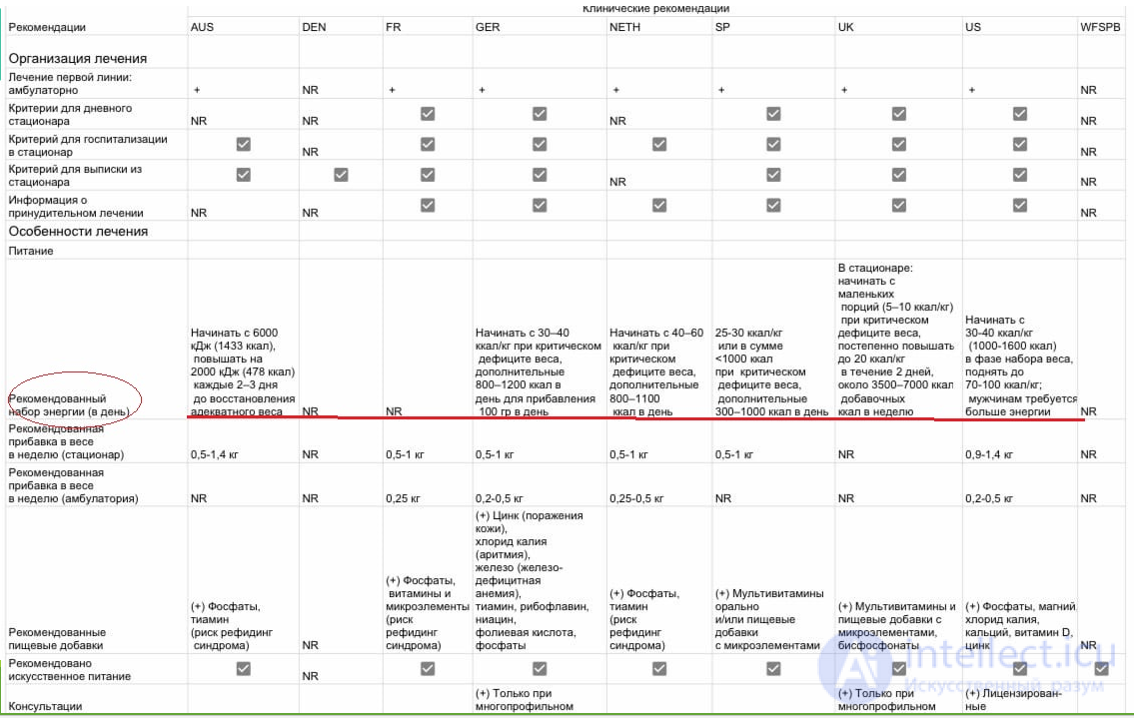
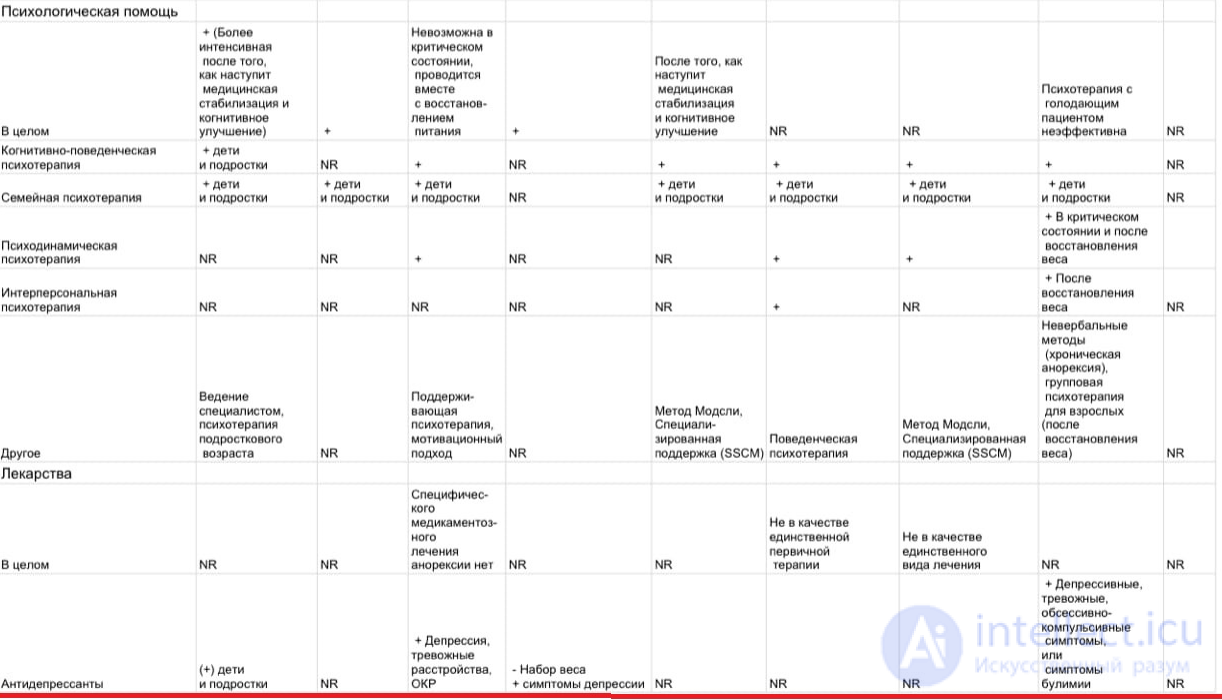
Our understanding of anorexia nervosa has expanded considerably in recent times. Various variants and forms of this disorder have been identified, along with a demonstrated tendency for them to transition into one another and a high level of comorbidity with other mental disorders. It has been shown that hereditary factors play a major role in the emergence of anorexia nervosa, and that this disorder is closely linked to disturbances in individual mental development. At the same time, heightened psychopathological vulnerability creates the conditions for predisposed individuals to react intensely to deviations in upbringing style. The result of this is the formation of a specific personality structure that contradictorily combines disturbances in self-image and identity, perfectionism, impulsivity, and a need for autonomy and recognition. Personality and behavioral disorders manifesting as pathological control over weight reflect profound cognitive shifts related to abnormalities in the psychosocial development of such patients. The insufficient cognitive-personal differentiation of patients with anorexia nervosa is closely linked to a wide range of psychoendocrine disturbances, whose etiopathogenetic significance is beyond doubt. However, the specific role of these disturbances largely remains unclear.

Comments