
Lecture
Histrionic personality disorder (from Ancient Greek ὑστέρα — «uterus»), also called hysterical personality disorder (outdated names — personality disorder of the hysterical type, hysterical psychopathy), — is a personality disorder characterized by self-dramatization, theatricality, egocentrism, emotional lability, exaggerated expression of emotions, a drive to be the center of attention, and excessive preoccupation with physical attractiveness. It is included in the ICD-10 and DSM-5.
- A personality disorder characterized by shallow and unstable excitability, a tendency toward dramatization and theatricality, exaggerated expression of emotions, suggestibility, egocentrism, and a constant desire for success and attention
The term «histrionic» (from Lat. histriō — «actor») has, since the introduction of the ICD-10, replaced the term «hysterical», as the latter acquired an offensive colloquial usage. The word «histrionic» carries the meanings of theatricality and over-emotionality, and etymologically does not imply a sex preference, unlike the word «hysterical» .
Histrionic personality disorder is characterized by:
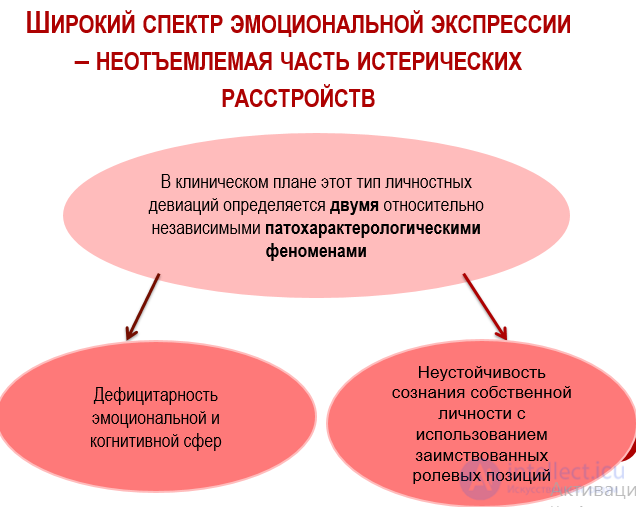
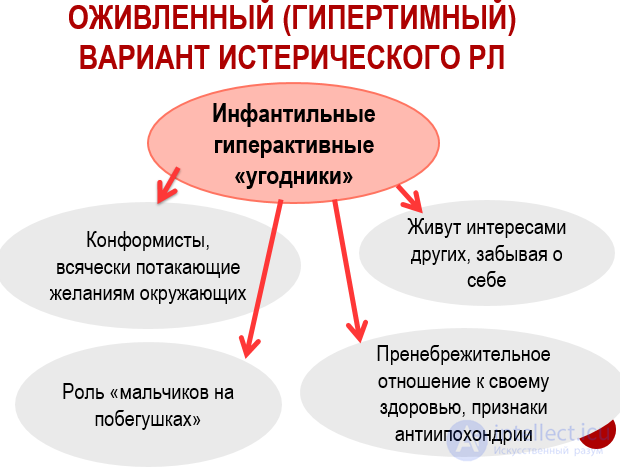
These are shallow, superficial, disorganized people, lacking firm and realistic views on life and a harmonious, adequate system of personal values.
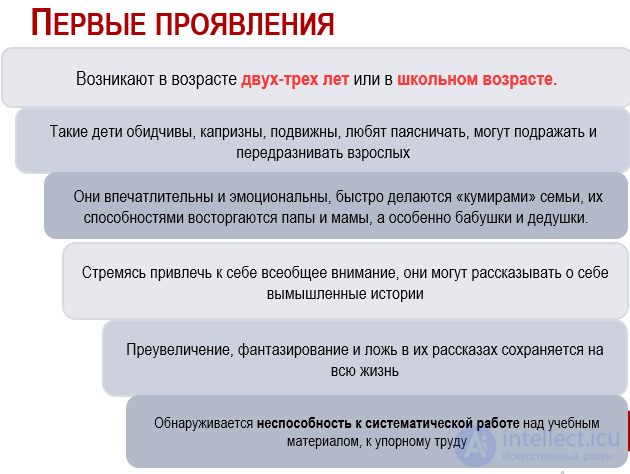
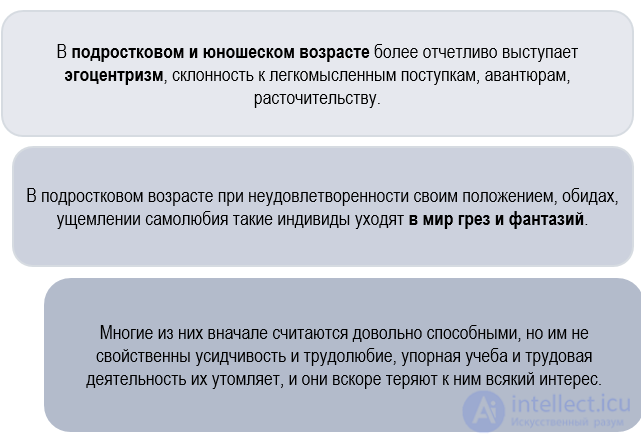
Their behavior draws attention through theatricality, stiltedness, extravagance, inconstancy, and a lack of simplicity and sincerity.
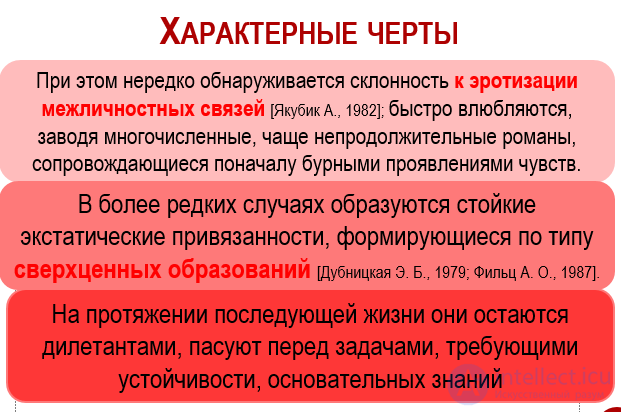
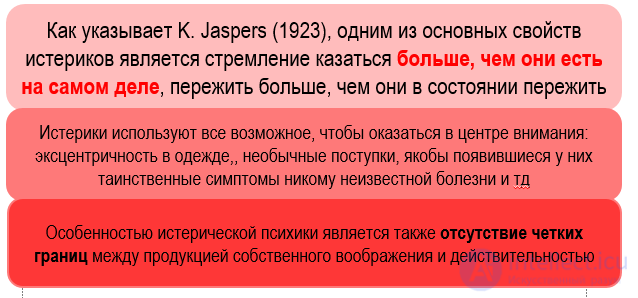
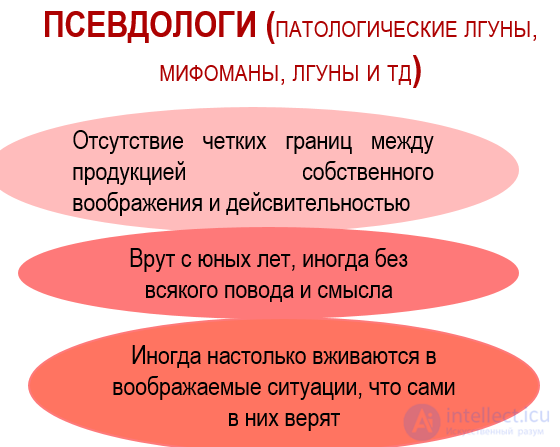
Hyperbolization and vividness in expressing their feelings, a striving to appear far more significant than they actually are, to experience more than they are able to experience, so that it is more accurate to say they «want to seem rather than to be». Their behavior is dictated not by internal motives but is calculated for external effect; they are prone to envy, scandal-mongering, dishonesty, an absence of lasting attachments, an inability to distinguish reality from fiction, and eccentricity in manners, clothing, tastes, and hobbies. They enjoy an idle life with outward, ostentatious splendor, varied entertainments, and a frequent change of impressions. The absence of clear boundaries between the products of their own imagination and reality.
Because of the vividness of some images and impressions and the dimness of others, they do not see the difference between fantasy and reality, between what happened while awake and what was seen in a dream.
A variant of the tendency toward pathological fantasizing («pathological liars» according to P. B. Gannushkin, «pseudologists»): they become so immersed in the situations created by their imagination that they come to believe in them themselves. Fantasies sometimes turn into false self-accusation, with confessions to invented crimes and even murders. Instead of dealing with real problems, they are preoccupied with fantastic inventions, often pursuing certain self-serving goals (swindlers, fortune-tellers, marriage fraudsters, charlatans)
From the standpoint of a systems approach, histrionic disorder can be defined as an acquired, learned, and relatively stable disturbance of self-regulation (self-regulation) of a living system, manifesting as dysfunction of integration mechanisms at various levels of intra-system organization.
Hysterical neurotic and reactive disorders differ in the essential structure of their etiopathogenesis (the hierarchy of importance of pathogenetic factors), as well as in the level of disintegration of the system's regulatory mechanisms, which determines the features of the clinical picture.
In the genesis of hysteria, three main factors are most often mentioned, closely interrelated:
The most significant factor is S (situation), the least — C (constitution)
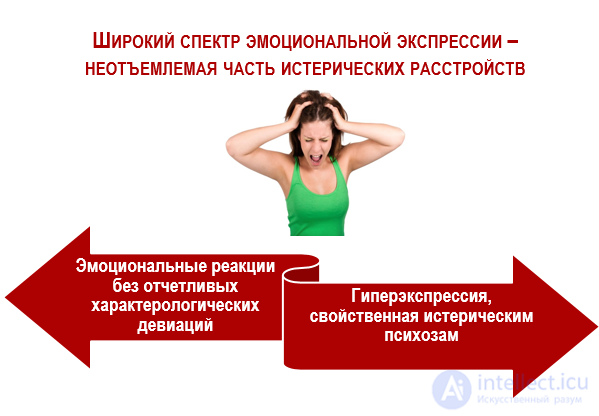
In clinical practice, the concept of hysterical neurosis is quite often confused with the concept of the hysterical personality
One may encounter the mistaken belief that a hysterical personality structure is a precondition for the occurrence of hysterical syndromes.
The results of detailed clinical studies indicate that among patients with hysteria, only 7-18% are diagnosed with a hysterical personality structure.
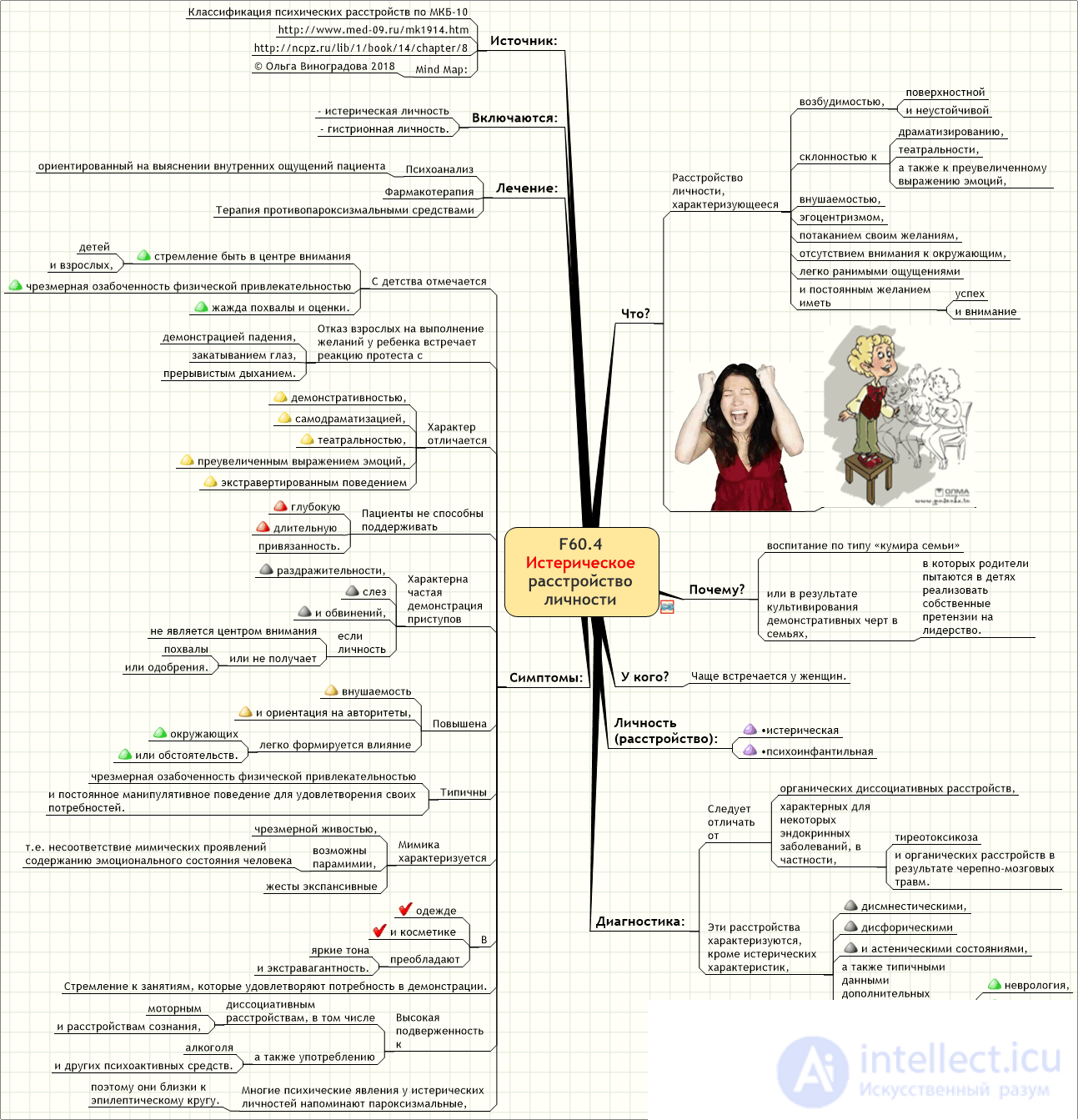
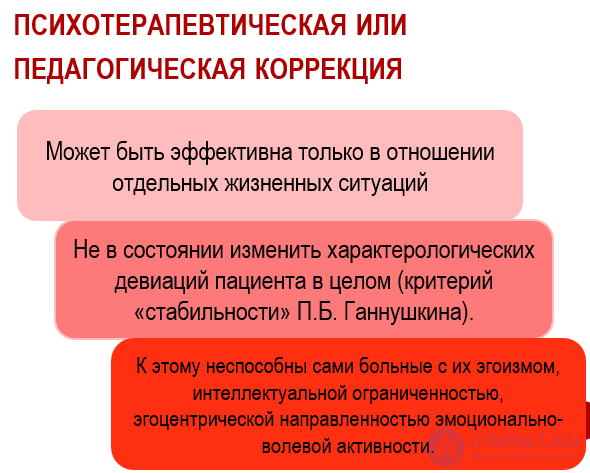
Pharmacological treatment is of limited effectiveness for personality disorders (although it does help, for example, with symptoms of depression associated with hysterical disorder), so psychotherapy is used primarily.
According to proponents of psychoanalysis, one of the most favorable prognoses is achieved through the use of psychoanalytic therapy. The therapist, however, should keep in mind that attempts at seduction are one of the main methods of attracting attention in the hysteric's arsenal, and this will undoubtedly be used on the therapist as well; however, if seduction toward the therapist proves successful, this can have the most destructive effect both on the course of therapy and on the client's inner state[. Another serious difficulty in therapy with hysterical clients is erotic countertransference, which quite often arises in therapy with this type of client.
During therapy with any therapist, a hysterical personality very quickly develops a strong transference, whose characteristics depend heavily on the therapist's sex. With a therapist of the opposite sex, the hysterical client usually feels aroused, frightened, and defensively seductive. Toward a therapist of the same sex, they experience hostility and competitiveness. In both cases, the transference most obviously repeats this client's childhood parental conflict.
There are also a number of other serious problems that arise in therapy with such people, such as: countertransference to the client's regression, irritation that the client may provoke in the therapist, mistaken underestimation of experiences described in an excessively theatrical manner, and others.

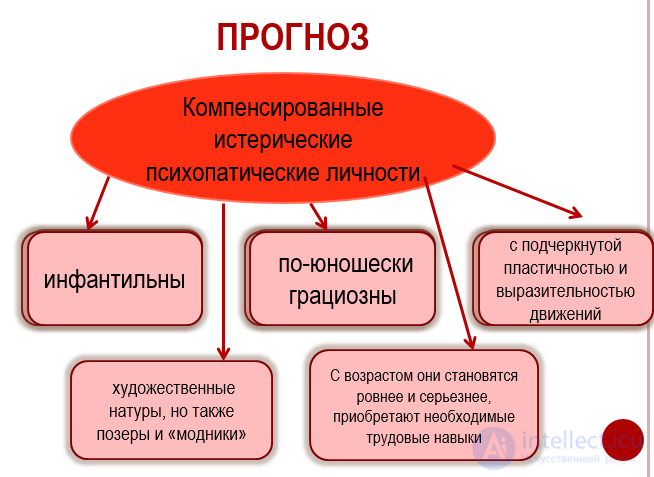
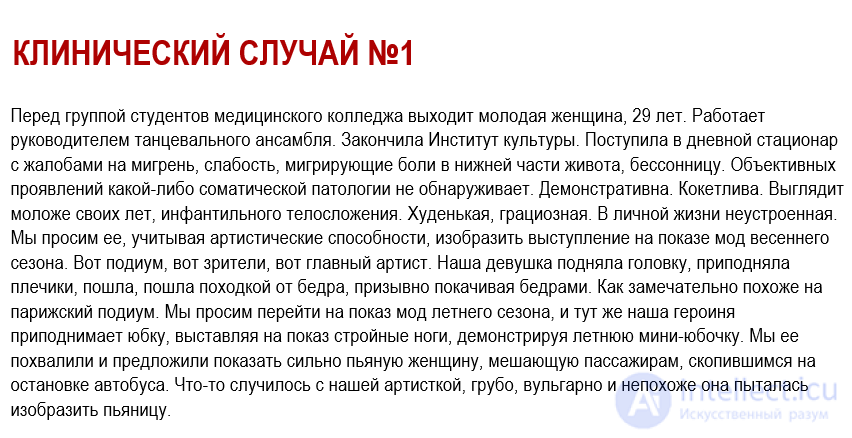
According to D. Enikeeva, hysteroidism, hysterical character accentuation, and sometimes even hysterical psychopathy, are to some degree characteristic of people in creative professions, and of actors first and foremost.


Comments