
Lecture
Psychiatry (from Ancient Greek ψυχή — «spirit», «soul», «character» ; + Ancient Greek ἰατρεία «treatment», «correction» , in turn from ἰατρός «physician» ) is a branch of clinical medicine that studies mental disorders through the lens of medical methodology, along with the methods of their diagnosis, prevention, and treatment. The term is also used to refer to the totality of state and accredited non-state institutions which, in some countries, are authorized to involuntarily isolate individuals who pose a potential danger to themselves or to others.
A medical specialist in the field of psychiatry is called a psychiatrist.
Widely accepted is the definition of psychiatry proposed by the German psychiatrist Wilhelm Griesinger (1845) as the science of recognizing and treating mental illnesses . According to a number of contemporary authors, this definition «contains the most essential features of this medical discipline» , «precisely formulates the tasks facing psychiatry» , provided one takes into account that:
Recognition means not only diagnosis, but also the study of the etiology, pathogenesis, course, and outcome of mental disorders. Treatment, besides therapy proper, includes the organization of psychiatric care, prevention, rehabilitation, and the social aspects of psychiatry.
— Obukhov S. G. Psychiatry / Edited by Yu. A. Aleksandrovsky — M.: GEOTAR-Media, 2007. - P. 8.

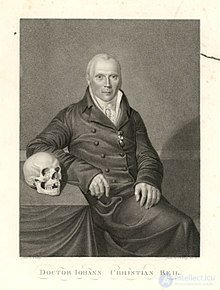
The term «psychiatry» was proposed in 1803 by the German physician Johann Christian Reil (German: Johann Reil; 1759—1813) in his famous book «Rhapsodies» (Rhapsodien. 1803, 2nd ed. 1818), in which, as characterized by Yu. V. Kannabikh, «the foundations of „true psychiatry“, that is (taking the word literally) — the treatment of mental illnesses, are laid out» . V. A. Gilyarovsky called this term an anachronism, since it
presupposes the existence of the soul or psyche as something independent of the body, something that can become ill and that can be treated on its own.
— Gilyarovsky V. A. Psychiatry. A Guide for Physicians and Students. — M.: MEDGIZ, 1954. P. 9.
«This,» continues A. E. Lichko, «does not correspond to our contemporary concepts of mental illnesses»[10], and there were attempts to replace the term «psychiatry» with another.
For example, V. M. Bekhterev proposed the name «pathological reflexology», V. P. Osipov — «tropopathology» (from Greek tropos — manner of action, direction), A. I. Yushchenko — «personopathology». These names found no followers, and the term «psychiatry» remained, having lost its original meaning.
— Korkina M. V., Lakosina N. D., Lichko A. E. Psychiatry: Textbook. — M.: Meditsina, 1995. P. 5–6.
N. N. Pukhovsky, arguing that the use of «psychiatry», «psychiatric disorders» makes the physician neurotic and disorients the patient, and noting the duality of conceptions about the nature and essence of the subject of psychiatry (which is usually understood, on the one hand, as the metaphysical «disorder of the psyche as the symbolic organ of the person», and on the other, as «pathology of the human brain as the organ of reason»), proposes to return to practice the previously used terms «phreniatry» and «alienism» and to distinguish two independent fields of therapy for mental disorders: phreniatry (treatment of brain pathology as the organ of reason) and psychotherapy (correction of disorders of human self-determination by psychological methods).
Borderline states between norm and pathology are also studied by clinical psychology.
There is no single agreed-upon definition of the concepts of «illness—health» and «norm—pathology» in psychiatry. According to one widely used definition, a mental illness is a change in consciousness that goes beyond the «norm of reaction». Many researchers speak of the fundamental impossibility of defining «normal behavior», since the criteria of mental normality differ across cultures and historical situations .
Main paradigms in psychiatry

Psychiatry is divided into general and specific psychiatry:
Whereas specific psychiatry studies individual illnesses, general psychopathology, or rather general psychiatry, studies the general laws of mental disorder… Typical psychopathological states can arise in different illnesses, and consequently they have a general significance… General psychiatry is built on the generalization of all those changes that occur in the course of individual mental illnesses.
— Snezhnevsky A. V. General Psychopathology: A Course of Lectures. – M.: MEDpress-inform, 2001. P. 7—8.
This understanding by A. V. Snezhnevsky of general psychiatry as general psychopathology is accepted by many domestic psychiatrists , but is not universally accepted . In particular, general psychiatry sometimes includes, in addition to general psychopathology, pathopsychology as well. Special (private) psychiatry is occasionally called special psychopathology .
Signs (symptoms) of mental disorders constitute the subject matter of psychiatric semiotics[20]. A combination of various symptoms of a mental disorder is called a psychopathological syndrome.
Clinical psychiatry studies the manifestations and symptomatology of mental disorders, as well as the biological essence of the pathological changes in the body that lead to disorders of the psyche.
Thus, modern psychiatry studies the etiology, pathogenesis, clinical picture, diagnosis, treatment, prevention, rehabilitation, and evaluation of mental disorders. In turn, evaluation in psychiatry is divided into: forensic psychiatric evaluation, military psychiatric evaluation, and medical-social evaluation (occupational).
In addition to the division of psychiatry into general and special (private), the following branches of this science are distinguished:
Branches engaged in studying the features of the onset, course, clinical manifestations, and treatment of mental disorders depending on age:

A psychiatric diagnosis is established on the basis of facts obtained by various methods — clinical and laboratory[27] . The primary method of psychiatry is clinical examination .
Diagnosis in psychiatry is to a large extent subjective and probabilistic in nature, which frequently leads to cases of overdiagnosis [29]. Unlike diagnoses made by physicians in other fields, which identify pathology in specific organs and systems, psychiatric diagnosis also includes an assessment of the reflection of the external world and the events occurring within it: in other words, a psychiatric diagnosis represents an assessment of the patient's and the physician's picture of the world from the standpoint of the concepts and diagnostic criteria applied in the particular historical period of the development of society and science [13].
The priority of the clinical method and the subordinate position of instrumental techniques give grounds for accusations of subjectivism in psychiatric diagnosis. Denial of the possibility of an objective diagnosis in psychiatry leads to denial of the existence of mental illnesses altogether and of psychiatry itself as a science.
— Zharikov N. M., Ursova L. G., Khritinin D. F. Psychiatry: Textbook — M.: Meditsina, 1989. P. 251
«To this day, for several centuries, the debate has continued as to whether psychiatry is a science or an art»[30]. In the opinion of critics, there is no real evidence for the scientific validity of psychiatry, nor for the effectiveness of its methods[31].
Kittrie studied a number of deviant manifestations, such as drug addiction, alcoholism, and mental illness, and demonstrated that such manifestations were first considered problems of a moral, then of a legal nature, and are now regarded as problems of a medical nature[32]:1[33]. As a result of this perception, unconventional people with deviations from the norm were subjected to social control of a moral, legal, and then medical nature[32]:1. Similarly, Conrad and Schneider conclude their review of the medicalization of deviance with the opinion that three main paradigms can be identified on which the meanings of the concept of deviance have depended in various historical periods: deviance as sin, deviance as crime, and deviance as illness[32]:1[34]:36.
In all cases, mental illnesses must be differentiated from symptomatic mental disturbances and pathologies encountered in other diseases of the exogenous group, which systemically affect the body as they progress. These include, first of all, degenerative diseases of the nervous system (Parkinson's disease, Guillain–Barré syndrome, Down syndrome, autism, cerebral atherosclerosis) and systemic collagenoses; secondly, clinical mental disorders encountered in acute and chronic infections (especially venereal and parasitic infections, subacute sclerosing encephalitis, lethargic encephalitis, multiple sclerosis), intoxications (a thorough toxicological history is important, especially in cases of poisoning by drugs, alcohol, carbon monoxide, heavy metals, or medications), injuries (primarily psychosis), and diseases involving metabolic disturbances (diabetes mellitus, thyroid disease, hypothalamic pathology, Addison's disease), oncological diseases (brain tumors, ovarian tumors, pancreatic tumors, hemablastoses, radiation sickness), and in encephalopathic syndromes of various etiologies.
The history of psychiatry dates back to ancient times. As with any other science, the starting point for the existence of psychiatry can be considered either the moment when an idea of the object of the science (in this case, mental disorders) arose in public consciousness, or the moment when the first scientific knowledge (at least, that which has survived to our time) appeared.

In antiquity, what is understood today as mental illness was explained on the basis of religious and mystical notions. As a rule, madness was associated with curses, the intervention of dark forces, and possession by evil spirits. Since mental activity was already associated with the head at that time, it appears that skull trepanation was a common practice, intended to «release» the spirits. Some mental disorders were associated with «divine favor», a «mark of chosenness» — for example, epilepsy was regarded as such long before Hippocrates.
In Europe, the Middle Ages was a time when church dogma prevailed, and attitudes toward mental illness were dominated by superstition and religious beliefs. There was no scientific approach to the mentally ill, and medicine did not consider mental illness to fall within its area of competence. According to some scholars, during the famous witch trials, persecution and reprisals, up to and including burning at the stake, were also inflicted on individuals with mental disorders, who were often perceived as possessed by demons and regarded as sorcerers and witches.
At the same time, as is often claimed, it was in medieval Western Europe that the first psychiatric hospitals arose[35], although there is an opinion that they emerged even earlier in the Middle East, in Baghdad in the 8th century[36] and in Byzantium. In Western Europe such institutions were not intended to cure the sick but to isolate them from society. Conditions resembled those of prisons: chains and shackles were widely used, and even basic hygiene was often disregarded. A vivid example of this is Bedlam, opened at the end of the 15th century. Nevertheless, there also existed boarding facilities attached to monasteries and church hospitals, where conditions were comparatively better, but admission to such institutions was, as a rule, available only to members of privileged strata of society.
In medieval Rus there were no institutions like Bedlam, and care for the mentally ill was undertaken by monasteries, as was, indeed, care for those suffering from other illnesses and for the poor. Moreover, in Orthodoxy there existed the notion of the "holy fools" (yurodivye), which often meant a gentler attitude than in Western Europe. Nevertheless, cases of burning people with mental disorders were also recorded[37].
The situation of psychiatry and of the mentally ill in Europe changed little over the 16th century to the first half of the 18th century. In the 17th century, so-called "general hospitals" became widespread, which, like the Bicêtre or Bedlam, were in fact not medical institutions at all. Along with the mentally unwell, such establishments housed the poor, vagrants, freethinkers, debauchees, those suffering from venereal disease, spendthrifts, and other persons displaying undesirable behavior. In the mid-18th century, numerous houses arose that held exclusively people with mental disorders[38].
Thus, in France from 1760 onward, the mentally ill were required to pass through the Hôtel-Dieu hospital, the essence of "treatment" in which was to determine whether the person was ill or not — by means of bloodletting, the administration of laxatives and hellebore, and dousing with cold water. If "recovery" did not occur, the patient was sent to the Petites Maisons (fr.)Rus. (literally "Little Houses") or to the Bicêtre (for men) or the Salpêtrière (for women)[35].
In Russia, institutions of this type first appeared in the 18th century by decree of Peter III. Called "dollhauses" ("toll" — mad, "haus" — house), they were places resembling prisons, where those confined were subjected to torture and kept in unsanitary conditions[39].
At the end of the 18th and beginning of the 19th century, changes occurred in psychiatry owing to shifts in the social and political situation and the accumulation of scientific knowledge. The first reform of this kind took place in revolutionary France, where Philippe Pinel was appointed chief physician of the Bicêtre and showed a humane attitude toward patients, removing their chains. His work and theoretical views found a response in various countries of Europe, influencing the development of psychiatry in the first half of the 19th century[35].
Nevertheless, even by the middle of the 19th century a humane approach to patients' living conditions and to restraint measures had not spread everywhere. For example, in German institutions for the insane, before reform, beatings were common, and sticks and whips were in use; inmates of these institutions often went hungry and died of exhaustion. "Mechanized psychotherapy" of psychoses was widely used in Germany — a whole series of mechanical devices that were essentially instruments of torture: the restraint chair, the restraint bed, the rotating machine, the "sack" (Sack). Also used as methods of treatment were caustic rubbing agents, cauterization with hot iron, "nausea therapy," and special hydrotherapy procedures (sudden immersion in cold water, ice-cold showers, etc.)[35].
In 1803, the German physician Johann Christian Reil, who introduced the term "psychiatry," exclaimed:
 |
We lock up these unfortunate creatures like criminals in madhouses, in these lifeless prisons beyond the city gates, where owls have settled in the dark crevices… and leave them there to rot in their own filth[40]. |  |
In the first half of the 19th century in England, most patients in madhouses lived in conditions no less harsh than before: overcrowded and poorly heated wards, chronic starvation, filth and damp, the use of chains and shackles, and the practice of chaining patients to beds for extended periods for the convenience of staff. The work of E. Charlesworth and R. Gardiner Hill in the city of Lincoln, and of J. Conolly in Hanwell (eng.)Rus., led to reforms that began with strict limits on the use of restraint measures: straitjackets, handcuffs, camisoles, and straps were now used in the hospitals of these cities only in extreme cases. Conolly's system significantly influenced the practice of psychiatric institutions in Europe. In the 1860s—1870s, the system of non-restraint (the rejection of binding and the use of straitjackets) spread in Germany, Switzerland, and the Netherlands[35].
However, most large public institutions in European countries and the United States failed to adopt the successful experience of the early proponents of moral treatment for patients. Financial constraints, large patient numbers, and the absence of alternatives to existing forms of care led to the rapid transformation of public psychiatric asylums into closed institutions[41]. By the end of the 19th — beginning of the 20th century, the movement for the humanization of psychiatry had gone into decline. Public psychiatric hospitals could provide only modest custodial care and the most ineffective treatment, and these hospitals became increasingly overcrowded with each passing year. Right up until the middle of the 20th century, the paternalistic model of psychiatric care prevailed throughout the world, and the involuntary hospitalization of the overwhelming majority of the mentally ill was considered a generally accepted social norm.
In the science of mental disorders at the end of the 19th — beginning of the 20th century, two schools stood out among others. The first to mention is psychoanalysis, which began with the work of Sigmund Freud (1856—1939), who laid the foundations of the theory of the unconscious. According to this doctrine, the human mind contained a region of animal instincts (the so-called «Id», opposed to the personal «Ego» and the «Superego» — the dictate of society, which commands the personality and imposes certain norms of behavior). The unconscious, from the point of view of Freud and his followers, became a prison for forbidden desires, in particular erotic ones, repressed into it by consciousness. Given that a desire cannot be finally destroyed, consciousness offered the mechanism of «sublimation» — realization through religion or creativity — for its safe fulfillment. A nervous disorder was thus presented as a failure in the mechanism of sublimation and the eruption of the forbidden to the surface through a pathological reaction. To restore the normal functioning of the personality, a special technique called psychoanalysis was proposed, which involved returning the patient to childhood memories and resolving the problem that had arisen.
Freudianism was opposed by the school of positivist medicine, one of whose outstanding figures was Emil Kraepelin. Kraepelin based his understanding of mental disorder on progressive paralysis and proposed a form of studying the illness, new for its time, as a process developing over time and breaking down into distinct stages, each described by a specific set of symptoms[35]. Drawing on the philosophy of positivism, in particular on the principle that «science is philosophy» — in other words, the proclamation that only the results of experience or scientific experiment are real, as opposed to the scholastic speculation of earlier times — positivist medicine offered an explanation of mental disorder as a biological disturbance, a destruction of brain tissue caused by causes of multiple origin .
However, neither theory could claim an unambiguous and well-substantiated explanation of cases already described in the literature or known from clinical practice — thus, Freud and his followers were reproached for the speculative and unsystematic nature of their constructions, and for the arbitrariness of their interpretations of the examples they cited. In particular, Freud built his theory of infantile sexuality on the psychoanalysis of adults, explaining the impossibility of confirming it in children by their fear of the forbidden topic .
For their part, opponents reproached Kraepelin with the fact that the theory of organic damage de facto reduced madness to emotional and mental degradation. The cure of a mentally ill patient was at that time a priori declared impossible, and the physician’s work was reduced solely to supervision, care, and the containment of possible aggression. It was also pointed out that positivist theory was unable to explain numerous cases of mental disorders in which no biological damage could be found .
As one of the possible ways out of the impasse that was emerging , Edmund Husserl and his followers proposed a method called the phenomenological method.
Its essence consisted in identifying certain «phenomena» — ideal entities that are a reflection of objects of the real world, as well as of one’s own «self» in the consciousness of the individual. These phenomena, idealized facts purified of their emotional and social component, represented, according to Husserl, the foundation of all cognition — even though they did not actually exist, they were inseparably linked to the cognizing subject. Philosophy, therefore, was meant to serve as the culmination of any inquiry, representing its quintessence and a rigorous system at the level of scientific understanding[52], with phenomenology serving as the instrument of this cognition.
At the foundation of the application of the phenomenological method in psychology and psychiatry lay the postulate of the «embodiment of the mind» — the inseparable connection of the human being with the outer world and the possibility for consciousness to function normally only within this connection. A disruption of this connection, a confusion of perception in the transmission of external impressions to the mind, constitutes the essence of mental illness. The restoration of this connection accordingly leads to recovery . The method of achieving phenomenological clarity of the mind was seen as clarification, the bracketing out of the emotional aspect, and a pure view of the world unclouded by bias — a state that phenomenologists gave the special name «epoché» .
K. Jaspers, who began his medical career in 1909 at the Heidelberg psychiatric clinic where the famous Kraepelin had worked shortly before, took a critical view of his legacy and of the approach to treating and confining patients practiced at the clinic . In contrast, drawing on Husserl's theory, he developed the phenomenological method specifically as applied to psychopathology, proposing a detailed interviewing of the patient to identify the basic phenomena of their consciousness and their subsequent classification for diagnostic purposes (descriptive phenomenology) . In addition, E. Minkowski proposed using the so-called method of structural analysis to identify the underlying disturbance to which the illness owes its origin (structural analysis) . H. Ellenberger, in turn, proposed, on the basis of phenomenology, a method for reconstructing the patient's inner world (categorial analysis) . The immediate result of such an approach was respect for the patient as a person and orientation of the specialist toward understanding, rather than imposing on the patient a view of things alien to him .
The 20th century was marked by the development of various forms of outpatient psychiatric care . Studies showed that confinement in closed-type psychiatric hospitals produces minimal therapeutic effect and, in a number of cases, even leads to the worsening and exacerbation of mental disorders. Attention to human rights violations occurring in closed psychiatric institutions increased.
In foreign countries, the antipsychiatric movement that arose in the 1950s led to deinstitutionalization — a large-scale reduction in the number of psychiatric beds, the closure of many psychiatric hospitals, and the creation of outpatient services. This process was most pronounced in Italy, where Law 180, adopted in 1978, provided for the closure of all psychiatric hospitals and the provision of care by alternative community mental health services. A large-scale reduction of psychiatric hospitals took place in nearly all countries of North America and Western Europe .
In addition to the development of outpatient services, a system of semi-inpatient psychiatric care was formed in various countries during the 20th century. Day hospitals and semi-inpatient facilities were created, specialized for patients with various illnesses and for different age groups; weekend hospitals, end-of-week hospitals, halfway hospitals, night clinics, and post-hospital care and rehabilitation centers were also organized.
All mental disorders are conventionally divided into two levels: neurotic and psychotic.
The boundary between these levels is conditional, but it is assumed that gross, pronounced symptomatology is a sign of psychosis…
Neurotic (and neurosis-like) disorders, by contrast, are distinguished by the mildness and smoothness of their symptomatology.
— Zharikov N. M., Tyulpin Yu. G. Psychiatry: A Textbook. — Moscow: Meditsina, 2002. - P. 71.
Mental disorders are called neurosis-like if they are clinically similar to neurotic disturbances but, unlike the latter, are not caused by psychogenic factors and have a different origin. Thus, the concept of the neurotic level of mental disorders is not identical to the concept of neuroses as a group of psychogenic illnesses with a non-psychotic clinical picture. In this connection, a number of psychiatrists avoid using the traditional term "neurotic level," preferring the more precise terms "non-psychotic level" and "non-psychotic disorders"[60][61].
The concepts of the neurotic and psychotic level are not tied to any particular illness.
— Zharikov N. M., Tyulpin Yu. G. Psychiatry: A Textbook. — Moscow: Meditsina, 2002. - P. 71.
Progredient mental illnesses often make their debut with disorders of the neurotic level, which subsequently, as the symptomatology worsens, produce a picture of psychosis. In certain mental illnesses, for example in neuroses, the mental disturbances never exceed the neurotic (non-psychotic) level.
P. B. Gannushkin proposed calling the entire group of non-psychotic mental disorders "minor" psychiatry, while V. A. Gilyarovsky called it "borderline" psychiatry. The terms "borderline psychiatry" and "borderline mental disorders" are frequently encountered in psychiatric publications .
In cases where the result of a mental function's operation is the presence of mental production, which should not be present under normal conditions, such mental production is called "positive," or "productive," symptomatology. Positive symptomatology, as a rule, is a sign of some illness. Illnesses whose key symptoms are this kind of "positive" symptomatology are conventionally called "diseases of the psyche" or "mental illnesses." Syndromes formed by "positive" symptomatology are conventionally called, in psychiatry, "psychoses" ]. Since illness is a dynamic process that can end either in recovery, or in the formation of a defect (with or without transition to a chronic form), such "positive" symptomatology likewise either eventually disappears or forms a defect, which, in the functioning of the psyche, is conventionally called "dementia," or feeble-mindedness.
Productive symptoms are not specific (that is, not tied to any particular disease). For example, delusions, hallucinations, and depression can all be present in the clinical picture of various mental disorders (with differing frequency and course). Nevertheless, an «exogenous» type of psychic reaction (that is, caused by factors external to brain cells) is distinguished, for example exogenous psychoses, and an endogenous type of psychic reaction (that is, caused by internal factors), or «endogenous» disorders, which primarily include schizophrenia, disorders of the schizophrenia spectrum, bipolar affective disorder, and unipolar endogenous depression. Since the 19th century, psychiatry has held a concept, shared by only some psychiatrists, according to which endogenous psychoses are a single disease (the so-called unitary psychosis theory); however, most psychiatrists still hold the view that schizophrenia and endogenous affective psychoses stand in clear opposition to one another.
The concept of «endogenous» is one of the key concepts in psychiatry. Its ambiguity is sometimes pointed out:
The concept of «endogenous» is ambiguous and disputed. It means «not somatically conditioned» and «non-psychogenic». What is meant to define «endogenous» positively sounds equally ambiguous. A number of psychiatrists think of nothing other than the «idiopathic», that is, a disease arising from itself; some postulate an organic cause for it, even if that cause remains unknown (cryptogenic). Given the current state of knowledge, one can say with certainty only that «endogenous» psychoses are hereditarily determined and follow their own course, independent of external influences. In that case the concept of «endogenous» becomes unnecessary.
— Tölle R. Psychiatry with Elements of Psychotherapy. / Translated from German by G. A. Obukhov. — Minsk: Vysheishaya Shkola, 1999. — P. 42.
The general pathological patterns underlying the formation of productive (positive) psychopathological syndromes in mental illness can be represented in the following table (after A. V. Snezhnevsky, 1983)[65]:
| Relationship between general pathological positive syndromes and nosological entities |
|---|
| Ⅸ |
| Psychoorganic |
| Ⅷ |
| Convulsive |
| Ⅶ |
| Paramnesias |
| Ⅵ |
| Clouding of consciousness (amentia, delirium, twilight state) |
| Ⅴ |
| Hallucinatory-paranoid, catatonic, paraphrenic |
| Ⅳ |
| Paranoid, verbal hallucinosis |
| Ⅲ |
| Neurotic (obsessive, depersonalization, hysterical) |
| Ⅱ |
| Affective (manic, depressive) |
| Ⅰ |
| Emotional-hyperesthetic disorders |
«Negative symptoms (deficit symptoms, minus symptoms) — a sign of persistent loss of mental functions, a consequence of the breakdown, loss, or underdevelopment of certain links in mental activity. Manifestations of the mental deficit include memory loss, dementia, feeble-mindedness, decline in the level of personality, and others. It is generally accepted that positive symptoms are more dynamic than negative ones; they are changeable, capable of becoming more complex, and in principle reversible. Deficit phenomena, by contrast, are stable and highly resistant to therapeutic intervention».
— Zharikov N. M., Ursova L. G., Khritinin D. F. «Psychiatry: A Textbook»[66]
In Russian psychiatry, the patterns underlying the formation of negative syndromes in mental illness are traditionally described using the scheme proposed by academician A. V. Snezhnevsky. Below is its analogue, with the levels of mental disorders shown in the table by Roman numerals[65]. This is meant to reflect the clinical fact that each higher level incorporates all the underlying layers of mental disorders.
| Relationship between general pathological negative syndromes and nosological entities |
|---|
| Ⅹ |
| Mental marasmus |
| Ⅸ |
| Total dementia |
| Ⅷ |
| Amnestic disorders |
| Ⅶ |
| Regression of personality |
| Ⅵ |
| Decline in the level of personality |
| Ⅴ |
| Decline in energy potential |
| Ⅳ |
| Personality disharmony (including schizoidization) |
| Ⅲ |
| Objectively determinable alteration of personality |
| Ⅱ |
| Objectively perceived alteration of the «self» |
| Ⅰ |
| Exhaustion of mental activity |
The concepts of both «productive» and «negative» symptoms are applicable to a mental function.
By definition, there cannot be a defect (negative symptomatology) for perception, since perception is the primary source of information for mental activity. Positive symptomatology for perception includes illusion (an incorrect assessment of information received from a sense organ) and hallucination (a disturbance of perception in one or several sense organs (analyzers), in which a false (imaginary) perception of information that does not exist and was not received by the sense organs is interpreted as real).
Perceptual disturbances are also conventionally classified according to the sense organs to which the distorted information relates (example: «visual hallucinations», «auditory hallucinations», «tactile hallucinations», which are also called senestopathies ).
Sometimes thought disturbances become attached to perceptual disturbances, and in this case illusions and hallucinations acquire a delusional interpretation. Such delusions are called «sensory». This is a figurative delusion, with a predominance of illusions and hallucinations. The ideas within it are fragmentary and inconsistent — the primary disturbance is one of sensory cognition (perception).


The problem of positive symptomatology for the mental function of «memory» will be discussed further below (in the «Conclusion» section).
Dementia in which the key disorder is a memory disorder is what is known as «organic brain disease».

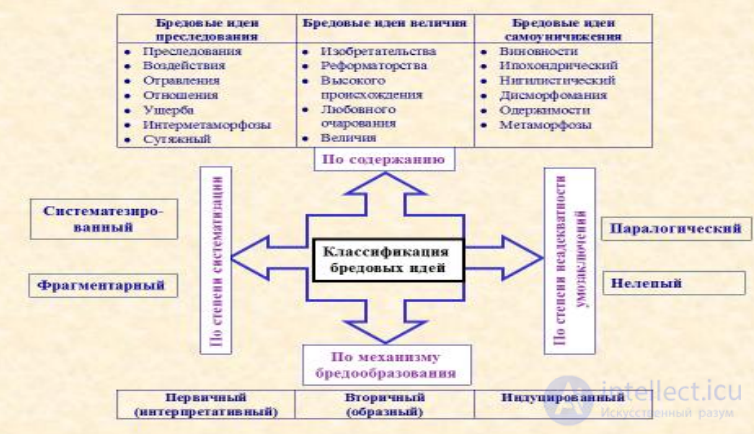
For thinking, the productive symptom is delusion — a conclusion that does not arise as a result of processing incoming information and is not corrected by incoming information. In ordinary psychiatric practice, the term «thought disturbance» is understood as referring either to delusion or to various disturbances of the thinking process .



Volitional disorders

Positive affective symptomatology consists of mania and depression (an elevated or, respectively, lowered mood that is not the result of an assessment of incoming information and does not change, or changes only slightly, under the influence of incoming information).
Flattening of affect (that is, its smoothing out), which arises as a result of schizophrenia, is not usually referred to by the term «affective disturbance» in psychiatric practice. This term is used specifically to denote positive symptomatology (mania and/or depression).
The following circumstance is key for psychopathology: a mental illness characterized by productive disorders (psychosis) in one of the mental functions causes negative disorders (a defect) in the next mental function. That is, if positive symptomatology of perception (hallucinations) was noted as the key symptom, then negative symptomatology of memory should be expected. And in the presence of positive symptomatology of thinking (delusion), negative symptomatology of affect should be expected.
Since affect is the final stage of the brain's processing of information (that is, the last stage of mental activity), no defect occurs after productive symptomatology of affect (mania or depression).
As for memory, the phenomenon of productive symptomatology of this mental function itself is not clearly delineated, since, based on theoretical premises, it should clinically manifest as an absence of consciousness (a person does not remember what happens during a memory disturbance). In practice, however, the development of negative symptomatology of the mental function of «thinking» (epileptic dementia) is preceded by epileptic seizures.
There are three main classifications of mental disorders: the International Classification of Diseases (ICD; the current version — ICD-10, class V: mental and behavioral disorders) and the American Diagnostic and Statistical Manual of Mental Disorders (DSM; the current version — DSM-5)[67].
Below is the division of mental illnesses that has been used in practical psychiatry for the last hundred years. These illnesses include, in particular, organic brain disease (a more precise name is psycho-organic syndrome), epilepsy, schizophrenia, and bipolar affective disorder (a name that has become widespread relatively recently; the former name was manic-depressive psychosis). In ICD-10, epilepsy (G40) belongs to class VI «Diseases of the nervous system (G00 — G99)». Previously regarded as one of the typical «mental illnesses» (for example, K. Jaspers identified three typical «mental illnesses»: epilepsy, manic-depressive psychosis, and schizophrenia), epilepsy has long been excluded from psychiatric classifications, and the notion of epilepsy has been replaced by the concept of epileptic syndrome[11].
Organic psychosyndrome (organic psychosyndrome) — a state of mental weakness caused by organic damage to the brain (in vascular diseases of the brain, lesions of the central nervous system, syphilis, traumatic brain injuries, various intoxications, substance abuse, chronic metabolic disorders, brain tumors and abscesses, encephalitis). However, organic psychosyndrome occurs particularly often in atrophic processes of the brain in presenile and senile age (Alzheimer's disease, senile dementia). In its mildest form, organic psychosyndrome represents an asthenic state with weakness, increased exhaustibility, emotional lability, unstable attention, and reduced working capacity. In severe forms of organic psychosyndrome, intellectual-mnestic decline comes to the fore, reaching the degree of dementia.
Since the key feature of dementia caused by organic psychosyndrome is memory impairment, intellectual impairments in patients manifest first of all: the ability to acquire new knowledge deteriorates to varying degrees, the volume and quality of previously acquired knowledge declines, and the range of interests narrows. Subsequently, deterioration of speech is added, in particular oral speech (vocabulary decreases, sentence structure simplifies, the patient more often uses verbal clichés and filler words). Memory impairments extend to all its types. The retention of new facts worsens, meaning memory for current events suffers, the ability to retain perceived material declines, and the ability to activate memory stores diminishes.
The clinical manifestations of epilepsy are exceptionally diverse. In the 19th century, it was widely believed that this disorder inevitably causes a decline in intelligence. In the 20th century, this view was revised: it was found that deterioration of cognitive functions occurs only in relatively rare cases[68]:287.
In those cases where a characteristic epileptic defect nevertheless develops (epileptic dementia), its key component is a disturbance of thinking. Thought operations include analysis, synthesis, comparison, generalization, abstraction, and concretization with the subsequent formation of concepts. The patient loses the ability to separate the main, essential from the secondary, from minor details. The patient's thinking becomes increasingly concrete-descriptive, and cause-and-effect relationships cease to be comprehensible to them. The patient gets bogged down in details and switches from one topic to another only with great difficulty. In patients with epilepsy, a limitation is found in the range of objects named within a single concept (only domestic animals are named as animate objects, or furniture and surroundings as inanimate ones). The inertness of associative processes characterizes their thinking as sluggish and viscous. The impoverishment of vocabulary often leads patients to form antonyms by adding the particle «not» to a given word. The unproductive thinking of patients with epilepsy is sometimes called labyrinthine.
This article deals only with the characteristic schizophrenic defect (schizophrenic dementia — dementia praecox). This dementia is characterized by emotional impoverishment reaching the degree of emotional bluntness. The defect consists in the fact that the patient either does not experience emotions at all, and (or) the emotional reaction to the products of thinking is distorted (such a discrepancy between the content of thinking and its emotional evaluation is called «splitting of the psyche»).
At present, the view that schizophrenia inevitably leads to dementia is refuted by research — the course of the illness is often favorable, and with such a course patients have the opportunity to achieve long-term remission and functional recovery[69][70][71].
When mental disorders develop (productive symptoms, i.e., mania or depression), no defect (dementia) occurs in the mental function called «affect».
According to the theory of «unitary psychosis», a single endogenous mental illness, which combines the concepts of «schizophrenia» and «manic-depressive psychosis», proceeds in its initial stages of development in the form of «mania», «melancholia (i.e., depression)», or «madness» (acute delirium). Then, if «madness» exists, it naturally transforms into «senselessness» (chronic delirium) and, finally, leads to the formation of «secondary dementia». The founder of the unitary psychosis theory is W. Griesinger. It is based on the clinical principle of T. Sydenham, according to which a syndrome represents a regular combination of symptoms that change over time. One of the arguments in favor of this theory is the fact that affective disorders include specific thought disturbances caused exclusively by the disturbance of affect (so-called secondary changes in thinking). Such specific (secondary) thought disturbances are primarily disturbances in the tempo of thinking (the pace of the thinking process). A manic state causes an acceleration in the tempo of thinking, while depression slows the pace of the thinking process. Moreover, changes in the tempo of thinking can be so pronounced that thinking itself becomes unproductive. In mania, the tempo of thinking can increase to such an extent that all connection is lost not only between sentences but between words (such a state is called «word salad»). On the other hand, depression can slow the pace of the thinking process to such an extent that thinking stops altogether.
Affective disorders can also give rise to a distinctive form of delusion found only in affective disorders (such delusions are called «secondary»). A manic state produces delusions of grandeur, while depression is the underlying cause of ideas of self-deprecation. Another argument in favor of the unitary psychosis theory is the fact that intermediate, transitional forms exist between schizophrenia and manic-depressive psychosis. This holds true not only from the standpoint of productive symptoms but also from the standpoint of negative symptoms, that is, the symptomatology that determines the diagnosis of the illness. For such transitional states there is a general rule, which states: the greater the affective disturbance in an endogenous illness relative to the productive thought disorder, the less pronounced the resulting defect (specific dementia) will be. Thus, schizophrenia and manic-depressive psychosis represent variant courses of one and the same illness. According to proponents of the «unitary psychosis» theory, schizophrenia is simply the most malignant variant of the course, leading to the development of pronounced dementia, while manic-depressive psychosis is the most benign variant of the course of the single endogenous illness, since in this case the defect (specific dementia) does not develop at all.

Comments