
Lecture
Questions for consideration:
Psychopathy (from Ancient Greek ψυχή «spirit; soul; consciousness; character» + from πάθος «suffering; pain; illness») — a psychopathological syndrome manifested as a combination of traits such as callousnessruen toward others, reduced capacity for empathy, an inability to feel genuine remorse for harming other people, deceitfulness, egocentricity, and shallow emotional reactions .
Subclinical psychopathy, along with Machiavellianism and subclinical narcissism, forms part of the Dark Triad of «malevolent character traits», which are characterized by callousness and manipulativeness . Psychopathy is a heterogeneous syndrome that, according to the triarchic model, represents a combination of the following phenotypic domains: «disinhibition », «boldness», and «meanness» .
The Psychopathy Checklist is used to assess the possible presence of psychopathy.
Psychopathy is not included among the official psychiatric diagnoses of ICD-10; however, the American DSM-5 states that psychopathy and sociopathy are synonyms for antisocial (dissocial) personality disorder. According to the DSM-5 alternative model (Section III), psychopathy may manifest as a specific variant of antisocial personality disorder; however, on the whole, psychopathy is not equivalent to that disorder, including at the neurobiological level.
Psychopathy can begin developing in childhood in the form of callous-unemotional traits ; compared with adult psychopathy, childhood psychopathy responds better to treatment[12]. The prevalence of psychopathy is approximately 4.5% in the general population and 15-25% in the criminal population; furthermore, about 10% of the population, while not clinical psychopaths, display psychopathic traits and cause harm to those around them
The use of the term «psychopathy» in forensic psychiatry is associated with an increased likelihood that a defendant who is not actually a psychopath will be mistakenly diagnosed as a «psychopath», which may result in a harsher and less fair sentence . Nevertheless, the theoretical and practical study of psychopathy is important for the justice system — criminal psychopaths are more prone than other offenders to sadism and recidivism, are skilled liars who seize the initiative during interrogations, and may pose a particular danger to the lives of law enforcement officers
Most portrayals of psychopaths created in cinema are unrealistic; however, as understanding of psychopathy grows, the correspondence of such portrayals to scientific observations is increasing, which has value for education[20].
I. M. Balinsky was the first to describe and substantiate psychopathy as a distinct clinical form. Modern conceptions of psychopathy were first formulated in 1941 by the psychiatrist Hervey Cleckleyruen; interest in the study of psychopathy within the scientific community rose sharply after the appearance in 1991 of the psychodiagnostic instrument, the PCL-Rruen[21]. The etiology of psychopathy, in addition to a social component[22], includes neurobiological dysfunction, due to which the psychopath is incapable of empathy and of deeply experiencing complex emotions (such as attachment, guilt, and joy); despite this, a psychopath may appear «charming», owing to a well-developed capacity for convincingly imitating emotions
According to the «successful psychopathy» hypothesis, there exist subclinical psychopaths who do not formally break the law and who achieve career advancement thanks to the psychopathic traits of their character, which those around them mistakenly interpret as leadership qualities, and which may in the long run harm the team
According to the results of large-scale studies conducted in the United States in the 1980s, psychopathy was identified in 5% of men and 1% of women. The predominance of men among psychopaths is also confirmed by data from studies of offender behavior. However, an alternative viewpoint is also common among specialists — that the scale of female psychopathy is underestimated. Psychopathy tends to manifest differently in women, in particular, it may appear less overtly and take the form of psychological rather than physical violence
The Canadian psychiatrist Robert D. Hare , after many years working as a forensic psychiatrist, developed the «Psychopathy Checklist» (PCL) with 20 items
For each characteristic a score from 0 to 2 is assigned: if the trait is observed — 2; if it is probably present — 1; if it is absent — 0. If the total score is from 30 to 40, it is possible that the person is indeed a psychopath, and a psychiatric evaluation is necessary to make the diagnosis. Some specialists believe that a total from 20 to 30 indicates the presence of psychopathic traits, but this opinion is not supported by most psychiatrists[29].
Behavioral genetic studies have identified potential genetic and non-genetic factors influencing psychopathy, including effects on brain function. Proponents of the triarchic model believe that psychopathy results from the interaction of genetic predispositions and an adverse environment. What counts as adverse can differ depending on the underlying predisposition: for example, it is suggested that individuals with high boldness may respond poorly to punishment but may respond better to rewards and secure attachments.
Genetically informed studies of personality characteristics typical of people with psychopathy have found moderate genetic (as well as non-genetic) influences. With respect to the PPI, fearless dominance and impulsive antisociality were also influenced by genetic factors and did not correlate with each other. Genetic factors generally tend to influence the development of psychopathy, while environmental factors influence the specific expression of the predominant traits. A study of a large group of children found heritability of over 60% for «callous-unemotional traits», and behavioral problems among children with these traits had higher heritability than among children without these traits.
From cases such as the accident of Phineas Gage, it is known that the prefrontal cortex plays an important role in moral behavior. Farrington's study of a sample of London men aged 8 to 48 examined which factors were associated with scoring 10 or more on the PCL:SV at age 48. The strongest factors were having a convicted parent, physical neglect, low father involvement with the boy, low family income, and coming from a broken family. Other important factors were poor supervision, abuse, harsh discipline, large family size, a delinquent sibling, a young mother, a depressed mother, low social class, and poor housing. There is also a link between psychopathy and harmful treatment by peers. However, it is difficult to determine the extent of environmental influence on the development of psychopathy given the evidence for its strong heritability.
Researchers have linked head injuries to psychopathy and violence. Since the 1980s, scientists have linked traumatic brain injury, such as damage to the prefrontal cortex, including the orbitofrontal cortex, with psychopathic behavior and an impaired ability to make morally and socially acceptable decisions — a condition that has been termed «acquired sociopathy» or «pseudopsychopathy». Individuals with damage to the area of the prefrontal cortex known as the ventromedial prefrontal cortex show a remarkable resemblance to diagnosed psychopaths, exhibiting reduced autonomic response to emotional stimuli, deficits in aversive conditioning, and similar preferences in moral and economic decision-making. These emotional and moral impairments can be especially severe when the traumatic brain injury occurs at a young age. Children with early damage to the prefrontal cortex may never fully develop social or moral reasoning and become "psychopathic individuals ... characterized by a high level of aggression and antisocial behavior carried out without guilt or empathy toward their victims". In addition, damage to the amygdala may impair the prefrontal cortex's ability to interpret feedback from the limbic system, which can lead to mismatched signals that manifest as violent and aggressive behavior.
Some laboratory studies demonstrate a correlation between psychopathy and atypical responses to aversive stimuli, including weak conditioning to painful stimuli and poor learning to avoid responses that trigger punishment, as well as low reactivity in the autonomic nervous system, measured by skin conductance, in anticipation of a painful stimulus, but not when the stimulus occurs. Although it has been argued that the reward system functions normally, some studies have also found reduced reactivity to pleasant stimuli. According to the response modulation hypothesis, psychopaths also experienced difficulty shifting from ongoing actions despite environmental cues signaling the need to do so. This may explain difficulties responding to punishment, although it is unclear whether it can account for findings such as impaired conditioning. Methodological questions concerning the research may arise. By establishing a range of features on average in linguistic and affective processing under certain conditions, this research program has not confirmed a general pathology of psychopathy.
Dysfunction of the orbitofrontal cortex, among other things, is involved in the mechanism of psychopathy.
Thanks to advanced MRI research, experts can visualize specific brain differences and abnormalities in people with psychopathy in areas that control emotions, social interactions, ethics, morality, remorse, impulsivity, and conscience. Blair, a researcher who pioneered research into psychopathic tendencies, stated: «With respect to psychopathy, we have clear indications as to why the pathology gives rise to emotional and behavioral disturbances, and important insights into the neural systems involved in this pathology». Dadds et al. note that, despite the rapidly developing neurobiology of empathy, little is known about the developmental foundations of the psychopathic split between affective and cognitive empathy.
A 2008 review by Weber et al. showed that psychopathy is sometimes associated with brain abnormalities in prefrontal, temporo-limbic regions, which, among other things, are involved in emotional and learning processes. Neuroimaging studies have found structural and functional differences between those who scored high and low on the PCL-R in a 2011 review by Skeem et al., which states that they «are primarily located in the amygdala, hippocampus and parahippocampal gyrus, anterior and posterior cingulate cortex, striatum, insula, as well as the frontal and temporal cortex».[A 2010 meta-analysis showed that antisocial, violent and psychopathic individuals have reduced structural function in the right orbitofrontal cortex, right anterior cingulate cortex and left dorsolateral prefrontal cortex.
The amygdala and frontal regions have been proposed as being particularly important.[People who scored 25 or higher on the PCL-R, with a corresponding history of violent behavior, appear on average to have significantly reduced microstructural integrity in the white matter connecting the amygdala and the orbitofrontal cortex (e.g., the uncinate fasciculus). Evidence suggests that the degree of abnormality was significantly correlated with the degree of psychopathy and may explain offensive behavior.[In addition, changes in the amygdala have been linked to «callous-unemotional» traits in children. However, the amygdala has also been associated with positive emotions, and studies in specific regions have yielded inconsistent results, which may be related to methodological issues.
Some of these findings are consistent with other studies and theories. For example, a neuroimaging study of how people with psychopathy respond to emotional words showed widespread differences in activation patterns throughout the temporal lobe when psychopathic offenders were compared with «normal» volunteers, which is consistent with views in clinical psychology. In addition, the concept of psychopathy characterized by low fear is consistent with findings of amygdala abnormalities, since the deficit in aversive conditioning and instrumental learning is thought to result from amygdala dysfunction, potentially exacerbated by orbitofrontal cortex dysfunction, although the specific causes are unknown.
Substantial research has documented the existence of two subtypes of primary and secondary psychopathy.[Proponents of primary-secondary psychopathy and the triarchic model argue that there are neurological differences between these psychopathy subgroups that support their views.[For example, it is argued that the boldness factor in the triarchic model is associated with reduced amygdala activity during frightening or aversive stimuli and a reduced startle response, while the disinhibition factor is argued to be related to frontal lobe impairment. There is evidence that boldness and disinhibition are genetically distinguishable.
High testosterone levels combined with low cortisol and/or serotonin levels have been theorized as contributing factors. Testosterone «is associated with approach-related behavior, reward sensitivity, and reduced fear», and testosterone administration «shifts the balance from punishment to reward sensitivity», reduces fear, and increases «responsiveness to angry faces». Some studies have shown that high testosterone levels are associated with antisocial and aggressive behavior, but other studies suggest that testosterone alone does not cause aggression but increases dominance-seeking. It is unclear from research whether psychopathy correlates with high testosterone levels, but several studies have shown that disrupted serotonin neurotransmission impairs cortisol reactivity to a stress-inducing speech task. Thus, serotonin dysregulation in the brain may contribute to the low cortisol levels observed in psychopathy. Cortisol increases withdrawal behavior and sensitivity to punishment and aversive conditioning, which are abnormally low in people with psychopathy and may underlie their impaired aversion learning and disinhibited behavior. High testosterone levels combined with low serotonin levels are associated with «impulsive and highly negative reactions» and may amplify severe aggression when a person is provoked or frustrated. Several animal studies have noted the role of serotonergic functioning in impulsive aggression and antisocial behavior.
However, some studies in animals and humans have shown that the emotional-interpersonal traits and predatory aggression of psychopathy, unlike impulsive and reactive aggression, are associated with increased serotonergic functioning. A study by Dolan and Anderson on the relationship between serotonin and psychopathic traits in a sample of individuals with personality disorders showed that serotonin function, as measured by prolactin response, although inversely related to impulsive and antisocial traits, correlates positively with arrogant and deceitful traits and, to a lesser extent, with callous and remorseless traits. Baris Yildirim suggests that the "long" allele of 5-HTTLPR, which is usually regarded as protective against internalizing disorders, may interact with other serotonergic genes to produce hyperregulation and blunting of affective processes, leading to the emotional impairments of psychopathy. It has also been found that the combination of the long 5-HTTLPR allele and high testosterone levels leads to a reduced threat response, as measured by cortisol reactivity, reflecting the fear deficit found in people with psychopathy.
Studies have shown other correlations. Psychopathy has been associated in two studies with an increased ratio of HVA (a dopamine metabolite) to 5-HIAA (a serotonin metabolite). Studies have shown that people with traits meeting the criteria for psychopathy exhibit a greater dopamine response to potential "rewards," such as monetary promises or the use of drugs such as amphetamines. Theoretically, this is linked to heightened impulsivity. A 2010 British study found that a large 2D:4D digit ratio, indicating high prenatal estrogen exposure, was "positively correlated" with psychopathy in women and positively correlated with callous affect (a psychopathy subscale) in men.
The results also showed that monoamine oxidase A affects the predictive power of the PCL-R. Monoamine oxidases (MAO) are enzymes involved in the breakdown of neurotransmitters such as serotonin and dopamine, and are therefore able to influence feelings, mood, and behavior in humans. The findings suggest that further research is needed in this area.
Main classifications of psychopathies. Systematics of psychopathies by degree of severity of clinical manifestations
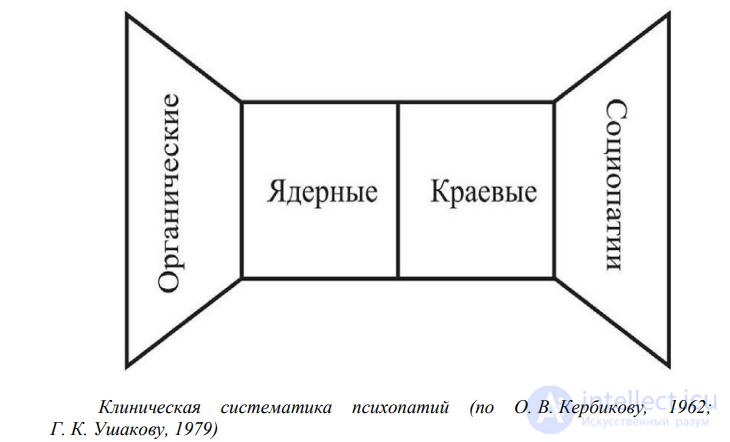
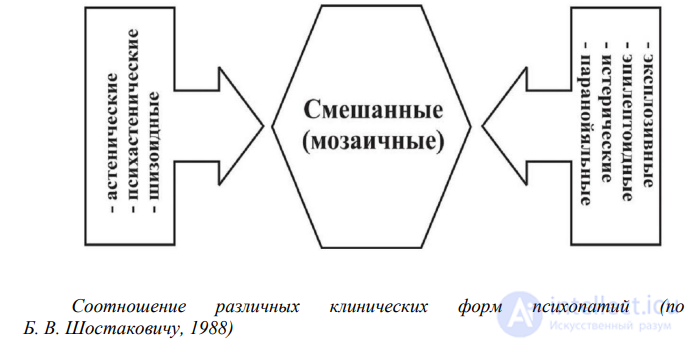
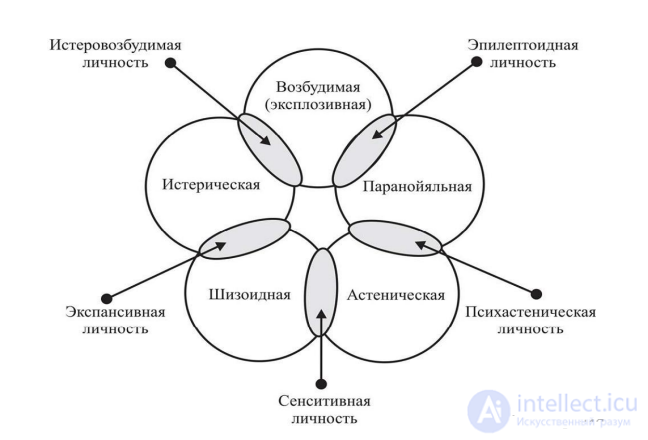
Diagnostic criteria for specific personality disorders (according to ICD-10)
The internal experiences and behavior of the individual as a whole deviate markedly
and persistently from the culturally accepted range (the "norm").
Such deviation must manifest in more than one of the following areas:
1. the cognitive sphere (i.e., the manner of perceiving and
interpreting objects, people, and events);
2. emotionality (the range, intensity, and appropriateness
of emotional reactions);
3. control of impulses and satisfaction of needs;
4. relationships with others and the manner of handling interpersonal situations;
5. insufficient adaptability or other dysfunctional
features found across a wide range of personal and social
situations (i.e., not limited to one "triggering mechanism" or
situation).
6. In connection with the behavior noted above, there is personal
distress or an adverse effect on the social environment.
The deviation is stable and long-lasting, beginning in late childhood
or adolescence.
7. The deviation cannot be explained as a manifestation or consequence
of other mental disorders of adulthood.
8. Organic brain disease, injury, or brain dysfunction must be
excluded as a possible cause of the deviation.
Classification of [constitutional] psychopathies is a classification of personality disorders. This article presents classifications of personality disorders from the era when they were still called psychopathies, before the introduction of ICD-10 and DSM-5 into psychiatric practice. The 10th revision of the ICD (ICD-10) was approved by the 43rd session of the World Health Assembly in May 1990.
The classification developed in 1933 by P. B. Gannushkin gained the widest recognition in Soviet and Russian psychiatry. The International Statistical Classification of Diseases, Injuries, and Causes of Death, 9th revision (ICD-9), as adapted for use in the USSR, was used until Russia's transition to the 10th revision (ICD-10) in 1997 .
The term "psychopathy" is quite ambiguous (it can be used as a synonym for dissocial personality disorder, as a designation for mental disorders in general, and so on), and for this reason Gannushkin used the expression "constitutional psychopathy," emphasizing the static and, in his view, innate nature of this group of disorders. By the time of the transition to ICD-10, the term "psychopathy" had already become firmly attached specifically to personality disorders.
The classification is based on the features of the pathological character, manifested in a combination of various psychopathic traits, and the type of disturbance of higher nervous activity.
According to research by A. E. Lichko, psychopathies differ from accentuations (Z73.1) in that they manifest always and everywhere (accentuations manifest when difficult situations place increased demands on the «point of least resistance in the character») and lead to social maladjustment . Accentuations, unlike psychopathies, can in some situations even contribute to social adaptation . Some researchers regard accentuations as a characterological feature that occupies an intermediate position between the norm and psychopathy .
Comparative table of classifications of psychopathies :
| Groups of psychopathies | E. Kraepelin (1915) | E. Kretschmer (1921) | K. Schneider (1923) | Gannushkin P. B. (1933) | T. Henderson (1947) | Popov E. A. (1957) | Kerbikov O. V. (1968) | ICD-9 code |
|---|---|---|---|---|---|---|---|---|
| Psychopathies with a predominance of emotional disturbances | Excitable | Epileptoids | Explosive | Epileptoids | Aggressive | Excitable
Explosive |
Excitable | Excitable type 301.3 |
| Cycloids | Hyperthymic
Depressive, Emotionally labile |
Cycloids
Constitutionally excitable, Constitutionally depressive, Emotionally (reactively) labile |
Thymopaths | Affective type 301.1 | ||||
| Fantasists
Liars and deceivers |
Seekers of recognition | Hysterical
Pathological liars |
Creative | Hysterical | Hysterical | Hysterical type 301.5 | ||
| Psychopathies with a predominance of changes in the sphere of thinking | Asthenic | Asthenics | Asthenics | Inhibited | Asthenic type 301.6 | |||
| Anankastic
Self-doubting |
Psychasthenics | Psychasthenics | Anankastic type 301.4 | |||||
| Eccentrics | Schizoids | Schizoids (dreamers) | Inadequate | Pathologically withdrawn | Schizoid type 301.2 | |||
| Quarrelsome
Pathological arguers |
Fanatics | Fanatics
Paranoiacs |
Paranoid | Paranoid (paranoiac) type 301.0 | ||||
| Psychopathies with a predominance of volitional disturbances | Unrestrained | Weak-willed
Unstable |
Unstable | Unstable | Unstable | Unstable type 301.81 | ||
| Psychopathies with disorders of drives | Possessed by drives | Sexual perversions | Sexual psychopathy | Sexual perversions 302 | ||||
| Psychopathies with disturbances of social behavior | Enemies of society | Cold | Antisocial | Emotionally blunted 301.7 | ||||
| Mixed psychopathies | Constitutionally dull | Mosaic | Mosaic psychopathy 301.82 |
P. B. Gannushkin identified the following types of psychopathic personalities: asthenics, schizoids, paranoiacs, epileptoids, hysterical characters, cycloids, unstable, antisocial, and constitutionally dull .
Personalities of this psychopathic type are characterized from childhood by increased shyness, timidity, indecisiveness, and impressionability. They become especially lost in unfamiliar settings and new conditions, experiencing a feeling of their own inferiority. Heightened sensitivity, or «touchiness,» manifests itself both in response to psychological stimuli and physical exertion. Quite often they cannot bear the sight of blood or sharp temperature changes, and react painfully to rudeness and tactlessness, though their displeasure may express itself as silent resentment or grumbling. They frequently have various autonomic disorders: headaches, unpleasant sensations in the region of the heart, gastrointestinal disturbances, sweating, and poor sleep. They become exhausted quickly and are prone to fixating on their own state of health.
Individuals of this type are characterized by pronounced shyness, indecisiveness, self-doubt, and a tendency toward constant hesitation. Psychasthenics are easily hurt, timid, and shy, yet at the same time painfully self-conscious. They are characterized by a striving for constant self-analysis and self-control, a tendency toward abstract logical constructions detached from real life, and obsessive doubts and fears. Any change in life, any disruption of their usual routine (a change of job, place of residence, etc.), is difficult for psychasthenics and heightens their insecurity and anxious apprehension. At the same time, they are diligent, disciplined, and often pedantic and fussy. They can make good deputies, but can never work in leadership positions. The necessity of making independent decisions and showing initiative is ruinous for them. A high level of aspiration combined with a lack of a sense of reality contributes to the decompensation of such personalities.
Individuals of this type are characterized by reticence, secretiveness, detachment from reality, a tendency toward internal processing of their experiences, and dryness and coldness in relationships with those close to them. Schizoid psychopaths are characterized by emotional disharmony: a combination of heightened sensitivity, vulnerability, and impressionability — when a problem is personally significant — together with emotional coldness and imperviousness with regard to other people's problems («wood and glass»). Such a person is detached from reality; their life is directed toward maximal self-satisfaction without striving for fame or material well-being. Their interests are unusual, original, «unconventional». Among them are many people engaged in art, music, and theoretical sciences. In everyday life they are usually called eccentrics, originals. Their judgments about people are categorical, unexpected, and even unpredictable. At work they are often unmanageable, since they work based on their own notions of life's values. However, in certain fields requiring artistic extravagance and talent, unconventional thinking, and symbolism, they can achieve a great deal. They have no lasting attachments, and family life usually does not work out due to a lack of shared interests. Nevertheless, they are ready for self-sacrifice for the sake of some abstract concepts or imaginary ideas. Such a person may be utterly indifferent to a sick mother, yet at the same time call for helping the starving on the other side of the world. Passivity and inactivity in dealing with everyday problems in schizoid personalities coexist with inventiveness, enterprise, and persistence in achieving goals that are especially significant to them (for example, scientific work, collecting).
It should be noted that this clinical picture is not always observed. Thus, material well-being and power, as a means of self-satisfaction, may become the schizoid's primary goal. In some cases the schizoid is able to use their (though sometimes unnoticed by others) unique abilities to influence the world outside them. As for the schizoid's activity in the workplace, it should be noted that the most successful combination occurs when the effectiveness of the work brings them satisfaction, and it does not matter what type of activity they are engaged in (naturally, only provided it involves creation or, at least, the restoration of something).
The main feature of psychopathic personalities of the paranoid group is a tendency to form overvalued ideas, which develop by the age of 20—25. However, from childhood they are already characterized by such traits as stubbornness, straightforwardness, and one-sidedness of interests and pursuits. They are touchy, resentful, self-assured, and very sensitive to their opinion being ignored by others. A constant striving for self-assertion, categorical and peremptory judgments and actions, egoism, and extreme self-confidence create fertile ground for conflicts with others. With age, personality traits usually intensify. Fixation on certain thoughts and grievances, rigidity, conservatism, and «the fight for justice» form the basis for the development of dominant (overvalued) ideas concerning emotionally significant experiences. Overvalued ideas, unlike delusions, are based on real facts and events, are specific in content, yet the judgments are based on subjective logic and a superficial, one-sided assessment of reality that serves to confirm one's own point of view. The content of overvalued ideas may involve invention or reform. Failure to recognize the merits and achievements of a paranoid personality leads to clashes with others and conflicts, which in turn may become real grounds for litigious behavior. In such cases, «the fight for justice» consists of endless complaints, letters to various authorities, and litigation. The patient's activity and persistence in this struggle cannot be broken by requests, persuasion, or even threats. Ideas of jealousy and hypochondriacal ideas (fixation on one's own health, with constant visits to medical institutions demanding additional consultations, examinations, and the latest treatment methods without real justification) may also take on overvalued significance for such personalities.
The leading traits of epileptoid personalities are extreme irritability and excitability, explosiveness reaching fits of anger and rage, with the reaction disproportionate to the strength of the stimulus. After an outburst of anger or aggressive acts, patients quickly «cool down» and regret what happened, but act the same way in similar situations again. Such people are usually dissatisfied with many things, look for reasons to find fault, and enter into arguments over any issue, showing excessive vehemence and trying to shout down their interlocutors. Lack of flexibility, stubbornness, conviction in their own rightness, and a constant fight for justice, which ultimately amounts to a fight for their own rights and the observance of their personal egoistic interests, lead to their being difficult to get along with in a group and to frequent conflicts in the family and at work. People with this type of personality, along with viscosity, fixation, and resentfulness, are characterized by such qualities as sugariness, flattery, sanctimoniousness, and a tendency to use diminutive-affectionate words in conversation. In addition, excessive pedantry, meticulousness, domineeringness, egoism, and a predominance of gloomy, sullen mood make them unbearable in everyday life and at work. They are uncompromising — they either love or hate, and those around them, especially those close to them, usually suffer both from their love and from their hatred, accompanied by vindictiveness. In some cases, disturbances of drives come to the fore, in the form of alcohol or drug abuse (to relieve tension) and a tendency to vagrancy. Among psychopaths of this circle are found compulsive gamblers and binge drinkers, sexual perverts, and murderers.
The most characteristic feature of hysterical personalities is a thirst for recognition, that is, a drive to attract the attention of others at any cost. This manifests itself in their demonstrativeness, theatricality, and exaggeration and embellishment of their experiences. Their actions are calculated for external effect, aimed solely at impressing those around them — for example, through an unusually flamboyant appearance, stormy displays of emotion (raptures, sobbing, wringing of hands), or accounts of extraordinary adventures and inhuman suffering. Sometimes, in order to draw attention to themselves, such patients do not stop at lying or self-incrimination — for instance, attributing to themselves crimes they did not commit. Such people are called pathological liars. Hysterical personalities are characterized by psychic infantilism (immaturity), which is evident in their emotional reactions, judgments, and actions alike. Their feelings are shallow and unstable. The external manifestations of their emotional reactions are demonstrative and theatrical, and disproportionate to the cause that provoked them. They are characterized by frequent mood swings and rapid shifts between likes and dislikes. Hysterical types are distinguished by heightened suggestibility and self-suggestibility, and so they are constantly playing some role, imitating a personality that has struck their imagination. If such a patient ends up in a hospital, they may copy the symptoms of illnesses seen in other patients sharing the ward with them. Hysterical personalities are prone to an artistic type of thinking. Their judgments are extremely contradictory and often have no basis in reality. Instead of logical reasoning and a sober assessment of facts, their thinking is based on immediate impressions and their own inventions and fantasies.
The cycloid group includes personalities with varying, constitutionally determined levels of mood. Individuals with a persistently lowered mood make up the group of constitutionally depressive psychopaths (hypothymic). These are always gloomy, dejected people, dissatisfied with everything and uncommunicative. At work they are excessively conscientious, meticulous, and dutiful, since they are always ready to anticipate complications and failures. They are characterized by a pessimistic assessment of the present and a correspondingly bleak outlook on the future, combined with lowered self-esteem. They are sensitive to troubles and capable of empathy, but they try to hide their feelings from others. In conversation they are reserved and taciturn, afraid to voice their opinion. They feel that they are always wrong, and look for fault and inadequacy in themselves in every situation.
Constitutionally excitable individuals — these are hyperthymic personalities who, unlike hypothymic ones, are distinguished by a persistently elevated mood, activity, and optimism. They are sociable, lively, talkative people. At work they are enterprising, full of initiative and ideas, but their tendency toward adventurism and inconsistency hinders them in achieving their set goals. Temporary setbacks do not discourage them; they tackle the task anew with tireless energy. Excessive self-confidence, an overestimation of their own abilities, and activity bordering on the illegal often complicate their lives. Such people tend to lie and to be unreliable in fulfilling their promises. Owing to heightened sexual drive, they are often indiscriminate in their acquaintances and enter into rash intimate relationships.
Individuals with emotional instability, that is, with constant mood swings, belong to the cycloid type. The mood of cyclothymics shifts from low and sad to elevated and joyful. Periods of bad or good mood vary in duration, from several hours to several days or even weeks. Their state and activity level change in accordance with the shift in mood.
Emotionally labile (reactively labile) psychopaths — individuals whose state fluctuates extremely often, sometimes literally by the day. Their mood shifts from one extreme to the other for no apparent reason.
People of this type are distinguished by heightened susceptibility to external influences. They are weak-willed, easily suggestible, «characterless» personalities who readily succumb to the influence of others. Their entire life is governed not by purposeful goals but by external, chance circumstances. They often fall into bad company, become alcoholics, drug addicts, or swindlers. At work such people are unreliable and undisciplined. On the one hand, they make promises to everyone and try to please, but the slightest external circumstance throws them off course. They constantly need supervision and authoritative guidance. Under favorable conditions they can work well and lead a proper way of life.
A distinguishing feature of antisocial psychopaths is sharply pronounced moral defects. They suffer from partial emotional dullness and have virtually no social emotions: a sense of duty toward society and a feeling of sympathy for others are usually entirely absent in them. They have neither shame nor honor, are indifferent to both praise and blame, and are incapable of adapting to the rules of communal living. They often gravitate toward sensual pleasures. Some antisocial psychopaths, from childhood, are prone to tormenting animals and feel no attachment even to their closest relations (even to their mother).
Psychopaths who are not clever, limited from birth. The distinguishing trait is innate mental insufficiency. Unlike people with oligophrenia, these individuals do well in their studies (not only in secondary school but even at university), and often have good memory. However, when they enter life, where they have to apply their knowledge in practice and show initiative, nothing works out for them. They display no originality and are inclined to say banal, formulaic things, which is why their disorder is called «Salon Blödsinn» (German for «drawing-room feeble-mindedness»). To denote this same concept, Eugen Bleuler used the term «die unklaren» («the unclear ones»), emphasizing that their main characteristic is more a vagueness of concepts than a poverty of associations. The group of constitutionally stupid people also includes «philistines» — people without spiritual (intellectual) needs and demands. Nevertheless, they can cope well with the undemanding requirements of some particular occupation.
Constitutionally stupid psychopaths are suggestible individuals, ready to submit to «public opinion», and they are also inclined to follow fashion. They are always conservatives, afraid of anything new and clinging, out of a sense of self-protection, to what they are used to and have adapted to.
Constitutionally stupid psychopaths may have great self-conceit, uttering, with a pompous and solemn air, elaborate phrases devoid of meaning — that is, a set of pretentious words with no actual content. A similar figure appears in literature in caricatured form — Kozma Prutkov.
The German psychiatrist Emil Kraepelin (1915) identified the following types of psychopathic personalities:
Kurt Schneider (1923) identified 10 types of psychopathic personalities:
The typology of psychopathies proposed by O. V. Kerbikov was one of the most widely used in Soviet psychiatry and included the following types:
The Gannushkin—Kerbikov triad of criteria for psychopathies:
O. V. Kerbikov noted that a particular type of upbringing leads to the formation of a particular psychopathy. Thus, dominant hyperprotection (raising a child with an «iron hand») forms the asthenic type, while indulgent hyperprotection (the child being the «family idol») forms a hysterical-type personality, and so on.
Kerbikov—Felinskaya genetic systematics of psychopathies
This system classifies psychopathies by etiological basis into the following groups:
In most cases, the etiology of psychopathy is mixed.
The 9th revision of the International Classification of Diseases (ICD-9), adapted for use in the USSR, included the following classification of psychopathies :

Comments