
Lecture
In computer graphics, level of detail ( LOD ) refers to the complexity of a 3D model's representation . LOD can be reduced as a model moves further from the viewer or according to other metrics, such as object importance, speed relative to the viewpoint, or position. LOD techniques increase rendering efficiency by reducing the workload on stages of the graphics pipeline , typically vertex transformation . The reduction in a model's visual quality often goes unnoticed due to the small effect it has on the object's appearance when it is far away or moving quickly.
Although LOD is most often applied only to geometric detail, the basic concept can be generalized. Recently, LOD techniques have also included shader management to control pixel complexity. A form of level-of-detail management has been applied to texture maps for many years under the name mip-mapping , also providing higher rendering quality.
It is commonly said that «an object has been LOD-enhanced » when the object is simplified by a basic LOD-enhancement algorithm , as well as by a 3D modeler manually creating LOD models
The origin of all LOD algorithms for three-dimensional computer graphics can be traced to a paper by James H. Clark in the October 1976 issue of Communications of the ACM . At that time computers were monolithic and rare, and graphics was driven by researchers. The hardware itself was completely different, both in terms of architecture and performance. Thus one could observe many differences with respect to today's algorithms, but also many common points.
The original algorithm was a much more general approach than what will be discussed here. After introducing some available algorithms for managing geometry, it is argued that the most fruitful results came from "...structuring the rendered environments" , which allowed the use of faster transformations and clipping operations .
The same environment structuring is now proposed as a way of managing changing detail, which avoids unnecessary computations while still providing adequate visual quality:
For example, a dodecahedron looks like a sphere from a sufficiently large distance and can thus be used to model it, as long as it is viewed from that distance or greater. However, if it ever has to be viewed more closely, it will look like a dodecahedron. One solution to this problem is to simply define it at the highest degree of detail that will ever be needed. However, it may then have far more detail than is required to represent it at large distances, and in a complex environment with many such objects there will be too many polygons (or other geometric primitives) for visible-surface algorithms to process efficiently .
The proposed algorithm involves a tree-shaped data structure , which encodes in its arcs both transformations and transitions to more detailed objects. Thus each node encodes an object, and according to a fast heuristic , the tree descends to leaves that provide each object with more detail. When a leaf is reached, other methods can be used when higher detail is required, such as Catmull's recursive subdivision .
However, the important point is that in a complex environment, the amount of information presented about the various objects of the surroundings varies depending on the fraction of the field of view occupied by those objects.
The paper then discusses clipping (not to be confused with culling, although they are often similar), various considerations regarding the graphics working set and its impact on performance, and interactions between the proposed algorithm and others for improving rendering speed.
Dynamic LOD systems, for example, ROAM (Real-time Optimally Adapting Meshes) and RQT (Restricted Quadtree Triangulation).
Although the algorithm presented above covers a wide range of level-of-detail management techniques, real applications usually use specialized methods adapted to the information being displayed. Depending on the requirements of the situation, two main methods are used:
The first method, Discrete Levels of Detail (DLOD) , involves creating several discrete versions of the original geometry with reduced levels of geometric detail. At runtime, full-detail models are replaced by reduced-detail models as needed. Because of the discrete nature of the levels, visual popping may be observed when one model is swapped for another. This can be mitigated with alpha blending or morphing between states during the transition.
The second method, Continuous Levels of Detail (CLOD) , uses a structure that contains a continuously varying spectrum of geometric detail. The structure can then be probed to smoothly select the appropriate level of detail required for the situation. A significant advantage of this method is the ability to vary detail locally; for example, the side of a large object nearest to the view can be represented with a high degree of detail, while simultaneously reducing detail on its far side.
In both cases, LODs are selected based on some heuristic used to estimate how much detail is lost when detail is reduced, for example by evaluating the geometric error of the LOD relative to the full-detail model. Objects are then rendered with the minimum amount of detail required to satisfy the heuristic, which is designed to minimize geometric detail as much as possible in order to maximize performance while maintaining an acceptable level of visual quality.
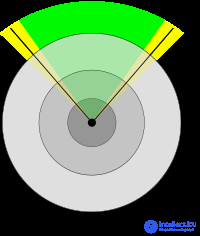
Example of different DLOD ranges. Darker areas must be rendered with higher detail. An additional culling operation is run, discarding all information outside the pyramid (colored areas).
The basic concept of discrete LOD (DLOD) is to provide different models to represent the same object. Obtaining these models requires an external algorithm, which is often nontrivial and is the subject of many polygon-reduction techniques . Subsequent LOD algorithms simply assume that these models are available.
DLOD algorithms are often used in high-performance applications with small data sets that fit easily in memory. Although out-of-core algorithms can be used, detail information is not well suited to this kind of application. Such an algorithm is generally simpler to work with, since it provides both higher performance and lower CPU load due to the small number of operations involved.
DLOD methods are often used for «self-contained» moving objects, possibly including complex animation techniques. A different approach is used for geomipmapping , a popular terrain rendering algorithm , since it is applied to terrain meshes, which differ both graphically and topologically from «object» meshes. Instead of computing an error and simplifying the mesh accordingly, geomipmapping uses a fixed reduction method, estimates the introduced error, and calculates the distance at which the error is acceptable. Despite its simplicity, the algorithm delivers decent performance.
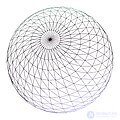
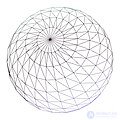
| Image | 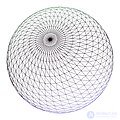 |
 |
 |
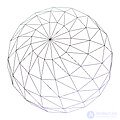 |
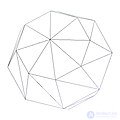 |
|---|---|---|---|---|---|
| Vertices | ~5500 | ~2880 | ~1580 | ~670 | 140 |
| Notes | Maximum detail, for close-ups |
Minimum detail, very distant objects |
A specially written application can be used to model a realistic transform-bound scenario. Using simple algorithms and minimal fragment operations ensures that a CPU bottleneck does not occur. In each frame, the program calculates the distance of each sphere and selects a model from the pool according to that information. To easily demonstrate the concept, the distance at which each model is used is hard-coded in the source code. A more sophisticated method would compute the appropriate models according to the chosen usage distance.
OpenGL is used for rendering because of its high efficiency in managing small batches, storing each model in a display list, thus avoiding communication overhead. Additional vertex load is provided by applying two directional light sources, ideally positioned at an infinite distance.
The following table compares the rendering performance of the LOD method and the full-detail (brute-force) method.
| Brute force | DLOD | Comparison | |
|---|---|---|---|
| Rendered images |
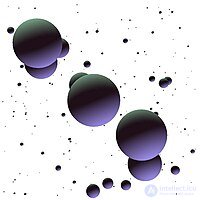 |
 |
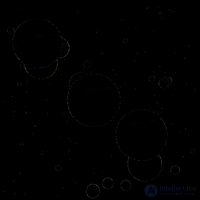 |
| Render time | 27.27 ms | 1.29 ms | 21 × reduction |
| Scene vertices | 2,328,480 | 109,440 | 21 × reduction |
Because hardware is designed for large amounts of detail, rendering objects with a low polygon count can yield suboptimal results. HLOD avoids this problem by grouping different objects together . This makes it possible to improve efficiency, as well as to take advantage of proximity considerations.
Within the AIA, LOD [ 4 ] is broken down into five main levels, one for each main phase of a building's life cycle. These levels define the progression of detail and data accuracy in the BIM model:
LOD 100 (conceptual design): This model is basic in terms of geometric shapes and placeholders. Rough layout and massing studies are used to assess the feasibility of the project. As a tool for initial design discussion, LOD 100 is useful for giving you an overall picture of the project without forcing you to pin down every detail. This stage allows stakeholders to evaluate the site at a high level and set project goals.
LOD 200 (Schematic design): The model becomes more specific, with approximate dimensions, spatial relationships, and general locations. With sufficient accuracy, elements are modeled for early design decisions, cost estimates, and preliminary analysis. Although LOD 200 remains general, it shows much more clearly what the building will look like and how it will function, allowing stakeholders to contribute to refining the concepts and moving toward detailed design.
LOD 300 (detailed design): LOD 300 marks a major step forward in accuracy. Precise dimensions, materials, and spatial relationships are specified for components. This stage provides enough detail to obtain construction permits, prepare detailed drawings, and coordinate across all disciplines. This convention ensures that the model is built so that contractors can estimate project costs and prepare for construction.
LOD 400 (Fabrication and construction): The model is enhanced with fabrication and assembly detail at this level. It consists of manufacturing specifications as well as installation instructions. LOD 400 supports actual construction, so that everything in the building can be built. This stage is critical for accurate allocation of contractor resources and on-site execution.
LOD 500 (As-Built model): The completed project is LOD 500. It consists of verified dimensions, materials, and specifications of the actually constructed structure. It is invaluable for facility management, since it provides accurate data for maintenance and repair, as well as for future upgrades. The As-Built model provides the ability to manage the building's life cycle efficiently.
LOD is especially useful in 3D video games. Video game developers want to give players large worlds, but are always constrained by hardware, frame rate, and the nature of real-time video game graphics . With the advent of 3D games in the 1990s, many video games simply did not render distant structures or objects. Only nearby objects would be rendered, while more distant parts would gradually fade out, essentially implementing distance fog . Video games that use LOD rendering avoid this fog effect and can render larger areas. Some notable early examples of LOD rendering in 3D video games include The Killing Cloud , Spyro the Dragon , Crash Bandicoot: Warped , Unreal Tournament , and the Serious Sam engine . Most modern 3D games use a combination of LOD rendering techniques, using different models for large structures and distance culling for environmental details such as grass and trees. The effect is sometimes still noticeable, for example when the player's character flies over virtual terrain or uses a sniper scope to view a large distance. In particular, grass and foliage will appear to pop into view as they are approached, also known as foliage culling. [ 5 ] LOD can also be used to render fractal terrain in real time. [ 6 ] The Nanite system in Unreal Engine 5 essentially implements level of detail at the mesh level, rather than only for objects as a whole.
LOD occurs in GIS and 3D city models as a similar concept. It indicates how thoroughly real-world objects have been mapped and how closely the model corresponds to its real-world counterpart. In addition to geometric complexity, other metrics can be taken into account in model LOD, such as spatial-semantic coherence, texture resolution, and attributes. The CityGML standard contains one of the best-known LOD categorizations.
The GIS analog of «LOD-ing» is called generalization .

Comments