
Lecture
3D computer graphics , sometimes called CGI , 3-D-CGI or three-dimensional computer graphics , is graphics that uses a three-dimensional representation of geometric data (often Cartesian ) stored in a computer for the purposes of performing calculations and rendering digital images , usually 2D images , but sometimes also 3D images . The resulting images may be stored for viewing later (perhaps as an animation ) or displayed in real time .
3-D computer graphics, despite its name, is most often displayed on two-dimensional displays. Unlike 3D films and similar technologies, the result is two-dimensional, without visual depth . 3-D graphics is more rarely displayed on 3-D displays , as in virtual reality systems.
3D graphics differs from 2D computer graphics , which typically uses completely different methods and formats for creation and rendering.
3-D computer graphics relies on many of the same algorithms as 2-D computer vector graphics in the wireframe model and 2-D computer raster graphics in the final rendered display. In computer graphics software, 2-D applications may use 3-D techniques to achieve effects such as lighting , and similarly 3-D may use some 2-D rendering techniques.
Objects in three-dimensional computer graphics are often called three-dimensional models . Unlike a rendered image, model data is contained within a graphics data file. A three-dimensional model is a mathematical representation of any three-dimensional object; technically, a model is not graphics until it is displayed. A model may be visually displayed as a two-dimensional image through a process called three-dimensional rendering , or it may be used in non-graphical computer simulations and calculations. With three-dimensional printing, models are rendered into an actual three-dimensional physical representation of themselves, with some limitations on how accurately the physical model can match the virtual model.
William Fetter is credited with coining the term «computer graphics» in 1961 to describe his work at Boeing . An early example of interactive three-dimensional computer graphics was explored in 1963 with the Sketchpad program at MIT's Lincoln Laboratory . One of the earliest instances of computer animation was the film Futureworld (1976), which included animation of a human face and hand that had originally appeared in the 1971 experimental short film A Computer Animated Hand , created by University of Utah students Edwin Catmull and Fred Parke .
3D graphics software began to appear on home computers in the late 1970s. The earliest known example is 3D Art Graphics , a set of 3D graphics effects written by Kazumasa Mitazawa and released in June 1978 for the Apple II .
3D virtual reality is a version of 3D computer graphics. With the appearance of the first headset in the late 1950s, the popularity of VR did not grow until the 2000s. Oculus was released in 2012, and since then the world of 3D VR headsets has expanded.
The workflow for creating three-dimensional computer graphics is divided into three main stages:
Modeling describes the process of forming the shape of an object. The two most common sources of 3D models are models that an artist or engineer creates on a computer using some 3D modeling tool, and models scanned into a computer from real-world objects (polygonal modeling, patch modeling, and NURBS modeling are some popular tools used in 3D modeling). Models can also be created procedurally or through physical simulation .
Essentially, a 3D model is formed from points called vertices, which define the shape and form polygons . A polygon is a region formed by at least three vertices (a triangle). A polygon of n points is an n-gon. The overall integrity of the model and its suitability for use in animation depend on the structure of the polygons.
Before rendering into an image, objects must be placed within a 3D scene . This determines the spatial relationships between objects, including location and size . Animation refers to the temporal description of an object (i.e., how it moves and deforms over time. Popular methods include keyframing , inverse kinematics , and motion capture ). These methods are often used in combination. As with animation, physical simulation also determines motion.
Stop motion has several categories, such as Claymation , Cutout, Silhouette , Lego , Puppets , and Pixelation .
Claymation — is the use of clay models for animation. Here are a few examples: Clay Fighter and Clay Jam .
Lego animation — is one of the most common types of stop-motion animation. Lego stop-motion animation — is the use of the figures themselves, which move. Here are some examples: Lego Island and Lego Harry Potter .
Materials and textures — are properties that a rendering engine uses to render a model. Materials can be set for a model to tell the rendering engine how to treat light when it strikes a surface. Textures are used to give a material color through a color or albedo map, or to give surface characteristics through a bump map or normal map . They can also be used to deform the model itself through a displacement map .
Rendering converts a model into an image either by simulating light transport to produce photorealistic images, or by applying an artistic style, as in non-photorealistic rendering . The two main operations in realistic rendering are transport (how much light passes from one place to another) and scattering (how surfaces interact with light). This step is usually performed using three-dimensional computer graphics software or a 3D graphics API .
Converting the scene into a form suitable for rendering also involves 3-D projection , which maps a three-dimensional image into two dimensions. Although 3-D modeling and CAD software can also perform 3-D rendering (for example, Autodesk 3ds Max or Blender ), there is also dedicated 3-D rendering software (for example, OTOY's Octane Rendering Engine , Maxon's Redshift)
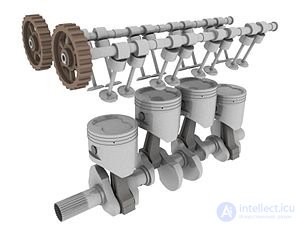
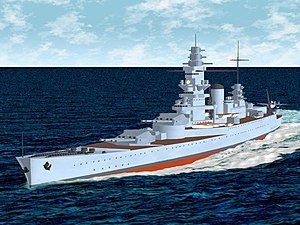
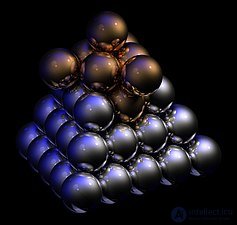

Software for three-dimensional computer graphics creates computer-generated imagery (CGI) through three-dimensional modeling and three-dimensional rendering, or creates three-dimensional models for analytical, scientific, and industrial purposes.
There are many types of files that support 3D graphics, such as Wavefront .obj files and DirectX .x files. Each file type usually has its own unique data structure.
Each file format can be accessed through corresponding applications, such as DirectX and Quake files. Alternatively, files can be accessed through third-party standalone programs or through manual decompilation.
3-D modeling software — is a class of 3-D computer graphics software used to create 3-D models. Individual programs in this class are called modeling applications or modelers.
3-D modeling begins with the description of 3 display models: drawing points, drawing lines, and drawing triangles and other polygonal patches.
3-D modelers allow users to create and modify models through their 3-D mesh . Users can add, subtract, stretch, and otherwise modify the mesh as they wish. Models can be viewed from different angles, usually simultaneously. Models can be rotated, and the view can be zoomed in and out.
3D modelers can export their models to files , which can then be imported into other applications , provided the metadata is compatible. Many modelers allow importers and exporters to be plugged in, so that they can read and write data in the native formats of other applications.
Most 3D modelers contain a number of related features, such as ray tracers and other rendering alternatives and texture mapping capabilities . Some also contain features that support or allow animation of models. Some may be able to generate full-length video from a series of rendered scenes (i.e., animation ).
Computer-aided design software may use the same fundamental 3D modeling techniques as 3D modeling software, but their purpose is different. They are used in computer-aided design , computer-aided manufacturing , finite element analysis , product lifecycle management , 3D printing , and computer-aided architectural design .
After creation, studios edit or compose video using programs such as Adobe Premiere Pro or Final Cut Pro at the intermediate level, or Autodesk Combustion , Digital Fusion , Shake at the high end. Match moving software is typically used to match live video with computer-generated video, synchronizing them with camera movement.
The use of real-time computer graphics engines to create cinematic productions is called machinima .
Not all computer graphics that look 3D are based on a wireframe model . 2D computer graphics with 3D photorealistic effects is often achieved without wireframe modeling and is sometimes indistinguishable in its final appearance. Some graphics software includes filters that can be applied to 2D vector graphics or 2D raster graphics on transparent layers. Artists can also trace or render 3D effects and manually render photorealistic effects without using filters.
Some video games use 2.5D graphics, which involve limited projections of three-dimensional environments, such as isometric graphics or virtual cameras with fixed angles , either as a way to improve game engine performance , or for stylistic and gameplay reasons. In contrast, games that use 3D computer graphics without such limitations are said to use true 3D.
Cutout — is the use of flat materials, such as paper. Everything is cut from paper, including the environment, characters, and even some props. An example of this is Paper Mario .
Silhouette is similar to cutouts, except that they are of one solid color, black. Limbo — is an example of this.
Puppets — are dolls and various marionettes used in gameplay. An example of this might be Yoshi's Wooly World .
Pixelation — is when the entire game appears pixelated, including the characters and the environment around them. One example of this can be seen in Shovel Knight .

Comments