
Lecture
An elementary vibrator is a conductor element carrying a current that varies in time and is the same across all cross-sections of the conductor at each fixed moment of time (fig. 1,a). A practical implementation of an elementary vibrator can be the Hertz dipole. The Hertz dipole consists of two metal spheres connected by a wire, whose charges  at each moment in time are equal in magnitude and opposite in sign (fig. 1.6).
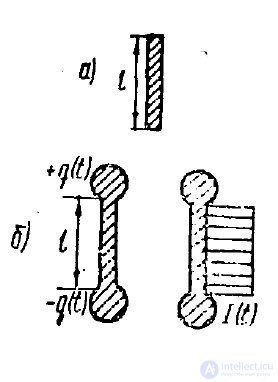
Fig. 1
Hertzian dipole (symmetric dipole, Hertz dipole) — is the simplest antenna, a device for radiating and receiving electromagnetic waves. It is a relatively short (compared to the wavelength) straight electrical conductor with a gap in the middle, fed (in radiating mode) at the gap points by a high-frequency current generator. The first experiments with such an antenna were carried out by Heinrich Hertz in 1886—1888. In electrodynamics, the Hertz dipole is understood as a model in the form of an element (a short fragment) of a straight alternating electric current of small length with constant amplitude and phase of oscillation over its entire length. If, after being charged, the dipole is left to itself, oscillations will arise, since the spheres, connected by a wire, possess capacitance and inductance and inevitable resistance, which leads to damping of these oscillations.
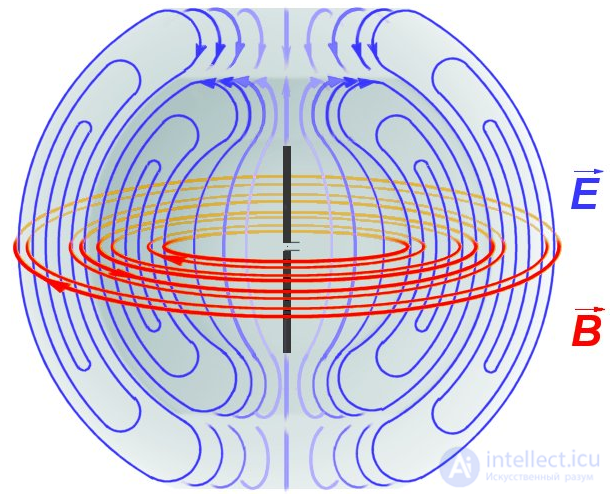
Field lines of the electric (blue) and magnetic (red) fields near a radiating vibrator of small length. The density of the electromagnetic energy flux is maximal in directions lying in the plane perpendicular to the vibrator
Along the wire connecting the two spheres, a current will flow
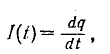 (1)
(1)
at each fixed moment the same across all cross-sections of the wire (fig. 1,6).
The Hertz dipole has a dipole moment that varies with time:
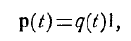
where l — is the length of the dipole
Correspondingly, any elementary vibrator possesses a dipole moment p(t), and this moment and the current I(t) in the vibrator are related by the formula
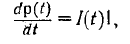
which, in the case of a harmonic time dependence of the current, transforms into the form

With the above in mind, the elementary vibrator is called the Hertz dipole or simply the electric dipole.
A sufficiently short element of wire of length l belonging to any wire antenna can be regarded as an elementary vibrator, if this length is much less than the radiated wavelength  , i.e.
 (2)
(2)
Let the current in the elementary vibrator, located at the origin of coordinates (fig. 2), vary according to the harmonic law 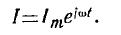
Let us find the field of this vibrator. Its vector potential A, according to (8) of lecture 19 and by virtue of (2), equals
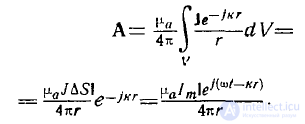 (3)
(3)
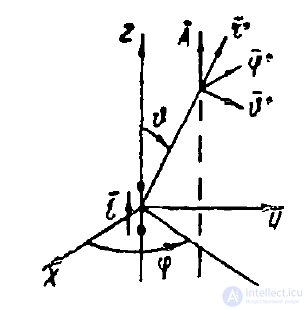
Fig. 2
From this expression it is evident that the vector potential A is parallel to the vector I. This circumstance significantly simplifies the calculation of the electromagnetic field vector."
Let us apply the spherical coordinate system r, θ, φ. In this coordinate system, as seen from fig. 2, the components of the vector A are equal to
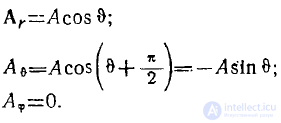
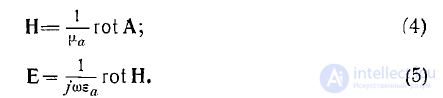
Let us first determine which components of the field vectors E and H are nonzero and which are zero. For this we turn to the formulas
In a spherical coordinate system, the components of the vector in the presence of axial symmetry  are as follows
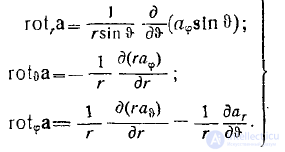 (6)
(6)
Comparing formulas (4) — (6) with each other, we conclude that
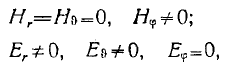
i.e. the vector H has only one «equatorial» component  while the vector E has radial and «meridional» components
The components of the vector E can be calculated from the vector A in two ways: by formulas (4) and (5), or, using the Lorenz condition, by the formulas
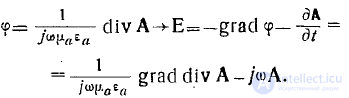
It is easy to verify that both methods lead to the same result. Indeed, according to (4) and (5),

Taking into account the wave equation for the vector A
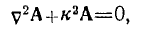
we have
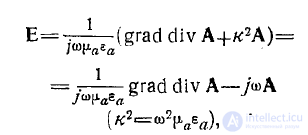
which is what needed to be proven
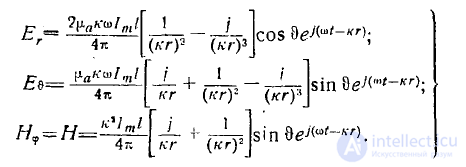
Using relations (6), we shall carry out the calculation of the field components by the first method.
As a result we obtain the following exact formulas for the field vector components:
 (7)
(7)
Using formula (2), let us introduce the dipole moment  into these expressions and represent them in the form
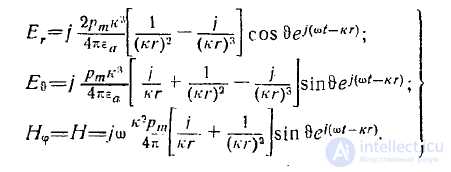 (8)
(8)
As can be seen from formulas (7) or (8), the components of the field vectors of the elementary vibrator are characterized by a sum of terms that depend differently on distance. In this connection, in the space surrounding the vibrator, three zones can be distinguished — the near, intermediate, and far, or wave, zones. These zones are defined by the conditions:
 — near zone;
 — intermediate zone;
 — far zone of the elementary vibrator.
Let us consider the near zone 
In this zone the main contribution to the field is made by terms containing the higher powers of — . Neglecting terms of lower powers of 1/kr, from formulas (8) and (7) we find
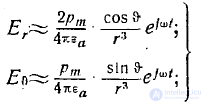 (9)
(9)
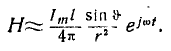 (10)
(10)
According to formulas (9), the electric field of the elementary vibrator in the near zone, in terms of the magnitude of the field at each moment of time and the configuration of its field lines, is the electrostatic field of a dipole, but with a dipole moment varying in time. According to (10), the magnetic field of the elementary vibrator in the near zone, in terms of the configuration of the field lines and its magnitude, is the magnetostatic field determined by the Biot-Savart law, but the current creating this field varies in time. As can be seen from formulas (9) and (10), near the vibrator retardation is neglected, so the field here is called quasi-stationary.
Let us consider the wave zone 
In this zone the main contribution to the field magnitude is made by the term with the first power of 1/kr
Therefore, neglecting terms of higher powers of 1/kr, we obtain
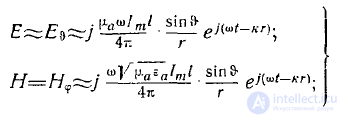 (11 )
(11 )
Analysis of expressions (11) allows us to draw the following conclusions regarding the electromagnetic field in the far zone:
1) the vectors E and H, as in plane waves, are mutually perpendicular;
2) surfaces of equal phase are spheres, i.e. the wave is spherical;
3) the wave propagation velocity, as in the case of plane waves, equals
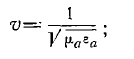
4) the velocity vector v is perpendicular to the vectors E and H, owing to which these waves are transverse, as in the case of plane waves;
5) the magnitudes of E and H vary in time in phase;
6) the amplitudes of the field strengths are inversely proportional to the distance 1/r;
7) the amplitudes of the field strengths depend on the angle  , and since they are proportional to
  , the field is maximal in the equatorial plane and equals zero along the axis of the vibrator, i.e. the elementary vibrator radiates waves directionally;
8) the amplitudes are proportional to the quantity 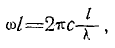 i.e. the ratio of the vibrator length to the wavelength;
9) the ratio of the field strengths E and H, as in the case of plane waves, equals the wave impedance of the medium, i.e.
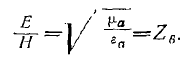
The field strengths of the elementary vibrator in the far zone in free space, where

are equal to
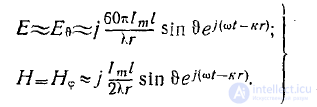 (12)
(12)
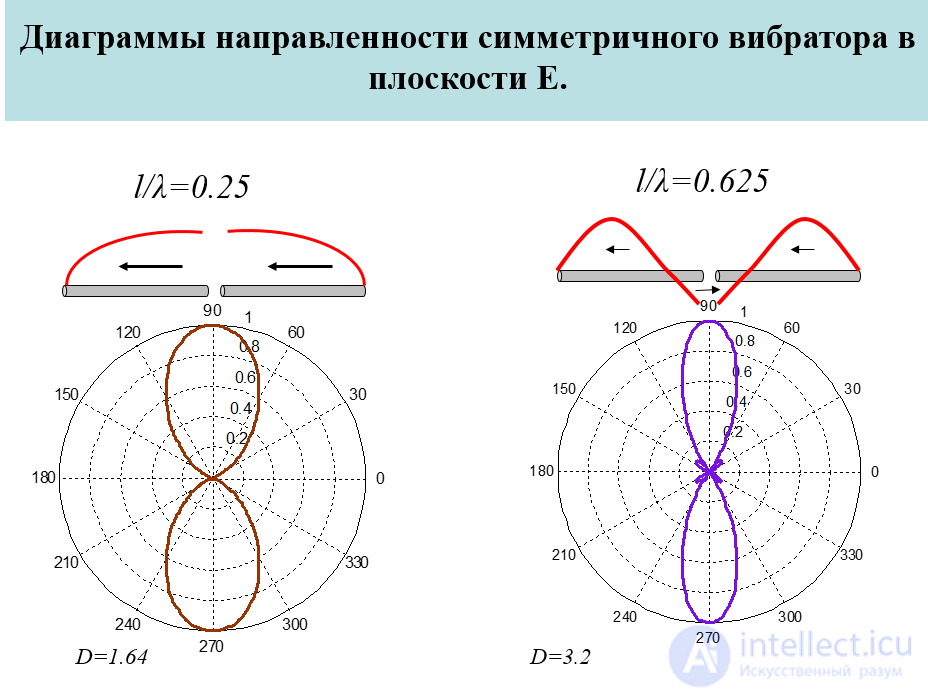
Depending on the ratio of the vibrator length to the wavelength and the point at which the feeder is connected to it, its radiation pattern takes the form shown in the figure:
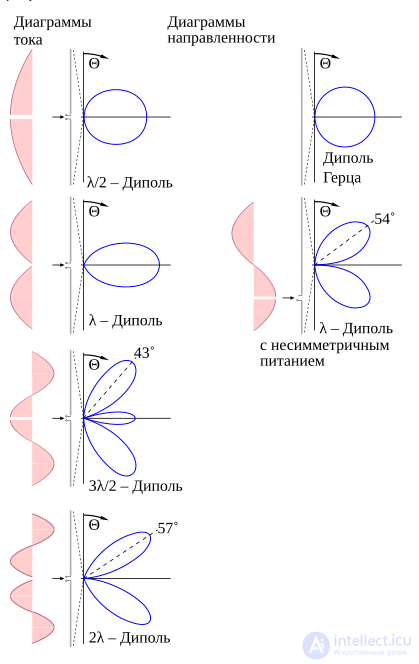
| Ratio of vibrator length to wavelength |
Directivity, dBi | Note |
|---|---|---|
| ≪0.5 | 1.76 | low efficiency |
| 0.5 | 2.15 | most common |
| 1.0 | 4.0 | only with thick vibrators |
| 1.25 | 5.2 | highest gain |
| 1.5 | 3.5 | third harmonic |
| 2.0 | 4.3 | not used |
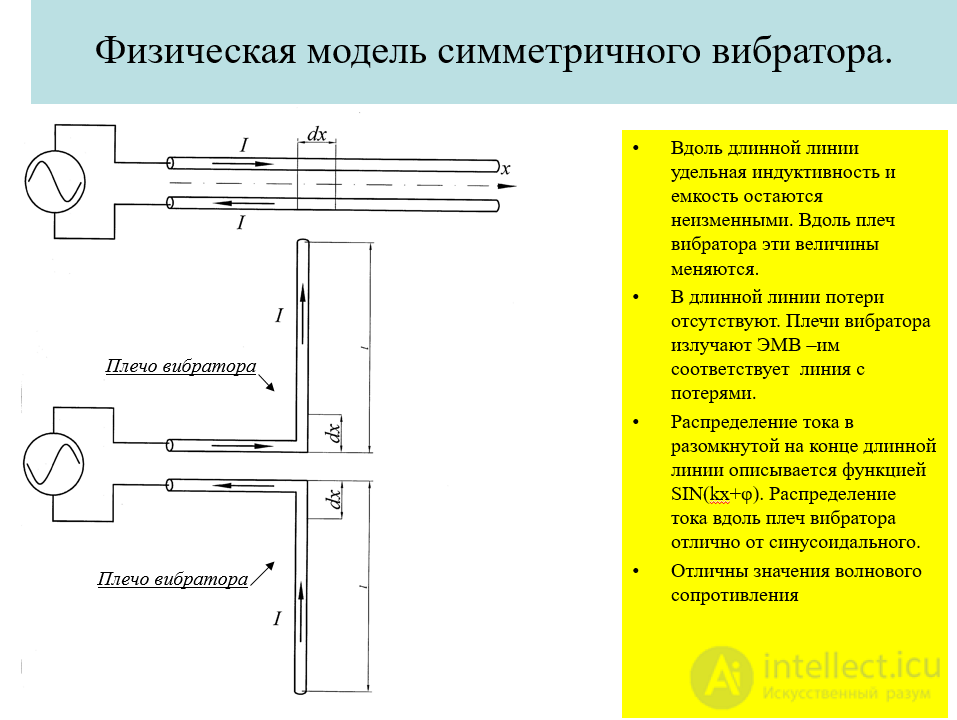
Physical model of the symmetric dipole.
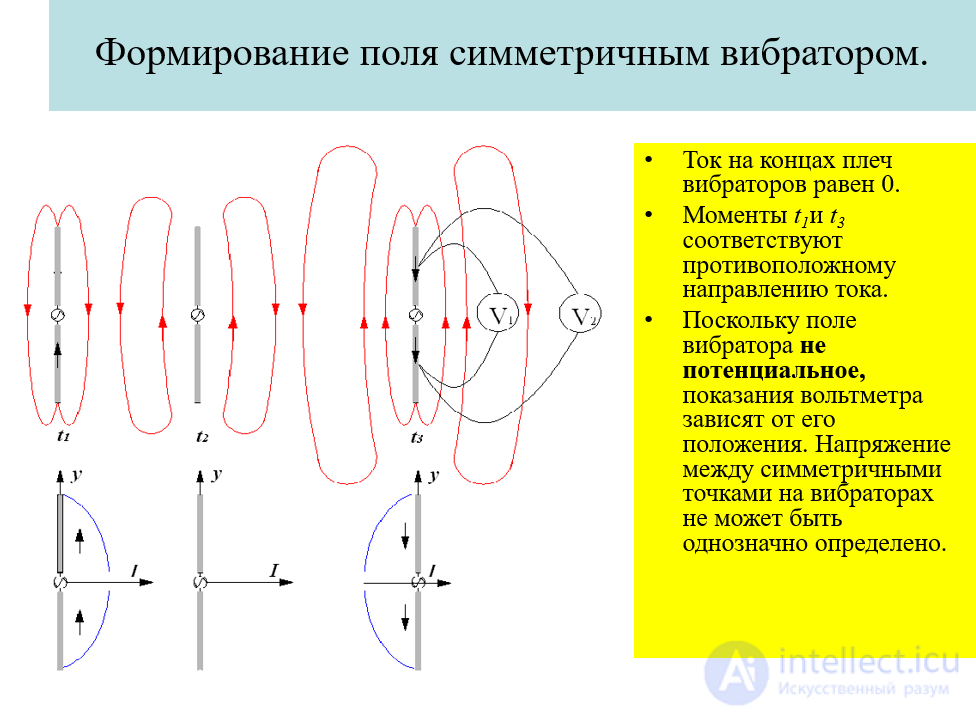
Field formation by the symmetric dipole.
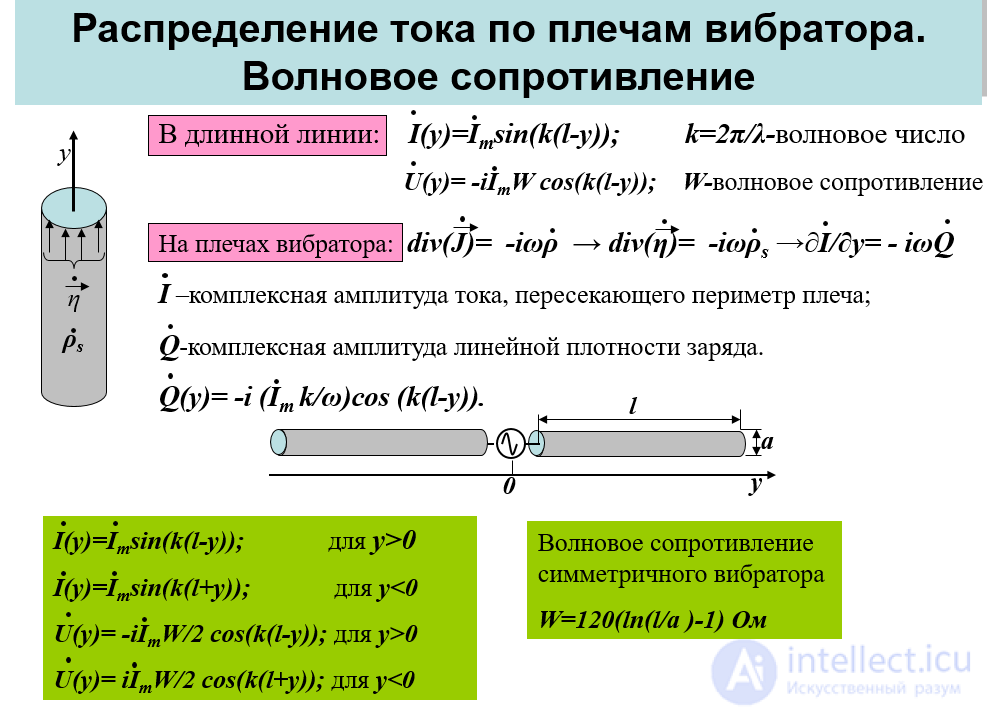
Current distribution along the arms of the dipole. Wave impedance
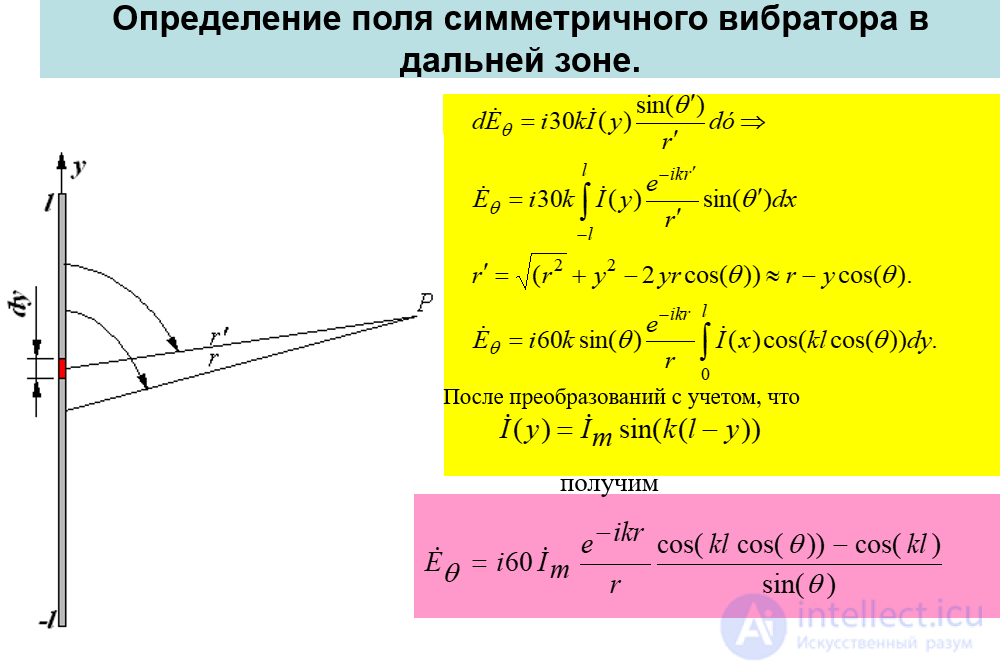
Determination of the field of the symmetric dipole in the far zone.
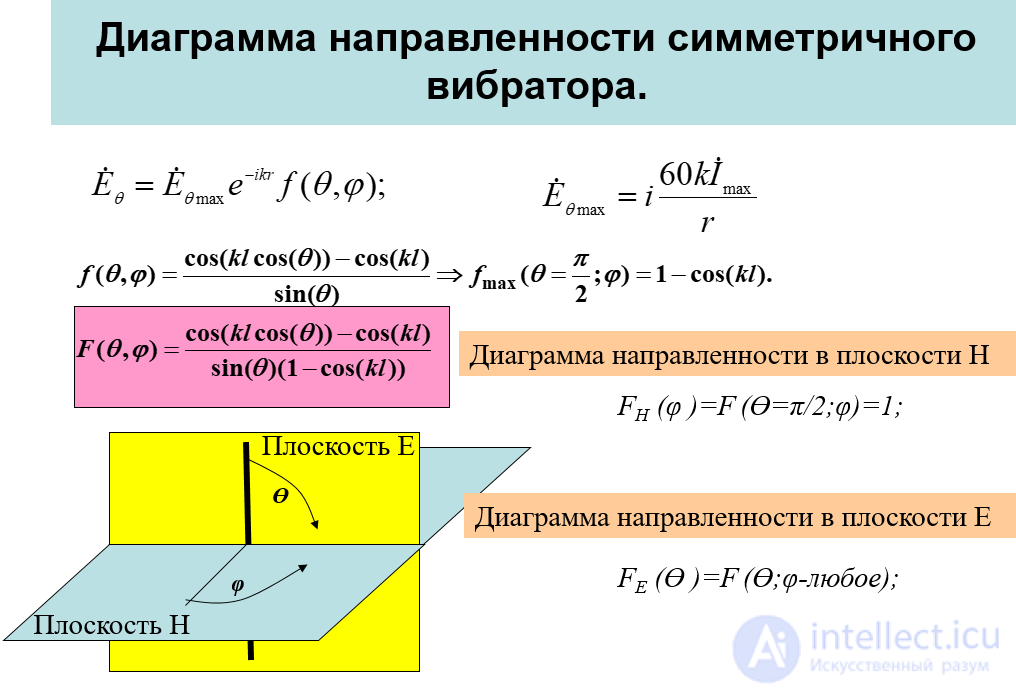
Radiation pattern of the symmetric dipole.
Radiation patterns of the symmetric dipole in the E plane.
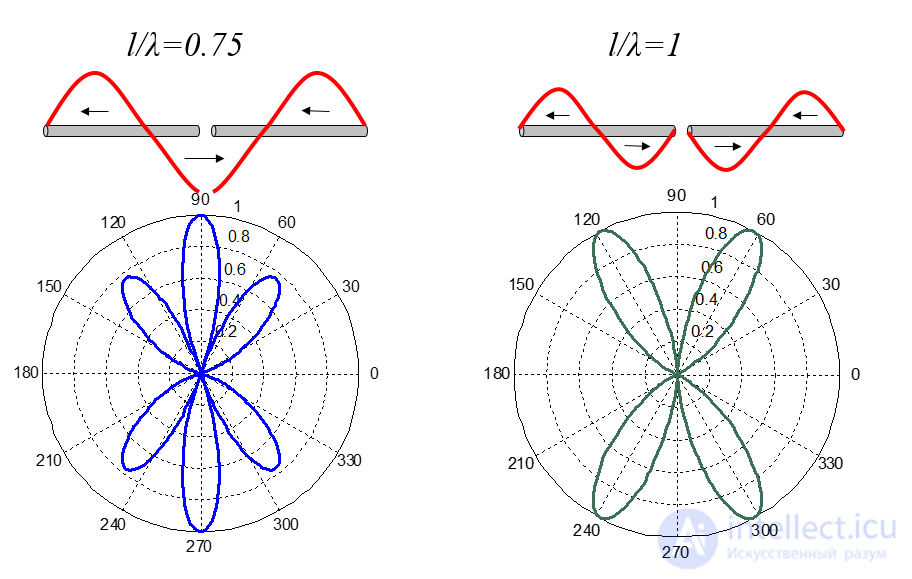
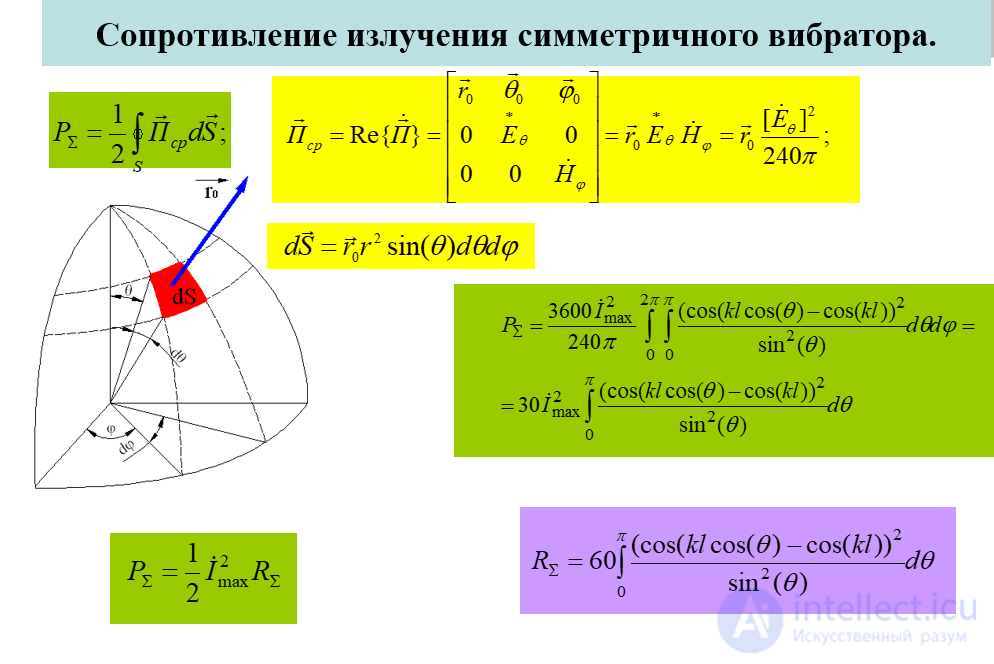
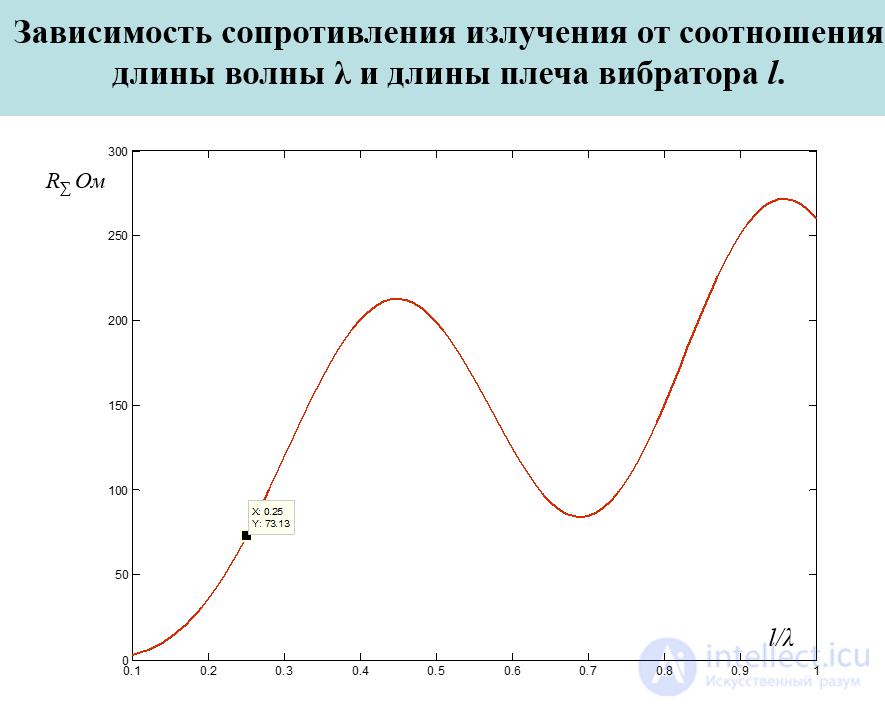
Radiation resistance of the symmetric dipole.
Dependence of radiation resistance on the ratio of wavelength λ to the dipole arm length l.
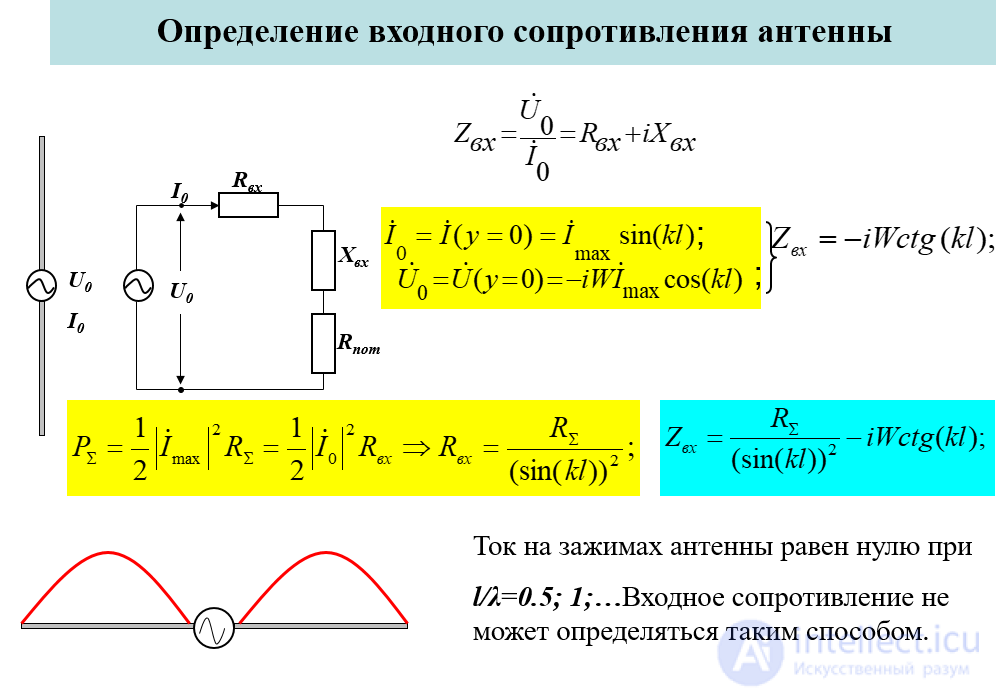
Determination of the antenna's input impedance
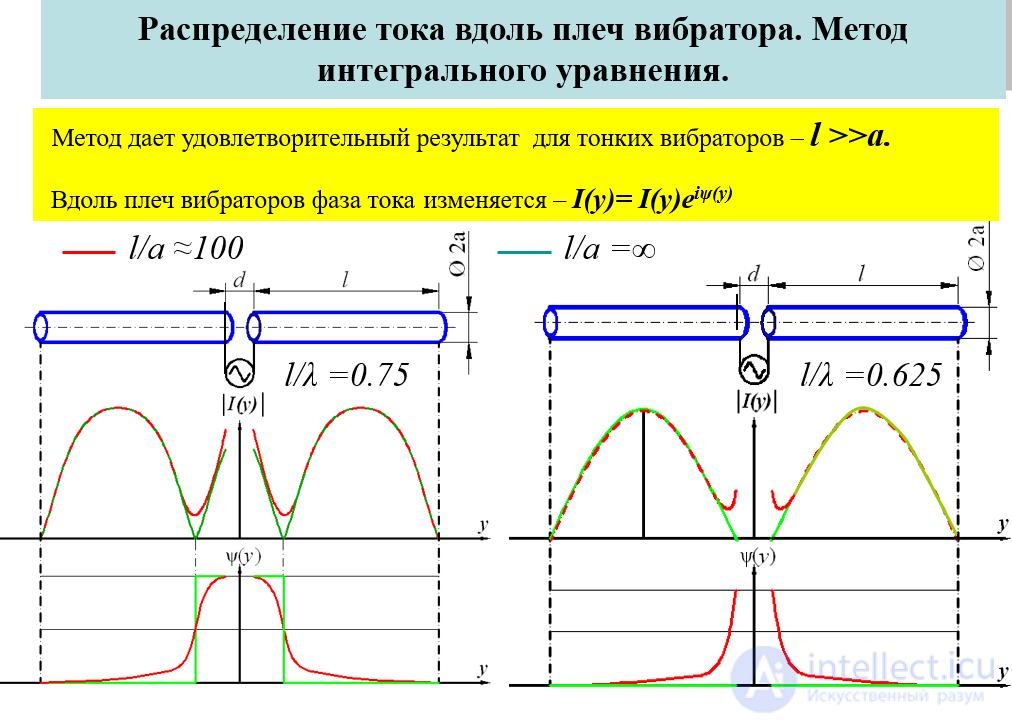
Current distribution along the dipole arms. Integral equation method.
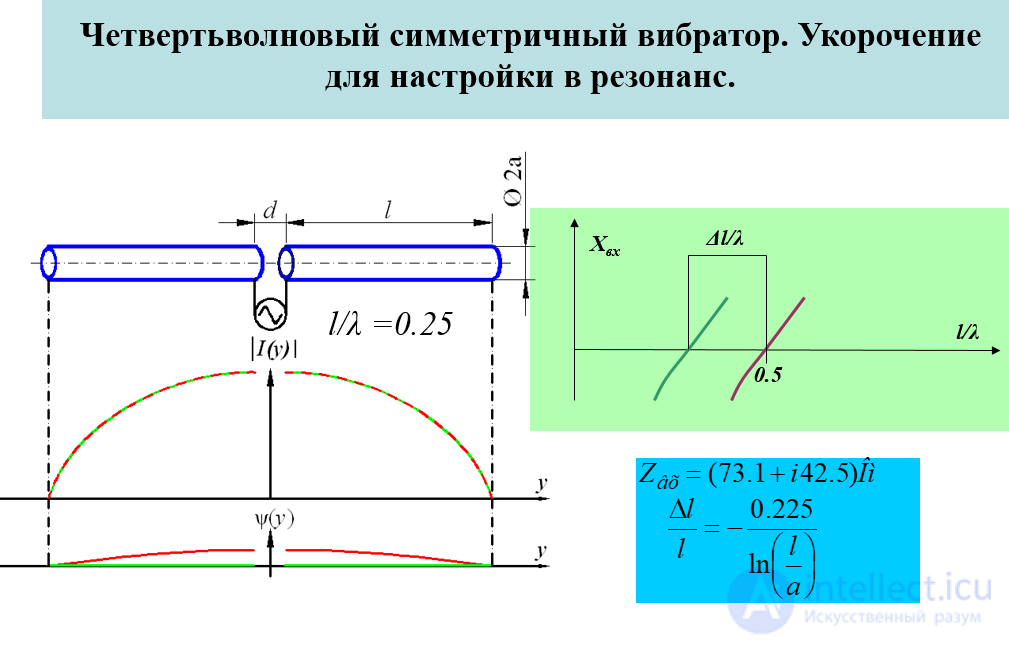
Quarter-wave symmetric dipole. Shortening for resonance tuning.
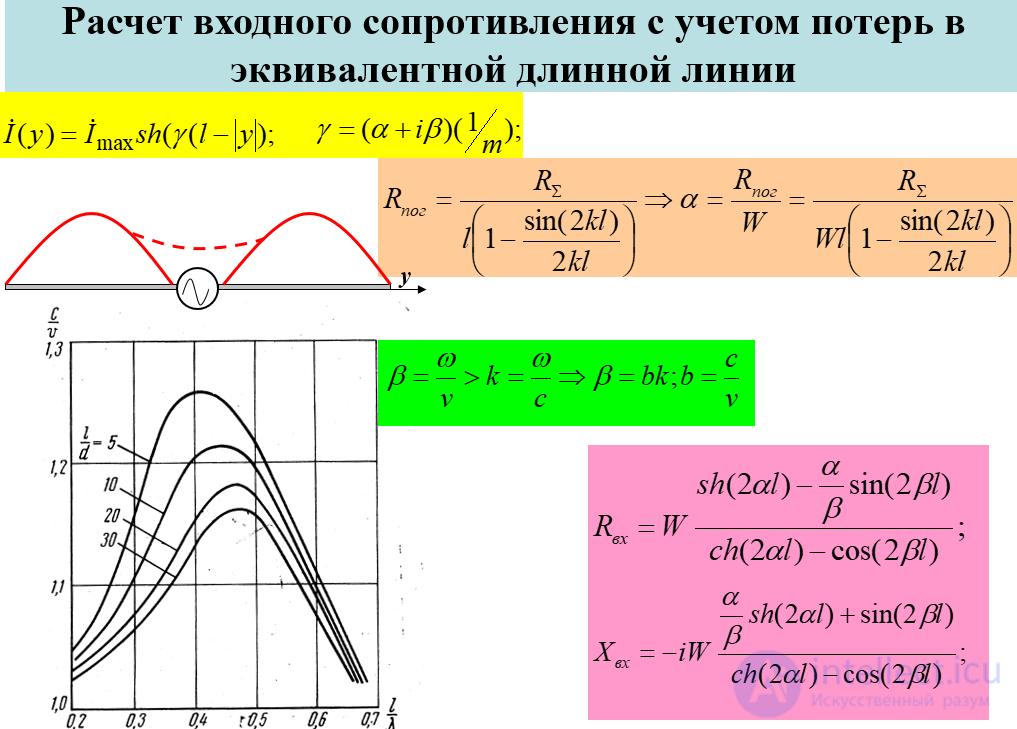
Calculation of input impedance taking into account losses in the equivalent long line
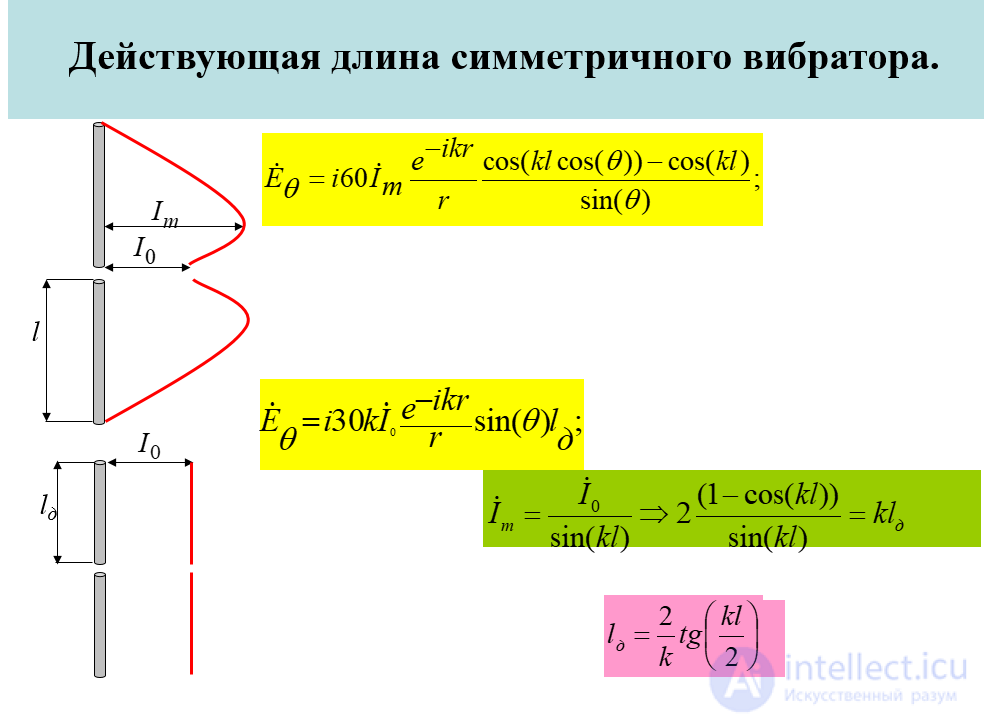
Effective length of the symmetric dipole.

Comments