
Lecture
Materials science is an interdisciplinary field of science that studies changes in the properties of materials, both in the solid and liquid state, as a function of various factors. The properties studied include the structure of substances and their electronic, thermal, chemical, magnetic, and optical properties. Materials science can be regarded as belonging to those branches of physics and chemistry concerned with the study of material properties. In addition, this science makes use of a whole range of methods for investigating the structure of materials. In the manufacture of high-technology products, especially when working with micro- and nanoscale objects, it is necessary to know in detail the characteristics, properties, and structure of materials. It is precisely these problems that materials science is intended to solve.
Materials science is a field of knowledge that sets out the regularities linking the composition and structure of materials to their functional properties, as well as to changes in the properties of materials under operating conditions. The materials-science field is aimed, above all, at improving traditional metallic materials. Over the last 30 years, attention has been devoted to creating fundamentally new classes of structural materials. The form of such materials has also become more varied. It may be a powdered material, a material in the form of a thin film, or a thick coating on various substrates. Throughout its history, materials science as an engineering discipline has been closely linked to advances in the fundamental sciences (physics, chemistry, mechanics). This is why one can distinguish chemical materials science, physical materials science, and so on.
Knowledge of the structure and properties of materials leads to the creation of fundamentally new products and even entire industries. However, classical industries also make wide use of the knowledge gained by materials scientists for innovations, troubleshooting, expanding the product range, improving safety, and reducing production costs. These innovations have been applied to casting, steel rolling, welding, crystal growth, thin-film preparation, firing, glassblowing, and other processes.
Methods used in materials science include: metallographic analysis, electron microscopy, scanning probe microscopy, X-ray diffraction analysis, mechanical property testing, calorimetry, nuclear magnetic resonance, shearography, and thermography.
Improving production and equipping modern facilities with electrical equipment and various instrumentation is impossible without further development of production and the mastery of new materials. Materials science is one of the first engineering disciplines whose fundamentals are widely used in coursework and diploma design, as well as in an engineer's practical work. Progress in the power industry is closely linked to the creation and adoption of new materials with the most varied mechanical and electrophysical properties. A material's properties are determined by its internal structure, which in turn depends on its composition and the nature of prior processing. The «Materials Science» section studies the physical basis of these relationships. The subject of the «Materials Science» course for specialists in power supply is the modern understanding of the electrophysical properties and processes occurring in electrical engineering materials. The aim of the course is to give students knowledge of the main electrical engineering materials, their properties, and skills in correctly selecting materials for various operating conditions and applications. The rational selection of electrical engineering materials and their proper use is impossible without a detailed study of the relationship between their structures and their properties and the electrophysical processes occurring in these materials under thermal, magnetic, electromagnetic, and other energy influences.
The main branches of materials science arise from three principal classes of materials: ceramics, metals, and polymers.
There are also widely applicable undertakings that are independent of the specific material.
Materials also receive considerable attention with regard to specific phenomena and methods.
A material is defined as a substance (most often solid, though other condensed phases may be included) intended for use in specific applications. Materials surround us; they can be found in everything from buildings and automobiles to spacecraft. Materials can generally be divided into two classes: crystalline and non-crystalline. Traditional examples of materials are metals, semiconductors, ceramics, and polymers. New and advanced materials being developed include nanomaterials, biomaterials, energy materials, and many others.
At the heart of materials science lies the study of the structure of materials and its relation to their properties. Once a materials scientist knows this structure-property correlation, they can proceed to study the material's performance characteristics for a given application. The main determining factors of a material's structure, and hence its properties, are the chemical elements it is composed of and the way it was processed into its final form. These characteristics, taken together and linked through the laws of thermodynamics and kinetics, determine the material's microstructure and, consequently, its properties.
Structure is one of the most important components of the field of materials science. Materials science studies the structure of materials from the atomic scale up to the macro level. Characterization is the way materials scientists investigate a material's structure. This includes techniques such as diffraction using X-rays, electrons, or neutrons, as well as various forms of spectroscopy and chemical analysis, such as Raman spectroscopy, energy-dispersive spectroscopy, chromatography, thermal analysis, electron microscope analysis, and so on.
Structure is studied at the following levels.
This concerns the atoms of materials and how they are arranged, giving rise to molecules, crystals, and so on. Many electrical, magnetic, and chemical properties of materials arise at this level of structure. The length scales used are specified in angstroms ( Å ). Chemical bonding and the arrangement of atoms (crystallography) are fundamental to the study of the properties and behavior of any material.
To gain a complete picture of a material's structure and how it relates to its properties, a materials scientist must study how the various atoms, ions, and molecules are arranged and bonded to one another. This involves the study and application of quantum chemistry or quantum physics. Solid-state physics, solid-state chemistry, and physical chemistry are also involved in the study of bonding and structure.
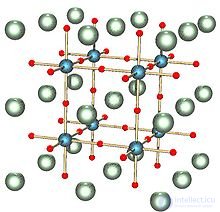
Crystallography is the science that studies the arrangement of atoms in crystalline solids. Crystallography is a useful tool for materials scientists. In single crystals, the effects of the crystalline arrangement of atoms are often easily seen macroscopically, because the natural shapes of crystals reflect the atomic structure. In addition, physical properties are often controlled by crystal defects. Understanding crystal structures is an important prerequisite for understanding crystallographic defects. Materials are mostly found not as single crystals but in polycrystalline form, as an aggregate of small crystals, or grains, with different orientations. For this reason, the powder diffraction method, which uses diffraction patterns of polycrystalline samples containing a large number of crystals, plays an important role in structure determination. Most materials have a crystalline structure, but some important materials do not have a regular crystalline structure. Polymers have varying degrees of crystallinity, and many are entirely non-crystalline. Glass, some ceramics, and many natural materials are amorphous, having no long-range order in their atomic arrangement. The study of polymers combines elements of chemical and statistical thermodynamics to give a thermodynamic and mechanical description of physical properties.

Materials whose atoms and molecules form constituents at the nanoscale (that is, they form a nanostructure) are called nanomaterials. Nanomaterials are the subject of intensive research in the materials-science community because of the unique properties they display.
Nanostructure deals with objects and structures ranging from 1 to 100 nm. In many materials, atoms or molecules agglomerate together, forming objects at the nanoscale. This gives rise to many interesting electrical, magnetic, optical, and mechanical properties.
When describing nanostructures, it is necessary to distinguish the number of dimensions at the nanoscale.
Nanotextured surfaces have one dimension at the nanoscale, meaning only the thickness of the object's surface is between 0.1 and 100 nm.
Nanotubes have two dimensions at the nanoscale, meaning the tube diameter is between 0.1 and 100 nm; its length could be much greater.
Finally, spherical nanoparticles have three dimensions at the nanoscale, meaning the particles are sized between 0.1 and 100 nm in every spatial dimension. The terms nanoparticles and ultrafine particles (UFP) are often used interchangeably, although UFP can extend into the micrometer range. The term «nanostructure» is often used in relation to magnetic technology. Nanoscale structure in biology is often called ultrastructure.
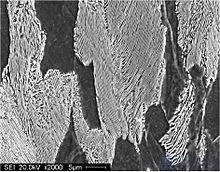
Microstructure is defined as the structure of a prepared surface or thin foil of a material, revealed under a microscope at a magnification greater than 25 times. It deals with objects ranging from 100 nm to a few centimeters. A material's microstructure (which can broadly be divided into metallic, polymeric, ceramic, and composite) can strongly influence physical properties such as strength, toughness, ductility, hardness, corrosion resistance, high/low-temperature behavior, wear resistance, and so on. Most traditional materials (such as metals and ceramics) are microstructured.
Producing a perfect crystal of a material is physically impossible. For example, any crystalline material will contain defects such as precipitates, grain boundaries (the Hall–Petch relationship), vacancies, interstitial atoms, or substitutional atoms. A material's microstructure reveals these larger defects, and advances in modeling have provided a better understanding of how defects can be exploited to improve material properties.
Macrostructure is the appearance of a material at a scale from millimeters to meters; it is the structure of a material visible to the naked eye.
Materials display a wide range of properties, including the following.
A material's properties determine its usability and, consequently, its engineering application.
Synthesis and processing involve creating a material with the desired micro/nanostructure. From an engineering standpoint, a material cannot be used in industry unless an economical production method has been developed for it. Thus, materials processing is vital to materials science. Different materials require different processing or synthesis methods. For example, metal processing has historically been very important and is studied in the materials-science field known as physical metallurgy. In addition, chemical and physical methods are also used to synthesize other materials, such as polymers, ceramics, thin films, and so on. In the early 21st century, new methods are being developed for synthesizing nanomaterials such as graphene.

Thermodynamics studies heat and temperature and their relation to energy and work. It defines macroscopic variables, such as internal energy, entropy, and pressure, which partially describe a body of matter or radiation. It states that the behavior of these variables is subject to general constraints common to all materials. These general constraints are expressed in the four laws of thermodynamics. Thermodynamics describes the bulk behavior of a body, rather than the microscopic behavior of the very large number of its microscopic constituents, such as molecules. The behavior of these microscopic particles is described by statistical mechanics, and the laws of thermodynamics follow from it.
The study of thermodynamics is fundamental to materials science. It forms the basis for studying general phenomena in materials science and engineering, including chemical reactions, magnetism, polarizability, and elasticity. It also helps in understanding phase diagrams and phase equilibrium.
Chemical kinetics is the study of the rate at which systems that are out of equilibrium change under the action of various forces. Applied to materials science, it deals with how a material changes over time (transitioning from a non-equilibrium state to an equilibrium one) due to the application of a given field. It details the rate of the various processes occurring in materials, including changes in shape, size, composition, and structure. Diffusion is important in the study of kinetics, since it is the most common mechanism by which materials undergo change. Kinetics is important in materials processing because, among other things, it details how microstructure changes under the effect of heat.
Materials science is a very active field of research. Alongside materials-science departments, materials research is also conducted by departments of physics, chemistry, and many engineering disciplines. Materials research spans a broad range of topics, and the following incomplete list highlights several important areas of research.
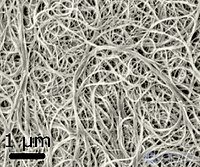
Nanomaterials generally describe materials whose individual element size (in at least one dimension) is between 1 and 1000 nanometers (10 -9 meters), but is usually between 1 and 100 nm. Nanomaterials research uses a nanotechnology approach based on materials science, employing advances in metrology and materials synthesis that were developed to support microtechnology research. Materials with structure at the nanoscale often possess unique optical, electronic, or mechanical properties. The field of nanomaterials is loosely organized, much like the traditional field of chemistry, into organic (carbon-based) nanomaterials, such as fullerenes, and inorganic nanomaterials based on other elements, such as silicon. Examples of nanomaterials include fullerenes, carbon nanotubes, nanocrystals, and so on.

A biomaterial is any material, surface, or construct that interacts with biological systems. The study of biomaterials is called biomaterials science. Throughout its history, it has undergone steady and strong growth, and many companies have invested large sums of money in developing new products. Biomaterials science includes elements of medicine, biology, chemistry, tissue engineering, and materials science.
Biomaterials can either be obtained from nature or synthesized in the laboratory using various chemical approaches involving metallic components, polymers, bioceramics, or composite materials. They are often designed or adapted for medical applications, such as biomedical devices that perform, supplement, or replace a natural function. Such functions may be benign, such as for a heart valve, or may be bioactive with more interactive functions, such as hip implants coated with hydroxyapatite. Biomaterials are also used every day in dentistry, surgery, and drug delivery. For example, a construct impregnated with pharmaceuticals can be placed in the body, allowing the drug to be released over an extended period of time. A biomaterial can also be an autograft, allograft, or xenograft used as a material for organ transplantation.

Semiconductors, metals, and ceramics are used today to form very complex systems, such as integrated electronic circuits, optoelectronic devices, and magnetic and optical information storage media. These materials form the basis of our modern computerized world, and research on them is therefore of vital importance.
Semiconductors are a traditional example of such materials. These are materials with properties intermediate between conductors and insulators. Their electrical conductivity is very sensitive to impurity concentration, which allows doping to be used to achieve desired electronic properties. Consequently, semiconductors form the basis of the traditional computer.
This field also includes emerging areas of research, such as superconducting materials, spintronics, metamaterials, and so on. The study of these materials involves knowledge of materials science and solid-state physics or condensed-matter physics.
With the continuing increase in computing power, it has become possible to simulate the behavior of materials. This allows materials scientists to understand behavior and mechanisms, develop new materials, and explain properties that were previously poorly understood. Efforts related to integrated computational materials engineering are now focused on combining computational methods with experiments to dramatically reduce the time and effort needed to optimize material properties for a specific application. This includes modeling materials at all length scales using methods such as density functional theory, molecular dynamics, Monte Carlo methods, dislocation dynamics, phase-field modeling, finite-element methods, and many others.

Comments