
Lecture
Glasses are inorganic quasi-amorphous solids in which short-range order is present but long-range order in the arrangement of particles is absent.
classification
By application, glasses are subdivided into:
Capacitor glasses — for use in capacitors
Mounting glasses — for producing mounting parts and various
insulators. For example, alkali silicate glasses;
Lamp glasses — for envelopes and stems of lamps and various electronic
devices. Must be sealed to certain metals (the values
of the linear thermal expansion coefficients αl of the glass and the metal
must be equal). «Platinum», «molybdenum», «tungsten
glasses» are boro- or aluminosilicate glasses with αl close to αl of Pt, Mo, W;
Laser glasses — for the active medium in a laser. Glass based on the oxides BaO –
K2O – SiO2, activated with Nd3+ ions (the ions being the generating centers)
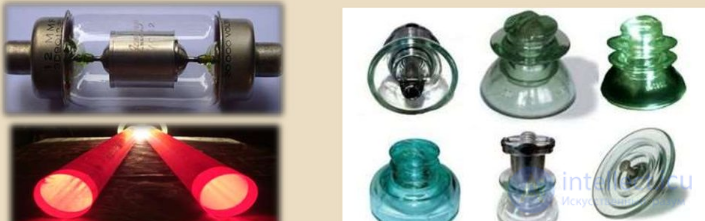
By chemical composition, inorganic glasses are subdivided into elemental, chalcogenide, and oxide glasses. Only oxide glasses exhibit dielectric properties. The basis of an oxide glass is a glass-forming oxide. The glass-forming oxides include SiO2, B2O3, GeO2, Р2О5. Silicate glasses (i.e., based on SiO) are the most widely used, owing to their high chemical stability as well as the low cost and availability of raw-material components. To impart certain physical properties, and also for technological reasons, oxides of various metals (most often alkali and alkaline-earth metals) are introduced into the composition of silicate glasses.
Glasses are classified by the glass-forming substance, by the content of modifiers, and by application.
Depending on the chemical nature of the glass-forming substance, glasses are subdivided into:
The most widely used is silicate glass, whose main component is silicon dioxide (SiO2). Pure silicon dioxide in the glassy state (fused silica) has a framework of tetrahedra (SiO4)-4, joined at their vertices. The distances between the nodes vary over a wide range, so a disordered spatial network is formed (fig. 1, a). Partial substitution of silicon by aluminum or boron leads to the formation of an aluminosilicate or borosilicate glass framework. Cations of alkali and alkaline-earth metals (Na, К, Са, Mg, Ва) — the modifiers — are located between the silicon-oxygen tetrahedra without disrupting the structure of the framework (fig. 1, b).
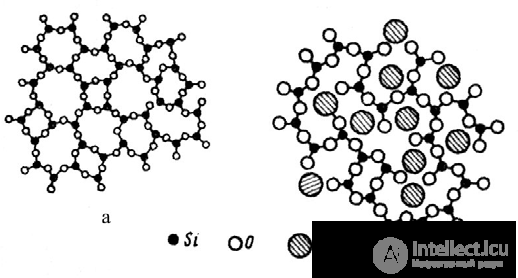
Fig. 1. Structure of inorganic glass: a — fused silica; b — alkali glass
By content of modifiers, glasses are alkali (containing Na2О, К2О oxides), alkali-free, and quartz (fused-silica) glasses.
Multicomponent silicate glasses of the Na2O—CaO—SiO2 system with the addition of Al2O3 and MgO have become widely used.
Fused silica is obtained by melting natural or synthetic quartz. The glass-production technology includes batching the raw mix and melting it in furnaces.
By application, inorganic glasses are subdivided as follows:
Technical glasses mostly belong to the aluminoborosilicate group and are distinguished by the variety of oxides they contain. Glasses are produced by industry in the form of finished articles, blanks, or individual parts.
The composition of common glasses is as follows:
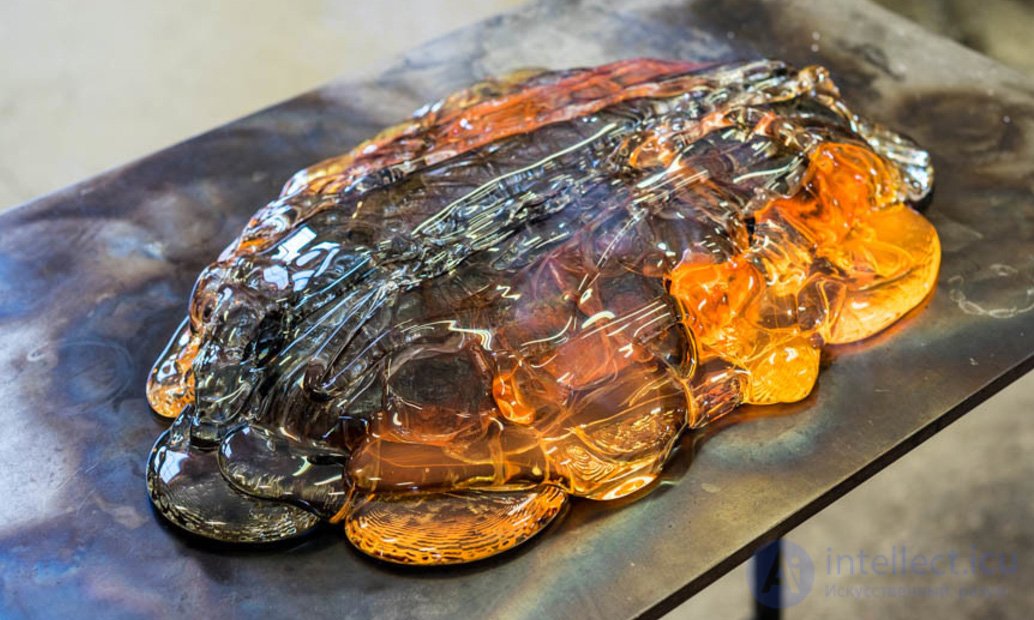
On heating, glass melts over a certain temperature interval, which depends on its composition. Below the glass-transition temperature tc the glass becomes brittle. For industrial silicate glasses the glass-transition temperature tс = 425…600 °C, and the softening temperature tр = 600…800 °C. In the temperature interval between tс and tp the glass is in a highly viscous plastic state. At temperatures above tp (1,000…1,100 °C) all technological processes of shaping the glass melt into articles are carried out. The properties of glass (like those of all amorphous bodies) are isotropic. The density of glass ranges from 2,200 to 6,500 kg/m3 (for glass containing lead or barium oxides it can reach 8,000 kg/m3).
The mechanical properties of glass are characterized by high resistance to compression (500…2,000 MPa), low tensile strength (30…90 MPa in tension and 50…150 MPa in bending), a high elastic modulus (45…100 MPa), and a Poisson's ratio μ = 0.184…0.26. The theoretical strength of glass (at the molecular level) is 200…500 times greater than its actual strength. To bring the actual strength of glass closer to the theoretical strength value, it is necessary to improve the manufacturing technology and improve the composition of the glass materials. The highest mechanical properties are found in glasses 5…100 µm thick and fibers 0.2…40 µm in diameter. The hardness of glass (like that of other inorganic materials) is often determined by the approximate scratch method on the Mohs mineralogical scale and equals 5…7 units (the hardness of diamond is taken as 10 units, and that of talc as one unit).
Glass is a brittle material with low impact toughness (1.5…2.5 kJ/m2). Higher mechanical characteristics are found in glasses that contain no alkali, and in fused silica. The most important specific properties of glasses are their optical properties (transparency, reflection, scattering, absorption, and refraction of light). Ordinary uncolored sheet glass transmits up to 90 %, reflects about 8 %, and absorbs about 1 % of visible and partly infrared light, while it absorbs ultraviolet radiation almost completely (fused silica is transparent to ultraviolet radiation). The refractive index of glasses is 1.47…1.96, and the dispersion coefficient lies in the range 20…71. Glass with a high PbO content absorbs X-ray radiation.
Sheet glass is obtained by drawing the glass melt through a narrow slit. Glass blocks and articles are most often produced by pressing and volumetric stamping. For the production of hollow articles, the glass-blowing method is used.
The heat resistance of glass characterizes its durability under various conditions of temperature change and is determined by the temperature difference that the glass can withstand without failure upon sudden cooling in water (t = 0 °C). The heat resistance of glass is calculated using G. M. Bartenev's formula:
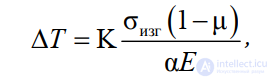
where ΔT — temperature difference, °C; K — coefficient (for cooling of the whole article K = 1); σизг — bending strength; μ — Poisson's ratio; α — linear thermal expansion coefficient; Е — elastic modulus.
The linear expansion coefficient (α) of glass ranges from 5.6·10–7 с-1 (fused silica) to 90·10-7 с-1 (building glass), and the thermal conductivity coefficient is 0.7…15 W/(m·K). For most types of glass, the heat-resistance values range from 90 to 170 °C, while for fused silica it is 800…1,000 °C. The chemical stability of glass depends on its constituent components: the oxides SiO2, ZrO2, TiO2, В2О5, A12О3, CaO, MgO, ZnO provide high chemical stability, whereas the oxides Li2О, Na2О, К2О, BaO, and PbO, on the contrary, promote chemical corrosion of the glass. The mechanical strength and heat resistance of glass can be increased by tempering and thermal hardening.
Tempering consists of heating the glass to a temperature above the value tc and then rapidly and uniformly cooling it in a stream of air or in oil. This increases the glass's resistance to static loads by a factor of 3…6, and its impact toughness by a factor of 5…7. Tempering also increases the heat resistance of the glass.
Thermochemical strengthening is based on a significant change in the structure of the glass and the properties of its surface. The glass is tempered in heated organosilicon liquids, as a result of which polymer films form on the surface of the material. This creates additional strengthening (compared with the result of ordinary tempering). An increase in strength and heat resistance can also be obtained by etching tempered glass with hydrofluoric acid, which removes surface defects that reduce its quality.
Glass can be machined (it can be sawn, turned, cut, ground, and polished) using special tools.
The raw materials used for making glass are the following: quartz sand SiO2, soda Na2CO3, potash K2CO3, limestone CaCO3, dolomite CaCO3 – MgCO3, sodium sulfate Na2SO4, borax Na2B4O7, boric acid Н3ВО3, red lead Pb3О4, and others.
The raw materials are ground, weighed out in the required proportions, and thoroughly mixed; the resulting batch is charged into a glass-melting furnace. Large-scale production uses tank furnaces, while pot furnaces are used to obtain small quantities of glass of precisely maintained composition. On heating, the batch melts, the volatile constituents (Н2О, СО2, SO3) are removed from it, and the remaining oxides react chemically with one another, so that a homogeneous glass melt is formed, which is then used to produce sheet glass or glass articles.
Glass articles are shaped by blowing, centrifugal casting, drawing, pressing, casting, etc. It should be noted that the glassy state of the material is obtained only by rapid cooling of the glass melt. In the case of slow cooling, partial crystallization begins, the glass loses its transparency owing to loss of homogeneity, and the shaped articles then have low mechanical strength.
Manufactured glass articles are annealed in order to eliminate dangerous local mechanical stresses in the glass that arise during rapid and uneven cooling. During annealing, the article is heated to a sufficiently high temperature (the annealing temperature) and then slowly cooled.
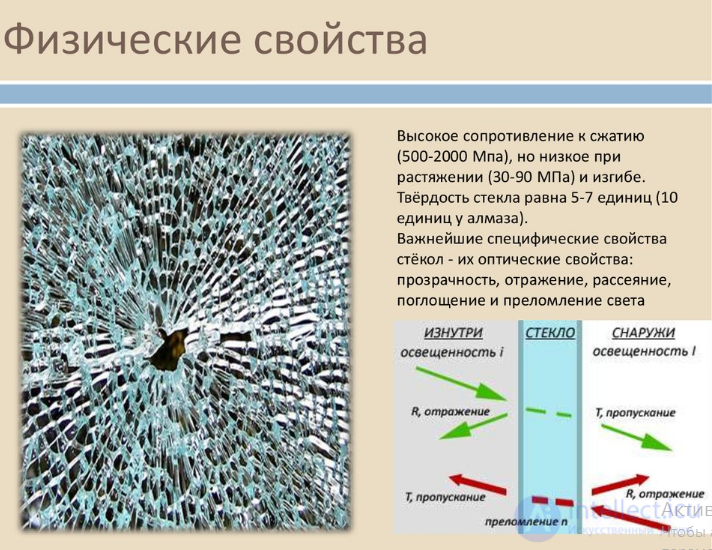
For glazing transport vehicles, laminated safety glass, insulated (thermopane) glass, and tempered glass are predominantly used.
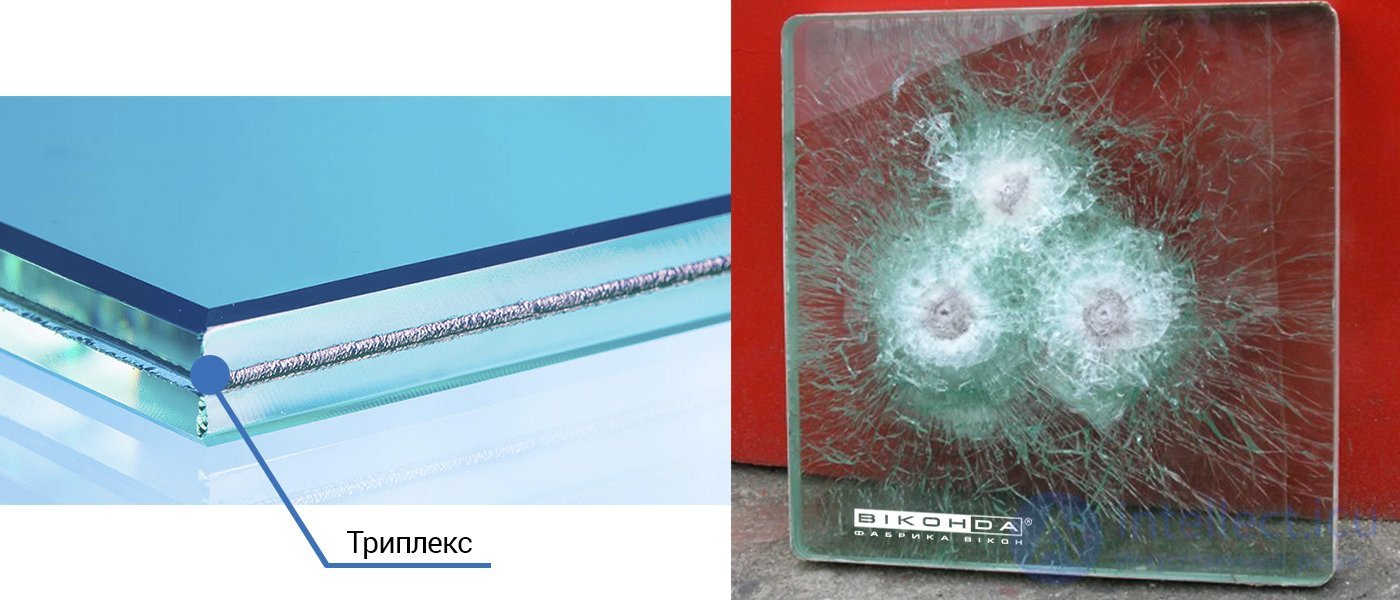
Laminated safety glass is a composite material obtained from two sheets of tempered silicate glass 2…3 mm thick, bonded with a transparent elastic polymer film (usually polyvinyl butyral). When laminated glass breaks, the blunt fragments are held on the polymer film. Laminated glass may be flat or curved.
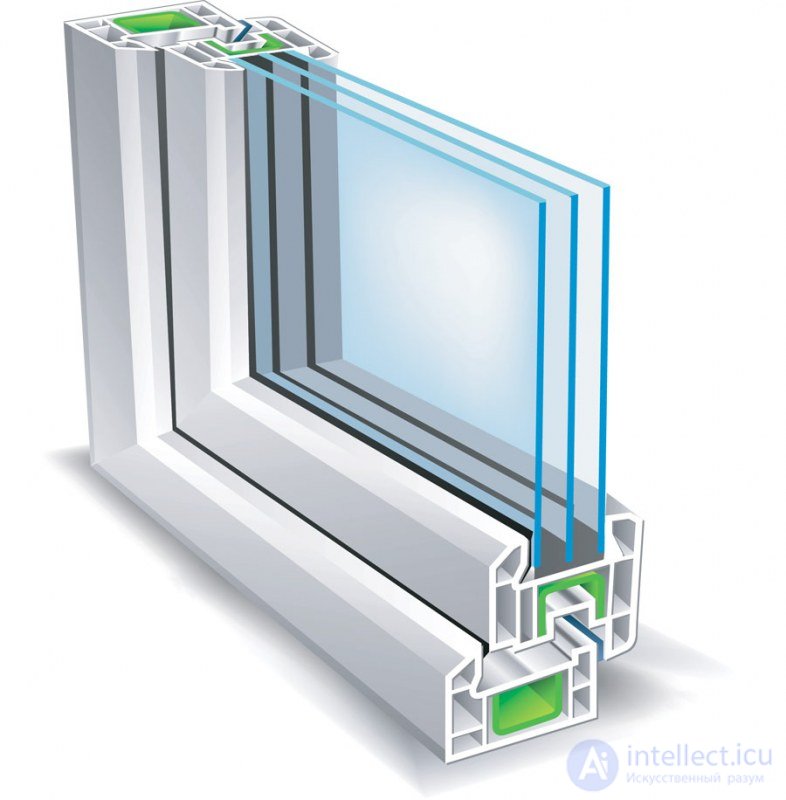
Thermopane is a three-layer glass made of two sheets of tempered glass with an air gap between them, which provides thermal insulation.
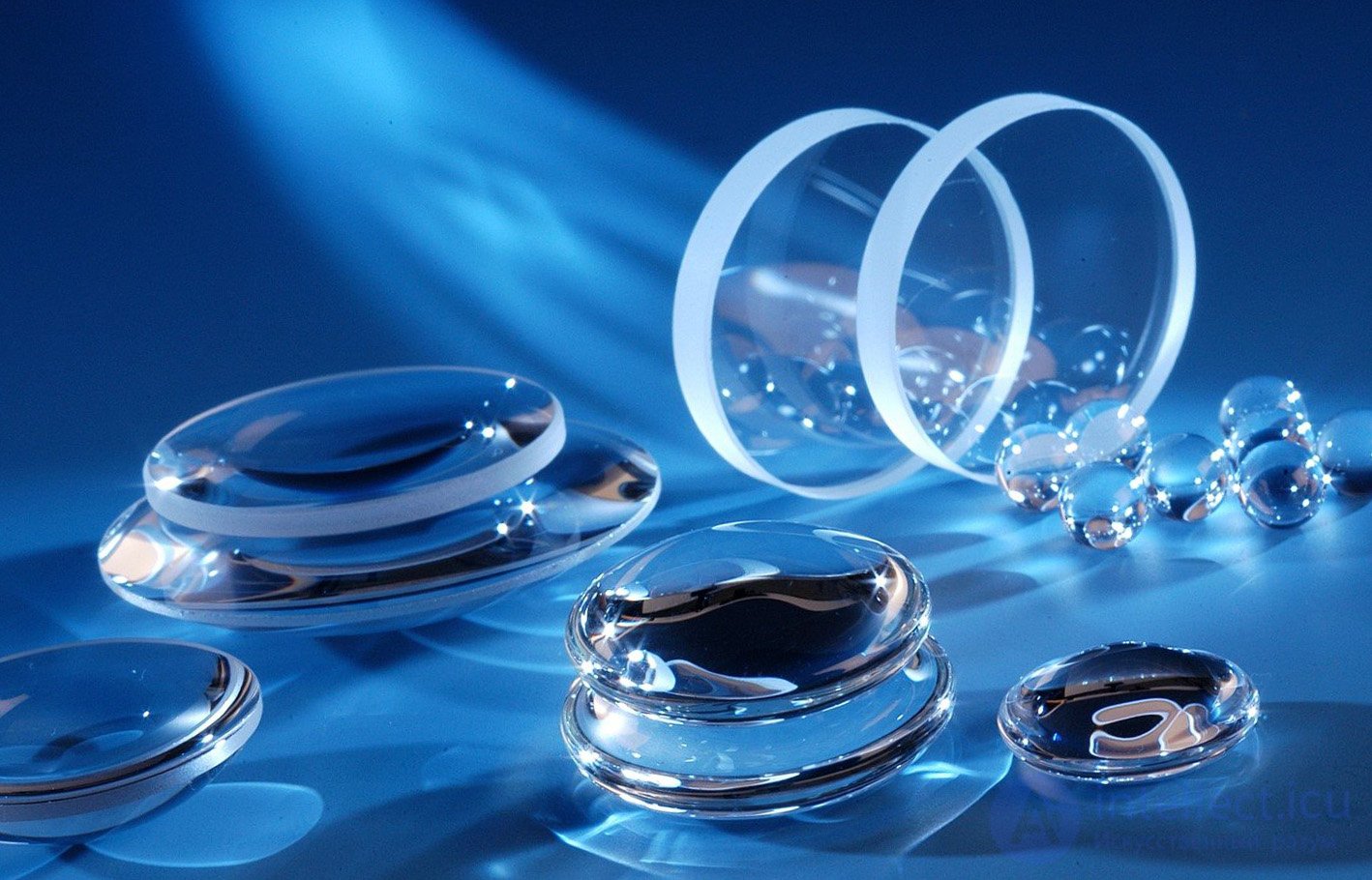
Optical glasses, used in optical instruments and devices, are subdivided into crowns, distinguished by a low refractive index, and flints, which are characterized by a high lead oxide content and high refractive index values. Heavy flints do not transmit X-rays and γ-radiation.
Light-diffusing glasses contain fluorine in their composition. The glazing of cabins and rooms housing the control panels of open-hearth and arc furnaces, rolling mills, and overhead cranes in foundry shops is made of glasses containing iron and vanadium oxides, which absorb about 70 % of infrared radiation in the wavelength range 0.7…3 µm.
Owing to its high (thermal and chemical) resistance, fused silica is used to manufacture crucibles, dishes, tubes, and tips, as well as laboratory glassware. Quartzoid (silica) glass, close in properties to fused silica but more technologically manufacturable, is used for electron-tube envelopes, precision-casting molds, and the like. Electrically conducting (semiconducting) glasses (chalcogenide and vanadium oxide glasses) are used as thermistors and photoresistors.
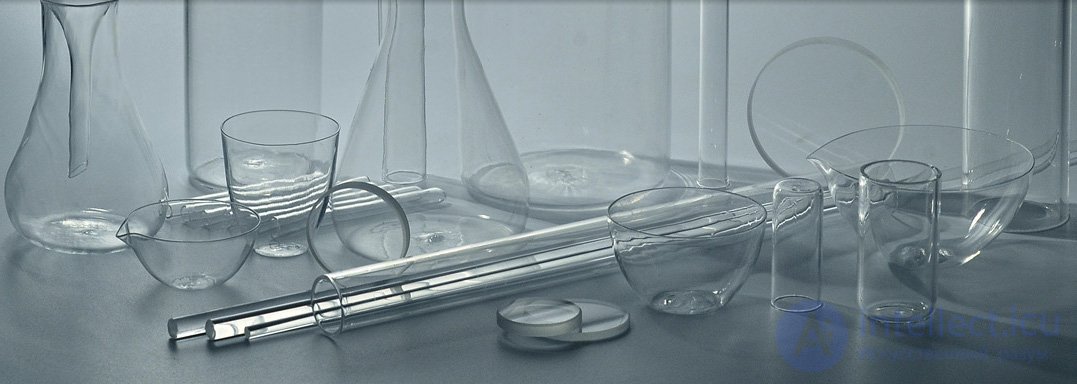
In industry (chemical and food industries), instead of pipes made of stainless steel and non-ferrous metals, heat-resistant pipes made of boron-free glass are used.
Heat- and sound-insulating glass-fiber materials have a loose fibrous structure with a large number of air pockets, in which the fibers are arranged randomly. Owing to this structure, these materials have a low bulk density (20…130 kg/m3) and low thermal conductivity λ = 0.030…0.0488 W/(m·K).
Glass fiber is produced by the following methods: the rod method (a drop forming at the end of a heated rod falls, drawing a thread from the rod); the bushing (spinneret) method (glass fiber is drawn from the melt through a bushing); the bushing-centrifugal method; and the blowing method.
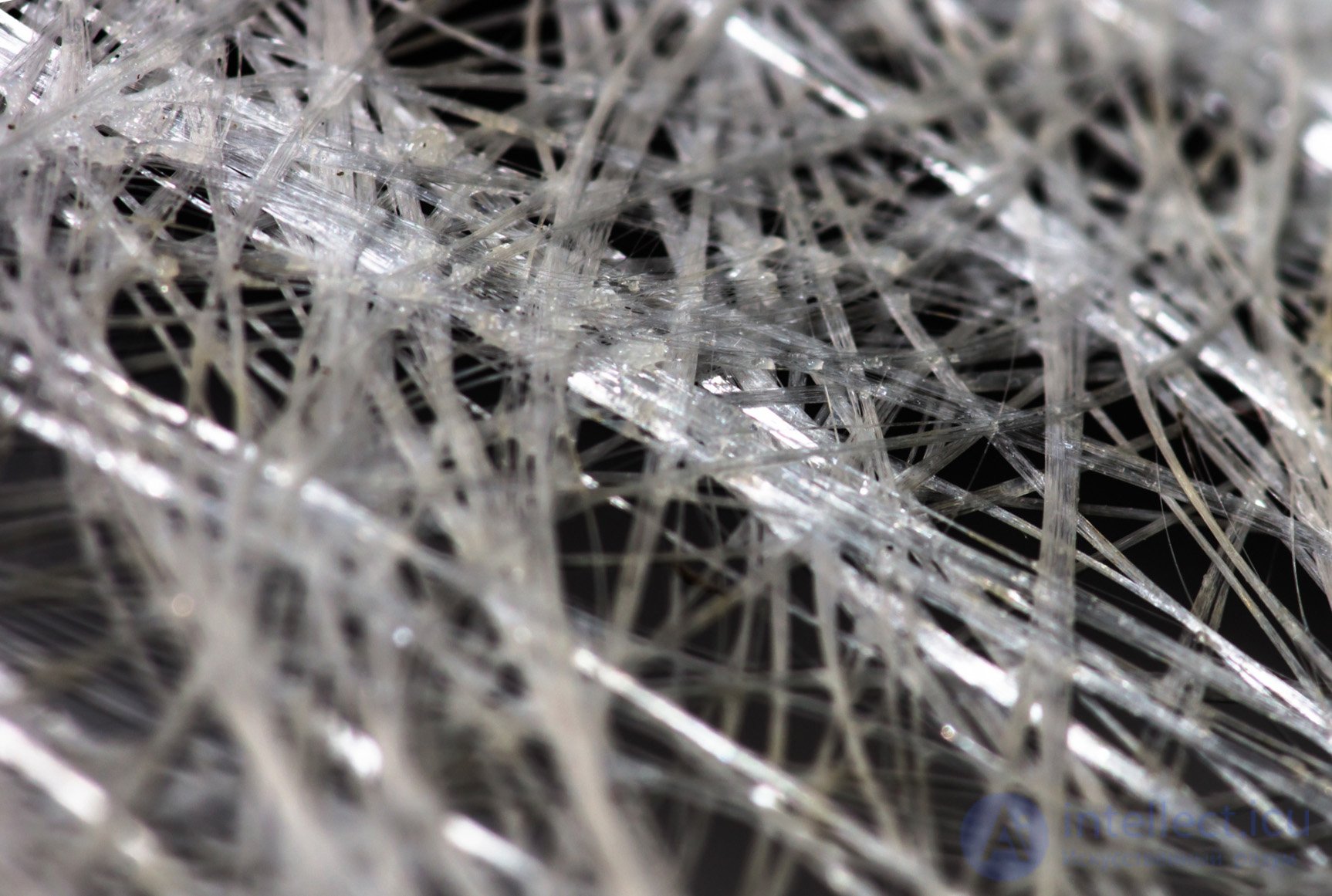
Varieties of glass-fiber materials include glass wool, whose use is limited by its brittleness. Glass wools are materials such as АСИМ, АТИМС, and ATM-3, consisting of glass fibers arranged between two layers of glass fabric or glass mesh, quilted with glass thread. These materials are used over the temperature range from –60 to +600 °C. Sometimes glass fibers are combined with a thermosetting resin, which gives the materials (mats) a more stable loose structure (material АТИМСС). Such materials operate at temperatures up to 150 °C.
Materials produced from short fiber and synthetic resins are called boards. The sound-absorption coefficient of the boards at a sound frequency of 200…800 Hz is 0.5; at a frequency of 8,000 Hz it is 0.65.
Glass fibers and glass fabrics are used as fillers in the production of glass-fiber-reinforced plastics.
Glass wool, mats, and boards are used for heat and sound insulation of aircraft cabins, automobile bodies, railway cars, locomotives, electric locomotives, and ship hulls, as well as in refrigeration engineering. These materials are used to insulate various pipelines, autoclaves, and the like.
[[b8277]]

Comments