
Lecture
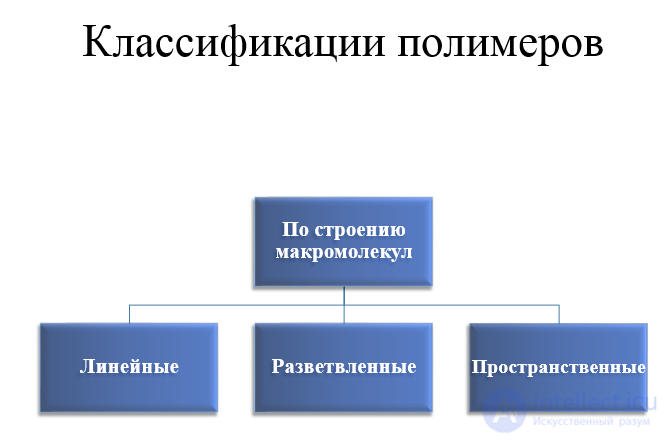
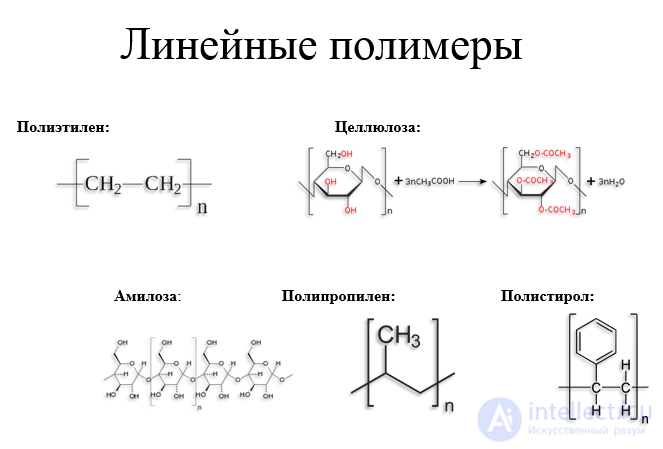
Linear polymers are unique compounds whose macromolecules are represented as a long chain. In turn, the molecules of this chain are chemically inert with respect to one another. They are bonded together solely by van der Waals forces. It should be noted that linear polymers are precisely those polymers endowed with specific macromolecules. In other words, in such macromolecules the atomic groups are arranged in the form of an open chain. Let us note the main advantages of the polymers under consideration: - these polymers readily form high-strength films and fibers; - they possess a certain elasticity; - such polymers are capable of forming solutions of fairly high viscosity; - they are very flexible. This last quality contributes to the possibility of densely forming packed, ordered structures called crystalline regions. Examples of crystalline polymers include polyethylene, polyamide, polypropylene, and some thermoplastic polyesters. It should be noted that crystalline polymers are characterized by fairly significant shrinkage during molding.

Polytetrafluoroethylene (PTFE) is called fluoroplastic-4 (ftorlon-4). It is obtained by polymerizing tetrafluoroethylene
F2C = CF2 (ethylene, in whose molecule all four hydrogen atoms are replaced by fluorine atoms). The PTFE macromolecule has a regular, symmetric structure.
Among all organic polymers, PTFE stands out for its high heat resistance (about 300°C) and very high resistance to the action of chemical reagents. Thus, it is entirely unaffected by sulfuric, hydrochloric, nitric, and hydrofluoric acids, alkalis, and the like. Only molten alkali metals and atomic fluorine at elevated temperatures have any effect on it. In resistance to chemically aggressive substances, PTFE surpasses gold and platinum. It is non-flammable, does not dissolve in any known solvent, is practically non-hygroscopic, and is not wetted by water or other liquids.
On heating to a temperature of 415°C, PTFE decomposes with the release of a poisonous gas — fluorine. But even at this temperature the polymer does not pass into a viscous-flow state. Therefore the usual methods of molding thermoplastic materials are unsuitable for PTFE. It is processed into products by sintering. First an item of a given shape is formed from the powder by pressing, and then sintering is carried out at a temperature of 360…380°C.
Polyvinyl chloride (PVC) is a solid product of the polymerization of gaseous vinyl chloride, H2C=CH–Cl, which represents ethylene in whose molecule one H atom is replaced by a Cl atom. The name vinyl chloride comes from the word "vinyl" for the group of atoms H2C=CH– (styrene can be called vinylbenzene).
Due to strong polar intermolecular bonds that tightly hold the molecular chains together, polyvinyl chloride is a rigid, inflexible material. To impart flexibility, plasticizers are added to PVC, using organic polar liquids with a high boiling point. The plasticizer separates the molecular chains and weakens the interaction between them, thanks to which the macromolecules gain the ability to move relative to one another; in other words, the plasticizer acts as a kind of "molecular lubricant." The introduction of a polar plasticizer worsens the electrical properties of the polymer.
Polyethylene terephthalate (lavsan) is a thermoplastic polymer obtained from ethylene glycol and terephthalic acid, C6H4(COOH)2. It has considerable mechanical strength and a fairly high softening temperature.
Lavsan is used to manufacture fibers, films, and for other purposes. At elevated temperatures it oxidizes rapidly in air, so processing of the heat-softened material is carried out in an atmosphere of an inert gas
(nitrogen).
Polyamide resins also have a linear molecular structure and are thermoplastic substances. They are distinguished by high mechanical strength and elasticity, and are soluble in only a small number of solvents (in particular, in cresol and molten phenol). They are used to manufacture synthetic fibers and plastics.
Polyamides age under the action of light, moisture, and temperature changes. This is manifested in deteriorating plasticity and reduced mechanical strength. Polyamides are characterized by relatively high hygroscopicity and easy deformability at elevated temperatures.
Plasticized polyvinyl chloride compound has become widely used in the production of hookup wire, thanks to its flexibility, sufficient strength, and high productivity of insulation application. Products capable of working in chemically aggressive environments are made from unplasticized PVC. Films of polyethylene terephthalate (lavsan) are used as the carrier base in the manufacture of magnetic recording tape. From this material thin films can be obtained for interlayer insulation in the windings of transformers, chokes, and similar products designed for an operating temperature of up to +150°C. Lavsan films with the highest mechanical strength are about 6.5 μm thick. Capacitors made from such films have a higher operating temperature (up to 150°C) compared with paper capacitors and are smaller than the latter in size.
Organic glass (acrylic) is mainly used as a decorative material in electrical and radio equipment. Nylon (kapron), thanks to its good thermoplastic properties and high mechanical strength, is used in the production of various structural parts of radio equipment (instrument housings, control knobs and buttons, band-switching keys, coil formers, etc.). Polyamides are used to make enamel varnishes, which form strong, elastic dielectric coatings on metal wires.

Comments