
Lecture
Это окончание невероятной информации про активные диэлектрики.
...
biaxial medium, that is, there exist two directions of light propagation for each of which the refractive index does not depend on polarization. This difference in properties is related to the fact that in smectic A rotation of the molecules about the long axis is possible, while in smectic C such rotation is hindered.
Since rotation of the molecules along the long axis is hindered in smectic C, the orientation of neighboring molecules turns out to be close, that is, such liquid crystals will exhibit ferroelectric properties. The requirement of minimum energy leads to a gradual rotation of the dipole moments at the domain boundaries. In other words, a structure analogous to that of cholesterics appears at the domain boundaries. When such materials are heated, the domain boundaries expand, and throughout the whole volume the structure of the smectic becomes analogous to the structure of a cholesteric. Such smectics are called chiral.
It should be noted that the helical pitch of chiral smectics is, as a rule, larger than the helical pitch of cholesterics, so selective reflection of light is observed in the infrared range. Applying an electric field changes the helical pitch, which makes it possible to convert infrared radiation into visible radiation.
Superionic conductors are dielectrics with ionic bonding whose conductivity rises sharply upon reaching a certain temperature lower than the melting point. This effect is associated with so-called internal melting. In other words, if liquid crystals combine the properties of a liquid and a crystal, then superionic conductors combine the properties of a crystal and a liquid.
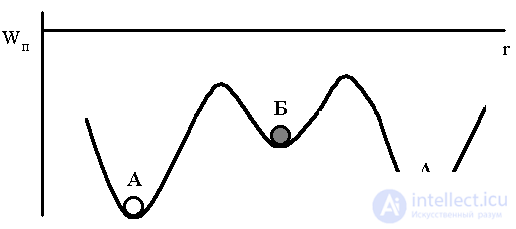
Figure 9. Potential curve of superionic conductors. WП – potential interaction energy, r - distance between ions.
To explain the internal melting effect, one must consider the features of the potential curve of such materials. The potential curve of such materials is characterized by differences in the depth of the potential wells for ions of different species. For example, for ions of type A the potential wells are deeper, while for ions of type B the potential wells are shallower. When the material is heated, the ions rise out of the potential wells, and at a certain temperature the thermal energy of the material becomes equal to the potential energy of the type-B ions but remains less than the potential interaction energy of the type-A ions. In other words, the type-B ions leave the lattice sites and become free charge carriers. At the same time, the type-A ions continue to form the crystal lattice.
The structure of superionic conductors at high temperatures (temperatures sufficiently high for transition to the superionic state) resembles the structure of metals, in which an electron «gas» is located between the positive ions. The only difference is that in superionic conductors, a «gas» of ions of the opposite sign is located between ions of one sign.
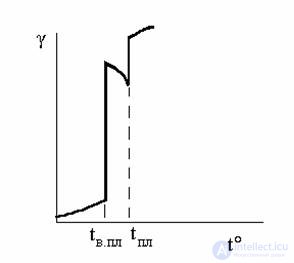
Figure 10. Dependence of the electrical conductivity of superionic conductors on temperature.
Based on these concepts, it is easy to explain the effect of temperature on the electrical conductivity of superionic conductors. Up to the internal melting temperature, an increase in temperature leads to a rise in electrical conductivity according to an exponential law, which is characteristic of any dielectric. This is because, as the temperature rises, the probability of an energy fluctuation sufficient for an ion to leave its potential well increases. Consequently, as temperature rises, the concentration of free ions increases. When the internal melting temperature is reached, ions with a less deep potential well leave the lattice sites, which leads to a sharp rise in electrical conductivity.
With further increase in temperature, activation of the vibrations of the lattice ions leads to a decrease in electrical conductivity. This phenomenon has the same nature as the decrease in electrical conductivity upon heating of metals.
In metals, heating leads to activation of the vibrations of the lattice sites, as a result of which the crystal lattice is locally distorted. It is known that the main charge carriers in metals are electrons. The motion of electrons in metals with a close-packed crystal lattice is conveniently represented as the motion of an electron wave. When the electron wave interacts with the lattice sites, the electron wave transfers energy to the ions located at the sites. Having absorbed the energy of the electron wave, the ions become excited, vibrate, and radiate diffracted electron waves in all directions. The diffracted waves interfere, and a new wave is formed. In the case where the crystal lattice is regular, the ions are coherent sources of the diffracted waves, so the amplitudes of the diffracted waves add up, and a new wave is formed whose amplitude equals the amplitude of the original wave (see Fig. 11).
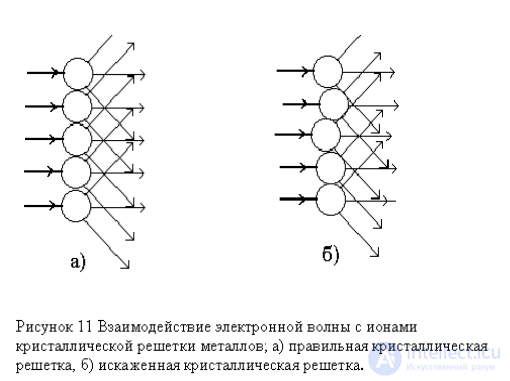
The energy of a wave is proportional to the square of its amplitude, so in a regular crystal lattice the electron wave moves without losses, and the resistivity of a material with an ideal crystal lattice equals zero. The appearance of defects in the crystal lattice leads to displacement of some ions from their equilibrium positions, and the diffracted waves become incoherent (Fig. 11). When incoherent waves are superposed, the amplitude of the resulting wave turns out to be smaller than the amplitude of the incident wave, and as a result the metal's resistivity becomes nonzero. As temperature rises, local distortion of the crystal lattice of metals occurs, and consequently the resistivity increases.
In superionic conductors, the charge carriers are ions, whose motion can likewise be represented as the motion of an ion wave. Similarly, the resistivity of superionic conductors increases upon local distortion of the lattice framework on which the ion wave is diffracted.
A further rise in temperature leads to complete melting of the crystal, that is, the thermal energy becomes equal to the work required for ions to leave the deepest potential wells. Therefore the conductivity of superionic conductors again increases. A rise in temperature increases the kinetic energy of the ions and reduces their electrostatic interaction. Therefore, a rise in temperature after complete melting of superionic conductors leads to an increase in conductivity.
Superionic conductors were discovered in 1912 during a study of the properties of silver halides. It was found that silver iodide crystals exhibit unusual properties (a sharp rise in electrical conductivity) upon heating. Silver fluoride and silver chloride crystals do not have such properties. Somewhat later, superionic conductors among copper compounds were discovered. For a long time, copper and silver were considered «magic» metals whose compounds could exhibit the properties of superionic conductors. However, after the nature of the phenomenon was understood, other materials with the properties of superionic conductors were also discovered. Let us examine the nature of this phenomenon in more detail.
Silver and iodine have a fairly large difference in ionic size, so although silver iodide has the same crystal lattice as silver fluoride, the elastic distortions of the crystal lattice are large. Consequently, the potential well for silver ions in the silver iodide lattice is shallower than in the silver fluoride lattice. This is why the superionic conductor effect appears in silver iodide. Thus, two conditions are necessary for this effect to appear: the presence of ionic bonding and a large difference in ionic sizes. Consequently, the properties of superionic conductors will be exhibited by oxides of rare-earth metals, in which the charge carriers are oxygen ions; sodium aluminate, in which the charge carriers are sodium ions; and so on.
A whole range of interesting technical devices can be created on the basis of superionic conductors. One of the first (and most curious) proposals for the application of superionic conductors was the idea of the famous theorist who discovered the third law of thermodynamics, Nernst. He proposed using oxides of rare-earth metals to make filaments for incandescent lamps. The idea was patented, and manufacturers of incandescent lamps bought out the patent, though quite unnecessarily. The transition of rare-earth metal oxides to the superionic conductor state is observed at temperatures exceeding 600 °C. In other words, to turn on such a lamp, the filament would first need to be heated to 600 °C. For the light emitted by the lamp to be as close as possible to the solar spectrum, the temperature of the filament must be 2400 – 2600 °C, so it is quite difficult, or rather impossible, to find a material for preheating the filament that would work at such temperatures in an oxidizing environment.
Nevertheless, superionic conductors based on oxides of rare-earth metals are actively used in engineering. They are used to make high-temperature temperature sensors as well as gas analyzers. Since the main charge carriers in such materials are oxygen ions, the resistance depends not only on temperature but also on the partial pressure of oxygen in the surrounding medium.
Besides making sensors, superionic conductors can be used to make other technical devices: memory cells, ultra-high-capacity capacitors – supercapacitors, batteries, and others.
To make memory cells, two carbon electrodes are placed in the melt of a superionic conductor, with one of the electrodes pre-coated with a metal whose ions are the charge carriers in the superionic conductor. In the example under consideration, silver is deposited on one electrode, and the superionic conductor is silver iodide. When a positive potential is applied to the silver-coated electrode, the silver begins to dissolve, silver ions pass into the superionic conductor and are transferred to the other electrode. After the layer of silver has been transferred to the other electrode, the current through the cell stops. To resume the current, the polarity of the electrodes must be reversed.
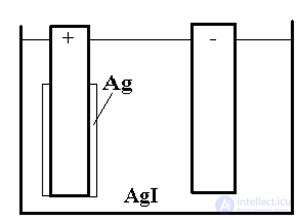
Figure 11. Diagram of a memory cell
If no metal layer is deposited on the electrodes, then upon application of an electric field the mobile ions shift away from one of the electrodes, and a blocking layer appears in the superionic conductor. In other words, the cell has turned into a capacitor. The capacitance of the capacitor is proportional to the surface area of the electrodes and the permittivity, and inversely proportional to the distance between the electrodes, or the thickness of the blocking layer. Since the surface of one of the electrodes can be made very large by using activated carbon as the electrode, and the thickness of the blocking layer is small – 30-40 interatomic distances – while the permittivity of ionic compounds is fairly large, the capacitance of the resulting capacitors reaches very large values, while the dimensions of the capacitor remain fairly small. A supercapacitor with an operating voltage of 30 V and a capacitance of 1 farad is about the size of a piece of toffee.
The literature describes a battery design using as electrolyte a superionic conductor – sodium-doped aluminum oxide, in which the charge carriers are sodium ions. The battery is a cup made of aluminum oxide, into which molten sodium is poured. The cup itself is placed in a melt of sodium polysulfide. Essentially, the melts of sodium and sodium polysulfide are liquid electrodes, while the aluminum oxide is a solid electrolyte. When a positive potential is applied to the molten sodium, sodium ions pass through the electrolyte and saturate the sodium polysulfide. Such a battery can be charged until all the molten sodium has been converted into polysulfide, in other words, such a battery has a very high capacity.
Materials for solid-state lasers.
The operating range of modern solid-state lasers covers the ultraviolet, visible, and near-infrared regions of the spectrum.
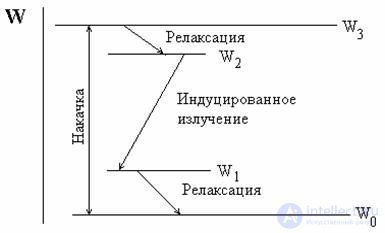
Materials intended for making lasers must have a quite specific set of energy levels. It is most convenient to use a four-level quantum system. Stimulated emission occurs during transitions in the active atoms from level W2 to level W1. Pumping the system with energy provides the transition W0®W3. The lifetime of the electron at energy level W3 must be short, while the lifetime at level W2 must be sufficiently long. The energy level W1 must be, if possible, minimal.
Thus, a fairly strictly defined set of allowed energy levels determines the possibility of using a material for the active elements of lasers. The most important of these requirements are:
1. The presence of intense, sharp fluorescence lines with a quantum yield close to unity.
2. The presence of sufficiently wide bands of active absorption in the absorption region of the pump source.
3. Absence of losses at the working-transition frequency.
Of particular interest are ionic paramagnetic dielectrics with a bandgap of several electron-volts, doped with transition metal ions. Transition metal ions serve as activators of the matrix. The matrix must meet the following requirements.
1. The matrix must not have intrinsic or impurity absorption in the region of laser emission or in the emission region of the pump source.
2. The matrix must have high thermal conductivity, and photochemical and mechanical resistance.
3. The structure of the matrix must allow the introduction of the specified activator. That is, in the case of crystalline materials, the ionic radii of the activators must be close to the ionic radii of the matrix ions. If necessary, it must be possible to compensate for distortions of the matrix lattice.
These properties are satisfied by matrices based on oxides and fluorides of various elements.
Ruby
One of the most important materials in laser technology is ruby – an aluminum oxide crystal doped with chromium. At a chromium content in ruby of about 0.03%, a pink hue arises; at 0.5% – red; and at 8% or more – green (the latter is usually associated with a change in the lattice parameter of aluminum oxide). In laser technology, pale pink ruby with a chromium content of 0.05% is usually used. Ruby crystals have high chemical resistance. Ruby dissolves well in potassium bisulfite at temperatures above 450 °C, and in borax at temperatures above 800 °C. At a temperature of 1000 °C, chemical polishing of ruby in borax is possible.
Garnets
The use of garnets in modern quantum electronics is explained by a favorable combination of optical, thermophysical, and mechanical properties. The most widely used is yttrium aluminum garnet Y3Al5O12, doped with neodymium. The yttrium aluminum garnet crystal is optically isotropic and has a cubic lattice. The unit cell contains eight molecules of Y3Al5O12. Yttrium aluminum garnet is most often doped with neodymium at a concentration of 1-3%. Rare-earth elements with smaller atomic numbers enter the lattice with more difficulty, and those with larger atomic numbers enter it more easily. This is readily explained, since an increase in the element's atomic number leads to a decrease in the size of its ion.
Due to the substantial difference in the ionic radii of yttrium and neodymium, doping causes distortion of the crystal lattice and the appearance of optical inhomogeneity, which is especially noticeable with a non-uniform distribution of neodymium in the crystal. To achieve a more uniform distribution of the dopant in the crystal and to reduce internal stresses, low crystal growth rates are used (~1 mm/hour). In addition, the synthesized crystals are subjected to prolonged annealing at a temperature of 1500 °C.
Lasers based on yttrium aluminum garnet can operate in continuous-generation mode with an output power of several hundred watts; in pulsed mode with a pulse repetition rate from a few hertz to megahertz; and in single-pulse mode with a pulse power of tens of megawatts.
A drawback of yttrium aluminum garnet is the low incorporation coefficient of neodymium ions, which makes it difficult to obtain large crystals with a uniform distribution of neodymium. Therefore, a search is underway for other media with a garnet structure. One of the most promising materials is gallium garnet, as well as rare-earth gallium garnets.
Rare-earth gallium garnets have a lower melting point and are therefore more manufacturable. A larger lattice parameter allows uniform introduction of neodymium. The similarity of gallium and chromium ions allows them to be doped with chromium. The latter is especially important, since it enables tunable generation on the electron-vibrational transitions of chromium at room temperature.
Tungstate and molybdate crystals
Tungstates and molybdates of divalent and monovalent metals belong to the scheelite structural type. They are activated with rare-earth elements, mainly neodymium. The large number of compounds of this type makes it possible to vary the material composition over a wide range. At present, there are relatively few industrial laser materials based on tungstates and molybdates, but the large number of studies of these materials indicates their promise.
Glasses.
Along with crystals, glasses activated with rare-earth elements are widely used in laser technology. The advantages of glasses as laser materials include:
At the same time, compared to crystals, glasses have drawbacks, such as:
A comparison of the properties of crystals and glasses shows that these materials complement each other well.
Glasses are classified by their base – the glass-forming element – as well as by the content of modifiers. If the base of the glass is quartz (SiO2), the glass is called silicate glass. When the base of the glass is boric anhydride, the glass is called borate glass. If the base of the glass is beryllium fluoride, the glass is called fluoroberyllate glass. Glasses with a high content of lead oxide are called lead glasses.
The technology for producing laser glasses is distinguished by high requirements for the purity of the starting components. Laser glasses are usually melted in platinum crucibles using high-frequency heating. After melting and forming the articles, the articles are subjected to prolonged annealing to relieve internal stresses.
Some characteristics of solid-state laser materials are given in Table 2.
Table 2. The most common solid-state laser materials and their characteristics
| Active medium material
|
Matrix
|
Activator
|
Wavelength, µm
|
Efficiency, %
|
Generation mode
|
| Ruby
|
Al2O3
|
Cr3+
|
0.694
|
1
|
Pulsed
|
| Yttrium aluminum garnet with neodymium
|
Y3Al5O12
|
Nd3+
|
1.06
|
4
|
Continuous
|
| Neodymium glass
|
Glass
|
Nd3+
|
1.06
|
8
|
Pulsed
|
| Erbium glass
|
Phosphate glass
|
Er3+
|
1.54
|
3
|
Pulsed
|
| Yttrium aluminate with neodymium
|
YalO3
|
Nd3+
|
1.06
|
1
|
Continuous
|
| Sodium-lanthanum molybdate with neodymium
|
NaLa(MoO4)2
|
Nd3+
|
1.06
|
2.5
|
Pulsed
|
| Calcium fluorite with dysprosium
|
CaF
|
Dy2+
|
2.36
|
2
|
Pulsed
|
| Gadolinium scandium gallium garnet with chromium
|
Gd3Sc2Ga3O12
|
Cr3+
|
0.7 – 0.9
|
-
|
Tunable-wavelength laser
|
| Gadolinium scandium gallium garnet with neodymium
|
Gd3Sc2Ga3O12
|
Nd3+
|
1.06
|
3.5
|
Pulsed |
Часть 1 4.14. Classification of Active Dielectrics: Ferroelectrics, Piezoelectrics, Pyroelectrics, Electrets
Часть 2 Superionic conductors. - 4.14. Classification of Active Dielectrics: Ferroelectrics, Piezoelectrics,

Comments