
Lecture
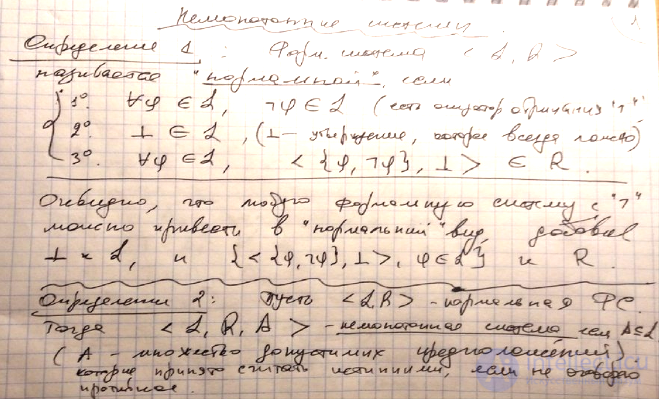
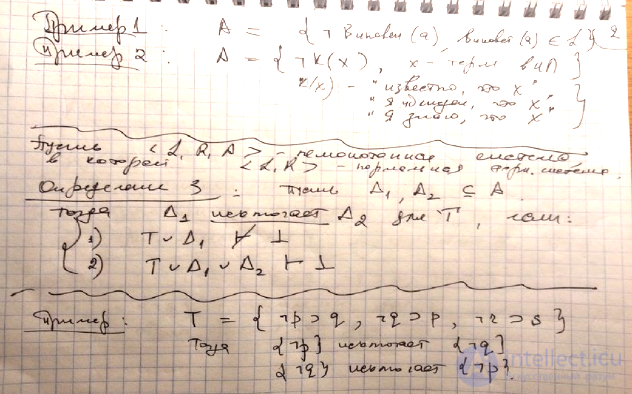
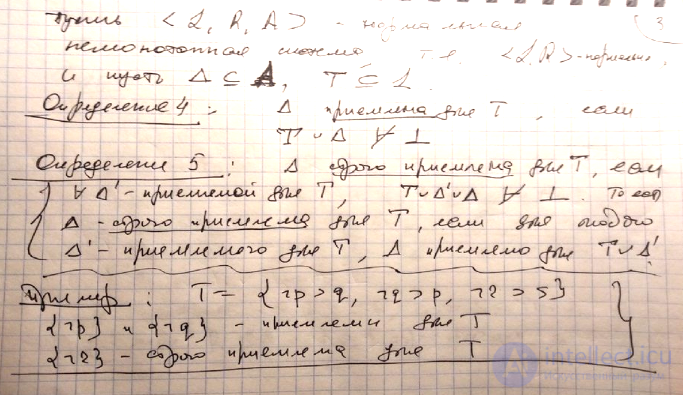
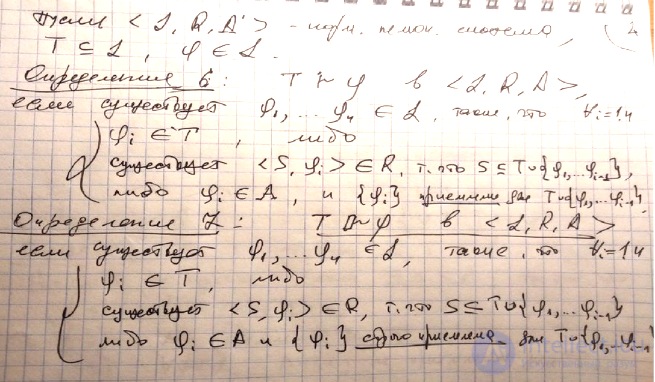
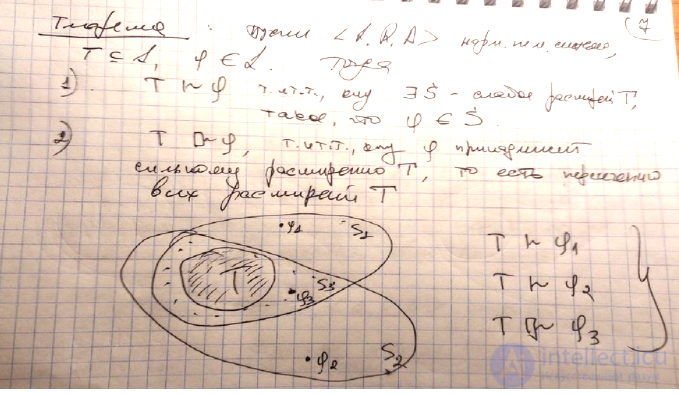
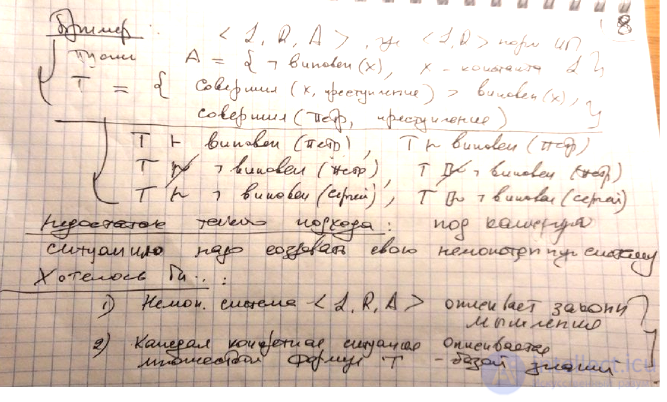
Non-monotonic logic is a formal logic whose consequence relation is not monotonic. In other words, non-monotonic logic is intended to capture and represent defeasible inferences (cf. defeasible reasoning), i.e. a kind of inference in which reasoners draw tentative conclusions, allowing reasoners to retract their conclusion(s) based on further evidence. The most-studied formal logics have a monotonic consequence relation, meaning that adding a formula to a theory never produces a reduction of its set of consequences. Intuitively, monotonicity indicates that learning a new piece of knowledge cannot reduce the set of what is already known. A monotonic logic cannot handle various reasoning tasks such as default reasoning (a consequence may be derived only because of the absence of evidence of the contrary), abductive reasoning (a consequence is derived only as the most likely explanation), some important approaches to reasoning about knowledge (the ignorance of a consequence must be retracted when the consequence becomes known), and similarly, belief revision (new knowledge may contradict old beliefs).
Abductive reasoning is the process of deriving the most likely explanations for known facts. Abductive logic should not be monotonic because the most likely explanations are not necessarily true. For example, the most likely explanation for seeing wet grass is rain; however, this explanation will have to be abandoned upon learning that the actual cause of the wet grass was a sprinkler. Since the old explanation (it was raining) is retracted due to the addition of a piece of knowledge (the sprinkler was activated), any logic that models explanations is non-monotonic.
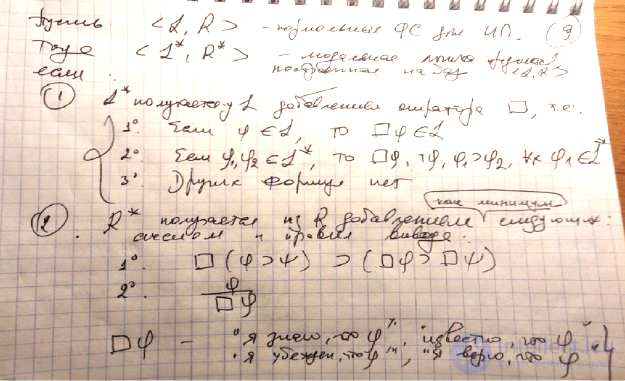
If a logic includes formulas that mean that something is unknown, this logic should not be monotonic. Indeed, learning something that was previously unknown leads to the removal of the formula stating that this piece of knowledge is unknown. This second change (removal, caused by an addition) violates the condition of monotonicity. The logic of reasoning about knowledge is autoepistemic logic.
Belief revision is the process of changing beliefs to accommodate new beliefs that may not be consistent with the old ones. Assuming that the new belief is true, some of the old ones must be retracted in order to maintain consistency. This retraction in response to the addition of a new belief makes any belief-revision logic non-monotonic. The belief-revision approach is an alternative to paraconsistent logic, which tolerates inconsistency rather than trying to eliminate it.
The revision of a body of beliefs is the process of changing beliefs to accept a new belief that may be inconsistent with the old ones. Under the assumption that the new belief is correct, some of the old ones must be retracted in order to maintain consistency. This rejection in response to the addition of a new belief makes any belief-review logic non-monotonic. The belief-revision approach is an alternative to contradiction-tolerant logic, which allows inconsistency rather than attempting to remove it.
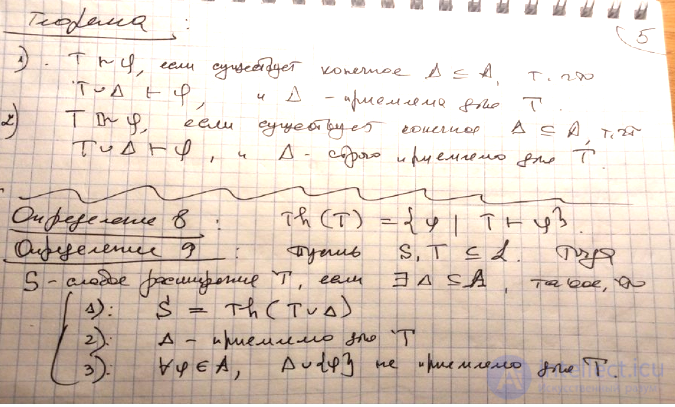
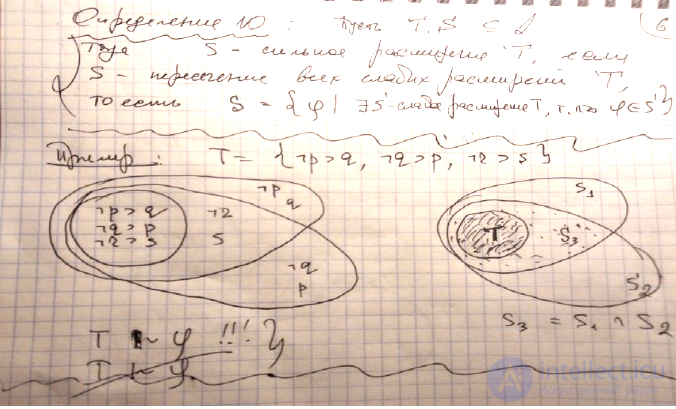
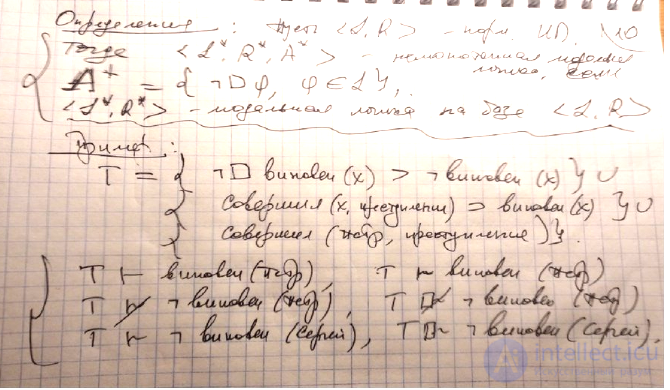
A proof-theoretic formalization of a non-monotonic logic begins by adopting some non-monotonic rules of inference, and then prescribes the contexts in which these non-monotonic rules may be applied in permissible inferences. This is usually achieved by means of fixed-point equations that relate sets of premises to sets of their non-monotonic consequences. Default logic and autoepistemic logic are the most common examples of non-monotonic logic formalized in this way.
A model-theoretic formalization of a non-monotonic logic begins by restricting the semantics of a suitable monotonic logic to some special models, for example minimal models, and then derives a set of non-monotonic rules of inference, possibly with some restrictions on the contexts in which these rules may be applied, so that the resulting deductive system would be sound and complete with respect to the restricted semantics. Unlike some proof-theoretic formalizations, which suffered from well-known paradoxes and which were often difficult to assess in terms of their correspondence to the intuitions they were meant to capture, model-theoretic formalizations had no paradoxes and left little room for confusion about which non-monotonic reasoning patterns they cover. Examples of proof-theoretic formalizations of non-monotonic reasoning that revealed some undesirable or paradoxical properties, or that failed to capture the desired intuitions, which have been successfully (i.e., consistently with the corresponding intuitions and without paradoxical properties) formalized by model-theoretic means include first-order circumscription, the closed-world assumption, and autoepistemic logic.

Comments