
Lecture
«There are patients whom we can help, but there is no patient whom we cannot harm» Arthur Blumenfeld
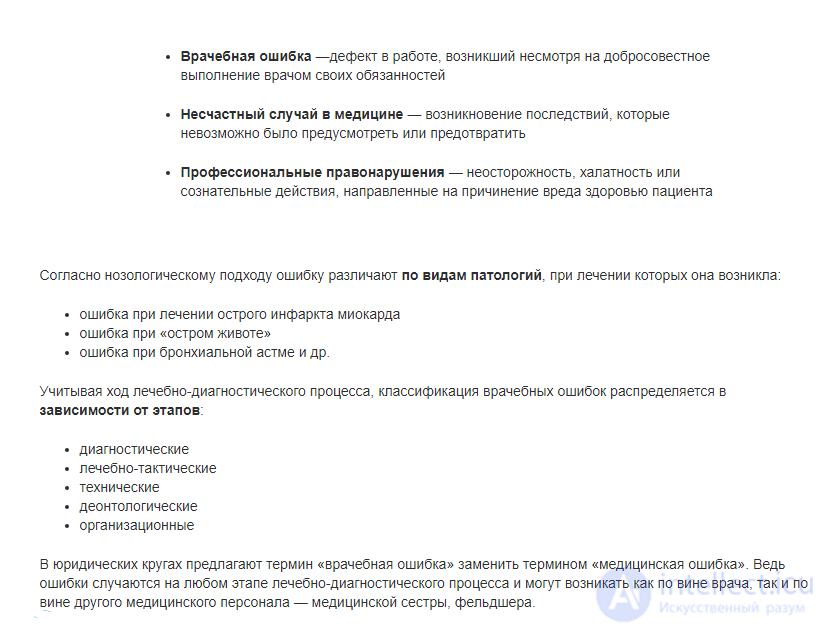
«Medical errors – are the consequence of a physician's bona fide misjudgement in the performance of his professional duties. The main distinction between an error and other
defects of medical practice lies in the exclusion of deliberate criminal acts – negligence and carelessness, as well as ignorance».
I.V. Davydovsky, 1941
1. Professional crimes:
Physicians' actions that cause harm to health
(continued)
2. Accident. In medical
practice, an accident is understood as an unfavourable outcome
of a medical intervention associated with circumstances
that were random and that the physician could not foresee and
prevent. In such cases the physician acted correctly and
in a timely manner, in full accordance with the rules and
methods of medicine.
Physicians' actions that cause harm to health
(continued)
3. Medical errors, which may be of an objective or subjective nature (I.P. Davydovsky, E.I. Chazov)
3.1. Objective nature - imperfection of science, the impossibility of
adequate diagnostic and therapeutic actions – that which does not
depend on the physician.
3.2. Subjective nature: insufficient qualification, defects
in taking the medical history and in the objective examination of the patient, the absence
of special methods of investigation, overestimation of the data
obtained, defects of clinical thinking - that which depends on the physician.
3.3. Errors of an objective and subjective
nature are often combined – the most severe consequences for the patient.
It is believed that 30-40% of errors are of an objective
nature, and 60-70% of errors are of a subjective nature.
There are different points of view on the concepts of medical error (ME),
medical misconduct, and medical crime20\3
• ME – incorrect actions of a physician, based on
causes of a subjective or objective nature.
• The main criterion of ME is the physician's bona fide
misjudgement, when he acted in accordance with
the standards and could not foresee the unfavourable
consequences of his actions.
• Medical misconduct is based on inattentiveness,
carelessness, and insufficient knowledge.
• Medical crime is associated with negligence,
bad-faith, improper performance of
duties. In such cases a legal
qualification of the physician's actions is possible.
1. Diagnosis by analogy
2. Diagnosis by the method of analysis-synthesis
3. Differential diagnosis
4. Cross differential diagnosis
Diagnosis by analogy
• A typical course of the disease, the patient is well known to the physician – confirmatory examinations of the patient's condition – the emergence of complications, iatrogenesis, the addition of concomitant diseases, in order to adjust the treatment.
• The presence in the patient of striking (pathognomonic?) symptoms – laboratory and instrumental verification of the correctness of the diagnosis.
1. Primary analysis of all available subjective and objective data about the patient – analysis of symptoms.
2. Combining individual symptoms into syndromes – syndromic diagnoses.
3. Combining syndromic diagnoses – establishing particular diagnoses.
4. Combining particular diagnoses into a single diagnostic version – establishing an individual clinical diagnosis.
5. Differential diagnosis.
6. Cross differential diagnosis.
7. Secondary analysis – verification of the diagnosis.
1. Full characterization of the main, leading clinical symptoms according to five points:
1. Localization, radiation.
2. Qualitative characteristic of the symptom – character, quality, properties, features.
3. Quantitative characteristic of the symptom – strength, intensity, degree, magnitude, frequency, multiplicity.
4. Dynamics of the manifestation of the symptom taking the history into account – duration, time of onset, rapidity – rate of development, constancy or periodicity of development, increasing or decreasing over time
of onset.
5. Mutual relationships of the symptom – its presumed causality or conditioning, its connection with other manifestations of the disease, what relieves the symptom. What errors occur at different stages of a physician's work
1. Each manifestation of the disease is not analyzed according to five criteria: 1) location and radiation; 2) quality; 3) quantity; 4) relationships between symptoms; 5) dynamics.
2. The history of the disease is presented incompletely, without regard to the periodicity of the disease course, treatment, conditions
of work, daily life and rest, harmful habits, etc.
3. Poor quality of objective examination, preference given to laboratory and instrumental studies.
4. Failure to perform, or poor quality of, simple tests (weighing the patient, daily diuresis, etc.).
5. Lack of interest in medical records (outpatient charts, electrocardiograms, etc.).
1. Preference for diagnosis by analogy.
2. Lack of skill in diagnosis by the analysis-synthesis method.
3. Abbreviated and incomplete diagnosis by the method of direct and cross differential diagnosis based on the most informative syndrome or symptom.
4. The habit of making stereotyped, «favourite» diagnoses with no regard for individuality.
5. A tendency to make rare diagnoses.
6. When assessing the diagnostic significance of individual manifestations of the disease, preference is given to instrumental and laboratory findings over clinical data.
7. Erroneous conclusions of consultants that are not subjected to proper critical review.
8. Underestimation of the peculiarities of the disease course in elderly and senile patients.
1. Masking of signs and atypical course of the underlying disease, especially in the presence of another disease.
2. The vividness, prominence and apparent significance of the results of laboratory and instrumental studies.
3. Underestimation of the possibility that the primary clinical symptoms may be «distorted» by treatment-related complications.
4. Changes in clinical symptoms under the influence of working conditions, everyday life, preventive measures and other causes.
5. «Cognitive traps», bias of opinion, stereotyped thinking.
1. Insufficient individualization – variants and forms of the disease, the effect of prior therapy, and drug intolerance are not taken into account.
2. No treatment plan is formed for the acute phase of the disease – tactical therapy, or for the remission phase – strategic therapy.
3. Insufficient attention to regimen, diet, and elimination of harmful habits.
4. Errors in pharmacotherapy: polypharmacy, a template approach to prescribing drugs, no control over the timing, sequence, duration of intake and compatibility of drugs, and age-related features of drug response are not taken into account.
5. Non-pharmacological methods are not used.
6. Incorrect attitude toward colleagues when assessing the effect of prior therapy.
• In four large hospitals in Moscow, the diagnosis made during the patient's lifetime turned out to be incorrect in 21.6% of cases, pneumonia was not diagnosed in 20% of cases, and in 30-40% - a malignant
neoplasm.
• In Moscow and St. Petersburg, diagnostic discrepancy amounts to 20%, that is, in every fifth case the diagnosis established in hospital turned out to be
incorrect.
• Within the compulsory medical insurance system, about 10 million defects in the provision of medical care are identified annually.
Medical errors leading to severe consequences
• Globally, in 2013, 142,000 patients died from the adverse effects of treatment. In 1990 there were 94,000 patients.
• Every year more Americans die from medical errors than from car accidents.
• In the USA in 2015, 251,454 patients died from medical errors.
• In Israel, about 10% of deaths in clinics are caused by medical errors. From 2002 to 2007, the number of lawsuits against physicians increased 13-fold.
• According to the Investigative Committee of Russia, in 2015, 888 people were victims of medical errors, 712 of whom died.
Risk of medical errors depending on medical specialty
• The risk of medical errors and adverse outcomes of medical practice is higher among representatives of «aggressive» medical specialties (resuscitation specialists, anesthesiologists, surgeons, etc.), who sometimes work with dying patients, than among physicians of internal medicine specialties.
• A district physician is the safest specialty.
• A physician's mood is an accumulator of all the information processed.
• Worsening of the disease course, unfounded complaints from the patient and his relatives – have a negative effect on mood overall, on attention, concentration and the physician's capacity for work.
• The unstable character of a physician's mood, like that of any person, is caused by many factors: everyday concerns, worry for relatives and loved ones, various emergency situations, wounded pride, pangs of conscience.
• A physician's mood is affected by changes in physical status, life situations, troubles, misfortunes.
• A bad mood can be caused by relationships with colleagues and staff. Kindness, responsiveness and goodwill of colleagues improve mood. Pedantry, callousness, irritability, gloominess of character, suspiciousness can provoke negative reactions and contribute to errors and lapses in work.
• The success of treatment ultimately depends on the physician's mood and his relationship with the patient.
The physician and the patient
• Negative phenomena and events in the relationship between the physician and the patient and his relatives are often a cause of iatrogenesis. • In the past, acting in the patient's interest, the physician acted according to his own view of the diagnosis and treatment without informing the patient about it. Letting the patient in on the details of medical technology was considered not only unnecessary but harmful. The relationship between physician and patient was built on the patient's trust in the physician.
• Nowadays the patient is informed of the details of the treatment process, and the relationship between physician and patient must be built on trust and cooperation.
• Trust in the physician remains an indispensable condition for successful treatment and the absence of iatrogenesis.
• Winning trust is a difficult task. It requires prolonged, engaged communication between physician and patient; one must calmly listen to the patient, ask him questions, carefully review the medical records and conduct an objective examination.
• In the real conditions of primary care, with a 15-minute appointment slot, this is impossible to do. Communication with the patient is largely formal in nature. This reduces
the effectiveness of treatment, undermines the physician's authority, and increases iatrogenesis. Appointment-time norms for specialist physicians, approved by the Ministry of Health. Order No. 290n of June 2, 2015.
• Therapists and pediatricians at a primary outpatient appointment are allotted 15 minutes per patient, general practitioners – 18 minutes, neurologists and gynecologists – 22 minutes, ophthalmologists -
14 minutes, otolaryngologists – 16 minutes.
• A follow-up visit to a specialist physician – 70-80% of the norm for a primary appointment.
• The norms approved by the Ministry of Health are not mandatory but are recommendations.
• This order mainly concerns the heads of medical institutions and human-resources staff, for determining a region's staffing needs, calculating positions, workload, etc.
• In practice, since organizational documentation will be based on these norms, attempts will be made to restrict physicians to them.
Time-motion study of the working time of a district general practitioner in
Vologda, results of an analysis of 107 visits (G.T. Banshchikov, 2011)
Section of communication with the patient Time, min.
1. Collecting the patient's complaints 2.26
2. Physician's guiding questions 2.43
3. Physical examination of the patient 3.82
4. Measuring blood pressure 1.81
5. Other instrumental studies (throat, hearing, vision) 2.67
6. Filling out referral forms 3.88
7. Writing prescriptions 4.50
8. Referral to various specialists 3.36
9. Filling out the outpatient chart 4.66
10. Daily completion of reporting documentation 1.77
Time per visit 31.16
Treatment adherence
• The physician's word is the most important medical instrument in communicating with patients, especially those with neurotic disorders.
• The physician's word and gaze have an exceptionally positive effect on the patient, but this requires time for the physician to make contact with the patient.
• A shortage of contact between physician and patient has a negative effect on the patient's adherence to treatment and its effectiveness.
• 65% of patients are unable to comply with all the physician's prescriptions due to lack of funds
The attitude of patients and society toward physicians' work
• Humanism – the ethical foundation of medicine.
• The basic principles of medical ethics (J. Childress, 1989): 1. do no harm, 2. do good, 3. respect patient autonomy, 4. observe the principle of justice.
• Many physicians are in a state of «hardware-and-laboratory dependency», which pushes aside clinical methods and personal contact between physician and patient.
• The time for contact between patient and physician is shortened, and the physician begins to play the role of a dispatcher; the healing role of physician-patient contact is lost.
• The crisis of patient trust in physicians is linked to the socio-economic relations between physician and patient.
• Medical care has been classified as a service, and patients have been assigned the role of clients.
• Negative attitudes toward physicians and mid-level medical personnel are emerging.
On replacing the words «in the provision of medical services»
In the Federal Law «On Amendments to Certain Legislative Acts of the Russian Federation on Matters of the Application of Information Technologies in the Sphere of Health Protection» of July 21, 2017, it is again
stated:
…in the title, replace the words «in the provision of medical services» with the words
«in the exercise of medical activity».
The main conditions necessary for a physician's successful work, and their availability in Russia
• What a physician must have:
1. knowledge,
2. the ability to apply it in clinical practice,
3. time to communicate with the patient.
• What exists in Russia:
1. length of training 6 years – the shortest in the world,
2. one week of work in a polyclinic in the 6th year,
3. time for a primary patient appointment in a polyclinic 15 minutes, but in reality about 10 minutes.
• What is the cause of medical errors and physician burnout?
Consequences of medical errors - iatrogenesis
Drug-induced iatrogenesis was first described in 1882 by W. Osler (Osler W.). W. Osler described noncardiogenic pulmonary edema in a patient that developed after prolonged use of opiates.
A novice physician prescribes twenty drugs for each disease; an experienced physician prescribes -
one drug for twenty diseases.
William Osler
Adverse effects of medicinal drugs
1. Negative effects caused by the pharmacological action of the drug (for example, hypoglycemic shock after insulin administration.
2. Drug intoxications, including toxic, mutagenic, oncogenic, teratogenic, embryotoxic, immunosuppressive effects.
3. Side effects (NSAIDs, glucocorticoids, antibiotics, etc.).
4. Secondary reactions (superinfection, dysbacteriosis).
5. Drug allergy.
6. Drug pseudoallergy.
7. Drug dependence.
8. Individual intolerance.
9. Idiosyncrasy.
10. Withdrawal syndrome.
11. Drug-induced psychoses.
12. Reactions caused by drug interactions.
13. Post-vaccination reactions and complications.
Prevalence of adverse drug effects
• On average, during each hospital stay a patient receives 10 different drugs.
• If a patient takes fewer than 6 drugs, the probability of adverse effects is about 5%; if more than 15 drugs – over 40%. For outpatients this figure is about 20%.
• Adverse drug effects account for 2-5% of all hospital admissions to internal medicine and pediatric departments.
• Mortality from drug complications among hospitalized patients is 2-12%.
• The use of medicinal drugs during pregnancy and childbirth can adversely affect the fetus and newborn.
• In 10% of elderly patients, adverse drug effects occur at least once a year.
• Up to 90% of adverse effects are caused by the use of aspirin and other NSAIDs, digoxin, anticoagulants, diuretics, glucocorticoids, antimicrobials, antineoplastic agents, and hypoglycemic agents.
• It must always be remembered that new complaints and symptoms may be caused by adverse effects of medicinal drugs.
Polymorbidity→polypharmacy→iatrogenesis→drug-induced disease→complications→ new drugs→complications→ a «vicious circle» closes
Postulates of B.E. Votchal
1. Drugs should be used to treat only when treatment cannot be avoided.
2. Fewer drugs, only the most necessary ones.
3. At the patient's bedside, the physician should think not about what else can be prescribed, but about what can be dispensed with.
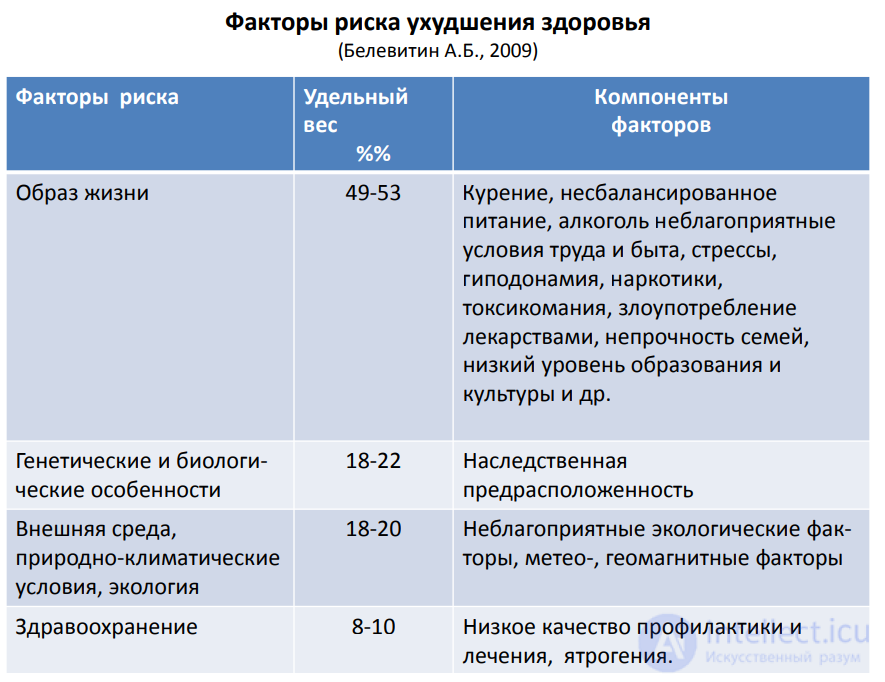
Unsatisfactory conditions for performing
medical duties, moral «burnout»
Prevalence of burnout syndrome among physicians of different specialties (%%)
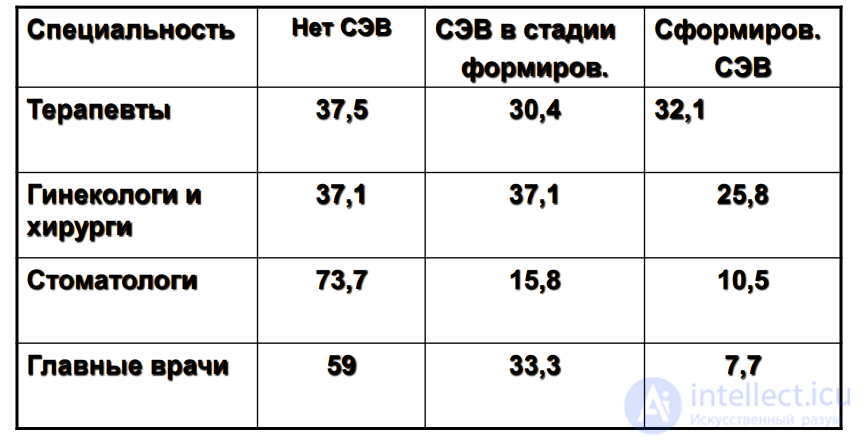
Main groups of symptoms characteristic of burnout syndrome
• Physical symptoms: fatigue, insomnia, elevated blood pressure, cardiovascular diseases.
• Emotional symptoms: pessimism, indifference, a sense of hopelessness, aggressiveness, irritability, anxiety, inability to concentrate, hysterics.
• Behavioural symptoms: increased working hours, fatigue, a desire to rest during work, anorexia, justifying the use of alcohol, smoking, drugs.
• Intellectual state: loss of interest in new ideas, formal performance of work, apathy, decreased interest in life.
• Social symptoms: low social activity, declining interest in leisure, a sense of isolation, lack of support from family, friends, colleagues.
Legal consequences of medical errors
According to various estimates, in Russia over the past several years the number of claims for compensation for harm to life and health caused in the provision of medical care has increased 13-fold.
V.V. Kushchenko, 2005.
According to Investigative Committee statistics, today in every region of Russia dozens of patient deaths in which physicians are suspected are being examined. Physicians are most often
charged under two articles of the Criminal Code – Article 109, «causing death by negligence», and Article 293, «negligence».
There is a proposal to amend the Criminal Code of the Russian Federation and introduce criminal liability for medical errors.
In connection with the foregoing, not only high quality of clinical work is needed, but also the quality of medical documentation.
What needs to be done to reduce medical errors and iatrogenesis What needs to be done to reduce the number of
medical errors and iatrogenesis
• Increase the opportunity to obtain the knowledge physicians need.
• Expand and improve the system of training in applying knowledge in practical medical work.
• Use modern diagnostic and therapeutic technologies and standards in everyday work.
• Increase the time physicians spend communicating with patients.
• Overcome part of the population's negative attitude toward physicians and medicine.
• Restore the principles of domestic paternalism in the physician's attitude toward the patient.
• Ensure a non-punitive approach to physicians' errors; learn from mistakes.
• Improve the financial situation of medical personnel.
Research literature has shown that medical errors arise as a result of commission and omission. Errors of omission occur when providers fail to take action when they should have, while errors of commission occur when decisions and actions are delayed. Errors of commission and omission are also attributed to communication failures.
Medical errors may be associated with inexperienced physicians and nurses, new procedures, age-related limitations, and complex or emergency care. Poor communication (whether in a patient's native language or, as in the case of medical tourists, in another language), incorrect documentation, illegible handwriting, spelling errors, an inadequate nurse-to-patient ratio, and drugs with similar names all contribute to the problem. Actions or inaction on the part of the patient can also make a significant contribution to medical errors.
Complex technologies , potent drugs, intensive care, rare and multiple diseases and prolonged hospital stays can contribute to medical errors.
In 2000, the Institute of Medicine published the book «To Err is Human », which argued that the problem of medical errors lies not in bad people in healthcare, but in the fact that good people work in bad systems that need to be made safer.
Poor communication and unclear delineation of the responsibilities of physicians, nurses, and other healthcare workers are also contributing factors. [42] Disconnected reporting systems within a hospital can lead to fragmented systems, in which multiple patient handoffs result in a lack of coordination and errors. [43]
Other factors include the impression that action is being taken by other groups within the institution, the use of automated systems to prevent errors [44] and inadequate systems for exchanging information about errors, which complicates the analysis of contributing causes and improvement strategies. [45] Hospital cost-cutting measures in response to reduced reimbursement may jeopardize patient safety. [46] In emergency situations, patients may be treated in areas poorly suited for safe monitoring. The American Institute of Architects has identified concerns regarding the safe design and construction of healthcare facilities. [47] Infrastructure failure is also a concern. According to the WHO, 50% of medical equipment in developing countries can only be partially used due to a lack of qualified operators or spare parts. As a result, diagnostic procedures or treatment cannot be carried out, leading to substandard care.
The Joint Commission«s 2007 Annual Report on Quality and Safety found that inadequate communication between healthcare providers, or between providers and patients' family members, was the leading cause of more than half of the serious adverse events in accredited hospitals. [48] Other leading causes included inadequate assessment of the patient's condition, as well as poor leadership or training.
Differences in the training and experience of healthcare workers and a failure to recognize the prevalence and severity of medical errors also increase risk. The so-called July effect occurs when new patients arrive at teaching hospitals, leading to an increase in medication errors, according to a study of data from 1979–2006.

A sign posted in a hospital listing medications that are similar in spelling or appearance.
Cognitive errors, commonly encountered in medicine, were first identified by psychologists Amos Tversky and Daniel Kahneman in the early 1970s. Jerome Groopman, author of the book « How Doctors Think», says these are «cognitive traps», biases that cloud our logic. For example, a practitioner may overweight the first data found, distorting their thinking. Another example may be a situation in which a practitioner recalls a recent or dramatic case that comes to mind quickly, coloring the practitioner's judgment. Another trap is that stereotypes can harm thinking. [54] Pat Croskerry describes clinical reasoning as an interaction between intuitive, subconscious thinking (System 1) and deliberate, conscious rational consideration (System 2). Within this framework, many cognitive errors reflect excessive reliance on System 1 processing, although cognitive errors can also sometimes involve System 2. [55]
Lack of sleep is also cited as a factor contributing to medical errors. [17] One study found that being awake for more than 24 hours caused medical interns to double or triple the number of preventable medical errors, including those that led to injury or death. [56] The risk of a car crash after these shifts increased by 168%, and the risk of a near miss by 460%. [57] Interns admitted to falling asleep during lectures, during rounds, and even during surgery. [57] Night shifts are associated with impaired surgeon performance during laparoscopic operations. [17]
Risk factors for practitioners include fatigue, [58] [59] [60] depression [61] and burnout. [62] Factors related to clinical settings include diverse patients, unfamiliar environments, time pressure, and an increased patient-to-nurse ratio. [63] Medication names that look alike or sound alike are also a problem. [64]
Errors in interpreting medical images are often perceptual rather than «evidence-based»; these errors are often caused by deficits in attention or vision. [65] For example, visual illusions can lead to misperception of images by radiologists. [66]
A number of information technology (IT) systems have been developed to detect and prevent medication errors, the most common type of medical error. [67] These systems check data such as ICD-9 codes, pharmacy and laboratory data. Rules are used to look for changes in drug prescriptions and abnormal laboratory results that may indicate medication errors and/or adverse drug reactions. [68]
Errors may include an incorrect diagnosis or delayed diagnosis, administering the wrong medication to the wrong patient or by the wrong route, prescribing multiple medications that interact negatively, operating on the wrong site, failing to remove all surgical instruments, failing to take the correct blood type into account, or incorrect record-keeping. A 10th type of error is one not observed by researchers, such as RNs who fail to program an IV pump to deliver the full dose of intravenous antibiotics or other medications.
According to a 2016 Johns Hopkins Medicine study, medical errors are the third leading cause of death in the United States. [69] The projected cost of these errors to the US economy is approximately $20 billion, 87% of which represents a direct increase in medical expenses for treating patients harmed by medical errors. [70] Medical errors can increase average hospital costs by $4,769 per patient. [71] One common type of medical error arises from X-rays and medical imaging: failure to see or notice signs of disease on an image. [65] The retrospective «miss» rate among studies of abnormal images is reported to reach as high as 30% (the real-world error rate is much lower, around 4-5%, because not all images are abnormal),[72], and up to 20% of missed findings lead to long-term adverse effects.
A large study reported several cases in which patients were mistakenly told they were HIV-negative, when physicians erroneously ordered and interpreted testing for HTLV (a closely related virus) instead of HIV testing. In the same study, more than 90% of HTLV tests were ordered erroneously. [75] It is estimated [ by whom? ], that 10 to 15% of physicians' diagnoses are incorrect. [76]
Misdiagnosis of lower-extremity cellulitis is estimated to occur in 30% of patients, leading to unnecessary hospitalization in 85% and unnecessary antibiotic use in 92%. Together, these errors result in 50,000 to 130,000 unnecessary hospitalizations and $195 to $515 million in avoidable annual healthcare costs. [77]
Female sexual desire was sometimes diagnosed as female hysteria.
Food sensitivity and food allergies risk being mistaken for the anxiety disorder orthorexia.
Studies have shown that bipolar disorder is often mistaken for major depression. Its early diagnosis requires clinicians to pay attention to the features of the patient's depression, as well as to any current or prior hypomanic or manic symptoms. [78]
Misdiagnosis of schizophrenia is also a common problem. Patients may experience a prolonged delay in receiving a correct diagnosis of this disorder. [79]
Delayed sleep phase disorder is often confused with: psychophysiological insomnia; depression; psychiatric disorders such as schizophrenia, ADHD or ADD; other sleep disorders; or school refusal. Sleep medicine specialists point to an alarmingly low rate of accurate diagnosis of the disorder and often call for physicians to be better educated about sleep disorders.
Cluster headaches are often misdiagnosed, left uncontrolled, or undiagnosed for many years; they may be confused with migraine, «cluster-like» headache (or mimics), CH subtypes, other TACs (trigeminal autonomic cephalalgias), or other types of primary or secondary headache syndrome. [81] A cluster headache may be diagnosed as a secondary headache rather than as a cluster headache. [82] The underrecognition of CH by healthcare professionals is reflected in consistent findings across Europe and the US that the average time to diagnosis is about seven years. [83]
Asperger's and autism typically receive undiagnosed or delayed recognition and delayed diagnosis [84] [85] or misdiagnosis. [86] A late or incorrect diagnosis can be traumatic for individuals and families; for example, a misdiagnosis can lead to medications that worsen behavior.
The DSM-5 field trials included «test-retest reliability», in which different clinicians conducted independent assessments of the same patient - a new approach to studying diagnostic reliability. [89]
Misdiagnosis is the leading cause of medical error in outpatient settings. After the National Institute of Medicine published its 1999 report «To Err Is Human», noting that up to 98,000 hospital patients die annually in the US from preventable medical errors, government and private-sector efforts focused on ensuring the safety of inpatients.
While in 2000 the Committee on Quality of Health Care in America affirmed that medication is «an inevitable outcome of learning medical practice», [90] as of 2019 a generally accepted link between prescribing skill and clinical clerkship had not yet been demonstrated by available data [91], and in the United States, the legibility of handwritten prescriptions is indirectly responsible for at least 7,000 deaths annually. [92]
Prescribing errors involve ambiguous abbreviations, correct spelling of the full drug name: incorrect use of nomenclature, decimal points, units of measurement or rates; legibility and correctness of instructions; dosage miscalculations (amount, route and frequency of administration, duration of treatment, dosage form and strength); missing patient information (e.g., allergies, reduced renal function) or missing information in the medical record. [91]
Errors can have a very negative emotional impact on the physicians who make them.
Some physicians acknowledge that adverse consequences of errors do not usually arise from an isolated mistake, but in fact reflect systemic problems. [49] This concept is often referred to as the «Swiss cheese model» . [97] This is the concept that there are layers of protection against error for physicians and patients. So even if a doctor or nurse makes a small error (for example, an incorrect medication dose written by the doctor on the medication chart), it is caught before it actually affects patient care (for example, the pharmacist checks the medication chart and corrects the error). [97]Such mechanisms include: practical changes (for example, medications that must not be given by drip are fitted with tubing that means they cannot be connected to an intravenous drip, even if a doctor makes a mistake and tries to do so) [98], systematic safety processes (for example, all patients must undergo a Waterlow score and falls assessment on admission), [98] and training programs / continuing education courses [98] - these are measures that can be adopted.
There can be multiple failures in a process, leading to a single adverse outcome. [99] Furthermore, errors are more common when other demands compete for a physician's attention. [100] [101] [102] However, placing too much blame on the system can be unconstructive.
Essayists suggest that the capacity to make mistakes is part of what makes a physician's work rewarding, and without that potential, the rewards of medical practice would be diminished. Lawrence states that «everyone dies, you and all your patients. All relationships end. Would you want it to be otherwise? [...] Don't take it personally» [103] Seder states: «[...] if I left medicine, I would mourn its loss as I would mourn a passage from my own poems. To draw daily on the trust of patients and their families, and on the fellowship of one's peers, is both a privilege and a joy. There are no blood-racing dilemmas as in a severe trauma case, no mental game as rigorous as a complex differential diagnosis, and although the stakes are high, so are the rewards».
Forgiveness, which is part of many cultural traditions, can play an important role in addressing medical errors. Among other healing processes, this can be achieved through communicative disclosure guidelines.
An inability to forgive oneself can create a cycle of suffering and increase the likelihood of future error.
However, Wu et al. suggest that «... those who coped by taking responsibility were more likely to make constructive changes in practice, but [also] experienced more emotional turmoil». It may be helpful to consider the much larger number of patients who are not affected by errors and who are helped by medical care. [
Gallagher et al. state that patients want «information about what happened, why the error occurred, how to mitigate the consequences of the error, and how to prevent it from happening again». Interviews with patients and their families, published in the 2003 book by Rosemary Gibson and Janardan Prasad Singh, assert that those harmed by medical errors face a «wall of silence» and «want acknowledgment» of the harm caused. To be candid, «healing can begin not only for patients and their families, but also for physicians, nurses, and others». As part of experimental studies, Annegret Hannawa et al. developed evidence-based disclosure guidelines consistent with scientific principles "
A 2005 study by Wendy Levinson of the University of Toronto found that surgeons, when discussing medical errors, used the word «error» or «mistake» in only 57 percent of disclosure conversations and offered a verbal apology in only 47 percent of cases.
Disclosure of information to the patient is important in the process following a medical error. Today's standard of practice in many hospitals is to inform patients about errors when they occur. In the past, there was a widespread fear that disclosing information to a patient might trigger a malpractice lawsuit. Many physicians chose not to explain that an error had occurred, which fostered mistrust of the medical community. In 2007, 34 states enacted laws excluding from use in court information about a physician's apology for a medical error (even a full admission of fault). [114] This encourages physicians to acknowledge and explain errors to patients, maintaining an open line of communication.
The Council on Ethical and Judicial Affairs of the American Medical Association states in its Code of Ethics:
"Sometimes situations arise in which a patient experiences significant medical complications that may have resulted from a physician's mistake or judgment. In these situations, the physician is ethically required to inform the patient of all facts necessary to ensure an understanding of what has occurred. Concern regarding the legal liability that may result from truthful disclosure should not affect the physician's honesty toward the patient ".
From the American College of Physicians Ethics Manual:
«In addition, physicians should disclose to patients information about procedural or judgment errors made in the course of care, if that information is material to the patient's well-being. Errors do not necessarily constitute improper, negligent, or unethical conduct, but failing to disclose them may».
However, «there appears to be a gap between physicians' attitudes and practices regarding error disclosure. Willingness to disclose errors was associated with higher levels of training and a range of patient-centered attitudes, and this was not diminished by prior malpractice litigation». . Hospital administrations may share these concerns.
Consequently, in the United States, many states have enacted laws excluding expressions of sympathy after accidents from being used as evidence of liability.
Disclosure may actually reduce malpractice payouts.
In a study of physicians who disclosed their own errors, it was suggested that disclosing to non-physician sources of support may reduce stress more than disclosing to physician colleagues. [120] This may relate to a finding among physicians participating in the same study: when presented with a hypothetical scenario of an error made by another colleague, only 32% said they would unreservedly offer support. It is possible that greater benefit occurs when spouses are physicians.
It is helpful to discuss errors with other physicians. [49] However, healthcare professionals may be less forgiving of one another. The reason is not clear, but one essayist cautioned: «Do not take too much delight in other physicians' mistakes». [122]
Disclosure of errors, especially «near-miss situations», can help reduce the number of subsequent errors in institutions capable of analyzing near-miss events. [123] However, physicians report that healthcare institutions may not support the physician.
Based on anecdotal and survey data, Banja ] states that rationalization (justification) is very common among medical professionals for concealing medical errors.
In a survey of more than 10,000 physicians in the US, when asked: «Are there times when it is acceptable to conceal or avoid disclosing an error if that error will not harm the patient?», 19% answered yes. , 60% answered « no» and 21% answered it depends on the circumstances . When asked «Are there times when it is acceptable to conceal an error or avoid disclosing it if that error could potentially or likely cause harm to the patient?» 2% answered yes , 95% answered no and 3% answered that it depends on the circumstances .
Traditionally, errors are attributed to mistakes made by individuals, who may then be punished. A common approach to responding to and preventing specific errors requires additional checks at certain points in the system, the results and performance details of which must be recorded. For example, the error of free-flow intravenous heparin administration is addressed by training staff on how to use IV administration systems and to exercise particular caution when setting up an IV infusion pump. Although common errors become less likely, checks increase workload and can themselves become a source of additional errors. Some hospitals schedule regular morbidity and mortality conferences to discuss complications or deaths, and to review or improve overall processes.
A new model for improving healthcare originates in the work of W. Edwards Deming on the Total Quality Management model. This model attempts to identify the underlying systemic defect that caused the error. For example, in such a system the error of unimpeded free-flow intravenous heparin administration is eliminated by discontinuing intravenous heparin and replacing it with subcutaneous heparin administration, which removes the entire problem. However, this approach presupposes the existence of research showing that subcutaneous heparin is as effective as intravenous heparin. Thus, most systems use a combination of approaches to the problem.
The field of medicine that has taken a leading position in systems approaches to safety is anesthesiology. Steps such as standardizing intravenous medications to a 1 mL dosage, national and international color-coding standards, and the development of improved airway management devices represent a model for improving the delivery-of-care system.
Pharmacy specialists have thoroughly studied the causes of errors in prescribing, preparing, dispensing, and administering medications. As early as the 1930s, pharmacists worked with physicians to select the safest and most effective medications from the many options available for use in hospitals. This process is known as the Formulary System, and the list of medications is known as the Formulary. In the 1960s, hospitals introduced unit-dose packaging and unit-dose medication distribution systems to reduce the risk of incorrect medication administration and dosing errors in hospitalized patients; [128] centralized sterile compounding services have been shown to reduce the risks of contaminated and infected intravenous medications; [129] [130]and pharmacists provided medication information and clinical decision support directly to physicians to improve the safe and effective use of medications. [131] Pharmacists are recognized experts in medication safety and, over the past 50 years, have made a substantial contribution to reducing the number of errors and improving patient care. More recently, governments have attempted to address issues such as patient-pharmacist communication and consumer knowledge through measures such as the Australian Government«s Quality Use of Medicines policy.
Standards and regulations regarding medical malpractice vary by country and by jurisdiction within a country. Healthcare professionals may obtain professional liability insurance to offset the risk and costs of lawsuits based on medical malpractice.

Comments