
Lecture
1. “Achieving the maximum happiness for the greatest number of people” is the principle of ...
2. The “ultimate” justification of ethics was addressed by:
3. “Act in such a way that you always treat humanity, whether in your own person or in the person of any other, always as an end and never merely as a means,» said:
4. “To achieve benefit, one must act morally” is the principle of ...
5. “To act morally, one must proceed from one's own selfish interests, but these interests must be understood reasonably” is the principle of ...
6. “Ethics, Demonstrated in Geometrical Order” was written by:
7. “I am life that wills to live, in the midst of life that wills to live” is the principle of:
8. A «gentleman» always shows respect to someone older:
9. A «gentleman» must show attention to a woman, especially an elderly one ...
10. A «gentleman» is not late for a meeting or a date:
11. «Living Ethics,» created by N.K. Roerich, drew on the ideas of:
12. «My attitude toward another person should disarm his bad intentions,» said:
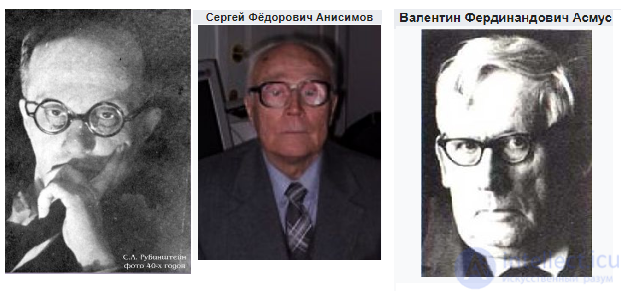
13. The «Nicomachean Ethics» is a work written by:
14. «Nothing is so cheap, yet valued so dearly, as courtesy,» said:
15. «On the Nature of the Gods» is a treatise written by:
16. «First among equals» can be said of such categories of ethics as:
17. «They are met by their clothes, seen off by their wits» is a judgment ...
18. «Politics,» translated from the Greek, means:
19. «The modest person deserves praise and, in certain matters, holds to the middle,» believed:
20. "The sovereign, like the law, can turn men into animals and animals into men," believed:
21. 428 - 348 BCE are the years of the life of:
22. Eudemonia translates as:
23. Hedone translates as:
24. Memento mori is the principle of the philosophical school of:
25. A. Schweitzer believed that the roots of the decline of morals in the 20th century lay in:
26. A. Schweitzer maintained that to be moral means to be ...
27. The absolute and highest good for I. Kant:
28. Abstract moralizing:
29. The author of the argument aimed at removing the fear of death: «Death has nothing to do with us: when we exist, death is not present, and when death is present, we no longer exist,» is:
30. The author of the famous exclamation «God is dead!» is:
31. The author of the formula «reverence for life» is:
32. The author of the phrase “Man is the measure of all things”:
33. The authority of parents ...
34. The author of the “Nicomachean Ethics” is:

35. The author of the term “ethics” is:
36. An English businessman is very observant, is a good psychologist, and ...
37. The English historian and philosopher who concluded that a truly universal world history began in the 20th century is:
38. Antisthenes is the most famous:
39. Anthropological factors ...
40. Anthropocentrism and humanism are concepts that are:
41. The anthropocentric worldview is directed at:
42. Aristippus was the founder of the ________________ school.
43. Ataraxia, one of the most important categories of Stoic ethics, means:
44. The unaccountable instinct of shame turns into the clear voice of conscience, said:
45. Bioethics is considered a component part of:
46. A reverent attitude toward life is the principle of:
47. Most researchers maintain that postmodernity is:
48. Marriage has legal force if it is formalized and registered at:
49. To be fashionable, a suit must ...
50. In bourgeois society, etiquette is used as a means of exchange:
51. In the Greek consciousness, justice is associated with:
52. In business communication, the coordination of interests ...
53. In the classical period of ancient culture, a new attitude toward nature began to form, based on the words:
54. At the end of the 20th century, the crisis engulfed:
55. In the culture of early Ancient Greece, nature ...
56. In love, it is impossible to discover:
57. At the present time ...
58. In our time, one observes ...
59. In the field of genetic engineering, special ethical regulation is needed for:
60. At the foundation of the ethical reflections of such Russian philosophers as F.M. Dostoevsky, V.S. Solovyov, N.A. Berdyaev, and S.N. Bulgakov lay the ideas of:
61. Unlike Western European languages, the word «justice» (spravedlivost) in Russian derives from the word:
62. Unlike the medieval tradition, the humanists ...
63. With regard to clothing ...
64. In relations with a friend, a «gentleman» ...
65. In primitive society, nature:
66. In the period of the formation of the information civilization, the following questions come to the fore:
67. In post-industrial society, the main role is played by:
68. In the poem “Purifications,” Empedocles expressed:
69. In principle, an orator ...
70. In the process of communication, a person in bourgeois society is confronted with an alternative of possibilities:
71. The radical position of the thinkers of the Jacobin dictatorship contained demands directed ...
72. In Russia, it is customary for a man to greet a woman while standing:
73. In Russia, the tsar (tsarina) who opened the way for Western European fashion was:
74. In his concept of the «deadly sins» of modern civilization, K. Lorenz does not include:
75. In which situations are introductions categorically forbidden:
76. In complex situations of interpersonal communication, impeccable knowledge of etiquette ...
77. In the total social labor, the share of ...
78. In estate-based society (England and France in the 17th century), the etiquette that reached the highest development was ...
79. In the sphere of legislation, etiquette began to take shape when:
80. In the treatise «Toward Perpetual Peace,» Kant maintained:
81. In forming high labor discipline, the strongest means is:
82. What the good life consists in, and what a person should above all strive for, is a question of ...
83. In the ethical poem the Bhagavad Gita, the individual “I” is personified by:
84. The most important condition for spiritual compatibility in a family:
85. The most important element of the value orientations of technogenic society are the values of:
86. Courtesy is a moral quality:
87. The Great French Revolution took place in:
88. Faith, hope, love - these are life-meaning ideals of ...
89. An individual's attitude toward various events is influenced by factors that are:
90. Being in love ...
91. External recognition and appraisal of a person is:
92. Internal recognition and appraisal of a person is:
93. A person's inner need to act in accordance with certain moral principles and norms; the expression of social necessity in moral requirements placed before the individual - this is:
94. Suggestion is a process of influencing a person's psychic sphere ...
95. During a meeting, men take off their jackets:
96. In France, decisions are made not only at the working table but also at the dinner table. Among the forms of business receptions practiced in this country are:
97. The view that rejects all religious beliefs is:
98. The possibility of an individual exercising his will on the basis of the laws governing the development of society and nature is:
99. The will must not be restricted by anything - this is the postulate of ...
100. Questions about how a person should act belong to the sphere of ________________ ethics.
101. Only the following has an educational significance based on the results of labor:
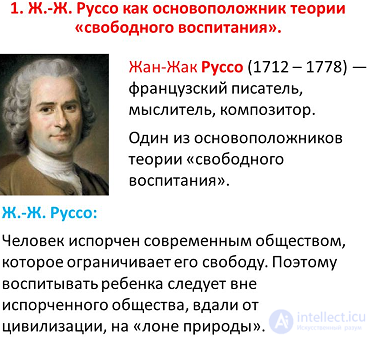
102. Raising children in the bosom of nature was advised by (the founder of free upbringing):
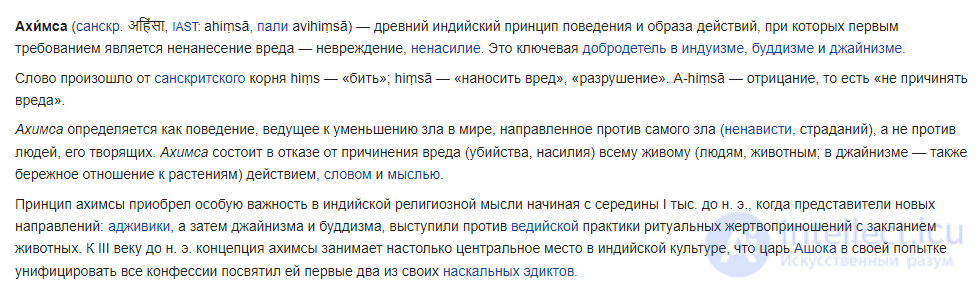
103. The teaching, going back to the ancient Indian tradition, of not causing harm to living beings, from which follows the inadmissibility of killing, is called:
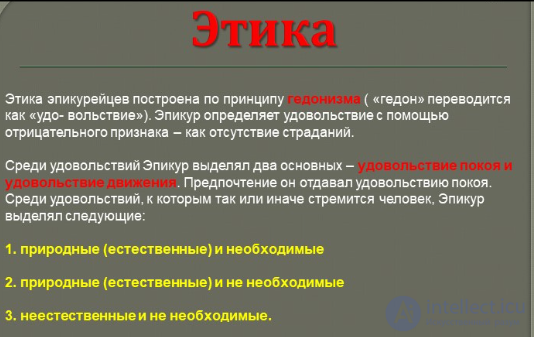
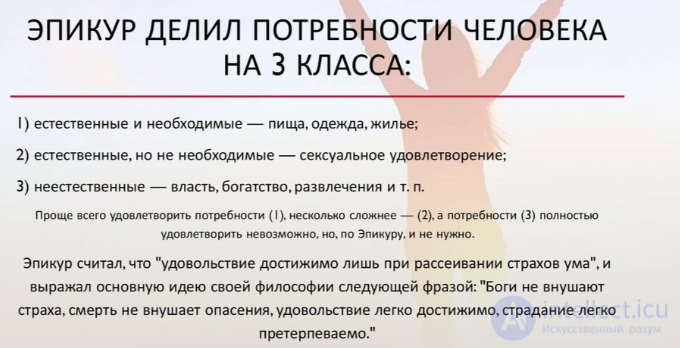
104. Epicurus divided all pleasures into:
105. Everything that depends on the will of the person and of society, and that which follows from human activity, can become:
106. The Universal Declaration of Human Rights was adopted by the UN in:
107. The opening of a written address ...
108. The derivation of morality from causes lying outside it and independent of the subject's will is called moral:

109. The carrying of a child conceived with the purpose of subsequently handing him over to other persons is ... motherhood
110. The expression of a person's moral worth, proceeding from the principle of the equality of all people, is:
111. The highest degree of pleasure is:
112. The highest good is inner freedom and self-possession, believed the representatives of the ________________ school.
113. The highest good of man consists in the striving for pleasure, believed the representatives of the ________________ school.
114. Harmony of thoughts, feelings, and behaviour, expressed in etiquette, presupposes:
115. Harmony, perfection, and expediency in the states and processes of a person is:
116. Hippocrates ...
117. The main principle of justice in the modern understanding is:
118. The main element of politics:
119. Hobbes believed that among people in the natural, pre-state condition there reign:
120. Humanism is a system of views recognizing ...
121. The humanistic ethics of interpersonal communication is oriented toward:
122. J. Rawls grounds liberal values in the principle of:
123. An action having positive moral significance is:
124. An action considered from the standpoint of the unity of motive and consequences, intentions and deeds, ends and means, is:
125. A delicate manner of communication ...
126. The democratization and simplification of etiquette in bourgeois culture are processes ...
127. Democritus is classed among:
128. An active, practical stance, that which unites one's attitude to social life, one's attitude to oneself, and the outer and inner world of the personality, is:
129. Human activity must be in harmony with the rhythms and laws of nature, believed the philosophers of the school of:
130. Gentlemanliness is a way of life and the code of rules and norms of the respectable morality of the upper class of Western Europe (especially in England) that grew up on its basis, in the period of:
131. Dialogue represents:
132. Discipline is ...
133. Lasting satisfaction with life is called:
134. For the conclusion of marriage, the obligatory condition is:
135. For Plato, virtue is:
136. For Plato, ethics merges with:
137. In order to justify the truth of morality, one must presuppose the existence of some other reality, said:
138. In order to obtain «the strength to do good, one must have a concept of the good, otherwise its performance will be merely a mechanical act, wrote:
139. For environmental ethics, the most important value is:
140. The good is «the absolute end of the world and duty for the subject», it is «in itself and for itself», believed:
141. The voluntary, painless death of a terminally ill patient is termed in biomedical ethics:
142. Voluntary death of a patient, when the physician takes some action to bring about death, is ... euthanasia
143. Voluntary death of a patient, when the killing is carried out because the physician withholds life-sustaining measures, is ... euthanasia
144. Virtue is always in a state of forward movement, and yet it always begins again from the start, said:
145. Good deeds lead to happiness and enjoyment, while evil ones give rise to suffering and misfortune, in the opinion of the school of:
146. Duty is a moral category requiring the fulfilment of ...
147. The long presence of Finland within the Russian Empire and the experience of the subsequent 40-year economic cooperation:
148. Friendship is a form of interpersonal relations based on ...
149. Friendly relations cannot be realized within:
150. The only being possessing the knowledge that it will die is:
151. The only thing that remains to a person after death, in the opinion of the ancients, is:
152. The only moral motive, in Kant's opinion, is:
153. The unity and cohesion of a family depend on complete compatibility, arising on the basis of similar qualities thanks to:
154. If a conversation drags on, the manager may give to understand that the conversation is ending:
155. If a female employee enters the office, the manager:
156. If it is not important to respect, but only to create the impression that one respects the person one is dealing with, then etiquette ...
157. If the office telephone rings, an employee of the enterprise (institution), upon picking up the receiver, is obliged to:
158. If someone introduces themselves to you decently and respectfully during a journey, one should:
159. If a new member appears at a meeting of the collective, they are introduced:
160. The natural virtue is mercy, in the opinion of:
161. Natural conditions, climate, and geographical location belong to the factors of the attainment of happiness that are:
162. A woman greets a man first:
163. A life stance that gives life value is:
164. To live means to sacrifice oneself, believed:
165. For a murder, vengeance must be taken on the murderer himself or his relative, according to:
166. The closing of a written address consists ...
167. The Law of the Russian Federation provides for the dissolution of marriage upon the application of one or both spouses ...
168. Evil is the assertion of finitude and subjectivity in opposition to the infinite, believed:
169. Evil and the Fall, in Augustine's opinion, is the victory ...
170. Evil is created by an evil will, in the opinion of:
171. A significant part of the norms of etiquette arose on the basis of:
172. The ideal of detached wisdom, embodied in the position of the hermit in the philosophy of the pre-Socratics, was most fully expressed by:
173. The ideals of truth, goodness, and beauty were first proposed by:
174. Ideals form ...
175. The ideas of the maximal «use of nature» and the establishment of dominance «over all living things on Earth» acquire great weight:
176. The ideology of the modern era was formed in:
177. Among social groups or individuals, custom in primitive society singled out as especially significant:
178. Of the following, the concept of the culture of behaviour in the broad sense includes:
179. Of the following, group marriage includes:
180. Of the following, the errors leading to a violation of the unified ensemble in clothing include:
181. Of the following, the values of ideal communication should include:
182. Of the following, the elementary rules of telephone communication include:
183. Of the following, professional ethics does not study:
184. Of the following, the communication style of young people is characterized by:
185. Of the listed types of etiquette, the main types include:
186. Of the listed concepts, the meaning of military etiquette is revealed by:
187. Of the given statements, not characteristic features of laziness are:
188. From the various forms of veneration of primitive society grew three different phenomena of ritual culture:
189. Of the situations, the manifestation of the volitive function of speech etiquette includes:
190. Of the components of speech culture, the significant ones are:
191. Of the social norms, the behavioural ones include:
192. Of the statements concerning the democratization of etiquette in bourgeois society, the true state of affairs is reflected by:
193. Avoid pleasures that bring sorrow, said:
194. An apology is:
195. Perverted, false, and illusory notions of happiness and the meaning of life, reflecting the spiritual emptiness and hopelessness of life, are:
196. An imperative is:
197. The imperative of morality, in Kant's opinion, can be:
198. The first name and patronymic of subordinates, for a manager:
199. Individualism, as a concept of ethics, is:
200. The institution expressing moral responsibility:
201. Called virtue artificial:
202. The art of valuing others ...
203. To profess universal human values today means:
204. Truth, goodness, beauty are life-meaning ideals ...
205. True are the statements regarding the fact that the significance of people in bourgeois society depends on:
206. Historically, in the course of moral progress, the degree of moral and etiquette norms:
207. The historical events that most influenced the recognition of the crisis of European civilization in the 20th century are:
208. Italians are proud of their country as the cradle of many arts and crafts; a display of knowledge in this sphere makes a favourable impression. Of the types of art, the most suitable topics in the course of communication with partners from Italy are:
209. Among the main qualities of a “gentleman” are:
210. True love cannot include:
211. To the categories of good and evil the Stoics added the category:
212. Every day think that you could calmly part with life, believed:
213. Kant divided all forms of government into:
214. Kant believed that the political system most inclined to despotism is:
215. Kant believed that war would overcome itself, because in the future it:
216. Kant asserted that the highest goal of political order is the establishment of ...
217. The categorical imperative is:
218. The categorical imperative in Kant's system:
219. The categorical imperative as an absolute law is the law of:
220. The category of ethics denoting a person's sense of moral responsibility for their behaviour before themselves:
221. The book «Human Qualities», which analyses the crisis situation in the world at the start of the 1970s, was written by:
222. Coherence is:
223. Commercial relations with Spanish firms are traditionally built on a hierarchical principle; bureaucracy here possesses great autonomy in decision-making. This means ...
224. The end of the life of a living being, the cessation of its vital activity, is:
225. The end of the 20th century was marked in philosophy by the spread of:
226. The final outcome, completing something, is:
227. A specific fashion for something represents:
228. Concrete sociological studies of morality in various types of society belong to the field of ________________ ethics.
229. The contact-establishing function of language is manifested in such speech acts, when:
230. The concept of the global problems of the present day was put forward by:
231. Correctness is the ability ...
232. A cosmopolitan is a person preaching ...
233. Coevolution is a concept denoting the process of the joint development of ...
234. A short-term emotion or a stable feeling, engendered in a person by real or imagined danger, is:
235. Croesus asked the Greek sage about the happiest people:
236. Cultural rights are rights ...
237. The culture of behaviour is:
238. Leviathan became the image of the state in the work of:
239. Leadership is:
240. Personality and morality do not exist without:
241. A personality is:
242. A person to whom a service was rendered or in whose fate part was taken is obliged to express their gratitude ...
243. Courtesy is:
244. Love ...
245. Love is individual because ...
246. Love can be explained as:
247. Magical ritual acts turned into the etiquette of initiation into kings, caliphs, knights, scholars, clergy, counts, barons, etc. From the outward side, initiation appeared as:
248. Machiavelli wrote about the relationship between the ends and means of politics that:
249. Interpersonal relations are a system of attitudes, orientations, expectations, stereotypes, and other dispositions, through which ...
250. The measure of the fulfilment of an individual's moral duty in their deeds is:
251. The methodological principle of interpreting the nature of morality, which is expressed in the fact that moral concepts and notions are given a relative, changeable, and conventional character, is:
252. One usually passes by one's own happiness:
253. The world of assumptions and the world of what ought to be form the structure of:
254. A worldview is a totality of ...
255. Spinoza's worldview is classed as:
256. Fashion is a measure, a rule, existing in a certain period and generally recognized ...
257. Moral evaluation is formed ...
258. The moral worth of a person, connected with the person's specific social standing, with the type of their activity and the social roles they perform, is:
259. The moral feeling in which a person expresses condemnation of their own actions, motives, and moral qualities is:
260. The moral incentives of labour relate above all to:
261. The moral character of a family person is made up of:
262. Wisdom consists in reflecting on life, believed:
263. The thought of death must awaken the thought of life and its meaning, believed:
264. The thought that enjoyment is freedom from the sufferings of the body belongs to:
265. The thought that it is natural for a person to strive for enjoyment and avoid suffering belongs to:
266. At the International Ecological Forum in Rio de Janeiro in 1992, there was worked out:
267. The most general definition of humanism:
268. The most general concept of morality, which unites the whole totality of the positive norms and requirements of morals and serves as an ideal, is:
269. The most extensive critique of the “naturalistic fallacy” belongs to:
270. Punishment as a form of educational influence will not achieve its goal if it is:
271. The field in modern medicine dealing with the transplantation of organs from one person to another is called:
272. The trend in socio-political theory asserting that small social communities of people make it possible to realize the ideals of solidarity and justice and to overcome the alienation between the individual and society, is:
273. The trend of ancient Greek ethics founded by Zeno of Citium around 300 BC; a stable theoretical and normative tradition in the history of European ethics; a moral principle - this is:
274. A true life is possible only in the afterlife, they believed in:
275. The science of man, of his origin, evolution, the formation of human races, and of the normal variations of the physical structure of man, is:
276. The science investigating the moral aspects of the attitude to life and death, a field of ethics forming at the intersection of medical ethics and the ethics of science, is:
277. A nationalist is a person characterized by ...
278. The boss invites the female employee to sit down:
279. Judge not, that ye be not judged, taught:
280. Factors in the attainment of happiness that are independent of a person's consciousness and will are:
281. The German philosopher who noted that the end of the world became quite real with the advent of the atomic bomb is:
282. Hatred ...
283. The necessity of acting out of respect for the moral law, Kant calls:
284. Unhappy is he who does not consider himself happy, said:
285. A norm represents:
286. The bearer of honour can be:
287. The moral culture of a person is:
288. Morally indifferent for the Stoics is that which ...
289. The moral behaviour of an individual is the realization of ...
290. Love in marriage is considered moral when it leads to:
291. The moral values of a person:
practice
292. The moral meaning of etiquette is manifested in that it can be used to express:
293. One must fear death when out of danger and not fear it when in danger — this was held by:
294. The area of philosophical inquiry whose subject is the justification of ethical
principles and norms regulating a person's relation to nature is called environmental ...
295. The field of application of bioethics is ________________ practice.
296. The renewed worldview of humanity, oriented toward developing a global consciousness based on non-violence, justice and recognition of human rights, is:
297. A general assessment of the whole of life is contained in:
298. Communication is a complex process of establishing contact between people, generated by the need for joint activity and involving the exchange of information ...
299. Communication and dialogue with holders of a different point of view presupposes:
300. A generally binding and mandatory rule, established to limit the freedom and will
of a person, necessary to ensure the freedoms of other people, is:
301. The social and the individual in labour merge into a single whole and serve:
302. Public opinion does not tolerate indifference to such moral problems of society as:
303. The society of traditional relations was disrupted by:
304. A society that honours traditions created and passed on from generation to generation, and that is distinguished by political stability, is called a society of the:
305. A general theoretical and worldview orientation centred on the interaction of social formations with the environment is:
306. Universal human morality, by promoting the affirmation of the moral value of labour in society, regards free conscious labour as one of the ...
307. The objective result to which a person's action led is:
308. An ordinary, simple attitude toward the dead was characteristic of:
309. One of the founders of ethical rationalism was:
310. Approval or condemnation by moral consciousness of various phenomena of social reality, whereby it establishes the correspondence or non-correspondence of a deed
to definite moral requirements, is:
311. The revival of a person after clinical death is:
312. The supporting points of a worldview are:
313. Optimism is the belief that in the world ...
314. The founder of Stoicism was:
315. The main function of the family ...
316. The main characteristic feature of «familism» is orientation toward:
317. The main goal of life for a Stoic:
318. The main thing in family upbringing is:
319. The main ethical postulate of the “Bhagavad Gita” states:
320. The main requirements in family relations:
321. The main levels of labour discipline:
322. The main source of Confucian ethics is:
323. The basis of the spiritual motives of human behaviour is:
324. The founders of ethical relativism are considered to be:
325. Especially relevant today for the ethico-philosophical understanding of the process of dying is
the problem of:
326. Particularly serious ethical and legal problems in transplantology proved to be connected with the transplantation of:
327. A person's awareness of the meaning and content of life, and its concretization in some particular undertaking, is:
328. Responsibility ...
imposed by society
329. Renouncing freedom is tantamount to renouncing respect, in the opinion of:
330. The revelations of Zoroaster formed the ethical conception of:
331. A person's attitude to their professional duties finds its expression in:
332. Payment, punishment for a crime, for evil, is:
333. The denial of generally accepted values, ideals and moral norms is:
334. The state-protected, legally sanctioned possibility of a subject, the freedom to do something,
to carry it out, or conversely the prohibition (ban) on some activity, is:
335. Assessing deeds through the prism of the highest moral values is grounded in:
336. To be cleansed of injustice, in the opinion of the ancient Greeks, is important ...
337. P.A. Sorokin believed that what can put an end to human aggression toward one another
is only:
338. Patriotism is a category of ethics expressing ...
339. Patriotism is activity for the good of the homeland, ensuring ...
340. Patriotism as a moral value ...
341. The pedagogical culture of parents is a constituent part of a person's general culture, in which
is embodied ...
342. The primary component of shame is:
343. The transmission of moral values takes place in the sphere of:
344. The period of European history from the 17th century to the first half of the 20th century, during which there occurred
the formation and development of the basic institutions of Western society: the capitalist mode
of production, the liberal state, civil society, received the name of:
345. Pythagoras said that a person becomes most like God when he:
346. Plato distinguished three parts in the soul:
347. Platonic love is:
348. In the opinion of A. Schweitzer, the ethics of «reverence for life»:
349. In Augustine's opinion, of his own free will a person ...
350. In Heraclitus's opinion, a virtuous person must:
351. In the opinion of the ancient Greeks, for an injustice inflicted on someone one must:
352. In M. Gandhi's opinion, the cause of the violence on which contemporary civilization is based lies in the fact
that ...
353. In Spinoza's opinion, we:
354. In the opinion of philosophers, in postmodern society there is an acute shortage of:
355. In Epicurus's opinion, for a happy and virtuous life:
356. A saying that contradicts the ethics of labour:
357. Structure should be understood as ...
358. Maintaining the endless chain of birth / death is the meaning of life, from the standpoint of ...
359. The position asserting a woman's absolute right to perform an abortion regardless
of the age of the fetus is called:
360. Polemic and overcoming objections in the course of an emerging discussion presuppose:
361. A polemic is:
362. The politicization of a person and their adaptation ...
363. A political-legal orientation based on the recognition of the political and economic rights
of the individual, understood as a generalization of the natural needs of civilized people, is:
364. Political ethics is the doctrine of political life and relations from the standpoint of ...
365. Political relations are relations of:
366. Political freedoms enable the individual and society to act in accordance with
a system of ...
367. Political right is the right ...
368. The fullness of being is felt when a person:
369. A full-fledged moral life for any person (including a businessman) is possible only
with ...
370. Sex education does not presuppose:
371. The position of people in society that ensures their equal political and civil
rights is:
372. The state opposite to the true state of affairs, in which a person finds themselves
who has violated moral norms, is:
373. The concept of “arete” for a Greek of the Homeric period meant:
374. The concept of “dharma” corresponds to the Russian:
375. The concept of «apatheia» was introduced by:
376. The concept of moral consciousness that serves as a generalized expression of notions of the immoral, deserving of condemnation, is:
377. The concepts of honesty, justice and humaneness together make up:
378. After us, even the deluge — declared by:
379. A person's deed represents:
380. Reverence for one's parents and respect for one's elder brothers is, in Confucius's opinion, the basis of:
381. The rights to social security in old age, sickness, disability, loss of a breadwinner, to
housing, medical care, to the protection of motherhood and childhood, to education, a safe
environment — these are ... rights
382. Human rights are a necessary condition for ...
383. The rules of etiquette arose in connection with the need to bring order to ...
384. The rules of etiquette for written correspondence guide one toward:
385. The object of desires and aspirations, reflecting the level of human development, its pressing needs and cares, is:
386. It is preferable to suffer injustice than to commit it — this was held by:
387. A representative of «cosmic ethics» who developed the philosophy of panpsychism is:
388. The notion of the Last Judgment, the Apocalypse, and original sin is characteristic of:
389. When being introduced, the first to extend a hand for a handshake is:
390. Invitations and announcements are customarily written ...
391. The acknowledgment of the unconditional existence and truth (or non-existence or falsity) of something with a resoluteness and firmness that exceed the persuasive force of factual and
logical proofs is:
392. The recognition of the primacy and exceptional significance of social reality in human
life is called:
393. Acknowledging one's own guilt and condemning one's own past deeds is:
394. The principle of autonomy of the will is itself, in Kant's opinion, ...
395. Hippocrates's principle: «I swear not to give a lethal drug even if I am asked
to» — today ...
396. A principle characterizing a person's attitude to the moral values of society;
it means the denial of moral norms, principles and ideals common to everyone (in this respect it
is close to moral relativism and in its extreme expression turns into cynicism and amoralism),
non-recognition of any social authorities is:
397. The causes of the emergence of the global problems of our time:
398. Progress is:
399. Protagoras was the most famous:
400. An opponent of kissing women's hands was:
401. Professionalism as a moral quality is based on:
402. Psychological compatibility ...
403. Pierre Abelard considered the highest moral criterion to be:
404. The work «The Myth of Sisyphus» belongs to the pen of:
405. The development of medical ethics in the 20th century showed that the fundamental ethico-philosophical
problem of contemporary medicine is the problem of the attitude ...
406. The division of philosophy into physics, logic and ethics was made by:
407. Divided all the virtues into intellectual and moral:
408. The distinction between distributive and corrective justice was introduced by:
409. Of real practical significance for bioethics is the theme of a person's attitude toward:
410. The revolutionary democrats considered their predecessors to be:
411. Solving the global problems of our time requires:
412. Many specialists make the solution of the problem of abortion dependent on:
413. A ritual is:
is canonized and has only symbolic significance
414. An even temper and a rich imagination give a sense of happiness, said:
415. The founder of humanism was:
416. Birth, betrothal, wedding, anniversary, illness, recovery, death:
417. A role that has fallen to someone's lot, fate, is:
418. The milestone that brought all of humanity to the brink of destruction was the creation of:
419. A team leader, addressing a subordinate with a work assignment, must do so:
420. A manager, entering the department ...
421. Rousseau called on humanity:
422. Rousseau believed that man is by nature:
423. Since the Modern Age, the tradition has developed of:
424. From the standpoint of morality, at the basis of the family there cannot be:
425. Connected with the phenomenon of «clinical death» is a problem generated by resuscitation medicine, namely:
426. Self-control, as an ethical concept, is:
427. The intrinsic value of communication ...
428. Freedom is the central axis around which man revolves, believed:
429. Freedom from feelings and passions in Greek philosophy received the name:
430. The freedom of divorce as a moral norm:
431. Liberty, equality and fraternity are the life-meaning ideals of ...
432. Liberty, Equality, Fraternity is the slogan of:
433. Wilfulness represents:
434. Mummified their dead:
435. Self-love should be regarded ...
436. Family and domestic compatibility means a coincidence of views on:
437. Family relations presuppose self-restraint and the subordination of:
438. A family educates its children ...
439. The family as a socio-cultural group is a structure defined by ...
440. Seneca — a Stoic and writer who had a great influence on the formation of the ethics and dogma of Christianity — was:
441. The symbiosis of shame and guilt forms:
442. A symbol is:
443. Following the categorical imperative ...
444. Death is not the end of a person's existence, in the opinion of:
445. From the standpoint of mythological consciousness, the meaning of life consisted in:
446. The removal of guilt for deeds committed in the past through the full acknowledgment of one's guilt,
the punishment endured, or subsequent good deeds that make a person
worthy of forgiveness — this is:
447. Conscience often serves as a synonym for:
448. Conscience can figuratively be compared to:
449. Conscience arises from a feeling of responsibility to oneself, believed:
450. A set of views, principles, and convictions that determine the direction of one's activity and
one's attitude to reality — this is:
451. A set of regulative ideas orienting behaviour, lifestyle and relationships, in which
the leading attitude of activity is the striving for prestigious consumption, for obtaining
the maximum of pleasures and entertainment — this is:
452. A set of ethical ideas based on the conviction that
moral goals can be achieved only by non-violent methods received the
name:
453. Modern polemology holds that wars can be eliminated ...
454. The modern field of scientific research into military conflicts is called:
455. The present state of society, which has exhausted the potential of modernization and is seeking new
forms of identity, has been called:
456. Modern schools of polemology hold that the inevitable triad of modern life
is:
457. According to Aristotle, the mean between vanity and self-abasement is:
458. According to Aristotle, the mean between extravagance and stinginess is:
459. According to Aristotle, happiness consists in:
460. According to Aristotle, the aim of ethics is:
461. According to the views of the humanists, that which is unconditionally condemned is:
462. According to theories widespread in the West, modern society is passing through the ________________ stage of development.
463. According to modern environmental ethics, nature ...
464. According to Spinoza, people must strive for:
465. According to the Stoics, the source of evil is:
466. According to the requirements of etiquette, a farewell is accompanied by:
467. According to Epicurus, the condition of happiness is:
468. According to Epicurus, philosophical thinking ...
469. The content of professional ethics:
470. The content of labour is not exhausted by its production and technical-economic
indicators: it ...
471. Factors for the attainment of happiness that are created by the person himself are:
472. The conscious choice of one's goals and actions is:
473. Socrates held that the necessary and sufficient condition for performing a good deed
is:
474. The correspondence of ideas or statements to the actual state of affairs is:
475. The state of the world community was first called a «situation of postmodernity» by:
476. A state of moral satisfaction, satisfaction with one's own life, is:
477. The state of a dying person in which the heart has already stopped but biological death, i.e. the destruction of the brain, has not yet occurred, has been given the name:
478. Employees respond to a manager's greeting ...
479. The social prestige of labour is a comparative assessment by society or a group and its members of:
480. Sympathy is an attitude toward another person based on:
481. In Augustine's opinion, a person can be saved only by:
482. In his ethical conception, Spinoza holds that a person's will is determined by God, and therefore
he:
483. Spinoza introduces a new ethical category:
484. The ability and habit of a person to conduct himself while respecting the dignity of another person:
485. The ability of a person to make independent and responsible decisions, free from
external pressure and his own fears, is called moral ...
486. Justice is an ethical category used to characterize human
relations in the distribution of ...
487. Justice is a special virtue, believed:
488. Justice appears, first and foremost, as the problem of ...
489. Among the oppositions that are decisive for the formation of norms of etiquette are:
490. Among Russian writers, a proponent of the principle of non-violence was:
491. Incentives for labour are divided into:
492. The Stoics strove for:
493. Stoicism is the name given to:
494. Stoic apathy is:
495. A clash of opposing views, strivings, interests is:
* collision
496. Supporters of the conservative viewpoint maintain that the embryo becomes a person:
497. The ideologists of postmodernity declare the building block of the future world order to be:
498. A person's subjective awareness of his duty and his responsibility to society —
this is:
499. A subjective principle for understanding moral activity based on will;
a characterization of a person's personal stance, deeds, and views, distinguished by overt
arbitrariness — this is:
500. Kant calls the subjective principle of the good will:
501. Subjects of political relations:
* individual persons, groups, strata, communities and society as a whole, as well as their
organizations and institutions
502. In divorce proceedings, the court takes measures to protect:
* minor children and the disabled spouse
503. The judgment: “The more civilized people are, the more they are actors” was formulated by:
* I. Kant
504. The judgment: «Respect is the outpost guarding both father and mother, and the child as well; the former it
saves from grief, the latter — from pangs of conscience» belongs to the pen of:
* O. Balzac
505. There exist two groups of factors conducive to the attainment of happiness — these are:
* subjective and objective
506. The sphere of interaction between nature and society, within which rational human
activity becomes the main determining factor of development — this is:
* the noosphere
507. Happiness is a feeling of ...
* the fullness of life
508. For the Stoics, happiness is:
* the harmony of a person's will with the will of god
509. Happiness is psychologically close to such a state of soul as:
* joy
510. T. Hobbes held that the world is arranged according to the laws of mechanics and ...
* did not recognize either freedom or human responsibility
511. The mystery of good and evil has driven all philosophers into a dead end, declared:
* B. Shaw
512. Tactfulness is the ability to conduct oneself in society, the basis of which is:
* respect for another person, a sense of measure that suggests the most delicate line of behaviour
513. The thesis that «nature is subtle, but not malicious» belongs to:
* A. Einstein
514. The theoretical grounding of moral relations in the sphere of labour presupposes the definition of:
* the goals, means and results of labour
515. The theory of rational egoism was developed by:
* Holbach, Helvétius
516. The term “ren” translates as:
* humaneness
517. The term “xiao” translates as:
* filial piety
518. The term “ethics” appeared in:
* Ancient Greece
519. The term denoting the assurance of society's progress that guarantees an optimal
state of the natural environment is:
* ecological culture
520. A type of social relations based on the principle according to which ends and means
must coincide within the lifetime of each generation and individual, is:
* the ideal of non-violence
521. The type of primitive thinking in which individual natural elements and
phenomena are imbued with spirit is called:
* animism
522. Comradeship is a relationship between people based on the commonality of their interests,
manifested in:
* mutual aid, solidarity, respect and trust
523. Tolerance is forbearance toward various kinds of views, norms of behaviour, habits ...
* different from those held by the subject
524. Only man is capable of suicide, believed:
* Hegel
525. Thomism is a doctrine founded by:
* Thomas Aquinas
526. Characteristic of traditional society is:
* the inviolability of moral values
527. The tradition of «cooperation with nature»:
* has its roots in the primitive existence of humanity
528. The treatise «Toward Perpetual Peace» was written by:
* I. Kant
529. The treatise «The Justification of the Good» was written by:
* Solovyov
530. The requirements and norms of etiquette can be:
* conventional
531. Exactingness and adherence to principle ...
* are the most important components of a manager's working style
532. Labour is the purposeful activity of people that involves ...
* the transformation and assimilation of natural and social forces
533. Labour as a phenomenon of culture is ...
* creative activity aimed at transforming the natural and social environment
534. Labour in which the individual and the social are harmoniously present allows
everyone to find a way of self-expression, and the individual invariably:
* receives public recognition and support
535. Diligence, in the moral-psychological makeup of a person, does not presuppose regarding labour as:
* a means of attaining social status
536. Parasitism (idleness) is ...
* an aversion to and disdain for labour, an idle way of life
537. Conviction is a person's conscious need that impels him to act in:
* accordance with his value orientations
538. The belief that abortion is always immoral and may be permitted only in the case
where it is a matter of saving the life of the pregnant woman, is called:
* conservative
539. A person's convictions, range of interests, and hobbies form the group of factors:
* subjective
540. The conviction that God does not exist is called:
* atheism
541. Respect is:
* discipline of behaviour, the ability to reckon with the significance of others
542. The legalized ability to control someone or something, to subordinate to one's own will — this is:
* power
543. The strengthening of women's economic independence and social equality raises
the level of requirements for the marital union as:
* a union of feelings, standing and rights
544. The ability to observe etiquette presupposes:
* developing the ability to practically apply the norms and rules of etiquette in
everyday communication
545. A moderate way of life for the Epicureans:
* is not an end in itself
546. Mental labour is analytic-synthetic intellectual activity, the products of which
are:
* a text, a calculation, a drawing, a message, an order, etc
547. Oral monologic speech consists of:
* an introduction, a main part, a conclusion
548. Self-assertion in society, the striving to take everything from life, is characteristic of the personality type:
* consumerist
549. The doctrine of the biosphere as transitioning into the noosphere, opening the way into space, received the
name:
* cosmism
550. The doctrine of the universal foundations of being, being in general, its structure and laws — this is:
* ontology
551. The teaching of Epicurus belongs to the tradition of:
* eudaimonism
552. A disciple of L.N. Tolstoy who adopted the theory of «non-resistance to evil by force» was:
* M. Gandhi
553. Scientists believe that the solution of the global problems of our time must be based on
new values, such as:
* biocentrism
554. Physical or moral pain, torment — this is:
* suffering
555. Physical labour is directed at:
* changing the material-substantive environment
556. The philosophical-political doctrine asserting the necessity of the equality of all people in general
and before the law in particular — this is:
* egalitarianism
557. The philosophical doctrine of the nature of ethical values, of the values of life, culture, etc. — this is:
* axiology
558. The philosophical doctrine based on the recognition of the absolute value of the human being as a person, of his
right to the free development and exercise of his abilities, and the affirmation of human good as the
criterion for the assessment of social relations — this is:
* humanism
559. The formation of etiquette shows that every free person has
an independent significance. Of those listed, in class society, considered to have only
instrumental usefulness were:
* the serf
* the slave
* the servant
* the alien
560. The formula of the relation of an objective law to the imperfect will of a person — this is:
* the imperative
561. Forms of courtesy as small gains that contribute to the accumulation of wealth were examined by:
* F. Bacon
562. The phrase «Act so that the maxim of your will could always hold as the principle of universal
legislation» belongs to:
* Kant
563. The phrase: «Shame raises man above the animal instinct of self-preservation of the species»,
belongs to:
* Solovyov
564. The French philosopher Derrida observed that postmodern man lives in a reality:
* full of uncertainties
565. The fundamental value of the modern age is:
* reason
566. Hans Jonas developed:
* an ethics of survival and responsibility
567. The value-spiritual guideline by means of which the choice of action in
relation to death is made is:
* human dignity
568. That which is a value «in itself» is:
* the good
569. The central category of Confucius's ethical teaching:
* “ren”
570. The central place in a worldview belongs to ideals:
* concerning the meaning of life
571. Civilization is:
* a stage of social development and material culture, characteristic of a given
socio-political formation
572. Cynicism is insolent, shameless behaviour imbued with contempt for people and culture,
a profound manifestation of ill breeding, the essence of which is:
* the absence of genuine inner culture
573. A person must be able to demonstrate his activity in labour:
* productive labour and activity aimed at restoring his spiritual and physical strength
574. A person takes in the whole world with his gaze by means of ...
* a worldview
575. Man is made for happiness, as «a bird for flight» — this is:
* folk wisdom
576. Human being is:
* a specific form of existence, joint activity and behaviour of people,
which are regulated by social norms
577. Spinoza compares the human soul to:
* a spiritual automaton
578. What gives human life meaning is the hope for:
* happiness
579. Sensitivity is a moral quality characterizing a person's attitude toward others and
presupposing ...
* concern for the needs, requests and desires of people, a tactful attitude toward the self-esteem,
pride and sense of dignity of others, and courteous treatment of everyone
580. The Swedes are known throughout the world for their Lutheran business ethic. Of the notions, characteristic of the Lutheran
business ethic are:
* thoroughness
* diligence
* punctuality
581. German accuracy and punctuality are widely known. Our business people should
take this into account in a wide variety of situations. Of the statements, true are:
* one should not react as to a manifestation of distrust or disrespect toward you if
a German partner locks the telephone or the photocopier
* a German may well not share breakfast brought from home
* having invited you to a restaurant, a German will expect you to pay for yourself
582. Egalitarianism in marital relations is:
* equality of the spouses
583. Exogamy is the prohibition of ...
* marriage within one's own collective
584. Environmental ethics prescribes that a person relate to nature:
* with love and respect
585. Environmental ethics teaches a person to show respect for:
* nature
586. The elements of politeness, tact and courtesy ...
* are honed through constant practice
587. The emotive function of language is connected with the expression of:
* a person's emotions, feelings, and attitudes
588. Empathy represents the ability to understand:
* the inner states of other people and to feel with them
589. The Epicurean concept of ataraxia consists in:
* calm and serenity
590. The ethics of «reverence for life» rests on such a striving of every living being,
as:
* the will to live
591. The ethics of «reverence for life»:
* is cosmically universal
592. The ethics of labour, as one of the most important spheres of the operation of morality, covers:
* all areas of a person's socially useful activity
593. Etiquette is:
* a set of rules of behaviour concerning the outward manifestation of attitudes toward other
people
594. The etiquette of a «gentleman» requires keeping one's promises:
* always, even if it is difficult
595. Etiquette in primitive society ...
* has not yet emerged as distinct from the general ritual culture
596. In estate-based society, etiquette was used as a means of maintaining social stratification. For this purpose the state authority established and conferred special marks of distinction:
* titles, official ranks, coats of arms, orders, and established forms and materials of dress
597. In estate-based society, etiquette became aestheticized, that is:
* it grew into many forms of art
598. Etiquette takes shape and acquires its own «appearance» in:
* class society
599. Etiquette took shape as a form of culture in estate-based society. Of the functions listed,
the functions of a legal-political character include:
* that which served as a means of appropriating social ranks
* that which sustained the hierarchical stratification of society
* that which stimulated a clear and strict demarcation of social strata
600. What should be called etiquette in letters is:
* the known formalities established by custom
601. The ethics of altruism in Russian philosophy was developed by:
* P. Kropotkin
602. An ethical theory that continued the tradition of hedonism and eudaimonism in ethics; at its basis lies the principle of utility advanced by Bentham, which proclaimed the sole aim of moral activity to be the attainment of the greatest amount of happiness for the greatest number of
people — this is:
* utilitarianism
603. Hegel's ethical views are set out in the book:
* «Philosophy of Right»
604. The ethical views of the ancient Sumerians and Akkadians were embodied in:
* the «Epic of Gilgamesh»
605. Ethical questions connected with the departure from life have become more acute today in connection with the development of a new field in medicine — this is:
* resuscitation medicine
606. Ethical problems in transplantology are connected above all with the problem of:
* the donor and the recipient
607. An adherent of ethical utilitarianism was:
* Holbach
608. An ethical doctrine close to hedonism, according to which the chief criterion of morality and the basis of a person's moral behaviour is recognized to be the striving for happiness; unlike hedonism, this doctrine places the emphasis on the spiritual component of happiness — this is:
* eudaimonism
609. An ethical doctrine according to which good is defined as that which brings pleasure and
deliverance from suffering, and evil as that which entails suffering — this is:
* hedonism
610. The Jacobins rejected:
* the artificial, stiff character of politeness
Test 1. Ethics – is:
Test 2. To whom does the term «ethics» belong:
Test 3. Moral regulation relies on:
Test 4.Put crosses (+) in the table:
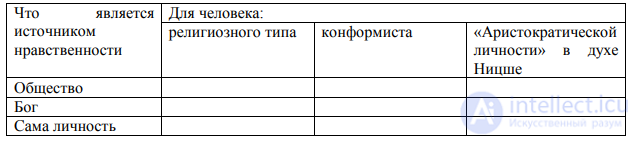
What serves For a person:
as the source
of morality
of the religious type, of the conformist, of the «aristocratic
personality» in the spirit of
Nietzsche
Society
God
The personality itself
Test 5. In ancient ethics, the Greek sages singled out as fundamental:
Test 6. Was Epicurus an epicurean in the modern sense of that word:
Test 7. Hedonism is an ethics of:
Test 8. Identify which of the listed schools belongs to eudaimonism:
Test 9. Which of the listed schools can be characterized as an ethics of duty:
Test 10. Which of the listed virtues are affirmed in ancient ethics, and which in Christianity. Mark the crosses in the table:
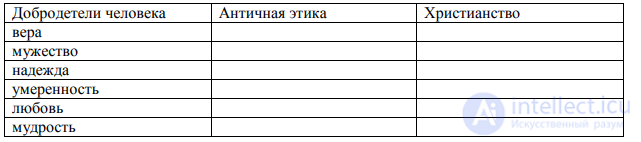
Human virtues Ancient ethics Christianity
faith
courage
hope
temperance
love
wisdom
Test 11. Which of the listed characteristics applies to the Renaissance:
Test 12. In Machiavelli's teaching, «all means are good» for achieving a good end. What does he mean here by a good end:
Test 13. For which of the listed philosophers is ethics the main goal of his philosophy:
Test 14. Who wrote «Ethics», constructed according to the «geometric method» (based on axioms and proofs):
Test 15. Characterize the ethics of the Age of Enlightenment:
Test 16. Characterize the Enlightenment thinkers' views on human nature:
Test 17. The basic principle of the «natural morality» of the Age of Enlightenment is:
Test 18. What does the theory of «rational egoism» mean
Test 19. Name the philosophers – proponents of the theory of «rational egoism»:
Test 20. Why, from the standpoint of Kant's ethics, is suicide immoral:
Test 21. Indicate the direction of development of objective spirit according to Hegel's teaching:
Test 22. Nietzsche identifies the following periods in the history of humanity:
Test 23. Sigmund Freud proposes a three-tier structure of the human psyche:
Test 24. Which of the named teachings can be characterized as the «philosophy of freedom»:
Test 25. What is the goal of revolt according to Kant:
Test 26. To which of the trends in Western European philosophy and ethical thought can N.A. Berdyaev be attributed:
Test 27. Which of the Russian thinkers is called the chief ideologist of «pochvennichestvo»:
Test 28. What does the term «li» mean in Confucianism:
Test 29. Which of the listed categories are central, system-forming:
Test 30. Mark the crosses (+) in the table:

30. Ethical teachings. Good is:
Test 31. Mark the crosses (+) in the following table:

Test 32. Which of the listed philosophers understands matter as evil:
Test 33. N. Machiavelli believed that:
Test 34. Which concept is the opposite of the concept of «virtue»:
Test 35. In ethics, the category of freedom is considered as:
Test 36. Which acts does Kant classify as moral:
Test 37. According to Kant, morality is the result and goal of:
Test 38. Who holds the understanding of happiness as activity for the good of the state:
Test 39. Which ancient philosopher created the theory of the ideal state:
Test 40. Determine which of the following ethical categories are directed above all at
a person's inner world and self-assessment, rather than being oriented toward public
opinion:
Test 41. Which type of justice is characteristic of bourgeois society:
Test 42. Business ethics as a special field of knowledge arose:
Test 43. Continue the thought:
Business ethics is ______________________________________________
Test 44. Continue the thought:
Economic immoralism is ____________________________________________
Test 45. Which principles of personnel work exist in ethics:
Test 46
What is the source of sanction for the violation of the norms of professional ethics:
15
Law, statute
Public opinion
Test 47
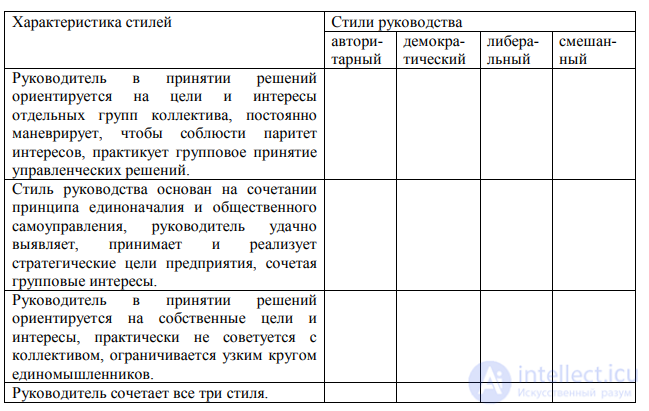
Mark the crosses in the table:
Characteristics of styles Management styles
authoritarian
democratic
liberal
mixed
In making decisions, the manager
is guided by the goals and interests
of individual groups within the team, constantly
maneuvers to maintain a balance
of interests, and practices group decision-making
on management issues.
The management style is based on a combination
of the principle of one-man management and social
self-governance; the manager successfully
identifies, adopts and implements
the strategic goals of the enterprise, combining
group interests.
In making decisions, the manager
is guided by his own goals and
interests, practically never consults with
the team, and limits himself to a narrow circle
of like-minded people.
The manager combines all three styles.
Test 48. Which ethical category defines class-based morality and etiquette:
Test 49. Continue the thought:
Management style is: ___________________________________________________
Test 50. What components does body language include:
Test 51. Which factors influence nonverbal language:
Test 52. Mark the crosses (+) in the table:
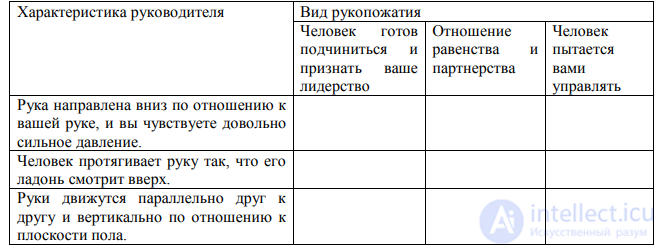
Characteristics of the manager Type of handshake
A person is ready
to submit and
acknowledge your
leadership
A relationship
of equality and
partnership
The person
is trying
to control
you
The hand is directed downward relative to your hand, and you feel fairly strong pressure.
The person extends their hand so that their palm faces upward.
The hands move parallel to each other and vertically relative to the plane of the floor.
Test 53. What should the wardrobe of a modern businesswoman contain?
Test 54. What do Americans value in people?
Test 55. Which three rules do American entrepreneurs strictly adhere to?
Test 56. For the French, the most suitable topics for table conversation are:
Test 57. What does Arab etiquette forbid?
1. The term "ethics" was introduced by
Correct answer: 2) Aristotle
2. The term "moral" was introduced by
Correct answer: 2) Aristotle
3. The highest social function of morality
Correct answer: 1) preserving human society
4. The Chinese philosopher, founder of a socio-ethical theory
Correct answer: 1) Confucius
5. Homer's works give a description of
Correct answer: 2) group morality
6. The work of the ancient Greek poet Hesiod devoted to the teaching of the right way of life
Correct answer: 3) "Works and Days"
7. The ethical teaching of the Greek "Seven Sages" was expressed
answer - in aphorisms
8. The ethical teaching based on the harmony of numbers was created by
9. "Coming unawares, Fire will judge and seize all things." Identify the author
10. "Man is the measure of all things: of things that are, that they are; of things that are not, that they are not."
Identify the author
11. Socrates laid the foundations of a school in ethics called
12. According to Socrates, virtue is identical to
13. The Cynics were proponents of
14. Plato is considered the founder of
15. The teaching about the existence of objective values in the world is called
16. Ethics acquired an independent status in the works of
17. Ataraxia presupposes
18. According to Aurelius Augustine, evil
19. Thomas Aquinas is the author of
20. The geometric method in ethics was applied by
21. The author of the theory of theodicy in the ethics of the modern era is
22. The term "moral sense" was introduced into ethics by
23. Sentimentalism as a school of ethics arose
24. NOT a representative of sentimentalism is
25. D. Hume is the author of the work
26. A proponent of ethical pragmatism is
27 A proponent of the idea of natural morality was
28. The founder of the ethics of duty is
29. According to the "ethics of duty" duty is expressed in the impulse to perform or not perform a certain act, which is called
30. The position according to which a person must observe the law because it exists and demands certain actions, and not for the sake of reward
31. In the "ethics of duty", the law that requires such behaviour from a person as could become a universal requirement is called
32. According to the "ethics of duty", a person, by acting morally, brings good to
33 G. Hegel set out his ethical teaching in the work
34. The philosopher who called his ethical theory "immoralism"
35. The founder of "metaethics" is
36. The goal of metaethics is
37. Ethical dualism presupposes
38. Ethical relativism presupposes
39. The element of moral consciousness that exists in the form of a dialogue
40. Which belongs to a dualistic religion

Comments