
Lecture
Emotivism is a meta-ethical view holding that ethical sentences do not express propositions but emotional attitudes. It is therefore colloquially known as the boo/hurrah theory. Under the influence of the growth of analytic philosophy and logical positivism in the 20th century, the theory was vividly formulated by A. J. Ayer in his 1936 book « Language, Truth and Logic» , , but its development owes more to C. L. Stevenson.
Emotivism can be regarded as a form of non-cognitivism or expressivism. It stands opposed to other forms of non-cognitivism (such as quasi-realism and universal prescriptivism), as well as to all forms of cognitivism (including both moral realism and ethical subjectivism)
In the 1950s, emotivism reappeared in modified form in R. M. Hare's universal prescriptivism.
Emotivism is also a philosophical and aesthetic theory holding that the primary function and purpose of art lies in evoking and conveying emotions and feelings in the viewer or listener. According to emotivism, art is a means for expressing and evoking emotional states and experience.
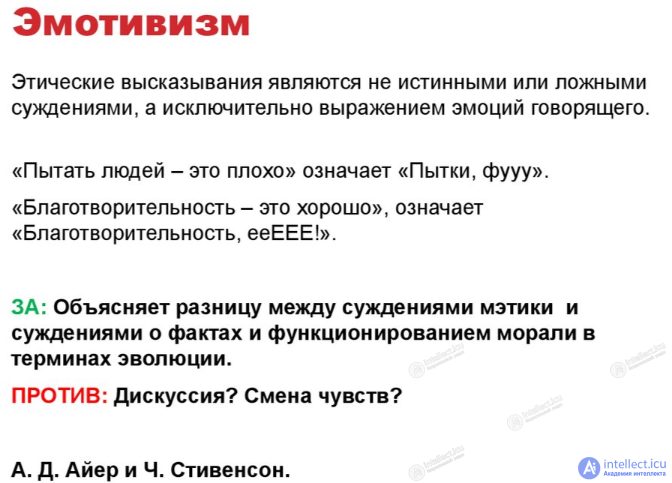

Emotivism rose to prominence in the early 20th century, but it was born centuries earlier. In 1710, George Berkeley wrote that language as a whole often serves not only to convey ideas but also to arouse feelings. Decades later, David Hume advanced ideas similar to Stevenson's later ones. In his 1751 book «An Enquiry Concerning the Principles of Morals» Hume held that morality is not connected with facts but is «determined by sentiment»:
In moral deliberations we must know beforehand all the objects and all their relations to one another, and from a comparison of the whole fix our choice or approval. … So long as we do not know whether a man was the aggressor or not, how can we determine whether the man who killed him was guilty or innocent? But once every circumstance, every relation, is known, reason no longer has any place for action, nor any object to which it could apply itself. The approval or blame that then follows is not a matter of judgment, but a matter of the heart; it is not a speculative proposition or assertion, but an active feeling or sentiment.
G. E. Moore published his «Principia Ethica» in 1903 and argued that the attempts of ethical naturalists to translate ethical terms (such as « good » and « bad ») into non-ethical ones (for example, «pleasant » and «unpleasant ») committed the « naturalistic fallacy ». Moore was a cognitivist, but his arguments against ethical naturalism led other philosophers toward non-cognitivism, and in particular toward emotivism.
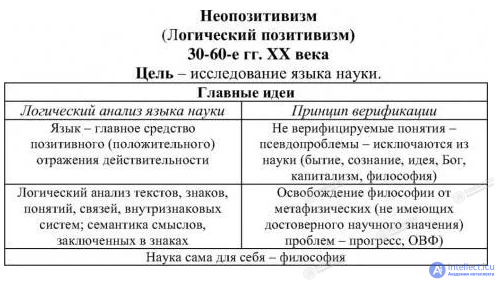
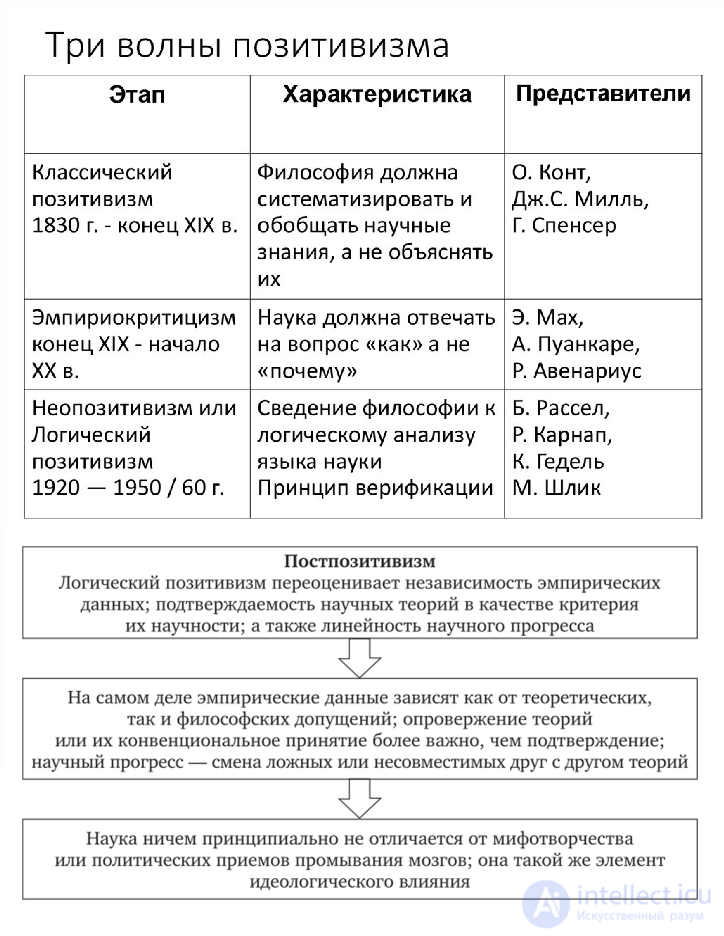
The emergence of logical positivism and its verifiability criterion of meaning in the early 20th century led some philosophers to conclude that ethical statements, not being susceptible to empirical verification, are cognitively meaningless. This criterion was fundamental to A. J. Ayer's defense of positivism in his book «Language, Truth and Logic» , which contains his statement of emotivism. Positivism, however, is not essential to emotivism itself, perhaps not even in Ayer's own form of it, and some positivists of the Vienna Circle, which had great influence on Ayer, held non-emotivist views.
R. M. Hare set out his ethical theory of universal prescriptivism in his 1952 book «The Language of Morals» , intending to defend the importance of rational moral argument against the «propaganda» that he believed Stevenson encouraged, since Stevenson held moral argument to be sometimes psychological rather than rational. But Hare's disagreement was not total, and the similarity between his non-cognitive theory and the emotive theory — especially his claim, and Stevenson's claim, that moral judgments contain commands and are thus not purely descriptive — led some to regard him as holding an emotivist classification, which he rejected:
I followed, and continue to follow, the emotivists in their rejection of descriptivism. But I was never an emotivist, though I have often been called one. Unlike most of their opponents, however, I saw that what was wrong was precisely their irrationalism, not their rejection of descriptivism. My chief task, then, was to find a rationalist kind of non-descriptivism, and this led me to establish that imperatives, the simplest kind of prescriptions, can be subject to logical constraints, even though they are not descriptive.
Influential statements of emotivism were made by C. K. Ogden and I. A. Richards in their 1923 book on language « The Meaning of Meaning » and by W. H. F. Barnes and A. Duncan-Jones in independent works on ethics in 1934. , especially the later works of Ayer and, above all, Stevenson, which are the most fully developed and most widely discussed defenses of the theory.
A. J. Ayer's version of emotivism is presented in the sixth chapter, «Critique of Ethics and Theology,» of the book «Language, Truth and Logic». In this chapter, Ayer divides the «ordinary system of ethics» into four classes:
He focuses on propositions of the first class — moral judgements proper — saying that propositions of the second class belong to science, propositions of the third class are simply commands, and propositions of the fourth class (which are treated in normative ethics as opposed to metaethics) are too concrete for ethical philosophy. Although statements of the third class were not relevant to Ayer's emotivism, they would later play a significant role in Stevenson's emotivism.
Ayer maintains that moral judgements cannot be translated into non-ethical, empirical terms and, therefore, cannot be verified; in this he agrees with the ethical intuitionists. But he differs from the intuitionists in that he dismisses appeals to intuition as «worthless» for determining moral truths, since one person's intuition often contradicts another's. Instead, Ayer concludes that ethical concepts are «simply pseudo-concepts»:
The presence of an ethical symbol in a proposition adds nothing to its factual content. Thus if I say to someone, «You acted wrongly in stealing that money,» I am not stating anything more than if I had simply said, «You stole that money.» In adding that this action is wrong I am not making any further statement about it. I am simply expressing my moral disapproval of it. It is as if I had said, «You stole that money» in a peculiar tone of horror, or written it with the addition of some special exclamation marks. … If now I generalize my previous statement and say, «Stealing money is wrong,» I produce a sentence which has no factual meaning, that is, which expresses no proposition that can be either true or false. … I am simply expressing certain moral sentiments.
Ayer agrees with the subjectivists that ethical statements are necessarily bound up with individual attitudes, but he says that they have no truth value, because they cannot properly be understood as statements about those attitudes; Ayer holds that ethical sentences are expressions, rather than assertions, of approval. While a statement of approval can always be accompanied by an expression of approval, expressions can be made without statements; Ayer's example is boredom, which can be expressed through the stated assertion «I am bored» or through non-declarative means, including tone of voice, body language, and various other verbal expressions. He treats ethical statements as expressions of the latter kind, so the phrase «Stealing is wrong» is a non-propositional sentence which is an expression of disapproval, but is not equivalent to the proposition «I disapprove of stealing.»
Claiming that his theory of ethics is non-cognitive and not subjective, he agrees that his position and subjectivism are equally opposed to G. E. Moore's argument that ethical disputes are evidently genuine disputes, and not merely an expression of differing sentiments. Ayer's defense is that all ethical disputes concern facts relevant to the correct application of a value system to a particular case, rather than the value systems themselves, because any dispute about values can only be settled by a judgement of the superiority of one value system over another, and this judgement itself presupposes a shared value system. If Moore is wrong in saying that there is factual disagreement about value, we are left with the claim that there is factual disagreement about facts, and this Ayer accepts without hesitation:
If our opponent agrees with us in expressing moral disapproval of a given type t, then we can get him to condemn a particular act A by putting forward arguments to show that A is of type t. For the question of whether or not A belongs to this type is a plain question of fact.
Stevenson's work has been regarded both as a development of Ayer's views and as a presentation of one of the «two broad types of ethical emotivism.» The analytic philosopher Stevenson, in his 1937 essay «The Emotive Meaning of Ethical Terms,» suggested that any ethical theory must explain three things: that reasonable disagreement can arise on moral questions, that such moral terms as good «exert a pull on the listener » . «in encouraging action», and that the scientific method is insufficient for verifying moral judgments. Stevenson's own theory was fully developed in his 1944 book «Ethics and Language».. In it, he agrees with Ayer that ethical sentences express the speaker's feelings, but adds that they also have an imperative component intended to change the listener's feelings, and that this component is of greater importance. Where Ayer spoke of values or fundamental psychological dispositions, Stevenson spoke of attitudes, and where Ayer spoke of disagreement about facts or rational disputes over the application of certain values to a particular case, Stevenson spoke of differences in beliefs; the concepts are the same. Apart from terminology, Stevenson interprets ethical statements according to two patterns of analysis.
According to his first pattern of analysis, an ethical statement consists of two parts: a declaration of the speaker's attitude and an imperative to mirror it, so that «"This is good" means I approve of this; do so as well». The first half of the sentence is a proposition, while the imperative half is not, so Stevenson's rendering of the ethical sentence remains non-cognitive.
Imperatives cannot be proved, but they can nevertheless be supported, so that the listener understands that they are not entirely arbitrary:
If one says to shut the door, one may ask, «Why?» and be given such a reason as «There is too much draft» or «The noise is distracting.» … These reasons cannot be called «proofs» except in a dangerously broadened sense, and they are neither demonstratively nor inductively related to the imperative; but they clearly support the imperative. They «back it up,» or «establish it,» or «base it on specific references to fact.»
The purpose of these supports is to make the listener understand the consequences of the action he is being ordered to perform. Once he understands the consequences of the command, he can determine whether obeying the command will have the desired results.
The imperative mood is used to change the listener's attitude or actions. … The supporting reason then describes the situation which the imperative seeks to alter, or the new situation which the imperative seeks to bring about; and if these facts show that the new situation will satisfy the overwhelming majority of the listener's desires, he will no longer hesitate to obey. More generally, reasons support imperatives by changing such beliefs as may, in turn, change an unwillingness to comply.
Stevenson's second pattern of analysis is used for statements about types of action, rather than particular acts. Under this pattern,
«This is good» means «This has qualities or relations X, Y, Z…», except that «good» also has emotive meaning which permits it to express the speaker's approval and tends to evoke the listener's approval.
Under the second pattern of analysis, the speaker does not evaluate the action directly but evaluates it according to a general principle. For example, someone who says «Killing is wrong» may mean «Killing lowers the general level of happiness»; this is a second-pattern statement, which leads to the first pattern: «I disapprove of anything that lowers general happiness. Do so as well.»
For Stevenson, moral disagreements can arise from differing fundamental attitudes, differing moral beliefs about particular cases, or both. The methods of moral argument he proposed were divided into three groups, known as logical, rational-psychological, and non-rational-psychological forms of argument
Logical methods involve attempts to show inconsistencies between a person's fundamental attitudes and his particular moral beliefs. For example, someone who says «Edward is a good man» after having earlier said «Edward is a thief» and «No thief is a good man» is guilty of inconsistency until he abandons one of his statements. Similarly, a person who says, «Lying is always wrong,» may consider lying morally permissible in some situations, and if examples of such situations can be produced, his view can be shown to be logically inconsistent.
Rational psychological methods examine the facts connecting fundamental attitudes to particular moral beliefs; [37] the aim is not to show that someone has been inconsistent, as with logical methods, but only that they are mistaken about the facts linking their attitudes to their beliefs. To modify the previous example, consider a person who believes that all thieves are bad people. If she sees Edward pocket a wallet found in a public place, she may conclude that he is a thief, and there will be no inconsistency between her attitude (that thieves are bad people) and her belief (that Edward is a bad person, because he is a thief). It may happen, however, that Edward recognized the wallet as belonging to a friend, to whom he immediately returned it. Such a disclosure would probably change the observer's opinion of Edward, and even if it did not, the attempt to uncover such facts would count as a rational psychological form of moral argument.
Non-rational psychological methods revolve around language exerting psychological influence without necessarily being logically connected to the listener's attitude. Stevenson called the primary such method «persuasive in a somewhat extended sense» and wrote:
[Persuasion] depends upon the sheer, direct emotional impact of words — upon emotive meaning, rhetorical cadence, apt metaphor, stentorian, hypnotic, or wheedling tones of voice, dramatic gestures, and care in making contact with the listener or audience, and so on, ad infinitum. … The redirection of the listener's attitude is accomplished not through the mediate step of changing his beliefs, but through exhortation, whether obvious or subtle, blunt or refined.
Persuasion may involve the use of certain emotionally charged words, such as «democracy» or «dictator,» or hypothetical questions, such as «What if everyone thought as you do?» or «How would you feel in their place?»
The utilitarian philosopher Richard Brandt offered several criticisms of emotivism in his 1959 book «Ethical Theory». His first is that «ethical utterances are clearly not the sort of thing the emotive theory says they are, and prima facie, at least, must be regarded as statements» He believes that emotivism cannot explain why most people, historically speaking, have regarded ethical sentences as «stating facts» rather than as merely emotional. Moreover, he argues that people who change their moral views regard their former views as mistaken, rather than merely different, which makes no sense if only their attitude has changed:
Suppose, for example, that as a child a person disliked eating peas. When he recalls this as an adult, he is amused by it, and notes how preferences change with age. He does not say, however, that his earlier position was mistaken. If, on the other hand, he recalls that he once thought atheism or divorce wicked, and no longer does, then he regards his former opinion as mistaken and unjustified. … Ethical statements are not like what the emotive theory says they are.
James Urmson's 1968 book «The Emotive Theory of Ethics» likewise disagrees with many of Stevenson's points in «Ethics and Language», a «work of great value» with «several serious errors [which] led Stevenson persistently to misrepresent his otherwise valuable insights.»
Brandt criticized what he called the «thesis of «magnetic influence,»» Stevenson's idea that ethical statements are intended to influence the listener's attitude. Brandt argues that most ethical statements, including judgements about people out of earshot, are made without any intention of changing others' attitudes. Twenty years earlier, Sir William David Ross made much the same criticism in his book «The Foundations of Ethics». Ross suggests that emotivist theory seems consistent only when it deals with simple linguistic acts, such as recommending, commanding, or passing judgement on something occurring at the same moment as the utterance.
… There is no doubt that such words as «you ought to do so-and-so» can be used as a means of inducing a person to behave in a certain way. But if we are to do justice to the meaning of the words «right» or «ought,» we must also take into account such modes of speech as «he ought to have done so-and-so,» «you ought to have done so-and-so,» «if such-and-such were the case, you ought to do so-and-so,» «if such-and-such had been the case, you ought to have done so-and-so,» «I ought to do so-and-so.» If a judgement of obligation refers either to a third person rather than to the person addressed, or to the past, or to an unfulfilled past condition, or to the future regarded as merely possible, or to the speaker himself, there is no plausibility in describing the sentence as a command.
On this view, there would be little point in translating a statement such as «Galileo should not have been compelled to recant heliocentrism» into a command, imperative, or recommendation — doing so might require a radical change in the meaning of such ethical statements. Given this criticism, it may seem that emotivist and prescriptivist theories are capable of converting only a relatively small subset of all ethical claims into imperatives.
Like Ross and Brandt, Urmson disagrees with Stevenson's «causal theory» of emotive meaning — the theory according to which moral statements have emotional meaning only when they are made in order to change the listener's attitude — saying that this is mistaken in explaining «evaluative force in purely causal terms.» ". This is Urmson's fundamental criticism, and he suggests that Stevenson would have made a stronger case had he explained emotive meaning in terms of «laudatory and recommendatory attitude» rather than in terms of «the capacity to evoke attitudes.»
In «Ethics and Language,» Stevenson's, written after Ross's book but before those of Brandt and Urmson, it is said that emotive terms «are not always used for exhortative purposes.» For example, in the sentence «Slavery was good in ancient Rome,» Stevenson thinks that someone is speaking of past attitudes in an «almost purely descriptive» sense. And in some discussions of present attitudes «agreement in attitude may be taken for granted,» so a judgement such as «He was wrong to kill them» may describe someone's attitudes yet be «emotively inert,» without any real emotive (or imperative) meaning.ethical statements, arguing that «for contexts most typical of normative ethics, ethical terms perform a function which is simultaneously emotive and descriptive.»
Philippa Foot takes the position of a moral realist, criticizing the idea that when an evaluation is superimposed on a fact, an «obligation in a new dimension» occurs. By analogy, she introduces the practical implications of using the word « injury». Not everything counts as an injury. There must be some kind of impairment. When we assume that a person wants something he cannot obtain because of an injury, are we not falling into the old naturalistic fallacy?
It might seem that the only way to establish the necessary connection between «injury» and the things to be avoided is to say that it is used only in the «action-guiding sense» when applied to something the speaker intends to avoid. . But we should look closely at the crucial move in this argument, and question the assumption that someone might fail to want anything for which he would need his hands or his eyes. Hands and eyes, like ears and legs, play a part in so many operations that a person could be said to need them only if he had no needs at all.
Foot argues that virtues, like hands and eyes in the analogy, play so large a part in so many operations that it is implausible to suppose that demonstrating one's virtue requires performing an action in some non-naturalistic dimension.
Philosophers who supposed that an actual act was required in order to use «good» in a sincere evaluation ran into difficulties because of weakness of will, and they would surely have to agree that enough has been done if we can show that any person has reason to seek virtue and avoid vice. But is this really so implausible, once we take into account what counts as virtue and vice? Consider, for example, the cardinal virtues: prudence, temperance, courage and justice. It is obvious that every person needs prudence, but does he not also need to resist the temptation of pleasure where harm is concerned? And how could it be claimed that he will never have to face what is fearful for the sake of something good? It is not clear what someone would mean if he said that temperance or courage were not good qualities, and not because
As an offshoot of his fundamental criticism of Stevenson's thesis of magnetic influence, Urmson wrote that ethical statements have two functions — «standard-using,» the application of generally accepted values to a particular case, and «standard-setting,» the act of proposing certain values as those which should be adopted — and that Stevenson had confused the two. According to Urmson, Stevenson's utterance «I approve of this; do so as well» is a standard-setting statement, yet most moral statements in fact use standards, so the account of ethical statements that Stevenson gives is unsatisfactory. Colin Wilks responded that Stevenson's distinction between first- and second-order statements resolves this problem: a person who says that «sharing is good» may be making a second-order statement, such as «sharing is approved of by the community.» A standard-using statement, according to Urmson, is most typical of moral discourse. At the same time, their statement can be reduced to a standard first-order sentence: «I approve of everything that is approved of by the community; do so as well.»
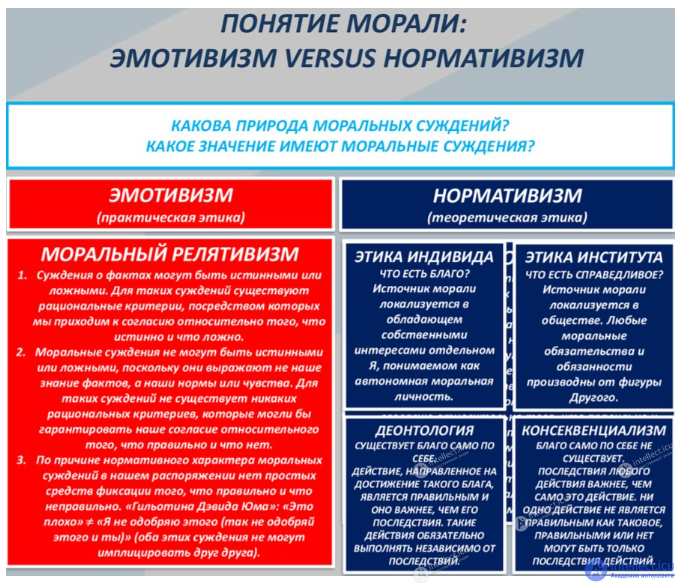
Normativism is one of the trends in twentieth-century scholarship that arose on the basis of a methodology developed by legal positivism and that treats law exclusively as an objective logical form, abstracted from its social, psychological and historical origins, in its «pure form» The chief theorist of normativism was the Austrian jurist Hans Kelsen.
The practical application of emotivism can vary and depends on the specific context of the art form. Here are a few examples of how emotivism is applied:
Theatre and film: Directors and actors can use the principles of emotivism to convey and evoke emotions in the audience. The use of music, lighting, stage design and acting can be aimed at creating a particular emotional impact on the audience.
Painting and sculpture: Artists can use colour, composition, form and texture to convey a certain mood or evoke emotions in the viewer. The use of bright colours and dynamic forms can evoke feelings of joy and energy, while the use of dark tones and rough textures can evoke feelings of sadness or anxiety.
Music: Composers and musicians can use melody, rhythm, harmony and instrumentation to convey particular emotions. Musical works can evoke joy, sadness, excitement or calm in the listener.
Literature: Writers can use language, descriptions and characters to evoke emotions in readers. They can create intriguing plots, describe the emotional states of characters and convey feelings of tension, joy, sadness and other emotions.
Advertising and marketing: The principles of emotivism can be used to create advertising campaigns that evoke emotions in consumers. Commercials and print advertisements can be aimed at evoking particular emotions in order to attract attention and create a connection with the product or brand.
On the whole, emotivism can be used in various fields of art and communication for the purpose of conveying and evoking emotions in an audience or viewers.
choose one correct answer - if the correct answer is chosen you will receive a coin, otherwise a coin will be taken from you
1. Emotivism is a trend in ethics:
2. What is the main goal of art in emotivism?
3. What means are used to convey emotions in theatre and film within emotivism?
4. What elements can help convey emotions in painting and sculpture?
5. What can evoke particular emotions in the listener in music?
6. What means are used in literature to convey emotions?
7. What principles of emotivism can be used in advertising?
8. What does emotivism presuppose regarding the viewer's reaction?
9. What emotions can be evoked in viewers through dramatic theatre?
10. What is a key factor in conveying emotions in photography?
11. What characteristics belong to the emotivist approach in art?

Comments