
Lecture
Professional ethics is the set of moral norms that regulate the relationship between people in their work activity and a person's attitude toward their professional duties and obligations.
Professional ethics is a term used to denote:
a system of professional moral norms (for example, «the professional ethics of a lawyer»)
a field of ethical inquiry concerning the foundations of professional activity
Professional ethics is a system of moral principles, norms and rules of conduct for a specialist, taking into account the specific features of their professional activity and the particular situation. Professional ethics must be an integral part of the training of every specialist.
Professional ethics - these are the moral norms that regulate:
Work activity (industrial, economic, cultural, etc.) is the main sphere of public life. The wellbeing of society and of the individual depends on the moral goals and content of work activity.
In professional activity there exist specific relationships between people, both with one another and with society, and specific moral norms that regulate these relationships.
The content of professional ethics:
Professional ethics studies:
The theoretical justification of moral relations in the sphere of labour presupposes:
Professional ethics also operates in people's everyday notions, in their practical work activity.
Morality in the sphere of labour may have a social character (the morality of the entrepreneur, the manager, the hired worker, etc.). Heightened requirements are placed on workers in certain professions. These are specialists on whom people's life and health depend (medicine, transport, etc.) and who have the right to intervene in a person's inner world (pedagogy, psychiatry, etc.).
Important moral characteristics of a person include professional qualities and one's attitude to work. A person's moral qualities are regarded as one of the conditions of their professional fitness.
Professional morality is closely linked to social consciousness and the system of generally accepted moral norms. A violation of work ethics leads to the breakdown of general moral attitudes and causes harm to society.
As the information civilisation takes shape, the following problems come to the fore:
Professionalism is based on such moral norms as honesty, duty, and responsibility for the results of one's activity, among others.
The content of any professional ethics is made up of the general and the particular. The general principles of professional ethics, based on universal human moral norms, presuppose:
Particular principles arise from the specific conditions, content and specifics of a given profession and are expressed, for the most part, in moral codes — requirements placed on specialists.
Professional ethics, as a rule, concerns only those types of professional activity in which people are dependent, in one way or another, on the actions of the professional, that is, where the consequences or processes of these actions have a particular influence on the life and fate of other people or of humanity. In this connection, traditional types of professional ethics are distinguished, such as pedagogical, medical, legal, and the ethics of the scientist, and relatively new ones, whose emergence or increasing relevance is connected with the growing role of the «human factor» in a given type of activity (engineering ethics) or with its increasing influence in society (journalistic ethics, bioethics).
Professionalism and attitude to work are important qualitative characteristics of a person's moral character. They are of primary importance in the personal assessment of an individual, but at different stages of historical development their content and evaluation have differed significantly. In a class-differentiated society they are determined by the social inequality of types of labour, the opposition between mental and physical labour, the existence of privileged and unprivileged professions, and depend on the degree of class self-awareness of professional groups, the sources from which they are recruited, the individual's general level of culture, and so on.
Professional ethics is not a consequence of inequality in the degree of morality among different professional groups. But society places heightened moral demands on certain types of professional activity. There are professional spheres in which the very process of labour is based on a high degree of coordination among its participants, intensifying the need for solidary behaviour. Particular attention is paid to the moral qualities of workers in those professions connected with the right to dispose of people's lives, with significant material assets, and in certain professions in the fields of services, transport, administration, healthcare, education, and so on. Here the issue is not the actual level of morality but the sense of obligation, which, if left unrealised, may in some way hinder the performance of professional functions.
The subject matter of professional ethics comprises:
The basic content of professional ethics consists of norms of conduct that prescribe a particular type of moral relations between people, necessary for the fulfilment of one's professional duty, as well as the justification and interpretation of codes, tasks and goals of the profession. In this regard, the justification of moral relations in the sphere of labour presupposes:
The features of professional ethics are presented in Fig. 3.1.
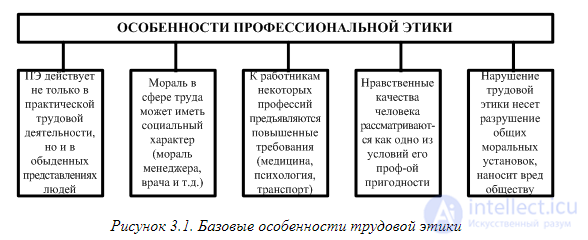
Figure 3.1. Basic features of work ethics
Despite the existence of universal principles of business ethics, work ethics has a distinctly profession-oriented specification.
A profession is a particular type of work activity requiring the necessary knowledge and skills acquired through training and prolonged work practice.
Professional types of ethics — are those specific features of professional activity that are directed immediately at the person, under one or another condition of their life and activity in society.
Professional moral norms — are the guiding principles, rules, models and standards, the order of a person's internal self-regulation based on ethical-humanistic ideals. The emergence of professional ethics in time preceded the creation of scientific ethical theories about it. Everyday experience and the need to regulate relations among people of one profession or another led to the recognition and formulation of specific requirements of professional ethics. Public opinion plays an active role in the formation and assimilation of the norms of professional ethics.
Professional ethics, having arisen initially as a manifestation of everyday, ordinary moral consciousness, subsequently developed on the basis of the generalised practice of behaviour of representatives of each professional group. These generalisations were summed up both in the written and unwritten codes of conduct of various professional groups and in the form of theoretical conclusions, which testified to a transition from everyday to theoretical consciousness in the sphere of professional morality.

A twelfth-century Byzantine manuscript with the Hippocratic Oath.
The main types of professional ethics are: medical ethics, pedagogical ethics, the ethics of the scientist, the ethics of law, of the entrepreneur (businessman), of the engineer, etc. Each type of professional ethics is determined by the distinctiveness of the professional activity, has its own specific aspects in the implementation of moral norms and principles, and together they make up the professional code of morality.
Some of the branches of professional ethics:
Some professional organisations may define their ethical approach in terms of a number of separate components. These usually include honesty , reliability , transparency , accountability , confidentiality , objectivity , respect , compliance with the law and loyalty .
Most professionals have internal codes of practice that members of the profession must follow in order to prevent the exploitation of clients and to preserve the integrity and reputation of the profession. This benefits not only the client but also those who belong to the profession. Disciplinary codes allow professionals to set standards of conduct and ensure that individual practitioners meet that standard, penalising them through the professional community if they do not practise appropriately. This allows those professionals who act conscientiously to practise knowing that they will not be commercially undermined by those with fewer ethical scruples. It also sustains public trust in the profession, encouraging people to continue seeking their services.
In cases where professional organisations regulate their own ethics, such organisations have the potential to become self-interested and fail to follow their own code of ethics in their dealings with wayward members. This is especially true of professions that hold an almost complete monopoly over a particular field of knowledge. For example, until recently English courts relied on professional consensus on matters concerning their practice that fell outside the scope of case law and legislation.
In many countries there is a degree of legislative regulation of professional ethical standards, such as the statutory bodies regulating nursing and midwifery in England and Wales. Non-compliance with these standards can therefore become a matter for the courts.
For example, non-specialists should not be held liable for failing to rescue the victim of a car accident because they were unable to provide proper emergency assistance , although they are responsible for attempting to obtain help for the victim. This is because they lack the relevant knowledge and experience. By contrast, a fully trained doctor (with the right equipment) will be able to make the correct diagnosis and carry out the appropriate procedures. A doctor's outright refusal to help in such a situation is generally regarded as negligent and unethical . However, if a doctor helps and makes a mistake that is considered negligent and unethical, there can be egregious consequences. An untrained person will be considered to have failed to act only if they did nothing at all to help, and is protected by «Good Samaritan» laws if they unintentionally caused greater harm and possible loss of life.
A company may turn to a professional engineer to certify the safety of an unsafe design. While one engineer may refuse to certify the design on moral grounds, the company may find a less scrupulous engineer willing to certify the design for a bribe , thereby saving the business the cost of redesign.
Some corporations have tried to improve their ethical image by creating whistle-blower protections, such as anonymity. In Citi's case, they call this an «ethics hotline» , although it is unclear whether companies such as Citi take seriously the violations reported to these hotlines.
At the theoretical level there is debate about whether a profession's code of ethics should conform to the moral requirements that guide society. Separatists argue that professions should be allowed to go beyond such boundaries when they consider it necessary. This is because they are trained to achieve certain outcomes that may take moral priority over other functions of society. [10] : 282 For example, it could be argued that a doctor may lie to a patient about the severity of their condition if there is reason to believe that informing the patient would cause so much suffering as to harm their health. This would be a disregard for the patient's autonomy, since it withholds information from the patient that could have a major impact on their life. On the whole, this would be morally wrong. However, if the goal of improving and maintaining health is a moral priority in society, then violating other moral requirements to achieve that goal may be justified. [10] : 284 Separatism is based on a relativist conception of morality, according to which there can exist different, equally valid moral codes applicable to different strata of society, and differences in codes between societies (see Moral relativism ). If moral universalism is adopted, this would be incompatible with the view that professions may have differing moral codes, since a universalist holds that there is only one valid moral code for everyone.
As attending college after finishing secondary school becomes the norm in young people's lives, colleges and universities are becoming increasingly business-like in their expectations of students. Although people hold differing opinions on how effective this is, surveys claim that this is a common goal of university administrators. Creating a businesslike atmosphere helps students grow accustomed to what will be expected of them in the business world after graduating from college.
Codes of conduct, such as the St. Xavier Code of Conduct, are becoming an increasingly important element of students' academic life. While some of these rules are based purely on academics, others are more detailed than in previous years, for example specifying the level of respect expected toward staff and around gambling.
Codes of conduct are applied not only during study at schools at home, but also during study abroad. Schools also apply a code of conduct for international study-abroad programmes, which carries over many of the same rules as in most student handbooks.
1.Professional ethics is…
2.The emergence of professional ethics was brought about by
3.The body of moral norms determining a person's attitude toward their professional duty and toward the people with whom they are connected by the nature of their profession – this is…
4.The function of professional communication that provides emotional contact and empathy is called

Comments