
Lecture
European values — a set and/or system of axiological maxims (values in Europe), of the basic principles for organizing the family, society and the state, and of political-economic, legal, cultural, ethical and other norms, uniting a significant majority of the inhabitants of Europe (and, more broadly, the «Western world»), and serving as the basis of their identity . The ideology based on these values is called Europeism or Europeanism.
Despite the fact that the existence of European values is considered the fundamental basis of the European Union (EU) and the foundation for European integration, not all experts share this concept.
There is no single canonical list of European values, that is, one recognized by the expert community , although they are enshrined as an entity in the European Convention on Human Rights and Fundamental Freedoms adopted by the Council of Europe. Nevertheless, Alexander Gessel, adviser to the Secretary General of the Council of Europe, is convinced that when European values are discussed, everyone understands one another, even though each person brings his own vision of the subject .
The head of the European Academy (Berlin), professor Eckart Stratenschulte (German)Russian, stresses that the EU is a community of European values . In Article 2 of the Treaty on European Union, after the amendments introduced by the Treaty of Lisbon, this is formulated as follows :
Article 2. Values of the Union.
The values on which the Union is founded are respect for human dignity, freedom, democracy, equality, the rule of law and respect for human rights, including the rights of persons belonging to minorities. These values are common to the Member States in a society in which pluralism, non-discrimination, tolerance, justice, solidarity and equality between women and men prevail.
In the preamble to the European Union Charter of Fundamental Rights these value-principles are set out as follows: the principle of respect for human dignity, the principle of ensuring the rights and freedoms of the person and citizen, the principle of equality, the principle of solidarity, the principle of democracy and the principle of the rule of law. It is emphasized that they are based on the spiritual, moral and historical heritage of the peoples of Europe .
Most proponents of the concept of European values currently include the following among them:
There also exist «autonomous» systems of views on the subject. Thus, senior researcher at the Centre for European Policy Studies (Brussels), former ambassador of the European Commission to Russia, professor Michael Emerson acknowledges that in the official documents of the European Union and the Council of Europe values are defined only partially, and proposes to be guided by his own list of «ten European commandments» :
Political scientist John McCormick develops these ideas and identifies the following basic attributes of Europeanism:
The formation of the common system of European values has passed through several important stages in its development. As Yuri Rubinsky, Doctor of Historical Sciences and professor at the HSE Faculty of World Economy and World Politics, notes, this system «resembles not a monolithic obelisk, but rather a pyramid built up over centuries out of different building materials» .
Experts trace the origins of European values back to antiquity — above all to Athenian democracy and ancient Rome . The decisive milestones in their historical evolution were the epochs of the Renaissance, the Enlightenment and the Reformation . Today's system of European values is based on the principles first formulated by the Great French Revolution of 1789 — «liberty, equality, fraternity» (today one would say «solidarity» ). In particular, this implied personal and civil liberties, democracy, the equality of citizens before the law, equal taxation, and binding the state to a constitution .
As a consequence of the further progressive development of the system of European values, at the turn of the 20th century European civilization reached the apex of its flourishing and power, while facing, however, new challenges in the form of socialism and nationalism, which reached its most extreme form — fascism. The two world wars became sources of inter-civilizational rifts and created the ground for the emergence and dominance in Europe of totalitarianism, incompatible with the traditional system of European values ].
The fate of the continent and of the rest of the world was saved by two autonomous branches that had split off from European civilization — the Soviet Union and the United States. Europe found itself split into opposing social systems with incompatible systems of values, and the world became bipolar. As a result, post-war Europe was forced to recognize the diminished significance of its geopolitical role, feeling the need first for economic and then also for political unification through the collapse of the «Iron Curtain».
The ideologists of this unification came to realize that economic and geopolitical unity of interests alone was not enough to accomplish the task — the durability of the community of the peoples of Europe required a unified system of values. It was on this that the European Union was founded .
Vyacheslav Smirnov, director of the Institute of Political Sociology and member of the political council of the «Pravoye Delo» party, dates the emergence of European values as an integral concept to the mid-1960s. «Previously there were no „European values“ at all. There were Christian Catholic values and Christian Reformist and Protestant values», — he said on Radio «Svoboda» . Philologist and journalist Sergei Dorenko, however, adds that as of the early 20th century, European values included, for example, the eight-hour working day, women's suffrage, the metric system of measures, and the Gregorian calendar — and it was precisely these that the October Revolution of 1917 brought to Russia .
In the course of preparing the founding documents of the European Union in the early 21st century, a substantial difference of views on European values emerged, namely — whether to count the Christian heritage of Europe among them and explicitly fix its significance, or to do without this, showing tolerance toward representatives of other faiths and of atheists .
From the earliest post-war years, Christianity — and above all Catholicism (the RCC) — played a major role in the process of emerging European integration, viewing it in the context of the Cold War as a means of containing expansion from the East (see «rollback» and the «domino theory»). In its anti-communist struggle for European unity, the Vatican relied on the Christian-Democratic parties of Western Europe — and the latter were convinced that Western civilization was closely bound up with Christian values and needed protection both from the temptations of the modern way of life and from the communist threat .
Pope Pius XII supported the creation of the European Community as «the historic mission of Christian Europe»[13]. The first Federal President of the FRG, Theodor Heuss, declared that Europe rests on three hills — on the Acropolis, which gave it the values of freedom, philosophy and democracy; on the Capitoline, which gave it Roman law and civic order; and on Golgotha, that is, on Christianity . And the founding fathers of the European Union were themselves deeply religious men — such were, for example, the French foreign minister Robert Schuman, the West German chancellor Konrad Adenauer, and the Italian foreign minister Alcide De Gasperi[13].
Therefore, from the standpoint of the Christian churches of Europe, it was natural, without infringing on the secular character of the authority of the uniting Europe, to expect that its founding documents would fix the role of Christianity as one of the European values, recognize the special status of the churches, and formalize their future interaction with the EU .
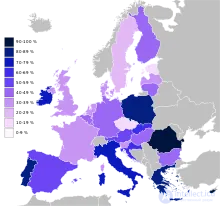
Thus, in 2002, in a joint letter to the President of the Convention (the working body tasked with drafting the EU constitution), Valéry Giscard d’Estaing, from the Commission of the Bishops' Conferences of the European Community (COMECE) and a number of other church organizations, it was stressed that excluding references to religion, churches or religious communities from the constitution «would create a situation of emptiness, given their [the churches'] enormous significance both for society as a whole and for the values and identities on which society is based, as well as for the relations between the Union and its citizens»[13].
In September 2003, eight countries (Italy, Spain, Ireland, Malta, Poland, Portugal, Slovakia and the Czech Republic) issued a joint statement on the need for the presence of Christianity in the text of the constitution. This initiative was supported by 82 members of the European Parliament, as well as by a petition signed by 400,000 ordinary Europeans. In addition, the Czech Republic proposed including in the draft references to ancient Greek philosophy, Roman law, and Jewish and Christian roots[13].
However, representatives of the churches and the public succeeded only in securing the inclusion in the preamble of the constitution of a reference to the «cultural, religious and humanist inheritance» of Europe, but not to God and Christianity. Belgium and France took a firm stance in opposition, seeing in the proposal a threat to the principle of the secular state and threatening to block the entire process[13]. Moreover, some opponents saw in the mention of Christianity a restriction on the right to criticize religion. Thus, Thorbjørn Jagland, Secretary General of the Council of Europe and chairman of the Norwegian Nobel Committee, was convinced that freedom of speech «constitutes the essence of European identity» and that «if we allow compromises on freedom of expression, the very fate of our democracy will be at stake» .
The final text of the constitution, without the presence of the word «Christianity», nevertheless received moderate approval from Christians. COMECE stated that, by mentioning Europe's religious heritage, «the constitutional treaty implicitly recognizes the preeminent contribution of Christianity to the formation of modern Europe», and that «the unambiguous use of the Christian term „church“» and respect for its special contribution show that «the Union demonstrates an awareness of Europe's Christian heritage»[13]. Pope John Paul II also expressed himself with restraint :
The unity of the European peoples, if it is to endure, cannot be merely economic and political… European identity would be incomprehensible without Christianity. Only a Europe that does not hide but, on the contrary, once again opens up its Christian roots will be able to rise to the great challenges of the third millennium.
One way or another, ratification of the EU constitution by the member states subsequently failed , which led in 2007 to the signing of the Treaty of Lisbon in its place. Its provisions concerning religion, however, turned out to be practically identical to the articles of the previously agreed constitution. In particular, it mentions Europe's «religious heritage», declares respect for the special status of the churches, and promises to maintain a regular dialogue with them — although no structures or formal obligations are provided for this within the EU .
Fixing the final position of the European Union on religious questions, German Chancellor Angela Merkel, on assuming the EU presidency in 2007, noted:
The European Union is founded on values that we all share — respect for human rights, freedom, justice, democracy and the rule of law — values that have gradually developed over the centuries and owe much to the Christian tradition and the Enlightenment. The success of European integration will always be rooted in these values.
Although the Vatican called Europe possessed by «militant secularism» , and Pope Benedict XVI issued a bull condemning its dechristianization , in subsequent years the clergy stopped raising the question of a more adequate place for Christianity among European values in public as often. Commentators close to the RCC, according to The Times, tend to speak of «great disappointment among the church hierarchy» with the European project as such .
Cardinal Kurt Koch, Doctor of Theology, President of the Pontifical Council for Promoting Christian Unity, states: «When we drive God out of life, people are very soon trampled underfoot». Koch identifies several stages in the erosion of Christian values in the post-war period, tracing its origins to the left-wing student protests of 1968, when a «wave of dechristianization» swept the continent and the new political elite turned away from Christianity. The second stage — the late 1980s, when the place of communism was taken by the «dystopias of relativism and nihilism». Now a third stage is under way: Europeans have found themselves «in the millstones of the secular experiment» .
Sergei Mikheyev, head of the Center for Political Conjuncture of Russia, concludes :
Over the past couple of centuries, Europe has been steadily moving toward a complete rejection of its Christian roots, and after the Second World War this process took on a total character. The 20th century was marked by what amounted to the dechristianization of Europe, carried out quite deliberately and instilled as a new ideology.
Speaking in November 2014 in Strasbourg before the European Parliament, Pope Francis characterized the European Union as an over-bureaucratized organization incapable of generating new ideas, and the continent itself, which for centuries had marched at the vanguard of humanity, — as having turned into a «tired grandmother» . Europe should return once again to the Christian roots of its identity, the pontiff indicated . Martin Schulz, President of the European Parliament, acknowledged in his response :
You are the man who shows us the way at a moment when we have lost it.
The previous papal address to the European Parliament had taken place 26 years earlier, in 1988, when John Paul II visited Strasbourg for that purpose. His speech at the time was devoted to the need to reunify a divided Europe. In all the years since then, the Holy See had declined the repeated invitations of the members of the European Parliament .
If at the end of the 20th century European values were regarded by many as an organic part of universal human values [28], then in the 21st century the system of European values encountered new problems.
The collapse of the socialist bloc and the end of the Cold War radically shifted the balance of power between Europe and the USA in favor of the latter. The difference in the interpretation of their respective obligations is becoming ever more apparent, along with a renewed reassessment of their roles, despite assurances from both sides of solidarity based on shared values .
Europe is increasingly reluctant to find justification for US claims to unilaterally impose its world order by force — above all because the United States is not fully coping with such a burden. Experts point out that the basic principles of a market economy and democracy remain common to Europe and the United States, but the restriction of civil rights and violations of human rights practiced by the latter in the fight against international terrorism provoke rejection among Europeans .
By contrast, championing the concept of a multipolar world as a value objectively brings Europe closer to fairly influential countries of the «third world» — which also has historical grounds, since many of them are former colonies of Europeans .
The value-based contradictions between foreign Europe and Russia also continue to deepen, which looks paradoxical after the latter's decommunization, given the period of pro-European euphoria («Europe from the Atlantic to the Urals») of the late 1980s — early 1990s in the disintegrating USSR[30]. Thus, Alexander Rahr, director of Russia and CIS programs at the German Council on Foreign Relations, remarks :
One could think about including Russia in Europe as well. But this option is now being ruled out, since it is understood that it would be too costly and difficult and would lead to too much confusion. Fewer and fewer people now hold to the idea of Russia being part of Europe. The process is moving in the opposite direction.
Mikhail Margelov, chairman of the Federation Council Committee on International Affairs, sees a way out in the need to «adapt European values» to the conditions of all European countries without exception :
Today, dealings with Russia are being approached with an emphasis on «a values gap». This is unproductive. Values can be similar while interests diverge. Even within the EU member states, interests sometimes differ. Russia accepts European values. They pose no threat whatsoever to its interests.
A similar view is held by Ruslan Grinberg, director of the Institute of Economics of the Russian Academy of Sciences and Doctor of Economic Sciences . However, in the opinion of Doctor of Historical Sciences Yuri Rubinsky, Margelov is engaging in wishful thinking . Russian experts observe at least several practices that provoke sharp public rejection in the post-Soviet space but nonetheless exist in Europe abroad, namely :
They point out that what has been listed is alien to the Russian mentality and that new problems should not be added to the existing ones. Nevertheless, this pressure from Europe abroad is also felt in the post-Soviet space — and it is felt as strong, aggressive and bitter, to the point of being compared to the Bolshevik persecution of the church and accusations of the corruption of children . In particular, this pressure is discussed by Vladimir Kizima, Doctor of Philosophy, professor, head of the department at the Center for Humanitarian Education of the National Academy of Sciences of Ukraine :
Today we are being forced to accept so-called «European values», but for me and many of you these are not values, this is more like perversion. The foundations of juvenile justice… and much else besides are unacceptable.
Meanwhile, Vladimir Simonko, chairman of the Lithuanian Gay League, is convinced that the process of legalizing same-sex unions is «an obvious European trend»[40]. Alexei Pushkov, head of the Russian State Duma Committee on International Affairs, candidate of historical sciences and television analyst, relates[41]:
I specifically discussed with colleagues in PACE — whether same-sex marriage is already a European value or not yet. We were told it is not yet a value, but judging by how things are progressing, it may well turn into one. And then we will be asked: so how do things stand with you on these values?
Even Filaret, primate of the non-canonical Ukrainian Orthodox Church of the Kyiv Patriarchate, who is in a protracted conflict with the Moscow Patriarchate's ROC and who advocates for Ukraine's rapprochement with the European Union, nevertheless categorically rejects what he considers «exotic» European values, in particular opposing the legalization of same-sex marriage .
Meanwhile, moving to meet the foreign process of European integration, Russia has set about creating a Eurasian Union grounded in distinct Eurasian values and at times fed ideologically by anti-Westernism , one that may be seen as competing with the EU[45]. In the view of Georgian President Mikheil Saakashvili, Russia is itself inflating the issue of advancing sexual-minority rights, seeking to draw the republics of the former USSR into the web of its propaganda against European values .
However, the chairman of the Democratic Party of neighbouring Armenia, Aram Sargsyan, sees the danger coming from the opposite direction: he accuses the European Union of totalitarian propaganda of European values and calls for rejecting those of them that run counter to national interests, including the promotion of sexual-minority rights[47]. He is joined by the vice-president of the Academy of Social and National Relations of Georgia, Doctor of Political Science Alexander Chachia, who points out, in particular: «One must be aware that pederasty is an inseparable part of contemporary „European values“»[48].
MGIMO Professor Alexei Podberezkin, member of the Council under the President of the Russian Federation for the Development of Civil Society Institutions and Human Rights, states[49] that, one way or another:
Russia, as it has for centuries, while remaining within greater Europe, preserves its civilizational specificity… and does not accept the system of European values in its entirety. Accordingly… it remains a geopolitical subject, not a part of the European Union.

Economic problems are forcing the European Union to sharply revise its social commitments downward. The crisis of the welfare state is ruining millions of European families.
Amid ever more constrained economic conditions of painful cuts to social state programmes, a noticeable share of Europeans, especially young people, and especially in the countries of Central and Eastern Europe, are turning to neo-Nazism and other radical political movements incompatible with European values. In the opinion of Mikhail Margelov, chairman of the Federation Council Committee on International Affairs, this jeopardises the viability of the latter[53].
In the autumn of 2013, British Prime Minister Cameron even declared it likely that his country would withdraw from the European Convention on Human Rights, which is grounded in European values, which would allow the United Kingdom to deport all who do not adhere to the British way of life .
Sergei Karaganov, dean of the Faculty of World Economy and World Politics at the HSE, warns against «the advance of Islamic radicalism on European values». The political scientist notes as the chief miscalculation the fact that Europeans allowed political Islam to take shape within their own countries . The collapse[58] of multiculturalism leads to an aggravation of the situation within European society itself, as is noted, in particular, by Veniamin Popov, director of the Centre for Partnership of Civilizations at the MGIMO Institute for International Studies, Candidate of Historical Sciences :
One cannot fight extremists at home with one hand while at the same time bombing other states and helping extremists beyond one's own borders with the other. All of this will come back to haunt the streets of Paris, London and other cities.
Deputy Chairman of the Government of Russia, diplomat Dmitry Rogozin, points out that multiculturalism became a leftist reaction of post-war Europe to the collapse of fascism and represents «the other extreme». It was expected that a tolerant environment would defuse conflicts and help the adaptation of Muslim immigrants, but the opposite occurred: unlike social benefits, the «autochthonous» culture of Europe holds no attraction for them, and so immigrants isolate themselves in ethnic quarters. Such segregation encourages the formation of a «fifth column» that would not mind blowing up the «godless West» from within[59].

Daniel Pipes, an expert on political Islam, writes that instead of cooperating with anti-Islamist Muslims who are not pursuing the goal of establishing Islamic law (sharia) in Europe, European authorities are trying to engage with Islamists who reject violence, hoping that they can persuade their co-religionists to express hatred of the West through lawful means. Meanwhile, the current dominance of Islamists over European Muslims has historical roots: in the past they were sponsored by the Nazis and the Americans, who trained them for subversive work against the communists .
Against this background, the statements of French Interior Minister Claude Guéant no longer seem so radical — that human civilisations and cultures are not equal to one another and that the superiority of European values over any others must be recognised in order to protect them . The politician stated that many of the migrants are simply not needed by the country's economy, so that a quarter of guest workers remain unemployed, while two-thirds of their children are poor performers at school. Telling was the reaction to this from Ségolène Royal, France's former left-wing presidential candidate :
A clash of civilisations is war. And surely we do not want war, do we?
The «Spring of Nations» (the revolutions of 1848—1849), which the ideologists of the concept of European values regard as one of the most important stages in its formation, gave rise both to the unification of Italy and Germany and to ethnic separatism. Typical examples of the latter in the twentieth century were Northern Ireland and the Basque Country.
The separation of Kosovo from Serbia at the turn of the century, brought about with the assistance of the European Union, divided Europe: Spain, Romania, Greece, Bosnia and Herzegovina, Cyprus and other Euro-integrated countries refused to recognise this new political entity as an independent state, fearing it would set a precedent for their own separatists .
The twenty-first century brought a new wave of separatist movements exploiting the irresolvable contradiction between the declared right of nations to self-determination and the principle of the territorial integrity of states and the inviolability of their borders. However, unlike previous waves, this one is as a rule stimulated by an intensification of contradictions arising from the uneven economic development of territories — by the desire of wealthy provinces to separate from their poorer neighbours and cease to be their donors. Thus the former president of Spanish Catalonia, Jordi Pujol, states frankly :
Language matters. The flag matters. Culture matters a great deal. But money matters more.
Separatism of this kind is not the whole story — there is also a «separatism of the poor» , which relies on the PR exploitation of the very same European values. And whereas Scotland, for instance, despite the current multi-million subsidies from London, may hope for economic benefit from independent control of its hydrocarbon reserves , Corsica, one of the poorest French provinces, certainly cannot . This does not stop part of its population from considering itself oppressed by the metropole.
The role of the European Union's supranational structures in the processes described is contradictory: substantial funds from the relevant EU funds are allocated to level out and bring together the levels of economic development of the regions, yet it turns out that, under crisis conditions, such selective sponsorship over the heads of national governments does not cement large member states but breaks them apart. Commentators point out that Brussels has its own interest in this: strong countries with weight and the ability to control Euro-officials are not to its advantage, whereas it is easier to come to terms with small ones .
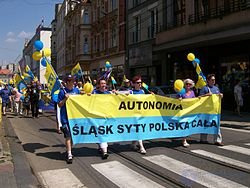
One of the projected scenarios for the EU's transformation is a «Europe of a hundred colours», a community not of 20—30 states but of 100 or more regions . Superimposed on this is the encouragement of the development of cross-border so-called Euroregions, which, as conceived by Brussels, often unite various border areas of the European Union itself with analogous ones in neighbouring states (for example, «Baltika», «Pomerania», «Carpathia», «Karelia» and others). Such a vector may inspire many Euro-conservatives concerned about the loss of national-cultural identity due to multiculturalism: secession would, in effect, allow «removing pieces (European values) from the chessboard» and abandoning the cultivation of civic equality for foreign-tribe outsiders. The journal «Otechestvennye Zapiski» describes this interest :
Regionalisation has become the last refuge for the historical-cultural distinctiveness of «native» Europeans. An Algerian may obtain French citizenship (nationality), that is, become French, but he will never become a Breton or a Burgundian; a Turk becomes a German, but not a Bavarian or a Saxon.
Globalisation, accompanied by the mutual interpenetration of different cultures, gives rise to natural conflicts between systems of value coordinates — for Europeans this is, above all, the conflict between a Westernising Islamic world and an Islamising Europe (see Eurabia). Sergei Mikheev, general director of the Centre for Political Conjuncture of Russia, states[24]:
In terms of worldview and cultural studies, Europe is in a situation of losing its internal identification, that is, it is in confusion… They are trying to seek answers to the challenges brought by the wave of Islamic immigration, trying to take some measures, but it is perfectly obvious that they have no coherent concept.
Unable to express its rejection of alien values in any other way, society (and at times the state as well) often directs its aggression at what is associated with them — cultural-religious artefacts and symbols. Such, for example, are many similar scandals of the late twentieth and early twenty-first centuries:
In these wars over symbols, the relationship, the balance between one value and another, is rethought; the latter are tested for durability. The question of how far the rights of minorities should be limited, where tolerance and the freedom of self-expression of the individual and of associations of people should end so as not to become dangerous[24][73] for the existence and normal functioning of the whole of society, receives, with every new such conflict, ever new answers — and ones that still do not satisfy everyone .
To believe that a clash is taking place between the liberal West and an Islam that rejects freedom of speech is to display ignorance and hypocrisy, writes the French political scientist and Islam scholar Olivier Roy in Le Monde. As an example, he recalls that in 2005 the Catholic Church in France secured a ban on an advertisement in which half-dressed girls played the apostles at the Last Supper — yet it occurred to no one to stage actions in defence of freedom of speech, as happened[70] in the case of the cartoon scandal in response to the outrage of the Islamic world. Muslims, Roy is convinced, were shocked not by the indecent depictions of the Prophet Muhammad but by the European practice of double standards[75]:
Thresholds of tolerance in public opinion vary greatly… No major newspaper would publish cartoons of the blind, of dwarfs, of homosexuals or of Roma on its pages — fearing accusations of bad taste more than legal prosecution. But where Islam is concerned, bad taste turns out to be forgivable, since public opinion is more tolerant of Islamophobia (behind which there often lies a rejection of immigration).
According to German Chancellor Angela Merkel, speaking in June 2013, European values have enduring significance and «are not up for negotiation for us»[76], but what exactly is to be understood by this or that value, and how, gives rise to discussion. Thus Vadim Karasev, director of the Institute of Global Strategies, notes[77]:
European integration can only succeed once we are able to adapt European values, because in today's world democracy is the rule of the majority that does not take the interests of the minority into account. If the interests of the minority are not taken into account, that is not Euro-democracy.
Iranian President Hassan Rouhani warns from the rostrum of the UN General Assembly :
Ignoring the differences between cultures and globalising European values as the sole correct and universal ones implies an unjust division of the world into the superior and the inferior. Such a worldview breeds violence.
Roland Berger, honorary chairman of Roland Berger Strategy Consultants, argues the opposite in his speech at the ceremony awarding him the Bavarian Order of Merit, published by the Frankfurter Allgemeine Zeitung: that people all over the world want more dignity, freedom and legality, and that is why the whole world, looking at Europe's impressive achievements, is so «enchanted» by European values and trusts them so much that young people in various countries are ready to fight for them, risking their lives[14].
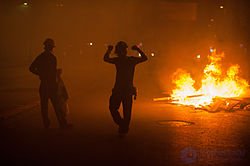
Berger maintains that the values of European civilisation dominate everywhere. In support, he names Nelson Mandela and Aung San Suu Kyi, and mentions the events at Tiananmen Square, in the streets of Istanbul and São Paulo, and at Tahrir Square in Cairo, where there were placards reading «Thank you, Europe!»[14]
Roland Berger, however, admits that trust in Europe is being lost and that this is being felt painfully, but he believes it is not European ideals that are being called into question but their practical implementation. That is, the lack of trust is not the cause of Europe's problems but their consequence. It is therefore worth improving the governance of the EU, which will give Europeans more confidence[14].
However, many other leading European politicians, economists, cultural scholars, human rights advocates and experts are compelled to state: the fundamental values of Europe in the twenty-first century are subjected to ever new and ever more serious trials . By their own admission, there is a profound systemic crisis at hand[79]. Thus, for example, the Prime Minister of the Netherlands, Jan Peter Balkenende, states in 2004:[80]
The European Union, it seems, is finding it ever more difficult to arrive at solutions to emerging disagreements that suit everyone. The bright ideal that many people so passionately pursued, sometimes at the risk of their own lives, during and after the Second World War has, in the eyes of some, now lost its lustre. What is Europe? Europe is cultural, spiritual and moral values that must be constantly reinforced.
Experts point out that the European Union is built on the principles of the free movement of goods, services, labour and capital; equal rights of citizens; equality of members, as well as substantial financial transfers from rich regions to poor ones. However, if a significant number of citizens do not feel a sense of shared involvement in the fates of people in other parts of the EU, this puts the whole structure at risk[29][81].
Too large-scale and hasty an expansion of the EU critically weakens that «glue» — the sense of community — that holds the member states together[29][81]. Nor can the European Union stop trying to expand, since this risks abandoning reforms on the periphery of Europe, potentially disrupting political and social stability there, which would create a zone of risk for the EU, believes former European Commission ambassador to Russia, Professor Michael Emerson[10].
Commentators at The Guardian conclude that Europe is finding it ever more urgently necessary to popularise the values that unite it, in order to overcome the growing alienation[82] of its citizens. Even in the twenty-first century, the question remains unresolved as to whether Europeans have their own European values, or whether one can only speak of the values of the Western world or of universal human values[29][81].
The President of Estonia, Toomas Hendrik Ilves, even asserts in June 2012 that the right to be a citizen of the European Union entails the obligation to be a European, for which one must necessarily share the values on which present-day Europe is based, respect them and be guided by them in life[83].
Experts note that former notions of how classical European values are realised are becoming a thing of the past[36]. French political scientist Dominique Moïsi states:
This is a new, painfully real and expanding phenomenon. When democratic countries preach values that they do not follow in practice, they lose their moral authority, and with it their appeal to the rest of the world.
The same problem of double standards is observed by human rights advocate Dmitry Kondrashov, founder and editor of the magazine for Russian compatriots «Baltiysky Mir»:
Too easily does the current leadership of the EU transgress European and universal human values, handing out political indulgences to practically any charlatan willing to further the economic, political and geographic expansion of the EU.
Meanwhile, Russia's Minister of Culture, publicist Vladimir Medinsky, denies outright that European values exist as such[86]:
The notion of European values is the fruit of the excited minds of intellectuals working for North Atlantic propaganda; they do not exist. Every person has their own values. If these people are put together, some part of these values unites them. As a rule, under the banner of universal, so-called common human, or, more cynically still, European values, one state tries to impose the value scale of its elite on other peoples, that's all there is to it.

Comments