
Lecture
Bioethics (from Ancient Greek βιός «life» + ἠθική «behaviour, conduct») — a field of interdisciplinary research concerning the moral aspect of human activity in medicine and biology, which took shape in the mid-twentieth century at the intersection of philosophical disciplines (above all ethics), jurisprudence, and the natural sciences. It represents a fundamentally new paradigm for humanity's study of the surrounding world and for its preservation under conditions of scientific and technological progress, including the safeguarding of human health. Modern bioethics — an actively developing scholarly field — has many branches (environmental bioethics or ecological bioethics, medical bioethics, clinical bioethics), some of which are still taking shape .
«Life as the supreme value» - a person's attitude toward life and death carries a universal human and cultural meaning, and for a physician it is also a professional value. Even in antiquity the supreme ethical norm of the medical profession was formulated
«Non nocere!» - do no harm: do no harm to the life, health, well-being, or peace of mind of your patient!
Respect for the life and the personhood of the patient has been the alpha and omega of medical ethics – from Hippocrates to the present day!
The term «bioethics» was first used for this new branch of science by the American biochemist V. R. Potter (1969). According to Potter, bioethics is meant to unite «facts» and «values», to close the gap between the ever-growing technical capabilities and the knowledge accumulated by humanity, and the not-so-active reflection on the seriousness of progress's impact on universal human values.
Biomedical ethics — is a general concept encompassing the diverse, centuries-old moral experience of physicians, from the ethics of Hippocrates the physician to its modern form — bioethics.
Biomedical ethics — is the professional ethics of everyone who works in medicine and healthcare. Biomedical ethics studies the relations between people within the healthcare system, as well as the system of norms, values and obligations that a physician adopts and fulfils in providing care to a sick person.
Thus, biomedical ethics — is an applied ethics that, on the basis of moral principles, addresses the task of establishing such a relationship with the patient as would ensure faith in the treatment and trust in the physician on the part of both the patient and society.
The physician's practical attitude toward the sick and the healthy person, oriented from the outset toward care, help and support, is undoubtedly the defining feature of the medical profession. Hippocrates rightly noted the direct dependence between love of humanity and the effectiveness of professional medical activity. Love of humanity not only serves as the fundamental criterion for choosing the profession, but also directly influences the success of treatment, largely determining the measure of the physician's art. «Where there is love of humanity, — Hippocrates wrote, — there is also love of one's art» . The ability to subordinate oneself to the interests of the patient, mercy and self-sacrifice — are not merely qualities of a physician's personality deserving of respect, but evidence of his professionalism.
The principles of professional medical ethics formulated by Hippocrates differed considerably from the moral customs influential in ancient culture, which cultivated the natural properties and individual needs of a person. Hippocrates saw the distinctive feature of a physician's moral conduct above all in the fact that it should not be oriented toward personal individual good and the search for ways of achieving that good (material, sensual, and so on). The physician's activity, both from the standpoint of his inner aspirations and from the standpoint of his outward actions, must be motivated by the interests and the good of the patient. «Into whatever house I enter, I will enter it for the benefit of the sick, being far removed from all intentional wrongdoing and harm», — Hippocrates wrote.
The differences between the moral rules of a physician's conduct and the everyday practice of human relations persist even today. Among the tasks of biomedical ethics are explaining and justifying why precisely these rules acquire the status of fundamental ones, and what the nature and reason for their binding force is. Thus, the subject of study of biomedical ethics is the system of moral relations between the subjects of medical activity within the relationships «physician — patient», «physician — physician», «physician — society», including the physician's internal moral self-assessment, i.e. the relationship «I — I».
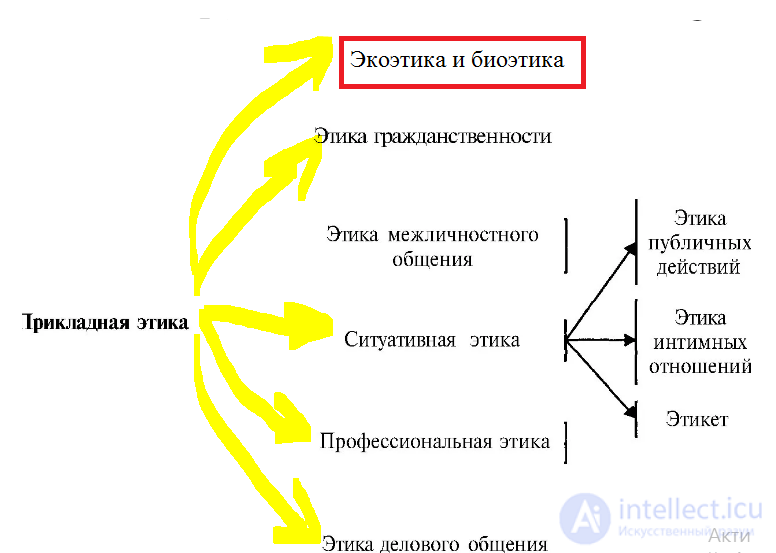
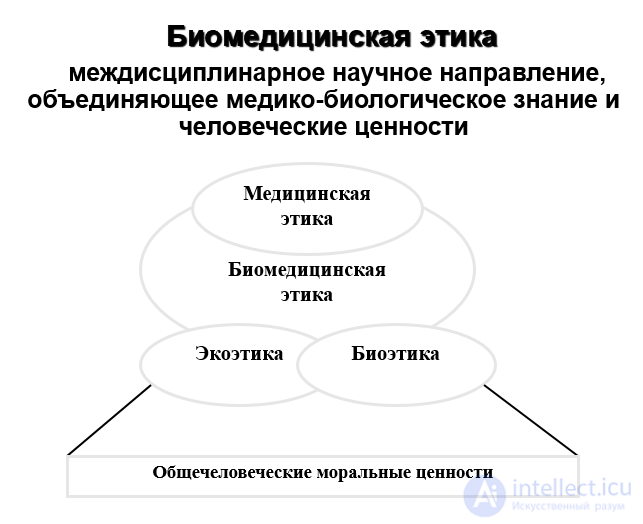
Ethics – the study of morality – a system of norms, principles, values and ideals regulating a person's behaviour and attitude toward society, other people and oneself
Environmental ethics, the subject of which is the most fundamental principles and problems of moral relations within the triad "Man - Nature - Society"
Bioethics orients a person toward developing and establishing a morally understanding attitude toward Life in general and toward any Other Living being
Medical ethics – is a constituent part of biomedical ethics that regulates mainly "human relations" in medicine vertically (physician - patient, nurse - patient) and horizontally (physician - physician, nurse - nurse)
Biomedical ethics – is the moral attitude of society as a whole, and of medical professionals in particular, toward the Human Being, his life, health, death, and it sets itself the task of making the protection of these a priority right of every person
The term bioethics was first used by Fritz Jahr in 1927. In 1969 it was used by the American oncologist and biochemist V. R. Potter to designate the ethical problems connected with the potential danger to the survival of humanity in the modern world. The first mention of the term in a medical journal is dated to 1971.
In the Encyclopedia of Bioethics (vol. 1, p. XXI) bioethics is defined as «the systematic study of the moral dimensions — including moral evaluation, decisions, conduct, guidelines, etc. — of the achievements of the biological and medical sciences».
Later biomedical ethics took shape as an academic discipline in medical schools. Thinkers of various persuasions have addressed, and continue to address, questions of bioethics. For example, the well-known Japanese specialist in the history of Buddhism Nakamura Hajime (1912—1999) repeatedly touched on problems of bioethics in his works.
In the narrow sense the concept of bioethics denotes the whole range of ethical problems in the interaction between physician and patient. Ambiguous situations, constantly arising in practical medicine as a product of the progress of biological science and medical knowledge, require ongoing discussion both within the medical community and among the broader public.
In the broad sense the term bioethics refers to the study of social, environmental, medical and socio-legal problems concerning not only the human being but also any living organisms included in the ecosystems surrounding humans. In this sense bioethics has a philosophical orientation, evaluating the results of the development of new technologies and ideas in medicine and biology as a whole.
The differentiation of modern bioethics is presented in Fig. 2.
Bioethics, including pharmaceutical bioethics, shapes the philosophy of the professional's activity. In connection with the development of bioethics, the problem arose of forming a philosophy of pharmaceutical and medical activity.
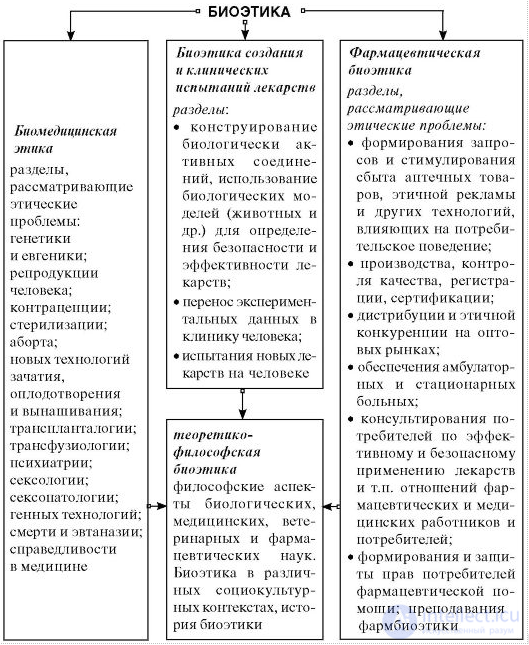
Fig. 2. Differentiation of modern bioethics
Within the structure of biomedical ethics a special place is occupied by medical deontology
Deontology — is not ethics, but neither is it a branch of medicine; rather it is a boundary discipline between ethics and medicine, having its own specificity
At its foundation lie the categories of benefit and harm for the good of the particular patient
The difference between deontology and ethics lies mainly in the fact that ethics regulates relations between people in society, whereas medical deontology is directed toward preserving the life and health of each particular patient
Deontology — is the study of the duty, responsibility, honour and dignity of medical personnel; of the principles, norms and forms of relations in the field of healthcare that directly or indirectly affect the effectiveness of the treatment, rehabilitation or prevention of illness of a particular patient
The foundation of deontology consists of contemporary philosophy, which has absorbed all the achievements of world culture, and ethics with its universal human moral values
The defining task of deontology is to form in medical workers firm professional moral stereotypes connected with the performance of their professional duty, raising their sense of professional responsibility and dignity
The main spheres of action of deontology:
Professionalism consists of:
The question of the acceptability of voluntary departure from life is becoming ever more pressing — as the technical capabilities for preserving «the life of the body» grow — even where «brain death» is entirely possible.
In Russia, living organ donation (mainly of the kidney) is permitted only from close relatives, with the mutual consent of the parties involved.
The sooner an organ is transplanted from a donor who has died from some cause, the higher the chances of the operation's success. However, the procedure for establishing death and its criteria remain a subject of debate to this day.
In Russia the practice adopted is that, if a person or his relatives have not directly expressed opposition to the possible use of organs after death, he is considered a potential donor.
The most difficult question remains trust in the services responsible for organ procurement (monitoring for the absence of abuses — potentially dangerous precedents are considered to be bringing donor patients to death, failure to provide due assistance to a potential donor, and even the removal of organs from healthy people under the pretext of various operations artificially imposed by the physician).
The transplantation of organs from animals to humans may be unacceptable for ethical reasons, for Muslims or Jews the tissues and organs of the pig may be unacceptable, and for Hindus — those of the cow. Xenotransplantation is also criticized by animal rights and human rights advocates who consider such a practice unethical toward animals.
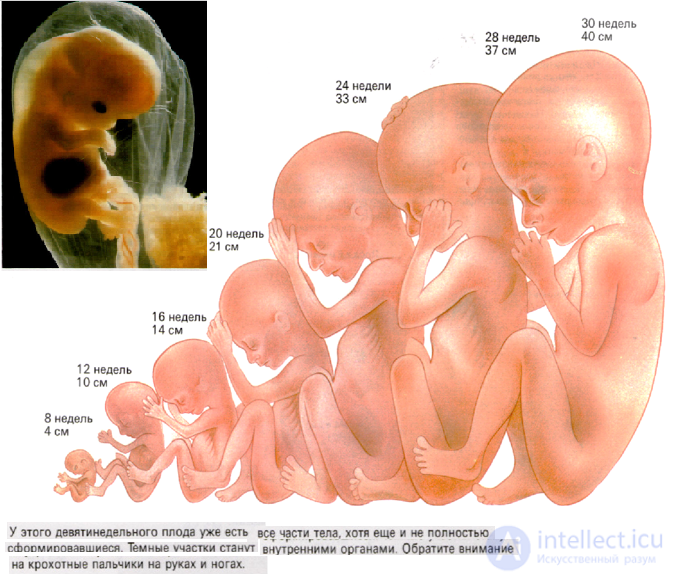
The question of the permissibility of performing a medical abortion is decided legislatively, differently in different countries, depending on the secular or religious character of the state. Buddhism and Hinduism deny the possibility of abortion, even on medical grounds. The Catholic Church and the Orthodox Churches (including the Russian Orthodox Church), following Basil the Great, equate abortion with murder. The document The Basis of the Social Concept of the Russian Orthodox Church speaks of the hypothetical permissibility of abortion to save the life of the mother. According to the official position of the Russian Orthodox Church, the use of intrauterine and hormonal contraceptives that have an abortifacient effect, that is, that cause the death of a human being during the embryonic, transitional or fetal period of life, is equated with the commission of an abortion .
In most secular states it is held that a woman's bodily autonomy gives her the right to dispose of her own body, and that the emergence of a new person possessing rights occurs at the moment of birth. Therefore in all these countries abortion is permitted .
In certain cases embryonic tissues are used to obtain stem cells (most often either the patient's own stem cells or undifferentiated blastocyst cells are used). In some countries the use of abortive material for this purpose is prohibited, in others only the use of tissues grown in vitro is explicitly permitted. An alternative to embryonic stem cells could be induced stem cells, obtained by rejuvenating reprogramming from the patient's own cells. This would remove the problems of bioethics.
Conducting clinical trials of new medicines and vaccines is necessary for improving methods of therapy and finding the most effective drugs.
In the past, the conduct of such trials was not as large-scale as it is now, and physicians had fewer doubts regarding the possible occurrence of various side effects or complications.
Modern pharmacology has acquired considerable experience in conducting evidence-based and ethical clinical trials. The formation of this experience has also been influenced by lawsuits brought by patients, volunteers, and other categories of test subjects that have been recorded over the last 50 years.
At present the main requirement for participation in trials is obtaining the so-called «informed consent» of the patient or volunteer.
The technology of surrogate motherhood is prohibited in some countries (Germany), but is permitted in Russia and Ukraine. Each country has particularities of legislation that regulate this practice differently.
A significant part of the problems is connected with the potential possibility of making certain decisions on the basis of data about the human genome, or of individual results of biometric tests. This data constitutes medical confidentiality, and there is a whole range of concerns regarding its «misuse», in particular — for taking this data into account in insurance or in hiring.
The possibility of prenatal diagnosis of certain characteristics of the embryo (sex, markers of hereditary diseases, markers of the presence of isoenzyme systems, etc.) today genuinely provides a pathway toward altering the pool of natural human genes.
The main principles and supreme moral values of biomedical ethics:
A. The Helsinki Declaration (1964)
B. «Georgetown mantras» (T. Beauchamp, J. Childress)
C. «Kemp's Principles»
Personal autonomy – a principle of biomedical ethics based on the unity of the rights of the medical worker and the patient, presupposing their mutual dialogue, in which the right of choice and responsibility is not concentrated entirely in the hands of the physician, but is distributed between him and the patient
Informed consent – a principle of biomedical ethics that requires observance of the patient's right to know the whole truth about the state of his health,
about the existing methods of treatment, about the illness - this is a communicative dialogue between the medical worker and the patient, presupposing observance of a number of ethical and procedural norms
Voluntariness - a principle of biomedical ethics connected with patient autonomy
Respect for the free expression of a person's will, presupposing the independent making of a decision or the giving of consent to medical procedures on condition of being informed and free from external coercion
Voluntariness and the absence of dependence lead to the requirement and expectation of confidentiality
Confidentiality – a principle of biomedical ethics, manifested in mutual trust between the medical worker and the patient
Confidentiality presupposes:
Problems of moral principles and values in the professional activity of medical workers
«Good and evil» - these generalized forms
of distinguishing and contrasting the moral and the immoral are criteria of any
behavioral activity of a person
These categories acquire special significance in medicine, on which depends not only the preservation but also the quality of people's lives
«Suffering and compassion»
Suffering – an emotional state of a person generated by difficulties that exceed his physical, mental and spiritual capacities
Compassion – the ability to suffer literally together with another, to sympathize, empathize, condole («to put oneself in another's shoes»)
The most effective form of compassion for the sick is mercy – a universal human value, a manifestation of the human in a person
Empathy manifests itself in sympathy and participation
Participation – is the highest level of empathy, requiring great self-sacrifice – «to take the patient's pain upon oneself» and help him through action
«Suffering and compassion»
Suffering – an emotional state of a person generated by difficulties that exceed his physical, mental and spiritual capacities
Compassion – the ability to suffer literally together with another, to sympathize, empathize, condole («to put oneself in another's shoes»)
The most effective form of compassion for the sick is mercy – a universal human value, a manifestation of the human in a person
Empathy manifests itself in sympathy and participation
Participation – is the highest level of empathy, requiring great self-sacrifice – «to take the patient's pain upon oneself» and help him through action
«Duty and conscience»
Moral choice as a form of the manifestation of freedom
of a medical worker is determined by the distinctive character
of the hierarchy of values prevailing in medical ethics: in it human life is considered a priority value, and human health the highest good
The highest manifestation of the professional duty of a medical worker is the principle of humanism – these are the physician's obligations toward the patient
Being always ready to provide help, medical workers are obliged to be attentive and caring, to approach each patient individually and thoughtfully, and to display maximum creative activity
«Honour and dignity»
of a medical worker are determined by his universal human qualities:
Morality is the criterion both of a worthy life and of a worthy death
Reflections on life and death stimulate the moral consciousness of the individual; they do not deprive her of strength, but invite her to look more deeply at her own fate within the whole of creation, allowing her to grasp the meaning of her existence in the face of eternity
Biomedical ethics, or bioethics, is an interdisciplinary field of knowledge and practical activity whose subject is the ethical problems connected with medicine (above all those caused by new technologies such as organ transplantation, artificial reproduction, euthanasia, etc.), with experiments on human beings, and with the attitude toward living things. It has been developing rapidly in recent decades. The term «bioethics» arose in 1971.
Among the main problems of bioethics are: the ethical foundations of the relationship between medical worker and patient, induced abortion, new reproductive technologies, medical genetics, gene therapy, euthanasia, transplantology, medical experiments, the ethical aspects of providing psychiatric care, and others.
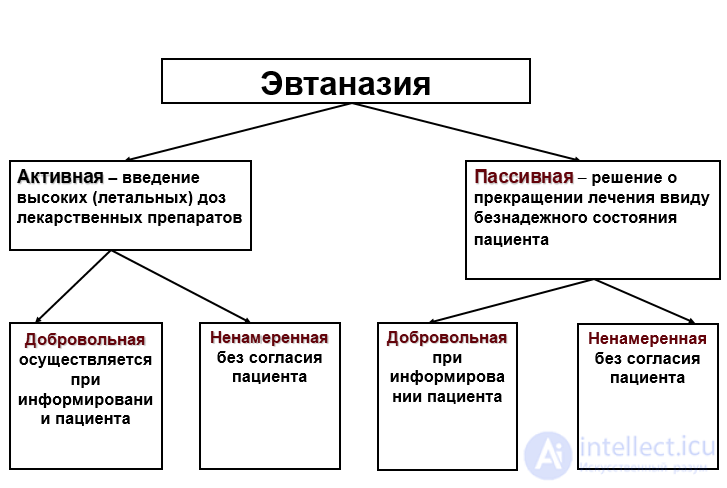
The word «euthanasia» (the section on euthanasia follows A.A. Guseinov) literally means: a beautiful (easy, pleasant) death. In contemporary biomedical ethics it has acquired a terminological meaning and denotes the painless bringing of a hopelessly ill person to death. It is assumed that in special cases of irreversible and agonizing illness, death may be considered a good for the dying person, or, at the very least, is not an evil for him. This concerns situations in which advances in pharmacology or biomedical technologies make it possible to sustain, for a considerable time, the life of a patient who is in an irreversibly unconscious state, or to prolong the life of a terminally ill patient who is suffering agonizingly. Ordinarily, unconscious states and unbearable pain are, on the scale of a human life, short-lived; they either pass quickly or end in death. Modern pharmaceutical agents and biomedical technologies make it possible to stretch such states out over years and decades.
A distinction is drawn between passive and active euthanasia (the criterion being the physician's position), and between voluntary and non-voluntary euthanasia (the criterion being the patient's position). Passive euthanasia means that the physician, by withdrawing and refraining from actions that could sustain life, passively sanctions the (often agonizing) dying of the patient. In the case of active euthanasia, the physician, deliberately and by a decision made in advance, undertakes specific actions that hasten death. Euthanasia is called voluntary when it is carried out at the unambiguous request of the patient or with his previously expressed consent (expressing one's will in advance, in a legally valid form, in case of irreversible coma has become a widespread practice in the USA and other Western countries). Non-voluntary euthanasia is carried out without the direct consent of the patient, although this does not mean that in this case it contradicts his will — simply that, because of his illness, he cannot express his will and did not do so in advance; here those who make the decision on euthanasia assume that if the patient could express his will, he would have wished for it. Combining these forms of euthanasia, we obtain four situations of euthanasia: voluntary and active; voluntary and passive; non-voluntary and active; non-voluntary and passive. Regarding the first situation (voluntary and active euthanasia) and the fourth (non-voluntary and passive), specialists speak both «for» and «against». Regarding the third situation (non-voluntary and active euthanasia), opinions are most often negative. Those who speak in favour of euthanasia, as a rule, have in mind the second situation, in which euthanasia is voluntary on the part of the patient and passive on the part of the physician.
The main arguments put forward in favour of euthanasia can be reduced to the following three.
1. Life is a good only when, on the whole, pleasures prevail over sufferings, and positive emotions over negative ones. In the situation of euthanasia this balance is irreversibly disturbed, as a result of which life becomes unrelieved torment and can no longer be a good, a desired end. This argument is very strong, especially when the agonizing character of life is obvious and the person's unwillingness to remain in such a state is attested by his unambiguously expressed will. And yet it is vulnerable. Two objections are possible against it. The first. In analyzing the permissibility of euthanasia it is incorrect to compare life as suffering with life as a good. In the case of euthanasia the choice made is not between life-as-suffering and life-as-good, but between life in the form of suffering and the absence of life in any form whatsoever. Sufferings are worse than pleasures, negative emotions are worse than positive ones — there is no doubt about this, if only because this assertion is a logical tautology and a truism of life. But can we say that life amid suffering is worse than the absence of life, and that negative emotions are worse than the absence of any emotions at all? Even the most resolute proponents of euthanasia do not venture to assert this. If we grant that life itself, life as such, is a good, that it is a good prior to and independently of how pleasures and sufferings happen to be distributed within it, that the very classification of the manifestations of life into positive and negative is possible only on the general assumption that life itself is something positive, then from such a viewpoint it is impossible to argue for the moral justification of euthanasia. Life is a good, and it remains a good even when it becomes predominantly suffering, or even unrelieved suffering. The second. A consciously expressed will to live and an unconscious will to live are not one and the same thing. The latter, too, cannot be ignored in ethical reasoning. A consciously expressed will to live is possible only where there is an unconscious will to live. The former cannot have unconditional priority over the latter. In any case, the following must be clearly acknowledged: in arguing for the permissibility of euthanasia on the ground that such is the conscious will of the patient himself, we thereby acknowledge that if the patient were able to dispose of his own life when it becomes, by accepted standards, unbearable, he would end it himself — that is, we in fact acknowledge the right to suicide. However, not everyone who acknowledges the right to euthanasia acknowledges the right to suicide.
2. Life can be regarded as a good only so long as it retains a human form, existing within the field of culture and moral relations.
Having degraded to a purely vital, pre-human level, it loses its ethical sanction and can be regarded as an object, a thing, and therefore the question of ending it is no more than the question of whether to cut down a withered tree or weed out grass choking a garden. This argument is striking above all for its scholastic contrivance, its emotional emptiness, for besides the external side of human life there is also its inner side. Yet the argument under consideration is vulnerable even within the bounds of heartless casuistry. Of course, the human, culturally and morally formed mode of life and physical life are not one and the same, and ethics begins with the admission, voiced by Socrates, that a good, worthy life is higher than life as such. Yet the former does not exist apart from the latter. The human form of life, or a worthy life, apart from life itself, is complete nonsense. The world of moral value is always given in a sensuously concrete, material form. There is no mother, no friend, in themselves, apart from the bodily particularity of this woman, this man, apart from those whom I call my mother, my friend. This bond between moral meaning and the thing in which it is embodied is so tight that the thing itself no longer appears as a mere thing, but as the bearer (symbol, sign) of meaning. Here it is worth recalling a person's attitude toward the dead remains of his fellow human beings: graves holding lifeless bones are objects of reverent veneration, and the attitude toward them is regarded as an indicator of the attitude toward the people whom they commemorate. If the moral attitude toward a human being extends to his remains, then all the more should it extend to a living body, even one disfigured by illness. But even if we set aside the fact that the human body is thoroughly symbolic, saturated with meanings, and is more a fact of culture than a fact of nature, and consider it in a purely physical, natural aspect, even then it remains within the field of morality — at least to the extent that we have obligations toward nature. Life even in the form of plants evokes a certain reverence. And it is hardly right to deny this to people who find themselves at a merely vegetative level of life.
3. Sustaining life at the stage of dying, carried out by means of complex technologies, costs too much. Specifically: the resources spent on sustaining life in hopeless situations would suffice to treat dozens, hundreds, thousands of people who are curable. This argument is purely practical and, of course, has its significance within the bounds of practical decisions connected with the allocation of funds and the organization of the healthcare system. But it cannot be taken into account when the moral justification of euthanasia is at issue. For in that case the question is not one of the financial, social, psychological or other expediency of euthanasia, but simply whether we can regard it as a moral act.
The ethical sanctioning of euthanasia increases the danger of abuse on the part of physicians and relatives. The danger of abuse, which exists in general, is heightened in relation to the situation of a hopeless illness. Physicians, valuing their professional reputation, are reluctant to treat the dying. Relatives may wish for the patient's death because of inheritance or other considerations. Morality, as is well known, is one of the last barriers against abuses of various kinds. If euthanasia is recognized as a good deed, this barrier is removed. And in their conduct toward fellow human beings dying in suffering, people gain unlimited opportunities to pass off evil as good, to sin with a clear conscience. Yet another, and the most important, objection to euthanasia is that it violates the principle of the sanctity of human life. The taboo that it lifts is the taboo of morality itself. Euthanasia proceeds from the thesis that the good is not life as such, but life of a certain quality. Euthanasia itself is conceived as a worthy mode of conduct in a situation where life loses the qualities that make it a good. This is a subtle sophism: from the statement that a life directed toward the good is higher than life as such, an entirely illegitimate conclusion is drawn, namely that life as such is not a good. In fact, a life directed toward the good (a worthy life) is possible only because life itself possesses dignity, is a good. Within a worldview that recognizes life as a good, it is impossible to argue for euthanasia. Indeed, to recognize life as such as a good means to recognize that it remains a good for as long as it is life, even when it becomes predominantly suffering.
In the actual practice of contemporary medicine, in countries where the practice of euthanasia has legally regulated forms, the corresponding decisions are made collegially, collectively — by committees specially designated for this purpose, which are called ethics committees. These include the attending physician, representatives of the medical staff and hospital administration, a clergyman, a philosopher-ethicist, a lawyer, a social-insurance worker, and others. This is a collective body that fairly fully represents the interests of both society and the patient. The manner in which the decision is made speaks to its extraordinary character. It is extraordinary in at least two respects: adequately understood, it constitutes a responsibility of unbearable weight, and hence the need for a collective distribution of this weight; being a step beyond ethically permissible limits, it is fraught with boundless potential for abuse, hence — comprehensive representation, in order to more reliably block possible abuses. Reflection on the practice of euthanasia, like the whole range of biomedical issues, is at present one of the acute, widely discussed social problems.
A human being's right to life is meant to extend to every stage of his existence — from conception to death. It is precisely in this light that one should view the unceasing (and, of late, ever sharper) disputes concerning the artificial termination of pregnancy — abortion.
The conviction that abortion is always immoral and may be permitted only when it is a matter of saving the life of the pregnant woman is called the conservative position. The opposite position, asserting the woman's absolute right to have an abortion regardless of the age of the fetus, may be called the liberal position. The third, «moderate» position holds that the performance of abortions is ethically justified only when the fetus has not reached a certain stage of development and when, in the particular case at hand, there are circumstances that justify carrying out this procedure.
On the one hand, abortion still remains one of the most widespread means of birth control. On the other, this medical intervention (especially «on request») should be classified as a moral violation of the commandment «Thou shalt not kill», and, on the part of the physician, of the Hippocratic oath as well. And even in those cases where we define it as the «choice of the lesser evil», we must not forget that it is nonetheless a matter of evil. Therefore the moral duty of every man and every woman, of every physician, is the prevention of abortion and the use of other, morally more humane methods of preventing pregnancy and regulating the birth rate.
Alongside the need for a moral-ethical «weighing» of the value of human life in its initial phase, there is an urgent need for an ethical-humanistic reflection on its final phase — dying. In this connection the problem of the boundary between life and death becomes especially topical. It is precisely here that the new emphases in the interpretation of medical humanism are concentrated today. A huge number of philosophical, legal and medical works are devoted to the so-called «human right to death», connected with the «borderline situations» of a person's life. Death is a natural phenomenon that crowns the end of life. All people are equal before it. There is no choosing: a human being is doomed, he is finite. His life is bounded by conception and death. And, of course, it is for this reason that the most important ethical task is to work out mechanisms of defense against the fear of death — both emotional and rational.
Closely connected with the phenomenon of «clinical death» is an ethical problem generated by resuscitation medicine — the definition of the criterion of death. Indeed, what degree of degradation of the vital process should be considered objectively occurring death? The concept of brain death proposes that the criterion of a person's death be the death of his brain.
Biomedical ethics regards as an enduring value not only the human person, his rights and dignity, of which the brain is the bearer, but also life itself — as sovereign natural being, the autonomous integrity of life, its individuality. Yet brain death is precisely the splitting apart of the foundation of life, for it is exactly in this case that its autonomy and individuality, even in the biological sense, are lost. Therefore artificial lung ventilation, which substitutes for the function of breathing, contributes only to the reproduction of an artificial life, which can never become autonomously sovereign, since it is doomed to progressive degradation. In the case of brain death, life as the sovereign, autonomous existence of a biological individuality has already vanished.
Among the problems of biomedical ethics brought about by scientific and technological progress, a special place is occupied by those connected with the development of new biotechnologies and genetic engineering: gene therapy of germ and somatic cells, the production of genetically identical copies of a given organism, and so on. These forms of genetic intervention into the nature of the organism already require an assessment and discussion of their socio-economic consequences — both because the decisions worked out in the course of these discussions affect the direction and pace of the research being conducted, and from the standpoint of shaping an adequate societal response to the possibility and necessity of their use.
It is already evident today that gene technology and biotechnology possess enormous potential and capacity to affect the human being and society. Yet these prospects turn out to be dual in nature. Thus, in noting the scientific and economic prospects of genetic engineering, one must also bear in mind its potential threat to the human being and to humanity, the dangers that may arise as the human mind penetrates ever further into the natural forces of nature.
The level of development that genetics has attained by the present time makes it possible to raise the question of the ethical grounding of intervention into the biological processes responsible for human reproduction. The following problems are most important here, and not only for physicians:
In recent years, among the most impressive achievements of biotechnology has been the introduction into medical practice of new methods of overcoming infertility, allowing an ever-growing number of women to experience the joy of motherhood. Widespread use has been made of fertilizing, outside the organism, the egg cell of a woman who is infertile but capable of carrying a child, with the sperm of her husband (or another man), followed by implantation of the fertilized egg into her uterus. In many countries there are already thousands of children conceived in vitro — in a test tube.
At the same time, these most humane technological possibilities have given rise to new variants of their use. There has appeared the phenomenon of so-called «surrogate motherhood», the essence of which consists in carrying a child conceived for the purpose of subsequently handing it over to other persons.
Problems of euthanasia
Euthanasia – derives from the ancient Greek words:
eu – good and thanatos – death
In the modern understanding, this term means a voluntary, painless death and reflects the desire, natural to every person, to die easily and peacefully
Problems of cloning
Cloning – is the reproduction of genetically identical offspring
In the process of cultivating somaclone cells in test tubes, various kinds of mutations may arise, as a rule harmful to the organism
Therefore the cloning of human beings may lead to an increase, within the human population, of genetically defective people, including the mentally ill
Problems of organ transplantation
Transplantology - the transplantation of organs, with their subsequent engraftment
The main ethical problems of transplantation include:
Problems connected with determining the nature of interpersonal relations within the system of vertical and horizontal connections
The specific character of the relationship between medical worker and patient presupposes the dependence of one person on another (the patient on the medical worker). In the course of the interaction between physician and patient in the struggle against illness, two models have taken shape within the «physician - patient» system:
The paternalistic model (from Lat. pater - father) of the relationship between physician and patient presupposes:
Thus paternalism carries within it a coercive restriction of the individual's freedom, justified by «concern» for his well-being
The autonomous model of the relationship between physician and patient presupposes:
The patient's informed consent - the process of making the corresponding decision, based on the principles of mutual respect between physician and patient and their active joint participation in this process
In doing so, the following must be taken into account:
In 2001 the Ministry of Health of the Russian Federation adopted a Programme on Bioethics.
Bioethics, or the ethics of life, is a branch of ethics. Bioethics determines which actions toward living beings are morally permissible and which are not.
Speaking in Costa Rica in March 1999, the creator of the term, V. Potter, said in the conclusion of his address: «I ask you to understand bioethics as a new ethical teaching uniting humility, responsibility and competence, as a science that is by its very nature interdisciplinary, that unites all cultures and expands the meaning of the word „humanity“».
Bioethics is a systemic response to so-called «problem situations» of an ethical and legal nature that objectively arise under the influence of scientific and technological progress in ecology, biology and medicine, and in particular — in contemporary clinical practice. Changes in socio-economic factors, globalization, and the intermingling of cultural and religious traditions play an important role. The complex of moral and ethical problems covers the applications of biology not only to socio-political issues but to the whole range of humanitarian concerns, and includes, alongside bioethics, biopolitics, biotheology and other branches of science.
The Russian Orthodox Church presented its official position on questions of bioethics in the Fundamentals of the Social Concept, a document adopted at the jubilee Bishops' Council in 2000 (chapter XII).
Problems of bioethics are examined in the story «Rana dalmatina» from the collection «Wax Dolls» by Elena Mordovina — about a frog used for experiments at a university's medical faculty.

Comments