
Lecture
Teachers can obtain information for teaching students from various sources. Here are several key sources that can be useful:
Textbooks and study guides: Textbooks and study guides are the main source of theoretical information. They are usually developed by scientific and pedagogical specialists and provide structured material that corresponds to the curriculum.
Scientific journals and articles: Teachers can follow current research and scientific articles related to their field of teaching. This helps them stay informed about the latest trends and new teaching methods.
Educational websites: There are many educational resources on the Internet that provide free materials, lessons and courses. For example, Khan Academy, Coursera, edX and many others.
Specialized organizations and communities: Many educational societies and professional organizations provide resources, conferences and training events for teachers.
Popular science literature: Books and articles written by well-known authors and teachers can provide interesting ideas and teaching methods.
Networks and experience sharing: Communicating with colleagues and participating in professional networks allows teachers to share experience, learn from others' practices and ask questions.
Seminars and conferences: Participation in professional seminars and conferences can be a source of new knowledge and teaching methods.
Educational materials and software: There are many educational programs and materials that can help in developing lessons and tasks for students.
Experience and practice: Teaching experience and work with students are also a valuable source of information. Learn from your own practical observations and analysis of the results of your work.
It is important to constantly update your knowledge and keep track of new trends in the field of education in order to provide students with up-to-date and high-quality information.
Information and methodological support of an academic discipline is a set of educational materials, resources and methodological guidelines designed to support the learning process and ensure students' effective assimilation of the course material. It plays a key role in organizing the learning process and includes the following elements:
Textbooks and study guides: Textbooks are the main source of theoretical information on the discipline. Study guides may contain additional materials, examples, problems and recommendations for study.
Lectures and presentations: The lecturer can provide students with lectures and presentations that explain the key concepts and topics of the discipline. This can be in written or electronic format.
Curricula: A curriculum describes the content of the course, its goals, objectives and teaching methods. It provides a structured plan for the learning process.
Methodological guidelines: Methodological guidelines contain recommendations for studying specific topics, assignments for independent work, teaching methods and techniques, as well as assessment criteria.
Electronic resources: Modern technologies make it possible to create electronic learning resources, such as online courses, websites, video lessons and interactive tasks. These resources can enrich the learning process and make it more accessible.
Library resources: Students can use library resources, such as textbooks, journals, scientific articles and electronic databases, for a deeper study of the discipline.
Practical assignments and laboratory work: Practical assignments and laboratory work allow students to apply their knowledge in practice. Their information and methodological support may include instructions, descriptions of processes and methods, as well as sample reports.
Tests and examinations: Tests and examinations are used to assess students' knowledge. Information and methodological support may include a bank of questions, assessment criteria and rules of conduct.
Innovative approaches in the system of vocational education should be based on the principle of personal self-development. The emphasis is on strengthening the developmental function of the content of education, on forming professionally important qualities of students' personalities, and on the problem of motivation to learn. Such a reorientation of the educational process requires updating the entire information–methodological support, which is carried out primarily through the educational–methodological complex (EMC).
The educational–methodological complex is a system of regulatory and methodological documents that define the learning objectives and the content of the discipline, and the methods and means of forming students' knowledge, skills and habits, and professional qualities. The educational–methodological complex is a subsystem of information–methodological support that regulates all types of students' academic activities, significantly eases the teacher's workload and contributes to the intensification of instruction.
The educational–methodological complex has the following structure:
1.Regulatory and educational–methodological documentation:
2.Teaching aids:
3.Means of assessment:
4.Term papers and diploma projects:
2 materials for holding a «discipline week», scientific-practical conferences, competitions, olympiads, etc.
Information and methodological support should be structured, accessible and correspond to the goals and objectives of the academic discipline. This helps students learn effectively and helps instructors conduct instruction and assess knowledge.
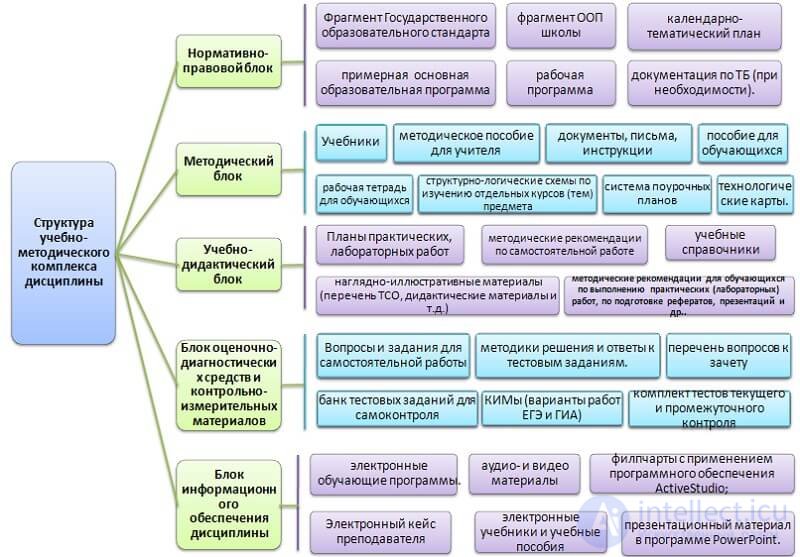
1. Classroom passport:
2. Methodological support of the learning process for the subject:
3. Methodological complex for each section and topic:
4. Methodological materials:
5. Classroom equipment:
the equipment necessary for the specific discipline (for example, for the discipline «Theory and Methods of Physical Education» this is sports equipment and gear).
Due to the increasing share of students' independent work (up to 50%), there is a problem of providing students with the necessary educational and methodological literature, which can be solved by developing instructional-methodological complexes for academic disciplines.
Providing students with an instructional-methodological complex will help them assimilate new material, differentiate and individualize instruction, improve control and self-control, free up time for creative and research work and, consequently, increase the effectiveness of the learning process.
The development of pedagogy, like any science, requires facts. Some of these facts «lie on the surface», one only needs to «look in the right direction», others are revealed only through in-depth examination and analysis of pedagogical phenomena, and still others are created by the researcher themselves (for example, as a result of applying a new pedagogical technology they have developed).
The sources from which pedagogy draws scientific facts and new ideas for implementation in pedagogical theory and practice are diverse in their form of presentation and method of preserving information, as well as in their origin, content, and application. I.P. Podlasy notes that they are difficult to classify, and to date there is no ready-made classification recognized by the scientific community. Therefore, in this chapter of the manual we will limit ourselves to a list of the main types of pedagogical sources and their characteristics.
The main function of pedagogy as a science is to investigate the laws, regularities and trends in human development, personality formation, the organization of the educational process, and the explanation of pedagogical phenomena in general. For reliable and objective conclusions, the researcher needs facts. “Facts are the air of a scientist”, said academician I.P. Pavlov. And this is indeed true: without facts there is no science, only prejudice, fantasy, conjecture, and invention. K.D. Ushinsky likewise asserted, in pedagogy, the priority of facts over fantasy unsupported by reality. In the preface to his work “Man as an Object of Upbringing” he wrote: “We followed the facts everywhere, as far as the facts led us: where the facts ceased to speak, there we put forward a hypothesis — and stopped, never using a hypothesis as an established fact”.
So, the development of any science, including pedagogy, requires facts. These facts exist somewhere, and in some cases they are, as it were, on the surface, in others — deep within phenomena and events, and in still others — they do not exist at all, and the researcher must create them (that is, by rough analogy — sow and grow them). These various “repositories” of the products of the educational activity of the individual and society, that is, the bases of facts of pedagogical content from which the researcher draws information and primary data about the pedagogical process, we shall call pedagogical sources.
Pedagogical sources are diverse in their method of fixation and objectification, in their origin and content. Their complete classification is a large and independent topic. When classifying them according to different criteria, explainable and justified overlaps are inevitable. Without going into the details of the question, we deliberately limit ourselves, instead of a detailed classification, to their nomenclature, that is, a list of names and their brief characteristics.
Written sources — these are sources in which pedagogical facts are recorded in written form (printed and handwritten materials): textbooks and study aids, pedagogical monographs, methodological recommendations and developments, works of classic pedagogues; directive documents of education authorities: orders, instructions, statutes, circulars, regulations; directive documents of state bodies and public organizations on questions of education and upbringing (for example, on organizing children's summer recreation, on base enterprises for the labor training of schoolchildren, etc.); accounting and reporting school and out-of-school documentation: curricula, programs, plans and reports on the work of the school, homeroom teachers, and methodological associations, minutes of meetings of school councils, pedagogical councils, the parent committee, reports on the work of various school subdivisions, records of inspector checks, official correspondence, etc.; materials of pedagogical readings of various levels; class registers, diaries of students and teachers; programs of holidays, festivals, olympiads, spartakiads, KVN, school evenings, etc. Written sources should also include materials of the periodical press — not only pedagogical (which naturally comes first), but also non-pedagogical: newspapers, magazines, bulletins, posters that raise urgent and pressing issues of educational and upbringing work; artistic-pedagogical literature, for example, the works of A.S. Makarenko, V.N. Soroka-Rosinsky, L.N. Tolstoy, A.P. Gaidar, A. Likhanov, Yu. Azarov, G. Belykh and L. Panteleev, S.V. Mikhalkov, A. Barto and other writers, in which the phenomena of upbringing are described and partly analyzed in artistic form; memoir and epistolary literature, personal diaries containing material on upbringing. For instance, A.S. Makarenko corresponded with A.M. Gorky in the 1920s–1930s. The letters were not published at the time. But time passed, and researchers of their work published the letters on the principle: letter — reply to it. And the modern reader finds in them the most interesting material of pedagogical content. Another similar example is the correspondence of N.K. Krupskaya with children. Memoirs and reminiscences are likewise living, first-hand material on upbringing and personality formation. The value of this genre of written sources lies in the fact that the memoirist most often finds himself at the center of the events described and reports on them reliably. In oral recollections, by contrast, some facts (dates, names, sequence of events) are forgotten over time, and facts are sometimes unintentionally distorted and events displaced. A valuable pedagogical source is the diaries of outstanding figures of science, culture, and pedagogy, for example, L.N. Tolstoy, K.D. Ushinsky, and others.
Oral sources are fixed neither in writing, nor graphically, nor symbolically. These are all things perceived orally at a given moment: lectures, reports, speeches, consultations, conversations, instructions, the content of conferences, meetings, seminars, disputes, “round tables,” and broadcasts of audio recordings on issues of upbringing. Their peculiarity is that the content of the information is most often perceived by ear and retained only in memory. As a result, not all useful and necessary information is preserved; moreover, some of it is reproduced in distorted form, and a repeat reference to the content of this type of source is difficult or even impossible.
Practice as a pedagogical source is a mass, constantly renewing, and therefore inexhaustible source. A.S. Makarenko put it figuratively, referring to this aspect of pedagogical facts, saying that upbringing takes place on every square meter of earth and every minute. It is an eternally living, continuously renewed wellspring of pedagogical facts. Practice, on the one hand, feeds the source base of pedagogical theory, and on the other — serves as a criterion for evaluating that theory. In pedagogical practice, the utilitarian is combined with the theoretical, the concrete with the abstract. One of the peculiarities of practice, in the researcher's use of it, must be recognized as the fact that for analysis he inevitably takes only a part, a fragment of living practice, moreover not always a successful one, and sometimes even an atypical one.
In order to use pedagogical practice and experience as a source, the facts of practice must be recorded: in writing, graphically, with the help of electronic-technical means, etc. Then they must be decoded for subsequent analysis.
Statistical sources contain interesting material on the quantitative characteristics of the phenomena of upbringing, personality development, and questions of education, for example, on the number of schools, students, graduates of educational institutions of various types, teachers, on the education budget, the number of young specialists, quantitative indicators of academic performance, etc.
Statistical sources provide generalized material, helping to reveal, in depersonalized form, the overall picture and general trend of the development of some pedagogical phenomenon, for example, the decrease or increase in the number of first-graders or school graduates in a district or region; the development of the network of preschool institutions, etc. But it is impossible to assert that this same quantitative picture is inherent to any individually taken class, school, specific district, etc. Quantitative facts and quantitative analysis provide grounds for the subsequent qualitative interpretation of pedagogical phenomena.
Visual-pictorial pedagogical sources are audio, photo, film, and video materials and documents of pedagogical content. They provide concrete, visual facts about pedagogical phenomena. Their shortcoming is that they can be random, many of them are fragmentary, and special equipment is needed to reproduce the image.
This same group of sources should also include diagrams, charts, tables, and drawings containing material of pedagogical content.
Material sources are objects and things belonging to the person being studied; they may have been made by the person himself or simply used by him; these are — school supplies, a schoolchild's belongings, models, mock-ups, instruments and other handicrafts, drawings, and objects. Material sources represent additional material: by analyzing it, the researcher can obtain valuable information and facts about the person or pedagogical phenomenon being studied, for example, about a schoolchild's hobbies, professional orientation, artistic abilities.
Folk pedagogy is a rich source. Folk traditions, customs, rites, the folklore of adults and children, folk holidays, games and toys, songs, dances, jokes, rhymes, counting rhymes, teasing rhymes, folk omens, beliefs on various occasions, legends and tales on various themes, labor and other relations in the family and society represent a treasury of folk pedagogical wisdom. All of this is passed down from generation to generation, enriched with new experience. A researcher's turn to folk pedagogy gives him the opportunity to draw material from the treasury of the rich experience of raising young people of the present time and of past eras. This question is examined in more detail in a separate topic.
Works of art should also be considered as a pedagogical source. Of course, they primarily represent artistic value. But besides that, they also have a substantive side, and this content can be examined from the standpoint of pedagogy as well. For example, such paintings as “Mental Arithmetic” by N.P. Bogdanov-Belsky, “Another Failing Grade” by F.P. Reshetnikov, “Arrived for the Holidays” (by the same artist), and the like directly reflect various episodes from the lives of children and schoolchildren, directly connected with their academic activities. One can also refer to analogous examples from other genres of art: music, theater, ballet, feature film, in which events relating to the phenomena of upbringing are depicted. And it is quite indisputable that art itself is a powerful means of aesthetic education, the cultivation of humanism, and consequently, an invaluable pedagogical source.
Materials from related sciences can quite reasonably be counted among pedagogical sources, since they too investigate problems of upbringing, albeit from their own standpoints. In particular, it is impossible to work out questions of moral upbringing in a pedagogical sense without knowledge of ethics, to study children's development without command of developmental and pedagogical psychology, or to study folk pedagogy without knowing ethnography.
We have already spoken about the anthropological sciences, following K.D. Ushinsky, and about the sciences bordering on pedagogy. It is precisely these that are meant when we speak of the sources of pedagogy.
To broaden its base of sources, pedagogy draws on a number of auxiliary scholarly disciplines: pedagogical bibliography, chronology, linguistics, archeography, emblematics, phaleristics, as well as editorial technique.
Most pedagogical sources can be divided into written and oral.
Written sources include printed and handwritten materials on pedagogical subjects. Since writing has been known to humanity since ancient times, there is a great abundance of written sources, including ones that have come down to us from past centuries and millennia.
Oral sources are those perceived in spoken form: lectures, reports, speeches, consultations, conversations, oral instructions and directives, the content of conferences, meetings, seminars, debates, «round tables» and so on.
The main advantage of these sources is direct contact with the bearer of the information. For example, one can put a question to a lecturer or speaker, enter into a dialogue, take part in the discussion of a pedagogical problem. Moreover, in conveying information orally, people usually do not use overly complex syntactic constructions, and try to give vivid examples and report interesting facts. On the whole this makes the information easier to take in.
However, oral sources have a serious drawback: when information is perceived by ear, it is retained only in memory, and as a result part of it is forgotten or distorted, and returning to the source a second time is often impossible. Of course, one can take notes on a lecture or make a video recording of a scholarly report. But in that case other sources will subsequently be used: a written one (the notes) and a visual-pictorial one (the video recording).
Statistical sources contain quantitative data on the processes and phenomena of instruction, upbringing and personal development (for example, on the number of schools, pupils, graduates of various types of educational institutions, on the education budget, on academic performance, and so on). Their main advantages are statistical accuracy and the systematic organization of information.
Pedagogical practice is an inexhaustible source, since practice is mass in character and is constantly renewed. Researchers not only draw «ready-made» facts from practice, but also test theoretical propositions in practice, and thus it is precisely thanks to practice that a researcher can create new pedagogical facts themselves.
Pedagogical innovation is a special type of practical pedagogical activity. It differs from mass pedagogical practice in that it is aimed not at reproducing and refining existing experience, but at seeking new ways of solving professional tasks. By studying colleagues' innovative experience, a practicing teacher can borrow it and apply it in their own work. A researcher-teacher identifies the most essential features in the innovative experience studied, generalizes it, formulates general principles, identifies the stages of its practical implementation, and determines the optimal methods and means, thereby contributing to the spread of innovative experience in mass practice.
Scientific research in pedagogy, unlike pedagogical innovation, is aimed not so much at creating new experience as at obtaining new pedagogical knowledge. The results of scientific research are presented in various types of sources (oral, written, visual-pictorial, electronic).
Visual-pictorial pedagogical sources are, above all, photo, audio, film and video materials of pedagogical content. The facts they contain are distinguished by their concreteness and visual clarity, which is undoubtedly their advantage. The drawback of such sources is that they are often random and fragmentary (for example, photographs may capture only the most striking moments of an event, or only the friends of the pupil taking the picture may end up in the frame, striking «attractive» poses unnatural to them in front of the camera). Another drawback of audio, film and video materials is the need for special equipment to use them.
Visual-pictorial sources also include schematic depictions of pedagogical processes and phenomena, diagrams reflecting statistical indicators, and drawings and diagrams of pedagogical content. For example, Fig. 5.1 and 5.3 show drawings of a standard elementary school building and a school desk from N.A. Korf's book (1870).
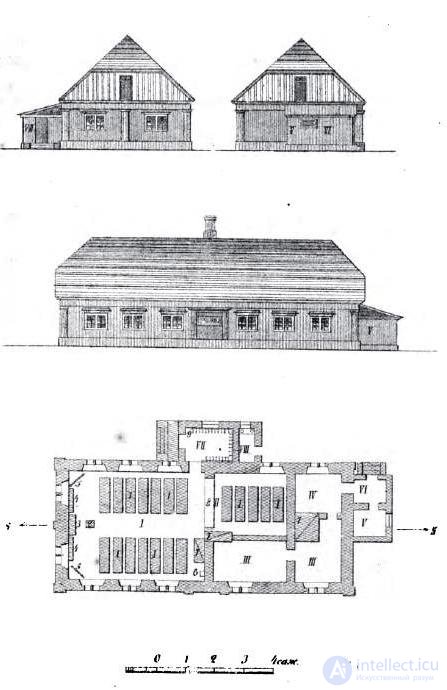
Fig. 5.1. Plan of a standard rural school building, designed by N.A. Korf
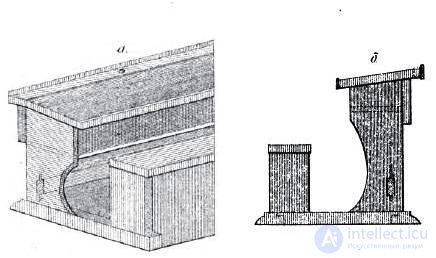
Fig. 5.2. Desk of N.A. Korf's design
Electronic and internet sources combine the properties of almost all other sources of information. Computer software makes it possible to work with texts (written sources) and images, audio and video sources, and not only to become acquainted with their content but also to edit information: to select, copy, cut and arrange the needed fragments, and save them in modified form. Modern mobile devices make it possible to use these sources at any time, in practically any place, and even to carry with oneself at all times a personal «electronic library» assembled from files of various formats. Main types of pedagogical internet sources
Material pedagogical sources are physical objects used in the pedagogical process. These include various teaching aids (posters, reproductions, cards for individual work, models, mock-ups, instruments, etc.), as well as school supplies, personal belongings of pupils and teachers, handicrafts and drawings. By studying material sources one can obtain information about their owners or about the organization of the educational process in the historical era from which these material sources have come down to us. The latter is especially important for research into the history of education and pedagogy. Thanks to material sources, today we know a great deal about how instruction was conducted, for example, in ancient Sumer or ancient Greece (Figures 5.3 and 5.4).
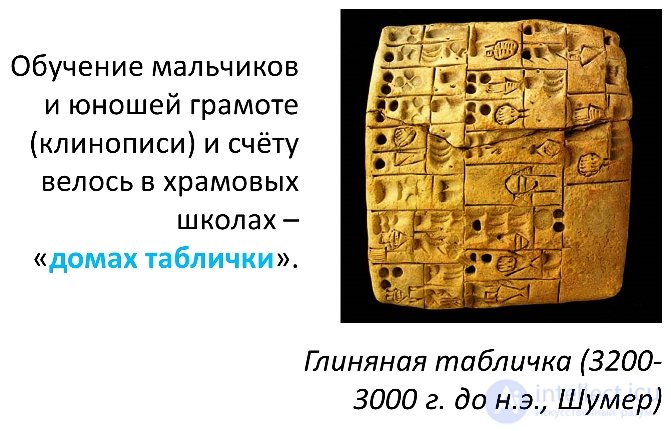
Fig. 5.3. A clay tablet on which a Sumerian schoolboy learned to write
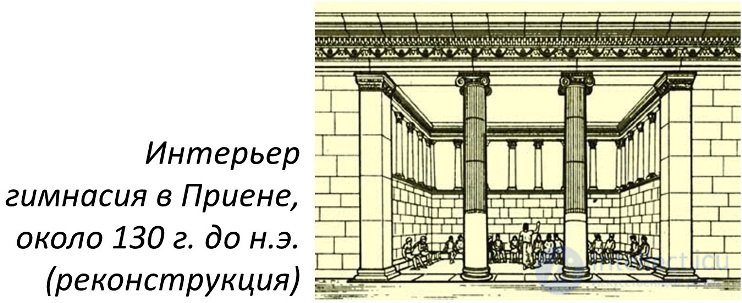
Fig. 5.4. Reconstruction of an ancient school – a gymnasium
Works of art are also counted among pedagogical sources if their content consists of events and phenomena that carry pedagogical meaning. For example, the paintings by F.P. Reshetnikov «Arrived for the Holidays» and «Another Failing Grade» (Fig. 5.5 and 5.6) reflect situations connected with children's schoolwork.
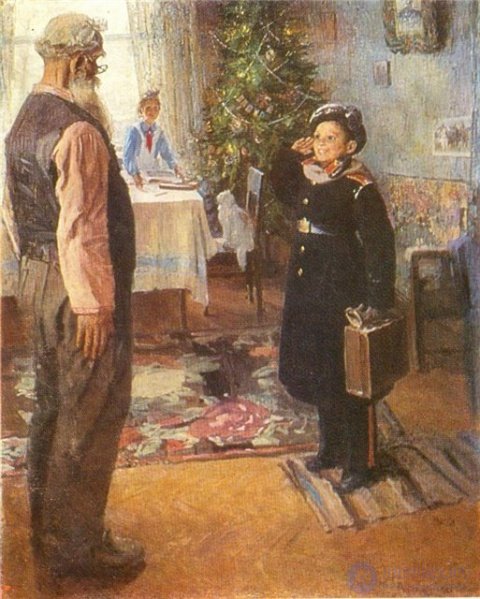
Fig. 5.5. F.P. Reshetnikov. Arrived for the Holidays
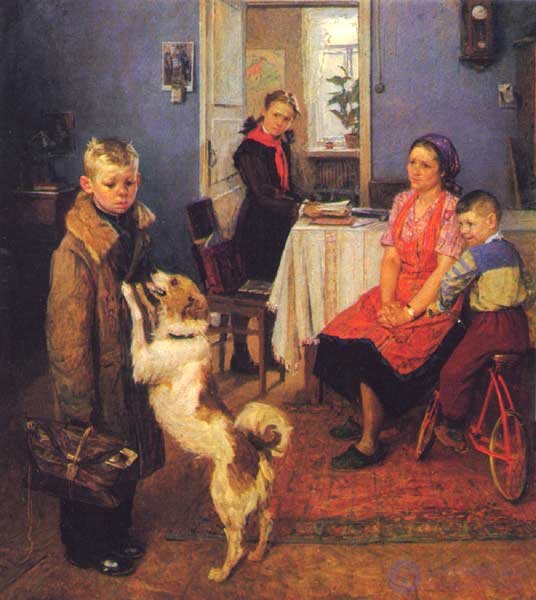
Fig. 5.6. F.P. Reshetnikov, Another Failing Grade
In the paintings by N.P. Bogdanov-Belsky «Mental Arithmetic» and «Sunday Reading in a Rural School» (Fig. 5.7 and 5.8) working moments from the life of the Tatevo school, founded by the outstanding Russian educator S.A. Rachinsky, are captured.
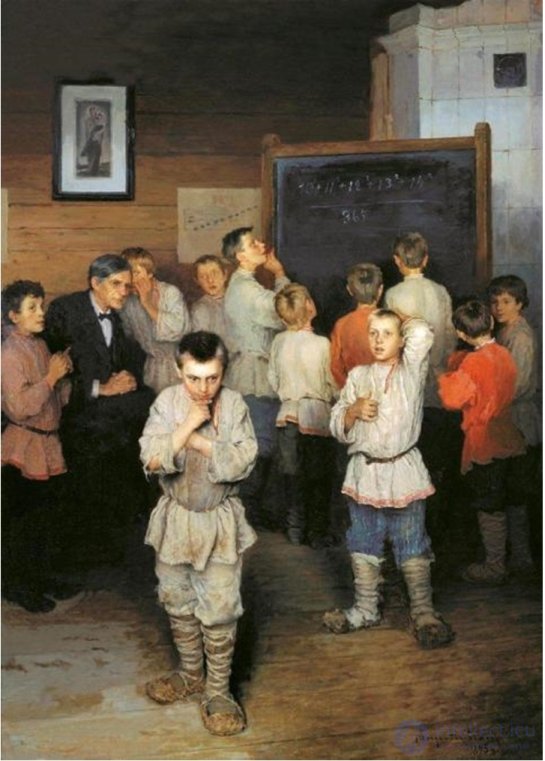
Fig. 5.7. N.P. Bogdanov-Belsky. Mental Arithmetic
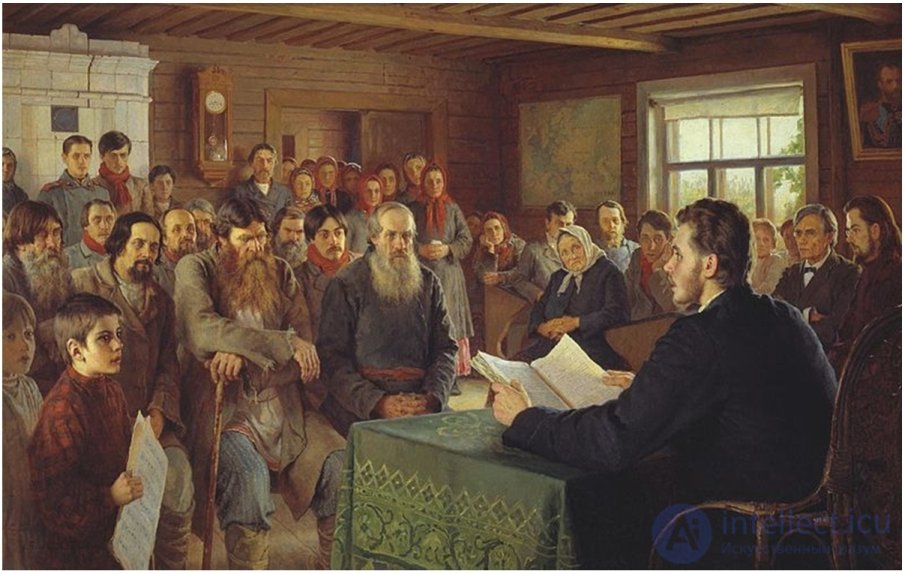
Fig. 5.8. N.P. Bogdanov-Belsky. Sunday Reading in a Rural School
Bogdanov-Belsky was himself a graduate of this school, and some of the characters he depicted are real people. Both paintings depict S.A. Rachinsky (in «Sunday Reading in a Rural School» he is second from the right).
Pedagogical sources are also present in other art forms, for example in film or fiction.
School, learning, and childhood years are often depicted in feature films. Some films are devoted entirely to school and pedagogical themes:
Events of school and student life today often become the basis for the plots of comedy television series aimed at young people. However, calling them sources of pedagogical information (as well as works of art) would be quite a stretch. For example, Dr. Bykov (in the series «Interns») is the image of a sadistic teacher, while the former racketeer Foma (in the series «PE Teacher») is a random person who got a job as a physical education teacher through a bribe, and his mere presence at the school creates a threat to the students. These are examples of what a teacher should not be like.
A characterization of fiction as a pedagogical source is given in the section on written sources.
Materials from related sciences can also be considered pedagogical sources if they examine problems of education from their own standpoint. For example, without knowledge of ethics it is impossible to develop questions of moral upbringing, without turning to developmental and educational psychology it is meaningless to study children's development, and without ethnography it is impossible to achieve a deep understanding of folk pedagogy.
An example of how drawing on related sciences enriches pedagogy can be found in modern concepts and methods of developmental instruction. Thus, thanks to drawing on psychological knowledge, the following were created: Zankov's method (the psychologist L.V. Zankov headed the research group), the concept of the stage-by-stage formation of mental actions (developed on the basis of the psychological theory of P.Ya. Galperin and N.F. Talyzina), and the concept of meaningful (content-based) learning (the research group was headed by the psychologists V.V. Davydov and D.B. Elkonin).
Written sources – printed and handwritten materials that record pedagogical facts (scientific-theoretical propositions, results of pedagogical research, specific pedagogical situations and reflections on them).
1. Educational and methodological literature: textbooks and study aids, methodological manuals, recommendations, guidelines for teachers, methodological developments.
2. Regulatory documents: legislative acts, orders of the Ministry of Education and Science, as well as documents of regional and municipal governing bodies, and local acts of educational organizations (orders, charters, instructions, etc.);
3. Curricular and program documentation – a set of regulatory documents that determine the goals and content of education (curricula, educational programs together with their attached reviews, lists of teaching aids, lesson plans, etc.).
4. Record-keeping and reporting documentation of educational organizations: plans and reports on the work of the school, homeroom teachers, and methodological associations, minutes of meetings of school councils, pedagogical councils, and the parent committee, reports on the work of various school departments, inspection reports, official correspondence, class registers and students' diaries, etc.
5. Methodological developments (lesson notes, plans for celebrations, festivals, subject olympiads, competitions, school evenings, etc.).
6. Periodical press materials: newspapers, journals, bulletins, in which topical issues of education and pedagogical activity, and socio-pedagogical problems, are raised.
7. Scholarly pedagogical literature
8. Literary-pedagogical works. This group of written sources includes a variety of works of fiction. Problems of upbringing have at all times attracted the attention of poets and writers, so pedagogical ideas can be found in many literary books.
Children's literature is especially rich in them: the works of recognized children's writers (L. Kassil, A. Gaidar, A. Barto, A. Likhanov, K. Bulychev) and other authors (for example: L.N. Tolstoy's stories for children; «What Is Good and What Is Bad?» and «What Should I Be?» by V. Mayakovsky). Good children's literature is filled with deep pedagogical meaning. This is characteristic of both domestic and foreign children's literature, fine examples of which are the works of H.C. Andersen, A. Milne, A. Lindgren, and others.
J. Verne wrote many of his novels under contract with a publisher specifically for children and young people. And the most famous characters of the quite «adult» writer M. Twain are the mischievous boys Tom Sawyer and Huck Finn.
Russian classical literature is saturated with pedagogical ideas. Profound thoughts on upbringing and education are expressed in D. Fonvizin's comedy «The Minor» and A. Griboyedov's «Woe from Wit»; the theme of family upbringing and the interaction between generations became one of the central themes in I. Turgenev's novel «Fathers and Sons», while L.N. Tolstoy's novel «War and Peace» reveals a wide range of problems of moral upbringing.
These examples could go on, but one should not forget that many classic works of pedagogical literature are themselves literary in nature. Such sources include the novels about Gertrude by J.H. Pestalozzi, «Emile, or On Education» by J.-J. Rousseau, stories for children by K.D. Ushinsky, «The Pedagogical Poem» and «Flags on the Towers» by A.S. Makarenko, «King Matt the First» by J. Korczak, and others.
9. Memoirs and epistolary sources, personal diaries, containing material on upbringing. These sources are unique in that pedagogical experience, pedagogical ideas, and thoughts on upbringing are presented in them in a personal, «unofficial» form, through the eyes of direct participants. One can often find in them things that cannot be found in ordinary literature.
Memoirs – the recollections of participants in the events described. This is precisely where their main value lies. Of course, a memoirist may make factual errors, since some facts are forgotten over time, become distorted, or are chronologically displaced. But in any case, memoir sources possess an immediacy of perception and often present the reader with an alternative point of view. Among pedagogical memoir sources, one should first of all mention the diaries of outstanding figures in pedagogy (L.N. Tolstoy, K.D. Ushinsky, and others), as well as the recollections of their students and of the teachers who worked with them (for example, V.N. Tersky's books on club work in the F.E. Dzerzhinsky commune, which was headed by A.S. Makarenko, have a memoir basis).
However, pedagogical ideas can also be found in the recollections of people far removed from pedagogical activity, since such recollections often describe study and self-education (for instance, the scholar-pedagogue M.N. Skatkin, in one of his monographs, repeatedly turns to memoir sources of the nineteenth and early twentieth centuries in order to characterize the problems of the educational process).
Epistolary sources are materials of personal correspondence. Thus, from the correspondence of J.A. Comenius we learn what difficulties he encountered while introducing the class-lesson system in Hungary (the headmaster of the gymnasium, who at first asked the ruler of Hungary to invite Comenius to organize the educational process, later begged for his removal, since the changes carried out by the great pedagogue seemed excessively radical to him).
A.S. Makarenko corresponded with A.M. Gorky in the 1920s and 1930s. Researchers of their work subsequently published this correspondence, and now readers have access to valuable information of pedagogical content.
Of great interest are materials of correspondence between outstanding people and their children – letters composed as admonitions. The «Instruction» (Pouchenie) of Prince Vladimir Monomakh (12th century) is one of the first such messages to have survived to us in Rus'. Addressing his children, the wise ruler fully understands that the younger generation may treat his instructions with skepticism, yet he remains confident that in time his advice will prove useful to them: «My children, or whoever else may hear this little book, do not mock it, but let whichever of my children finds it dear take it to heart and not be lazy, but labor».
In pedagogical circles, V.A. Sukhomlinsky's «Letters to My Son» are well known. It is interesting that in the mid-twentieth century the author – one of the most brilliant Soviet pedagogues – likewise had to reckon with the condescending attitude of grown children toward their parents' instructions. Here is an excerpt from his first letter to his son Alexander, a first-year student: «Your mother and I know that every young generation is somewhat condescending toward the instructions of parents: you, they think, cannot see and understand everything that we see and understand. Perhaps that is so... Perhaps, after reading this letter, you will want to put it away somewhere far, so that it reminds you less of the endless instructions of your father and mother. Well then, put it away, but remember well where, because a day will come when you recall these instructions and say to yourself: father was right after all... and you will need to read this old, half-forgotten letter».
Epistolary sources are not only drawn from private correspondence; sometimes an author deliberately uses the form of a personal letter in order to freely and sincerely express their thoughts. Thus, among the pedagogical writings of J.H. Pestalozzi, the «Letter to a Friend on His Stay in Stans» is widely known.
10. Pedagogical journalism.
An important source of pedagogical knowledge is scholarly literature. Its main distinguishing feature is the objectivity and reliability of the information it presents. Scholarly-pedagogical publications are devoted to pressing problems of education; studying them helps one see the dynamics of the science's development, orient oneself with respect to current trends, and apply scholarly-methodological developments in practice.
A work of scholarly literature may be published as a separate edition (as a self-contained book) or may form part of a larger publication, being one of its components (for example, an article in a scholarly journal or a collection of scholarly papers).
Scholarly publications are divided into two large groups: source-study publications and research publications.
Source-study or scholarly documentary publications include cultural monuments and historical documents that have been scholarly prepared for publication: systematized, accompanied by analytical articles and commentary, bibliographic lists, and scholarly-grounded interpretation of words (scientific terms, dialectisms, archaisms, foreign words), etc. In the pedagogical sciences these may include, for example, editions of the works of outstanding pedagogues of the past.
Research publications contain the results of theoretical and/or experimental research.
Research publications are divided into the following types.
Monograph – a scholarly or popular-scientific book publication in which a complete and comprehensive study of a single scholarly problem or topic has been carried out (mono – one). A monograph may be written by a single author or by a team of authors, based on the results of scholarly research conducted. The chief merit of a monograph is its concentration on a single scholarly problem, and the deep, exhaustive character of the information it presents on the stated topic. This type of scholarly-pedagogical publication is of greatest interest to specialists and to researchers interested in the given problem or in problems close to it.
Students may need to consult scholarly monographs when preparing essays, term papers, or final qualifying theses.
Dissertation abstract – a booklet containing an abstract, composed by the author, of the scholarly research conducted and presented by them for the award of an academic degree. The materials of such research are set out in detail in the dissertation itself, which exists in manuscript form, i.e., it is not printed in a run; only a few copies are made from it for storage in scholarly archives. The dissertation abstract is needed for wide dissemination of the main results of the research; it is sent out in advance to scholarly and educational organizations so that specialists can express their opinion of the research conducted, including – giving official reviews that will later be read out at the defense of the dissertation.
For students and master's students, familiarity with dissertation abstracts in the pedagogical sciences is important because it forms an understanding of the structure of pedagogical research and of the sequence in which its results are presented.
Preprint – this is a publication of scholarly materials of a preliminary nature. A preprint is published before the release of the edition in which the materials may be placed. A preprint is needed, for example, so that the authors, members of the editorial board, or editorial council can become acquainted with the forthcoming publication and offer their comments and suggestions. The preprint as a paper printout was popular at a time when computer technologies had not yet become widespread in publishing. Now, instead of a preprint, an electronic version of the publication is most often used. However, in some cases a preprint is still indispensable. For example, when an author urgently needs to provide proof of publication of their work without waiting for the edition to come off the press, they can obtain a preprint certified by the seal of the publishing organization and the signature of its official representative.
Collection of scholarly papers is a scholarly publication that brings together several independent research materials, as a rule by different authors. Such collections are published or prepared for publication by scientific and educational organizations and associations. The most common form of presenting research materials in a scholarly collection is the research article.
Conference proceedings are also a type of collection, but they have some differences from a collection of scholarly works.
The first difference lies in the nature of the works included in it, among which are published not only lengthy articles but also abstracts of papers and presentations. The main content of the research materials at a conference may be revealed in the author's oral presentation. In this case, the conference proceedings publish an abstract-form outline of the paper. Abstracts briefly reveal the content of the oral presentation, formulating only its main points.
The second difference is related to features of how the publication is prepared. Collections of materials are needed by participants of a scholarly conference, among other things, so that during the event they can become acquainted with the topics and content of colleagues' research, perhaps discuss them in informal conversation, and establish personal connections with scholars from other research organizations. For this reason, organizers try to release the collection of materials by the start of the conference, i.e. such publications are constrained by the conference's timetable, and the selection of materials for them is usually not as thorough.
Collections of scholarly works and conference proceedings are traditionally classified in Russia as non-periodical publications (unlike scholarly journals). However, according to international publishing standards there is a concept known as a serial (continuing) publication. Serials, alongside periodicals, also include regularly issued collections. For example, if a scientific or educational organization holds quarterly scientific-practical conferences on topical problems of education, then the proceedings of these conferences can be classified as continuing publications. Thus, in the Scientific Electronic Library (SEL) eLibrary.ru, the conference proceedings of the Sociosphere Research Center are listed under the «Journals» heading.
Abstracts of papers (reports) of a scholarly conference – a type of scholarly publication that is now very rarely encountered in the pedagogical sciences. It publishes only abstracts of presentations, annotations and summaries of articles. Such collections are released by the start of conferences, and their purpose is to familiarize participants with the content of the conference materials.
A popular science publication – a book or magazine in which information about research in science, culture and technology is presented in a form accessible to a broad readership that are not specialists.
A scholarly journal – a periodical scholarly publication containing materials of theoretical or applied research. More on scholarly-pedagogical journals below.
Pedagogical periodicals – the general name for periodical publications on pedagogical topics: journals, newspapers, information bulletins, continuing collections and almanacs.
The periodicity («continuity») of publications is a property that makes it possible to combine within a single issue publications that differ in topic and genre and are comparatively small in volume. Periodicals respond quickly to current events and maintain contact with authors and readers. The main form of material in a periodical is the article. This attracts many authors to publish their work, since writing an article is far simpler than writing an entire book. Larger materials can be published gradually across several issues, sustaining readers' interest in the release of the next issue. All this makes periodicals far more popular among readers than, for example, scholarly monographs.
Pedagogical periodicals are quite diverse and include…
Scholarly journals are divided into scientific-theoretical, scientific-practical, and scientific-methodological.
Scientific-theoretical journals mainly publish materials of a theoretical nature; their main target audience is specialists in the given scientific field.
Scientific-practical journals focus mainly on the applied results of research, and their readership expands to include practicing specialists.
Scientific-methodological journals are the most widespread precisely in the field of pedagogical sciences and education. Alongside the results of theoretical and applied scientific research, they publish methodological materials for organizing the educational process: thematic planning for various subjects, and methodological developments for lessons and educational activities.
Scholarly-pedagogical journals in pedagogy may…
- have a broad scope, covering topical issues of pedagogical science and education, for example: «Pedagogika» (Moscow), «Siberian Pedagogical Journal» (Novosibirsk);
- limit the scope of their publications to a single major scientific problem, an important direction of pedagogical research: «Scientific Support for the System of Personnel Advanced Training» (Chelyabinsk); «Standards and Monitoring in Education» (Moscow);
- cover issues of specific teaching methods for individual subjects: «Russian Language at School», «Mathematics at School».
In addition, scholarly journals may cover research in the field of several related sciences at once, among which pedagogy is included; examples of such journals are: «World of Science, Culture, Education» (Gorno-Altaysk), «Education and Society» (Oryol), «Socio-Humanitarian Herald of the South of Russia» (Krasnodar), «Modern Studies of Social Problems» (Krasnoyarsk); «Historical, Philosophical, Political and Legal Sciences, Cultural Studies and Art History. Issues of Theory and Practice» (Tambov).
Scholarly journals published by major universities are often divided into series belonging to different sciences. For example, «Bulletin of the South Ural State University» is published in seventeen series, two of which represent the pedagogical sciences («Education, Pedagogical Sciences», «Education, Healthcare, Physical Culture»).
A variant of the scholarly journal is the scholarly almanac – a periodical publication that appears irregularly, as material accumulates. An example of a scholarly-pedagogical almanac is the «Almanac of Modern Science and Education», published by the «Gramota» publishing house.
Also belonging to scholarly publications are popular science journals – periodicals on scientific topics in which the published materials are presented in a form accessible to ordinary readers interested in science news.
An important role in the development of pedagogical science and practice is played by periodicals of a practical orientation. Their primary readership consists of practicing teachers. However, one should not forget that pedagogical science is enriched through the study of teachers' practical experience. These include more than twenty journals from the «Pervoe Sentyabrya» (First of September) publishing house, some journals of the «Narodnoe Obrazovanie» (Public Education) publishing house, and others.
Periodicals specializing in the publication of regulatory documents and brief informational notices are few. In Russia, the best known of these is the «Vestnik Obrazovaniya» (Bulletin of Education) (the official publication of the Russian Ministry of Education and Science).
Among pedagogical publications that publish materials of various forms and genres, the best known are publications with a history spanning many decades:
- «Narodnoe Obrazovanie» (Public Education) – the oldest pedagogical journal in Russia (along with «Vestnik Obrazovaniya», it is considered the successor to the publication «Periodicheskoe sochinenie ob uspekhakh narodnogo prosveshcheniya» (Periodical Composition on the Successes of Public Enlightenment), founded in 1803 by Emperor Alexander I);
- «Uchitelskaya Gazeta» (Teacher's Gazette) (published since 1924).
On their pages one can read not only news from the Ministry of Education and Science, scholarly articles, and methodological developments, but also reports, essays, interviews, and original creative works by teachers and students. It is notable that both of these publications are currently independent, although they were originally created as official government sources.
The list and subject matter of publications in pedagogical periodicals can be found on the «Pedagogical Periodicals» website.
The internet is one of the most accessible and extensive sources of pedagogical information today.
Searching for information on the internet is carried out with the help of special programs that
продолжение следует...
Часть 1 Information and Methodological Support of an Academic Discipline: Sources of Pedagogical Ideas and Searching for
Часть 2 Pedagogical Publicism - Information and Methodological Support of an Academic

Comments