
Lecture
The most important feature of contemporary instruction is its orientation toward preparing learners not only to adapt to, but also actively to master, situations of social change.
Sustaining instruction is the continuous training of workers, aimed at improving the performance of tasks, plans and tactical techniques.
It is the process and result of learning activity aimed at maintaining and reproducing the existing culture, social experience and social system. This type of instruction ensures the continuity of sociocultural experience, and it is precisely this type that has traditionally been characteristic of both school and higher education.
Traditional instruction is instruction in which the teacher's work is oriented above all toward communicating knowledge and methods of action, which are conveyed to learners in ready-made form and intended for reproductive assimilation; the teacher is the sole actively initiating figure in the instructional process. Traditional instruction is predominantly reproductive in character.
To characterize the essence of traditional instruction, it is best to do so through the example of the distinction between «sustaining» (the traditional approach to instruction) and «innovative» types of instruction.
Traditional instruction in its essence corresponds to the very concept of instruction, which, again traditionally, is understood as the transmission of sociocultural ways of a person's existence and development from one individual or their community to another individual. In doing so, on the one hand continuity (reproduction) of sociocultural experience and of the person as its bearer is ensured, while on the other hand conditions are created for the emergence of new sociocultural methods of activity and human development, and thereby for changes in the sociocultural environment.
Traditional is the lesson: a simultaneous session with the whole class, in the course of which the teacher communicates and conveys knowledge and forms skills and abilities, relying on the presentation of new material (communication, exposition), its reproduction by the pupils, and evaluates the results of that reproduction. Traditional instruction is predominantly reproductive in character. The teacher's work is oriented above all toward communicating knowledge and methods of action that are conveyed to learners in ready-made form, intended for reproductive assimilation; the teacher is the sole actively initiating figure in the instructional process.
It is the process and result of such learning and educational activity as stimulates the introduction of innovative changes into the existing culture and social environment. Besides maintaining existing traditions, this type of instruction stimulates an active response to problem situations arising both for the individual and for society.
Innovative instruction is an approach to education based on the use of the latest technologies, methods and approaches, aimed at creating a more effective and interactive environment for students' learning and development.
Innovative instruction includes various aspects, such as:
Technology in instruction: the use of computers, interactive whiteboards, tablets, mobile devices and other modern technologies to support the learning process. This can include online courses, webinars, mobile applications and other forms of e-learning.
Interactive teaching methods: actively engaging students in the learning process through the use of group projects, games, discussions, collaboration and other interactive methods. This helps students take an active part in their own learning and apply the knowledge gained in practice.
Individualization of instruction: adapting the educational process to the individual needs and abilities of each student. The use of innovative technologies makes it possible to create personalized learning programs that take into account the student's level of knowledge and interests.
Use of data: collecting and analyzing data on the learning process to improve the effectiveness and productivity of the educational program. Data analysis makes it possible to identify weak points in instruction and take measures to eliminate them.
Learning environments of the future: creating new educational environments, such as virtual reality, augmented reality and artificial intelligence, which can significantly expand the possibilities of instruction and create more realistic and effective environments for acquiring knowledge and skills.
The aim of innovative instruction is to raise the quality of education, to develop critical thinking, creative potential and problem-solving skills in students, and also to prepare them for the demands of contemporary society and the labor market.
The concept of «innovation» refers not simply to the creation and dissemination of novelties, but to changes of a substantial character, accompanied by changes in the mode of activity and in the style of thinking. The category of novelty relates not only (and not so much!) to time as to the qualitative features of the changes. Innovative processes are a regularity in the development of contemporary education.
Unlike traditional instruction, which is engaged in transmitting accepted norms of thought and behavior, this type of instruction is aimed at forming in a person such qualities and skills as will allow them both to create new products, norms and rules, and to accept such developments by other people without aggression. «This idea was first voiced in 1979 in the Report to the Club of Rome «No Limits to Learning» (Botkin J., Elmandra M., Malitza M., 1979). It was then, too, that the new term «innovative learning» appeared — instruction that stimulates innovative changes in culture and the social environment, a response to the problem situations arising in the life of the individual and of society in an age of innovation. This Report was a reaction to the state of crisis in which the education system found itself, not defining as its main goal the preparation of the individual for participation in innovative transformations. The consequence of this was the education reforms carried out in the world's leading countries: the USA, the United Kingdom, the FRG, Japan».
Innovative approaches to instruction are divided into two main types, corresponding to the reproductive and problem-based orientations of the educational process.
Modernization innovations, which modernize the instructional process, are aimed at achieving guaranteed results within the framework of its traditional reproductive orientation. The technological approach to instruction underlying them is aimed above all at communicating knowledge to learners and forming methods of action by example, and is oriented toward highly effective reproductive instruction.
Transformation innovations, which transform the traditional instructional process, are aimed at ensuring its investigative character and organizing search-based educational and cognitive activity. The corresponding search-based approach to instruction is aimed above all at forming in learners the experience of independently searching for new knowledge and applying it in new conditions, and forming the experience of creative activity in combination with the development of value orientations.
The reproductive and problem-based orientations of the educational process are embodied in two main innovative approaches to transforming instruction in contemporary pedagogy: the technological and the search-based.
The technological approach modernizes traditional instruction on the basis of the predominant reproductive activity of learners, and determines the development of teaching models as the organization of learners' achievement of clearly fixed standards of assimilation. Within this approach, the educational process is oriented toward the traditional didactic tasks of reproductive learning and is built as a «technological», assembly-line process with clearly fixed, thoroughly described expected results.
The search-based approach transforms traditional instruction on the basis of learners' productive activity, and determines the development of teaching models as learner-initiated acquisition of new experience. Within this approach to instruction, the goal is to develop learners' capacity to independently acquire new experience; the guiding point of reference for the activity of the teacher and learners is the generation of new knowledge, modes of action, and personal meanings.
The generalized basic model within the search-based approach is the model of learning as creative search: from perceiving and formulating a problem — to putting forward assumptions and hypotheses, testing them, and cognitively reflecting on the results and the process of cognition.
The main variants of this basic model are
The study identified a common feature of the various variants of this basic search-based model: a change in the position of the learner, who experiences the educational process in the role of its active participant — a participant in inquiry, play, or discussion.
One of the key concepts used further on is the concept of the learning model. We propose the concept of the learning model in an instrumental sense, as a designation for the scheme or plan of a teacher's actions in carrying out the educational process; its basis is the predominant activity of the learners, which the teacher organizes and structures.
The basic criterion for distinguishing between models is the nature of the learning activity built into them as the main point of reference. We have identified two types of such points of reference:
The following serve as additional characteristics of a learning model: the nature and sequence of the stages of instruction over time, the nature of the interaction between teacher and learners (the ratio and nature of the roles of teacher and learners, the teacher's typical ways of responding to learners' actions), and a characterization of the expected results of instruction (the pedagogical orientation of the model). Within each of the basic models, didactic searches of an innovative orientation are being carried out that transform the nature of instruction; the lines of transformation are connected both with the type of predominant learner activity that the teacher organizes and with the nature and relative positions of teacher and learners.
The technological approach is implemented in the development of technological learning models aimed at having practically all learners achieve given standard results at the level of a guaranteed minimum, on the basis of organizing the presentation of material, standardized monitoring, and the correction of current learning outcomes. • The teacher is placed in the position of an operator of didactic tools, and the learner occupies the position of one of the objects of the instruction being constructed, with results fixed in advance (the learner as trainee).
The search-based approach is implemented in the development of process-oriented models aimed at learners acquiring new experience that they construct independently: • models of learning as the organization of systematic research activity; • models of learning as the organization of educational-game, simulation-based activity; • models of learning as the organization of communicative-dialogic activity, active exchange of opinions, and creative discussion. • In these models, the learner is placed in an initiating (subject) position during the educational process, and the teacher occupies the position of a partner-helper in expanding and mastering the experience directly lived through by the learners.
The main groups of innovative teaching methods, classified by the type of communication between learners and the instructor
We will conditionally divide the entire set of teaching and learning methods based on modern computer and telecommunications technologies into four main groups according to the type of communication between learners and the instructor:
Self-instruction methods .Self-instruction methods have undergone significant development on the basis of modern information technologies. Whereas in the traditional educational system self-instruction took place through reading books, new technologies have led to the development of a great many methods in which the learner interacts with educational resources with minimal involvement of the instructor and other learners. Self-instruction based on modern technologies is characterized by a multimedia approach, in which educational resources are developed using a wide variety of tools. • Traditional Innovative education • Printed materials Audio and video materials Computer-based training programs Electronic journals Interactive databases Other learning materials delivered over computer networks
Pedagogical "one-to-one" methods Pedagogical "one-to-one" methods, that is, methods of individualized teaching and learning characterized by a relationship between one learner and the instructor or another learner, are being developed in modern education not only on the basis of direct contact but also through technologies such as the telephone, voice mail, and e-mail. • The nature of the learning interactions: learner with instructor, learner with another learner •
Technologies:
"One-to-many" teaching "One-to-many" teaching, which is based on the instructor presenting learning material to learners who do not play an active role in the communication, is characteristic of the traditional educational system, but it is undergoing new development on the basis of innovative technologies. Thus, lectures recorded on audio or video cassettes, or broadcast on radio or television, are supplemented in the innovative educational process by so-called "e-lectures" (electronic lectures), that is, lecture material distributed over computer networks. An e-lecture may take the form not of a traditional lecture text but of a selection of articles or excerpts from them, as well as learning materials that prepare learners for future discussions. • Traditional Innovative • Lecture Audio and video lectures Radio and television lectures E-lectures - electronic lectures
Education based on "many-to-many" communication- these are methods characterized by active interaction between all participants in the educational process. The significance of these methods and the intensity of their use increase substantially with the development of instructional telecommunications technologies. Interactive interactions among the learners themselves, and not only between the teacher and the learners, are becoming an important source of acquiring knowledge. The development of these methods is connected with conducting collective educational discussions and conferences. Audio, audiographic, and video conferencing technologies make it possible to actively develop such methods in innovative education. Computer conferences play a special role in the educational process, allowing all discussion participants to exchange written messages in both synchronous and asynchronous mode, which has great didactic value. Computer-mediated communications make it possible to more actively use such teaching methods as debates, simulation, role-playing games, discussion groups, brainstorming, Delphi methods, nominal group methods, forums, project groups, and others. The nature of instructional interactions: between learners and the teacher; among the learners themselves. Technologies: synchronous and asynchronous audio, audiographic, video, and computer conferences
• The following can be identified as the main types of technologies currently used in innovative education: • Printed materials • Audio and video cassettes, video discs • Telephone • Radio and television • E-mail • Computer-based training programs • World Wide Web • Teleconferences (audio conferences, audiographic, video conferences, computer conferences)
The success of developing theoretical technologies depends on the accuracy of the pedagogical interpretation of the consequences of psychological theories that have received experimental justification, and on the correspondence of the pedagogical model of instruction to the essence of the psychological theory underlying it.
Any technology is defined through the description of its three constituent parts:
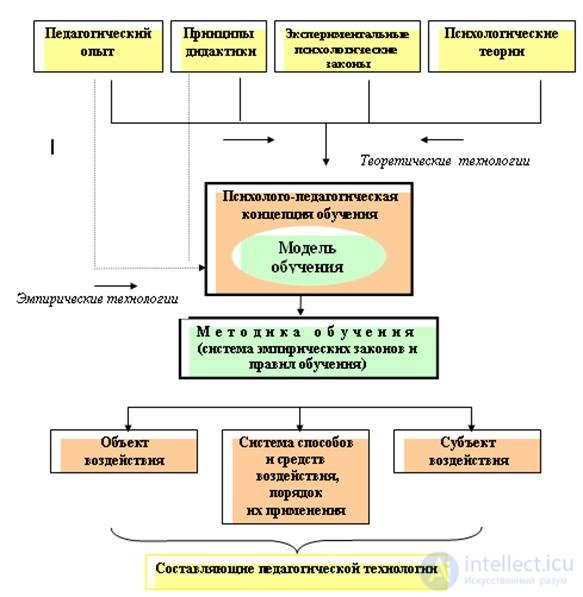
Fig. 3. Paths of formation of pedagogical technologies
The core of a technology is made up of the system of means and methods of working with a given object with the aim of obtaining a product of a specified quality. When transferred to the educational environment, this is the system of means and methods of organizing the educational process (influencing the personality of the learner). The system of methods of influence, when developing a technology, must receive a strict procedural-operational description in order to be reproducible by another teacher, while the system of means of influence must be represented by educational objects and educational materials prepared in accordance with the instructional model for organizing various types of student activity. The composition of educational objects and materials is determined by the system of types of educational activity implemented within a specific instructional model, and taken together gives us an idea of the content of the educational environment.
Let us consider a generalized model of an instructional technology. The structure of the model includes:
The development of innovative education makes it possible to identify the foundations on which the solution to the problem of choosing technologies in the process of managing innovations in the technological basis of the educational process is built. The following provisions can be identified as the main principles for the effective selection and use of technologies in the innovative educational process: In the educational process, what matters is not the information technology itself, but the extent to which its use serves the achievement of properly educational goals. More expensive and more up-to-date technologies do not necessarily provide the best educational result. On the contrary, quite familiar and inexpensive technologies often turn out to be the most effective. The result of instruction depends substantially not on the type of communication and information technologies, but on the quality of the development and delivery of the courses. When choosing technologies, it is necessary to take into account the greatest correspondence of certain technologies to the characteristic features of the learners, the specific features of particular subject areas, and the predominant types of educational assignments and exercises. The most effective approach when choosing technologies is the multimedia approach, in which one should strive for the mutual complementarity of various technologies and the synergistic effect of their interaction.
The generalized basic model within the framework of the search-based approach is the model of instruction as creative search: from the vision and formulation of a problem — to the advancing of assumptions and hypotheses, their testing, and cognitive reflection on the results and the process of cognition. The main variants of this basic model are the model of instruction based on systematic research (of the natural-science type), the model of instruction based on game simulation, and the model of instruction based on discussion and the joint working-out of positions and decision-making. The study revealed a common feature of the various variants of this basic search-based model: a change in the position of the student, his experiencing of the educational process in the role of its active participant — a participant in research, a game, a discussion.
1. A complete reconstruction of the school as an educational institution is presupposed when there are changes of the following kind:
2. The introduction, in primary school, of L.V. Zankov's didactic system of developmental instruction corresponds to which level of change in the education system:
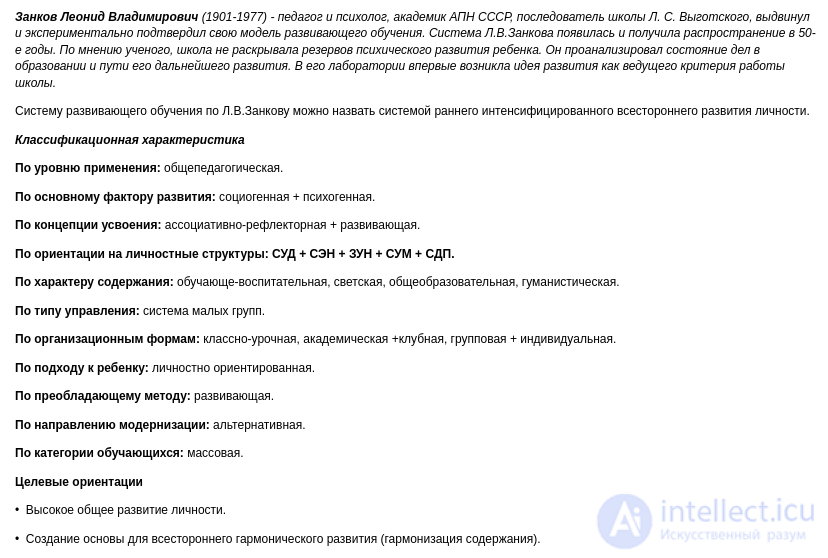
3. The most important goal of upbringing is the joining, in the child's mind, of the objective world and mental activity, in:
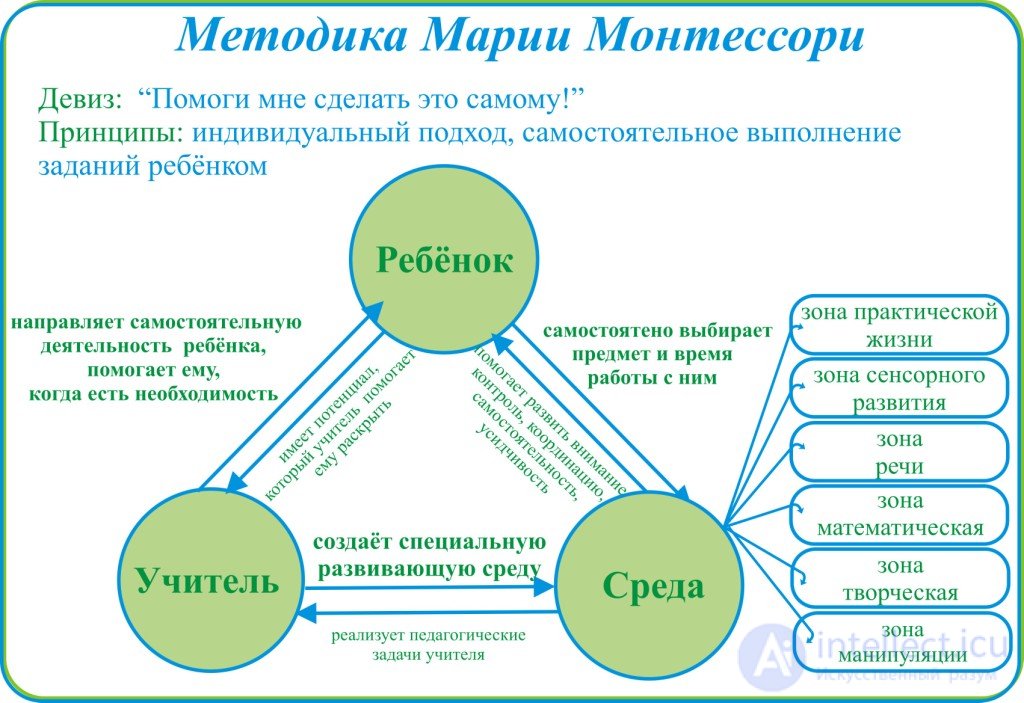
4. The idea of an educative (culturally developing, pedagogical) environment is a distinctive feature of the content of education in the system of:
5. One of the main goals of upbringing (character education) is the formation of the self-concept of an active entrepreneur, which forms the basis of:
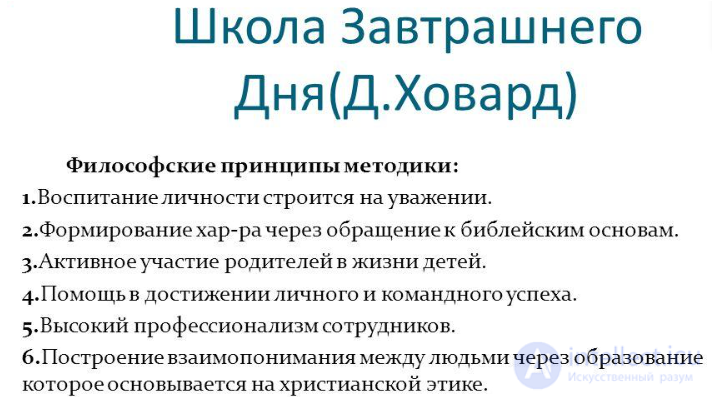
6. A technocratic approach to the individual prevails in the system of:
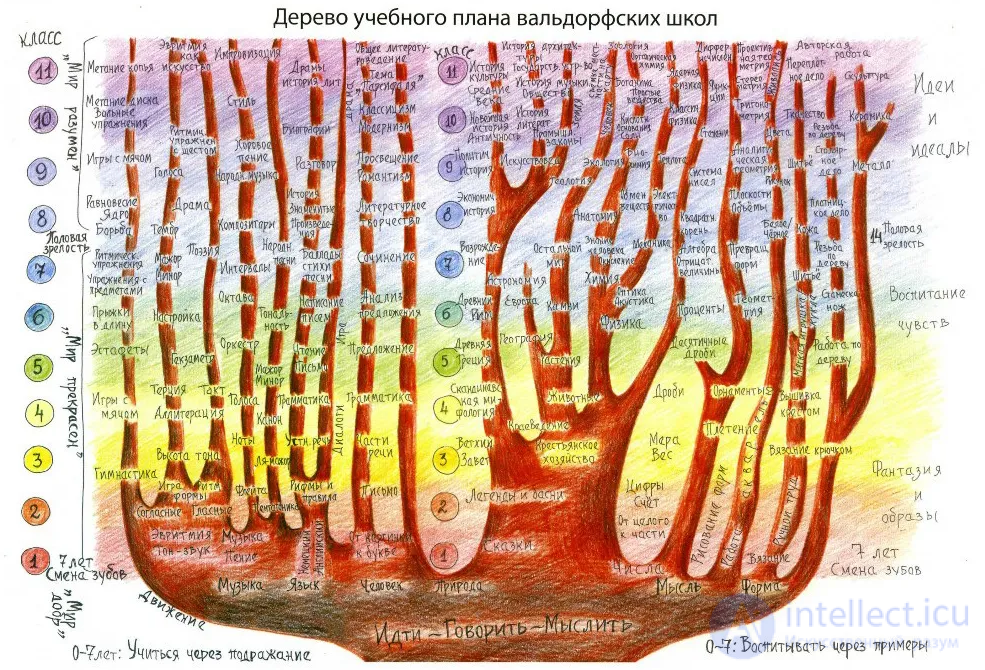
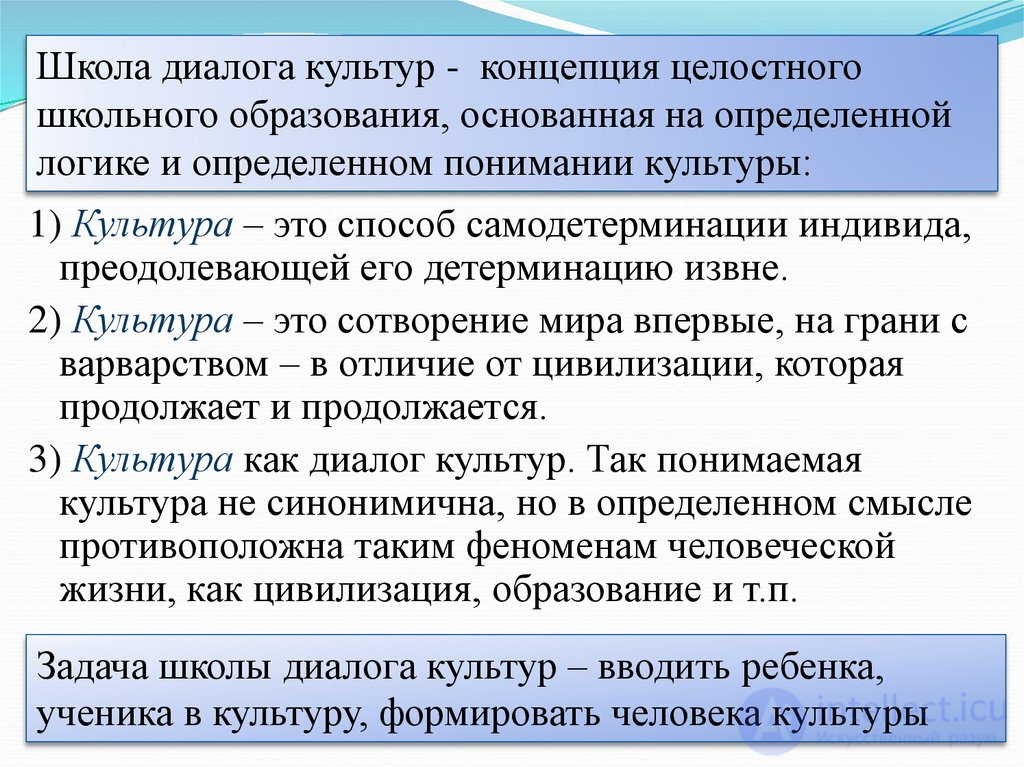
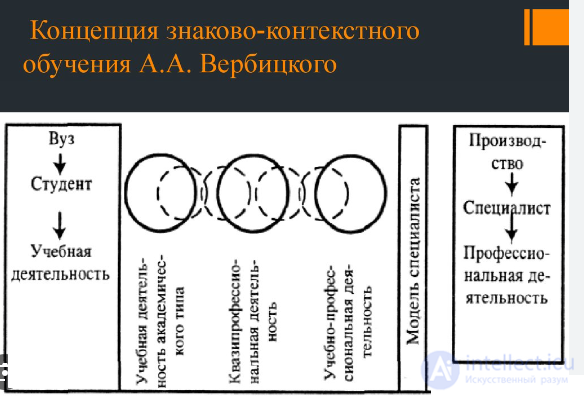
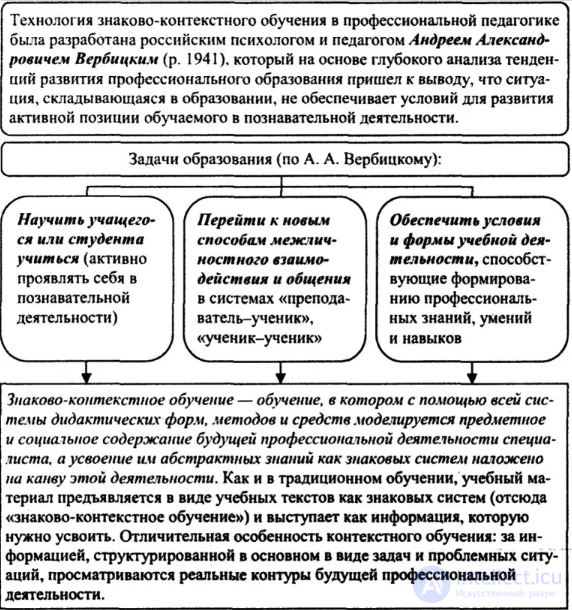
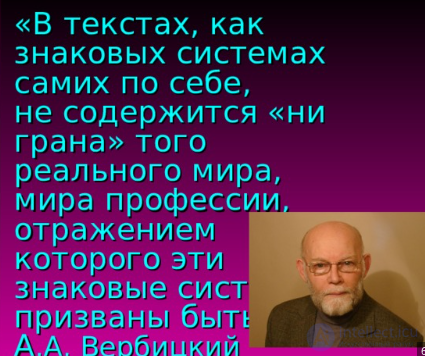
7. The author of the concept of «sign-contextual», or «contextual», learning is:
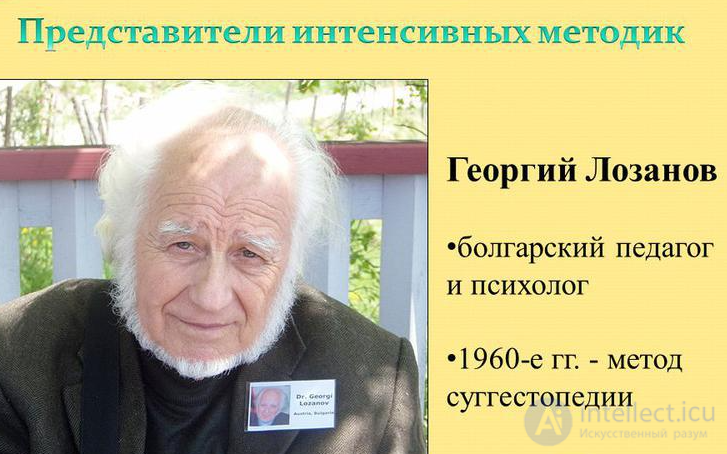
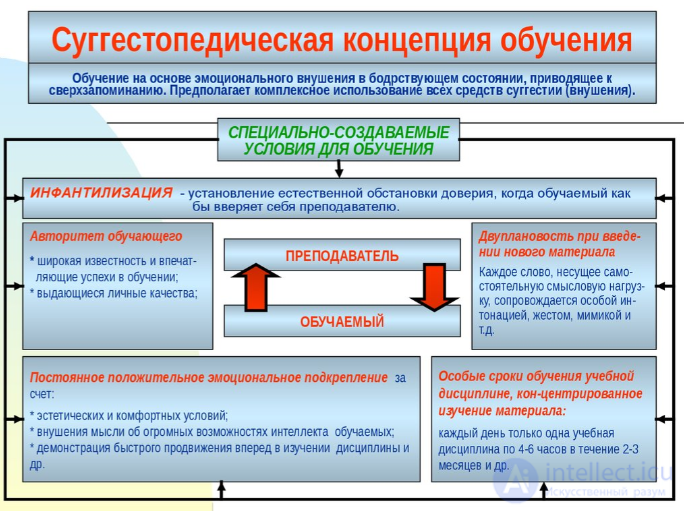
8. The author of a fundamentally new direction in pedagogical psychology — suggestopedia, suggestology — is:

Comments