Testing in the field of pedagogy and didactics plays an important role in assessing the knowledge, skills and abilities of students, pupils and teachers. Tests are an effective tool for measuring the level of understanding and mastery of instructional material, as well as for assessing learning progress and the effectiveness of the teaching process.
These tests make it possible to assess not only the knowledge of students or pupils, but also their pedagogical competence, their ability to apply the knowledge they have gained in practice, and to analyze and solve pedagogical problems. They help identify strengths and weaknesses in the educational process and determine the necessary adjustments and improvements.
These modern tests on pedagogy and didactics include various types of questions, such as single choice and multiple choice. They can be administered in the form of written tests, oral examinations, or used in an online format. These tests allow teachers and researchers to obtain objective data on the knowledge and skills of learners, as well as to draw conclusions about the quality of education and the effectiveness of educational programs.
In the tests on pedagogy and didactics, the answers are highlighted in bold. For hints and better memorization, diagrams and images related to the question are provided. Good luck completing the tests!
1. Pedagogy is the science of
- A) preparing a teacher for work in school
- B) methods of scientific cognition
- C) the psychological characteristics of personality
- D) the physiological patterns of personal development
- E) the laws of the upbringing and education of a person, and the successful transmission of social experience
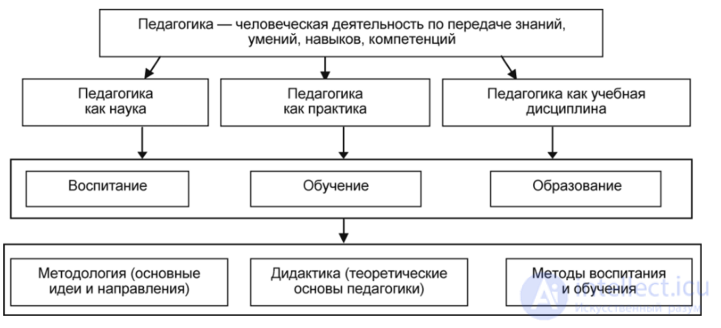
2. Translated from Greek, pedagogy means
- A) repetition
- B) reproduction
- C) management
- D) reinforcement
- E) child-leading
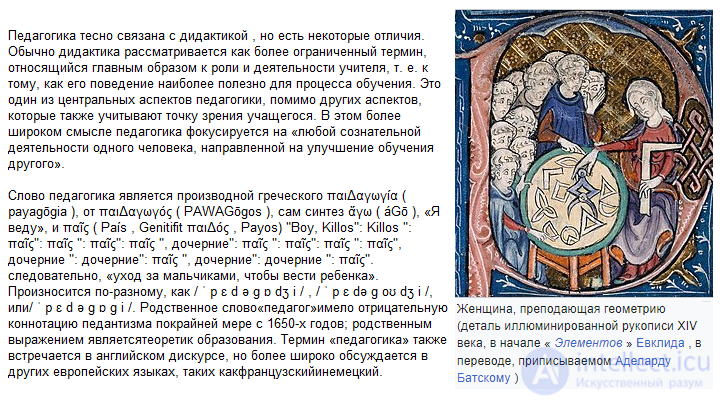
3. The development of pedagogy as a science is determined by
- A)the necessity of transmitting social experience
- B) the management of the work of practicing teachers
- C) the level of scientific and technical progress
- D) the heritage of preceding civilizations
- E) the increasing role of the individual in social life
4. The tasks of pedagogical science
- A) studying the abilities of students
- B) monitoring and assessing students' knowledge
- C) the teacher's cooperation with parents
- D) uncovering the patterns of teaching and upbringing
- E) forming a children's collective
5. The system of pedagogical sciences includes
- A) interdisciplinary communication between philosophy and psychology
- B) the principles of teaching and upbringing
- C) branches of the sciences of the upbringing and education of children and adults
- D) the results of sociological research
- E) a system of methods of pedagogical research
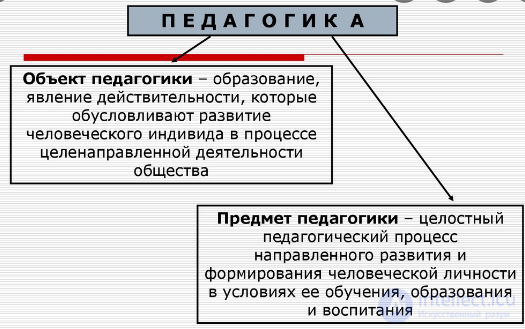
6. The object of pedagogy is
- A) the psychological characteristics of personality
- B) methods of pedagogical research
- C) the pedagogical process
- D) the doctrine of the principles of theory construction
- E) the interdisciplinary connections of the science of man
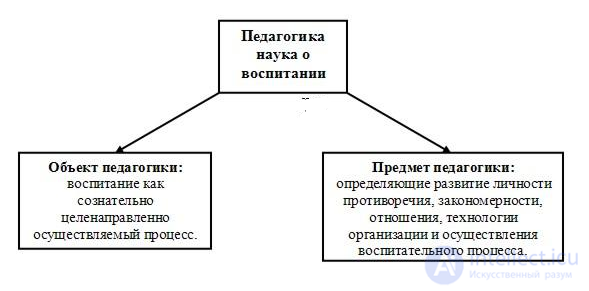
7. General pedagogy is faced with the tasks of
- A) studying the problems of population migration
- B) analyzing foreign pedagogical experience
- C) investigating the patterns of perception
- D) covering the history of the development of pedagogical theories
- E) the upbringing and instruction of the younger generation
8. A questionnaire survey is
- A) a means of educating the individual within the collective
- B) observing children's behavior on an excursion
- C) activating the cognitive activity of students
- D) a teaching technique used by the teacher
- E) a method of mass collection of material by means of questionnaires
9. Methods of pedagogical research are
- A) ways of assimilating new knowledge
- B) ways of reinforcing material that has been studied
- C) ways of solving problem-based tasks
- D) ways of forming personal qualities
- E) ways of cognizing objective reality
10. The necessity of transmitting social experience arose
- A) simultaneously with the emergence of society
- B) with the emergence of technical teaching aids
- C) in the course of developing the content of education
- D) with the development of pedagogy as a science
- E) as a result of the creation of the classroom-lesson system
11. Upbringing is
- A) the communication of people in informal associations
- B) the influence of the environment on the individual
- C) the transmission of social experience
- D) the learning activity of schoolchildren
- E) preparing a person for a profession
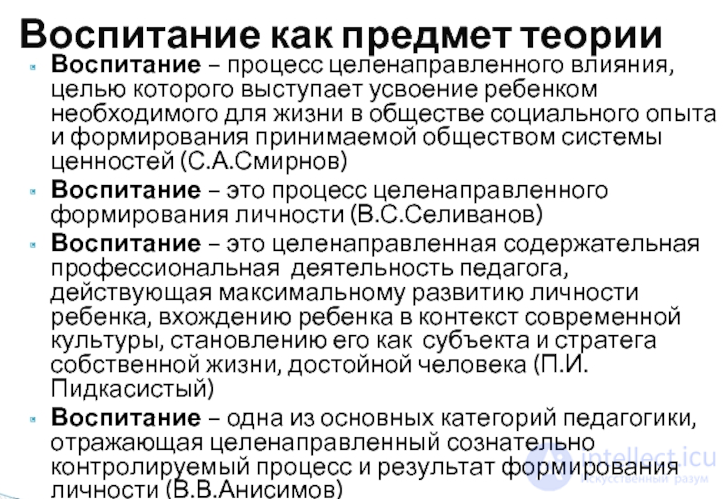
12. A concept that is not a principle of upbringing
- A) reliance on the positive
- B) the problem-based nature of instruction
- C) a personal approach
- D) the awareness of those being educated
- E) upbringing within the collective
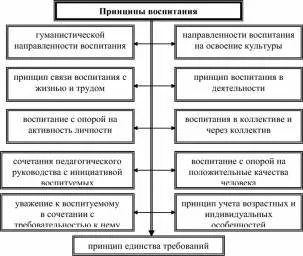
13. Factors influencing the setting of the goal of upbringing
- A) society's need for human resources
- B) the ideals of parents regarding their children
- C) the capabilities of educational institutions
- D) the interests of teachers in general-education schools
- E) students' desire to acquire a profession
14. An expression that does not reveal the essence of the upbringing process
- A) the teacher's mercantilism
- B) respect for the child's personality
- C) the purposefulness of the activity of the subjects
- D) the two-way nature of the pedagogical process
- E) reliance on the positive qualities of the personality
15. An educational standard is
- A) a method of instruction
- B) a norm for evaluating an object
- C) a teacher's work plan
- D) a way of studying a person
- E) a goal of upbringing
16. The goal of upbringing is
- A) a form of instructing students
- B) the final outcome of the formation of the personality
- C) the level of civilization of society
- D) an indicator of students' academic performance
- E) preparation for choosing a profession
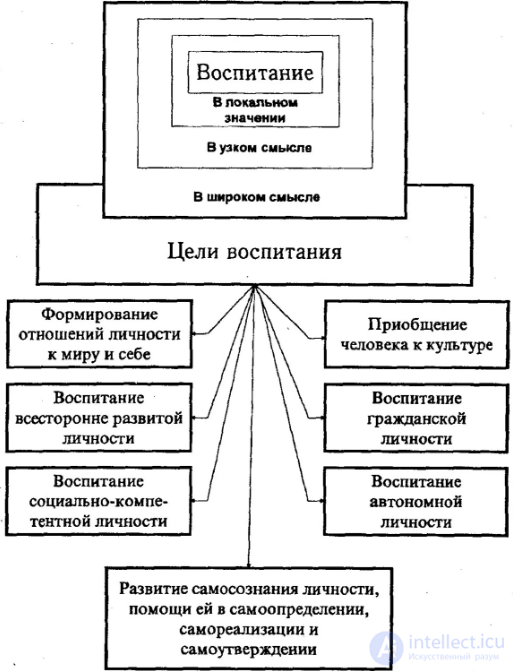
17. Subjective factors of upbringing
- A) the specific features of the manifestation of heredity
- B) the level of development of science and technology
- C) the influence of family relations
- D) the influence of climate and natural factors
- E) the influence of the mass media
18. Human development is
- A) preparation for choosing a profession
- B) an increase in a child's height and body mass
- C) a spontaneous process, independent of human will
- D) adaptation to living conditions
- E) quantitative and qualitative changes in the human organism
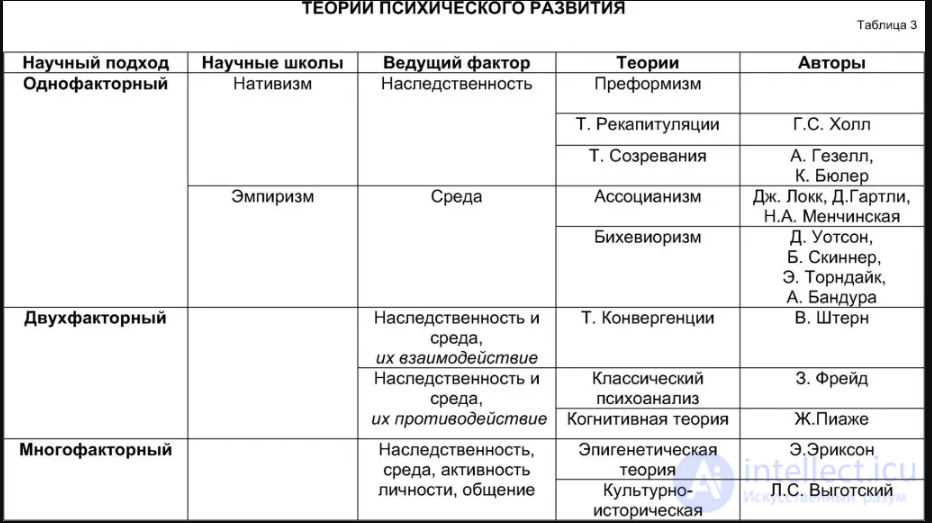
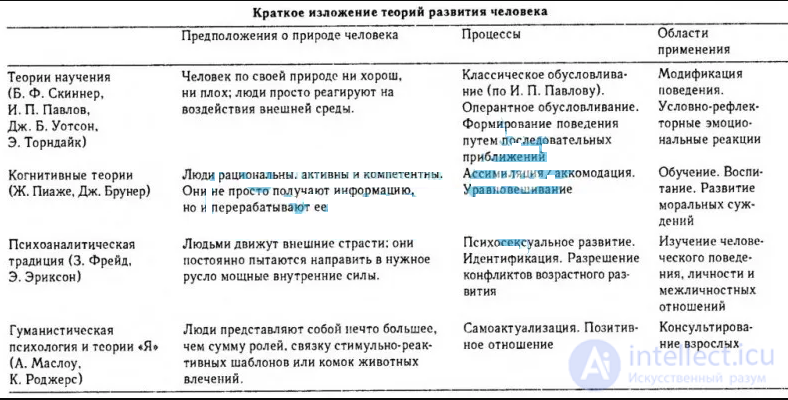
19. Factors of personal development
- A) heredity, environment, upbringing, self-education
- B) interest in studying, level of achievement
- C) the level of knowledge in academic subjects
- D) the status position of the individual within the collective
-
E) methods of teaching and upbringing
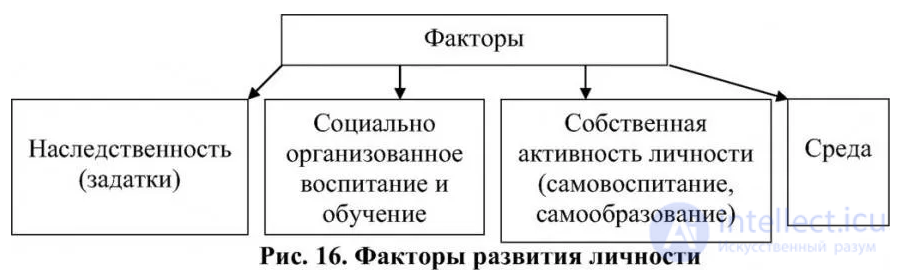
20. The driving forces of the upbringing process
- A) the cognitive interests of the individual
- B) the contradictions arising in the development of the individual
- C) the process of accumulating quantitative changes
- D) established forms of relationships
- E) the demands parents place on their children
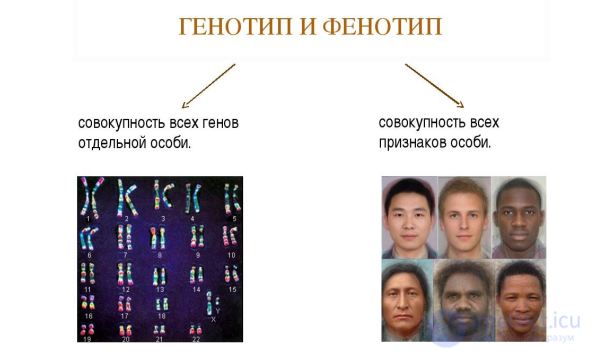
21. Qualities passed from parents to children:
- A) ways of thinking
- B) character traits, abilities
- C) the ability for a certain type of activity
- D) social experience
- E) eye color, skin color, blood type, type of nervous activity, temperament
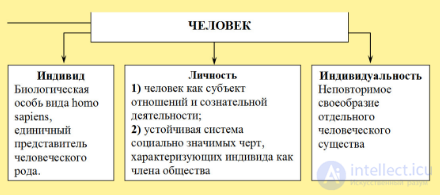
22. The concept of personality characterizes
- A) interest in the learning process
- B) the individual characteristics of a person
- C) natural inclinations and abilities
- D) a person's material situation
- E) the social essence of a person
23. The position of the teacher is
- A) scientific-theoretical training
- B) a system of attitudes toward pedagogical activity
- C) readiness for pedagogical activity
- D) the ability to plan the teaching process
- E) orientation in various branches of science
24. A requirement for the personality of the teacher
- A) professional competence
- B) being a good family person
- C) conformism
- D) being an interesting conversationalist
- E) indifference
25. The object of the teacher's activity is
- A) a learning task
- B) the pedagogical process
- C) the parents of the students
- D) forms of instruction
- E) methods of instruction
26. The main sign of the effectiveness of the upbringing process is
- A) knowledge, skills and habits
- B) academic performance
- C) the schoolchild's behavior
- D) the individual characteristics of the schoolchild
- E) adaptation to conditions
27. The main driving force of upbringing is
- A) the contradiction between the existing level of development and new, higher needs
- B) the contradiction of social development
- C) the contradiction between mental and physical labor
- D) the contradiction of individual moral consciousness
- E) the divergence of value orientations
28. An important sign of the effectiveness of the upbringing process is
- A) educators' understanding of the essence of the upbringing process
- B) the presence of specially trained people to transmit knowledge
- C) the pupils' knowledge, appropriate to their age, of norms and rules of behavior
- D) the formation of communication skills and habits
- E) the improvement of knowledge in practical activity
29. A requirement of the personal approach
- A) taking into account the age-related and individual characteristics of students
- B) the participation of pupils in the joint discussion of upbringing programs
- C) rejecting centralized school upbringing
- D) complete freedom of action for pupils
- E) coordinating the efforts of the school, family and community
30. The essence of the principle of unity of educational influences consists in:
- a) solving all educational tasks based on real life
- B) educators relying on the family while taking into account the child's individuality
- C) coordinating the educational influences of the school, family and community
- D) taking into account age-related and individual characteristics
- E) coordinating the mass media with the school
31. A pattern of upbringing is
- a) a general guiding principle requiring consistency of actions under various circumstances
- B) an adequate reflection of the objective reality of the upbringing process, possessing stable properties
- C) variants of organizing a specific upbringing process
- D) directing students' activity by means of various recurring tasks
- E) the conditions and prerequisites of the upbringing process
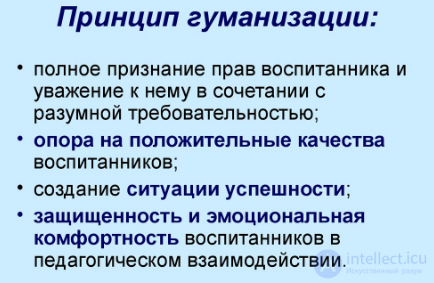
32. The principle of humanization characterizes
- a) permissiveness
- B) respect for a person's right to be themselves
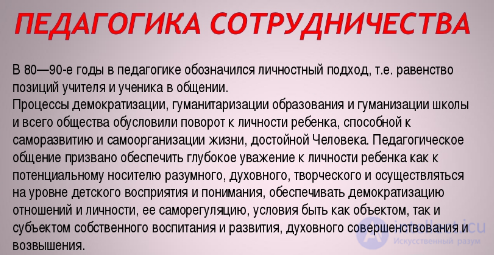
- C) developing the cognitive powers of students
- D) fostering diligence
- E) fostering neatness and thrift
33. The principle of linking upbringing with life and labor presupposes
- a) the interconnection of the methods, means and forms of upbringing
- B) the coordination of actions between educators and parents
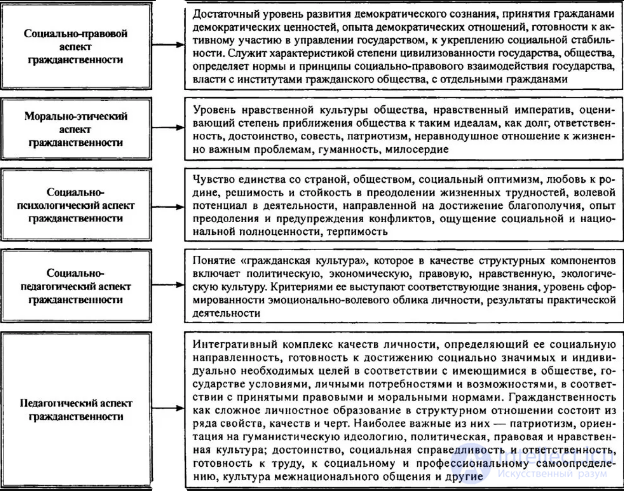
- C) combating bad habits, laziness, sloppiness
- D) mastering the content of education
- E) the mandatory participation of all children and adolescents in productive labor within their capabilities
34. Moral upbringing is
- a) the behavioral experience of schoolchildren
- B) forming aesthetic taste
- C) a scientific worldview of the individual
- D) knowledge of the humanities
- E) the assimilation of universal human values
35. The core of civic upbringing is
- a) the absence of conflicts among pupils
- B) the purposeful activity of schoolchildren
- C) polytechnic education
- D) encyclopedic knowledge
- E) patriotism
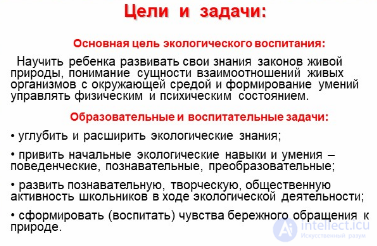
36. The goal of environmental education is
- a) forming a dialectical-materialist worldview
- B) forming an ecological culture
- C) forming a comprehensively developed personality
- D) forming a healthy lifestyle
- E) mastering various types of activity
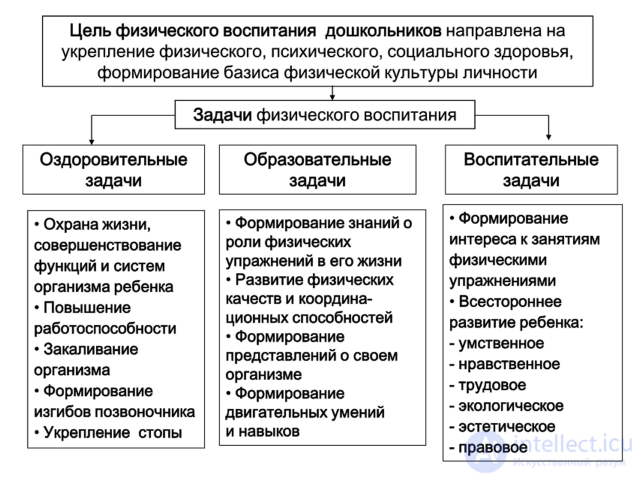
37. The goal of physical education is
- a) forming a worldview
- B) forming a physical culture
- C) forming conscious discipline
- D) forming chaste behavior in young men and women
- E) forming an aesthetic culture
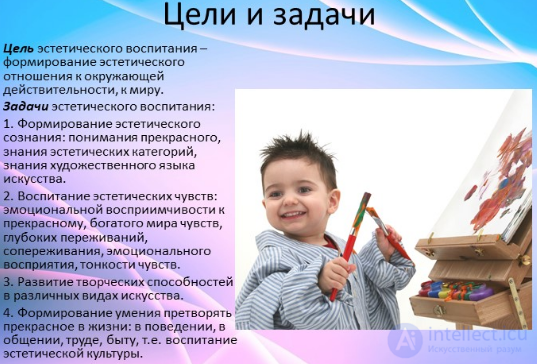
38. The goal of aesthetic upbringing is
- a) fostering a rationally thinking person
- B) forming a free personality
- C) spiritual self-improvement
- D) forming spiritual needs
- E) forming an aesthetic culture
39. The general-education school forms in students a worldview that is
- a) everyday/common-sense
- B) scientific
- C) religious
- D) mundane
- E) artistic
40. The effectiveness of legal education depends on the degree of
- a) punishment for violating laws
- B) the formation of legal knowledge
- C) society's control over compliance with laws
- D) the need to comply with laws
- E) the formation of legal consciousness, strictness
41. Methods of upbringing are
- a) the general initial principles that guide the teacher
- B) ways of influencing the consciousness, will, feelings, and behavior of pupils
-
C) objects of material and spiritual culture that are used to solve pedagogical tasks
- D) the external expression of the upbringing process
- E) variants of organizing a concrete upbringing process
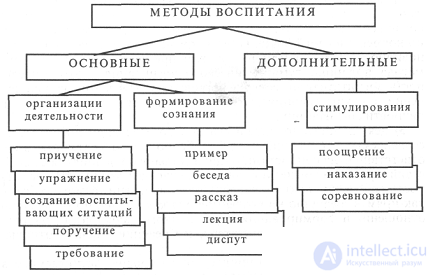
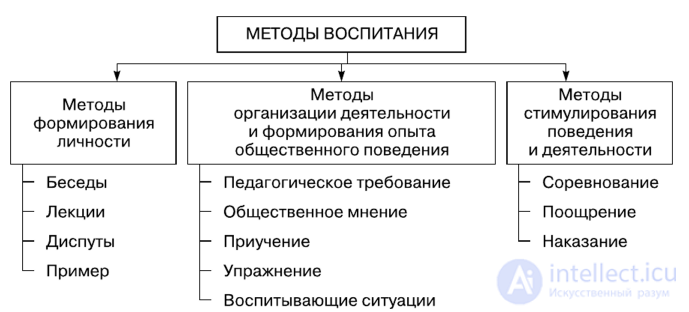
42. Punishment — is
- A) a way of influencing a pupil with the aim of stopping their negative actions
- B) a method of upbringing manifested in the form of a demand
- C) requests, stimulation, good deeds
- D) managing a student's activity by means of various repeated tasks
- E) influence on students' knowledge with the aim of clarifying facts and phenomena of life
43. Organized interaction of a pupil with objects of the surrounding world with the aim of forming socially valuable attitudes toward them — is
- A) formative activity
- B) educational (upbringing) activity
- C) teaching activity
- D) play activity
- E) social activity
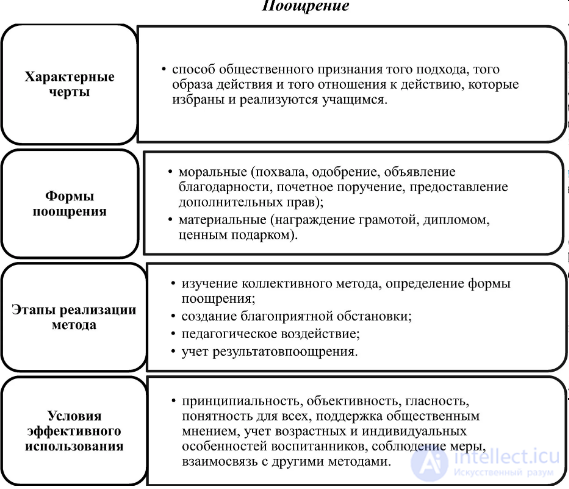
44. Encouragement — is
- a) emotional-verbal influence on pupils
- B) disapproval and negative evaluation of a person's actions and deeds
- C) involving pupils in developing correct assessments and judgments
- D) a method of pedagogical influence on a pupil with the aim of stimulating positive behavior
- E) a vivid, emotional account of concrete facts and events
45. Forms of upbringing
- a) the scope of upbringing work
- B) variants of organizing a concrete act of upbringing
- C) a system of purposeful organization of pupils' collective and individual activity (methods)
- D) a lesson — a panorama of the assimilation of new knowledge
- E) the expected results of upbringing
46. You have received a homeroom class. Where should you start your work
- a) getting acquainted with the students, appointing the class actives, familiarizing them with the rules of conduct and the requirements of homeroom leadership
- B) studying the list of students, the social status of their parents, and their place of residence
- C) studying the students, drawing up a work plan, and bringing this plan to the students' attention
- D) studying the students, identifying their interests, drawing up and discussing a work plan
- E) getting acquainted with the students, appointing the class actives, holding a parent meeting
47. The developmental function of extracurricular work consists in:
- A) identifying hidden abilities, developing the child's inclinations and interests
- B) forming the need for self-improvement
- C) the effectiveness of individual work
- D) understanding the child's inner world
- E) taking into account children's age-related characteristics
48. What should a homeroom teacher avoid when visiting students at home
- a) proposing joint projects
- B) a high degree of tact in conversation with parents
- C) a conversation in the student's presence
- D) complaining about the student
- E) emphasizing one's own interest in the pupil's fate
49. Which solutions to upbringing tasks in the family are not effective:
- A) parental authority
- B) folklore, the spoken word
- C) national traditions and customs
- D) material reward
- E) the spiritual climate of the family
50. The developmental function of upbringing work:
- a) studying the educational potential of the students
- B) developing individual abilities
- C) forming the foundations of a worldview and behavior
- D) managing students' activity
- E) organizing students' independent activity
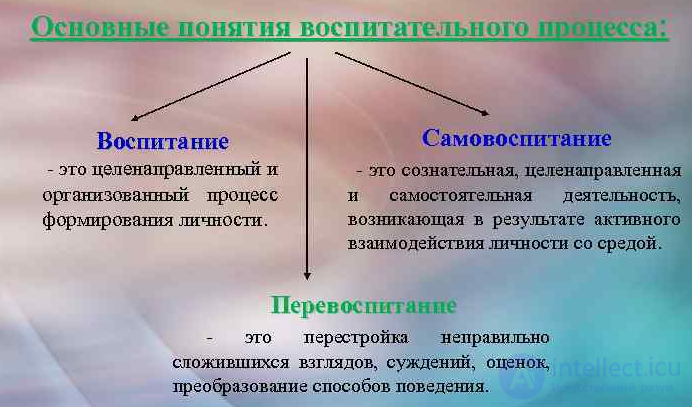
51. Re-education is
- a) cultivating a sense of national dignity
- B) specially organized cognitive activity
- C) a person's adaptation to various values
- D) cultivating good manners and a culture of behavior
- E) restructuring attitudes, views and ways of behaving that contradict ethical norms
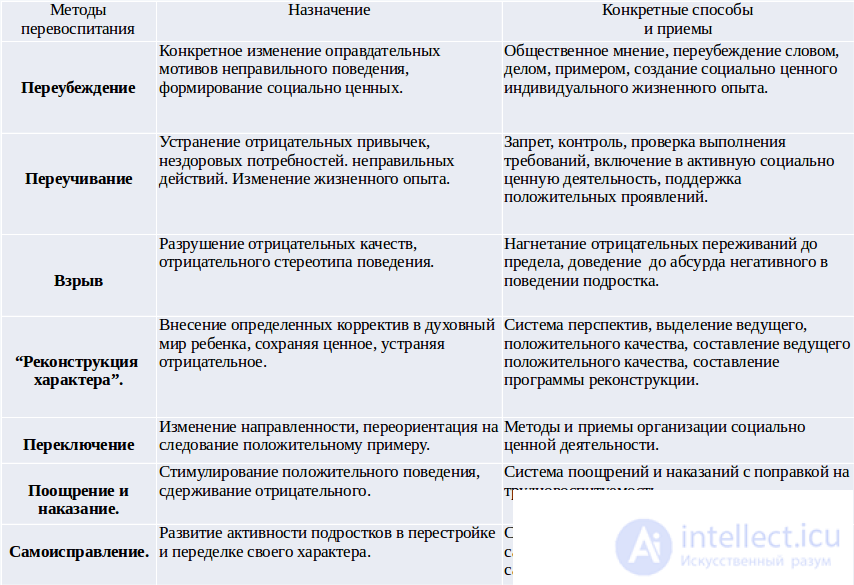
52. Self-education (self-upbringing) is
- a) eliminating circumstances that contribute to the formation of law-breaking behavior
- B) purposeful activity as a result of the active interaction of the personality with the environment
- C) the experience of forming consciousness, feelings and habits of behavior
- D) transforming negative modes of behavior that complicate the process of personality formation
- E) conscious, purposeful, independent activity leading to self-improvement
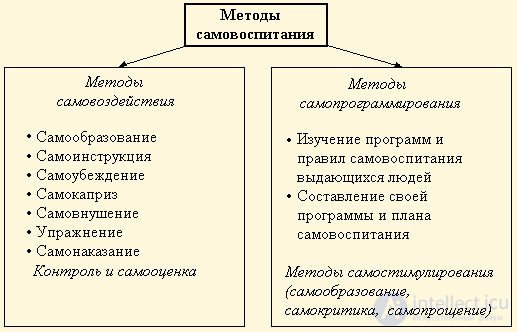
53. Self-education — is
- A) acquiring knowledge about the world on the basis of independent study
- B) techniques for activating mental activity
- C) self-knowledge, overcoming the shortcomings of one's previous upbringing
- D) specially organized health-improving activity
- E) a process of suggestion directed at oneself
54. The principle of a person's behavior, based on worldview attitudes, ideals and norms, is called
- a) self-awareness
- B) self-analysis
- C) a life position
- D) self-regulation
- E) self-control
55. An intensive manifestation of the need for self-education (self-upbringing), as a rule, occurs
- a) in infancy
- B) in adolescence
- C) in adulthood
- D) in old age
- E) in youth
56. The main techniques of self-education (self-upbringing) are
- a) situations of trust, control, self-regulation
- B) self-command, criticism, remarks
- C) self-analysis, self-assessment, self-control, self-regulation, self-condemnation
- D) competitions, demonstration of models and examples, creating situations of success
- E) persuasion, suggestion, narration, proof, appeals, well-being
57. The main function of the family
- a) socialization
- B) upbringing
- C) the child's physical development
- D) developing intellectual initiative
- E) teaching
- Zh) satisfying sexual needs
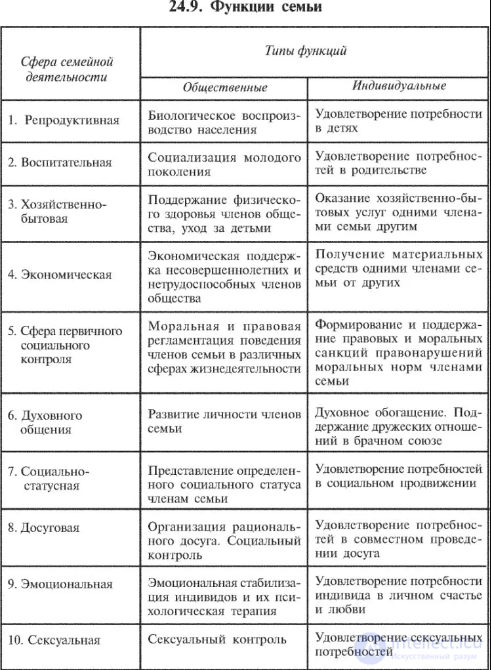
58. The reason for the decline in the family's educational influence is
- a) a decline in the standard of living
- B) all the answers are correct
- C) a decline in morals
- D) an intensifying generational conflict
- E) social regression
59. The main task of parent associations
- a) material support for schools
- B) organized educational influences on schoolchildren
- C) organizing and carrying out universal pedagogical education
- D) stimulating students' interest
- E) forming a culture of academic and intellectual work
60. The educational influence of the family in the present period
- a) cannot be reliably assessed
- B) has remained unchanged
- C) has increased
- D) has decreased
- E) is negative
61. Qualities that are not passed on from parents to children
- a) ways of thinking
- B) character traits
- C) type of nervous system and temperament
- D) skin and eye color
- E) social experience
62. The system of raising children in the family is characterized by
- a) moral and material rewards
- B) the organization of joint labor
- C) creating conditions for the formation of the child's personality, through the parents' behavior and their own personal style
- D) the transmission of parental experience
- E) permanent and temporary household chores
63. The family is
- a) an institution in which a person is fully expressed in all respects
- B) the marriage of two people
- C) the primary, structural unit of society, which lays the foundations of personality
- D) a socio-pedagogical group of people intended to satisfy needs
- E) a small group based on blood kinship, whose members are connected to one another

64. The crisis of the modern family is characterized by
- a) the predominance of civil (unregistered) marriages
- B) a narrowing of parents' outlook
- C) a sharp change in the social background and the slow adaptation of the family to new socio-economic conditions
- D) freedom to enter into and dissolve marriage
- E) a sharp decline in authority and an increase in conflict with them
65. The main directions of family upbringing are
- a) political, sexual, and the cultivation of a culture of behavior
- B) economic, environmental, professional
- C) physical, moral, aesthetic, labor, intellectual
- D) social and mental upbringing through labor
- E) the cultivation of conscious discipline, physical upbringing, and the all-round development of the personality
66. The set of institutions called upon to solve educational and upbringing tasks is
- a) the content of education
- B) the education system
- C) the concept of education
- D) the essence of education
- E) the educational space
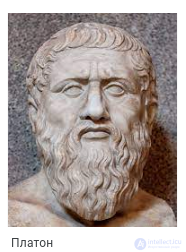
67. The creator of the classroom-lesson system of instruction is
- a) Plato
- B) K.D. Ushinsky
- C) J.A. Comenius
- D) Socrates
- E) V.A. Sukhomlinsky
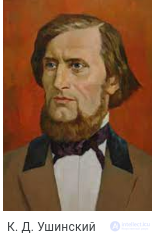
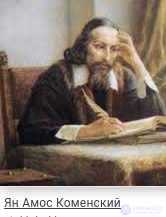
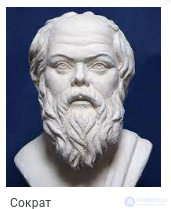

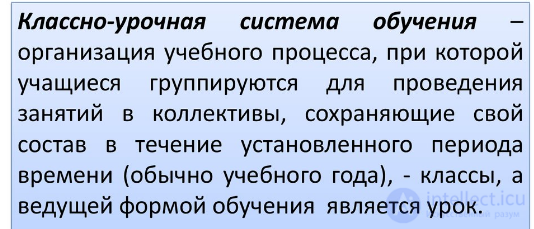
68. The system of knowledge, skills, habits, and modes of thinking acquired in the process of instruction is
- a) teaching
- B) education
- C) instruction
- D) upbringing
- E) scientific cognition
69. Didactics is
- a) a branch of pedagogy that studies upbringing
- B) the theory of personality formation
- C) the science of the laws of personality development
- D) a branch of pedagogy that studies instruction and education
- E) the theory of personality socialization
70. Instruction as a means of educating, raising, and developing a person is studied by
- a) school management theory
- B) dialectics
- C) dianetics
- D) the theory of upbringing
- E) didactics
71. Learning is one of the two sides of instruction, and the other side is
- a) comprehension
- B) perception
- C) reflection
- D) assimilation
- E) teaching
72. The leading form of organizing instruction in school is
- a) a consultation
- B) an educational discussion
- C) the lesson
- D) an educational dialogue
- E) an elective class
73. To determine the content of instruction means to answer the question
- a) how much to teach
- B) whom to teach
- C) why to teach
- D) how to teach
- E) what to teach
74. A category of didactics is
- a) the goal of upbringing
- B) moral development
- C) the process of instruction
- D) the socialization of the personality
- E) upbringing
75. Teaching methods in which the source of knowledge is the spoken or printed word are
- a) demonstration methods
- B) visual methods
- C) practical methods
- D) illustrative methods
- E) verbal methods
76. Consciousness and activeness in instruction is
- a) a teaching method
- B) a didactic principle
- C) a research method
- D) a teaching technique
- E) a regularity of instruction
77. From the standpoint of pedagogy, to teach means to
- A) monitor the correctness with which the subject is assimilated
- B) present the educational material in a clear and accessible manner
- C) ensure that students acquire knowledge, skills, and habits
- D) compel students to learn
- E) ensure the accumulation of scientific knowledge
78. The rule «from the simple to the complex» relates to the teaching principle of
- A) linking theory with practice
- B) visual presentation
- C) scientific rigor
- D) accessibility
- E) durability
79. Command of the methods of applying assimilated knowledge in practice is called
- A) skills
- B) a level of learnedness (attainment)
- C) knowledge
- D) a level of education
- E) good upbringing
80. A teaching aid is called
- A) part of a teaching technique
- B) the component parts of a teaching method
- C) technical equipment
- D) that with the help of which the instructor teaches and the student learns
- E) a way of assimilating knowledge, skills, and habits
81. The path to achieving the aim and task of instruction is
- A) its form
- B) its method
- C) self-education
- D) learning
- E) its means
82. Teaching methods in didactics make it possible to answer the question
- A) what to teach
- B) where to teach
- C) why to teach
- D) when to teach
- E) how to teach
83. The two-sided nature of instruction is manifested in the close interaction of
- A) education and upbringing
- B) the pupil and the class
- C) the family and the school
- D) self-education and learning
- E) teaching and learning
84. The initial premise that guides a teacher in practical activity is
- A) a law
- B) a method
- C) a regularity
- D) a principle
- E) a fact
85. The main components of education are
- A) skill, aptitudes, inclinations
- B) knowledge, abilities, thinking
- C) knowledge, skills, habits
- D) habits, skills, consciousness
- E) thinking, psyche, memory
86. An individual indicator of the speed and quality with which a person assimilates knowledge, skills, and habits in the process of instruction is
- A) good upbringing
- B) learning ability (trainability)
- C) level of education
- D) giftedness
- E) ability
87. A truly objective indicator of the success of students' learning is
- A) the number of textbooks
- B) the absence of negative grades
- C) the number of grades in the subject
- D) mastery of educational and cognitive skills
- E) the number of friends
88. The driving force of the educational process is
- A) the didactic abilities of the teacher
- B) the volitional qualities of the teacher
- C) the contradiction between the learning tasks and students' current level of knowledge
- D) the sequential change of the leading types of students' learning activity
- E) students' awareness of the need to master knowledge, skills, and habits
89. The essence of problem-based learning consists in
- A) studying students' cognitive capabilities
- B) managing students' cognitive activity
- C) posing a learning problem to students
- D) posing a problem and assimilating ready-made conclusions
- E) organizing students' independent search activity
90. Students' independent learning work is
- A) a pupil's learning activity carried out on the teacher's assignment
- B) extracurricular learning work
- C) a form of learning activity carried out without the teacher
- D) individual learning activity
- E) the completion of the teacher's individual assignments
91. The essence of programmed instruction consists in
- A) the automation of instruction
- B) instruction with programmed control over the process of assimilating knowledge, skills, and habits
- C) studying the material ‘’in small doses’’
- D) independent work with a programmed textbook
- E) the use of curricula
92. The document that determines the list of academic subjects, their distribution across years of study, and the weekly and annual number of hours is
- A) a working curriculum
- B) a syllabus
- C) a standard curriculum
- D) the curriculum plan (study plan)
- E) a calendar plan
93. A book that presents the fundamentals of scientific knowledge in an academic subject is
- A) an author's abstract
- B) didactic material
- C) a monograph
- D) a methodological manual
- E) a textbook
94. Didactics is
- A) a branch of pedagogy that develops the theory of instruction
- B) a branch of pedagogy that studies the process of upbringing
- C) the science of the laws of personality development
- D) a branch of pedagogy that studies the problems of managing educational institutions
- E) the science of the rising generation
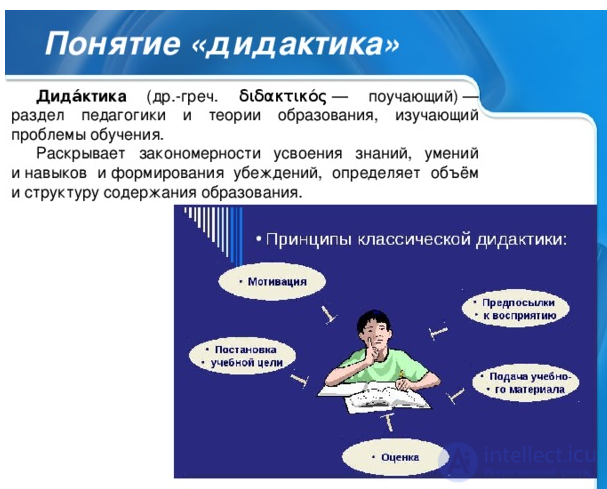
95. A principle of instruction is
- A) responsiveness
- B) comfort
- C) visual presentation
- D) timeliness
- E) emotionality
96. The rule «from the easy to the difficult» relates to the principle of
- A) accessibility
- B) sequence and systematicity
- C) scientific rigor
- D) linking theory with practice
- E) visual presentation
97. The process of instruction is
- A) mastering the culture of physical labor
- B) a set of sequential actions by the teacher and the students directed by him or her
- C) the conscious assimilation of a system of knowledge, skills, and habits
- D) the formation of the foundations of a worldview and behavior
- E) the development of creative powers and abilities
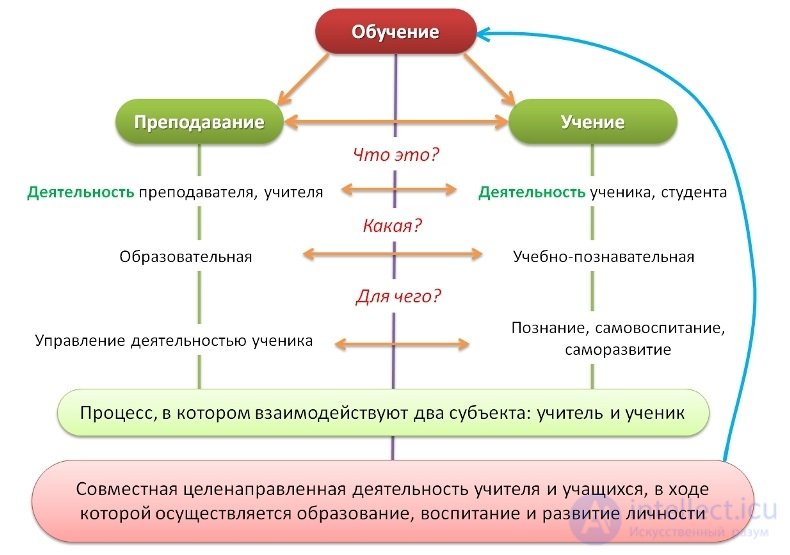
98. The dialogical teaching method, in which the teacher, by posing questions, leads students toward understanding the material, is
- A) the research method of instruction
- B) the problem-based teaching method
- C) the method of monitoring
- D) the illustrative method
- E) the educational conversation (heuristic talk)
99. The teaching activity of the teacher, together with the cognitive activity of the pupil that it directs, is
- A) learning
- B) upbringing
- C) instruction
- D) education
- E) self-education
100. The driving force of the process of instruction is
- A) equipping students with a system of knowledge, skills, and habits
- B) students' awareness of the need to master skills and habits
- C) the teacher's presentation of new knowledge and the organization of students' activity
- D) the contradictions of the instructional process
- E) the set of cognitive actions of the teacher and students aimed at assimilating a system of —knowledge, skills, and habits
101. Knowledge in action is
- A) motives
- B) habits
- C) knowledge
- D) skills
- E) communication
- F) habit (custom)
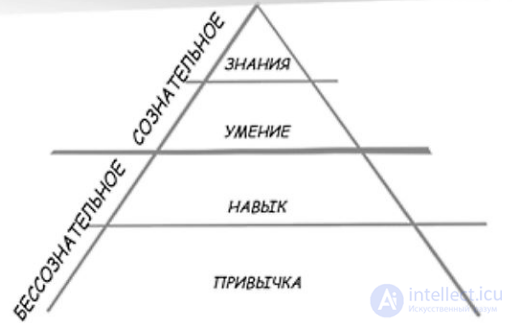
102. The process of scientific cognition is characterized by
- A) the discovery of new facts and laws governing the development of the surrounding world
- B) the presence of direct guidance on the part of the teacher
- C) equipping students with the experience and knowledge acquired by humanity
- D) the assimilation of subjectively new knowledge
- E) equipping students with a system of knowledge, skills, and habits
103. The basic concepts of didactics:
- A) pupil, teacher
- B) teaching, learning, education, instruction
- C) instruction, self-education
- D) learning situation, teaching method
- E) learning, the educational process
104. The regulator of the degree of difficulty in students' assimilation of new material is the principle of:
- A) scientific rigor
- B) visual presentation
- C) accessibility
- D) activeness and consciousness
- E) durability
105. The term «principle of instruction» means:
- A) didactic laws
- B) rules
- C) didactic regularities
- D) guiding ideas, normative requirements for the organization and conduct of the pedagogical process
- E) rules, norms
106. If the content of instruction acquaints students with objective scientific facts, theories, and laws, and reflects the current state of the sciences, then this corresponds to the principle of:
- A) scientific rigor
- B) visual presentation
- C) accessibility of instruction
- D) consciousness
- E) systematicity and sequence
107. If instruction takes into account the developmental characteristics of students and excludes intellectual, moral, and physical overload, then this is the implementation of the principle of:
- A) scientific rigor
- B) accessibility
- C) systematicity and sequence
- D) visual presentation
- E) students' consciousness and activeness
108. Teaching methods are divided into verbal, visual, and practical according to:
- A) the nature of students' cognitive activity
- B) didactic goals
- C) the source of knowledge
- D) the logical path of cognition
- E) their place in the structure of activity
109. The teaching method in which the teacher, relying on students' knowledge and experience, uses questions to lead them toward the assimilation of new knowledge, is called:
- A) narration (storytelling)
- B) explanation
- C) lecture
- D) conversation
- E) discussion
110. Visual teaching methods are:
- A) graphic work, laboratory work, exercise
- B) working with a book
- C) conversation, narration, a school lecture, instruction (briefing)
- D) compiling tables, graphs, and diagrams
- E) independent observations, illustration, demonstration
111. The purpose of a lesson devoted to studying new material is:
- A) the formation of skills and habits
- B) students' mastery of new materials
- C) systematization and generalization of new knowledge
- D) review and reinforcement of previously acquired knowledge
- E) establishing the level of students' mastery of theoretical knowledge and methods of cognitive activity on key topics
112. The following are NOT forms of organizing the learning process:
- A) elective classes
- B) the lesson
- C) laboratory practicum
- D) observation
- E) homework
113. The analysis of students' achievements is carried out for the purpose of:
- A) accumulating grades
- B) ongoing (current) monitoring
- C) periodic monitoring
- D) individualizing instruction
- E) correcting students' activity and managing the learning process
114. The classification of methods by the nature of cognitive activity:
- A) inductive and deductive
- B) verbal, visual, practical
- C) explanatory-illustrative, reproductive, problem-based
- D) the method of monitoring
- E) the method of initial mastery of the material, reinforcement, development of skills and habits, checking and assessment
115. Homework aimed at mastering the material being studied is characterized by:
- A) assimilation of the educational material
- B) students' independent work in completing the assignment
- C) the absence of direct guidance from the teacher
- D) the presence of a learning assignment and students' independent work in completing that assignment
- E) the improvement of academic skills and habits
116. The document that characterizes an individual academic subject is:
- A) a textbook
- B) the syllabus (curriculum)
- C) the curriculum plan
- D) a study aid/manual
- E) a standard (model) program
117. The repeated performance of learning actions for the purpose of practicing skills and habits is:
- A) an exercise
- B) a discussion
- C) an oral quiz
- D) laboratory work
- E) practical work
118. The use of supplementary forms of instruction is due to the fact that:
- A) lessons are boring and need to be varied
- B) lessons provide only part of the knowledge
- C) extracurricular forms promote the development of independent action
- D) they supplement and develop the class-lesson system
- E) extracurricular classes make lessons more interesting
119. The breakdown of the content of education by academic subjects and years of study is reflected in:
- A) the curriculum plan
- B) a lesson plan/outline C) a thematic plan
- D) a self-education plan
- E) a calendar plan
120. A plan is:
- A) the school's main tasks and forms of work
- B) analysis of teaching-and-upbringing work
- C) types of activity and forms of work
- D) analysis of teaching-and-upbringing work and types of activity
- E) a system of measures mapped out in advance, providing for the order, sequence and deadlines for completing the work
121. The collegial governing body for the strategy of developing the pedagogical process on a scientific basis is:
- A) the school's pedagogical council
- B) a workplace (production) meeting
- C) the methodological council
- D) a subject-area association
- E) a meeting/session
122. The principal document defining the system of management and administration of a school is called:
- A) a concept
- B) the State Standard
- C) a standard (model) plan
- D) the charter (statute)
- E) a normative document
123. Teacher certification is carried out for the purpose of:
- A) identifying the actual level of their professional skill
- B) diagnosing pedagogical activity
- C) teachers' self-education work
- D) teachers' methodological training
- E) improving the teacher's theoretical training
124. The branch of pedagogical science whose aim is to study the content and methods of managing public education, running a school and organizing its work is called:
- A) dialectics
- B) school studies
- C) the theory of upbringing; the improvement of teachers' theoretical training
- D) the theory of instruction
- E) didactics
125. Drawing up the plan for a school's teaching-and-upbringing work for the new academic year begins with
- A) formulating the tasks of the teaching-and-upbringing work
- B) planning the main activities
- C) analyzing the school's work over the past year
- D) determining the main directions of teaching-and-upbringing and mass sports work
- E) determining the main directions of upbringing work
126. The style of activity based on the cooperation of participants in the pedagogical process is known as:
- A) authoritarian leadership
- B) the communard method
- C) self-government
- D) pedagogy of cooperation
- E) liberal (laissez-faire) leadership
127. The main type of student activity, without which instruction cannot be provided, is;
- A) learning-and-cognitive activity
- B) play activity
- C) socially useful activity
- D) labor activity
- E) mental activity
128. The active, self-developing subject of the learning process is
- A) the administration
- B) the parents
- C) the pupil
- D) the teacher
- E) homeroom teachers
129. The development of pedagogy as a science was determined by:
- A) the increasing role of upbringing in social life;
- B) the biological law of the preservation of the human race;
- C) the objective need to prepare a person for life and work;
- D) parents' concern for their children's happiness;
- E) the progress of technical development.
130. The basic categories of pedagogy:
- A) forms of instruction, means of instruction
- B) lesson, instruction, development
- C) principles of instruction, components of the pedagogical process
- D) upbringing, education, instruction
- E) self-education, self-upbringing
131. The tasks of general pedagogy:
- A) studying problems of population migration
- B) teaching and raising the younger generation
- C) studying the laws (patterns) of the process of cognition
- D) studying the history of the development of pedagogical theory
- E) analyzing the experience of foreign pedagogy
132. The methodology of pedagogical science is the study of:
- A) upbringing and instruction
- B) the subject of the pedagogical process
- C) the socialization of the individual
- D) the goals of education and upbringing
- E) the principles of constructing scientific research
133. The branch of pedagogy that examines the age-related and individual characteristics of children, and the formation and development of the personality:
- A) the theory of instruction
- B) the theory of upbringing
- C) the general foundations of pedagogy
- D) school studies
- E) defectology
134. The branch of pedagogy that examines the upbringing and instruction of children with developmental disabilities:
- A) defectology
- B) surdopedagogy (education of the deaf)
- C) typhlopedagogy (education of the blind)
- D) speech therapy
- E) oligophrenopedagogy (education of children with intellectual disabilities)
135. The branch of pedagogy dealing with the teaching and upbringing of children with hearing impairments:
- A) surdopedagogy (deaf education)
- B) typhlopedagogy (education of the blind and visually impaired)
- C) logopedics (speech therapy)
- D) oligophrenopedagogy (education of children with intellectual disabilities)
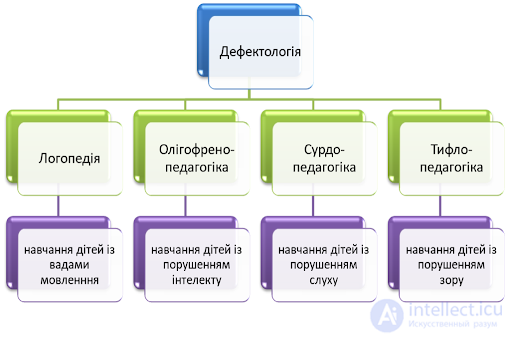
136. The branch of pedagogy dealing with the teaching and upbringing of children with visual impairments:
- A) logopedics (speech therapy)
- B) typhlopedagogy (education of the blind and visually impaired)
- C) oligophrenopedagogy (education of children with intellectual disabilities)
- D) surdopedagogy (deaf education)
- E) defectology (special education)
137. The branch of pedagogy dealing with the teaching and upbringing of children with intellectual developmental disorders:
- A) oligophrenopedagogy (education of children with intellectual disabilities)
- B) typhlopedagogy (education of the blind and visually impaired)
- C) surdopedagogy (deaf education)
- D) defectology (special education)
- E) logopedics (speech therapy)
138. The branch of pedagogy dealing with the teaching and upbringing of children with speech disorders:
- A) defectology (special education)
- B) oligophrenopedagogy (education of children with intellectual disabilities)
- C) typhlopedagogy (education of the blind and visually impaired)
- D) surdopedagogy (deaf education)
- E) logopedics (speech therapy)
139. Upbringing (character education) is:
- A) the transmission of knowledge, skills and habits
- B) educational work with children in an educational institution
- C) instilling appropriate norms and rules of behavior
- D) developing a person's creative powers and abilities
- E) the process of forming a personality in order to prepare it for social, productive and cultural activity
140. Education is:
- A) the development of a worldview, moral and other qualities of the personality
- B) the effective practical application of accumulated scientific knowledge
- C) the process and result of teaching and upbringing
- D) the result of purposeful relations between teacher and students
- E) the result of a person's professional training
141. Teaching (instruction) is:
- A) a person's activity carried out with a definite purpose
- B) the joint, purposeful activity of teacher and students, in the course of which the development, education and upbringing of the personality is carried out
- C) the influence of external and internal factors on the process of personality formation
- D) the formation of personal qualities
- E) a process of management under the teacher's guidance
142. Self-education is:
- A) the self-development of personal qualities
- B) the purposeful interaction of teacher and students
- C) the learning process under a teacher's guidance
- D) the process and result of a person's purposeful cognitive activity
- E) self-improvement with the help of the mass media environment
143. Personality is a combination of:
- A) individual and social
- B) moral and professional qualities
- C) moral and morphological qualities
- D) social and personal qualities that determine a person's social essence
- E) personal and individual qualities
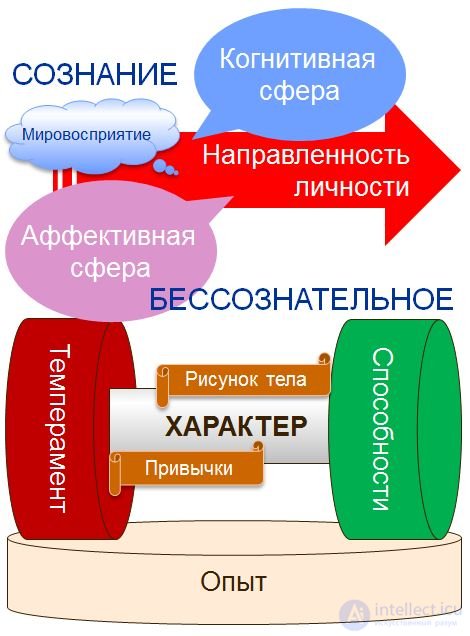
144. The development of the personality is:
- A) the process of transition from one state to another
- B) the process of a personality's improvement under the influence of external and internal factors
- C) the process of quantitative changes in the organism
- D) mental and physical improvement
- E) psychic development
145. Observation:
- A) cognition of the surrounding world under natural conditions
- B) the gathering of information
- C) an organized investigation
- D) the correction of received material in the mind
- E) the sensory perception of things
146. Scientific experience that takes into account the specific conditions of teaching and upbringing is:
- A) testing
- B) observation
- C) expert assessment
- D) experiment
- E) generalization of experience
147. The need to pass on social experience arose in connection with:
- A) the updating of the content of education
- B) the development of technical teaching aids
- C) the emergence of human society
- D) the development of pedagogical science
- E) the development of scientific and technological progress
148. A questionnaire survey as a research method makes it possible to:
- A) gather additional information
- B) gather information that determines the state of the problem under study
- C) investigate effective teaching methods
- D) investigate effective upbringing methods
- E) determine the individual abilities of students
149. Development is:
- A) ensuring the vital functions of the organism
- B) quantitative changes in the human organism
- C) the spontaneous development of volitional qualities
- D) the qualitative and quantitative changes occurring in the human organism
- E) the improvement of the psychic system
150. Subjective factors of upbringing:
- A) the mass media
- B) natural factors
- C) heredity
- D) the level of development of science and technology
- E) relationships within the family
151. A natural experiment is characterized by conditions that are:
- A) artificial
- B) natural
- C) social
- D) family-related
- E) environmental
152. A laboratory experiment is an experiment that is:
- A) family-related
- B) natural
- C) environmental
- D) specially organized
- E) social
153. Author of the book “Pedagogical Poem”:
- A) N.K. Krupskaya
- B) Sh. Amonashvili
- C) K.D. Ushinsky
- D) V.A. Sukhomlinsky
- E) A.S. Makarenko
154. The principle of conscious and active learning is characterized by:
- A) mental and physical labor
- B) the ability to use the necessary educational material
- C) the sequence of the material studied
- D) the assimilation of educational material with the active participation of students
- E) the logical connection of the educational material
155. The principle of accessibility in teaching is:
- A) taking into account the individual and age characteristics of students
- B) the correspondence of the content and volume of the educational material to the age-related and individual characteristics of students
- C) the correspondence of the teaching process to the students' level of knowledge
- D) taking into account the connection of the teaching process with life
- E) the correspondence of the teaching process to the interests of students
156. The principle of scientific rigor in teaching is:
- A) providing students with a system of knowledge that forms a scientific worldview
- B) the use of scientific facts in the teaching process
- C) the humanization of the teaching process
- D) the use of achievements of science
- E) the use of scientific literature in the teaching process
157. Functions of the teaching process:
- A) educational, developmental and upbringing (character-forming)
- B) educational, instructional and upbringing (character-forming)
- C) developmental, motivational and educational
- D) constructive, motivational and upbringing (character-forming)
- E) corrective, constructive and instructional
158. Author of the book “Where Have the Threes (C Grades) Gone?”
- A) S.I. Lysenkova
- B) V.F. Shatalov
- C) A.S. Makarenko
- D) Sh. Amonashvili
- E) A. Iskakov
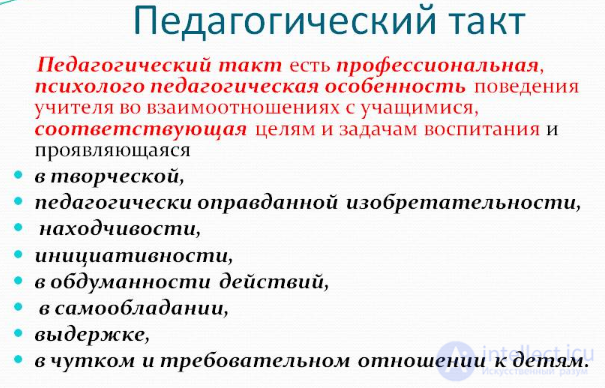
159. Pedagogical tact is:
- A) an external manifestation of a person's inner world
- B) the interaction of adults and children
- C) a measure of educational influence
- D) the principle of measure/moderation that a teacher must observe in the process of communicating with children
- E) an active form of interaction with the environment
160. The new model of higher education
- A) secondary school, college, higher education institution
- B) bachelor's, master's, doctoral studies
- C) higher education institution, postgraduate studies, doctoral studies
- D) preschool, school, secondary-vocational, higher
- E) college, institute, university
161. The State Program for the Development of Education in the Republic of Kazakhstan is designed for:
- A) 2000-2005
- B) 2003-2030
- C) 2005-2015
- D) 2003-2010
- E) 2005-2010
162. Pedagogy is closely connected with:
- A) physical education, drawing, and labor training
- B) philology, physics, and sociology
- C) mathematics, geography, and psychology
- D) philosophy, psychology, and physiology
- E) philosophy, astronomy, and medicine
163. The holistic pedagogical process is:
- A) the interaction of the school, the family and the community
- B) a purposeful process of interaction between the teacher and the students aimed at assimilating cultural values and preparing for life activity
- C) the unity of upbringing and instruction
- D) instruction and upbringing
- E) a joint system of all institutions of upbringing
164. The main elements of the holistic pedagogical process:
- A) structure, direction, content
- B) goal, course of the lesson, visual presentation
- C) goal, objectives, content, forms, methods, result
- D) academic subject, pupil, teacher
- E) lesson topic, goal, course of the lesson, checking of knowledge
165. Defectology:
- A) the upbringing of children with hearing impairments
- B) the upbringing of children with visual impairments
- C) the upbringing of children with speech development impairments
- D) the branch of pedagogy that studies the upbringing of children with developmental disabilities
- E) the branch of pedagogy that studies the upbringing of children with deviant behavior
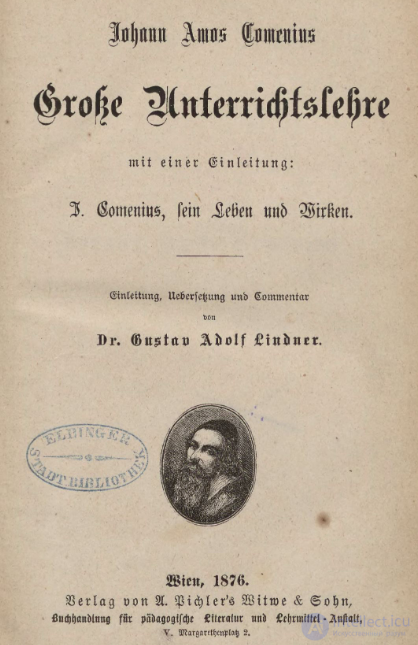
166. The author of the work “The Great Didactic”
- A) V.A. Sukhomlinsky
- B) K.D. Ushinsky
- C) A.S. Makarenko
- D) Ya.A. Comenius
- E) M. Zhumabayev
167. The influence of large groups of people on the formation of personality is called:
- A) upbringing
- B) a macrofactor
- C) a microfactor
- D) a megafactor
- E) a mesofactor
168. A process is:
- A) a result
- B) a system
- C) movement
- D) a goal
- E) a sphere
169. The transition to 12-year education in the Republic of Kazakhstan provides for:
- A) two stages
- B) five stages
- C) three stages of instruction
- D) four stages
- E) one stage
170. Play is the leading type of activity:
- A) of adolescence
- B) of infancy
- C) of youth
- D) of childhood
- E) of early adolescence
171. Characteristics of acceleration (developmental acceleration):
- A) biological development
- B) the development of the organism and the child's growth
- C) biological development, social status
- D) the development of upbringing processes
- E) the acceleration of growth and physical development in children
172. The transition to 12-year education for grades 5 and 11 in the Republic of Kazakhstan began in:
- A) 2008-2009
- B) 2009-2010
- C) 2005-2006
- D) 2004-2005
- E) 2006-2007
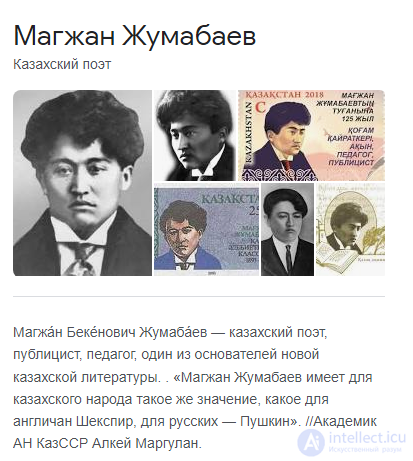
173. In Kazakhstan, the first textbook “Pedagogy” was written by:
- A) Zh. Aimauytov
- B) Y. Altynsarin
- C) A. Baitursynov
- D) M. Zhumabayev
- E) Zh. Koyanbayev
174. Styles of pedagogical communication:
- A) humanistic, mutual understanding, openness
- B) democratic, humanistic, openness
- C) authoritarian, democratic, liberal
- D) authoritarian, respectful
- E) cooperation, openness, authoritarian
175. “Command”, “directive”, “reprimand” are characteristic of the following style of pedagogical communication:
- A) authoritarian
- B) democratic
- C) liberal
- D) cooperation
- E) mutual understanding
176. “Request”, “consultation”, “agreement” are characteristic of the following style of pedagogical communication:
- A) authoritarian
- B) democratic
- C) liberal
- D) oppositional
- E) neutral
177. The style of behavior of a teacher who does not take part in the life of the collective:
- A) oppositional
- B) democratic
- C) authoritarian
- D) liberal
- E) cooperation
178. An effective style of managing the pedagogical process:
- A) liberal
- B) democratic
- C) authoritarian
- D) oppositional
- E) neutral
179. The Latin word “paradigm” means:
- A) a model
- B) a direction
- C) an example
- D) an instruction
- E) a project
180. The basic requirements for a teacher:
- A) pedagogical skill and pedagogical tact
- B) willpower, pedagogical technique
- C) ideological commitment, patience
- D) steadiness, observational skill
- E) patience, attentiveness
181. An internal factor influencing the development of the personality:
- A) relationships
- B) action
- C) the level of development of society
- D) upbringing
- E) heredity
182. A teacher's knowledge of child psychology makes it possible to:
- A) develop observational skill
- B) determine the child's intellect and the potential of their personality
- C) plan the child's activity
- D) master skills
- E) develop abilities and interest in learning
183. The interconnection between individual subjects is:
- A) the interconnection between science and subjects
- B) the interconnection between related subjects
- C) the interconnection of humanities and natural-science subjects
- D) the interconnection of individual subjects
- E) an interdisciplinary (cross-curricular) connection
184. Subjects of the aesthetic cycle:
- A) Kazakh, Russian and foreign languages
- B) social studies, human studies
- C) languages and literature
- D) music, fine arts, labor training, physical education
- E) economics, geography, history
185. Encouragement and punishment is a method,:
- A) stimulating
- B) verbal
- C) exploratory
- D) visual
- E) practical
186. An essay is:
- A) obtaining information about the nature of cognitive activity
- B) a completed scientific study
- C) a brief presentation, in written form or as a public talk, of the content of a source that has been studied
- D) advice given by a specialist
- E) a brief, written summary of an article
187. Encouragement is a method of:
- A) stimulating behavior
- B) stimulating the child
- C) a social demand placed on the child
- D) organizing the child's collective activity
- E) a collective demand placed on the child
188. The concept of “extracurricular educational work” means:
- A) olympiads and competitions
- B) lessons in out-of-school institutions
- C) various events conducted by the teacher, parents, and out-of-school institutions
- D) extracurricular lessons
- E) extracurricular educational events
189. The materials of the methodological association are kept:
- A) with the director
- B) in the methodological office
- C) in the teachers' lounge
- D) in the library
- E) with the deputy head for academic affairs
190. The founder of the first school in Kazakhstan:
- A) M. Zhumabayev
- B) Y. Altynsarin
- C) Ch. Valikhanov
- D) D. Sembayev
- E) A. Baitursynov
191. Advanced experience is experience:
- A) that ensures the effectiveness of teaching and upbringing
- B) that achieves high results
- C) that generalizes the work of teachers and students
- D) of particular teachers and educators
- E) of specific teachers, ensuring high effectiveness in the field of teaching and upbringing
192. Features of pedagogical work:
- A) the possibility of earning a high income
- B) fulfillment of the need for communication
- C) constant interaction with children
193. The branch of the upbringing process in the course of pedagogy:
- A) theory of instruction
- B) theory of learning
- C) theory of upbringing
194. Pedagogy of cooperation is:
- A) the prevention and avoidance of conflict situations
- B) a direction in theory and practice developed in the 1980s as an alternative to authoritarian pedagogy
195. The concept of «personality»:
- A) an adult human individual
- B) a person having rights and duties in accordance with local legislation
- C) a set of qualities characterizing the social essence of a person
196. The laws (regularities) of instruction are:
- A) repeating rules used by the teacher
- B) regulatory acts, laws, and decrees that the teacher must observe
- C) objective, essential, stable, recurring connections between the constituent components and parts of the instructional process
197. Teaching is:
- A) a way of earning income
- B) the transmission of knowledge
- C) the management of the educational-cognitive activity of learners
198. Abilities are:
- A) anatomical and physiological features of the nervous system that serve as the basis for the formation of particular abilities.
- B) individual psychological characteristics of the personality that are conditions for the successful performance of a particular activity
- C) a combination of abilities that gives a person the capacity to perform some complex work activity successfully, independently, and originally
199. Programmed instruction:
- A) instruction using special software systems installed on computer systems
- B) a form of education in the process of which a person teaches and educates himself using special programs
- C) instruction according to a pre-developed program that provides for the actions of both the students and the teacher
200. The basic elements of citizenship:
- A) moral and legal culture
- b) inner freedom of the individual
- c) a harmonious combination of patriotic, national, and international feelings
- d) discipline
- e) the ability to fulfill one's duties
- f) altruism
- g) greed
201. The developmental function of extracurricular work consists in: choose one answer:
- a. in identifying hidden abilities, developing inclinations and interests of the child*
- b. in the effectiveness of individual work
- c. in understanding the child's inner world
- d. in forming the need for self-improvement
- e. in taking into account the age-related characteristics of children
See also
- [[b972]]
- [[b7339]]
- [[b5097]]
- [[b11949]]
See also



Comments