
Lecture
DIDACTIC (TEACHING) MATERIAL - a special type of visual teaching aid (mainly maps, tables, sets of cards with text, numbers or pictures, reagents, plants, animals, etc.), distributed to students for independent work in class or at home, or demonstrated by the teacher to the whole class. Being very simple in its content, design and manufacturing technology, didactic material can be prepared by the students themselves at the teacher's request. Collections of problems and exercises are also called didactic material.
Didactic materials have traditionally been an integral element of lessons, on a par with textbooks and exercise books. However, their use is often associated with inconveniences related to selection, storage and updating. Modern developers of educational products are trying to solve these problems.
Didactic material — is material that activates a student's cognitive activity, prompting them to become involved in the learning process, to take in information, and to think about a given topic. The didactic principle itself implies progressing from the simple to the complex through tools that are optimal for a given learner.
Handout material - is a set of teaching materials used by learners during lessons or during independent work. Handout material is a component of a standard teaching kit, or is produced independently of a teaching kit
Electronic (digital) didactic material (EDM) is a digital aid that makes it possible to tailor the effect on the student to their perceptual characteristics and offer them work at a suitable level of difficulty. These are the same maps, tables, illustrations, as well as video and audio materials — convenient to store, accessible for homework, and enhanced with interactive elements. Didactic materials in electronic form are used not only through computers, phones, tablets and other personal digital devices, but also alongside paper editions, in the form of frontal (whole-class) work. Moreover, in our current reality the use of digital aids most often takes place through interactive whiteboards or simple projectors, which is taken into account by developers of digital educational resources.
Didactic and handout materials in classes on special disciplines are a kind of visual aid, the use of which helps activate the cognitive activity of learners and save instructional time.
Didactic and handout material – is a special type of teaching aid, predominantly visual: maps, tables, sets of cards with
text, numbers or formulas, etc., including materials created on the basis of information technology, distributed to learners for
independent work in class and at home, or demonstrated by the instructor to the entire group.
The large number of electronic educational resources that currently exist are not always able to adequately solve the tasks
facing the instructor when studying specific topics. Ready-made resources do not always suit the running of a class in terms of
alignment with the curriculum, the structure of the class, the characteristics of the learners, the manner of presenting information, etc.
The relevance of working with didactic and handout materials lies in the fact that it increases learners' motivation to learn,
develops a certain type of thinking (visual-figurative, theoretical, logical), and shapes a
culture of learning activity and of the information culture of society, while activating the interaction of intellectual and emotional
functions in the joint solving of research (creative) and learning tasks.
Speaking generally, the use of didactic and handout materials in the learning process contributes to achieving
the main tasks facing the instructor: helping the learner to master knowledge as fully as possible and to be able to use it in
solving practical problems.
Digital didactic materials in the individualization of education.
Electronic didactic materials help teachers implement the individualization of the learning process.
Directions of individualization:
Content (which topics are offered to a particular student).
Volume (the level of difficulty of the material).
Time of study.
The peculiarity is that when working with didactic aids, the student needs to be helped to become familiar with as much material as possible, but the study time must be strictly limited. In essence, didactic materials create starting points, activation points, which the child remembers and then uses in independent work, spending as much time on it as they need. Types of information in «activation points»: Visual. These are video materials, interactive maps, animation and so on. For the sake of individualization, the teacher can pause the clip on a key frame and leave it on the board so that each child can examine the important fragment and commit it to memory in whatever way is convenient for them. Digital didactic materials are also used by children in homework at an individual pace. Practical. Tasks in digital format make it possible to differentiate assignments according to the needs of the students, as well as to go over material that is important for all students in a whole-class format.
Digital didactic materials can also include electronic textbooks, assessment and measurement materials, practice tools for the All-Russian Verification Work (VPR), and much more. A builder for creating one's own presentations, the ability to edit and supplement materials, optimization for work on an interactive whiteboard.
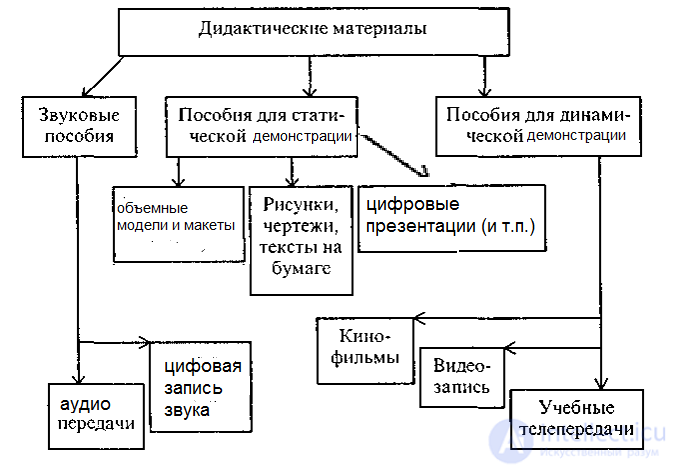
Fig. 1 classification of didactic materials
By the nature of the dominant system of information perception, systems of presenting material are divided into:
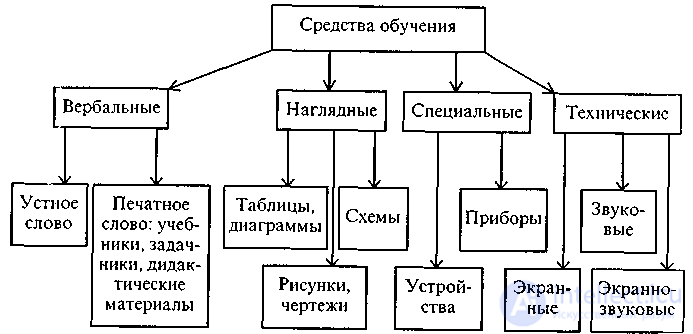
Fig. 2 teaching aids
When conducting a class, it is useful to know and take into account the main characteristics of «visual», «auditory» and «kinesthetic» students.
«Visual» learners, when memorizing and recalling, see specific images. It is easier for such students to take in information if it is accompanied
by some kind of visual sequence – text, a diagram, a map, a graph, etc., and not only spoken speech. Thus, visual didactic and
handout material is maximally effective for such students.
«Auditory» learners, when memorizing and recalling, hear words, and therefore assimilate material better in the form of a spoken explanation.
«Kinesthetic» learners assimilate material better if completing the task requires them to show independence, for example when working on a computer or doing lab work. As researchers note, high-achieving students, in addition to their leading system, actively use an additional system or additional
systems of information perception, whereas low-achieving students do not use additional systems. Therefore, if
the way information is conveyed does not match the learner's leading or usual system of information perception, the use of didactic
material allows the existing capabilities of students to be used more fully and actively thanks to the accessibility of the presentation of the educational material.
The combination of a visual image, text, and the teacher's oral explanation brings the student to multichannel perception, which is especially easily
achieved when using the capabilities of a computer. Such
perception of educational information allows each student to
learn more effectively within a system that suits them, and also
stimulates the development, in the given student, of additional
systems for perceiving information.
The use of didactic material contributes to activating students' educational activity and to saving instructional time.
Many teachers prefer to use in their work didactic materials of an exclusively monitoring/testing nature.
Given that the foundation of any learning process is, above all, students' independent activity, and also that one of the
purposes of didactic materials is their use in independent work, we can conclude that didactic
materials should play a somewhat different role in the learning process.
Means of visual presentation can include printed materials, demonstration pictorial aids, everyday surrounding objects, tables, illustrations, and counting and measuring instruments. Surrounding objects can be used to show various
spatial forms.
Demonstration pictorial aids. This type of visual aid includes, first of all, pictures and instructional tables, and also
includes models of measuring instruments and devices (a clock face, scales), models of measures (the meter, the liter), and mock-ups and models of objects.
Models are used when studying units of measure and teaching measurement. Mock-ups and models, in turn, serve as illustrative material when composing problems. Finally,
demonstration pictorial aids include images and models of various geometric figures.
Tables are understood as textual or numerical records arranged in a certain order. Most often in the form of columns, and also as grouped
series of drawings and diagrams, with or without text. Tables are printed on large sheets of paper glued, for ease of use, onto cloth or
cardboard. By their purpose, tables can be divided into groups: informational; instructional; practice/training; reference.
Measuring and counting instruments play a dual role in the learning process. First, they can be used for their direct
purpose, for measurements when carrying out various tasks or for obtaining data for problems of a practical nature. Second, they
can serve as auxiliary aids when studying units of measure and the individual relationships between units.
Illustrations are usually understood as drawings placed in the textbook
and schematic depictions of various objects and groups of
objects, as well as plans, drawings, diagrams, and tables; like the
demonstration visual aids discussed above, illustrations are used in
the most varied situations. With their help, the objects being discussed,
the actions being performed, are shown clearly, or the content of
the problem is explained.
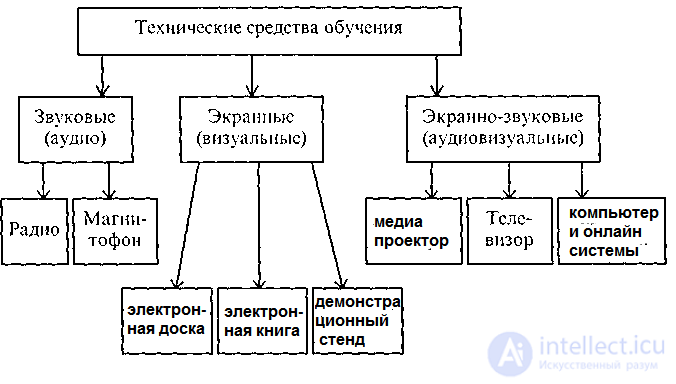
Fig. 3. Classification of EDM and technical teaching aids
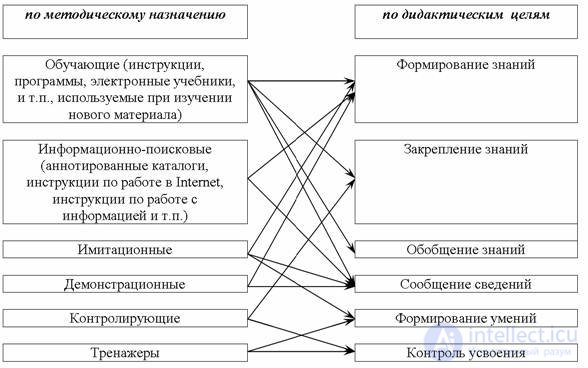
Fig. 4. Classification of EDM
Today, electronic demonstration handout materials have come into wide use in the educational process. There is a classification of electronic demonstration materials by methodological purpose and didactic goals; in particular, we can identify the following types:
1. Didactic texts for teaching students to work with various sources of information (textbooks, maps, reference books, dictionaries,
electronic resources, etc.);
2. Generalized plans for certain types of cognitive activity: studying scientific facts; preparing and conducting
an experiment; studying a physical instrument; conducting scientific-and-technical research; the act of measurement; analyzing a graph of
a functional relationship; analyzing tables;
3. Memos (instructions) for developing the logical operations of thinking: comparison, generalization, classification, analysis, synthesis;
4. Assignments for developing the skills of comparing, analyzing, proving, establishing cause-and-effect relationships, and generalizing;
5. Assignments of varying levels of difficulty: reproductive, transformative, and creative;
6. Assignments with problem questions;
7. Assignments for developing imagination and creativity;
8. Experimental assignments;
9. A generalized activity model (GAM) of the experiment as a method of independent research, including recommendations
on formulating the aim of the experiment, proposing and substantiating the hypothesis of the experimental study, planning the experiment, methods
for recording the results of observations and measurements, measurement rules, assessment of measurement accuracy, graphical interpretation of the experiment's results,
rules for approximate calculations, formulating a conclusion based on the experiment's results, and rules for preparing the report;
10. Instructional cards reflecting the logical scheme for studying new material and the necessary methods of academic work;
11. Consultation cards: didactic materials with explanatory drawings, a plan for completing assignments, an indication of the type of problem, etc.;
12. Instructions for laboratory work and whole-class experiments;
13. Self-preparation sheets for students ahead of a laboratory session;
14. Reference materials: «Laboratory equipment: instruments, their purpose and technical characteristics, rules of use», «Measuring instruments. Rules of use and specifics of measurement technique»; tables of physical quantities, etc.;
15. An algorithm for completing the assignment;
16. An indication of the cause-and-effect relationships needed to complete the assignment;
17. An indication of the theorems, rules and formulas on the basis of which the assignment is performed;
18. Models and simulation of the objects, processes or phenomena being studied or investigated;
19. Conducting laboratory work under conditions simulating, in a computer program, a real experiment or trial (the student can, at their own discretion, change the initial parameters of the trials, observe how the phenomenon itself changes as a result, analyze what is seen, and draw appropriate conclusions);
20. Tests with the possibility of self-monitoring. Any educational process requires visual presentation. Nowadays this is for the most part no longer diagrams, tables and pictures, but improved technical means of conveying information, for example, multimedia presentations.
A fundamental feature of a multimedia presentation is that, thanks to modern computer tools, it provides the most convenient perception of new information. Electronic presentations are, as a rule, intended for solving local pedagogical tasks. For example, the use of electronic presentations makes it possible to significantly increase the informativeness and effectiveness of a lecture when explaining educational material, and helps increase the dynamism and expressiveness of the material presented. It is obvious that the productivity of learning increases significantly when the visual and auditory channels of perception are engaged simultaneously. Research results show that the effectiveness of auditory perception of information is 15%, of visual perception – 25%, while their simultaneous involvement in the learning process raises the effectiveness of perception to 65%. Moreover, having notes in the form of thematic electronic presentations gives students the opportunity to organize independent work with resources of this kind . The main didactic capabilities of a multimedia presentation in the pedagogical process should be considered to include the presentation of new
theoretical information, the preparation and manner of use of active handout materials, the creation of problem situations and the setting of tasks,
as well as the monitoring of knowledge and the assignment of tasks for students' independent work.
The use of presentations in the educational process makes it possible to solve a whole range of didactic tasks: this includes the formation of vivid, imaginative
mental representations, which promotes better retention of the material; the possibility of becoming acquainted with natural and cultural objects,
phenomena, and processes that are not accessible to direct observation; saving time when presenting material, and much more.
As a modern, necessary teaching aid that is not difficult to prepare, a presentation helps raise the level of assimilation
of material by students, and accordingly increases the overall success of learning . At the present stage, a new system of
education is taking shape in Russia, oriented toward entering the global educational space, and therefore, when assessing students' knowledge, the problems listed
above are increasingly being solved through the use of testing as a form of assessment.
A test is a trial administered to a learner in order to determine the level
of formation of knowledge and skills, applied in accordance with a methodology for measuring the level of knowledge and evaluating results. The advantage of this method is that all students are placed in equal conditions, that is, the assessment of their knowledge becomes objective. A test makes it possible to determine the level of assimilation of knowledge for a given student, that is, to identify gaps in learning. On this basis, the learning process is then corrected, and subsequent stages of the educational process are planned.
A test disciplines the process of learning and thinking, helps systematize and generalize the knowledge acquired, and helps increase the effectiveness of student learning through the application of analysis and the formulation of conclusions based on the knowledge acquired.
The following are identified as the most significant principles of teaching implemented in the development of didactic materials:
1. The principle of accessibility (didactic materials are selected by the instructor according to the level already achieved by the learners);
2. The principle of independent activity (work with didactic materials is/can be carried out independently);
3. The principle of individual orientation (work with didactic materials is carried out at an individual pace, and the complexity and type of materials may also be selected individually);
4. The principles of visual presentation and modeling (since visual-imagistic components of thinking play an exceptionally important role in a person's life, using them in teaching proves to be extremely effective);
5. The principle of durability (human memory is selective in nature: the more important, interesting, and varied the material, the more durably it
becomes fixed and the longer it is retained; therefore the practical application of acquired knowledge and skills, being an effective way
of continuing their assimilation, promotes their better consolidation within a game-based (simulation) computer environment);
6. The principle of cognitive motivation;
7. The principle of problem-based learning (in the course of the work, the learner must solve a specific didactic problem using his or her knowledge, skills, and habits; being in a situation different from that of the classroom, under new practical conditions he or she carries out independent search activity, thereby actively developing his or her intellectual, motivational, volitional, emotional, and other faculties) .
At present, in order to train specialists who meet the modern demands of employers, instructors
must not only have a perfect command of their subject, but also master new information technologies. Today, a highly relevant
task is the development and use of electronic presentations in the educational process, all the more so since the use of multimedia
projectors and interactive whiteboards in class has already become more the rule than the exception .
On the whole, an electronic presentation is a didactic teaching material and represents a logically connected sequence
of slides, united by a single theme and common design principles.
Practically all teaching aids, except for experiments, can be replaced by presentation slides. It should be noted that a positive
effect from the use of presentations will only be achieved if the presentation is used not just once but systematically. At the same time,
when a presentation is used to conduct a class, it should serve rather as an auxiliary element of the class, that is,
the use of a presentation should not exclude the instructor's active participation in explaining the material and interacting with students .
Electronic presentations can be used in the following cases:
It is advisable to visualize slides not only in the form of plain text. Materials can be presented as diagrams, graphs, illustrations,
maps requiring commentary, a short video sequence, and so on. It is when explaining new material that the possibilities of the presentation itself and its design are broadest. The sequence of display and the logic of construction depend on the content of the material being studied, the characteristics of students' perception, and the individuality of the instructor. If a presentation is used at all stages of a lesson, its parts can be separated by different backgrounds, while the overall design style should still be perceived as a single whole .
In order for an electronic presentation to truly serve as an aid in the educational process, the following logical scheme for its construction can be recommended:
.
Summarizing some experience in preparing and using presentations in classes, several recommendations can be identified that can
help avoid a number of failures:
When opening each new slide in the presentation, the instructor invites the students to independently demonstrate the
knowledge they have acquired, as well as knowledge from previous classes, then summarizing everything and supplementing the answers with new information. During the class, there is a
alternation of types of work by the students, which contributes to activating their cognitive activity.
Thus, computer presentations – are one of the techniques that make it possible to make instructional material vivid and convincing, but this technique cannot be used for every topic or in every class. The advantages of presentations: the class becomes visual, information reproduced on slides is perceived quickly and easily, and the quality of instruction improves. A separate direction for using presentations – as independent material fully covering a given topic – can be useful for organizing preparation for knowledge testing when there are no textbooks available on the topic.
Let us consider the main goals of using didactic materials.
These include students' independent mastery of material and the development of skills for working with various sources of information,
activating students' cognitive activity, and developing skills for independently comprehending and assimilating new material.
Conventional substitutes, diagrams and drawings in didactic material contribute to the development of creative imagination and make it possible to «objectify»
abstract concepts.
The use of didactic materials makes it possible to establish feedback-based control, with diagnosis of errors (the appearance on the
computer of corresponding comments) based on the results of the activity, and evaluation of the results. Didactic materials are also aimed at
self-monitoring and self-correction, and practice in the course of assimilating instructional material.
In the process of working with didactic materials, students' motivation to learn is strengthened, a certain type of
thinking develops (visual-figurative, theoretical, logical), the process of forming a culture of learning activity is carried out,
along with an information culture of society, and the interaction of intellectual and emotional functions is activated in the joint solution of
research (creative) and learning tasks.
For example, if these are materials of a monitoring nature, they must necessarily provide for the possibility of self-checking and
self-monitoring.
A system of didactic materials in the learning process should also involve sequential, step-by-step instruction of students in various
techniques or methods of learning activity, as well as the use of tasks of various levels (reproductive, transformative, or
creative).
Among the existing requirements for didactic materials, the need to choose a sequence for becoming acquainted with
information stands out; where possible, the teacher should provide the student with detailed advice on the order of independent work and self-monitoring,
and structure the material in such a way as to ensure visual clarity for comparisons and juxtapositions.
Today, the use of information and communication technologies in the
educational process has become quite widespread, which helps free up instructional time by performing labor-intensive computational
work on the computer, strengthens motivation to learn, and develops a certain type of thinking (visual-figurative, theoretical, logical).
Didactic materials should be oriented toward forming a culture of learning activity, and also contribute to
activating the interaction of intellectual and emotional functions, in particular in the joint solution of research (creative)
learning tasks.
Modern information technologies allow developers of didactic materials to make use of a set of verbal and
non-verbal means such as they have never had at their disposal before. These means make it possible to create aesthetic, engaging, cognitive,
and problem-based materials, thereby increasing students' motivation and cognitive interest. From our point of view, this psychological-pedagogical
component of didactic material is aimed at attracting the student's attention, sustaining cognitive interest, activating
his thinking, and forming evaluations of what is described, and creates incentives for in-depth study of one issue or another.
It should be noted that the development of didactic materials is carried out strictly according to certain stages:

Comments