Tests in pedagogy are a tool for assessing the knowledge, skills and competencies of students or learners in the field of pedagogy. They are used to evaluate understanding and assimilation of pedagogical concepts, theories, methods and principles. Here are several reasons why pedagogy tests are useful:
-
Assessing the level of knowledge: Tests allow educators and teachers to assess the level of students' or learners' understanding of pedagogical topics. They help determine how well students have mastered the basic concepts, theories and methods of pedagogy.
-
Monitoring progress: By conducting regular tests, it is possible to track the progress of students or learners in studying pedagogy. This makes it possible to identify areas requiring additional attention and assistance, as well as to assess the effectiveness of teaching.
-
Evaluating the effectiveness of instruction: Pedagogy tests can be used to evaluate the effectiveness of teaching methods and pedagogical approaches. By comparing test results before and after applying specific teaching methods, it is possible to determine how successfully they contribute to the acquisition of knowledge and the development of skills.
-
Stimulating active learning: Conducting pedagogy tests can serve as an incentive for active learning. Knowing about an upcoming test, students or learners will be more motivated to study the material, ask questions and participate in discussions in order to prepare better for the test.
-
Feedback and recommendations: The results of pedagogy tests provide feedback to students or learners, as well as to educators and teachers. This helps identify students' strengths and weaknesses, pinpoint problem areas and provide recommendations for further improving instruction.
Pedagogy tests are one of the tools used in educational institutions to assess and improve the quality of education. They help stimulate active learning, assess students' knowledge and skills, and increase the effectiveness of the pedagogical process.
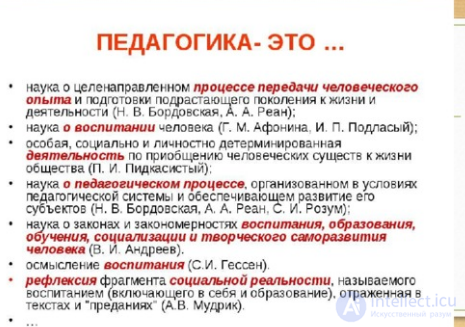
01. The term "pedagogy" is interpreted as
- a) a science that develops ways of realizing the goals of specific subjects on the basis of didactic norms
- b) the process of managing the formation of an active personality, the development of its social, psychological and physical properties
- c) a science that develops general norms for constructing integral systems of instruction
- d) the science of upbringing and teaching
- e) a sphere of professional activity aimed at achieving set goals on the basis of didactic and methodological norms, taking into account the specific conditions of instruction
Correct answer: the science of upbringing and teaching
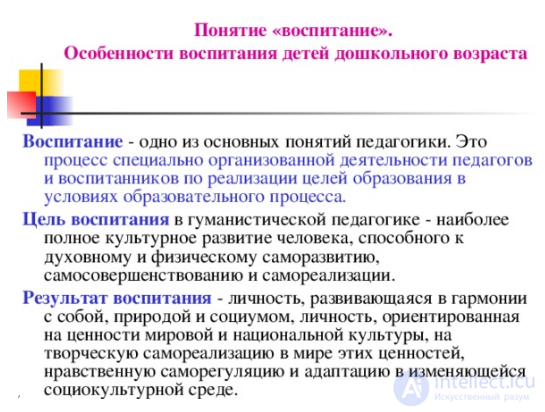
02. The term "upbringing" is interpreted as
- a) a science that develops ways of realizing the goals of specific academic subjects on the basis of didactic norms
- b) the process of managing the development of an active personality, its psychological, socio-moral properties and professional qualities
- c) a science that develops general norms for constructing integral educational systems
- d) the science of upbringing and teaching
- e) a sphere of educational activity aimed at achieving set goals on the basis of pedagogical norms, taking into account the specific conditions of instruction
Correct answer: b) the process of managing the development of an active personality, its psychological, socio-moral properties and professional qualities
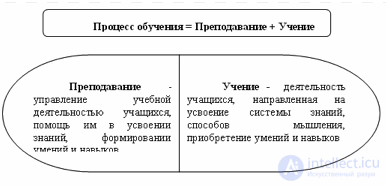
03. The term "the process of instruction" is interpreted as
- a) didactically grounded ways of assimilating the content of specific academic subjects
- b) the process of managing the formation of an active personality, the development of its psychological properties, social and professional qualities
- c) requirements for the general norms of constructing integral systems of instruction
- d) the science of upbringing and teaching
- e) the interconnected activity of the teacher and the learners aimed at achieving pedagogical goals
Correct answer: e) the interconnected activity of the teacher and the learners aimed at achieving pedagogical goals
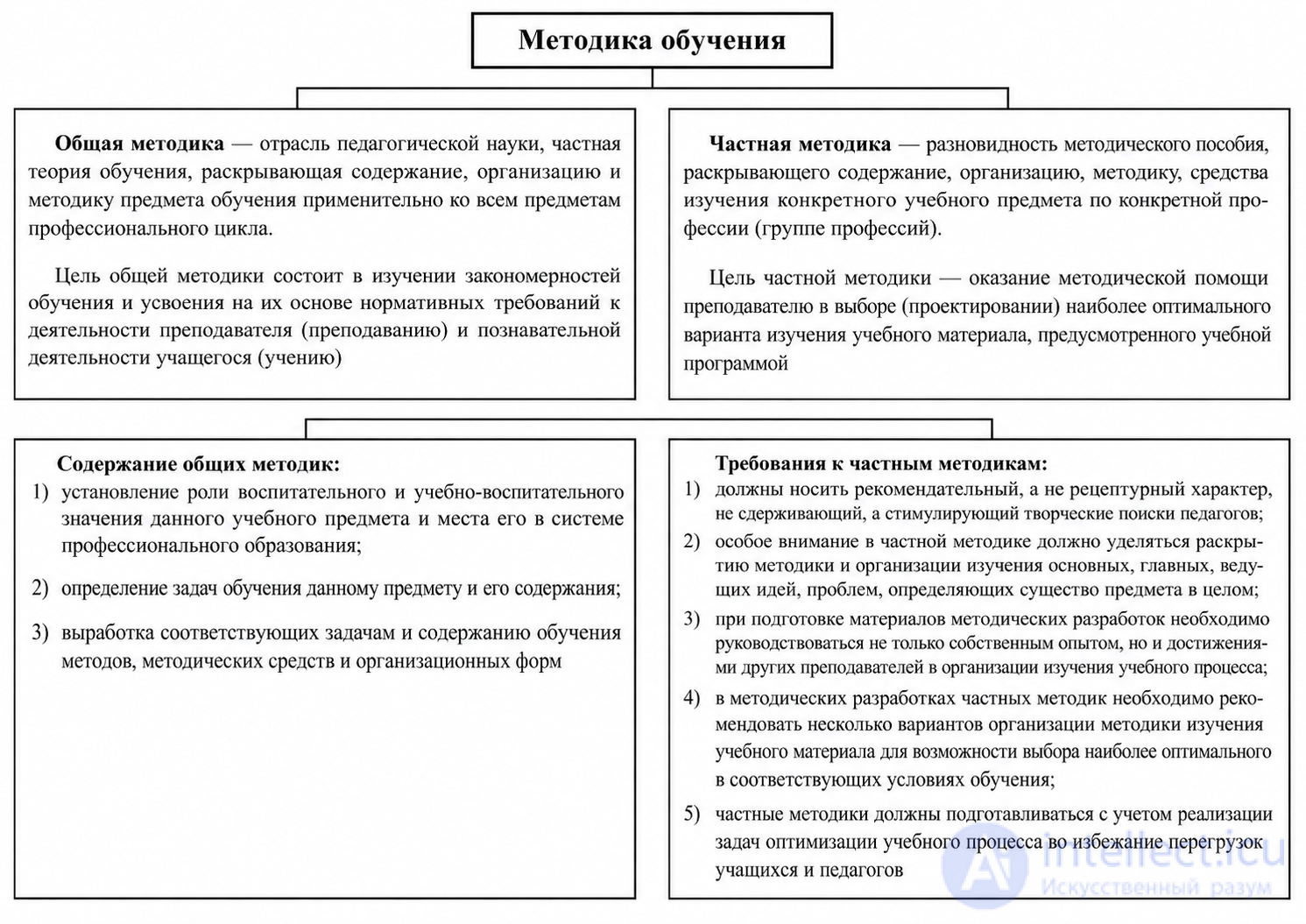
04. The term "teaching methodology" is interpreted as
- a) a science that develops ways of realizing the goals of mastering the content of specific academic subjects
- b) the process of managing the formation of an active personality, its social, psychological and physical properties
- c) a science that develops general norms for constructing integral systems of instruction
- d) the science of upbringing and teaching
- e) a sphere of professional activity aimed at achieving set goals on the basis of didactic and methodological norms, taking into account the specific conditions of instruction
Correct answer: a) a science that develops ways of realizing the goals of mastering the content of specific academic subjects
05. The pedagogical category "analysis" can be interpreted as
- a) the ability to use the material studied under probabilistic conditions
- b) the sequential reproduction of the material studied
- c) the transformation of material from one form of expression into another
- d) the ability to break material down into its component parts so that its structure clearly emerges
- e) actions with objects and people on the basis of a system of theoretical knowledge
Correct answer: d) the ability to break material down into its component parts so that its structure clearly emerges
06. Knowledge is
- a) a habit that has become a person's ordinary need
- b) an adequate representation of a subject, together with the corresponding images and concepts
- c) the ability to complete a task quickly
- d) the ability to act practically on the basis of assimilated information
- e) a body of life or professional experience
Correct answer b) an adequate representation of a subject, together with the corresponding images and concepts

07. A skill is
- a) a habit that has become a person's need
- b) a representation of a subject, together with the corresponding images and concepts
- c) the ability to complete a task quickly
- d) the ability to act on the basis of acquired knowledge
- e) a body of knowledge, skills and habits formed in the course of life and practical activity
Correct answer: d) the ability to act on the basis of acquired knowledge
08. A habit is
- a) a stereotyped action that has become a person's need
- b) a representation of a subject, together with the corresponding images and concepts
- c) an automatized skill; a condition for the rapid completion of a task
- d) the ability to act on the basis of acquired knowledge
- e) a body of knowledge and skills necessary for practical activity
Correct answer: a) a stereotyped action that has become a person's need
09. Didactics is
- a) the science of the laws governing the development of personality
- b) the science of the laws governing the formation of a child's personality
- в) a branch of pedagogy that develops the theory and technology of instruction
- d) a branch of pedagogy concerned with the education and upbringing of the younger generation
- e) the science that studies the process of educative instruction
Correct answer: c) a branch of pedagogy that develops the theory and technology of instruction
10. The following are true of the goals of instruction in secondary and higher education
- a) they are a reflection of the requirements of the state educational standard for the specialty
- b) they are a guideline for selecting the content, forms, methods and means of constructing the educational process
- c) they are a criterion for achieving the planned results at all stages of a specialist's training
- d) they are the most important means of integrating all disciplines of the curriculum
- e) they are a category that determines the choice of forms of instruction
Correct answer: a) b) c) d) e)
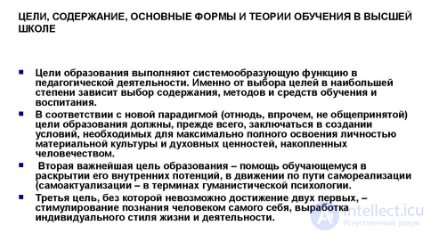
11. The following is characteristic of the goals of instruction
- a) the goals of instruction represent a list of the knowledge and skills a student must master
- b) the goals of instruction and the content of instruction are identical concepts that differ only nominally
- c) the goals of instruction serve as the basis for monitoring in the process of instruction
- d) the content of instruction determines the goals of instruction
- e) the goals of instruction are conceptions of the projected learning outcomes
Correct answer: a) the goals of instruction represent a list of the knowledge and skills a student must master;
c) the goals of instruction serve as the basis for monitoring in the process of instruction;
e) the goals of instruction are conceptions of the projected learning outcomes
12. The goals of a lecture are
- a) the formation of the theoretical and practical skills of the future specialist
- b) the formation of professional knowledge and the ability to communicate and interact in the course of practical activity
- c) the formation of the future specialist's theoretical thinking, and the substantiation of the orienting basis of his activity
- d) the implementation of the specialist's activity model (qualification profile)
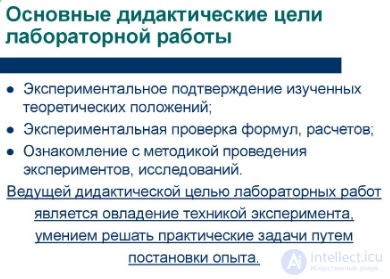
- e) the formation of skills for the experimental confirmation of theoretical propositions
Correct answer: c) the formation of the future specialist's theoretical thinking,
13. The goals of laboratory classes are
- a) the formation of theoretical and practical skills
- b) the formation of professional skills and the ability to communicate and interact in the course of practical activity
- c) the formation of systemic thinking, the substantiation of orienting-basis-of-action schemes, and the resolution of interdisciplinary and professional situations by means of the academic discipline
- d) the implementation of the specialist's activity model (qualification profile)
- e) the formation of skills for the experimental confirmation of theoretical propositions
Correct answer: e) the formation of skills for the experimental confirmation of theoretical propositions
14. The goals of a "game-based" practical class (including business games)
- a) the formation of a system of practical skills in the future specialist
- b) the formation of skills in professional communication and interaction
- c) the formation of the specialist's systemic practical thinking
- d) the implementation of a role-based model of the specialist's activity
- e) the formation of skills for the experimental confirmation of theoretical propositions
Correct answer: a) the formation of a system of practical skills in the future specialist; b) the formation of skills in professional communication and interaction: c) the formation of the specialist's systemic practical thinking; d) the implementation of a role-based model of the specialist's activity
15. By the content of education is meant
- a) the list of subjects in the curriculum, the number of hours allotted to studying them, and the indication of topics and sections
- b) the body of knowledge, skills, habits, experience of creative activity, and experience of an emotionally valued attitude toward reality that a student must master
- c) the range of knowledge that each learner acquires for their own development and for satisfying their interests, inclinations and needs
- d) the means and techniques of perception, memorization and logical thinking that students are taught
- e) the list of basic concepts that every learner must master
Correct answer: b) the body of knowledge, skills, habits, experience of creative activity, and experience of an emotionally valued attitude toward reality that a student must master
16. The content of instruction
- a) corresponds to the goals of instruction
- b) represents a list of abilities and habits
- c) reflects the content of the sciences and the specifics of the future specialist's professional work
- d) is based on the specialist's activity model
- e) depends on the teacher's scholarly preferences
Correct answer: a) corresponds to the goals of instruction; c) reflects the content of the sciences and the specifics of the future specialist's professional work
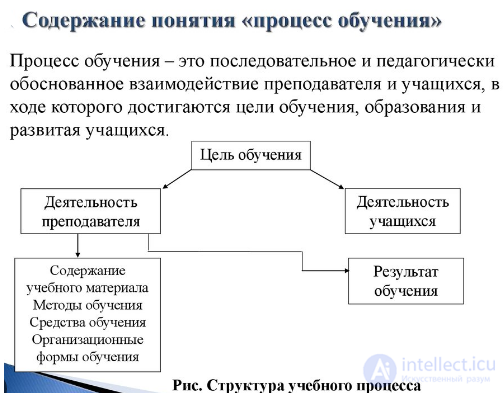
17. The process of instruction is
- a) the management of cognitive activity
- b) monitoring the assimilation of knowledge, skills and habits
- c) the joint activity of the teacher and the students aimed at intellectual development, the formation of knowledge and methods of mental activity in the learners, and the development of their abilities and interests
- d) a purposeful process of forming knowledge, skills and habits, and preparation for life and work
- e) the process of shaping the students' worldview
Correct answer: c) the joint activity of the teacher and the students aimed at intellectual development, the formation of knowledge and methods of mental activity in the learners, and the development of their abilities and interests
18. The curriculum for medical educational institutions is
- a) a training program
- b) a financial reporting document
- c) a directive document of the Ministry of Health of the Russian Federation
- d) a list of disciplines to be studied at the higher education institution, indicating the hours allotted to studying them and the forms of conducting classes
- e) an arbitrarily drawn-up work plan
Correct answer: b) a financial reporting document; c) a directive document of the Ministry of Health of the Russian Federation; d) a list of disciplines to be studied at the higher education institution, indicating the hours allotted to studying them and the forms of conducting classes
19. The course syllabus is
- a) a document that defines the content of a specific academic subject and the number of hours allotted to studying each topic of the course
- b) a document that lists the subjects to be studied at a given stage, and the number of hours allotted to studying them
- c) an indication of the parameters of a specialist's readiness for independent work in the chosen field of labor
- d) the list of goals for mastering the content of the academic discipline and the requirements for its mastery by students
- e) the list of professional and job duties of the future specialist
Correct answer: a) a document that defines the content of a specific academic subject and the number of hours allotted to the study of each topic of the course; d) the list of goals for mastering the content of the academic discipline and the requirements for its mastery by students
20. The upbringing process in a higher education institution presupposes
- a) the teacher's ability to bring up students through the content and methods of presenting their discipline
- b) the mandatory participation of students in social, educational and cultural events
- c) the self-education (self-upbringing) of students and teachers
- d) the existence of an institute of curators (academic advisors)
- e) compliance with norms of conduct by teachers and students
Correct answer: a) the teacher's ability to bring up students through the content and methods of presenting their discipline; c) the self-education of students and teachers; e) compliance with norms of conduct by teachers and students
21. The traditional forms of organizing the educational process include
- a) classes through the Faculty of Social Professions (FOP)
- b) olympiads
- c) interviews
- d) excursions
- e) lectures, seminars, practical classes, and field/on-the-job practice
Correct answer: e) lectures, seminars, practical classes, and field/on-the-job practice
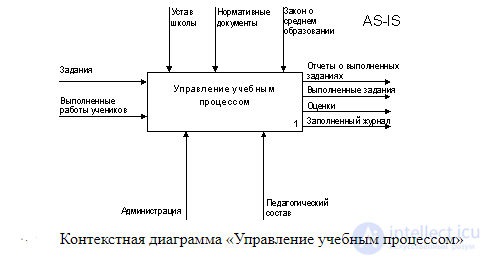
22. Managing the educational process is
- a) assessing the achievement of the learning objective
- b) monitoring and correcting the assimilation of educational material
- c) careful selection of educational material
- d) organizing students' cognitive activity for mastering the content of the academic discipline
- e) maintaining discipline
Correct answer: b) monitoring and correcting the assimilation of educational material
23. By teaching method one should understand
- a) methods of interrelated activity between the teacher and the students, aimed at achieving the goals of instruction, upbringing and development
- b) a way of transmitting knowledge to students
- c) the underlying regularity that determines the organization of the educational process
- d) a way of the teacher's cooperation with students
- e) a way of organizing students' cognitive activity
Correct answer: a) methods of interrelated activity between the teacher and the students, aimed at achieving the goals of instruction, upbringing and development; b) a way of transmitting knowledge to students; d) a way of the teacher's cooperation with students; e) a way of organizing students' cognitive activity
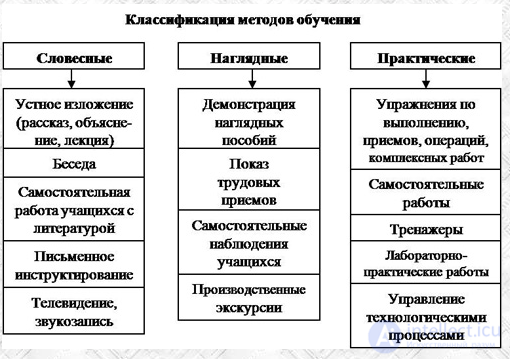
24. Teaching methods include
- a) conversation (discussion)
- b) narration (storytelling)
- c) imitation
- d) modeling
- e) illustration
Correct answer: a) b) c) d) e)
25. The main pedagogical goal of preparing a term paper and a diploma (thesis) project consists of the following
- a) the formation and practicing of skills
- b) providing the fundamentals of scientific knowledge
- c) the practical application of knowledge and skills
- d) deepening knowledge in the field of the subject being studied
- e) introducing students to the principles, rules and technology of conducting research work
Correct answer: e) introducing students to the principles, rules and technology of conducting research work
26. The form of instruction "field/on-the-job practice" has the following pedagogical goal
- a) the formation and practicing of skills
- b) the formation of the fundamentals of scientific knowledge
- c) teaching the practical application of the knowledge and skills formed in class, under the real conditions of professional activity
- d) deepening knowledge in the field of the subject being studied
- e) introducing students to the principles, rules and technology of conducting research work
Correct answer: c) teaching the practical application of the knowledge and skills formed in class, under the real conditions of professional activity
27. The form of instruction "lecture" has the following main pedagogical goal
- a) the formation and practicing of skills
- b) lays the foundations of systematized scientific knowledge
- c) the application of knowledge and skills in practice
- d) deepening knowledge in the field of the subject being studied
- e) introducing students to the principles and rules of the technology of research work
Correct answer: b) lays the foundations of systematized scientific knowledge
28. The form of instruction "practical class" has the following main pedagogical goal
- a) the formation and practicing of skills
- b) lays the foundations of scientific knowledge
- c) the application of knowledge and skills in practice
- d) deepening knowledge in the field of the subject being studied
- e) introducing students to the principles and rules of the technology of research work
Correct answer: a) the formation and practicing of skills
29. The form of instruction "seminar class" has the following pedagogical goals
- a) the formation and practicing of skills
- b) reinforcing the scientific knowledge acquired at the lecture
- c) the application of knowledge and skills in practice
- d) deepening knowledge in the field of the subject being studied
- e) developing the skills of discussing professional problems
Correct answer: b) reinforcing the scientific knowledge acquired at the lecture; d) deepening knowledge in the field of the subject being studied; e) developing the skills of discussing professional problems
30. The main goal of a practical class is
- a) to reinforce the knowledge gained in lectures and seminar classes
- b) to give a theoretical grounding of the topic
- c) to teach students to use theoretical material in practical situations
- d) to help carry the material presented in class through to the exams
- e) to determine the logical sequence of educational material on the topic
Correct answer: c) to teach students to use theoretical material in practical situations
31. The structure of a practical class includes:
- a) a motivational orientation
- b) the presence of a curriculum
- c) checking the initial level of knowledge and skills
- d) planning class time by type of activity
- e) students' independent work
Correct answer: a) the motivational orientation; c) monitoring the initial level of knowledge and skills; e) students' independent work
32. The didactic functions of independent homework are
- a) expanding and deepening the material covered in class
- b) monitoring knowledge
- c) forming motivation for learning
- d) forming skills and habits for completing tasks independently
- e) enhancing the teacher's authority
Correct answer: a) expanding and deepening the material covered in class; d) forming skills and habits for completing tasks independently
33. The functions of learning tasks in medical education consist
- a) in the approximate modeling of professional situations
- b) in practicing certain mental actions
- c) in use for independent work
- d) in identifying underperforming students
- e) in adding variety to the lesson
Correct answer: a) in the approximate modeling of professional situations; b) in practicing certain mental actions; c) in use for independent work
34. In problem-based learning
- a) the learning material is divided into doses
- b) situations of intellectual difficulty are created
- c) upon correctly completing control tasks, the student receives a new portion of material
- d) the learning process consists of sequential steps containing portions of knowledge and instructions on the mental actions needed to assimilate them
- e) learners acquire knowledge in cooperation with the teacher through independent creative activity
Correct answer: b) situations of intellectual difficulty are created; e) learners acquire knowledge in cooperation with the teacher through independent creative activity
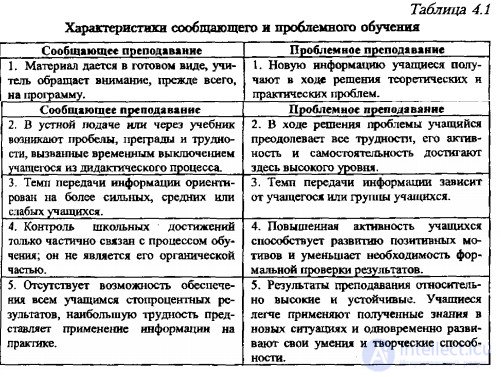
35. In programmed learning
- a) the learning material is divided into doses
- b) situations of intellectual difficulty are created
- c) upon correctly completing control tasks, the student receives a new portion of material
- d) the learning process consists of sequential steps containing portions of knowledge and instructions on the mental actions needed to assimilate them
- e) knowledge is acquired through one's own creative activity
Correct answer: a) the learning material is divided into doses; c) upon correctly completing control tasks, the student receives a new portion of material; d) the learning process consists of sequential steps containing portions of knowledge and instructions on the mental actions needed to assimilate them
36. The areas of application of programmed learning are:
- a) distance/correspondence learning
- b) seminar classes
- c) independent work
- d) test-based assessment
- e) problem-based lectures
Correct answer: a) distance/correspondence learning; c) independent work
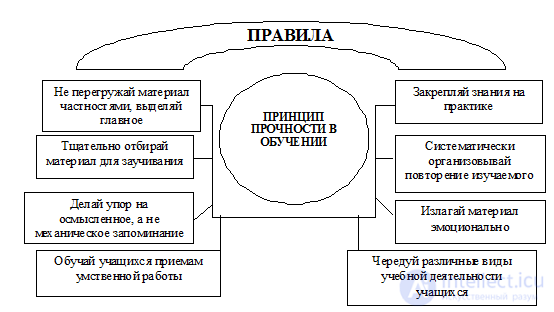
37. The durability of knowledge assimilation depends
- a) on teaching methods
- b) on how the memorization of learning material is organized
- c) on the extent to which knowledge is used in practice
- d) on the depth of comprehension of the material
- e) on the individual characteristics of the students
Correct answer: a) b) c) d) e)
38. The purpose of didactic diagnostics is
- a) surveying the learners,
- b)determining the number of underperforming students in the group
- c)identifying the content and structure of the lesson
- d) assessing the level of students' assimilation of the learning content
- e) identifying the state of students' health
Correct answer: d) assessing the level of students' assimilation of the learning content
39. Can it be considered that the management function is inherent only to certain teaching methods?
- a) yes, some special methods have been developed for the purpose of managing instruction
- b) this is a general function of all methods
- c) nothing definite can be said: it all depends on the circumstances
- d) a method only achieves didactic goals and nothing more
- e) the management function is absent in all methods
Correct answer: b) this is a general function of all methods
40. The learning objectives of a specific lesson are determined
- a) by the textbook material
- b) by the curriculum of the given faculty and the syllabus of the given course
- c) by the syllabus of the given course
- d) by the manual for the student's independent work
- e) by the specialist's qualification profile
Correct answer: c) by the syllabus of the given course; e) by the specialist's qualification profile
41. The orienting basis of action (OBA) includes
- a) motivation for the action
- b) the goal of the action
- c) methods of attracting attention
- d) a program or algorithm for execution
- e) operations for correcting execution
Correct answer: a) motivation for the action; b) the goal of the action; d) a program or algorithm for execution; e) operations for correcting execution
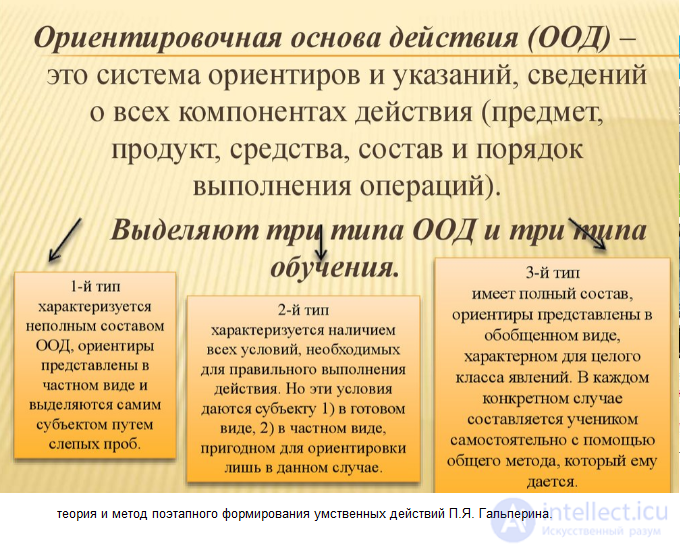
42. Providing students in a practical class with an OBA (orienting basis of action) scheme means:
- a) drawing a plan of the classroom, indicating in detail the arrangement of furniture and the placement of students
- b) drawing up a diagram of the building's location within the city block, tracing in detail the route from the metro station or a surface-transport stop
- c) describing the actions that make up the activity, their sequence, the conditions and methods of performing them, and the planned results
- d) asking the student to solve a problem, explain the method and result of its solution, and assess the speed of solving it
- e) devising a task that requires the application of a manual skill
Correct answer: c) describing the actions that make up the activity, their sequence, the conditions and methods of performing them, and the planned results
43. The effectiveness of instruction is determined
- a) by the use of technical aids
- b) by the retention of knowledge, skills and habits
- c) by the precise regulation of the lesson's structure
- d) by students' satisfaction with the learning outcomes
- e) by the degree to which the learning objectives are achieved
Correct answer: c) describing the actions that make up the activity, their sequence, the conditions and methods of performing them, and the planned results; d) by students' satisfaction with the learning outcomes; e) by the degree to which the learning objectives are achieved
44. Control is
- a) a way for the teacher to punish the student
- b) determining the degree of students' readiness for further study and practical work
- c) a way for the instructor to demonstrate their authority
- d) determining the degree of correspondence between the initial level and the results of the intermediate and final stages of instruction, and the set goals
- e) assessing students' conscientiousness
Correct answer: b) determining the degree of students' readiness for further study and practical work; d) determining the degree of correspondence between the initial level and the results of the intermediate and final stages of instruction, and the set goals
45. Functions of pedagogical control in the learning process consist of
- a) making decisions regarding the student's personality
- b) assessing the student's knowledge, skills and habits
- c) implementing social justice
- d) timely identification of students' falling behind in the subject
- e) determining the effectiveness of teaching methods
Correct answer: b) assessing the student's knowledge, skills and habits; d) timely identification of students' falling behind in the subject
46. When assessing theoretical knowledge it is necessary to check:
- a) knowledge of the sequence of actions to be performed
- b) understanding the meanings of the words used
- c) basic rules, laws, and axioms
- d) knowledge of the history of the subject's development
- e) the student's level of personal development
Correct answer: b) understanding the meanings of the words used; c) basic rules, laws, and axioms; d) knowledge of the history of the subject's development
47. The types of grades used during instruction are
- a) descriptive
- b) alternative
- c) multivariate
- d) point-based
- e) corresponding to predetermined criteria
Correct answer: a) b) c) d) e)
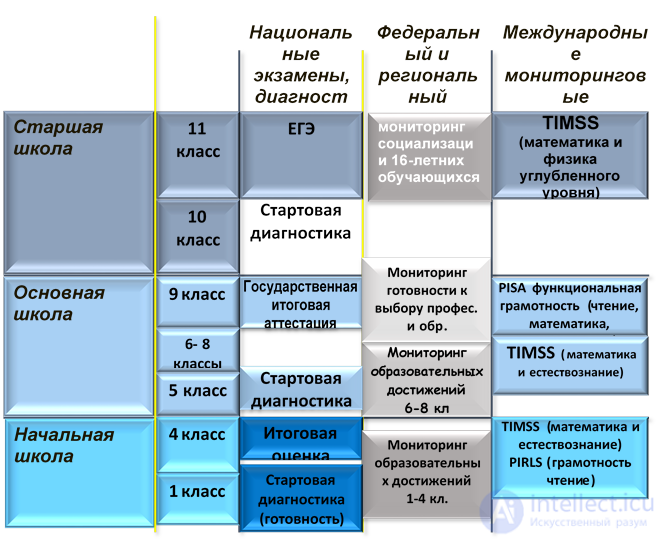
48. The main requirements for test-based assessment are:
- a) alignment with the learning objectives
- b) reliability of the assessment
- c) presence of instructions for those being tested
- d) presence of a reference answer
- e) automation
Correct answer: a) alignment with the learning objectives; b) reliability of the assessment; c) presence of instructions for those being tested; d) presence of a reference answer
49. The functions of didactic diagnostic tests are
- a) surveying all students
- b) using diagnostic information to improve the learning process
- c) developing students' speech
- d) forming students' quick reaction to the conditions of a task
- e) increasing the objectivity of diagnosing the progress and results of the learning process
Correct answer: a) surveying all students; b) using diagnostic information to improve the learning process; e) increasing the objectivity of diagnosing the progress and results of the learning process
50. When answering, the student made a number of mistakes. The instructor's comment, justified from a pedagogical standpoint,
- a) "Sit down, you don't know anything"
- b) "Nonsense! It seems I won't get a good answer from you"
- c) "The answer would be correct if you had indicated such-and-such..."
- d) "You made such-and-such mistakes. You need to prepare better for classes"
- e) a nonverbal comment
Correct answer: c) "The answer would be correct if you had indicated such-and-such..."
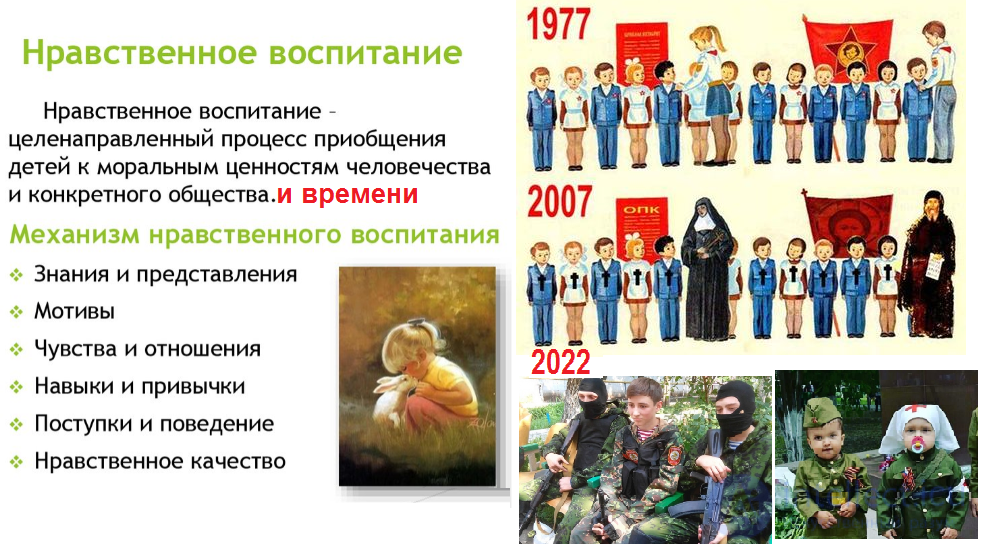
51. What is the name of the complex, purposeful, continuous process of forming a person's life orientations, views, tastes, and needs?
- a) moral upbringing
- b) multicultural upbringing
- c) psychological work
- d) family upbringing
answer a)
52. A teacher, applying methodological knowledge, carries out…
- 1) development of the variable part of the curricula
- 2) research into the principles and methods of acquiring knowledge about pedagogical reality
- 3) creation of curricula and syllabi
- 4) structuring the learning process in accordance with one's own understanding of the humanitarian foundations of pedagogical education
See also
- [[b972]]
- [[b7339]]
- [[b5097]]
- [[b8295]]
See also


Comments