
Lecture
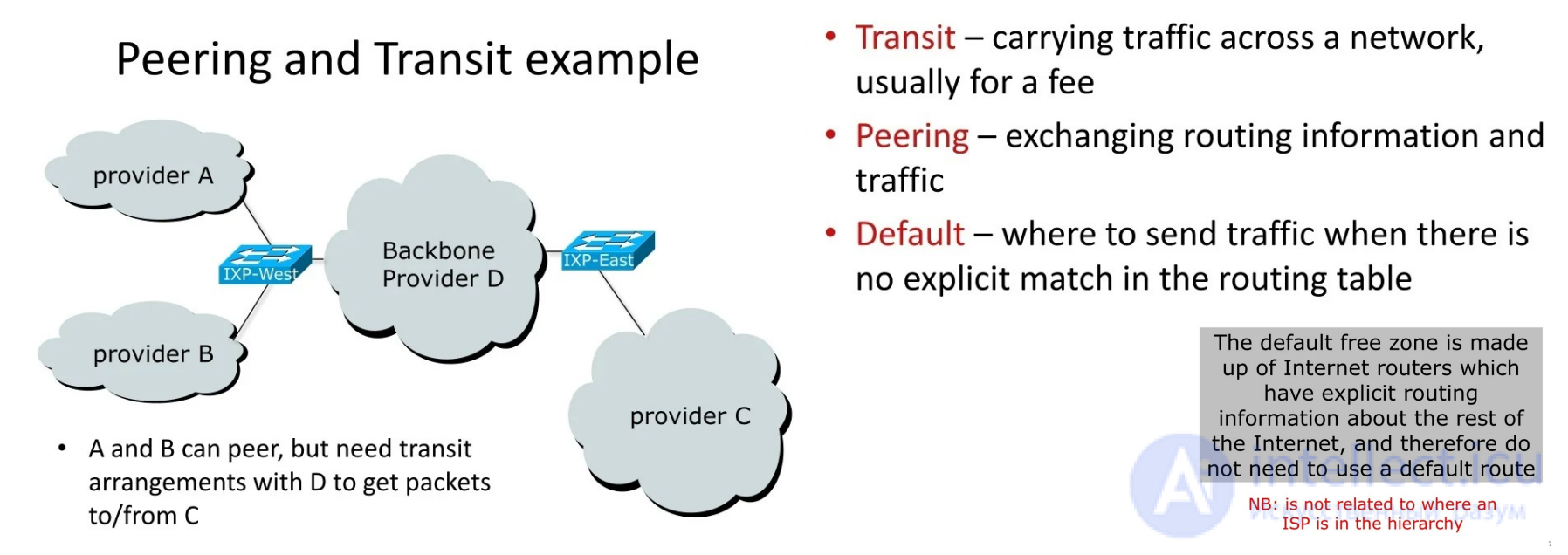
In Internet routing, the default-free zone (DFZ) — is the collection of all Internet routers that do not need a default route to route a packet to any destination, most often at the core of the autonomous systems. Conceptually, DFZ routers have a «full» Border Gateway Protocol table, sometimes called the Internet routing table, the global routing table, or the global BGP table. However, Internet routing changes rapidly, and the widespread use of route filtering means that not every router has the same view of all routes. Any constructed routing table will look different from the point of view of different routers, even if a stable view can be achieved.
The weekly routing reports used by the internet provider community come from a router at the Asia Pacific Network Information Centre (APNIC) in Tokyo, which is a well-connected router and has as good a view of the Internet as any other individual router. However, for serious routing research, routing information is collected at several well-connected nodes, including high-traffic internet providers (see the «skitter core» below).
On May 12, 2014, the APNIC router recorded 494,105 routes. These came from 46,795 autonomous systems, of which only 172 were transit, and 35,787 were stub/origin-only. 6,087 autonomous systems provided some level of transit. By July 2025, this figure had grown to roughly 990,000 IPv4 routes, and overall exceeded one million in September 2025, although the number of prefixes can vary by many thousands depending on the router's location, causing some routers to reach this figure earlier or later. Combined with IPv6 routes, the total size of the routing table had grown by that time to more than 1.2 million entries.
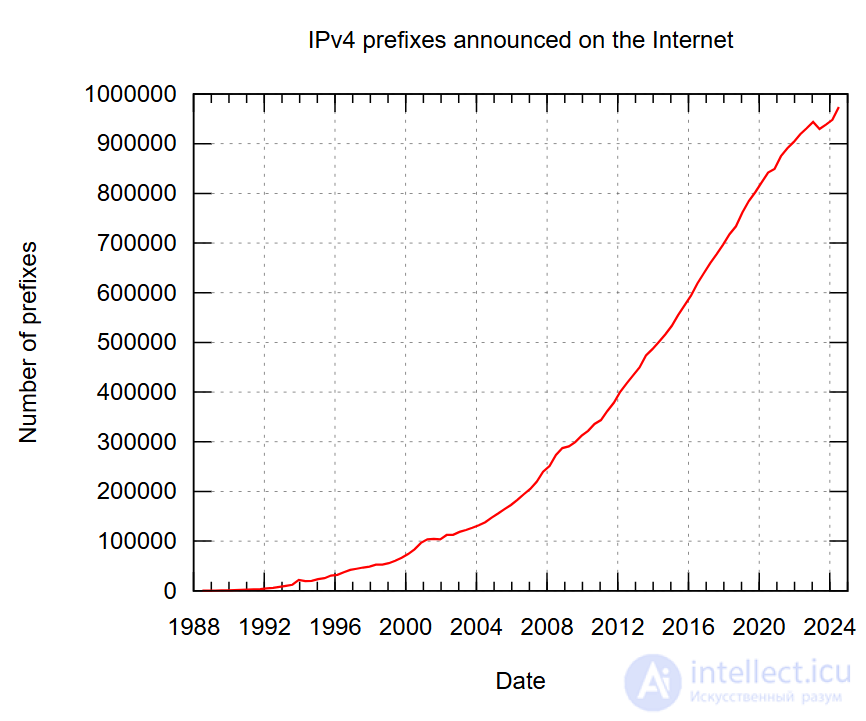
Growth of the Internet routing table since 1989.
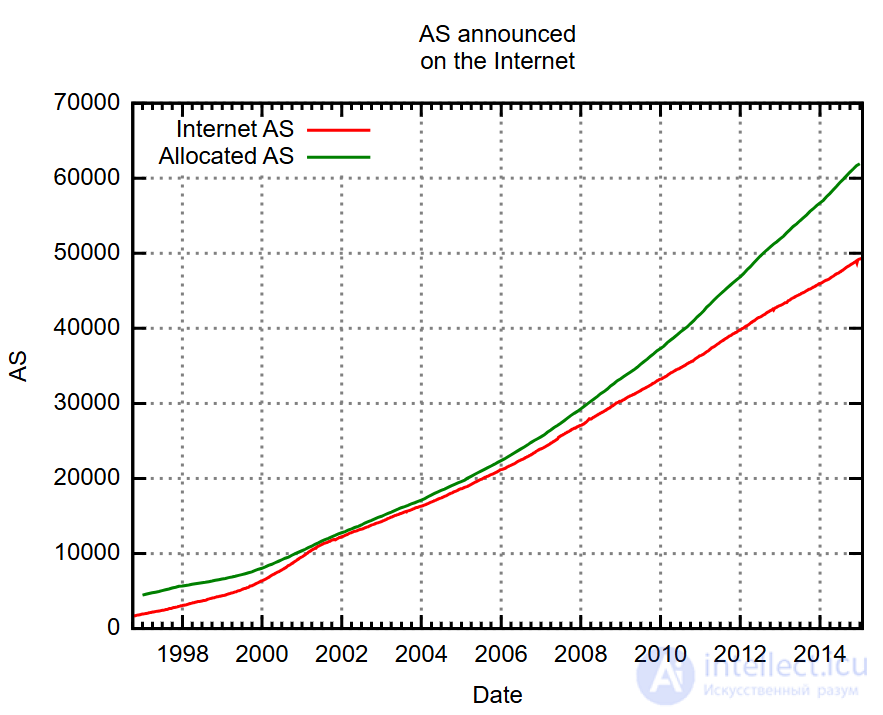
Growth in the number of autonomous systems on the internet since 1997.
The term «default-free zone» is sometimes confused with the «core of the Internet» or the Internet backbone, but no true «core» has existed since the days before the introduction of the Border Gateway Protocol (BGP). In the pre-BGP era, when the external routing protocol was the Exterior Gateway Protocol (EGP), it was indeed reasonable to assume the existence of a single Internet core.
However, this concept has long been obsolete. At best, today's definition of the Internet core is statistical in nature, and the «skitter core» is a certain number of autonomous systems with the most traffic, according to measurements by CAIDA, previously carried out using a measurement tool called «skitter». CAIDA's measurements are continuously updated.
Large internet exchange points (IXPs) — because their switching fabric typically carries the full routes visible to several internet providers, as well as customer routes — are extremely good places to assess global internet routing.
Before the emergence of the modern commercial internet, the NSFNET, which connected five US government-funded supercomputer centers, could be considered the core of the high-speed internet. NSFNET was supported by four traffic exchange points (IXPs), but over time these exchange points evolved into a model where commercial traffic could be exchanged. Although pinpointing the exact endpoint is somewhat difficult, NSF's funding for data transport ended by 1998.
In a multihomed but stub (i.e. non-transit) autonomous system, it is common practice for the router(s) using the BGP protocol to accept «full routes» from the various internet providers to which the autonomous system is connected. Especially if more than one router is connected to the same internet provider, which is common practice, it will receive more routes than are in the default-free zone (DFZ). This happens because when two routers are connected to a large internet provider such as Sprint, France Telecom, or Qwest, that provider has many customer autonomous systems connected to it. The optimal route to those customer autonomous systems is important to the internet provider itself, but it also tells one customer autonomous system which specific router has the best path to another customer system. The «full routes», or more precisely «full routes plus customer routes», arriving at the customer router make that customer router part of the DFZ, but certainly not part of the «skitter core».
The DFZ should not be confused with the concept of the Internet backbone, which does not actually exist, since every autonomous system can handle transit to a destination without necessarily passing through one or several specific autonomous systems. This concept of an Internet backbone no longer exists, since the Border Gateway Protocol (BGP) replaced the Exterior Gateway Protocol (EGP) as the Internet's routing protocol.
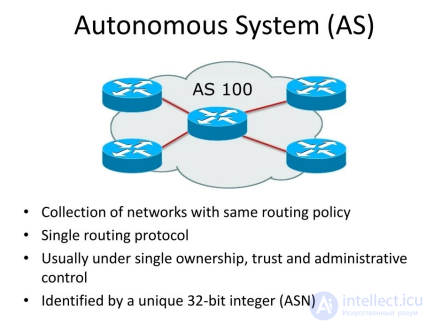
A stub autonomous system (Stub AS) — is an autonomous system that does not provide transit to another autonomous system. Stub autonomous systems are typically used by enterprises with multihomed Internet connectivity, or by private internet providers.
Although not required, it is possible for these routers to have a full routing table, allowing them to precisely select an outbound route, in which case they are part of the default-free zone (DFZ).

Comments