
Practice
The goal of using both VPNs and proxy servers is to hide the user's identity or geographic location. Many VPN providers offer both VPN and proxy server services. Interestingly, many public proxy servers are available for use completely free of charge. However, the real challenge here lies in determining the difference between a proxy and a VPN, and it's very important for you to determine exactly what will meet your needs and be available to you. Although the technologies are very similar, they work differently and have their own nuances. Matters are further complicated by the fact that you have a choice of many different proxy services.
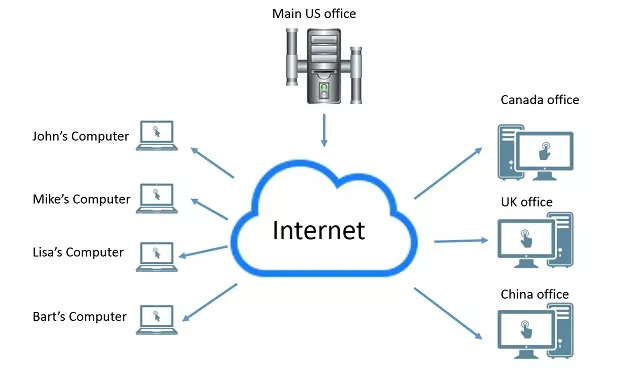 Proxy servers (technically open proxies) are computers that act as an intermediary between the Internet and your computer. Any traffic passing through a proxy server will carry its IP address instead of your computer's address. Unlike VPN servers, proxy servers have no means of encrypting the information passing through them and are capable of supporting simultaneous connections from many users at once. Proxy servers are typically connected to the Internet using either the HTTP or SOCKS protocols.
For a deeper understanding of the difference between the two protocols, let's look at the advantages and disadvantages of HTTP and SOCKS proxy servers.
The HTTP protocol is designed to interpret traffic at the HTTP level. This means they are not only able to handle traffic from a URL starting with shttp:// or http://, but are also effective for web browsing. However, since these servers do nothing other than process HTTP requests, they usually work faster than regular VPN servers or SOCKS proxy servers.
HTTP proxies are generally cheap and equally effective at hiding your IP from all the main checks, which makes them an ideal option for accessing geographically restricted websites. But again, these proxy servers are only needed for accessing websites and nothing else.
SOCKS servers do not interpret network traffic at all. This makes them more flexible, but at the same time slower. One of the biggest advantages of the SOCKS protocol is that it supports any and all kinds of internet traffic, including SMTP and POP3 for email, FTP, and torrent files. But one of its biggest drawbacks is a low level of security – roughly the same as HTTP servers.
 Unlike proxy servers, VPNs (virtual private networks) create encrypted tunnels between the server and your computer. You should keep in mind that the government or your provider has the means necessary to determine which VPN server you are connected to, but nothing more than that. Your IP address and activity remain hidden by 128-bit encryption.
As already mentioned, VPN servers have the ability to track your activity on the Internet. A good VPN service strives to avoid logging details. It goes without saying that compromising user activity primarily harms the VPN network itself.
To set up a VPN, you will most likely need to download and install a special program – a VPN client. But users with minimal skills are able to configure their computers or mobile devices using the instructions offered by VPN services. Once configured, all of your internet activity, regardless of the program you want to use, will be securely routed through the VPN.
One of the biggest downsides of VPN servers is their high cost. In addition, during heavy use, server performance can slow down exponentially.
Keeping the above factors in mind, it's safe to say that VPN servers significantly outperform regular proxies. Not only are they very effective, but they are also the best at what they do. Since your level of anonymity online is significantly increased, it is also a better way to get around provider throttling.
The only reason someone might prefer a regular proxy over a VPN server is the price of the service. But again, VPN services aren't as expensive as they might seem, and can cost as little as $10 a month.

Comments