
Lecture
Protecting the labour rights of workers is an important aspect of modern societies and the legislation of many countries. The main goal of protecting labour rights is to ensure fair and safe working conditions, prevent exploitation and violations of workers' rights, and ensure equal opportunity and social justice. Here are some of the main measures and tools used to protect the labour rights of workers:
Labour legislation: Most countries have labour legislation that establishes minimum standards and rules in the field of labour. It covers such aspects as working hours, pay, leave, occupational safety and health, dismissal procedures, and others.
Trade unions: Trade unions represent the interests of workers and often fight to improve working conditions, protect workers' rights and secure fair pay. They can negotiate with employers, organise strikes and provide legal support.
Monitoring and inspections: State bodies responsible for monitoring compliance with labour legislation conduct inspections at enterprises and can impose fines on employers who violate workers' rights.
Judicial protection: Workers have the right to go to court if their rights have been violated. Courts can hand down rulings in cases related to labour rights and award compensation.
Protection against discrimination: Equality and anti-discrimination laws prohibit discrimination on the basis of sex, race, religion, disability and other characteristics in the field of employment.
Occupational safety and health: Employers are obliged to ensure safe working conditions and to prevent occupational injuries and illnesses.
Minimum wage: Many countries set minimum wage rates to ensure that workers receive reasonable pay for their labour.
Leave and sick pay: Laws also regulate workers' rights to leave, sick pay and other types of absence from work.
The protection of workers' labour rights varies depending on the country and region, and it may be more or less developed. However, it is important that every worker knows their rights and can seek help and protection in the event they are violated. This contributes to creating a fairer and safer working environment.
Self-protection of labour rights by a worker should be understood as the worker's independent, lawful activity, carried out in order to protect their own labour rights without applying to jurisdictional bodies, or to bodies exercising supervision and control over compliance with labour legislation and other regulatory legal acts containing norms of labour law. It should be emphasised that self-protection is carried out exclusively by the worker's own efforts, and in this case the worker himself is the subject vested with the authority to protect labour rights.
The provisions of the Labour Code in less-developed countries, for example in the Russian Federation, concerning matters of self-protection unfortunately do not allow a worker to make full use of this method of protection when labour rights are violated. When a worker resorts to self-protection, their actions may be assessed ambiguously by the employer, either as lawful conduct or as a disciplinary offence. Such ambiguity in the legal assessment points to serious shortcomings in the construction of the legal mechanism of self-protection, which give rise to a number of problems.
The first problem is the restriction of the employee's rights due to the fact that his or her actions in independently defending labour rights may be regarded by the employer or the body resolving the labour dispute as a disciplinary offence. Also a negative factor for the employee when applying self-defence will be the danger of worsening relations with his or her employer, and therefore the employee will be wary of using this method of protecting his or her labour rights. The second problem is possible abuse of the right to self-defence by employees.
An employee has the right to make use of self-defence immediately after a violation of a labour right or the appearance of a threat of such a violation. In this connection, the provision of Article 142 of the Labour Code of the Russian Federation is puzzling, which establishes that in the event of a delay in the payment of wages for a period of more than 15 days, the employee has the right, after notifying the employer in writing, to suspend work for the entire period until the delayed amount is paid. This delay in exercising self-defence restricts the employee's right, since he or she cannot defend his or her violated rights without delay.
Self-defence of employee rights plays an important role in ensuring fair and safe working conditions. Here are some ways employees can defend their labour rights:
Knowledge of your rights: It is important to have an understanding of your labour rights, including equality laws, wage rules, occupational health and safety rules, and others. Information about your rights can be found in labour legislation and on official government websites.
Contact with trade unions: Trade unions can provide legal support and assistance in protecting labour rights. Employees can join trade unions or seek advice if problems arise in the workplace.
Protection of confidentiality: If you have witnessed a violation of other employees' rights, it is important to protect their confidentiality and not take part in revenge or threats.
Documentation: Keeping documentation of workplace problems can be an important tool in resolving disputes. This can include keeping records of rights violations, correspondence with the employer, and so on.
Advice and consultations: If you have questions or problems in the workplace, seek advice from lawyers, trade unions, government bodies, or organisations specialising in the protection of labour rights.
Participation in decision-making: If your workplace provides an opportunity to participate in decision-making, participate actively to ensure your interests are upheld.
Solidarity: Employees can unite in groups or associations to jointly defend their rights. Collective actions, such as strikes, can be an effective way to pressure employers.
Self-education: Continuous learning and professional development will help employees be more informed and confident about their rights.
Protecting labour rights requires activity and caution. Employees must be prepared to act if their rights are violated and to use the available resources and tools to defend their interests.
Consideration of individual labour disputes in court is a process in which an employee files a complaint with the court against the employer, claiming that his or her labour rights have been violated. This can include various types of disputes, such as dismissal, discrimination, breach of contract terms, non-payment of wages, and many others.
The process for handling individual labour disputes usually includes the following steps:
Filing a complaint: An employee who believes their labour rights have been violated must file a complaint with the court. The complaint must contain a detailed description of the violations and the employee's demands.
Preparing for court: The employee and the employer must prepare their arguments and evidence in support of their position. This may include gathering documentation, written testimony, contracts and other evidence.
Court hearing: After the complaint is filed, the court sets a date for the hearing, at which the parties present their arguments and evidence. Lawyers representing the parties' interests are usually present.
Issuing a ruling: At the end of the hearing, the judge issues a ruling, determining whether the employee's labour rights were violated and, if so, what compensation or measures should be taken.
Appeal: If one of the parties disagrees with the court's ruling, they may file an appeal and request a review of the decision by a higher court.
Enforcement of the ruling: If the court's ruling is in the employee's favour, the employer must comply with it, including payment of compensation or other measures ordered by the court.
Resolving labour disputes in court can be a long and complex process, and often requires professional legal support. It is important that employees and employers know their rights and obligations and strive to resolve disputes in court in accordance with the law.
Handling collective labour disputes is the process of resolving conflicts when a group of employees unites to express their common interests and demands to an employer or another party. These disputes may concern issues such as working conditions, wages, bonuses, terms of dismissal and other aspects of labour relations. Here are the main stages of handling collective labour disputes:
Discussion within the organisation: First, employees who are facing problems or disagree with the employer's decisions may discuss their demands and concerns within the organisation. This usually begins with collecting signatures or letters addressed to the employer.
Representation: A group of employees may choose a representative or a representative body to negotiate with the employer on their behalf. Trade unions can also provide legal and organisational support.
Negotiations: Once representation is chosen, negotiations begin with the employer or another party. The goal of the negotiations is to reach an agreement that satisfies the interests of both the employees and the employer.
Mediation: If negotiations become difficult or stall, a mediator may be brought in to mediate and help the parties find a compromise solution.
Strikes and protests: If negotiations and mediation do not lead to a resolution, employees may take collective action, such as strikes, rallies or other forms of protest, to pressure the employer into finding a solution to their demands.
Judicial resolution: If all other methods fail to resolve the dispute, collective labour disputes may be brought before the court. This process may include filing collective lawsuits, going to arbitration and other legal actions.
The consideration of collective labour disputes serves as a means for employees to protect their interests and rights within an organisation. It is important to comply with the law and observe the rules concerning collective action, in order to ensure a lawful resolution of the dispute and minimise the negative consequences for all parties
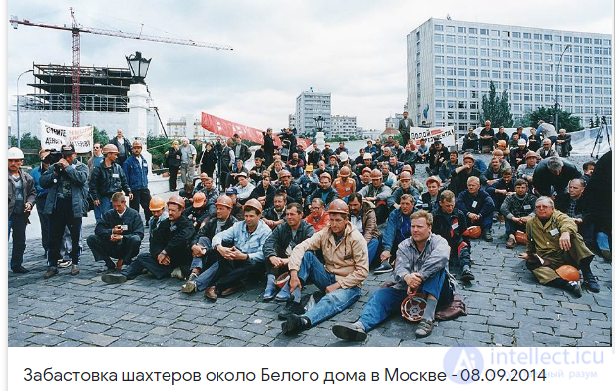
Strike (from Ital. and Sp. basta! «enough! enough!»), or walkout — a collectively organised cessation of work in an organisation or enterprise aimed at forcing the employer or management to fulfil certain demands; one of the ways of resolving labour disputes
A strike is one of the forms of collective action that workers can use to express their disagreement with the employer and to protect their interests in the course of a collective labour dispute. A strike is usually an economic instrument used to put pressure on the employer and compel them to negotiate and meet the workers' demands.
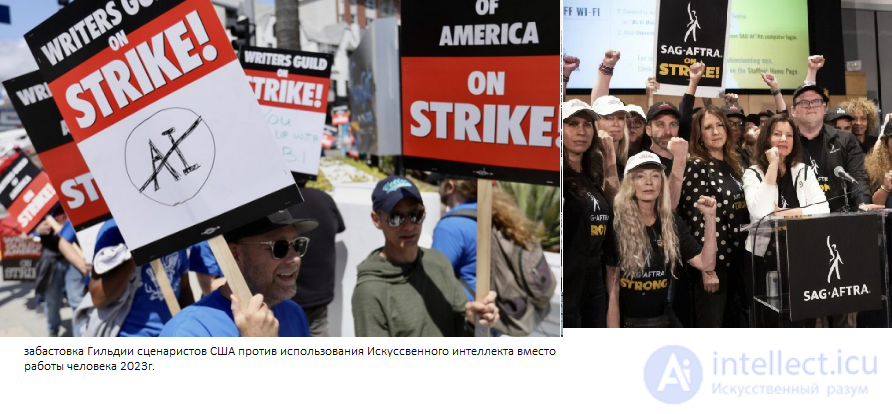
The strike of the Writers Guild of America and actors against the use of artificial intelligence to replace human labour, 2023. Among the writers' demands – restrictions on the use of artificial intelligence in content creation. The strike began on 2 May 2023 after negotiations between the Writers Guild of America (WGA) and the major studios reached an impasse. Among the main issues were questions of compensation, payments, and the creation of fairer rules in the film industry market and content creation.
Important aspects of strikes include:
Legality and regulation: Strikes are regulated by the legislation of each country, and the rules may vary. Certain categories of workers, such as military personnel and certain categories of public service employees, may be restricted in their right to strike. Before holding a strike, it is important to check whether all legal requirements are being met.
Preparation and coordination: For a strike to succeed, workers must carefully plan and coordinate their actions. This includes defining the goals of the strike, choosing the date and location, preparing the necessary documentation, and informing participants.
Participants in the strike: A strike can involve workers united in trade unions or other organisations, as well as those who support their goals. Participants may include workers as well as employees of other professions and fields who share common interests.
Forms of strike: Strikes can take various forms, including a complete or partial stoppage of work, rallies, picketing, hunger strikes, and others. The form of the strike depends on the nature of the dispute and its goals.
Messaging and public support: It is important for strike participants to have a clear message and to appeal to the public in order to explain their demands and the reasons for the strike. Public support can be crucial to the success of a strike.
Negotiation and resolution: A strike is usually used to compel the employer to negotiate and meet the workers' demands. After negotiations, an agreement may be reached that ends the strike.
A strike is a powerful tool that can have a significant impact on the employer and society as a whole. However, it can also have negative consequences for the participants and the economy, which is why its use is usually regarded as an extreme measure in resolving collective labour disputes.

Uncollected rubbish during the 2006 strike in Mannheim (Germany)

Comments