
Lecture
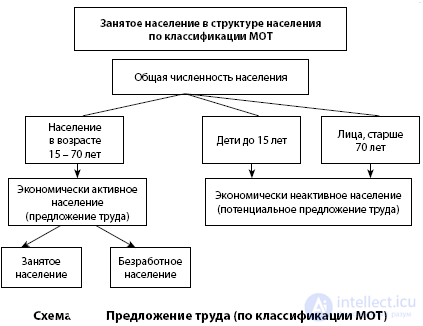
Employment and unemployment are two key concepts that characterize the state of the labour market in society. They reflect how many people in a country or region are working, and how many are looking for work. Let's take a closer look at these terms:
Employment:
Employment means that a person has a job and performs certain work duties. This can include full-time work, part-time work, or self-employment.
Employment can also be described as the employment rate in the economy, which measures what percentage of the labour force (the number of people working and looking for work) actually have jobs.
Employment is considered one of the key indicators of economic well-being, since a higher employment rate usually indicates greater stability and prosperity in the economy.
Unemployment:
Unemployment means the absence of a job for a person who is actively looking for work and ready to work. It is important to note that to be counted in unemployment statistics, a person must be actively looking for work and ready for employment.
The unemployment rate is the percentage of those who make up the labour force but are temporarily without a job. This indicator is also important for assessing the economic situation in a country.
Unemployment can be structural (when there are no suitable jobs for certain skills), cyclical (when it rises during periods of economic downturn), or seasonal (when it changes depending on the time of year).
Special methods and surveys are used to measure employment and unemployment in a country or region. This data is important for government bodies, policymakers, and economists, since it helps determine how the labour market functions and helps develop strategies to improve employment and reduce unemployment. Combating unemployment and creating jobs are often important tasks for governments and administrative bodies.
When looking for a job, people can turn to both state and commercial assistance. Both forms of assistance have their own features:
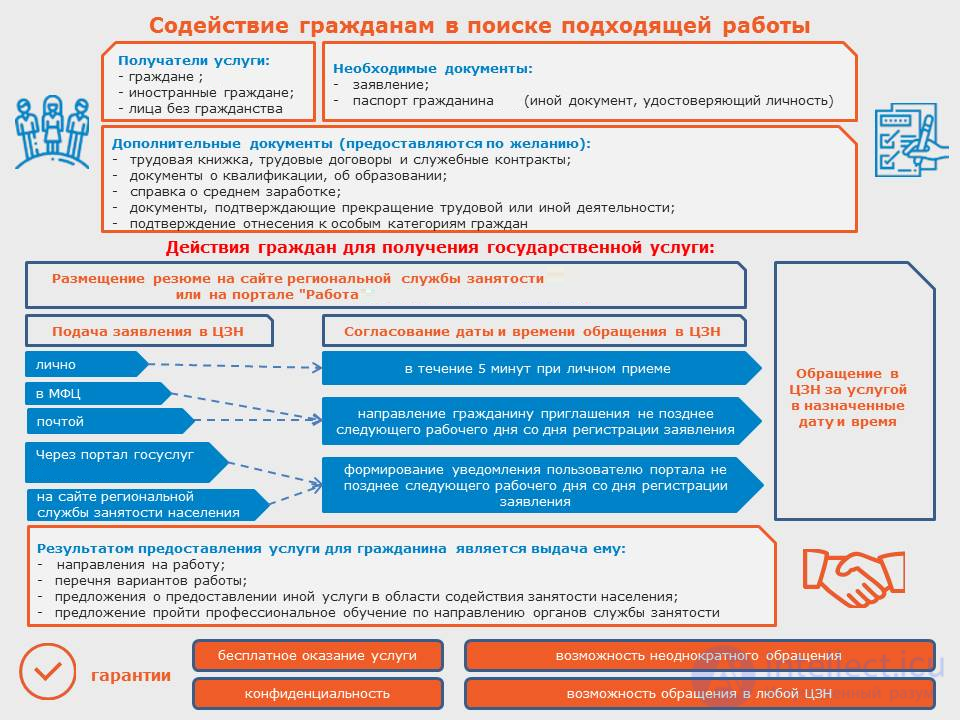
State assistance in job searching:
Employment services: Many countries have state employment services that provide free services for the unemployed and job seekers. These services can provide information about vacancies, help with résumé preparation, and conduct employment workshops.
Unemployment benefits: The state may provide unemployment benefits to support people who have lost their jobs. These benefits are usually paid for a certain period of time and are tied to certain criteria.
Training and retraining: Some states provide training and retraining programmes to help the unemployed or those who want to change their field of activity develop new skills.
Employment orientation: The government can fund programs and initiatives for job orientation, helping the unemployed and young people gain their first work experience.
Commercial job-search assistance:
Recruitment agencies: Commercial recruitment agencies provide job-search services for candidates. They work with employers and can help find a suitable vacancy.
Consulting and training: Private firms and consulting agencies can provide consulting and training services, helping candidates develop the skills needed for successful employment.
Career coaches and mentors: Some people seek help from professional career coaches and mentors to develop a job-search strategy and improve their professional skills.
Paid job-search platforms: There are many commercial online job-search platforms where candidates can pay for access to advanced features and a larger number of vacancies.
It is important to remember that both government and commercial assistance can be useful depending on the specific circumstances and needs of the candidate. Some people may prefer to use both forms of assistance for maximum effectiveness in their job search.
Educational institutions, particularly institutions of higher education (universities, colleges, technical and vocational schools), can provide various kinds of assistance to their students and graduates in finding employment. This support can include the following activities and resources:
Career centers: Many educational institutions are equipped with career centers, where students and graduates can get professional help developing career plans, writing résumés and preparing for interviews.
Employer relations: Educational institutions can maintain relationships with employers and provide access to local, national and international networks of professional contacts.
Internships and practical placements: Educational institutions can give students the opportunity to complete internships and placements with companies in their field of study, which can help students gain experience and industry contacts.
Seminars and events: Educational institutions can organize seminars, workshops and events at which guests from business and industry are invited to share experience and advice on employment.
Consultation and job-search support: Professional employment counselors can help students and graduates identify their career goals, prepare their résumés and take part in mock interviews.
Information resources: Educational institutions can provide access to job databases, information about companies and resources for skills development.
Graduate adaptation programmes: Some educational institutions offer special adaptation programmes for graduates, which can help them successfully enter the world of work.
Academic and career advisers: Instructors and advisers can give students advice and recommendations on career choice and professional development.
It is important to note that employment support may vary depending on the specific educational institution. Students and graduates should contact the career centres of their educational institutions to find out about the resources and services available to help them on the path to a successful career.
From examining various aspects of employment and support from educational and government institutions, the following conclusions can be drawn:
The importance of preparing for employment: The job search process can be complex and competitive. Effective preparation for employment, including developing career plans, creating a résumé and preparing for job interviews, is key to a successful start to a professional career.
The role of educational institutions: Educational institutions play an important role in preparing students for their future careers. Career centres and support programmes can significantly ease the job search process.
Government support: Government bodies also perform an important function in supporting employment and combating unemployment. This includes providing unemployment benefits, organising training programmes and supporting young people.
Commercial assistance: Commercial organisations, such as recruitment agencies and consulting firms, provide additional resources and services for job searching. They can be useful for those seeking a more individualised approach.
An individual approach: Every person has unique needs and goals in their career. The approach to employment should be individual, taking into account the characteristics and skills of each candidate.
Overall, successful employment requires a combination of efforts from education, the state and the candidate themselves. Resources and support are available, and using them can increase the chances of successful employment and career development.

Comments