
Lecture
Lesson objective:
a) didactic – to introduce students to the subject of the academic discipline «Fundamentals of Job Search», to define the distinctive features of the concepts of «labour» and «work», to outline the main stages in the emergence of professions;
b) developmental – to develop students' oral and written speech, to form an understanding of conscious career choice, to improve the ability to defend and argue one's point of view;
c) educational (character-building) – to cultivate love and respect for the chosen profession, as well as a respectful and tolerant attitude toward different professions.
Methods: verbal-illustrative, heuristic discussion.
Didactic teaching aids: textbooks, the presentation «History of the Emergence of Professions», cards with group assignments.
Interdisciplinary connections: history, law, social studies, ethics.
Lesson structure:
1. Organizational part. Greeting the students, organizing the workspace, checking attendance.
2. Announcing the topic, objective and main tasks.
Topic - Introduction to the discipline. The concept of labour and work. The history of the emergence of professions.
3. Activating background knowledge and motivating learning activity.
* What are labour and work? What is the difference? What is their significance in a person's life?
* Why do we need a profession? What types of professions do you know?
4.Motivating students' learning activity. Knowledge of the course's key concepts will allow students to form an understanding of the correct choice of profession and an adequate choice of job – subsequent employment.
To master this discipline, students must have the knowledge and skills gained from studying such disciplines as: «Anti-crisis Personnel Management», «Personnel Marketing», «Personnel Security of an Organization», «Fundamentals of Personnel Policy and Personnel Planning», «Labour Economics and Socio-labour Relations». The main provisions of the discipline can be used in the further study of the following disciplines: «Qualitative Methods and Technologies in Personnel Management», «Managing Organizational Culture», «Conflictology», «Strategic Human Resource Management»,
The material presented here can be selectively taught in schools, vocational educational institutions, universities, and training courses.
Labour — is the purposeful activity of a person, the realization of their physical and mental abilities in order to obtain certain material or spiritual benefits. Labour can be individual (on one's own garden plot, or as a sole artisan, etc.) or carried out within the social cooperation of labour (in production). Norms of labour law regulate labour only within the social cooperation of labour and do not regulate individual labour.
Work - is the purposeful activity of a person, a natural and inherent occupation consisting of creating material assets, providing services, and performing tasks. Efforts are directed at achieving a specific result that can be measured (production, construction, agriculture) or assessed abstractly (architecture, design, programming, journalism).
There are various types of labour, and their full diversity can be classified according to the following criteria:
Depending on the content of labour, a distinction is made between:
1)simple and complex labour. According to Karl Marx's definition, simple labour «is the expenditure of simple labour-power, which, on average, apart from any special development, every ordinary individual possesses in his bodily organism». This is labour that does not require the worker to have any special professional training – unskilled labour. Complex labour is «simply multiplied simple labour, or rather simple labour raised to a higher power». One hour of complex labour, as a rule, contains several hours of simple labour, which is why skilled workers create more value per unit of time than unskilled ones;
2)reproductive and creative labour. Reproductive labour is labour that is reproduced, known in advance, and contains no creative elements, whereas creative labour is generative activity, a process in the course of which something qualitatively new, unrepeatable, original, and unique is created. The results of creative labour depend on aptitude for the given type of creativity, enthusiasm for the work, its importance, the conditions involved, and so on;
3)functional and professional labour. At every enterprise (firm), groups of employees form depending on their role in production and in accordance with the functions they perform. Each function is tied to one or another aspect of the activity necessary for the normal operation of the enterprise. The tasks handled by each functional group are fairly specific. Such labour is commonly called functional labour. Functional labour is labour that differs in the composition and nature of the functions performed (for example, production, engineering, management, research, and so on). Within each of these groups, labour differs by individual trades and specialties (for example, process engineer, design engineer, organisational engineer, standards engineer);
4)mental and physical labour. Physical labour is the expenditure of physical energy. Mental labour is expressed in the fact that an idea for creating one use-value or another arises in the human mind, the person thinks through a plan for realising that idea, and monitors whether that plan finds embodiment in the course of physical labour.
The nature of labour shows how labour manifests itself, what its traits, characteristics, distinctive properties and features are. It depends on how the worker is joined with the means of production and determines the social nature of labour
Depending on the nature of labour, a distinction is made between:
1)concrete and abstract labour. As a particular purposive human activity aimed at transforming and adapting natural objects to satisfy human needs, labour appears in a definite useful form, and its result consists of various use-values. Labour aimed at creating them is called concrete labour. Reducing various concrete types of labour to a uniform, commensurable form requires abstracting from their qualitative features, reducing individual types of labour to simple expenditures of labour-power, to expenditures of labour in the physiological sense – to expenditures of physical, nervous, and other energy. This impersonal, homogeneous, and commensurable labour is called abstract labour. Concrete labour creates use-value, while abstract labour creates the value of a commodity;
2)wage labour and self-employment. Wage labour is the relationship that arises between the owners of the means of production and workers who are personally free but lack means of production and sell their prospective labour (their labour power) in exchange for a certain value in the form of wages.
At the same time, an entrepreneur who has started their own business creates an opportunity to apply their own labour, which can be called self-employment (a fairly widespread term abroad), and the nature of this labour is qualitatively different from that of wage labour. It is precisely this kind of labour that provides an opportunity for developing a person's initiative, promotes a careful, proprietary attitude toward property, and fosters qualities such as independence, enterprise and the manifestation of creative abilities;
3)individual and collective labour. These are, in a sense, different forms of the organisation of labour. The division of labour leads to the separation of individual types of activity and the separation of individual producers. Individual labour is the labour of individual workers (turners, fitters, adjusters, repairmen, etc.) or independent producers (individual entrepreneurs). The division of labour, by separating out partial operations in the manufacture of a given product, creates the need to combine the labour activity of workers so that their joint efforts result in the creation of the finished product. Collective labour is labour in which people do not work in isolation but jointly, uniting into work collectives (a department, a laboratory, a shop, a section, a team), regardless of the size of the collective;
4)private and social labour. In commodity production, when individual producers manufacture particular goods, individual labour appears as private labour owing to the economic, production-related and legal separateness of the owners of the means of production. No producer produces all of the goods needed to satisfy their own needs; rather, each specialises in manufacturing only part of them. Therefore, in any society private labour is always realised as a fraction of social labour and bears a social character, which manifests itself on the market through the equating of goods with one another and their exchange, through value.
By the results of labour, a distinction is made between:
1)productive and unproductive labour. Productive labour is labour directly involved in creating the material-tangible form of social wealth, the aggregate social product, national income. It is labour in the course of which material goods and services are produced and which brings profit.
Unproductive labour is labour that creates social and spiritual goods. Such labour is socially useful but is not productive, since it is not materialised;
2)living and past labour. Living labour is labour that is being expended at the given moment and whose results are still undetermined.
Past labour embodies a previously created result – this is raw materials and supplies, energy, machine tools, apparatus, computers and so on.
According to the material elements of labour used and the degree of human involvement, labour is subdivided into the following types:
1)manual labour, which is carried out either entirely by hand or with the help of hand tools;
2)mechanised labour, which is carried out with the help of mechanised tools (for example, drilling holes with an electric drill, riveting with pneumatic tools);
3)machine labour, when the main work is performed by a machine operated by the worker without the direct application of physical effort on their part to change the shape, dimensions or appearance of the object of labour. The worker performs by hand only elements of the auxiliary work of operating the machine and feeding it;
4)automated labour, when the elements of the main work are fully automated and the elements of the auxiliary work are automated fully or partially. The worker monitors the correctness and stability of the equipment's settings and its loading.
According to the methods of engaging people in labour, a distinction is made between:
1)labour under non-economic compulsion, when direct coercion takes place. Such labour is characterised by a restriction of personal freedom, and an example may be found in outright and debt bondage. In addition to direct coercion, such labour may be conditioned by the existence of criminal, administrative or other norms fixed in law. One example is the establishment of a universal duty to work, as was the case in the USSR;
2)labour under economic compulsion, i.e. labour out of necessity – to earn a livelihood, labour to earn money to pay off loans or a mortgage, and so on. Such labour is typical of the overwhelming majority of people;
3)voluntary labour, i.e. labour by choice. Such labour occurs when a person is financially secure and could choose not to work, yet works in order to realise their potential. For them, work is a means of self-expression and self-affirmation. Sometimes, to carry out such work, people use their own resources, for example by setting up charitable or public foundations, and so on
There are differences between "Work" and "labour". First, the concept of "labour" is much broader: among other things, it encompasses the concept of work. Labour can be either paid or carried out on a voluntary (or compulsory) basis. Second, the term "labour" is most often used in a positive sense, as opposed to routine processes. "Work", by contrast, may be interpreted in a negative sense as a monotonous, everyday task that must be performed regardless of circumstances.
Labour is far from always considered finished: it can continue endlessly. This is vividly illustrated by the myth of Sisyphus, who was punished by the gods with eternally pushing a rock up a mountain. Work, on the other hand, is aimed at a specific result, which must be either measurable or abstract. The term "work" applies exclusively to human beings. The concept of "labour" is also used to describe other representatives of the animal world (ants, apes, plants).
As such, professions did not exist in prehistoric times (before the beginning of the formation of settled communities). People engaged now in hunting, now in gathering, and moved from place to place. The material and technical conditions for the development of the division of labour were absent.
The first professions began to appear back in the pre-civilisational era, when humans began to establish settled communities, take up agriculture, and master pottery-making and blacksmithing. Because of the limits of their own strength, one and the same person could not simultaneously shape pots, forge metal tools and grow food, and so commodity exchange began to develop.
A new stage in the development of the professional division of people arose with the emergence of the centralized state. Rulers needed warriors to guard their domains and administrators to govern them. This is how military and administrative professions began to take shape. Humanity had firmly set out on the path of the professional division of labour.
With the onset of industrialization, many new professions emerged that were connected with the design and maintenance of machinery: engineers, factory workers, machine operators, and the like. Because civilization's need for new kinds and larger quantities of resources grew, the ranks of extractive professions also expanded: miners, oil workers, and others appeared.
As automation developed, the need for heavy manual labour began to decline. Whereas workers used to work 14—16 hours a day just to feed their families, they can now work 9 hours, and in the most developed countries people can work 3—4 days a week or even live on benefits. People gained more free time, which they began to spend consuming information, so supply arose to meet demand — the mass media began to develop: television, radio, and, at the end of the 20th century, the internet. Also, despite automation, there remained a need for people who would create new means of automated production: scientists and engineers. And mass computerization required large numbers of people capable of servicing computers and creating and maintaining their software. This is how an entire layer of information-worker professions arose — that is, workers whose activity is connected with processing and producing information: programmers, scientists, engineers, and the like; thanks to the media and publishing industry, creative professions saw strong growth as well: actors, musicians, artists, writers, and others. Thus, mechanical skills, as in the preceding industrial era, are no longer of great importance for professional development — knowledge and creative thinking are.
New professions keep arising. A person begins to understand one particular field more deeply and does everything better and more professionally. Each profession finds its own range of abilities and skills.
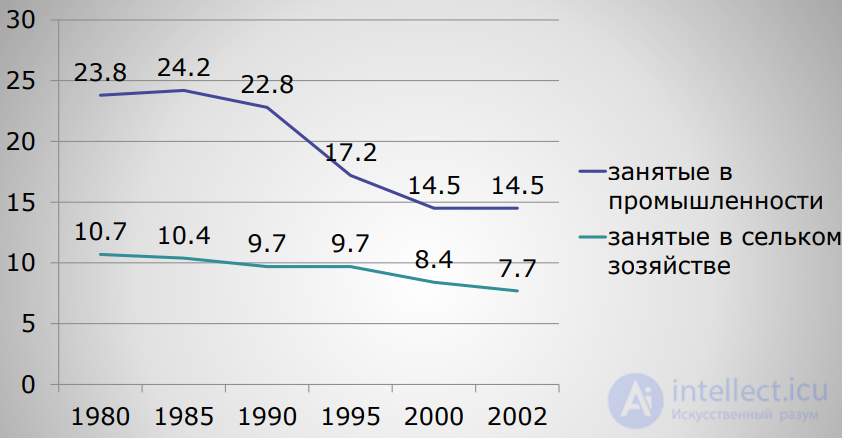
This is how an entire layer of information-worker professions arose — that is, workers whose activity is connected with processing and producing information: programmers, scientists, engineers, etc.; thanks to the media, creative professions saw strong growth: actors, musicians, artists, writers, and others.
There is a whole multitude of professions in the world, which exist and appear as humanity evolves. Today there are more than 40 thousand different types of activity, and in industry and construction alone there are about 3 thousand professions.
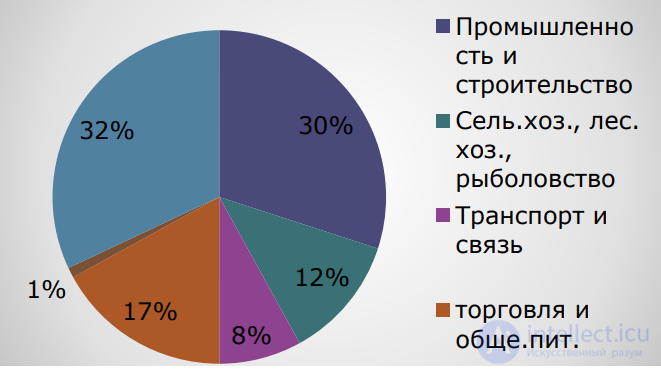
The world of professions and specialities is very diverse and dynamic – according to domestic and foreign reference sources, there are between 7 and 35 thousand names for them. In psychology, in order to solve a number of scientific and practical problems (career guidance, professional selection, etc.), a systematization of professions is required, along with their distribution and comparison according to various professional or psychological characteristics (the complexity or hazard of the work, the amount of workload, the goals of the work, mental strain, etc.).
A psychological classification of professions is needed for the theory of the psychology of work, for a crucial understanding of the role of psychological factors in work. It is also needed for practical research. Many studies could be carried out much faster if a definite typology of professions had already been developed. But so far there is no strictly unified approach to the classification of professions; the main shortcoming of many of them was that they proceeded from the special role — the predominance of some one particular mental process in a given type of activity. Classifications were proposed based on features of attention, on features of intellectual activity, but this is, of course, a one-sided approach.
There were also attempts to classify professions by branch of industry: mechanical engineering, metallurgy, the chemical industry, agriculture.
It is interesting that back in the 18th century the well-known historian and statesman V.N. Tatishchev proposed his own classification of types of professional activity:
At present the classification of professions is most interestingly presented in the «Information-Retrieval System. Professiography», developed at the Research Institute of Vocational Education in Leningrad under the guidance of E.A. Klimov. It is of great importance in resolving issues of career guidance and career counselling for young people. It is built on a multifactor principle.
Professional activity began to emerge at the moment the first settled communities appeared, when agriculture also arose. During this period, pottery-making and blacksmithing appeared simultaneously, and these branches represented structured collective work. But no single person could practice several crafts at once, and this is what gave rise to the first exchange of goods.
During this period, social status and standing played a major role in a person's activity, and labour activity began to divide into mental and physical. Creative and managerial occupations were considered independent professions at that time. It is believed that slavery in that period contributed to the development of society, its culture, architecture and even art. It was under this system that magnificent architectural structures were created, and humanity accumulated knowledge in the art of construction.
The traditional order represented a strict set of laws, according to which every person had no right to choose their own occupation and acquired a profession (or trade) by inheritance within their clan, by class traditions or social affiliation. Market relations and exchange took a back seat to redistribution, and until the 13th century paid work was looked down upon, but the development of trade and the growth in the number of hired workers contributed to changes in established social values.
Speaking of the worldview of that period, people were confined to a sacred religious order that stood at the head together with the state and was not subject to any change. Many aspects of human life were determined by traditions and collectivist principles, and notions of individuality were considered to violate the established order, with many private interests placed below public ones. As for governance, traditional society is characterised by authoritarianism – when all power lies in the hands of a single ruler or dictator.
With the emergence of industrial society, new occupations appeared, the most in-demand of which were engineers, factory workers and machine operators. As the state's need for large quantities of natural resources grew, professions such as oil workers and miners emerged.
The period of the 17th-19th centuries is marked in history by the emergence of labour specializations. The scientific and technological revolution brought about the automation of production, and the emergence of manufactories (enterprises employing hired labour) gave rise to universal trades in production; and gradually private services became widespread.
With rapidly increasing automation, many previously in-demand jobs involving heavy physical labour are becoming less necessary than before. The population's free time has increased, which influenced the emergence and development of new mass media – television, radio, and the internet appeared.
Automation has also contributed to the emergence of new professions: engineers, scientists, programmers, and a number of other information workers.
Epigraph:
«Life gives a person
three joys – a friend, love, and work».
The Strugatsky Brothers
Goal: To teach the algorithm of profession analysis and the technology of professional choice.
Objectives:
Equipment: multimedia, markers, flip-chart paper (2 sheets), puzzles, darts, cards with factors affecting a specialist's salary.
Category of participants: 9th-grade students.
Venue – a general education institution (school classroom). The play space is prepared in advance – 3 work zones.
Main idea of the game: Every student is guided by one motive or another when choosing a profession. And a graduate does not always realize what prompts them to choose this particular profession. During the game, students complete tasks aimed at creating an algorithm for choosing a profession, taking into account the analysis of its main components (communication, responsibility, working conditions, risks, content of the activity). Through the lens of the prestige of a profession, students will learn to analyse one motive or another and assess the possible consequences of their choice.
Expected result: In the course of group work, students will bring their main motives for choosing a profession into focus, learn to analyse the content of a profession's activity, compare it with their interests, abilities, personal characteristics, and health, and also acquire skills in planning their professional future.
Working methods: business game.
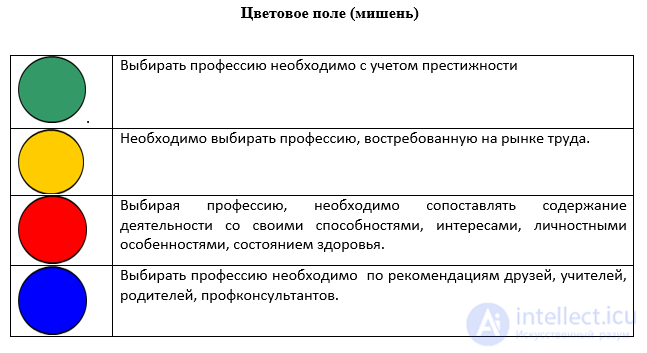
Effectiveness criterion: At the end of the game, students share their opinion on how a profession should be chosen in order to avoid possible mistakes and not be disappointed in their choice. "Darts" is used to obtain feedback. Of the four proposed principles for choosing a profession, students choose the one that reflects their attitude toward their future professional choice. The facilitator processes the results obtained.
Course of the game
Host 1: Good afternoon, dear guys, teachers, and guests!
Host 2: Hello!
Host 1: We are glad to welcome all participants of the business game «My Professional Choice». Our business game involves 3 creative research groups.
Host 2: The topic of our conversation is very important and relevant — in a few months our graduates will have to make a decision. This decision will shape their professional future for years to come.
Hosts 1-2. CHOOSING A PROFESSION!
Co-host 1: In many ways, it is our work that determines the friends, companions, and loved ones we choose. Habits, character, lifestyle, and social circle all form around one's profession. That is why graduates, when choosing a profession, are often guided by the notion of «prestige».
Co-host: Every year, dozens of sociological studies are conducted in our country, and their results boil down to the following: school graduates have an inadequate understanding of their own abilities, the requirements of professions, and the labour market. Parents and schools have little influence on a graduate's choice; most students choose their future profession based on the prestige of one job or another, rather than on labour-market demand or personal interest.
Today we will try to understand what prestige actually means, which professions the graduates of our school choose, and how to avoid mistakes when choosing one's own profession.
The floor is given to the first group of researchers.
Presentation by a representative of Group 1: We conducted a survey among the graduates of our school to find out what they consider a prestigious profession, and compiled a ranking of prestigious professions. The survey was conducted in questionnaire form, with 105 people taking part.
Based on the opinions of students in grades 9-11, a ranking of the most prestigious professions was compiled:
45% - prosecutor,
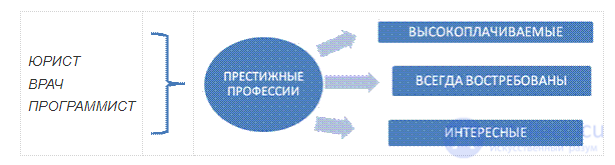
Co-host 1: (Tables with the names of the most prestigious professions by percentage are put up on the board – PROGRAMMER, DOCTOR, LAWYER)
According to the survey data, the main criteria of a prestigious profession were identified as:
Co-host 2: explains the diagram
(Tables with the names of the qualities of prestigious professions are put up on the board -
The resulting diagram:
Host 1: Thank you.
- It should be noted that the word "prestige" in French means charm, allure, while in Latin it translates as illusion, deception of the senses.
At the same time, in our society the word "prestige" is most often associated with such notions as authority, respect, and trust.
But, based on the etymology of the word, it is quite possible that when we speak of prestige, we are under the influence of illusion and deception.
The word "fashion" is used as a synonym for prestige. Fashion permeates many areas of our lives and influences our preferences in clothing, choice of home interior, car brand, and even type of professional activity. But is it reasonable to choose a profession based on whether it is "fashionable - not fashionable", «prestigious - «not prestigious»?
We invite you to try on the roles of representatives of the popular, prestigious professions you have chosen.
To do this, I suggest the groups draw lots with the names of the professions «Lawyer», «Programmer», «Doctor».
Stage 1.
Co-host 1:
Task for the groups: In the opinion of our senior students, a prestigious profession is always high-paying. Is every doctor, lawyer, or programmer a well-paid
specialist? What can influence the salary level of these professions? Consider the factors that might affect a specialist's salary. Prove whether a prestigious profession is always high-paying?
(Each team is given cards with factors that influence a specialist's salary. Working time is 3 minutes.).
The host summarizes the groups' work, drawing attention to the influence of the type of employment (private firm, government institution, own business), the specific place of professional activity, work experience, and qualification on salary level.
Myth: a fashionable, prestigious profession is always high-paying.
We have dispelled a very common myth that a fashionable, prestigious profession is always high-paying.
Co-host 1:

(inscription on the board: cross it out or write next to it «MYTH»)
Reality: Profitability is most often cited as one of the important criteria. However, throughout history, a prestigious profession has not always been a profitable one — the medical profession, for example. Since the times of ancient Babylon it has been a necessary and highly respected one in society, without being profitable. This trend has persisted to this day.
Stage 2:
Co-host 2: In the opinion of our senior students, a prestigious profession is always in demand on the labour market. Is this really so?
The floor goes to a representative of the second creative group.
Presentation by a representative of Group 2: We analysed labour-market information websites, visited the employment centre of the Traktorozavodsky district, and obtained information on the degree of demand for various professions on the labour market in the city of Volgograd and the Volgograd region.
Most of the vacancies are in the construction market — plasterers, bricklayers, welders — (41.5%). In second place are professions in the trade sector (salespeople, cashiers, merchandisers) — (11.8%). Rounding out the top three most in-demand fields are social welfare (social workers), healthcare (nurses, doctors), and education (teachers) — (9.5%).
It is hardest to find work for young specialists with no work experience, and for people over 40. It is especially difficult for those who chose popular specialities — psychologists, economists, lawyers (particularly in the field of real estate and banking law).
Co-host 2: Thank you. Compare this list with the list of prestigious professions on the board. Are all the prestigious professions we chose in demand on the Volgograd labour market? (not all of them)
Guys, what do you think — can graduates of educational institutions with professions such as, for example, plasterer, bricklayer, engineer, doctor, teacher, be well-paid? (students voice their answer options, the host comments and adds to them).
Task for the groups: Review and read the portrait-descriptions of two specialists in your profession, given in the task. Which of them has a better chance of having high demand on the labour market and a good salary?
(The groups work on the assignments. Working time 3 minutes).
At the end of the work, the facilitator summarises the groups' work:
a specialist is paid a salary not for what profession he has, but for the specific work he does. It is not the profession that is paid, but the work performed.
Facilitator 2: Specialists in many professions can be highly paid; for this it is necessary to become a master of one's craft, to be genuinely interested in what one does, and to possess the necessary professional knowledge and personal qualities.
Many draw the mistaken conclusion: my profession is not in demand. Life shows that there are no professions that are not in demand, only specialists who are not in demand.
Co-facilitator 2:
Myth: A prestigious profession is always in demand on the labour market.
We have dispelled yet another myth about prestigious professions

(the inscription on the board is crossed out and MYTH is written instead)
Reality: Masters of their craft, true professionals, are in demand.
Stage 3:
Co-facilitator 1: Let us return once again to our criteria for determining the prestige of a profession. The last and most common criterion we identified is that a profession is prestigious – meaning it is interesting.
The floor goes to the representative of the third group.
Presentation by the representative of group 3: Our group analysed statistical data for Volgograd and the Volgograd region on graduates who enrolled in various vocational educational institutions, and found that only a third of the ninth-grade graduates surveyed (30.6%) and 65.6% of eleventh-grade graduates were able to name the specific profession they intended to work in. Every fifth student who had chosen a profession knew nothing about its content or working conditions.
Likewise, according to research findings, up to 45% of applicants to vocational educational institutions are not confident that their choice is correct. About 30% of graduates of the vocational education system do not intend to work in the specialty they obtained, and up to 20% of graduates state upon completing their studies that their expectations about the chosen profession were not met.
Co-facilitator 1: Thank you. We thank your group for the interesting information. As the research shows, everyone choosing a profession must clearly understand the content of the future profession's activities, what special features and difficulties they will face, and with whom or what they will be in constant interaction.
Co-facilitator 1:
Assignment for the groups: We invite you to analyse the professions of «Doctor», «Lawyer» and «Programmer» from this point of view. Each team will receive a set of 6 puzzle pieces reflecting:
1. the content of the activity,
2. responsibility,
3. professional environment (with whom and what interaction takes place),
4. working conditions,
5. difficulties,
6. risks.
Each puzzle piece must be filled in with information according to the proposed characteristics, and the pieces assembled into a figure. Each puzzle piece has words on it, and once the figure is assembled, a proverb results. Explain its meaning.
(The groups work on the assignments. Working time for the groups is 10 minutes).
Suggested answers about the professions:
The profession of "Doctor"
Content of the activity: engages in the prevention, diagnosis and treatment of various illnesses, examines patients, gives consultations, and performs operations.
Responsibility: moral and criminal (for people's lives, choosing the correct treatment, correctly prescribing medications), timely and accurate completion of medical and other official documentation.
Environment: patients (sick, suffering people), colleagues.
Working conditions: indoors (hospital, clinic, morgue, hospice), outdoors, in extreme conditions.
Difficulties: nervous strain, irregular working hours, daily exposure to illness and death, work in extreme conditions.
Risks: incorrect diagnosis, death or harm to a patient's health, accusations, imprisonment, loss of the right to practise medicine, threats to one's own life.
Conclusion. Applicants' ideas about this profession are often romanticised and far from reality. Illusions frequently dissolve as soon as a student enters the clinic and encounters the realities of healthcare. It turns out that helping people is not as easy and simple as it seemed. However, if a person is willing to overcome difficulties for the sake of a higher purpose and is not afraid of the routine of everyday work, they will become a professional and derive satisfaction from their work.
The saying "a doctor's profession is round-the-clock" also has another meaning. Choosing the correct treatment is often the result of intense reflection and prolonged doubt. Practising medicine requires a great deal of personal responsibility. The price of a mistake here is very high — a person's health and life. Therefore, wherever a doctor may be, they willingly or unwillingly keep thinking about the
patient, analysing their own actions. It is hard for them to switch off completely, to step away from work, and to truly rest.
In medicine, much is achieved through hard work and total dedication. It is difficult to stand at the operating table for several hours, and not simply stand there, but perform intense work on which a person's life depends — work that demands the highest level of skill. The physical strain on a local district doctor is considerable. Sometimes they are forced to climb the stairs on foot several times a day (the elevator in the building where the patient lives may, for example, be broken). Ambulance doctors sometimes have to carry, turn, and support patients and the injured, making their way to them when they are trapped in a vehicle, pinned by a wall, lying at the bottom of a ravine, and so on. The suffering and death that doctors, nurses, and paramedics inevitably encounter is a serious test for the psyche. Medical staff cannot detach themselves from a patient so completely as to not feel their pain. It is precisely this that gives their work its particular psychological strain.
The Profession of "Lawyer"
Responsibility: moral and criminal (for the legal protection of citizens, compliance with the law).
Content of the work: protects the rights and interests of citizens, handles criminal, economic, and civil cases, solves crimes, hands down punishments, monitors their enforcement, advises citizens and organisations on legal matters, and drafts legal documents.
Working conditions: indoors (office, cell, courtroom), crime scenes, nervous-psychological strain, high intellectual load.
Difficulties: nervous strain, irregular working hours, constant contact with the less pleasant side of life: violations of the law, crimes, criminals and their victims, and people in difficult life situations.
Environment: criminals, victims, witnesses, colleagues.
Risks: judicial error, imprisonment, being barred from practising law, threats to one's own life.
Conclusion. Legal work is an occupation that requires great effort, patience, conscientiousness, knowledge and a high level of responsibility, based on the strictest observance of legal norms.
The work of lawyers, being highly varied and complex, has a number of features that distinguish it from the work of most people in other professions.
First, legal professions are characterized by an extraordinary variety of tasks to be solved. Every new case is a new challenge for the investigator, prosecutor, judge, or attorney. Very often, the search for the truth requires a creative approach to the case.
For practically all legal professions, one of the main aspects of the work is communicative activity, which consists of interacting within the framework of legal regulation.
Most legal professions are characterized by a high level of emotional strain in the work. This is often associated with negative emotions, the need to suppress them, and the need to postpone emotional release for a relatively long period of time.
Many legal professions are characterized by having to overcome resistance to their work from certain individuals, and in some cases from small groups. A prosecutor, investigator, operational officer, or judge, in the search for the truth, overcomes passive or active resistance from persons interested in a particular outcome of the case.
Essentially, legal professions are distinguished by the creative nature of the work.
The search for truth in criminal proceedings — is a creative process, which is why an investigator, prosecutor, attorney, or judge needs such qualities as humanity, sensitivity, attentiveness, the ability to penetrate a person's inner world, and the ability to find the most appropriate working methods in each specific case: whether dealing with a particularly dangerous repeat offender or with a person who has simply stumbled by chance.
Profession «Programmer»
Responsibility: moral and administrative (for the legal protection of information, compliance with laws).
Nature of the work: has a high level of training in the field of software development and has experience developing software products using a broad range of technologies. Creates the architecture underlying the program being developed, distributes work and monitors the completion of tasks by other team members, and trains new or less experienced developers. The programmer's main qualities are the ability to think systemically, with foresight, to see all stages of project development, and to track
current market trends and be able to apply the most promising and up-to-date technologies in their projects when required.
Working conditions: indoor (office), high intellectual load, sedentary work, strain on eyesight.
Difficulties: nervous tension, irregular working hours, constantly being in the virtual world.
Environment: colleagues.
Risks: loss of valuable information, leakage of personal data, infringement of the intellectual property rights of others.
Conclusion: The ability for self-directed learning – is one of the key skills a programmer must possess.
A command of English at the level needed to read technical documentation is another mandatory requirement placed on representatives of this profession. For such specialists it is very important to be able to work: in a team, on large projects, with collective development tools, with large financial systems (budgetary, banking, management accounting systems). Candidates for the position of lead programmer are also expected to have project- and team-management skills, independence, initiative, and the ability to bear personal responsibility for an assigned task. Programmers who work with 1C enjoy particular demand on the labour market — they are the same kind of «applied specialists», but they adapt the ready-made 1C software package to the needs of a specific enterprise, mainly its accounting department. By analysing the client's requirements, they set up programs that simplify calculations, optimise staff work, and streamline document management.
Another area of activity for a programmer is web programming: the development, modernisation and maintenance of websites. This field requires a great deal of specific knowledge — PHP, Python, MySQL, XHTML, CSS, JavaScript, XML. Moreover, employers very often want a «two in one» professional — a web designer and web programmer combined — so that they not only handle technical matters (fast site loading, working links, search functionality) but also take care of the site's design and sometimes even its content.
One can start one's own business, which can potentially prove very profitable (suffice it to recall that Bill Gates, founder of Microsoft, became the richest man in the world thanks to his creation). However, to successfully run such a business it is not enough to be able to write good computer programs; solid knowledge of economics, law and management is also required.
The teams present their completed assignments. A proverb assembled from puzzle pieces: "There are no untalented people, only people doing the wrong job."
Co-host 1: How do you understand this proverb? Could all of the proposed professions become your future occupations? (no) Why? (a profession must match your abilities and interests)
Could these puzzle pieces be of use to us in choosing our own profession? In what way? (it is an algorithm for choosing a future profession)
We have dispelled yet another Myth – «Prestigious professions are always interesting work».

(the table on the board is crossed out and the word MYTH is written)
Reality. Interest is a property of a person, not of an occupation as such; the very same occupation may be the most interesting thing in the world for one person and the most boring for another.
Stage 4: Summing up.
Co-host 2: So, let us sum up our business game. What criteria and rules should guide us in choosing a future profession? What is the reality of life?
Task for everyone:
From the statements offered, which characterise the rules for choosing a profession, select the one that you will be guided by when choosing your profession. (A target is drawn on the board. Students approach the target, choose a coloured field corresponding to the statements marked in the table, and place a magnet on it)
Which field turned out to be the most filled?
Notice that on our target most of the magnets ended up on the green and red fields. In the same way, in life we advise you to make the one truly correct choice of profession, like a shot straight into the bullseye.
Host 1: Guys, those of you who were planning to choose prestigious professions now have the opportunity to analyse your choice in more detail. If you want to be successful, to do work you love, and to be happy in your profession, you need to approach the choice of profession consciously. As Bernard Shaw said: "Labour done out of obligation is work; labour done out of a calling is leisure."
Thank you for your cooperation, until next time!!!
6.Summing up and generalising the material.
Achievement of the lesson's objective, analysis of the work done in the lesson, assignment of grades.
7. Assignment of homework for students' independent study.
7.1. Prepare a report on the topic:
«Labour saves us from three great evils: boredom, vice and want!»

Comments