
Lecture
Frustration (Latin frustratio — «disruption of plans», «destruction of intentions») — is a mental state that arises in a situation of real or presumed impossibility of satisfying certain needs , or, in simpler terms, in a situation where desires do not match available opportunities.
Such a situation can be regarded as, to some degree, traumatic
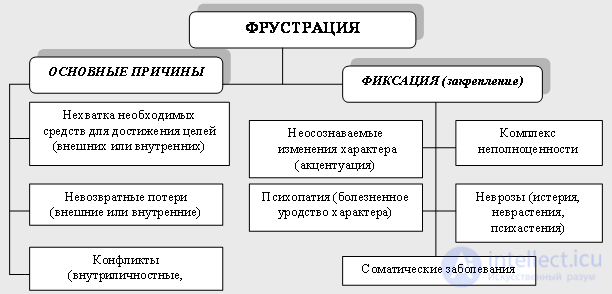
Employee frustration can arise for various reasons and have a negative effect on their productivity and morale. Here are some typical causes of employee frustration:
Unclear expectations and goals: If employees do not understand what is expected of them, or if goals and tasks have not been clearly formulated, this can cause frustration. Employees may feel that they are wasting time on undefined tasks.
Unfair remuneration: If employees believe that their pay does not match their efforts and results, this can cause disappointment and frustration. Unfairness in pay or promotion can be a source of conflict.
Unsatisfactory work environment: Poor working conditions, noise, disorder, or a lack of comfortable workspaces can cause indignation among employees. This can affect their efficiency and overall well-being.
Lack of recognition and praise: If employees do not receive due recognition for their achievements and efforts, this can lead to frustration and even loss of motivation.
Failures and inability to cope with tasks: Inability to achieve set goals or frequent failures can cause frustration and lower self-esteem.
Ineffective management: Inadequate management, conflicts with leadership, or insufficient support from management can become a cause of frustration.
Lack of career prospects: If employees see that they have no opportunity for growth and development within the company, this can cause frustration and a desire to leave.
Employee frustration can have serious consequences for an organisation, including increased staff turnover, decreased productivity, and a negative impact on corporate culture. Managing employee frustration involves listening to their concerns, providing feedback and support, and creating conditions for growth and development. Effective management of frustration helps create a more satisfying and productive work environment.
Reactions to frustration, a state of depression and anxiety can be varied and individual. Here are some types of reactions that people may display in response to frustrating events:
Emotional reaction: People may experience a variety of emotions, such as anger, disappointment, sadness or fear. These emotions may be expressed in the form of tears, shouting or aggression.
Depression: Frustration can cause a state of depression, in which a person feels powerless and hopeless. They may lose interest in activities that previously brought them enjoyment, and feel fatigued.
Anxiety: Frustration can also cause anxiety and worry. The person begins to dwell on the anticipation of future failures or negative events. This state of anxiety may be accompanied by physical symptoms such as insomnia, tension or trembling.
Aggression: Some people may react to frustration with aggression. They may express their anger through words or actions, for example by shouting, hitting objects, or even attacking other people.
Denial: Some people may try to deny the frustrating situation or event. They may convince themselves that nothing bad happened or that the situation does not matter.
Avoidance: Another way of reacting to frustration is to avoid the situation or event that caused it. A person may try to walk away from the problem instead of solving it.
Adaptation: Some people are able to adapt to frustration and find ways to cope with it. They may look for alternative ways of achieving their goals or seek support from other people.
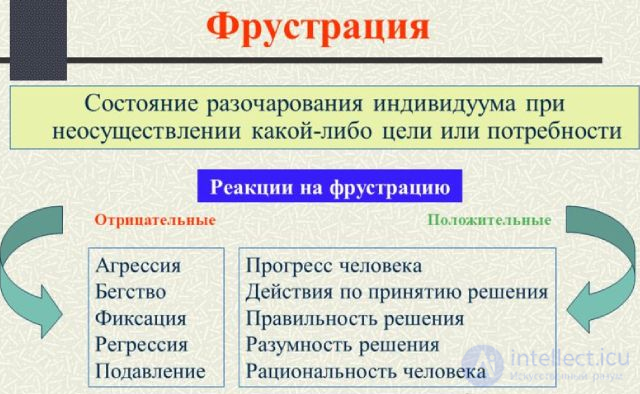
A reaction to frustration may depend on personal characteristics, experience, cultural context and the intensity of the frustrating situation itself. It is important to be aware of one's emotions and to seek healthy ways of managing frustration, such as talking with loved ones, physical activity, meditation or consultation with a psychologist, if the frustration becomes long-term and interferes with normal life.

Comments