
Lecture
Behavior - the interaction of living beings with the environment, mediated by their internal, psychic activity (M.I. Enikeev). The forms in which behavior is expressed depend on the level of organization of the organism's nervous system. Human behavior reflects a person's inner state and points to the individual traits and properties of their personality. The magnitude of one's response to surrounding events is best revealed in character traits. The characteristics of behavior are determined by the following factors:
At the stage of irritability, we are dealing with the organism's response to environmental influences in the simplest possible way. With the emergence of sense organs and a nervous system, behavior becomes more complex and active, no longer reducible to mechanical movement. It is determined by muscular contractions and signals from the central nervous system, which in turn depend on the activity of the sense organs. Like its simple form - movement, behavior is a means by which the organism adapts to environmental influences. Behavior is an evolutionary mechanism. In cases where animals encounter rapid changes in their environment, morphological adaptations cannot ensure survival, since changes in body structure occur too slowly. In such situations, only changes in behavior can save the animals.
"There are no two species of animals that would behave identically"1. On the other hand, within a single species there are many different types of behavior. Living organisms are just as diverse in their behavior as they are rich in size, shape, and color. The principle of the unity of structure and behavior applies. Using the trial-and-error method, animals ultimately settle on the type of behavior that best corresponds to the structure of their body. Types of behavior are divided as follows (Fig. 1).
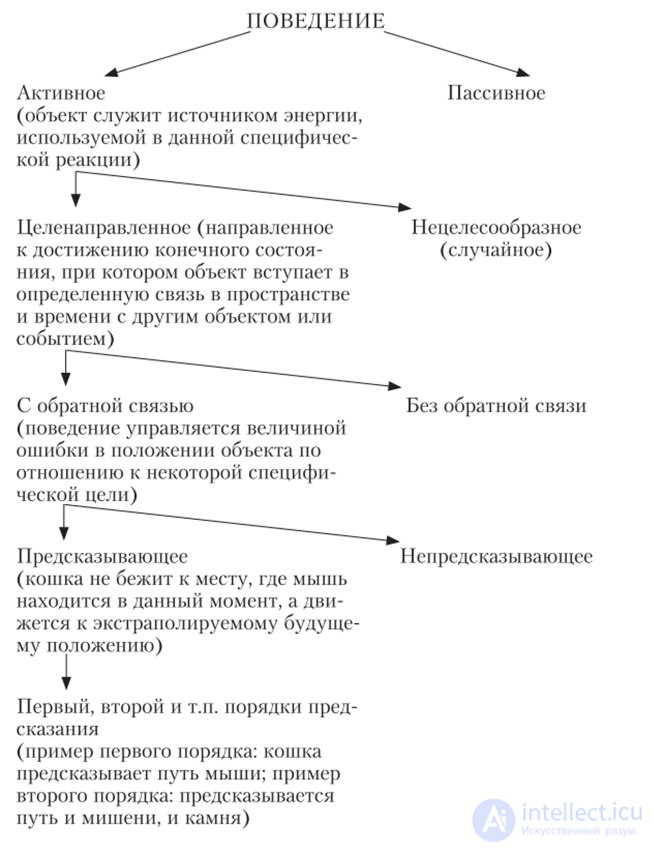
Fig. 1. Types of behavior
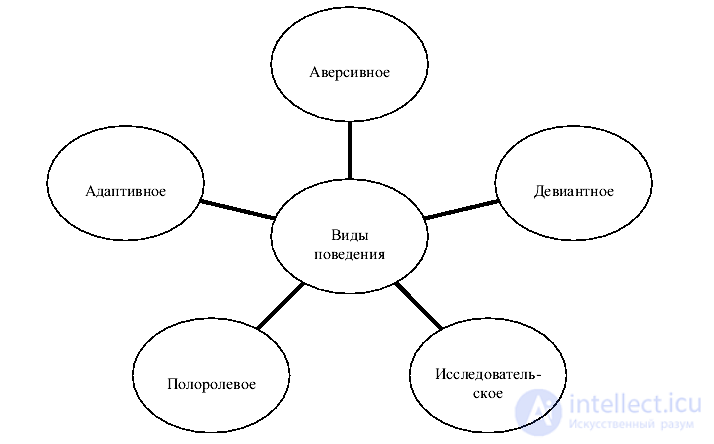
Aversive behavior - behavior of an organism observed under conditions of exposure to harmful stimulation.
Adaptive behavior - purposeful, usually reasonable human behavior that allows a person to adapt as effectively as possible to a situation or to life circumstances.
Deviant behavior - social behavior of a person that substantially departs from the social, moral, or ethical norms accepted in society, clearly violating them.
Exploratory behavior - behavior of a person or animal directed at studying the features of the surrounding environment in which the person or animal currently finds itself.
Sex-role behavior - behavior characteristic of a person of a given sex, associated with the typical social roles performed by people of that sex within the life (culture) of a given society.
Behavioral disorders
Behavioral reactions
Reaction of opposition or protest. In early preschool age it can arise from restriction of the child's activity, from excessive or forced feeding, or from premature or overly strict toilet training. In older children, the protest reaction is based on deep resentment, wounded pride, discontent, and bitterness arising from excessive demands, unbearable burdens, loss or lack of attention, or unjust or cruel punishments.
Reactions of active protest -- disobedience, rudeness, destructive actions, defiant or aggressive behavior.
Reactions of passive protest -- refusal to eat, running away from home, suicide attempts, refusal to speak (mutism), enuresis, encopresis, repeated vomiting, constipation, forced coughing, disguised hostility toward the "offender," withdrawal, and disruption of emotional contact.
Reaction of refusal. Its most typical manifestations occur at an early age. It arises in connection with the child's loss of a sense of security and an unmet need for contact with an emotionally significant figure. The most pronounced manifestations of this reaction are immobility, retardation, lack of desire for contact, and disappearance of reactions to what is happening around them. The desire to play and to enjoy sweets is lost. Depression, sleep disturbance, and loss of appetite appear. Weakening by somatic illness contributes to the emergence of this reaction.
Reaction of imitation. It is characterized by copying the behavior of the person who is most authoritative for the child. The child may imitate an adult's activity or the behavior of a reference group (an antisocial group of children). A behavioral disturbance arises when antisocial forms of behavior are copied (foul language, hooliganism, theft, vagrancy), harmful habits (masturbation), or addictive behavior (smoking, inhaling volatile substances, alcohol use). This reaction is especially persistent and leads to deeper maladjustment if it develops against a background of disinhibited drives, or if it itself provokes the premature development of instinctive manifestations (for example, sexual ones).
Reaction of compensation. It may arise as a form of psychological defense, in which children disappointed by failure in one sphere strive to achieve greater success in other areas. This reaction can become the basis for behavioral disturbances if a child who has failed to distinguish themselves at school begins to bolster their standing through antisocial behavior (hooliganism, theft, and so on).
The reaction of hyper-compensation differs from the previous one in that children overcome their inability or defect through extraordinary effort in precisely the area of activity that is most difficult for them. If a fearful adolescent tries to hyper-compensate for their fear by attacking other adolescents or by dangerous riding of a bicycle, motorcycle, or car (stolen from its owner), then this reaction becomes a mechanism for the development of disturbed behavior.
Character accentuations. People differ from one another in distinctive features that give them their individual character. These individual traits pertain to the sphere of interests and inclinations, to the sphere of feelings and will, and to the sphere connected with intellect. Accentuation is, in essence, the same kind of individual trait, but with a tendency to shift into a pathological state. When strongly expressed, such traits leave their mark on the personality as such and can ultimately acquire a pathological character, disrupting the structure of the personality.
A.E. Lichko describes the following main types of character accentuation: hyperthymic, cycloid, labile, asthenoneurotic, sensitive, psychasthenic, schizoid, epileptoid, hysteroid, and unstable.
Hyperthymic type. Characterized by elevated mood, a thirst for activity, increased talkativeness, and inexhaustible optimism, darkened only briefly by misfortunes and failures. An intensified thirst for activity contributes to achieving success in work and creative pursuits.
Cycloid type. This type is characterized by alternation between hyperthymic and dysthymic states, occurring without any apparent reason or in connection with particular events. The duration of these states ranges from a few days to several weeks. During dysthymic states, one observes lethargy, loss of energy, lowered mood, difficulty in communication, decreased working capacity, and even minor troubles and experiences are felt as heavy burdens. Appetite decreases, sleep worsens, a sense of exhaustion is often noted in the mornings, and there are complaints of boredom, thoughts of one's own worthlessness, and suicidal intentions. During this phase it is especially difficult to change one's habitual way of life, for example, switching from a strictly regulated life with parents to independent existence away from the family.
Labile type. People of this type react to life more turbulently than others. They fall into rapture over joyful events and into despair over sad ones with equal ease. Changes in mood are less connected to egoistic motives; more often they are motivated by altruistic impulses. They develop strong attachments. They are imbued to their very core with love of music, art, and nature.
The "weak link" for this type of person turns out to be emotional rejection by significant others, the loss of loved ones, or separation.
Asthenoneurotic type. People with this accentuation are distinguished by increased fatigability, irritability, a tendency toward hypochondria, affective outbursts, and tearfulness.
As children, people with this accentuation show signs of neuropathy: sleep disturbances, capriciousness, tearfulness, and timidity.
The "vulnerable point" is the realization that plans are unachievable and hopes and desires unrealistic, resulting in neurasthenia or other psychogenic disorders.
Sensitive type. The main traits of this type are excessive impressionability and a sense of one's own inferiority. These individuals find many shortcomings in themselves regarding moral-ethical and volitional qualities. They become very strongly attached to those close to them. They have a highly developed sense of duty and responsibility, and unusually elevated moral demands on themselves and others.
In childhood they are fearful, afraid of the dark, animals, and solitude, avoid overly boisterous peers, dislike noisy games, and are timid and shy. They are afraid of exams and are embarrassed to answer at the blackboard. Sexual urges intensify their shyness and sense of inferiority, especially with the onset of masturbation. The "weak link" is a situation in which the individual becomes the object of ill will, mockery, or suspicion of unseemly behavior.
Psychasthenic type. Representatives of this type are indecisive, hesitate for a long time before starting any task, seek confirmation of the future success of their activity, and are full of doubt. They are apprehensive, afraid of anything new, constantly in doubt, and fearful of misfortune and danger, making waiting extremely difficult for them. In childhood they are timid, fearful, motorically awkward, prone to intellectualizing, to "adult" intellectual interests, and to developing phobias of unfamiliar people, new objects, and darkness.
Sexual development often outpaces physical development. Breakdowns are possible when experiencing situations of heightened responsibility.
Schizoid type. For assessing reality, a person with this accentuation relies more on their own conceptions than on perceptions and sensations. They construct a picture of the surrounding world in accordance with their own judgments and on the basis of life experience. The more pronounced the accentuation, the further the person moves from actual reality. Such individuals are more inclined toward reflection and less ready for action. Pronounced absorption in their own inner experiences leads to isolation from other people. Another cause of difficulties in communication may be weak emotional contact. This is largely determined by the poverty of their emotional responsiveness, the underdevelopment of instincts, capacity for empathy, and lack of intuition.
From an early age these children prefer solitude, play alone, avoid noisy groups of peers, preferring instead the company of adults, whose conversations interest them. They are reserved beyond their years and lack lively emotional expressiveness.
Sexual activity is often unnoticed by those around them. Disdain for sexual life may coexist with persistent masturbation and vivid erotic fantasies both waking and in dreams.
The need to enter quickly and easily into informal contacts creates an unbearable situation for schizoid individuals.
Epileptoid type. Individuals with this accentuation are characterized by a drive toward affective discharge, explosiveness, impulsiveness, discontent, violent and rude protests, and resolving conflicts through physical force. A gradual buildup of affect and cruelty is observed. Their thinking is heavy, thorough, and gets stuck on details.
In childhood this accentuation is rarely detected, but if it does form early, one observes excessive, inconsolable tearfulness, sadistic tendencies, and a thriftiness and petty neatness uncharacteristic of the age.
A strong sex drive, a tendency toward sexual excess, and sadistic and masochistic inclinations are characteristic of epileptoid individuals.
They tolerate disobedience and material loss poorly, are unable to restrain their lust for power or curb their jealousy, and practically any affect can become uncontrollable and lead to brutal aggression.
Hysteroid type. Characterized by egocentrism, capriciousness, ostentatiousness, scheming, a need for recognition and overvaluation, a striving to appear rather than to be, self-glorification, self-accusation, accusation of others, fantasizing, extravagant appearance and actions, self-pity, thoughtless actions, and a lack of deep and sincere feelings.
From childhood they cannot bear it when others are praised; they play with toys less than they show them off. They strive to attract attention to themselves, seek admiration and praise, and to this end display their knowledge, skills, and "talents."
Sexual desire is not particularly strong; sexual behavior is extravagant and demonstrative. They tell stories of "conquests and adventures," presenting themselves as experienced and dissolute.
Unstable type. People of this type seek pleasure, idleness, and entertainment. As a result, they readily submit early on to those who offer them cigarettes, drinks, or psychoactive substances, and seek out unusual adventures, including in sexual relationships. They are suggestible and carefree. They are indifferent toward family members and neglect household duties. Those close to them are often regarded merely as a source of funds for pleasure and entertainment. They are cowardly, insufficiently proactive, and thus easily become prey for criminal elements.
In childhood they are disobedient and restless, easily fall under the influence of others, and have difficulty learning rules of behavior. They refuse to study. They do their work and follow a routine only under strict supervision.
Sexual desire is not strong; under the influence of others' example, they begin sexual life early, which becomes for them a source of entertainment.
The weak point of people with this accentuation is being left to their own devices without any supervision.
Hyperkinetic syndrome. This syndrome is characterized by a short attention span, restlessness, and impulsiveness. It hinders adaptation at school, worsens academic performance, and is a source of concern for parents and teachers. The main signs of hyperkinetic syndrome are: hyperactivity, impulsiveness, antisocial behavior, learning difficulties and delayed cognitive development, as well as emotional symptoms.
A vast array of behavioral forms is determined by genetic factors and depends just as much on the genetic heterogeneity of species and populations as does the diversity of bodily forms. Moreover, it is very likely that differences in the behavior of members of the same population are also, at least in part, hereditarily predetermined. Experiments show that natural selection influences behavior, and behavior in turn influences the genotype. Behavior influences the group composition of a population and thereby the fate of genotypic changes arising within it. Behavioral selection of animals is thus possible.
A vast array of behavioral forms is determined by genetic factors and depends just as much on the genetic heterogeneity of species and populations as does the diversity of bodily forms. Moreover, it is very likely that differences in the behavior of members of the same population are also, at least in part, hereditarily predetermined. Experiments show that natural selection influences behavior, and behavior in turn influences the genotype. Behavior influences the group composition of a population and thereby the fate of genotypic changes arising within it. Behavioral selection of farm animals is thus possible.
The behavior of a particular organism is determined by internal and external programming. External programming occurs through the individual animal's adaptation to the environment as it accumulates experience. Internal programming is the result of the gradual evolution of the species.
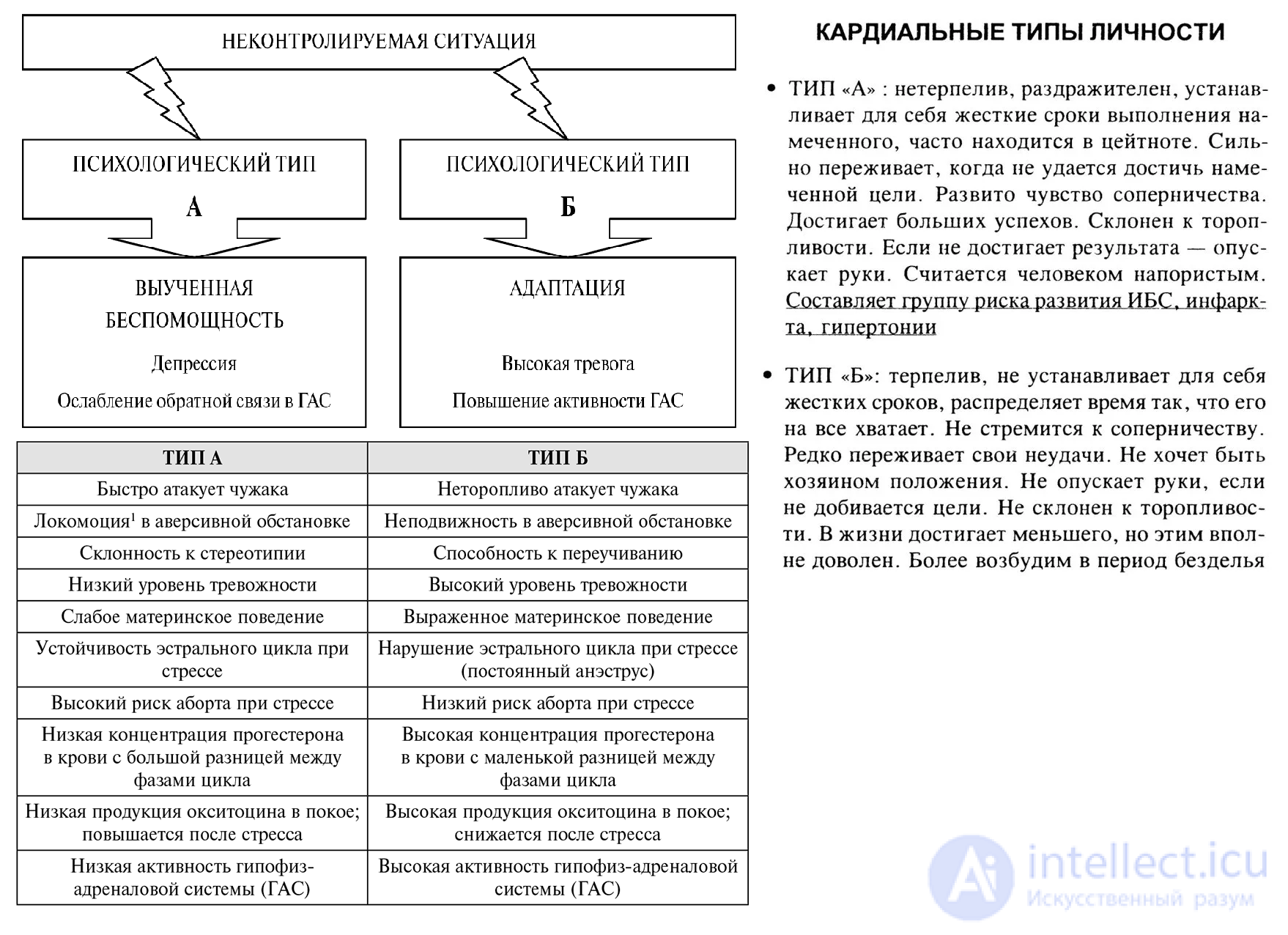
Type A behavior (English: type A behavior) is a set of personality traits whose presence increases the likelihood of an individual developing cardiovascular disease. It was first described by American cardiologists Meyer Friedman and Ray Rosenman in 1959.
This type of behavior is associated with such personal characteristics as an intense struggle to achieve success, competitiveness, easily provoked irritability, excessive commitment to one's profession, heightened sense of responsibility, aggressiveness, and a constant feeling of time pressure.
In the course of his medical practice, Meyer Friedman noticed differences in the behavior of people with and without heart disease. In a subsequent survey of executives and colleagues, Friedman found that most of them linked a high probability of developing cardiovascular disease to prolonged exposure to stressful situations, intense work, a person's competitiveness, and the economic difficulties they faced.
To test this hypothesis, Meyer Friedman and his colleague Ray Rosenman conducted a study lasting a total of eight and a half years. The study involved 164 people aged 35 to 59. As a result of the study, a behavioral model, or set of characteristics, associated with an increased likelihood of developing cardiovascular disease was described. This model was named "Type A behavior." It should be noted that the authors also attempted to describe the opposite model, Type B behavior, characterized by an absence of tension, ambition, a sense of time urgency, striving for achievement, and competitiveness.
Friedman and Rosenman's findings were also confirmed in other studies conducted in 1974, 1976, and 1980.
Type A and B behavior were first studied by cardiologists Meyer Friedman and Ray Rosenman in the 1950s. When the chairs in the reception area of a cardiology clinic were being replaced, an upholsterer drew the doctors' attention to the worn-out upholstery on the chairs' front edges. This was what prompted the start of research into the relationship between cardiovascular disease and behavior type.
Friedman and Rosenman conducted a longitudinal study. It involved 3,154 people aged 39 to 59, who were observed over eight and a half years, with behavioral features diagnosed by means of a survey. Participants were asked to complete a questionnaire containing questions such as: "Do you feel guilty if you use free time to rest?", "Do you need to win in order to enjoy games or sports?", "Do you usually move, walk, or eat quickly?", "Do you usually try to do more than one thing at a time?" Participants were then divided into two groups based on their answers: Type A behavior (ambitious, competitive, aggressive, restless) and Type B behavior (relaxed, calm, adaptive, non-conflictual, non-competitive). It was subsequently shown that Type A behavior was associated with coronary heart disease 2 to 6 times more often than Type B.[
Type A behavior is a consequence of the cumulative effect of prolonged experience of negative functional states and constant emotional tension in the absence of conscious self-regulation. Three components with the greatest pathogenicity are identified: competitiveness, time urgency, and hostility. It should be noted that Type A behavior is often encouraged by the very nature of the work involved. As a rule, this kind of occupational deformation is characteristic of people in leadership positions, middle and senior managers, whose work is associated with high workloads and responsibility for achieving results. People in sports professions, in which competitiveness and drive are encouraged, frequently suffer from the consequences of Type A behavior as well.
Type A behavior is a construct formed over the course of one's life, not an innate form of personality behavior.
Friedman and Rosenman concluded that the Type A behavioral model is the main cause of coronary insufficiency and the resulting circulatory disturbances. The probability of heart attacks and the development of severe forms of hypertension in at-risk individuals is 4.5 to 6 times higher than in people with a balanced type of behavior. In people with Type A behavior, the increase in blood pressure, heart rate, and release of stress hormones in response to stressors is much greater than in others. Their sympathetic nervous system turns out to be hypersensitive to stressors.[10]Type A behavior can also be accompanied by an overestimation of competitors and an underestimation of one's own strength, which leads to self-doubt, hyperactivity, and, as a consequence, reduced work efficiency..
"In recent decades, an increasing number of people have suffered from cardiovascular disease (CVD), especially those aged 30 to 60. Five main factors contributing to its development are identified: neuropsychic tension, disturbed lipid metabolism, elevated blood pressure, smoking, and hereditary predisposition. Somewhat later, another risk factor was added to this list - so-called Type A (or coronary Type A) behavior. According to observations by American cardiologists, in the absence of this type of behavior, coronary heart disease (CHD) is very rare before the age of 70, even if the person smokes, eats fatty food, and does not exercise. For this reason, studying the personality characteristics of people with Type A behavior, the causes behind the formation of this behavior type, and developing methods for its correction are extremely important.
Friedman and Rosenman, summarizing their observations of patients, were the first to describe a "behavioral syndrome" associated with the development of CVD, which came to be called "Type A behavior." They noticed that patients with coronary heart disease, when sitting down during a consultation, would sit right on the very edge of the chair, their posture signaling a wish to end the conversation with the doctor and leave as quickly as possible. A special survey of such patients showed that haste, impatience, and a constant sense of time urgency were indeed a stable feature of their behavior.
Subsequently, many authors described the characteristics of people with Type A behavior: a fast pace of life aimed at achieving a vaguely formulated (often hard-to-reach) goal; a constant drive to compare themselves with and compete against others, and to climb the career ladder; a persistent search for recognition; active participation in various kinds of activity; a shortage of time; high readiness for action; impatience and constant haste; a lack of a sense of security; a fast pace of life and acceleration of many physical and mental functions; an inability to relax [26, 109, 176 etc.]. In addition, certain outward manifestations of this type of behavior were noted, such as aimless hostility, irritability, fast, loud, and clipped speech with emphasis on individual words and phrases, and energetic gestures. It is also usually noted that such people leave quickly and eat quickly.
The opposite type of behavior (Type B) is described in far less detail. People with this type of behavior alternate work and rest, are not prone to states of emotional tension, and are relaxed and unhurried. Their speech is softer and calmer (as are their gestures). None of this, however, means that they are lazy, passive with regard to their duties, or work inefficiently.
Friedman and Rosenman also propose a more differentiated approach that takes into account the degree to which the characteristics of the two described behavior types are expressed. This allows for the identification of Type A1 behavior (a combination of the most strongly expressed traits of "coronary behavior"), Type A2 (a combination of traits of both behavioral groups, but with a predominance of "coronary behavior" characteristics), Type B3 (a combination of traits of both groups, but with a predominance of Type B behavior characteristics), Type B4 (a set of traits opposite to the parameters of coronary behavior), and Type 0 behavior, in which the traits of both groups are balanced.
A.V. Libin [89] proposes a different approach to distinguishing types of behavior. He gives a brief characterization of three patterns of preference underlying the behavioral styles of Types A, C, and T.
Type A syndrome includes signs of anger, competitive behavior, and a striving for perfection. The behavioral and personality manifestations of this type are discussed in more detail above. It has been shown that businesspeople belonging to this type are twice as likely to die of a heart attack. In addition to an increased risk of cardiovascular disorders, frequent failures resulting from setting excessively high goals often become, for people with Type A syndrome, a cause of depression and anxiety.
Type C syndrome is characteristic of those who are able to maintain their composure and hold firm in a stressful situation. Three attitudes help them cope with stress:
Thanks to all of the above, in people of this type the stresses they have gone through have practically no effect on their health.
Type T syndrome is "displayed" by those for whom the experiences brought on by stress are a reward for courage. They themselves seek out risky situations, striving for novelty and excitement.
Type A behavior is studied along four main lines of research. Component analysis involves studying the components of Type A behavior and their relationship to the clinical manifestations of coronary disease. It is believed that different manifestations of CVD correspond to different sets of traits within the "Sisyphean type." The second line of research is the analysis of manifestations of egocentrism: heightened attention to one's own persona in people with Type A behavior is linked to aggressive reactions. Researchers note that such people refer to themselves more often than others do, and their speech contains more instances of the pronouns "I," "me," "my," and so on.
Proponents of the third line of research adhere to the concept of control deficit, according to which Type A behavior is a specific way of mastering stress factors in the environment, an attempt to control events that are not actually subject to the individual's control. Finally, within the framework of the concept of ambiguous criteria, what comes to the fore is the heightened dependence of people with Type A behavior on public opinion, which forces them to constantly compare their achievements with those of others. However, in doing so they use inflated and poorly defined evaluation criteria, resulting in a constant struggle for success and a chronic sense of time shortage [176].
Alongside those already considered, there is yet another interpretation of Type A behavior, rooted in the psychoanalytic approach. In this interpretation, this type of behavior is treated as based on the need for self-actualization and the pursuit of social approval, as well as on the dominance of two psychological defense mechanisms - "repression" and "reinforcement." In a person with Type A behavior, two conflicting levels combine: the actual level (based on socially approved stereotypes of "activity," "independence," and so on) and the latent level (based on a drive toward dependence, impulsiveness, and passivity). The competition between these two levels creates the conditions for reduced resistance to CHD [138].
In sum, there is no single, generally accepted psychological theory explaining Type A behavior, despite the enormous number of studies on this topic. One reason is probably that these studies are largely "descriptive-correlational" in nature. Statistical methods and the establishment of formal relationships cannot replace a substantive psychological analysis of the phenomenon under study. Moreover, since most of the research has been carried out by physicians and published in medical journals, the pragmatic orientation of this work and its significance for practical medicine clearly dominate over the drive to uncover the psychological essence, psychological mechanisms, and genesis of Type A behavior. Those who believe that understanding this type of behavior requires analysis at all levels of mental phenomena and activity - motivational, goal-directed, operational, emotional, cognitive, and so on - are probably correct.
Since a systemic or structural-level approach has not been implemented, many questions remain unclear, and the answers often turn out to be contradictory. There is no precise definition of Type A behavior; even its name - "Type A behavior" - is not considered fitting by everyone. There is a hypothesis that Type A in fact represents not one but several behavioral patterns. Attempts to clearly link such behavior solely to reactions to stressful situations are also questionable.
There is also still no unambiguous answer to the question of which personality and behavioral features play the most pathogenic role in the development of CVD. Some studies point, for example, to intolerance and a tendency toward rivalry, while others emphasize the primary importance of anger and hostility. Very little is known about the mechanisms by which Type A behavior is formed. The question of its diagnosis has also not been fully resolved. The relationship between Type A behavior and the risk of any disease, including CHD, is often denied altogether [33].
The link between Type A behavior and CHD is confirmed by the results of numerous studies conducted both in our country and abroad. The results of longitudinal studies are especially valuable in this regard, since they make it possible to "disentangle" premorbid psychological features from changes in the psyche caused by (or at least associated with) the illness. In one such study, 3,200 healthy people were studied over several years. Among those with Type A behavior, the onset of CHD was recorded almost 5 times more often. According to another study, blood pressure is higher in people with this behavioral type than in people with Type B behavior. The rate of recurrent myocardial infarction in people with Type A behavior is 5.5 times higher than in those with Type B behavior. Atherosclerotic processes and thrombus formation are also more frequently noted in the former [32].
It is also important to note that the personality characteristics of CHD patients correlate closely with certain features of Type A people. It is known that the traditionally cited risk factors for CHD (smoking, physical inactivity, excess weight, etc.) account for only about 50% of CVD cases. Moreover, it is precisely the psychological and other problems caused by the "costs" of Type A behavior that may be one of the causes of smoking, overeating, and physical inactivity. There are also concepts explaining the anatomical-physiological mechanisms by which Type A behavior influences the onset of CVD, which there is no need to discuss here.
With regard to the manifestations of this behavior type, let us focus only on those that are beyond doubt, because they have been confirmed by many studies. These include, for example, reactions of irritability, aggression, and aimless hostility in stressful situations.
It has been found that people with Type A behavior are more inclined to mistreat children. About 75% of women undergoing treatment because they abused their own children displayed this type of behavior. In the control group, only 50% of such mothers showed it. Other data confirm that individual differences - at both the behavioral and physiological level - can influence one's propensity for aggression. In this regard, Type A men with high testosterone levels are especially prone to responding to provocation with violence [26].
The limited research available suggests that Type A behavior is formed during the course of one's life, under the influence of environmental factors, rather than being hereditarily predetermined. In particular, inadequate care for a child and poor parental upbringing in childhood lead, in the future, to the person more frequently becoming involved in situations characterized by a high degree of risk. This, in turn, may be connected to the fact that such people more often set themselves goals that are difficult to achieve. Factors contributing to the development of Type A behavior are also sometimes said to include the drive to achieve social adaptation at school, impatience, and irritability. At the same time, the presence of Type A or Type B behavior does not correlate with academic success.
It has been established that the prevalence of Type A behavior varies depending on the sociocultural characteristics of the group, the profession chosen, and the level of education. This type of behavior, for example, is more common in families with a high annual income, and among employees and executives, than among manual laborers [109]. The question of what is cause and what is effect here is, as always, unclear, although many authors write about the possible influence of behavior type on career choice.
Traits characteristic of Type A behavior have been observed in children aged 6 to 11. Sex differences have also been established: boys are more impatient, aggressive, more prone to competitive situations, and more ambitious compared to girls. This may also be a factor in boys' higher blood pressure.
Alongside pronounced hostility and aggressiveness, people with Type A behavior are characterized by sociability. They readily make contact and come across as pleasant, cheerful people distinguished by enthusiasm, who are ready to voice their opinions and share their impressions. This contradiction between a drive for interpersonal contact and emotional responsiveness, on the one hand, and hostility, on the other, produces chronic emotional tension [109]. This is why people with coronary-prone behavior often strive to control their actions and restrain their temper in order to maintain their relationships with those around them.
Because of their psychological characteristics, patients with Type A behavior who have suffered a myocardial infarction usually begin to experience alienation from their social environment. They no longer seek contact with people who might help or support them. In people of the opposite type, the drive for social contact does not depend on their state of health.
People with Type A behavior are characterized by pronounced enterprise. They are distinguished by a narrow range of interests; rather than scattering their efforts, they concentrate them on particular spheres of activity and areas of work in which they try to fully realize themselves. This may be connected to their desire to achieve perfection in everything they undertake. The dominant motivation of these people does not fade for a long time, and even intensifies after failures, forcing them to make ever greater efforts to realize their ambitions and leading to persistent psycho-emotional tension (especially when a goal is mistakenly assessed as achievable) [56, 109]. The drive to perform activities as effectively as possible is already characteristic of children aged 6 to 11 who display Type A behavior. A mother oriented toward achievement can influence the formation of the same type of behavior in her child, since the attitude toward work depends on the caregiver's stance: by encouraging the child's independence and good performance of various tasks, we reinforce behavior aimed at high achievement.
People with Type A behavior are distinguished by heightened conflict-proneness, and they rate conflicts at work (rather than in the family) as the most significant. They readily take on public responsibilities, which increases their emotional load and contributes to the progression of coronary artery atherosclerosis [109].
Certain sex differences have been established in the manifestation of Type A behavior. For example, in women of this type, the dominance of extraversion is more pronounced than in men. They also give more non-accusatory and self-accusatory responses when taking a frustration-based drawing test. According to D.V. Plotnikov, Type A behavior in women is determined to a greater extent by biological predispositions than in men [108]. It is suggested that two components of character are of decisive importance in determining this type of behavior. First, there is hyperthymia, accompanied by an elevated background mood and increased mental and motor activity. Second, exaltation and emotiveness, the depth of emotional experience, and emotional involvement in ongoing events are very important.
Another factor influencing the prevalence of Type A behavior is age. It occurs more often among young and middle-aged people.
Almost as soon as Type A behavior was described, and its link to coronary heart disease established, methods for modifying it began to be developed for the purposes of prevention and relapse prevention. A sufficient and realistic goal of such work should not be to turn Type A behavior into Type B, but rather to reduce the intensity of Type A behavioral reactions in situations requiring psychological mobilization [109]. The very first attempts at modifying this risk factor, undertaken by Friedman and Rosenman, proved successful. Using a variety of methods (cognitive-social learning, relaxation, training in self-analysis, conflict-resolution skills, and group psychotherapy methods), it was possible to reduce hostility and other components of Type A behavior by a factor of 2 to 5, as well as significantly reduce the number of repeat illnesses.
S.D. Polozhentsev and D.A. Rudnev described the main methods for reducing the intensity of coronary-prone behavior. The method for reducing anxiety level involves deep muscle relaxation, mentally picturing a state of anxiety, and then reducing it. As a result, fewer responses corresponding to pronounced achievement motivation are noted. Group psychotherapy combined with relaxation training leads to a decrease in blood cholesterol levels and a reduction in blood pressure, although involvement in work and the sense of time shortage remain at the same level.
The cognitive-behavioral approach to modifying Type A behavior can be considered the most thoroughly developed. Within this approach, a person's accumulated experience is regarded as the result of the interaction of four factors: cognitive, physiological, behavioral, and environmental. Correcting each of these has its own corresponding recommendations.
Patients are taught, through self-observation, to recognize the situations in which they behave in a Type A manner and what leads to these situations. They are then encouraged to voluntarily replace pathogenic negative reactions to their environment with more adaptive ones. Another aspect of psychological correction is teaching the patient to restructure or avoid situations that provoke Type A behavior. In addition, patients are advised to voluntarily change the pace of their speech and walking, and to reduce the number of other behavioral manifestations of Type A behavior through self-instruction. Finally, the fourth component of the cognitive-behavioral approach is training in autogenic relaxation techniques and other relaxation methods.
An example of the application of this approach is hostility-reduction training. First, patients are asked to recall situations in which they feel irritation and anger. The psychotherapist helps identify the causes of such reactions. This is followed by training in alternative reactions and non-aggressive communication when expressing negative viewpoints or emotions. Role-playing games are then used to transfer the reinforced positive reactions to new situations. Cognitive-behavioral training for patients who have suffered myocardial infarction, combined with cardiologist consultations, medication, and dietitian recommendations, proved quite effective. In the control group, where patients received the same treatment but without the involvement of a psychotherapist, the rate of recurrent infarction was almost twice as high [176].
A major problem is the weak motivation of people with Type A behavior to participate in this kind of training. Negative attitudes toward modifying Type A behavior are explained above all by the fact that, in modern developed countries, this very type often leads to success, helps one keep a job, and increases income. This is why attempts to change such a person's behavior often provoke anxiety and anger in them, and a return to habitual behavior helps reduce this tension. It is believed that, since people suffering from angina and those who have had a myocardial infarction are more motivated to change Type A behavior, it makes more sense to focus on secondary prevention. According to one study aimed at primary prevention, of 125 people invited to the first session, 67 attended, 40 attended the second, 29 attended the third, and only 25 of those invited attended all the sessions. Moreover, no more than 20% of participants followed the complex recommendations for changing their behavior and lifestyle [41].
So, there is a problem: how can one eliminate overstrain and excessive demands on oneself while preserving positive qualities and overall productivity? It has been proposed that we abandon the idealization of the professional qualities of people with Type A behavior and view Type B behavior not as a negative alternative but as the ability to work with high efficiency, but in a more psychologically economical way and in keeping with one's real capabilities. In other words, one must distinguish between people with Type B behavior and people who simply lack drive and self-demand. With this approach, it is easier to convince people with Type A behavior of the need to restructure their behavior. Moreover, one should not demand a complete overhaul of it; it is enough to change the psychological reactions to matters and situations that are relatively less important to the person. One thing is clear: there is no need to encourage excessive activity or multiple simultaneous pursuits accompanied by constant emotional tension at the expense of health. The heightened risk is not justified on either humanistic or economic grounds [109].
Numerous pieces of advice on how to reduce manifestations of Type A behavior can sometimes prove useful. It should be remembered, however, that when such behavior is strongly pronounced, this advice is unlikely to be followed. The reason is, once again, the problem of motivation. For example, to get rid of the sense of time shortage, it is recommended to spend more time with family and friends, to recall past events for at least a few minutes each day, to find time to relax and nap even during the day, to read books (unrelated to work), and to visit galleries, museums, theaters, and so on. Similar advice exists for reducing aggressiveness: make new friends; tell family members that you love them; do not refuse friends' help when it is needed; do not get carried away with arguments; concentrate on pleasant things; control your facial expressions when in a bad mood; talk less and listen more; joke to cope with irritation, and so on.
Another problem that arises in correcting Type A behavior is ensuring the stability and long-term persistence of the changes achieved through the psychotherapist's work with patients. The short-lived nature of the effect is often explained not only by low motivation but also by the fact that the psychological mechanisms of Type A behavior are not sufficiently understood. Moreover, psychological correction generally does not address the patient's personality as a whole, nor does it take into account their social situation of development. Usually, only certain components of behavior are targeted, without addressing the patient's reaction to the illness or their value-motivational sphere. It is no accident that Friedman, one of the founders of the concept of Type A behavior, notes that stable behavioral change is impossible without a reconstruction of spiritual values. The personal orientation of the psychological correction process needs to be strengthened [176].
Another well-known fact is psychologically interesting: a decrease in indicators of coronary-type activity is accompanied by an increase in indicators of neuroticism. This probably reflects the patient's anxiety about the consequences of departing from their habitual type of behavior. The need for heightened self-control over behavior may also be an important factor in neuroticization. This is why psychocorrective measures must be carefully planned, so as to prevent a possible negative effect.
V.P. Zaitsev and V.V. Khramelashvili list a number of points that must not be overlooked when developing such measures. First and foremost, group discussion is directed at identifying and changing false beliefs regarding one's own health. From the very outset, the patient's attention should be focused on the appeal of the sessions and the expected results. It is important to find out what the patient expects from these sessions, and to discuss the benefits and costs with them. The patient should not be required to give up all the habitual and comfortable forms of behavior. One of the goals of the program should be to develop a sense of personal responsibility for one's own behavior. Constant positive reinforcement of successes achieved, and mutual support among participants in the sessions, are necessary [55].
The problem of diagnosing Type A behavior remains relevant. Friedman and Rosenman proposed a structured interview consisting of 21 questions for this purpose (see Appendix). During the dialogue, the interviewer should pay attention not so much to the answers as to the behavior of the subject: how they hold themselves, how quickly they move, how they sit in the chair, and so on. Based on an analysis of the observation results, impatience, involvement in the conversation, features of contact, pace of movement and speech, energy level, and muscular tension are assessed. Although this method can be considered subjective, the rate of agreement among different interviewers is quite high [109].
The Jenkins Activity Survey, consisting of 61 questions with two to five possible answers, has become widely used. Some authors believe, however, that it is not sufficiently reliable, since it is oriented more toward diagnosing Type A or B behavior in people who already have coronary vascular disease. Moreover, a reliable analysis of the informativeness of individual questions most significant for diagnosing Type A behavior has not been carried out [109, 138]. Among attempts to find more objective indicators of this type of behavior, we may note, for example, analysis of voice characteristics and recording of hand-clenching into fists during conversation.
Abroad, several other methods are also used for diagnosing Type A behavior, both in adults and in adolescents and young people. Unfortunately, they have not been adapted for Russian-speaking samples, or are not available at all. An adapted version of the Jenkins questionnaire for diagnosing type of behavioral activity (authors - L.I. Wasserman and N.V. Gumenyuk) is given in one of the works [112]. A similar questionnaire for high school and university students is currently being developed under our supervision. In our view, it is very important, since it will make it possible to more effectively address the task of early prevention of one of the risk factors for coronary heart disease. Unlike the questionnaire for adults, it contains many questions concerning studies rather than work. The appendix also includes V.V. Boyko's questionnaire for determining behavior types, although we do not have data on its reliability and validity."
Type B behavior (English: type B behavior) is a set of personality traits characterizing calm and patient behavior, the opposite of Type A behavior. People with Type B are more inclined toward reflection, creativity, and tolerance of others, and are less anxious.
"In recent decades, an increasing number of people have suffered from cardiovascular disease (CVD), especially those aged 30 to 60. Five main factors contributing to its development are identified: neuropsychic tension, disturbed lipid metabolism, elevated blood pressure, smoking, and hereditary predisposition. Somewhat later, another risk factor was added to this list - so-called Type A (or coronary Type A) behavior. According to observations by American cardiologists, in the absence of this type of behavior, coronary heart disease (CHD) is very rare before the age of 70, even if the person smokes, eats fatty food, and does not exercise. For this reason, studying the personality characteristics of people with Type A behavior, the causes behind the formation of this behavior type, and developing methods for its correction are extremely important. …
Subsequently, many authors described the characteristics of people with Type A behavior: a fast pace of life aimed at achieving a vaguely formulated (often hard-to-reach) goal; a constant drive to compare themselves with and compete against others, and to climb the career ladder; a persistent search for recognition; active participation in various kinds of activity; a shortage of time; high readiness for action; impatience and constant haste; a lack of a sense of security; a fast pace of life and acceleration of many physical and mental functions; an inability to relax. In addition, certain outward manifestations of this type of behavior were noted, such as aimless hostility, irritability, fast, loud, and clipped speech with emphasis on individual words and phrases, and energetic gestures. It is also usually noted that such people leave quickly and eat quickly.
The opposite type of behavior (Type B) is described in far less detail. People with this type of behavior alternate work and rest, are not prone to states of emotional tension, and are relaxed and unhurried. Their speech is softer and calmer (as are their gestures). None of this, however, means that they are lazy, passive with regard to their duties, or work inefficiently.
Friedman and Rosenman also propose a more differentiated approach that takes into account the degree to which the characteristics of the two described behavior types are expressed. This allows for the identification of
Type B behavior is associated with a strategy of "lying low" and adapting to change. People with this type of behavior prefer to stay in the background and do not make important decisions in stressful situations. This behavioral strategy also shapes the body's hormonal responses. Thus, for Type B behavior, the main stress hormone is cortisol, secreted by the adrenal cortex. In uncontrollable situations, Type B is characterized by adaptation accompanied by an elevated level of anxiety. People of Type B are called parasympathotonics, since they are characterized by activation of the parasympathetic nervous system.
In the course of their study, Friedman and Rosenman identified three types of behavior: Type A, Type B, and Type C. People displaying the characteristics of Type A behavior are the most susceptible to cardiovascular disease. Respondents with Type B behavior were characterized in the study as complete opposites of people with Type A behavior. For the most part, they were not diagnosed with severe neurosis, and they were also more engaged in the research process. The greatest difference between Types A and B was the absence, in the latter, of the sense of time shortage characteristic of Type A. Another strong distinguishing feature of Type B is a lack of interest in pursuing several goals simultaneously or in competing; most preferred solitary activity.
A difference between Type A and B behavior has been shown in management styles. Whereas Type A behavior is aimed at achieving high leadership positions and a preference for a controlling attitude toward others, Type B behavior involves actions directed toward within-group cohesion. People with Type B see the situation from a global perspective, support teamwork, show patience in decision-making, and inspire colleagues to achieve success in group work.
The features of interaction between people with Type A and Type B behavior were demonstrated in a study by K. Matthews using a modified Prisoner's Dilemma. Players were divided into pairs: Type B - Type B, Type A - Type A, Type A - Type B. The results showed that participants with Type B behavior displayed aggression only when interacting with partners exhibiting Type A behavior. Participants with Type A behavior, meanwhile, displayed aggression and competitiveness toward both Type A and Type B partners. Type A individuals also punished people of their own behavior type more often than Type B players punished Type B people.
Class: Factors influencing health status and contact with health services
Type C behavior (cancer and typos - image) - a system of features obtained through personality tests that characterize individuals belonging to the cancer risk group. Among these features, the leading role is attributed to the suppression of negative emotions. The most characteristic traits are a tendency to avoid conflicts and stress, non-expression of emotions, and a striving to rely solely on oneself while being covertly dependent on others.
"Based on an examination of one hundred cancer patients, Elida Evans concludes that shortly before the onset of the disease, many of them had lost emotional connections that were significant to them. She believed that all of them belonged to a psychological type inclined to attach themselves to a single object or role (a person, a job, a home) rather than develop their own individuality. When this object or role comes under threat or simply disappears, such patients find themselves, as it were, alone with themselves, yet lacking the skills needed to cope with such situations… Furthermore, E. Evans believes that cancer is a symptom of the presence of unresolved problems in the patient's life…
Dr. Lawrence LeShan, trained in experimental psychology but working in the clinical field, is an unsurpassed expert on the psychological histories of cancer patients… Based on an analysis of the psychological aspects of the lives of more than 300 patients, LeShan identifies four main features in them:
• The youth of these patients was marked by a sense of loneliness, abandonment, and despair. Too great a closeness with other people caused them difficulty and seemed dangerous.
• In early adulthood, these patients either established a deep relationship of great significance to them with some particular person, or derived enormous satisfaction from their work. They invested all their energy in this relationship or role; it became the meaning of their existence, and their entire life was built around it.
• Then this relationship or role disappeared from their lives. The causes varied - the death of a loved one, moving to a new place of residence, retirement, their child starting an independent life, and so on. As a result, despair set in once again, as though the recent event had reopened a wound that had never truly healed since youth.
• One of the main features of these patients was that their despair had no outlet; they experienced it "inside themselves." They were unable to pour out their pain, anger, or hostility onto others. Those around them usually consider cancer patients to be exceptionally good people. People say of them: "Oh, what a sweet, pleasant person" or "She's simply a saint!" LeShan goes on to conclude: "This gentleness, this 'goodness,' in fact points to their inability to believe in themselves, to their complete loss of all hope."
Type D behavior (from D - distress) is a combination of personal traits such as negative emotionality (for example, worry, irritability) and social inhibition (for example, reticence and lack of self-confidence).
People with Type D behavior tend to experience heightened negative emotions and, as a rule, have difficulty perceiving the emotions of others. Johan Denollet, professor of medical psychology at Tilburg University, developed this construct based on clinical observations of patients with heart failure, empirical data, and existing personality theories. The prevalence of Type D behavior is 21% in the general population and ranges from 18% to 53% among patients with heart failure.
Negative emotionality is positively related to neuroticism, while social inhibition is negatively related to extraversion. In addition, the difficulties faced by Type D patients are associated not only with psychological disorders but also with persistent chest pain and withdrawal from work. People with Type D also tend to have fewer personal connections with others and feel uncomfortable with strangers.
Some early studies found that Type D patients with coronary heart disease (CHD) have a worse prognosis after myocardial infarction (MI) compared with patients without Type D behavior. In some of these studies, Type D was associated with a 4-fold increase in the risk of death, recurrent MI, or sudden cardiac death, independent of traditional risk factors such as disease severity. However, subsequent larger studies failed to reproduce these results.[10][11][12][13]Thus, some researchers have argued that the early findings linking Type D behavior to mortality in patients with CHD and CVD may inadvertently reach exaggerated or false conclusions.[14]
Type D personality can be assessed using a reliable 14-item test, the "Type D Scale." Seven items relate to negative emotionality, and the other seven to social inhibition. People who score 10 or higher on both dimensions tend toward Type D behavior.
Type D has also been examined in relation to general somatic complaints in childhood


Comments