
Lecture
Applied psychology is the use of psychological methods and the findings of scientific psychology to solve practical problems of human and animal behavior and experience. Mental health, organizational psychology, business management, education, health, product design, ergonomics, and law are just some of the fields influenced by the application of psychological principles and findings. Some of the fields of applied psychology include clinical psychology, counseling psychology, evolutionary psychology, industrial and organizational psychology, legal psychology, neuropsychology, occupational health psychology, human factors, forensic psychology, engineering psychology, school psychology, sport psychology, traffic psychology, community psychology, and medical psychology. In addition, a number of specialized branches of general psychology have applied offshoots (for example, applied social psychology, applied cognitive psychology). However, the boundaries between these branch specializations and the main categories of applied psychology are often blurred. For example, a human factors psychologist may draw on the theory of cognitive psychology. This could be called human factors psychology or applied cognitive psychology.
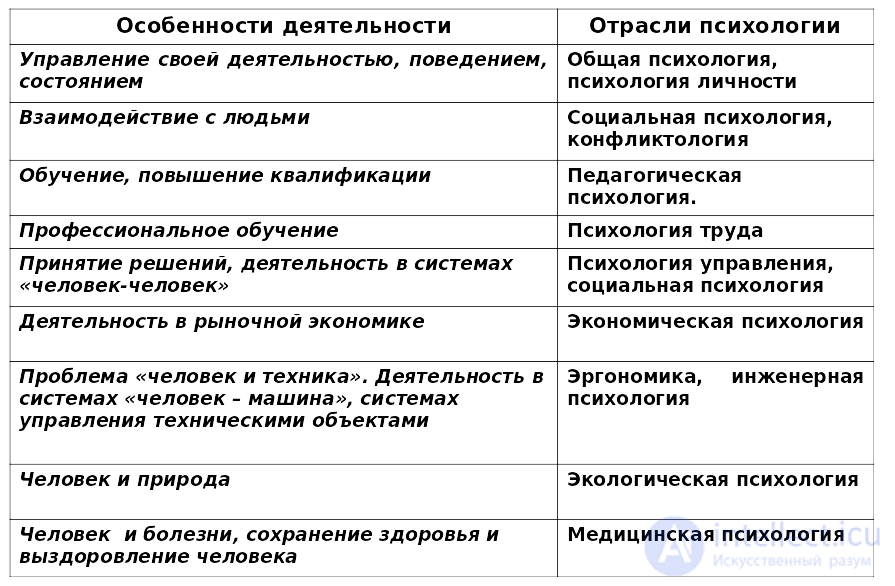
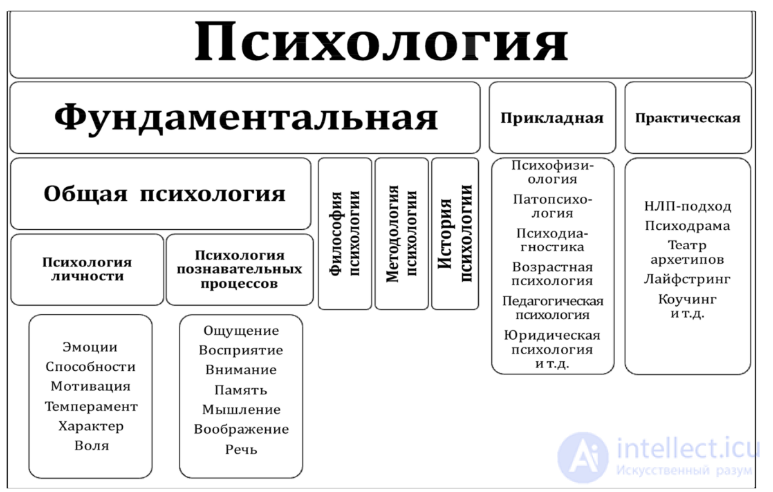
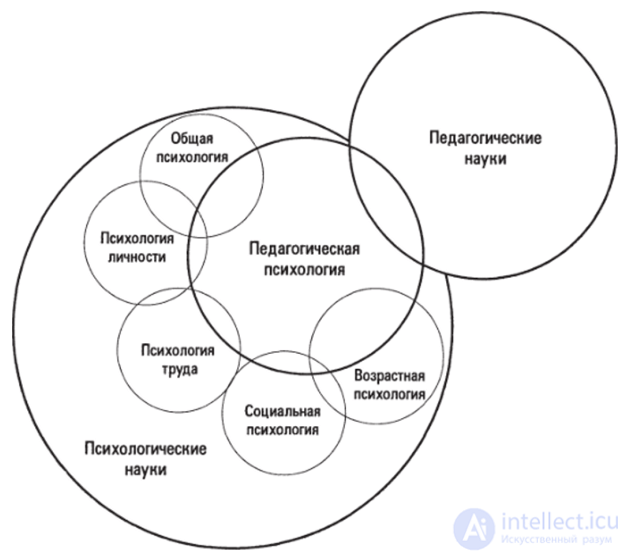
Fig. 1.5. Branches of psychological science
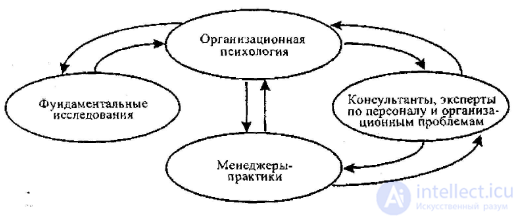
Fundamental psychology is, first and foremost, a basic science — a system of theories, methods, and research whose results form the theoretical and methodological foundation of all branches of psychology and related sciences: pedagogy, valeology, ethology, acmeology, and others. It usually includes general psychology, the history of psychology, the philosophy of psychology, and the methodology of psychology. General psychology studies the content, features, and general laws governing the functioning of the psyche and human consciousness, mental processes, properties, states, and personality traits. Within it, the psychology of cognitive processes and the psychology of personality are distinguished.
Applied psychology also includes those branches of psychology that seek to apply the principles, discoveries, and theories of fundamental psychology in practice in related fields, as well as to uncover the basic principles that can be applied in these fields. Applied psychology is oriented toward practice, but is aimed at professional psychologists and their professional education. At the same time, the material is presented in a strictly academic style, using scientific terminology.
The branches of applied psychology are distinguished according to the type of activity in which psychological knowledge is used; traditionally these include: psychophysiology, genetic psychology, medical psychology, pathopsychology, differential psychology, educational psychology, psychopharmacology, developmental psychology, psychotherapy, advertising psychology, social psychology, psychodiagnostics, environmental psychology, the psychology of religion, parapsychology, and legal psychology. Each branch of applied psychology has its own internal subdivisions.
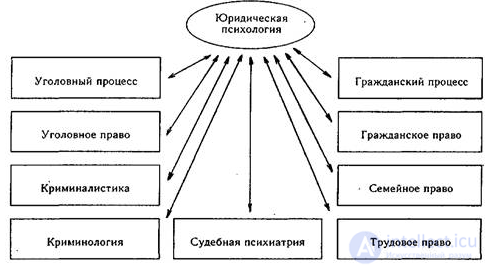
Legal psychology is an applied science that studies the laws and mechanisms of the psyche of people involved in relationships regulated by law. It includes legal psychology proper, forensic psychology, penitentiary psychology, criminal psychology, investigative psychology, and others (Fig. 1.6).
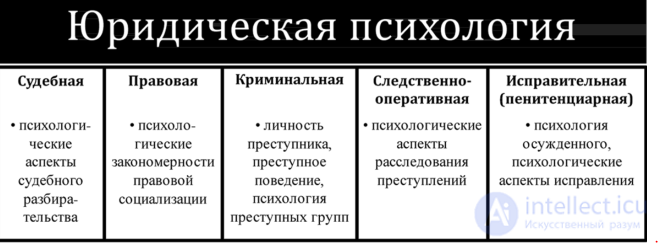
Fig. 1.6. The structure of legal psychology as a science
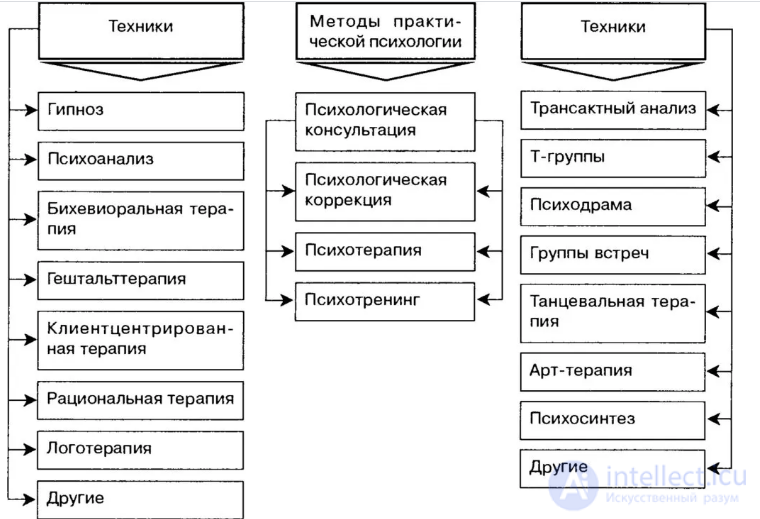
Practical psychology is a part of psychological knowledge aimed at meeting the practical needs of a broad range of people, oriented toward psychological work with the population. Practical psychology, while relying on a scientific base, also uses techniques that have proven themselves in practice but lack a scientific foundation. Classifying practical psychology is difficult, since there is an extraordinary number of different psycho-practices, and each practitioner claims uniqueness for their technique and often considers themselves the founder of a new direction in practical psychology. Here are some examples of directions in practical psychology:
The founder of applied psychology was Hugo Münsterberg. He came to America (Harvard) from Germany (Berlin, Stern's laboratory) at the invitation of William James and, like many young psychologists of the late 19th century, initially studied philosophy. Münsterberg had many interests within psychology, such as purposive psychology, social psychology, and forensic psychology. In 1907 he wrote several magazine articles on the legal aspects of giving testimony, confessions, and courtroom procedures, which eventually grew into his book On the Witness Stand. The following year, a department of applied psychology was attached to the Harvard psychological laboratory. Over the course of 9 years, he wrote eight books in English on the application of psychology to education, improving production efficiency, business, and teaching. In the end, Hugo Münsterberg and his contribution would define him as the creator of applied psychology. In 1920, the International Association of Applied Psychology (IAAP) was founded as the first international scientific society in the field of psychology.
Most professional psychologists in the United States before World War II worked in academic settings. But during the war, the armed forces and the Office of Strategic Services hired psychologists en masse to work on issues such as troop morale and propaganda design. After the war, psychologists found more and more jobs outside academia. Since 1970, the number of college graduates with a degree in psychology has more than doubled, from 33,000 to 76,000 in 2002. The annual number of master's and PhD degrees also increased sharply over the same period. At the same time, degrees in the related fields of economics, sociology, and political science remained unchanged.
Professional organizations have organized special events and meetings to promote the idea of applied psychology. In 1990, the American Psychological Society held a summit on behavioral science and formed the "Human Capital Initiative," covering schools, labor productivity, drugs, violence, and public health. The American Psychological Association declared 2000-2010 the "Decade of Behavior," with a similarly broad scope. Psychological methods are considered applicable to all aspects of human and societal life.
Business advertisers have long consulted psychologists to determine which messages will most effectively prompt a person to buy a particular product. The use of psychological research methods and findings on human cognition, motivation, attitudes, and decision-making can help in developing more persuasive advertising. Their research includes the study of unconscious influences and brand loyalty. However, the influence of unconscious factors has been controversial.
Clinical psychology involves the study and application of psychology for the purpose of understanding, preventing, and relieving psychologically based distress or dysfunction, as well as promoting subjective well-being and personal development. Psychological assessment and psychotherapy are central to its practice, although clinical psychologists may also be involved in research, teaching, consultation, forensic testimony, and program development and administration. Some clinical psychologists may focus on the clinical management of patients with traumatic brain injury — a field known as clinical neuropsychology. In many countries, clinical psychology is a regulated mental health profession.
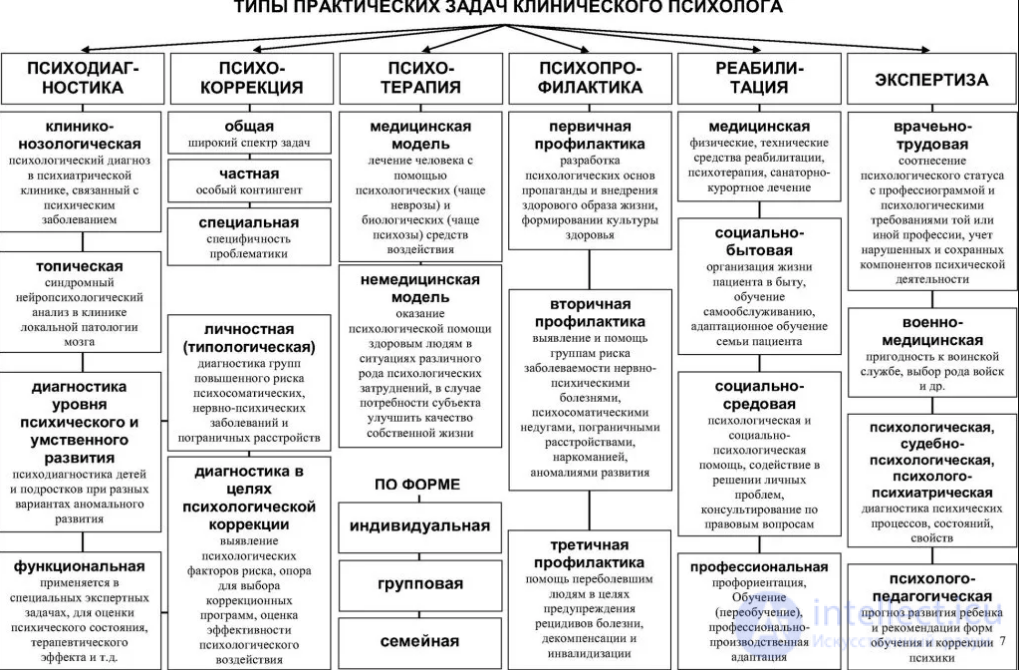
The work performed by clinical psychologists is typically carried out within the framework of various therapeutic models, each of which involves a formal relationship between a professional and a client — usually an individual, couple, family, or small group — that uses a set of procedures designed to build a therapeutic alliance, explore the nature of psychological problems, and encourage new ways of thinking, feeling, or behaving. The four main perspectives are: psychodynamic, cognitive-behavioral, existential-humanistic, and systemic or family therapy. There is a growing movement to integrate these various therapeutic approaches, especially with a deeper understanding of issues concerning ethnicity, gender, spirituality, and sexual orientation. As more reliable research results on psychotherapy have emerged, there is increasing evidence that most mainstream treatment methods are roughly equally effective, and that a strong therapeutic alliance is a key common element. [10] Because of this, more and more training programs and psychologists now adopt an eclectic therapeutic orientation.
Clinical psychologists typically do not prescribe medication, although a growing number of psychologists have prescriptive privileges in the field of medical psychology. In general, however, when medication is warranted, many psychologists will work in collaboration with psychiatrists to meet clients' treatment needs. Clinical psychologists may also work as part of a team with other professionals, such as social workers and dietitians.
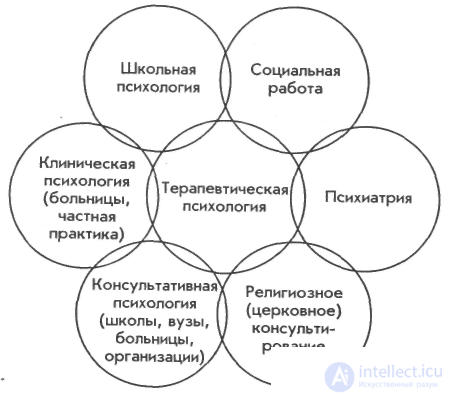
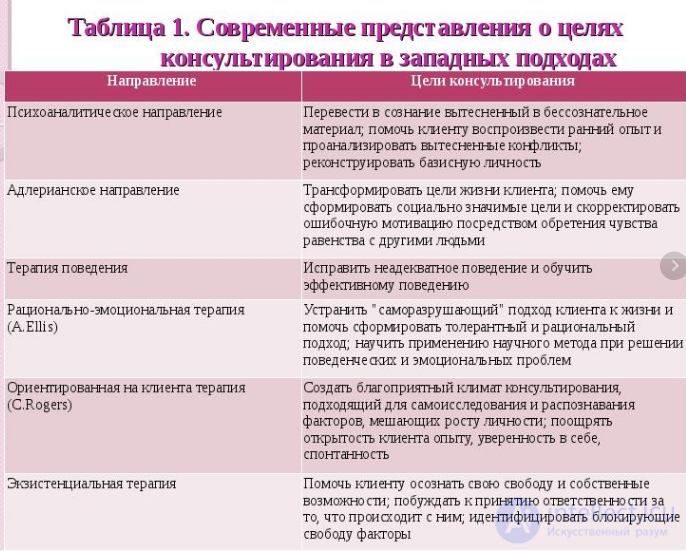
Counseling psychology is an applied specialty in psychology that involves both research and practice across various areas or domains. According to Gelso and Fretz (2001), counseling psychologists share several core themes. These include an emphasis on a person's strengths, relationships, educational and career development, and on normal personalities. [12] Counseling psychologists help people improve their well-being, reduce and cope with stress, and improve overall functioning in their lives. Interventions used by counseling psychologists can be short-term or long-term. They are often focused on a specific problem and goal-directed. There is a guiding philosophy that values individual differences and an emphasis on "prevention, development, and adaptation throughout life."
Educational psychology is devoted to studying how people learn in educational settings, especially in schools. Psychologists evaluate the effects of specific educational interventions: for example, phonics versus whole language instruction in early reading education. They also study the question of why learning occurs differently in different situations.
Another area of educational psychology is the psychology of learning. At some colleges, educational psychology courses are called "the psychology of learning and teaching." Educational psychology is largely based on the fundamental scientific disciplines of psychology, including cognitive science and behavioral research on learning.
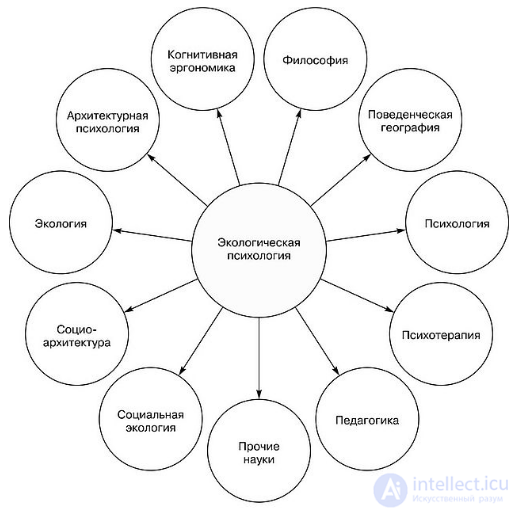
Environmental psychology is the psychological study of people and their interaction with the environment. The types of environments studied are boundless: from homes, offices, classrooms, factories, nature, and so on. However, across these different environments there are several common themes of study that arise in each of them. Noise levels and ambient temperature are clearly present in all environments and are often the subject of discussion for environmental psychologists. Crowding and stressors are a few more aspects of the environment studied by this subdiscipline of psychology. [15] In studying a particular environment, environmental psychology looks at the goals and objectives of the people using the environment and tries to determine how well the environment meets the needs of those who use it. For example, a quiet setting is necessary for a classroom of students taking a test, but this is neither required nor expected on a farm full of animals. [16] The concepts and trends derived through environmental psychology can be used in arranging or rearranging spaces so that a space best fulfills its function. Among the most common and well-known areas of psychology underlying this applied field are cognitive, perceptual, learning, and social psychology.
Forensic psychology and legal psychology are fields concerned with applying psychological methods and principles to legal questions and problems. Most often, forensic psychology involves the clinical analysis of a specific individual and the evaluation of a particular psycho-legal issue. A psycho-legal issue need not be criminal in nature. In fact, a forensic psychologist rarely participates in the criminal investigation itself. Custody cases are an excellent example of a non-criminal evaluation by forensic psychologists.
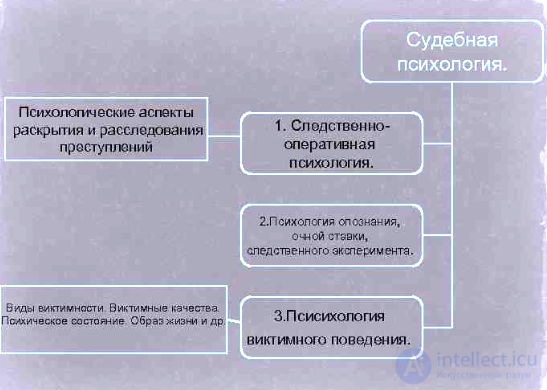
The reliability and support of eyewitness testimony is an area of forensic psychology that does approach criminal investigations, although it does not directly involve the psychologist in the investigative process itself. Psychologists are often called to give testimony as expert witnesses on issues such as the accuracy of memory, the reliability of police interrogation, and the proper course of action in child custody cases.

Legal psychology refers to any application of psychological principles, methods, or understanding to legal issues or problems. In addition to applied practice, legal psychology also includes academic or empirical research on topics concerning the relationship between law and human mental processes and behavior. However, inherent differences arise when psychology is placed in a legal context. [20] Psychology rarely makes absolute statements. Instead, psychologists use terms such as confidence level, percentage, and significance. Legal questions, on the other hand, seek absolutes: guilty or not guilty. This creates a strong bond between psychology and the legal system. Some universities offer dual JD/PhD programs focused on the intersection of these two fields. [19]
The Committee on Legal Affairs of the American Psychological Association is known for filing amicus curiae briefs as applications of psychological knowledge to high-profile court cases.
A related field, police psychology, includes consulting with police departments and participating in the training of police officers.
Health psychology is concerned with understanding how biology, behavior, and social context influence health and illness. [21] Health psychologists typically work alongside other medical professionals in clinical settings, although many also teach and conduct research. Although its early origins can be traced to the related field of clinical psychology, four distinct approaches to health psychology have been identified: clinical health psychology, public health psychology, community psychology, and critical health psychology. [22]
Health psychologists seek to change health-related behavior with a dual goal: helping people stay healthy and helping patients comply with treatment regimens for illness. Health psychologists generally focus on the health crisis facing the Western world, especially the United States. Cognitive-behavioral therapy and behavior modification are methods often used by health psychologists. Psychologists also study patient compliance with their doctors' orders. [23]
Health psychologists believe that a person's mental state is closely linked to their physical condition. [24] An important concept in this field is stress — a mental phenomenon with well-known consequences for physical health. [23]
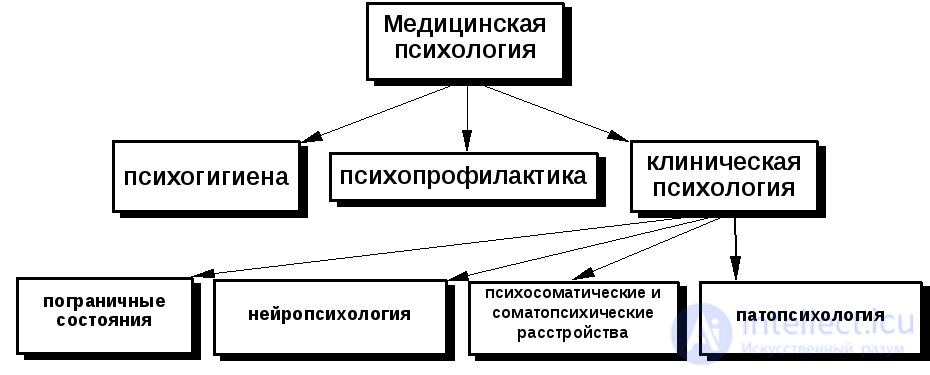
Medical psychology involves the application of a range of psychological principles, theories, and discoveries used for the effective treatment of physical and mental disorders with the aim of improving the patient's psychological and physical health. The American Psychological Association (APA) defines medical psychology as a branch of psychology that integrates somatic and psychotherapeutic methods in the management of mental illness, health rehabilitation, and emotional, cognitive, behavioral, and substance-abuse disorders. According to Muse and Moore (2012), a medical psychologist's contribution in the field of psychopharmacology distinguishes them from other areas of psychotherapy and other psychotherapists. [
Occupational health psychology (OHP) is a relatively new discipline that arose from the merging of health psychology, industrial-organizational psychology, and occupational health. OHP has its own journals and professional organizations. This field is concerned with identifying the psychosocial characteristics of workplaces that cause health problems for working people. These problems may relate to physical health (for example, cardiovascular disease [29]) or mental health (for example, depression [30]). Examples of the psychosocial characteristics of workplaces that OHP has researched include the degree of decision-making latitude [31] a worker can exercise and supervisor support. [32] OHP is also concerned with developing and implementing interventions that can prevent or improve work-related health problems. [33] In addition, OHP research is important for the economic success of organizations. [34] Other areas of research of concern to OHP include incivility [35] and workplace violence, [36] work-family conflict, [37] unemployment [38] and downsizing, [39] as well as workplace safety [40] and accident prevention. [41] Two important OHP journals are the Journal of Occupational Health Psychology and Work & Stress. Three important organizations closely associated with OHP are the International Commission on Occupational Health's Scientific Committee on Work Organization and Psychosocial Factors (ICOH-WOPS), [42] the Society for Occupational Health Psychology, and the European Academy of Occupational Health Psychology.
Human factors and ergonomics (HF&E) is the study of how cognitive and psychological processes affect our interaction with tools, machines, and objects in the environment. Many branches of psychology attempt to build models and understand human behavior. These models are typically based on data collected through experiments. However, human factors psychologists take that same data and use it to design or adapt processes and objects that will complement the human component of the equation. [43] Rather than people learning to use and operate technology, human factors seeks to design technology to fit the models of human behavior developed by general psychology. This may be reflected in the physical limitations of people, as in ergonomics, or in the design of systems, especially computer systems, that work intuitively with people, as in engineering psychology.
Ergonomics is applied primarily in office work and in the transportation industry. Psychologists take into account the physical limitations of the human body and try to reduce fatigue and stress by creating products and systems that operate within the natural limits of the human body. From simple things like the size of buttons and the design of office chairs to the layout of aircraft cockpits, human factors psychologists specializing in ergonomics try to relieve stress in our everyday lives, and sometimes even save it.
Human factors psychologists specializing in engineering psychology typically take on projects somewhat different from those of their ergonomics-oriented colleagues. These psychologists look at the interaction between human and process. [44] Engineering psychology is often focused on computers. However, at a basic level, a process is simply a sequence of inputs and outputs between a human and a machine. A person must have a clear method of entering data and be able to easily access information at the output. The inability to make quick and accurate corrections can sometimes lead to serious consequences, as recounted in many stories from "Set Phasers to Stun." [45] Engineering psychologists want to make the input and output process as intuitive as possible for the user.
The goal of human factors research is to understand the limitations and biases of human mental processes and behavior, and to design elements and systems that will interact in accordance with these limitations. Some may view human factors as intuitive, or as a list of dos and don'ts, but in reality, human factors research seeks to make sense of large volumes of data in order to bring precise applications to product and system design, helping people work more naturally and intuitively with the objects in their environment.
Industrial and organizational psychology, or I/O psychology, focuses on the psychology of work. Relevant topics in I/O psychology include the psychology of recruitment, the selection of employees from a pool of candidates, training, performance appraisal, job satisfaction, work motivation, workplace behavior, occupational stress, accident prevention, occupational safety and health, management, retirement planning, and unemployment, among many other issues related to the workplace and people's working lives. In short, I/O psychology is the application of psychology to the workplace. One aspect of this field is job analysis, a detailed study of what behaviors a given job entails. [46]
Although the name "Industrial Organizational Psychology" implies the joining of two separate disciplines, it is practically impossible to have one half without the other. If asked to generally define the differences, industrial psychology focuses more on the human resources aspects of the field, while organizational psychology focuses more on the personal interaction of employees. However, when these principles are applied, they are not easily separated. For example, when developing requirements for a new position, recruiters look for a candidate with good communication skills in many areas. Developing job requirements falls under industrial psychology, a human-resources type of work, while the requirement for communication skills relates to how an employee interacts with colleagues. As can be seen here, it is difficult to separate the task of developing a list of qualifications from the types of qualifications on the list. This is analogous to how I and O are almost inseparable in practice. Consequently, I/O psychologists are typically well-versed in both industrial and organizational psychology, although they may have some specialization. Other topics of interest to I/O psychologists include performance evaluation, training, and much more.
Military psychology includes research on the classification, training, and behavior of soldiers.
Military psychology — a branch of psychology that studies the psychological problems arising in the process of training military personnel and waging war, a component part of military science.
As a distinct discipline, military psychology emerged in the early 20th century in connection with mass research on armed forces personnel for their selection, upbringing, training, and placement.
The list of problems studied by military psychology includes:
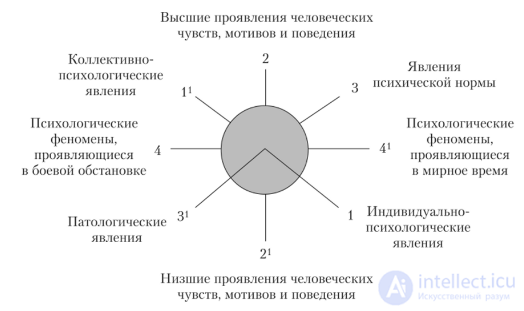
Fig. The subject field of military psychology
A special place is occupied by the study of the influence of combat-induced stress on human behavior.
The most important characteristic of opposing sides is the motivation of servicemen to engage in military (combat) actions. M. I. Dyachenko identified three types of such motivation:
Experience shows that the nature of servicemen's combat behavior (active or passive, self-sacrificing or self-preserving) largely depends on their attitude toward the war and its goals. The image of the war in the minds of servicemen takes on one or another emotional coloring depending on how successfully the fighting is going, on whose territory it is taking place, and what proportion of the country's population is physically and psychologically taking part in it. The experience of wars convincingly shows that the armed forces whose warriors see in the enemy a fierce and hated foe more often win.
The extent to which broad social motives can be drawn upon to encourage servicemen to take active combat action largely depends on what image of the potential or actual conflict has taken shape in public consciousness. In the absence of public support for a military action, and where anti-war sentiment is expressed, this becomes problematic.
From the standpoint of the sociologist V. V. Serebryannikov, people can be divided into the following types with regard to their attitude toward war: "warriors by vocation," "warriors by duty," "warriors by obligation," "armed peacekeepers," "those professionally engaged in supporting the army and the war," "pacifists," "anti-war people," and others.
The first category — "warriors by vocation" — includes those who wish to devote their lives to military affairs. According to experts, they make up about 3-5% of the able-bodied population.
The second category — "warriors by duty" — includes those who, regardless of their subjective attitude toward war in general, which is often quite negative, voluntarily go to war when faced with the need to defend their country from invaders. According to some sociologists, they make up 8-12% of the entire population liable for military service.
The third, generally the most numerous, category — "warriors by obligation" — includes those who have a generally negative attitude toward military service but comply with conscription law. They make up about 40-50% of the entire population liable for military service .
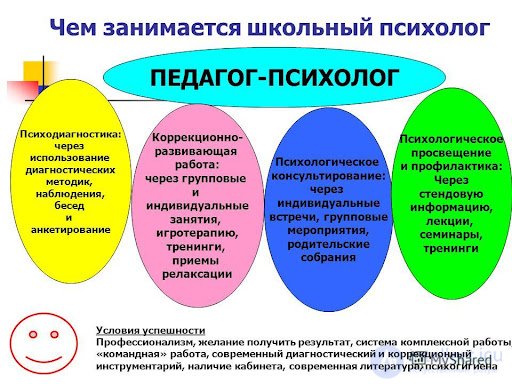
School psychology is a field that applies the principles of clinical psychology and educational psychology to diagnose and treat the behavioral and learning problems of students. School psychologists are trained in child and adolescent development, theories of learning, psychological and psycho-educational assessment, theories of personality, therapeutic interventions, special education, psychology, consultation, child and adolescent psychopathology, as well as the ethical, legal, and administrative codes of their profession.
According to Division 16 (School Psychology Division) of the American Psychological Association (APA), school psychologists operate within a scientific framework. They work to improve efficiency and effectiveness in the field. School psychologists conduct psychological assessments, carry out brief interventions, and develop or help develop prevention programs. In addition, they evaluate services, paying special attention to children's developmental processes within the school system and other systems, such as families. School psychologists consult with teachers, parents, and school staff about learning, behavioral, social, and emotional problems. They may teach parenting-skills lessons (much like school counselors), learning strategies, and other skills related to mental health in schools. They also explain test results to parents and students. They provide individual, group, and, in some cases, family counseling (State Board of Education 2003; National Clearinghouse for Professions in Special Education, n.d.). School psychologists actively participate in district and school crisis-response teams. They also supervise graduate students in school psychology. In many districts, school psychologists provide professional development for teachers and other school staff on topics such as positive behavior intervention plans and achievement tests.
One of the most notable applications of school psychology in today's world is addressing the unique challenges associated with an increasingly multicultural classroom. For example, psychologists can contribute to understanding the differences between individualistic and collectivist cultures.
School psychologists have great influence within the school system and are often approached to help solve problems. Practitioners must be able to consult and collaborate with other members of the educational community and confidently make decisions based on empirical research.
Psychologists have been hired to promote "green" behavior, that is, sustainable development. In this case, their goal is behavior change through strategies such as social marketing. Tactics include education, dissemination of information, organizing social movements, passing laws, and changing taxes to influence decisions. [48]
Psychology is applied on a global scale for the purpose of population control. For example, one strategy for television programming combines social models within a soap opera with informational messages during commercials. This strategy has increased the number of women visiting family planning clinics in Mexico. The program, which has been rolled out worldwide by Population Communications International and the Population Media Center, combines family planning ideas with depictions of women's education and literacy. [49]
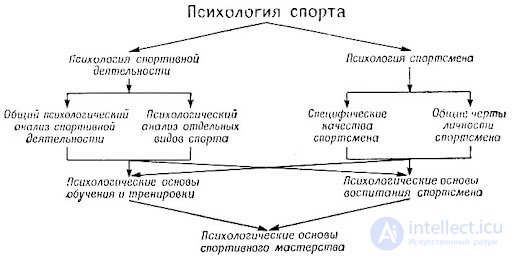
Sport psychology is a specialization within psychology that seeks to understand the psychological/mental factors that influence performance in sports, physical activity, and exercise, and to apply them to improve individual and team performance. The sport psychology approach differs from the perspectives of coaches and players. [15] Coaches tend to narrow their focus and energy toward the end goal. They are interested in the actions that lead to victory, in contrast to the sport psychologist, who tries to focus players' thoughts solely on achieving victory. Sport psychology trains players mentally to prepare them, whereas coaches tend to focus mainly on physical preparation. Sport psychology is concerned with improving performance by managing emotions and minimizing the psychological effects of injuries and poor performance. Some of the most important skills taught are goal-setting, relaxation, visualization, awareness and control of self-talk, concentration, the use of rituals, attribution training, and periodization. The principles and theories can be applied to any human movement or performance task (for example, playing a musical instrument, acting in a play, public speaking, motor skills), kinesiology (for example, sports and exercise, physical education), and counseling.
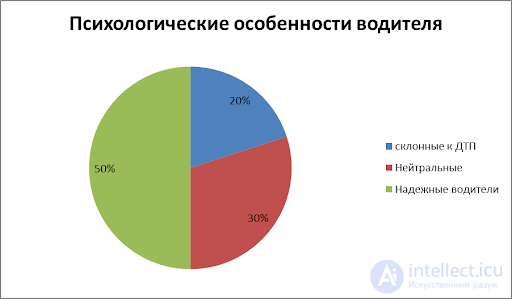
Traffic psychology is an applied discipline within psychology that studies the relationship between psychological processes and cognitions and the actual behavior of road users. In general, psychologists try to apply these principles and research findings to find solutions to problems such as mobility and traffic congestion, road accidents, and speeding. Research psychologists are also involved in the training and motivation of road users. [50] [51]

Comments