
Lecture
Practical psychology (in the 19th century — experiential psychology) is a branch of psychology concerned with the practical application of its knowledge.
Practical psychology is a philosophy and science of understanding and improving the human psyche, behavior, and interaction. It is focused on applying psychological knowledge and methods in everyday life and professional spheres.
Practical psychology is a field of psychology concerned with applying scientific knowledge to solve real-life problems and improve people's quality of life. Unlike theoretical psychology, which focuses on studying the laws and principles of human behavior, practical psychology is oriented toward using this knowledge in everyday practice. The main task of practical psychology is to help people solve personal, social, and professional problems.
Independent areas of practical psychology include: psychological counseling, psychological testing, and psychological correction. Practical psychology conveys its knowledge in the form of recommendations to professional psychologists concerning influence on people's psyche and activity. Methods can be individual or group-based. Individual methods (psychoanalysis, autogenic training, logotherapy) are used when working one-on-one with a client. Group methods are used with a group of people. Methods that allow work with a group include: autogenic training, gestalt groups, encounter groups, body therapy groups, art therapy groups, logotherapy, psychoanalysis, psychodrama, psychological counseling, psychological correction, psychological testing, and T-groups.
The practice of psychology often runs significantly ahead of theory. Various obstacles, in particular the lack of methods allowing experimental verification of data needed in practice, significantly restrain the development of theory, which sometimes struggles to keep up with the constantly growing demands of practice. This applies first and foremost to the practice of psychotherapy: a huge number of mental disorders have existed for many millennia, while the theory concerning them is only just beginning to take shape. Practical psychologists often fill the blank spots of theory with hypotheses that are weakly grounded theoretically but work in practice.
A practical psychologist is a specialist who provides psychological assistance (psychological services) to the population in situations requiring psychological intervention or the use of special knowledge and technologies.
A psychologist must know how people experience their emotions. They must have an understanding of what a patient's facial expression can reveal about their feelings. In addition, a psychologist has a set of specific methods, based on the results of which they can also draw conclusions about the patient's state. A psychologist cannot rely solely on the patient's words, since the latter is often unable to describe their feelings. Facial expression, gestures, and test results help to understand the emotions the patient is experiencing, even when the patient themselves is too distressed to find the right words, or does not know what they actually feel .
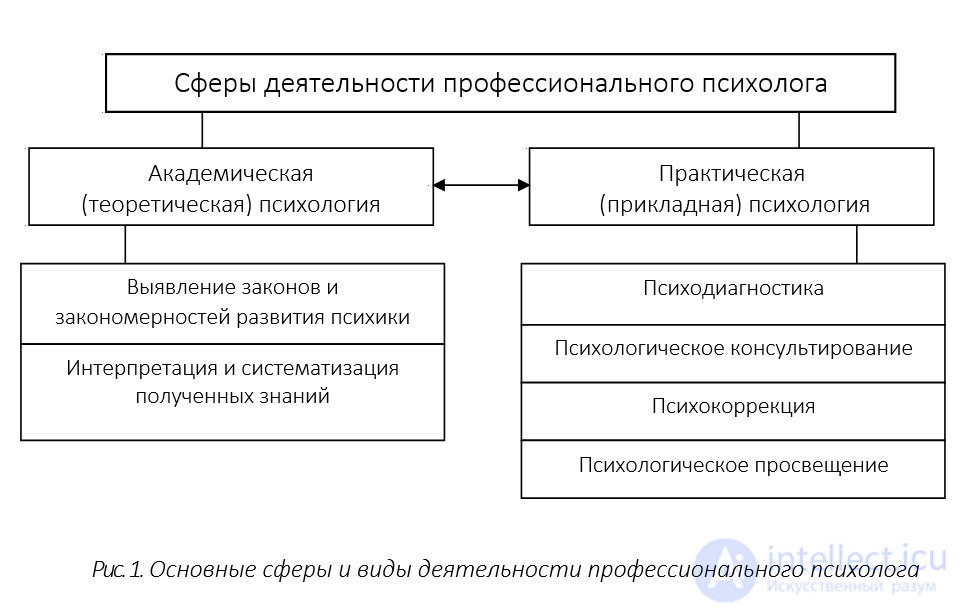
The main areas of activity of a professional psychologist are both academic psychology and practical psychology (Fig. 1).
As E. A. Klimov noted, between academic and practical psychology «there exists a useful (from the standpoint of the prospects for the development of science as a whole and psychological education in particular) contradiction between theory and practice», which gives rise to a close interconnection and interdependence between them (Fig. 2).
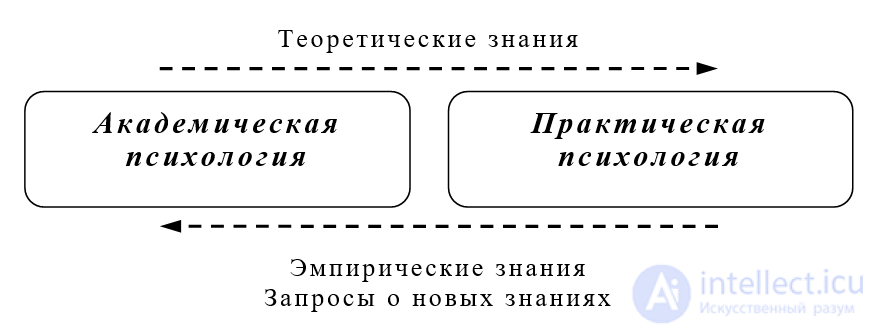
Fig. 2. The relationship between academic and practical psychology
In the education system, according to regulatory documents, a practical psychologist is designated as an «educational psychologist».
The main areas of activity of a practical psychologist in an educational institution, as provided for by the «Regulations on the Psychological Service of Education», are:
Education is an important area of activity for a practical psychologist. It represents a set of methods and means for informing people interested in psychological knowledge who are involved in raising and educating children.
Psychological education involves activities aimed at:
A practical psychologist working in other fields of activity (medicine, a psychological-medical-pedagogical commission/consultation, organizations, etc.) adheres, to one degree or another, to these areas of work.
The first «practical psychologists» in the USSR were pathopsychologists, whose training began back in the 1970s (see Pathopsychology). The systematic training of domestic practical educational psychologists began in the 1990s.
The very first definition of the term «practical psychologist» was proposed only in 1995: «A practical psychologist is a specialist psychologist with an appropriate higher education who solves tasks of psychodiagnostics, psychocorrection, and psychological counseling, related not to conducting scientific research but to providing direct psychological help to people.»
Practical psychology is important for understanding oneself and others, for resolving life's problems, and for improving quality of life in general. It provides tools and knowledge that help people become happier, healthier, and more successful.
The work of a practical psychologist is often aimed at improving clients' psychological state and helping them solve practical problems in life. This profession requires extensive knowledge in the field of psychology, empathy, professionalism, and ethical conduct.
Main areas of practical psychology
Counseling psychology
This branch of practical psychology focuses on providing psychological help to people in difficult life situations. Counseling psychologists help clients cope with various emotional problems such as anxiety, depression, stress, and interpersonal conflicts.
Coaching and personal development
Coaching is a field oriented toward helping people achieve goals, increase personal effectiveness, and achieve self-realization. Coaches work with clients on setting and achieving goals, developing self-confidence, managing time, and overcoming internal barriers.
Organizational psychology
Organizational psychology studies psychological processes in work teams and companies. Primary attention is given to issues of leadership, employee motivation, teamwork, and resolving conflicts within a team. Specialists in this field help improve the work atmosphere and increase productivity.
Family psychology
In family psychology, the emphasis is on resolving problems that arise in family relationships. Family psychologists help spouses, children, and parents cope with difficulties related to conflicts, raising children, and divorce, and offer strategies for strengthening family bonds.
Crisis counseling
At times of crisis, such as the loss of loved ones, divorce, or job loss, people often need support. Crisis psychologists help people cope with intense emotional reactions, restore inner balance, and find the strength to overcome difficulties.
Methods of practical psychology
Practical psychology uses a variety of methods, including:
Examples of the application of practical psychology
In everyday life and personal life
Practical psychology helps people better understand their emotions and feelings, develop emotional intelligence, and build harmonious relationships with those around them.
In the professional sphere
In the sphere of career and business, psychologists help develop leadership qualities, cope with stress, improve communication skills, and resolve conflict situations.
In education
Practical psychology also finds application in educational institutions. Psychologists help children cope with learning difficulties, address motivation and behavior problems, and develop skills of concentration and effective learning.
Practical psychology is an important field that helps people adapt to the demands of the modern world and successfully solve the problems they encounter. Understanding and applying psychological knowledge in everyday life can significantly improve quality of life, develop personal and professional skills, and help a person become more mindful and resilient to life's difficulties.

Comments