
Lecture
Penitentiary psychology from the Latin poenitentiarius, meaning "corrective, penitential," studies the psychological foundations of resocialization — the restoration of previously impaired personality traits necessary for a person's full functioning in society.
Penitentiary psychology (correctional psychology, correctional-labor psychology) (from Latin poenitentia — repentance, penitence) studies the psychological foundations of resocialization of convicts: the restoration of their impaired social and personal qualities, the dynamics of their personalities during the serving of punishment (i.e., serving a sentence), and their behavior . Prisoners are capable of rethinking their values during resocialization, learning to set positive goals for themselves, and developing skills of socially positive behavior. The field of penitentiary psychology includes research into the effectiveness of punishment and research into how well correctional legislation matches the tasks of reforming convicts.
Penitentiary psychology studies
The main goal of penitentiary (in other words, correctional) psychology is to compile a list of recommendations for the resocialization of convicts, as well as to develop methods and techniques for correcting the personality of offenders based on the laws of the psyche. Besides its theoretical component, there is also a practical one. The recommendations compiled and techniques developed are applied in practice, positive social life perspectives are formed, and psychotherapeutic sessions are conducted.
Places of confinement are needed in order to:
Correctional psychology studies the patterns and features of a convict's life activity. Psychologists working in places of confinement diagnose personal defects of convicts, develop correctional programs aimed at their reform, and also strive to minimize the negative "influences of prison," which traditionally contribute to criminalization . In the process of reforming an offender, psychologists work with the deep personal structures of the prisoner. In practice, psychologists may encounter certain problems. Sometimes offenders do not recognize their guilt. They see a positive meaning in their crime. Psychologists also often have to work with "hardened criminals," who have clear disturbances in their psyche, for example, problems with moral self-analysis .
The subject matter of penitentiary psychology consists of the facts, patterns, and mechanisms of psychic manifestations in individual convicts, socio-psychological phenomena within their environment, as well as the effectiveness of the means of influence used by staff of correctional institutions in the process of carrying out various types of punishment .
For the successful resocialization of a prisoner's personality, it is necessary to take into account their individual personal qualities. This requires special psychological knowledge, the ability to navigate the structure of the personality and the dynamics of its behavior, and skills in influencing the offender's personality.
First it is necessary to study the offender's personality. Methods for solving this task include: content analysis (qualitative study of the personal file, documents, correspondence, autobiography), objective and/or participant observation, conversation with the offender, as well as analyses of medical examinations.
In the process of obtaining information from the prisoner, attention is paid to various periods of their life, the family's way of life, features of family relationships, ethnic customs and traditions, and their style of interaction with the surrounding world. This also includes analyzing significant psychologically traumatic life circumstances arising during growth and development, interpersonal interaction, and the pursuit of a particular behavioral tactic.
The methodology of resocialization should be based on internal motivation. Under the harsh conditions of correctional institutions, there is a tendency for the influence of external motivation on a person to decrease, due to the psychological attitude of prisoners toward negative treatment of anything coming from the administration. A common reaction of prisoners to such influence is alienation, distrust, and hostility.
Important attention should be paid to studying the personality through activity. There is a special strategy for influencing the personality through the microenvironment (the immediate surroundings, everything that directly affects a person. It is within this microenvironment that a person forms and realizes themselves as an individual ). The microenvironment has adopted certain values that are, in one way or another, correlated with basic social values. Work activity in a group will be beneficial for prisoners and revealing for studying their personalities. The number of general and work-related violations decreases sharply as a modern industrial-production base is created within the correctional institution, work processes become more varied, and material interest in the results of labor increases .
Successful resocialization activity requires theoretical knowledge on the part of psychologists and educators, the formation of a cohesive team of qualified staff, and the creation of prospects for personal self-affirmation and prospects for "tomorrow." Administration of places of confinement must possess these skills.
Being in a place of confinement involves extreme conditions and the presence of frustrating and stress-inducing factors. Penitentiary stress, as a rule, not only negatively affects the health of the person serving the sentence but also contributes to the development of various psychologically destructive manifestations. Penitentiary stress is a subjective reaction — a complex of psychological experiences of a person in conditions of isolation — to stressors in the form of factors of the penitentiary environment caused by social isolation (restriction of freedom) . At the same time, stress manifests with varying intensity at different stages of a prisoner's life. As shown by the research of M. G. Debolsky, "Penitentiary Stress and Features of Its Manifestation in Convicts, Suspects, and Defendants" , this condition most often appears at the initial stage of serving a sentence, when social deprivation occurs and the usual way of life changes (the first peak of penitentiary stress), and before release, during the anxiety and worry about preparing for life at liberty (the second peak of stress). Convicts most often note the following states in themselves: fatigue, emotional and physical exhaustion; constant tension; irritability, aggression; loneliness; a depressed state; indifference.
Psychology of the convict. Factors influencing the specifics of the psychology
The personality of the convict
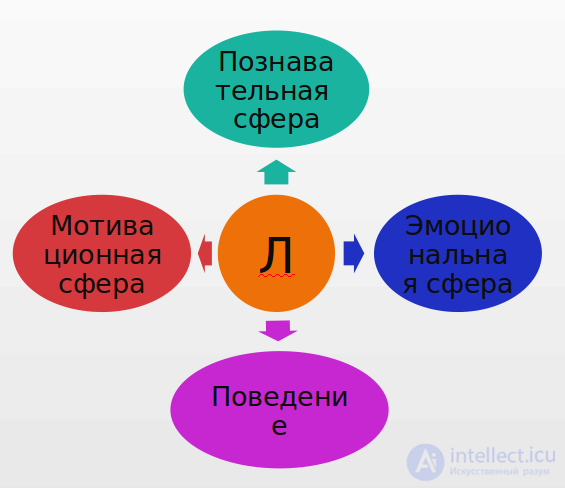
Behavior of the convict
Thinking of the convict
Motivational sphere of the convict
Emotional sphere of the convict
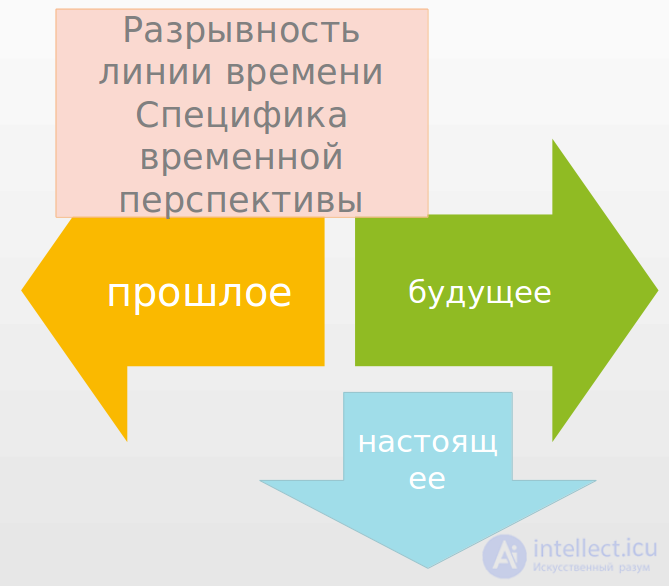
Temporal orientation of the convict
The term "sensation" refers to the initial experience arising as a result of elementary types of stimulation (R.L. Solso, 1996).
A person's cognition of the surrounding reality (light, color, sound, smell, warmth, cold, etc.) begins with sensations. Smells, grayness, monotony, and a lack of vivid sensory stimuli in prison dull the psyche. Under conditions of confinement, sensations are either heightened or weakened. Sensory hunger leads to a sharp deterioration in well-being (V. Frankl, 1990).
In places of confinement, people see and hear things that they do not see or hear at liberty. Everything is unusual and excessive. At first the prisoner is drawn to sounds from the outside world, then all of their cognitive processes switch over to the world of the prison, the colony. Prisoner G., who was held in a pretrial detention center, said: "The very fact that you are sitting in prison, that you cannot go anywhere, that everything is scheduled according to a set regime – is depressing. You are constantly walking as if on a knife's edge, situations are unpredictable. Anyone who comes in must immediately fit into prison life, that is, submit to the conditions that exist there. Anyone who has crossed the threshold of the colony, the prison, is viewed with suspicion. Within just a few days a person begins to feel a very strong lack of sensory information. All the senses become sharpened, for example, when being led to an interrogation, the prisoner tries to absorb as much information as possible. Even the chance to look at living greenery has a beneficial effect on the nerves, calms you down, allows you to concentrate and mobilize yourself."
Convicts often live with involuntary memories of their past life. This is based on the phenomenon of contrast between life in the colony and at liberty. The more hopelessly lost the past seems to them, the more it differs from the present, the more persistently and stubbornly they return to memories of pleasant events. At the same time, periods of time in the past that were filled with interesting events seem longer than those they would rather not remember. Images of previously perceived objects and phenomena are called representations. Memory is the process of imprinting (memorizing), retaining, and reproducing or recognizing what a person has perceived, done, or experienced. Thanks to it, a person is able to accumulate experience, learn, and improve.
Insomnia is the scourge of prison. Excessive mental or physical fatigue, personal anxiety, the stress-inducing nature of everyday life, monotonous food, and phobias related to confined spaces cause nightmares.
Most prisoners have restless dreams, which often include scenes of murder. Repeated recurrence of the same dreams leads to the emergence of a fear of sleep. Sleep disturbances are aggravated by the conditions of cell confinement: stale air, overcrowding, and the impossibility of proper rest. The sleep of male and female convicts has its own features; for example, women often dream of home and children. Studying the psychology of convicts' dreams makes it possible to provide them with effective psychological help.
A distinctive form of imagination is the dream as an image of a desired future. It expresses a need for objects or conditions of existence that do not yet exist but could be created as a result of activity. The dream helps the convict overcome difficulties that arise.
The full power of creative imagination is displayed by convicts in various prison tricks aimed at deception. They demonstrate ingenuity and invention in carrying out escapes, smuggling in and concealing prohibited items, and the illegal sending of correspondence. Moreover, those repeatedly serving criminal sentences of confinement are distinguished by a professional orientation of their imagination.
Unattainable, unreal, fruitless dreams detached from reality are called reveries. They weaken the will of convicts. Many of them vividly picture, as if in reality, meetings with relatives and family, sexual and other pleasant episodes from their life at liberty.
Often, in the imagination of convicts, the crime committed is "replayed." They alter the situation and the actions of the participants, trying to avoid the frustration associated with its consequences.
A distinction is made between passive and active imagination. Passive imagination is characteristic of convicts who have two or more convictions, are for the most part divorced or unmarried, and live in the city. Active imagination is typical, as a rule, of persons with a first conviction, a family, and who live in rural areas.
In addition, imagination can be situational, passive, or active, and is characteristic of both young and mature convicts. A visual manifestation of imagination and dreaming is the drawings made by convicts.
The development of fantasy in convicts is inevitable, because it helps reduce the degree to which reality is perceived. A dream is the same kind of drug that carries them away from the world of reality. In some convicts a deviation is observed in the area of fantasy, when one dream replaces another without sequence or connection, or a compulsive repetition of the same images occurs, the physiological basis of which is a dominant focus of excitation in the cerebral cortex.
A member of staff at a penitentiary institution needs to know the features of the process of imagination and be able to assess it in terms of its orientation (what motives drive it); content (in what areas of reality it is prompted); strength (strong or weak); and reality (real or unreal). Involving convicts in creative (technical, work-related, educational, professional, artistic) activity blocks the development of imagination for criminal purposes. It is also very important for a psychologist to carry out individual and group work to correct the unrestrained fantasies and reveries of convicts.
The thinking of a convict, like that of any person, always proceeds from certain needs, goals, and motives of activity. There is no doubt that criminal activity affects the orientation of thought processes, the formation of intellectual qualities, and the criminal sophistication of thinking.
The authors of the theory of thought models (H. Goddard, S. Pearlman, H.L. Zelanche, and others) claim that a criminal thinks differently from a law-abiding citizen (S. Yochelson); they have distinctive features in the structure of intellect, logic, and style of thinking. They also solve ethical questions related to the assessment of compromise and confrontation between good and evil differently.
Motives of thought can be socially valuable, asocial, and antisocial in nature, with a criminal orientation. Some convicts direct their minds toward positive activity, others toward carrying out asocial actions (violations of the regime, deceiving staff, various prison tricks).
The following types of convicts are distinguished, whose thinking has a specific orientation: thieves, card sharps, counterfeiters, swindlers, racketeers, extortionists, hooligans, murderers, persons prone to malingering and aggravation of symptoms, escape, drug and alcohol use, sexual perversions, hostage-taking, and typical regime violations (smuggling, throw-overs, manufacturing prohibited items).
Interpersonal cognition within the closed system of confinement facilities creates a more vivid picture of another person's way of thinking, their style of thought, and so on.
In the course of convicts' adaptation to new conditions, their thinking takes on a goal-directed character. The offender encounters new requirements and norms and tries to find other ways to survive, since the old ones become insufficient. These problem situations arise for convicts every day. They mean that in the course of activity a person runs into something incomprehensible, unknown; a not entirely clear and barely conscious impression forms, signaling: something is not right here. Thus a task arises that can be solved through the determination of mental activity in the process of acquiring knowledge in new conditions and life situations.
Most convicts, after some time, commit crimes again, since they act without a conscious plan. As the psychologist W. James put it, in such people thought often works so fast that consciousness cannot keep up with it (F. Bloom, A. Lazerson, L. Hofstadter, 1988).
The thinking of some prisoners is characterized by "getting stuck" on events and facts they previously paid no attention to. Trivial encounters and conversations, landscapes, scenes containing nothing significant, surface into consciousness (F.M. Dostoevsky, A.I. Solzhenitsyn, and others).
Connection with the outside world is maintained through telephone calls, correspondence, visits, television, radio, newspapers, and magazines. Books occupy an important place in the mental activity of the convict. Under prison conditions, the influence of what is read is many times greater than at liberty.
Studies of various categories of convicts, conducted in the 1990s, show that detective stories, adventure literature, science fiction, books about love and romance, and religious and philosophical literature are the most popular; about a fifth of the books read are legal, popular science, classical, and educational literature; the last places on this list are occupied by journalistic and everyday-life genres.
It should be noted that there are differences in the reading interests of convicts serving sentences under general, strict, and special regimes, and those sentenced to life imprisonment. The latter are more fond of science fiction and detective stories, which allows them to immerse themselves in another, unreal world (Yu.V. Slavinskaya, 2001).
The thinking of convicts is often concentrated on carrying out escapes from places of confinement, which are striking in their fantastical nature. Thought working in a single direction, together with a distinctive prison-honed observational skill, gives rise to types of escape that the administration of confinement facilities cannot foresee. The mental activity of convicts (prisoners) has developed hundreds of methods of escape: by tunneling, violence, disguise, and many others. Each of these requires the participants to display particular psychological traits. Escapes and tunnels from Zerentui and the Gulag were the height of engineering artistry. M.N. Gernet writes that in 1908, in the three-story Zerentui hard-labor prison, prisoners held in a second-floor cell decided to escape and began digging a tunnel downward through the thick prison wall, two arshins (an arshin being a unit of length equal to 0.71 m) in width. To do this, they began removing bricks from the very middle of the wall, creating a descent twelve vershoks wide (a vershok being a unit of length equal to 4.4 cm). However, the work was interrupted, as the prisoners were transferred to the third floor.
Memory and thinking, sensations, perception, and imagination are inextricably linked with speech. The speech of convicts is marked by two extremes:
1) lack of expressiveness, illogicality, inconsistency;
2) high emotional intensity (especially the use of slang), expressiveness.
Thieves' cant would not have arisen if criminals' speech were less emotionally charged. D.S. Likhachev (1992) noted that thieves have a motor type of thinking, in which the word acts not only on the cerebral cortex but also on the muscular system. It is precisely by speech (its flow, sentence construction, content of statements) that one can judge the psychological state of an offender.
Since criminals use slang and obscene words to varying degrees, it is precisely these that make up the main verbal arsenal of "forceful pressure." A criminal's language is dual, using both thieves' cant and ordinary words in parallel, and easily switching between them depending on the circumstances.
Almost every "habitual" criminal has an album that they treasure and in which they write down romances and songs. These albums are highly valued in card games. It is characteristic that they contain thieves' turns of phrase that the thieves themselves do not consider to be such. The language of these albums, D.S. Likhachev believes, is intermediate between ordinary Russian and thieves' cant.
A distinctive feature of convicts' speech is slang and the accompanying obscene expressions. Slang and coded forms of communication make it possible to hide the content of a conversation from the correctional institution's administration and to recognize one's own. Convicts, for example, use slang words: "Ivanushka the Fool came across four nailed-shut boxes in the forest. He dragged them to Baba Yaga. Nothing is written on three of the boxes, but on the fourth – 'do not open under any circumstances.' They opened the first – and there were syringe-'self-jabbers' (a 'self-jabber' being a syringe that hits the vein). Everyone got high, rejoicing. They opened the second – and there were pill-'self-rollers' (a 'wheel' being a pill with a narcotic effect). They grabbed a bunch of pills, rejoicing even more. The third box – joint-'self-puffers' (a 'joint' being a cigarette with narcotic-effect grass). Here a real orgy began. Ivanushka the Fool opens the fourth box too, and inside it – cops-'self-cuffers' (to 'cuff' meaning to detain)" (A.I. Mazurova, 1991).
The speech of convicts reflects their attitude toward staff, whom they study purposefully and systematically, obtaining exhaustive information about the personal qualities, interests, habits, family matters, manner of dress, gait, speech, facial expressions, and mental state of individual employees. Based on their observations, convicts often give nicknames; for example, the nickname "Chaffinch" was given to a small, thin, stooped man with a shuffling gait and a guilty smile. In accordance with the identified psychological essence of the staff member, convicts choose one approach or another toward them.
Convicts are often deprived of the opportunity to use speech while held in a solitary cell.
The prison environment does not allow convicts to have the same entertainment as at liberty. Besides reading books, they can, for example, listen to recordings of popular songs. These are mainly songs performed, for example, by the group "Lesopoval." The top three most popular song genres are Russian pop music (named by 49.3% of respondents) and foreign pop music (27.9%), and thieves' (prison) songs (38.2%) (A.N. Oleinik, 2001).
Throughout the history of prison, distinctive prison entertainments have arisen that were most often filthy and unnatural: games with lice, used as racehorses for speed competitions; the extermination of bedbugs, which turned into an actual hunt with a beating of the bushes for the "beast," with hunters lined up in a chain.
Many games in prison were of a depraved and cruel nature. This concerns above all the oath that a newly arrived prisoner was forced to take, the "wedding," in which prison depravity was cast in the form of a theatrical performance, games of "spoons," in which the prisoner was struck on the bare stomach with wooden spoons after first being spat on, "blind man's buff," in which they were struck with wet twisted rags, and "cupping," in which blows were struck on skin pulled up from the stomach.
V.F. Pirozhkov (1998) identifies among the cognitive activity of convicts so-called "gags," aimed at catching an unwitting person out on ignorance of the rules, traditions, and customs of the prison world, and testing a newcomer's wit and resourcefulness.
V.M. Anisimkov, in the book "The Prison Community: 'Milestones' of History" (1993), describes some prison games.
"The Bathhouse" – a cell game. The newcomer is made to take bedding to the bathhouse supposedly to steam it out. After this procedure, he is forced to sleep on a wet bed.
"The Bicycle" – a way of mocking newcomers or "chukhans" (low-status prisoners). Paper, cotton wool, or a rag is placed between the toes of a sleeping person and set on fire.
"Eye Test" – a cell game. The newcomer is invited to cover his face with a jacket and, through the sleeve stretched out like a pipe, name objects that will be shown to him. Instead of showing objects, water is poured into the sleeve.
"Smack" – a way of mocking cellmates, in which the victim's eyes are blindfolded and they are made to search for something, having certain body parts placed near their face.
"Bura" – a gambling card game. Cards are valued as follows: an ace – 11 points; a ten – 10; a king – 4; a queen – 3; a jack – 2 points. The goal of the game is to collect at least 31 points with three cards. Cards are dealt by whoever, according to convention, holds the highest or lowest, biggest or smallest card. If both partners have three trumps in hand, whoever's trumps are higher wins.
"Rams" – a card game popular among convicts. Before the game begins, the dealer is determined. Five cards are dealt to each player and a trump is set aside, with 5 cards set aside as the "buy." It is important not to end up as the dealer, since one's partner can replace bad cards with the "buy," while the dealt cards are "buried" in the deck.
"Dump Truck" – a cell game. A mug of water is placed on, or hung above, the newcomer's bed. If he so much as moves, he douses himself with water.
"Three Comrades" – a cell game. The newcomer is offered a choice of one of three matches. If he draws the shortest one, his eyes are blindfolded and he is made to guess who is delivering the blows.
"Prison Goat" – a cell game. A matchbox on the edge of the table is flicked upward. If it lands label-up, the player gets 2 points; on its edge – 5; standing upright – 10; label-down – 0 points. Whoever first scores 50 points wins. The game can be played for money, objects, flicks, and so on.
The tasks of penitentiary psychology are:
The tasks of correctional institution staff, in turn, are:
One of the problems of penitentiary psychology is the problem of the resocialization and adaptation of released persons under conditions of a market economy. For these processes to proceed successfully, it is recommended that a task be set to identify organizations (state and private enterprises) willing to hire former prisoners. Such organizations, as a rule, receive additional assistance and guarantees from the state. An analysis of advanced penitentiary experience was carried out, showing that a genuinely humane psychological environment arises in places of confinement in the process of resocialization, ensuring the formation of moral relationships among prisoners .
Another problem is that of psychological and psychotherapeutic support for correctional institution staff due to the stress-inducing nature of their work. The work of correctional institution staff requires deeper research; new methods need to be developed for the psychological preparation of personnel for work in this stress-inducing situation.
Psychologists working in this field emphasize the need to create genuine humanization of the environment in penitentiary institutions. To this end, it is necessary to introduce into prisoners' lives conditions that meet physical, sanitary-living, and economic standards, as well as to ensure the humanistic transformation of the nature of relationships within the correctional institution (between convicts, and between convicts and the staff of confinement facilities) .
Regime of the convict
The community of convicts
our prison has become an "academy" of crime (Enikeev)
The convicts' collective
Factors in the formation of a collective of convicts:
A.S. Makarenko: "I kept reviewing their composition again and again and sorting it into groups, classifying it from the point of view of social and human value"
Structure of the convicts' collective
Accepted methods of educating convicts
Methods of reeducating convicts
Readaptation
Persons being released from places of confinement can be conditionally divided into three categories:
Success of adaptation depends on the following factors:
1. the personality of the released person
2. the conditions of the external environment surrounding the released person
3. the conditions under which the convict was held in the correctional institution, which affect their behavior in the first months of freedom.
The first 3-6 months after release are the most difficult. The adaptation process continues for up to three years. Social adaptation is considered successful when the socially useful ties of the person released from punishment have been established in the main spheres of life activity and show no significant deviations. A normally adapted released person breaks ties with the criminal environment and other persons whose behavior is characterized as antisocial, does not abuse alcohol, and does not commit legal violations.
1. Do you agree with the statement that the cognitive processes of convicts differ from the cognitive processes of law-abiding citizens? Justify your answer.
2. What factors and conditions do you think determine the orientation of the cognitive activity of convicts? Justify your answer.
3. In what areas of the life activity of convicts in penitentiary institutions are sensation and perception, memory, thinking, and imagination manifested? Give specific examples.
4. In your opinion, what lies at the basis of the cognitive processes of convicts?
5. In what materials and documents, in your view, are the cognitive processes of the convict reflected?

Comments