
Lecture
Power — is the ability to influence the behavior of other people, the capacity to affect their activity by some means: will, coercion, encouragement, suggestion, intrigue, and so on.
Everyone wants to have power, because this is one of the most significant needs of any normal person. And, as we can see, different people strive to satisfy it with varying degrees of success. Some satisfy this need by gaining power over their family, some by gaining power over their coworkers, and some through power over an entire country. But to gain power, especially great power – one must have the requisite knowledge, skills, and, most importantly, the corresponding psychology that makes a person a leader, a pack leader, a strong personality capable of subjugating the will of others. We can see that people are divided into those who rule and those who obey. And these are completely different kinds of people. Above all, they differ in their mindset and their psychological makeup. People who hold power differ greatly from those who do not, and the psychology of power studies precisely the peculiarities of the life and psyche of such people. For you, dear readers, knowledge of the psychology of power can be useful in that, with its help and if you wish, you will be able to gain a certain amount of power, perhaps even a great deal, depending on how strongly it interests you. And also, if necessary, you will learn to defend your interests against those who already hold that power.
First, let us clarify what power is. There is a lot of talk about power, but far from everyone understands what it actually is. And our understanding of the psychology of power will depend on our understanding of power itself. Power, friends – is submission. Or, put another way – it is the skill and ability to subordinate the will of others to one's own will. And from the other side, from the side of those submitting to someone else's will – it is a propensity to submit. It is precisely the desire and ability of some people to subordinate the will of others, and the propensity of other people to submit, that give rise to power. That, essentially, is all there is to it. I know that dictionaries give a different definition of power, but if you look more closely at any form of power, you will see for yourself, without any philosophical musing, that the root of all power is precisely submission and subordination, upon which everything else is then layered. So first and foremost it is submission, and only then everything else, including the methods by which some people subordinate others, by which one person subordinates another. If there is no submission – there is no power. Be sure to remember this ironclad truth. No submission – no power!
But submission exists, and so power exists. People are built in such a way that they cannot help but rule and be ruled. After all, by nature a person is inclined both to rule and command over someone, and at the same time to submit to someone. Our hierarchical instinct is responsible for these capacities. And depending on the conditions in which a person lives and how they are raised – either a master and leader develops within them, or a servant and slave. If you don't like the word slave – it can be replaced with the word subordinate. Thus, the very personality that develops in us is the one that, in nature's view, fits ideally into the surrounding environment. That is, precisely those instincts that best promote our survival are activated within us. After all, the fundamental task of any living being is to survive. So the qualities that develop in a person depend on what their environment is like. If a person is constantly suppressed, humiliated, insulted, scolded, punished, and subjected to physical force in order to be made to submit, then the slavish instinct, or the instinct of submission – whichever you prefer – will begin to predominate in them, prompting this person toward submission, toward serving others, toward bowing before them, and toward fear of stronger personalities. In other words – violence and coercion, even if legitimate – are a low-quality form of power. After all, a humiliated, suppressed person, stripped of any sense of self-worth, makes a poor worker, a poor soldier, a poor pillar of support for power. Over time, such a person becomes completely passive, indifferent to everything, mediocre, and begins to degrade. If, on the other hand, a person is instilled with confidence and allowed to feel significant, strong, special, not to mention given the opportunity to manage other people, then the instinct of dominance, the instinct of power, the instinct of the leader, the pack leader, will develop within them. This is how we get leaders and pack leaders on one hand, and servants and subordinates on the other. So you see for yourself the difference between the instinct of power and the instinct of submission.
Now let us talk about the instruments that allow one to come to power and hold onto it, as well as the qualities one must possess in order to use these instruments. Physical force – is the most primitive instrument of power, but not the most effective one. Physical force can make people submit to your will, but this submission will not be sufficiently effective or stable. When people are forced by force to do something they do not want to do – they either resist, or turn into passive, suppressed, weak-willed, uninitiative, indifferent beings, prone to degradation and, as a rule, degrading both mentally and physically. Of course, it is necessary to use physical force to hold power and maintain order in society, in a collective, in a family, but this should be done very skillfully, so that any violence, any use of physical force, appears just and legitimate. Without justice, physical force becomes the beginning of the end for the one who uses it. Because when people band together to resist an aggressor, whose injustice unites people to fight against him, then no matter how strong he is – whether we are talking about a single person, a group of people, or an entire state – he, they, it will ultimately lose. And even if it does not lose – if, say, a state manages to suppress its citizens by force, making them submit purely out of fear – then these citizens will begin to degrade and grow bitter, and the state will not be able to rely on them in a difficult moment. So not everything in this life is so simple; force alone cannot solve every problem and task. Because people need not only the stick, but also the carrot. In fact, if violence alone could solve every problem and task, we would still have slavery [in its primitive form] as the most effective model of social organization, and we would resolve all our issues exclusively by force, without concerning ourselves with its legitimacy and lawfulness. But even from the example of raising children, we see that physical force, violence, punishment, the stick, will not get you very far by themselves. There must also be carrots, that is, rewards, in order for power to be truly strong and stable.
Encouragement, gifts, rewards, career advancement, praise, fame – these are exactly the carrot needed to hold onto power. People need to be given something, they need to be fed, made dependent on you, and then they will want to submit to you themselves. That is why the carrot is a very powerful instrument of power, and it often proves far more effective than physical force, the stick. As long as these carrots belong to the one who holds power, and not only in the form of ideas, but also of real material goods. Ideas alone will not feed anyone, however wonderful they may be. So, as historical experience shows, motivating people with carrots is more advantageous than with the stick, since productivity is higher precisely among those subordinates who are motivated by material gain rather than by fear. Although there should be both. People should always have a choice between fear and pleasure. There are exceptions, when some people can only do something under duress, and then only brute physical force or fear of its use forces them to submit to someone or something. It all depends on a person's mentality. But I repeat, people should have a choice between gain and fear, between pleasure and pain, and then they will be easier to manage. So carrots alone will not suffice either; otherwise people will refuse to submit even for a very large reward. And without submission, as you remember, there is no power. Therefore, on one hand, there must be strict, and depending on the situation, even very harsh punishment for disobedience, and on the other, substantial reward for obedience. A wise leader understands this and skillfully uses both instruments of power to motivate his subordinates. Everything should be in moderation. Impunity breeds permissiveness, which in turn breeds lawlessness and anarchy. And the absence of reward and praise makes people lazy and indifferent to whatever they are doing. So one must skillfully wield the stick and the carrot in order to preserve and increase one's power over other people.
The next instrument of power – is information. A very important instrument, it must be noted. Whoever owns information owns the world, as Nathan Rothschild or Winston Churchill once said. But even without the words of these great men, I am sure many know that information and knowledge give power. This is indeed true, this is a fact. But it is not the whole truth. This is only one side of the coin of power and might associated with information. There is another side, which I will write about below. For now, let us find out exactly how information and knowledge help one gain strength and power. And they do this very simply – quality information and useful knowledge help us make the right choices and increase the effectiveness of our decisions and actions. You know, don't you, that our entire life is a constant choice in favor of something and at the expense of something else? We make choices every day, big and small. We decide how to act in a given situation, what to buy, where to go, who to meet with, whom to ignore, what to spend our time and energy on, and so on and so forth. As if we were in a labyrinth – we are constantly choosing which way to move, trying not to end up in a dead end. It's like in Russian fairy tales, when one has to choose which way to go – straight ahead, left, or right. And every decision, every direction, has its own consequences, its own price. And yet, we often have not even the faintest idea where our choice might lead us, what price we will have to pay for one decision or another.
So, the power of information lies precisely in the fact that it clarifies this question for us. The information we receive is like a prophet – it shows us what we might arrive at if we act in one way or another. It points us toward the algorithm [sequence of actions] by which we can arrive at something or avoid something. It's like using an instruction manual for life – the more you know, thanks to quality information and rich personal experience, the more reasonable and correct your decisions and actions will be. Suppose you want to earn a lot of money – the right information will help you do this. It will tell you what actions need to be taken and in what order, so that with minimal effort, with a high degree of probability, you get the maximum positive result. Not bad, you'll agree. But this is on condition that the information you receive is of high quality, reliable, timely, and that you know how to use it. And obtaining quality information is not so easy. That is why one must know how to find it, select it, and analyze it. After all, information can be both useful and harmful. Useful information needs to be gathered, building from it a coherent picture of the world, while harmful information needs to be discarded, so as not to poison one's mind with it.
By the way, for power, what matters is not only, and not even so much, information about money, as information about people. Money without people is nothing, and there can be no power at all without people, because in that case there would be no one to rule over, no one to manage. So, friends, if you didn't know this, money does not rule this world – it is ruled by those who know how to use money to control people. Money obeys no one – it is people who submit to other people, including for money. And when you know how to influence people, how to manage them, how to manipulate them, how to organize them, how to make them want something and fear something, how to subordinate them to your will – you gain power over them. And money can be invented – that is not a difficult task. As much paper with numbers on it as you like can be printed – what matters is convincing and forcing you to work for that paper, to submit to it. And for this, the instrument of information is also employed, by means of which people are made to believe in the value of money. And those who refuse to value it – are punished. So when the power of information does not work – physical force is applied.
The second, more important side of power connected with information – is disinformation. This is what has truly allowed, and still allows, people to be controlled and power to be held over them. We are told that the most important thing today is to be able to gather information, assess it, analyze it, and then use it competently. This is indeed important to be able to do, but it is not the main thing needed in order to have an advantage over other people in the modern world. Far more important – is to create information and skillfully introduce it into society, with the goal of manipulating it. And since it is not advantageous to spread quality information useful to other people, for those who want power and those who already have it, these people instead actively spread disinformation in society, thereby prompting people to make the wrong choices and take erroneous decisions. The struggle for power – is war. And war – is, as Sun Tzu wrote – the way of deception. Therefore, one cannot win a war without deception. And people, as we know, have been warring with one another throughout their entire history. They fight over resources, over power, over the ability to subordinate others while submitting to no one themselves. Today, however, war has given way to competition, where everyone competes with everyone else for a large slice of the pie, for a place in the sun, for power, for resources. And for this, disinformation is actively used – the most powerful weapon in any war. Wars, as you can see, have not gone anywhere either. They are just as present as they ever were. Only now they are mostly local. Waging global wars today is not advantageous, especially with those countries that possess weapons of mass destruction.
Thus, friends, it is deception, lies – that is what truly matters, what gives strength, what allows one to gain power. Information, knowledge – are also important, but lies are more important. Or rather – more important is the ability to lie, to disinform, to confuse, to manipulate society through information resources, the ability to disinform the enemy. Whoever knows how to lie, to lie beautifully – will always have an advantage over one who does not know how to do this. And one can state with absolute certainty that the psychology of power is inextricably linked with lying. That is why many authoritative figures lie, politicians lie, and constantly at that. Moreover, many well-known figures are not only unashamed of intentionally misleading people, but do not even hide it. Why? Because no one holds them accountable for their lies. Because people believe them anyway, despite the fact that they lie regularly. Because people act guided by the words of authoritative liars, even having been deceived by them repeatedly. Submission, humility, support – this is what allows power to exist and strengthen itself, including through disinformation. As long as people want to be deceived – they will be deceived. And why people want to be deceived, we will discuss another time.
The next instrument of power – is resources. Those very resources without which we cannot manage. Resources — are a very important pillar for power; without them it is impossible to subordinate the will of other people. As a matter of fact, it is partly for the sake of resources that people strive for power, and so it is entirely unsurprising that, having gained this power, they take control of all the most significant resources, in order not only to provide themselves with everything they need, but also to strengthen their power with their help. Mass media, financial and law-enforcement structures – these are all resources extremely valuable to power, they are levers for controlling society. For an individual person, these resources are also valuable, for information, money, physical force, and the force of weapons – are all means by which one can subordinate the will of other people. At the same time, it is important to understand that there can never be enough resources – one must strive constantly to increase them. Otherwise other people will do it instead. It follows that the psychology of power – is a predatory psychology, and so a person holding power will never be satisfied with what he has, and will constantly strive to acquire ever more resources and, with their help, to increase his power. Starting with the mass media and ending with resources vital to every person, such as food, shelter, medicine, and so on – all of this power takes under its control. All manner of pleasures can also be counted among the resources that power seeks to manage and, as a rule, does manage, in order to bring all aspects of human life under its own control. In this way power makes those it governs, and thanks to whom it holds this very power, dependent on itself. When you are needed, when you are simultaneously loved, feared, and respected – people will submit to you. And it is especially important for power to ensure that it cannot be replaced by anyone. In reality many people can be replaced, but those who come to power thanks to their cunning, strength, deceit, and lies will, of course, instill in everyone the belief in their own exceptionalism and irreplaceability. So the ability to lie beautifully is again extremely useful here.
It is also useful to use lies for beautiful promises. This too is a very powerful instrument of power that every ambitious person wishing to subordinate the will of others must know how to wield skillfully. Promises – are the ability to project a beautiful future that people will arrive at under the leadership of the one who promises it to them. This is why politicians promise so much, and so often, of many good things, while typically not naming specific dates by which this good will arrive. For the point is not to keep the promise, although this must partly be done too, in order to keep the fire burning in people's eyes, but rather to constantly talk about a bright future, against the backdrop of which the drab present pales – thus hypnotizing people. Moreover, even if all promises were fulfilled and thereby backed up with deeds – people still would not calm down, and might not even say thank you; they would simply want more. They will demand more, forgetting everything they already have. Remember how the old woman behaved in Alexander Sergeyevich Pushkin's tale “The Fisherman and the Fish,” remember what she said: «I don't want to be a free-standing tsarina, I want to be the Ruler of the Sea!» This is how the overwhelming majority of people talk. In other words – everyone wants more. Therefore, everyone who wants to gain power should, not so much keep his word, as speak beautifully and promise, promise, promise. Some of the promises must be fulfilled, in order, as I have said, to keep alive people's hope for a better future, so that they see that promises are being kept, so that they form the illusion that those to whom they have handed power over themselves truly deserve to govern them. This makes it easier for people to submit, they feel that it is just – to submit to those who make their lives better.
Here it is also very important to understand that people must be promised exactly what they, or at least the majority of them, truly need, as well as what they want. All people have their own convictions, which in some respects coincide and in others diverge, but regardless of what they are – they must be taken into account. Usually, if people are convinced of something, especially since childhood, when some piece of information made a very strong impression on them while their critical thinking was not yet sufficiently developed to analyze that information competently, and so they believed everything they were told, then it is practically impossible to change their minds. This is a paradox of human nature – people can carry within themselves other people's knowledge, other people's ideas, other people's convictions, considering them their own and defending them, even if they are wrong and even if they harm people. I believe laziness is partly to blame for this – because giving up old, mistaken convictions requires not only wounding one's Ego by showing it that it has been mistaken all this time, but also forming new convictions to fill the void, which requires time and effort. That is why it is easier for many people to keep their own opinion, disregarding its erroneousness, and sometimes its harmfulness even to themselves. And if that is so, then for a person wishing to gain power over people, it is more expedient not to fundamentally change their picture of the world, but merely to embellish it with one's own beautiful tales. This is much simpler than convincing people otherwise, and in some cases much more advantageous as well. Perhaps, of course, it is wrong to indulge other people's delusions that harm them, but all means are fair in the pursuit of power. That is why those who strive for power have absolutely no conscience or morals.
The next instrument of power, quite old and very powerful – is faith. With the help of faith, as you know, one can control millions of people, including fairly educated ones. It's just that some people believe in one thing, others in another. Some believe in God, others do not believe in Him, which means they believe that He does not exist, without even trying to understand what God is. Some believe in unverified scientific data, some in a distorted or entirely invented history, and some in aliens they have never seen. It doesn't matter what a person believes in; what matters is that they act based on their faith. And this means that if one skillfully uses a person's faith to instill in them certain convictions that do not contradict, but rather supplement, their faith, then they will act based on them, that is, they will submit to them. And by submitting to someone else's, for example, your, convictions, a person submits to you. Consequently, you have power over them. And here, I repeat, it does not matter what a person believes in, as long as they believe, do not verify, do not seek, do not think, and do not reflect, but simply believe. For faith itself is blind – it is important for our lives, moreover it is inevitable – we will always believe in something, even without wanting to, but nonetheless faith is blind. Therefore, believing in something or someone – we always take a risk. And this is an inevitable risk. It is impossible to know everything, just as it is impossible to verify everything, and so one has to believe in something and someone. And this is skillfully exploited by those who use faith to subordinate the will of other people, that is, to gain power.
Speaking of how to come to power, one should carefully reflect on everything written above. For the instruments of power that I have described – themselves indicate what kind of person one must be and what one needs to be able to do in order to have power over someone. And these are far from all the instruments that exist; there are many more of them. I have described only the most important ones. So now imagine what kind of psychology one must have in order to skillfully use all these instruments. It is not knowledge or skills that are needed for this – anyone can obtain these things if they wish; what is needed and important is precisely the psychology – which must be developed within oneself. You cannot obtain this psychology ready-made, with the help of other people, the way knowledge can be, which we pass to one another. You can only develop it within yourself, through special work on yourself. Clearly, this must be a non-standard psychology, unlike that of most people. Well, this is essentially why not everyone holds power, especially great power. One could say that in order to come to power, one must be a callous, cynical, cold-blooded, unscrupulous, and at times ruthless person, capable of stepping over people to achieve one's goals. And I would be lying if I said this were not so. But one could also say that gaining power requires being calculating, practical, courageous, organized, purposeful, disciplined, responsible, ambitious, and a maximally adequate person, who understands what kind of world we all live in and what laws operate in it, both natural and social. And one could also say that such a person must be able both to interest and to intimidate people, in order to compel them to submit and to hold power over them. Such an approach to the psychology of power seems to me more objective. Although, in fact, I believe no evaluation of power as such, nor of the means of achieving it, is possible, for such things are better studied than judged. In the end, if something in this world is arranged one way rather than another, if, say, power requires certain qualities from a person, including ones that most people perceive negatively, then there is a chance that this is exactly how it should be. We can, of course, and perhaps should, change some of life's rules in order to improve it, but we should not ignore the existing laws of nature either. For they will not change based on our attitude toward them.
Thus – vanity and ambition, greed and aggressiveness, cunning and deceitfulness, calculation and cold-bloodedness, ambition and purposefulness, courage and steadfastness, self-confidence and self-discipline, as well as the ability to sacrifice something small in order to achieve something greater and the ability to take risks – all these are the qualities a person must possess in order to come to power, hold power, and retain power. One should also not forget about responsibility, which is inherent in strong leaders, true pack leaders, ready and able to bear it for those over whom they rule. It follows that the psychology of power – is the psychology of the aggressor, the predator, the hunter, the dominant, the strong leader, and the responsible pack leader. These personality traits are not always combined in an ideal way in people who strive for power and who hold it. That is why the quality of power varies. Nevertheless, even a partial possession of the character traits and mindset needed to gain power allows one to acquire it. The psychology of power has both negative and positive sides. But regardless of our attitude toward it, we must understand it, accept it, and, if necessary, if we want to hold even a bit of power, develop it within ourselves. And remember that before gaining power over other people, you must first gain power over yourself!
The understanding of submission in psychology is shaped by the direction of the research within which this phenomenon is studied. In social psychology, the problem of an individual's submission to majority pressure was studied through research on conformist behavior, begun by G. Allport and continued by G. Moore, M. Sherif, S. Asch, L. Festinger, M. Deutsch, and G. Gerard. An individual's submission to the power of a person vested with legitimate authority was studied by S. Milgram and his followers A. Elms and T. Blass, and is reflected in contemporary replications of Milgram's experiment in the studies of J. Burger and J. M. Twenge. A special place is occupied by P. Zimbardo's research on power and submission, which began with the widely known prison experiment.
In the psychology of personality, submission is studied within research on the need for submission in psychoanalytic studies of the «masochistic character», begun by S. Freud and continued by W. Reich, A. Lowen, O. Kernberg [10], and E. Fromm [11]. The tendency toward submission as a specific personality characteristic is studied within the theory of the «authoritarian personality», developed further in the works of T. Adorno [12] and B. Altemeyer [13]. The interest of contemporary researchers in the drive toward submission focuses on the study of so-called «consensual» sadomasochism, on which extensive research has been conducted by N. Breslow [14] and S. Moser [15].
The classification of types of submission in psychology is carried out within separate areas of research. Thus, in social psychology, the following forms of submission are distinguished: suggestibility – uncritical submission to the majority's opinion, leading to full agreement and a change in one's own assessments; conformity – a change in behavior in response to majority pressure; compliance – satisfying another person's request to behave in a certain way; and obedience to authority – carrying out the instructions of an individual formally vested with power. In studying power and influence, the following categories are also distinguished: acceptance (a consequence of influence, as opposed to submission – a consequence of the exercise of power); private acceptance (a change in a personal attitude as a result of open or covert influence); public compliance (a change in observed behavior in the desired direction without a necessary change in personal attitude); identification (submission based on attraction to other people); self-presentation (an act of self-expression aimed at creating a favorable image in the eyes of others); and others. In the psychology of personality, the term submission is often used in the sense of «obedience» or «meekness».
The classification of types of submission proposed within Soviet psychology is of interest here. Here, submission/obedience, external and internal conformity, and suggestibility are distinguished [16, p. 176], as well as collectivist self-determination (the conscious solidarity of a person with a collective, the acceptance and active defense of its values, norms and standards, convictions, ideals, and attitudes) [17, p. 163].
It can be noted that the grounds for these classifications are, mainly, the characteristics of the subject of power (the presence of formal authority, the openness of the exercise of power, its numerical scale), as well as the degree to which the individual behaviorally carries out the demands of power, that is, the behavioral component of submission. The basis for distinguishing such forms as suggestibility and collectivist self-determination is also the cognitive component – the level of awareness of power's influence and the individual's activity in carrying out power's demands.
Given the ambiguity of the grounds chosen by different authors for classification, a semantic overlap emerges when comparing the identified forms of submission. Thus, acceptance, submission, public compliance and self-presentation, as well as obedience and suggestibility as forms of behavioral change, can be observed both in cases of group and of individual pressure. Moreover, an individual's submission to group pressure may be mediated by their personal characteristics (obedience, need for submission) or may occur on condition that the group is formally vested with authority.
In turn, in the works of Russian researchers in the field of management psychology and organizational psychology, the problem of submission is studied predominantly within the framework of carrying out official duties in the «manager-executor» system. Here, the grounds for distinguishing types of submission (executive activity) are, mainly, the value-motivational characteristics of the executor's activity.
Researchers of management and submission relationships within organizations distinguish conscious, passive, and forced (out of necessity) submission [18]. A more extensive classification of types of official execution is proposed by V.B. Alexandrov [19]. The grounds for classification are the level of development of the employee's reflection regarding the activity being carried out, the depth of personal meanings, and the degree of consistency between professional and non-professional life. On these grounds, the following types of submission are distinguished: non-reflexive executiveness, reflexive executiveness, service, and creative participation.
The most theoretically developed classification is that of the socio-psychological types of executive activity by A.L. Zhuravlev [20]. The author identifies the following socio-psychological characteristics of executive activity: purposefulness of execution, interest (motivation), independence, organization, responsibility, competence, and creativity. Based on the analysis of the characteristics of executive activity by their levels of expression, the following socio-psychological types of execution are distinguished: creative, above-standard, regulated, transforming, passively following, poorly motivated, and evasive.
Thus, the uniqueness of the grounds chosen by scholars for classifying types of submission suggests that this phenomenon should be considered within separate branches of psychological science. At the same time, when studying various approaches to defining submission, the question arises as to the situation-independence and universality of this phenomenon. Within a broad interpretation of the concept of «submission», one can define the scope of its meanings by analogy with the outlined field of meanings of the concept of «power». Thus, researchers of power in the broad sense consider power not only in the form of the power of a person (or group) over another person (or group), but also use it as «the power of the elements over people», «a person's power over themselves», the power of public opinion, ideology, fashion, and much more [21, p. 64].
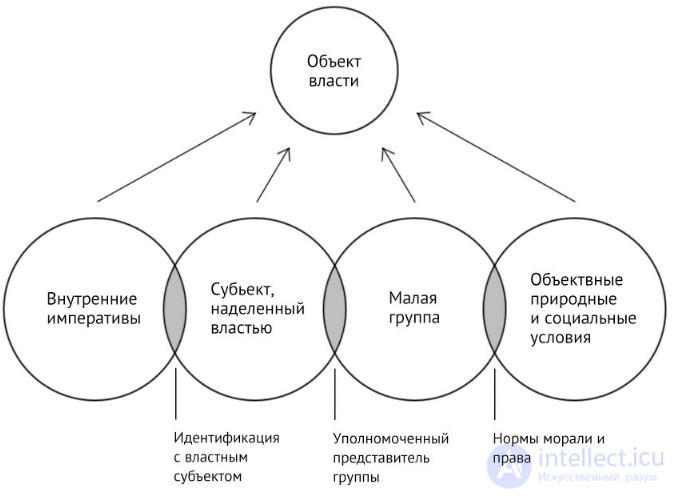
Figure 1 – Areas of individual submission to power
Let us dwell on examining the scope of meanings of individual submission to power. Thus, an individual's submission to the influence of power may include:
It can be assumed that these areas are not separated by rigid boundaries and form, at their intersections, «intermediate» zones of submission possessing the characteristic features of adjacent areas (Fig. 1).
Thus, excluding the characteristics of the subject of power from the definition of the concept of «submission» makes possible a broad interpretation of the concept, covering a wide range of situations. In cases where the influence of power is recognized by the individual, submission takes on the character of a personal choice and implies psychological activity that includes cognitive, emotional, and behavioral components. Based on the identified characteristics of submission, one can propose a variant classification of types of submission, carried out on the basis of correlating its three components: behavioral, cognitive, and emotional.
Based on the analysis of various types of submission carried out, one can designate the chosen coordinates as the most characteristic dimensions of submission, proposing a schematic division of each of them into four values. Thus, for the behavioral component (B), these values would be:
The dimensions of the cognitive component (C) are as follows:
In turn, the emotional dimensions (E) of submission are as follows:
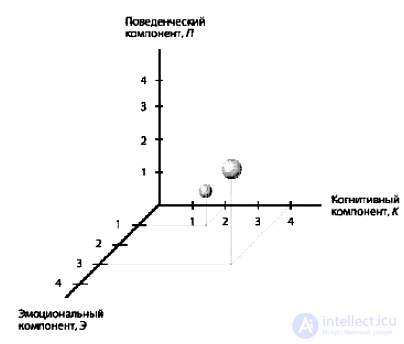
Figure 2 – Three-dimensional classification of submission
The proposed three-dimensional structure of submission makes it possible to describe a great variety of forms of submission (Fig. 2). For example, when attempting to represent external conformity within the three-dimensional system, it turns out that this characteristic is possessed simultaneously by several forms of submission, which differ from one another in essential features. Thus, external conformity can be represented by the coordinates B1C3E3, meaning full behavioral submission against a backdrop of internal cognitive conflict regarding the demands of the majority, causing the individual ambivalent emotions, or B1C4E4, when behavioral submission occurs with complete disagreement with the group's influence and causes negative emotions. In some situations, submission classified as externally conformist may be described by the coordinates B4 (fictitious submission) and any values of C and E, depending on how the individual assesses the group's demands and what emotions their own pretense and deception of these demands evoke in them.
In the same way, one can represent forms of submission to individual subjects, environmental influences, advertising, and so on. The classification presented can be applied to analyze submission at different levels (internal, individual, and social), as well as in different spheres of human interaction. Describing submission using the three-dimensional model makes it possible to pay attention not only to the objectively observable behavioral reactions of the one submitting, but also to their cognitive and emotional evaluation of the situation of submission and of their own behavior in that situation. Analysis of these components is an important element in understanding and predicting an individual's behavior, not only in a situation of submission, but also after the influence of power has ended.
[[b1508]]
[[b1510]]

Comments