
Lecture
Clinical psychology represents an integration of the humanities, behavioral science, theory, and clinical knowledge for the purpose of understanding, preventing, and relieving psychologically based distress or dysfunction, and of promoting subjective well-being and personal development. Central to its practice are psychological assessment, clinical formulation, and psychotherapy, although clinical psychologists also engage in research, teaching, consultation, forensic testimony, and program development and administration. In many countries, clinical psychology is a regulated mental health profession.
Clinical psychology is a branch of psychological knowledge that closely connects psychology with a whole range of natural, humanitarian, and even technical sciences. In choosing this specialization, a psychologist masters a competency model of a specialist whose subject-matter activity lies in the fields of medicine, education, emergency response units, law enforcement agencies, and social support. The leading goal of a clinical psychologist's activity is the prevention and overcoming of personal maladjustment.
The object of clinical psychology is a person with difficulties in adaptation and self-realization connected to their physical, social, and psychological condition.
The subject of a clinical psychologist's professional activity is the mechanisms, factors, and conditions that determine the success of adaptation and self-realization, the specifics of the course of adaptation, habilitation, and rehabilitation of a person experiencing difficulties in functioning and development connected to their physical, social, and/or psychological condition.
The term "clinical psychology" comes from the Greek "kline" – "bed," "hospital bed." Based on this understanding, clinical psychology is often used to refer to any psychological knowledge obtained in a clinical setting (or connected to medicine or a medical institution), or the methods that are applied in the clinic (in medicine). In modern psychology, the terms "clinical" and "medical" are very often used as synonyms. It's worth noting that there is a tradition among physicians of referring to this field of knowledge as medical psychology, while psychologists call it clinical psychology
The earliest recorded approaches to the assessment and treatment of mental disorders were a combination of religious, magical, and/or medical viewpoints.
Although the scientific community eventually rejected all these treatments for mental illness, academic psychologists were also not interested in serious forms of mental illness. The study of mental illness was already being carried out in the developing fields of psychiatry and neurology within the asylum movement.
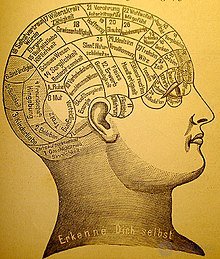
Many 18th-century treatments for psychological disorders were based on pseudoscientific ideas such as phrenology.
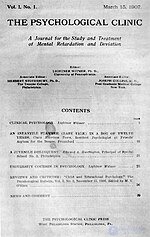
Cover of The Psychological Clinic, the first journal of clinical psychology, published in 1907 by Lightner Witmer.

The University of Pennsylvania was the first to offer formal education in clinical psychology.
By the second half of the 1800s, scientific psychological research was firmly established in university laboratories. Although a few scattered voices called for applied psychology, this idea was generally looked down upon, with an insistence on "pure" science as the only respectable practice.
Even as clinical psychology developed, working with serious mental disorders remained the prerogative of psychiatrists and neurologists.
The field began to take shape under the name "clinical psychology" in 1917 with the founding of the American Association of Clinical Psychology. This lasted only until 1919, after which the American Psychological Association (founded by G. Stanley Hall in 1892) developed a clinical psychology section, which offered certification until 1927.
When World War II broke out, the military again turned to clinical psychologists. When soldiers began returning from combat, psychologists started noticing symptoms of psychological trauma known as "shell shock" (later renamed post-traumatic stress disorder), which were best treated as soon as possible.
World War II contributed to fundamental changes in clinical psychology not only in America but around the world. Graduate education in psychology began adding psychotherapy to scientific and research training, based on the 1947 scientist-practitioner model, known today as the Boulder Model, for doctoral programs in clinical psychology.
By the 1960s, psychotherapy had become an integral part of clinical psychology, but for many, the PhD educational model did not offer the training needed by those interested in practice rather than research. There was a growing opinion that the field of psychology in the US had developed to the point where it required thorough training in clinical practice. The concept of a practice-oriented degree was discussed in 1965 and received approval for a pilot program at the University of Illinois starting in 1968.
Since the 1970s, clinical psychology has continued to develop into a solid profession and academic field of research. Although the exact number of practicing clinical psychologists is unknown, it is estimated that between 1974 and 1990 their number in the US grew from 20,000 to 63,000.
Clinical psychologists engage in a wide range of activities. Some focus exclusively on research into the assessment, treatment, or causes of mental illness and related conditions. Some teach, whether at a medical school or hospital, or in an academic department (e.g., a psychology department) at a higher education institution. Most clinical psychologists engage in some form of clinical practice, providing professional services including psychological assessment, psychotherapy, the development and administration of clinical programs, and forensic examination (e.g., providing expert testimony in court proceedings).
In clinical practice, clinical psychologists may work with individuals, couples, families, or groups in a variety of settings, including private practice, hospitals, mental health organizations, schools, businesses, and non-profit agencies. Clinical psychologists providing clinical services may also choose to specialize. Some specializations are codified and certified by the regulatory bodies of the country of practice.
Clinical psychologists study a general psychology program plus graduate training and/or clinical placement and supervision. The length of training varies around the world: from four years plus supervised practice after obtaining a bachelor's degree.
In the United Kingdom, clinical psychologists earn a Doctorate in Clinical Psychology (DClinPsych), which is a practicing doctoral degree that includes both clinical and research components. It is a three-year, full-time paid program sponsored by the National Health Service (NHS) and based at universities and the NHS. Admission to these programs is highly competitive and requires at least a three-year bachelor's degree in psychology plus some work experience, usually either in the National Health Service as an assistant psychologist or in academia as a research assistant. Candidates often apply several times before being admitted to a course, since only about one-fifth of applicants are accepted each year.
The practice of clinical psychology requires a license in the US, Canada, the UK, and many other countries. Although each US state differs somewhat in terms of requirements and licenses, there are three common elements:
All state and provincial licensing boards in the US are members of the Association of State and Provincial Psychology Boards (ASPPB), which created and maintains the Examination for Professional Practice in Psychology (EPPP). In many states, in addition to the EPPP, other exams are required, such as a jurisprudence exam (i.e., mental health law) and/or an oral exam.
In the UK, registration of a clinical psychologist with the Health Professions Council (HPC) is required. The HPC is the official regulatory body for practicing psychologists in the UK. In the UK, the following titles are restricted by law: "registered psychologist" and "practitioner psychologist"; in addition, the specialist title "clinical psychologist" is also restricted by law.
Psychological measures usually fall into one of several categories, including the following:
After assessment, clinical psychologists may give a diagnostic conclusion. Many countries use the International Statistical Classification of Diseases and Related Health Problems (ICD-10), whereas in the US the Diagnostic and Statistical Manual of Mental Disorders is most commonly used. Both are nosological systems that largely assume categorical disorders diagnosed using a set of criteria, including symptoms and signs.
Several new models are being discussed, including a "dimensional model" based on empirically validated models of human differences (such as the five-factor model of personality).
Clinical psychologists tend not to make diagnoses but rather use formulations — an individualized map of the difficulties faced by the patient or client, including predisposing, precipitating, and perpetuating (maintaining) factors.
What came to be called the debate over "clinical versus statistical prediction" was first described in detail in 1954 by Paul Meehl, who examined the claim that mechanical (formal, algorithmic) methods of combining data could outperform clinical (e.g., subjective, informal, "in the clinician's head") methods when such combinations are used to predict behavior. Meehl concluded that mechanical ways of combining data work as well as or even better than clinical ways. A subsequent meta-analysis of studies that directly compared mechanical and clinical predictions confirmed Meehl's 1954 findings. A 2009 survey of practicing clinical psychologists found that clinicians almost exclusively use their clinical judgment to predict their patients' behavior, including diagnosis and prognosis.
Psychotherapy involves a formal relationship between a professional and a client (usually an individual, couple, family, or small group), in which a set of procedures is used designed to build a therapeutic alliance, explore the nature of psychological problems, and encourage new ways of thinking, feeling, or behaving.
Clinicians may use a wide range of individual interventions, often guided by their training — for example, a cognitive behavioral therapy (CBT) clinician might use worksheets to record anxious thoughts, a psychoanalyst might encourage free association, and a psychologist trained in Gestalt methods might focus on the immediate interaction between the client and therapist. Clinical psychologists generally strive to base their work on scientific evidence and research findings, as well as trained clinical judgment. Although there are literally dozens of recognized therapeutic orientations, their differences can often be divided along two dimensions: insight versus action, and in-session versus out-of-session.
The methods used also vary depending on the population served, as well as the context and nature of the problem. Therapy will look different, say, for a traumatized child, a depressed but high-functioning adult, a group of people recovering from substance dependence, and a ward of the state suffering from terrifying delusions. Other elements that play a decisive role in the psychotherapy process include the environment, culture, age, cognitive functioning, motivation, and duration (i.e., short-term or long-term therapy).
Many clinical psychologists are integrative or eclectic and use the evidence base of various therapy models in an integrative way, rather than adhering to one specific model.
In the UK, clinical psychologists must demonstrate competence in at least two models of therapy, including CBT, in order to obtain a doctoral degree. The Division of Clinical Psychology of the British Psychological Society openly states the need to follow the evidence base rather than adhere to any single model of therapy.
In the US, training and practice in intervention and research is dominated by four major schools of practice: psychodynamic, humanistic, behavioral/cognitive-behavioral, and systemic or family therapy.
The psychodynamic perspective developed out of Sigmund Freud's psychoanalysis. The main goal of psychoanalysis is to make the unconscious conscious — to help the client become aware of their own primary drives (namely those related to sex and aggression) and the various defenses used to control them. The main tools of the psychoanalytic process are the use of free association and the exploration of the client's transference onto the therapist, defined as the tendency to take unconscious thoughts or emotions about a significant person (e.g., a parent) and "transfer" them onto another person. The main variations of Freudian psychoanalysis practiced today include self psychology, ego psychology, and object relations theory. These general directions now fall under the umbrella term psychodynamic psychology, with common themes including exploring transference and defenses, understanding the power of the unconscious, and emphasizing how early childhood development shaped the client's current psychological state.
Humanistic psychology was developed in the 1950s as a reaction against behaviorism and psychoanalysis, largely thanks to Carl Rogers's person-centered therapy (often called Rogerian therapy) and the existential psychology developed by Viktor Frankl and Rollo May. Rogers believed that a client needs only three things from a clinician to experience therapeutic improvement: congruence, unconditional positive regard, and empathic understanding. Using phenomenology, intersubjectivity, and first-person categories, the humanistic approach seeks to gain an understanding of the whole person, rather than only fragmented parts of the personality. This aspect of holism is connected to another common goal of humanistic practice in clinical psychology, which is the pursuit of integration of the whole personality, also called self-actualization. Since 1980, Hans-Werner Gessmann has integrated ideas from humanistic psychology into group psychotherapy as humanistic psychodrama. According to humanistic thinking, every individual already has built-in potentials and resources that can help them build a stronger personality and self-esteem. The mission of the humanistic psychologist is to help the person use these resources through the therapeutic relationship.
Emotion-focused therapy/Emotionally focused therapy (EFT), not to be confused with the Emotional Freedom Technique, was originally based on humanistic-phenomenological and Gestalt theories of therapy. "Emotion-focused therapy can be defined as a therapeutic practice based on understanding the role of emotion in psychotherapeutic change. EFT is based on a careful and thorough analysis of the meanings and contributions of emotion to human experience and change in psychotherapy. This focus leads the therapist and client to strategies that promote the awareness, acceptance, expression, use, regulation, and transformation of emotions, as well as corrective emotional experiences with the therapist. The goals of EFT are to strengthen the self, regulate affect, and create new meaning." Like some approaches in psychodynamic therapy, EFT draws heavily on attachment theory. The pioneers of EFT are Les Greenberg and Sue Johnson. EFT is often used in individual therapy and can be especially helpful for couples therapy. Founded in 1998, Sue Johnson and others lead the International Centre for Excellence in Emotionally Focused Therapy (ICEEFT), where clinicians can receive EFT training internationally. EFT is also a frequently chosen treatment for clinically diagnosed trauma.
Cognitive behavioral therapy (CBT) emerged from a combination of cognitive therapy and rational emotive behavior therapy, which grew out of cognitive psychology and behaviorism. CBT is based on the theory that how we think (cognition), how we feel (emotion), and how we act (behavior) are interconnected and interact in complex ways. From this perspective, certain dysfunctional ways of interpreting and evaluating the world (often through schemas or beliefs) can contribute to emotional distress or lead to behavioral problems. The goal of many cognitive behavioral therapies is to detect and identify biased, dysfunctional ways of interacting or responding and, through various methodologies, help clients overcome them in a way that leads to increased well-being. Many techniques are used, such as systematic desensitization, Socratic questioning, and keeping a journal to track cognitive processes. Modified approaches falling under the CBT category have also been developed, including dialectical behavior therapy and mindfulness-based cognitive therapy.
Behavioral therapy is a rich tradition. It is well researched and has a strong evidence base. Its roots lie in behaviorism. In behavioral therapy, environmental events predict how we think and feel. Our behavior creates conditions for the environment to provide feedback on it. Sometimes this feedback leads to an increase in behavior (reinforcement), and sometimes to a decrease in behavior (punishment). Behavioral therapists are often called applied behavior analysts or behavioral health consultants. They have studied many areas, from developmental disorders to depression and anxiety disorders. A recent article on mental health and addiction reviewed a list of well-established and promising APA practices and found that a significant number of them are based on the principles of operant and respondent conditioning. This approach has given rise to numerous assessment methods, including functional analysis (psychology), which has found wide application in the school system. In addition, numerous intervention programs have emerged from this tradition, including the community reinforcement approach for treating addiction, acceptance and commitment therapy, functional analytic psychotherapy, including dialectical behavior therapy and behavioral activation. In addition, specific methods such as contingency management and exposure therapy have emerged from this tradition.
Systemic or family therapy works with couples and families and emphasizes family relationships as an important factor in psychological health. The main focus tends to be on interpersonal dynamics, especially in terms of how a change in one person will affect the whole system. Therefore, therapy is conducted with as many significant members of the "system" as possible. Goals may include improving communication, establishing healthy roles, creating alternative narratives, and addressing problematic behavior.
There are dozens of recognized schools or orientations of psychotherapy — the list below presents several influential orientations not mentioned above. Although they all have some typical set of techniques that practitioners use, they tend to be better known for providing a framework of theory and philosophy that guides the therapist in their work with the client.
Community psychology approaches are often used for psychological harm prevention and clinical intervention.
The past couple of decades have seen a growing movement toward integrating various therapeutic approaches, especially with a growing understanding of cultural, gender, spiritual, and sexual orientation issues. Clinical psychologists are beginning to consider the various strengths and weaknesses of each orientation while working with adjacent fields such as neuroscience, behavioral genetics, evolutionary biology, and psychopharmacology. The result is a growing practice of eclecticism, in which psychologists study various systems and the most effective methods of therapy with the intention of finding the best solution for any particular problem.
The field of clinical psychology in most countries is strictly regulated by a code of ethics. In the US, professional ethics is largely defined by the APA Ethical Code of Conduct, which is often used by states to determine licensing requirements. The APA code typically sets higher standards than those required by law, since it is intended to guide responsible conduct, protect clients, and improve individuals, organizations, and society.
The APA code is based on five principles: Beneficence and Non-maleficence, Fidelity and Responsibility, Integrity, Justice, and Respect for People's Rights and Dignity.
In the UK, the British Psychological Society has published a Code of Conduct and Ethics for clinical psychologists. It consists of four key areas: respect, competence, responsibility, and integrity.

Fluoxetine hydrochloride, marketed by Lilly under the trade name "Prozac," is an antidepressant prescribed by physicians, psychiatrists, and some nurses.
| Comparison of mental health professionals in the US | ||||
| Occupation | Degree | Common licenses | Prescriptive privilege | Average income in 2020 (USD) |
| Clinical psychologist | PhD/PsyD/EdD | Psychologist | Depends on the state | $89,290 |
| Counseling psychologist (doctoral) | PhD/PsyD/EdD | Psychologist | No | $65,000 |
| Counselor (master's) | MA/MS/MEd | MFT/LPC/LCMHC/LPA | No | $47,660 |
| School psychologist | PhD/EdD/MS/EdS | School psychologist | No | $74,000 |
| Psychiatrist | MD/DO | Psychiatrist | Yes | $217,100 |
| Clinical social worker | PhD/DSW/MSW | LCSW | No | $51,760 |
| Psychiatric nurse | MSN/BSN | RN | No | $75,330 |
| Psychiatric mental health nurse practitioner | DNP/PhD/MSN | APRN/APN/PMHNP | Yes (depends on state) | $117,670 |
| Expressive/Art therapist | MA | ATR | No | $55,900 |
School psychologists are primarily concerned with the academic, social, and emotional well-being of children and adolescents in the school environment. In the UK, they are called "educational psychologists." Like clinical (and counseling) psychologists, school psychologists with doctoral degrees are eligible to obtain a health service psychologist license, and many engage in private practice. Unlike clinical psychologists, they receive much more training in children's education, development, and behavior, as well as the psychology of learning. Common degrees include the Education Specialist degree (EdS), Doctor of Philosophy (PhD), and Doctor of Education (EdD).
Social workers provide a variety of services, usually related to social problems, their causes, and solutions. After specialized training, clinical social workers may also provide psychological counseling (in the US and Canada) in addition to more traditional social work.
Occupational therapy — often abbreviated OT — is "the use of productive or creative activity in the treatment or rehabilitation of people with physical, cognitive, or emotional impairments."
Clinical psychology uses a variety of methods that make it possible to objectify, differentiate, and qualify various variants of normality and pathology. The choice of methodology depends on the task facing the psychologist, the patient's mental state, the patient's education, and the degree of complexity of the mental disorder. The following methods are distinguished:
Observation
Interview
Psychophysiological methods (e.g., EEG)
Biographical method
Study of creative products
Anamnestic method (collecting information about the treatment, course, and causes of the disorder)
Experimental-psychological method (standardized and non-standardized techniques)
In identifying the main areas of clinical psychology, we can move in two directions: first, we can identify the main branches that clinical psychology encompasses; second, we can analyze the current level of development of this science, highlighting the most relevant research directions today. Taking the first path, we should identify within clinical psychology, first and foremost, general clinical psychology, and a number of its specific branches. Thus, U. Baumann and M. Perrez, distinguishing between the general and specific components of clinical psychology, understand general aspects as the common characteristics of all disorders, and specific aspects as the characteristics of particular disorders. Accordingly, general clinical psychology, according to these authors, includes psychopathology (symptomatology, etiology, prognosis, classification, epidemiology); psychodiagnostics; psychological intervention; and psychosocial healthcare. V. A. Kulganov, V. G. Belov, and Yu. A. Parfenov also divide clinical psychology into general and specific. General clinical psychology studies: the psychological characteristics of a sick person, namely the features of a temporarily altered and disordered psyche compared to normal; the psychology of the medical worker, in particular the physician (issues of doctor-patient communication, the psychological atmosphere of a medical institution); problems of somatopsychics and psychosomatic manifestations; the study of individuality (character, temperament, personality), stages of postnatal ontogenesis (childhood, adolescence, youth, adulthood, and old age), and features of affective-volitional processes; and medical ethics, in particular issues of professional duty, medical confidentiality, etc. Specific clinical psychology studies such issues as: the psychological characteristics of patients with borderline forms of neuropsychiatric disorders (the most sensitive and vulnerable patients), who are the object of care of physicians of any specialty; the psychological characteristics of patients during preparation for and undergoing surgical interventions and in the postoperative period; the psychological characteristics of patients suffering from various diseases (infectious, neuropsychiatric, cardiovascular, gynecological, skin, and neoplastic); the psychological characteristics of patients with impairments of various organs and systems, in particular sensory ones (blindness, deafness); and the medical-psychological aspects of occupational, military, and forensic examinations. Based on their subject focus and methodological specificity, these researchers also identify the following areas within the structure of clinical psychology: 1) neuropsychology; 2) psychopathology; 3) psychosomatics; 4) the psychology of the somatically ill patient; 5) perinatal psychology; 6) the psychology of abnormal development; 7) the psychology of deviant behavior; 8) psychological support of the diagnostic and treatment process; 9) fundamentals of psychological influence in the clinic; 10) clinical psychology in expert practice.
Let us now consider the most significant components of clinical psychology. The leading area of clinical psychology is most often called psychopathology, which arose at the turn of the 20th century. Its founder is considered to be V. M. Bekhterev, whose scientific school established the quantitative and qualitative characteristics of the neuropsychiatric activity of individual patients, as well as the role of various factors in the dynamics of neuropsychiatric disorders. Psychopathology is a branch of clinical psychology that studies the patterns of disintegration (or, as is more often said now, the characteristic features) of the psyche of an abnormal personality, in comparison with the normally forming and functioning mental functions, properties, and processes characteristic of a healthy, productive, adaptive personality.
Neuropsychology is one of the most important areas of clinical psychology. Neuropsychology refers to a field of scientific psychological knowledge that studies the neural mechanisms underlying mental processes and functions. Several independent branches of neuropsychology are currently distinguished, united by common theoretical concepts and a common ultimate task, which is to study the brain mechanisms of mental processes: 1. Clinical, which studies neuropsychological syndromes that arise from damage to a particular area of the brain. 2. Rehabilitation, which deals with restoring lost higher mental functions, training, and restructuring impaired functional systems to develop a new set of psychological means for a person's normal functioning in everyday, professional, and social spheres. 3. Developmental (child), which studies ontogenetically determined changes in the brain organization of mental processes during the maturation of brain structures. 4. Neuropsychology of late age, which studies the features of mental functioning during the period of age-related degenerative changes in the brain in elderly people. Within neuropsychology, an analysis of higher mental functions is carried out to study visual, auditory, tactile-kinesthetic, motor, and other disorders in local brain lesions; the emotional-volitional, motivational, intellectual, and other spheres of personality are studied; and neuropsychological syndromes are described.
Psychotherapy (from the Greek "psyche" — "soul" and "therapeia" — "treatment") is a system of methods, means, and techniques of influence on the human psyche for therapeutic and preventive purposes, the goal of which is to improve mental and/or physical condition. In the narrow medical sense, the concept of "psychotherapy" is considered as a group of specific treatment methods (similar to physiotherapy, therapeutic exercise), while in the broad sense, psychotherapy represents the entire set of means and methods of psychological and medical assistance, one of the main tasks of which is to improve the client's psychological state, as well as the prevention of psychological distress.
Psychosomatics. This branch of clinical psychology, in a more general sense, is concerned with studying the mutual influence of the psyche and the body on one another. That is, psychosomatics studies the influence of psychological factors on bodily condition (this influence can be either pathogenic or sanogenic), as well as the influence of physical, bodily health factors on the psychological characteristics of the personality.
Somatopsychology is a branch of medical psychology concerned with studying the influence of psychological factors on the occurrence of a number of somatic diseases (bronchial asthma, hypertension, duodenal ulcer, ulcerative colitis, neurodermatitis, non-specific chronic polyarthritis).
Clinical psychology is a diverse field, and disagreements periodically arise about the extent to which clinical practice should be limited to treatments validated by empirical research.

Comments