
Lecture
Hope is an optimistic state of mind, one of the types of emotion, based on the expectation of positive outcomes regarding events and circumstances in one's own life or in the world as a whole. In the Merriam-Webster dictionary, hope is defined as «to expect with confidence» or «to cherish a desire with anticipation.» Hope is a positively colored emotion that arises during a tense expectation of the fulfillment of a desire and that anticipates the possibility of its realization; it is a philosophical, religious, and cultural concept connected with understanding the state of a person experiencing this emotional process. It is the desire to obtain a result without clarifying the details of how the process unfolds.
Among its opposites are despondency, hopelessness, and despair.
Hope finds expression in many dimensions of human life, including practical thinking, the religious virtue of hope, legal doctrine and literature, as well as cultural and mythological aspects.
Hope is a feeling, but one with a strong emotional coloring.
More precisely:
from a psychological point of view, hope is a stable positive feeling associated with the expectation of a favorable outcome in the future, even under difficult circumstances;
from the point of view of emotions, it is close to joy and faith, but differs in that it is directed forward, into the future — toward something that does not yet exist but that a person desires.
Thus:
Hope is a feeling containing the emotion of anticipation and belief in a positive outcome.
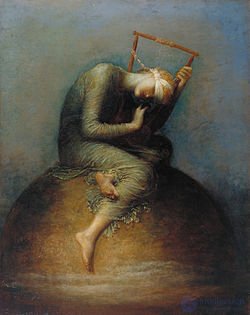
Hope, which lay at the bottom of the box, remained. An allegorical painting by George Frederic Watts, 1886.
American psychology professor Barbara Fredrickson argues that hope comes into its own when a crisis is looming, opening up new creative possibilities for us. Fredrickson argues that great need brings with it an extraordinarily broad range of ideas, as well as positive emotions such as happiness and joy, courage and self-confidence, drawn from four different spheres of personality: the cognitive, psychological, social, or physical. Such positive thinking bears fruit when it is grounded in a realistic sense of optimism rather than in naive «false hope.»
Psychologist Charles R. Snyder linked hope to the existence of a goal combined with a specific plan for achieving it. Alfred Adler similarly argued for the central role of striving toward a goal in human psychology, as did philosophical anthropologists such as Ernst Bloch. Snyder also emphasized the connection between hope and willpower (endurance), as well as the need for a realistic perception of goals (a problem-focused orientation), arguing that the difference between hope and optimism is that the former can look like wishful thinking, while the latter provides the energy to seek practical paths to a better future. D.W. Winnicott viewed a child's antisocial behavior as an expression of a cry for help, an unconscious hope signifying an unspoken wish for a positive outcome from those who control the situation in society as a whole, when containment within the immediate family has failed. Object relations theory similarly views the analytic transference as partly motivated by the unconscious hope that past conflicts and traumas can be relived and worked through anew.
As a specialist in positive psychology, Snyder studied how hope and forgiveness can affect various aspects of life, such as health, work, education, and personal meaning. He posited that three main factors shape optimistic thinking:

A rose expressing hope, at the Auschwitz concentration camp
In other words, hope was defined as the perceived ability to find paths to desired goals and to motivate oneself through agentic thinking to use those paths.
Snyder argues that people able to recognize these three components and believe in their own abilities are full of hope, capable of setting clear goals, envisioning multiple realistic paths to achieving them, and showing persistence even when obstacles arise along the way.
Snyder proposed the «Hope Scale,» which held that a person's determination to achieve their goal is their measured hope. Snyder distinguishes between hope measured in adults and hope measured in children. Snyder's Adult Hope Scale contains 12 questions: 4 measure «pathways thinking,» 4 measure «agency thinking,» and 4 are simply filler items. Each subject answers each question using an 8-point scale. Fibel and Hale measure hope by combining Snyder's Hope Scale with their own Generalized Expectancy for Success Scale (GESS) to empirically measure hope. Snyder believed that psychotherapy could help focus attention on goals, drawing on implicit knowledge of how to achieve them. Similarly, there is a worldview and understanding of reality for hope, distinguishing between «no hope,» «lost hope,» «false hope,» and «true hope,» which differ in terms of perspective and realism.
| Full of Hope | Perspective | Wishful | Committed to the Idea |
|---|---|---|---|
| Hopeful outlook, distorted reality , false hope |
Hopeful outlook, accurate reality, true hope |
||
| Skeptical | No hope , hopeless outlook, distorted reality |
Lost hope, hopeless outlook, accurate reality |
|
| Hopeless | Helpless | Given Up | |
| Understanding of Reality | |||
| Uninformed Distorted Denied |
Informed Accurate Internalized |
Contemporary philosopher Richard Rorty understands hope as something more than simply setting goals, but rather as a metanarrative, a story that serves as a promise or foundation for the expectation of a better future. Rorty, being a postmodernist, believes that past metanarratives, including the Christian story, utilitarianism, and Marxism, have proven to be false hopes; that theory cannot offer social hope; and that liberal man must learn to live without a generally accepted theory of social hope. Rorty says that reviving social hope requires a new document containing a promise.
It expresses one of the properties of the surrounding world: a person exists in an indeterminate (probabilistic) world rather than a strictly predetermined (deterministic) one. Thomas Aquinas, in the Summa Theologiae (Part 2, Q.25, A.4), classified hope (spes) as one of the four passions and defined it as the possession of a «future good» (bonum futurum).
«The Principle of Hope» (German: Das Prinzip Hoffnung) is a book by the Marxist philosopher Ernst Bloch, published in three volumes in 1954, 1955, and 1959. In it, the author explores utopianism, examining the utopian impulses present in art, literature, religion, and other forms of cultural expression, and envisions a future state of absolute perfection. The Principle of Hope became a foundational text for dialogue between Christians and Marxists.
Originally written between 1938 and 1947 in the USA, an expanded and revised version of «The Principle of Hope» was published successively in three volumes in 1954, 1955, and 1959. Bloch, who emigrated to the USA in 1938, returned to Europe in 1949 and became a professor of philosophy in East Germany. Although he initially supported the regime, Bloch was criticized for his philosophical unorthodoxy and his support for greater cultural freedom in East Germany, and the publication of «The Principle of Hope» was delayed for political reasons.
Philosopher Leszek Kolakowski calls «The Principle of Hope» Bloch's greatest work, noting that it contains all his important ideas. Philosopher Robert S. Corrington and psychoanalyst Joel Kovel called the work «monumental.»
Among the countless models exploring the importance of hope in human life, two main theories have gained significant recognition in psychology. One of these theories, developed by Charles R. Snyder, argues that hope should be viewed as a cognitive skill that reflects a person's ability to maintain a commitment to achieving a specific goal. This model suggests that a person's ability to maintain hope depends on two types of thinking: agency-based thinking and pathway-based thinking. Agency-based thinking refers to a person's determination to achieve their goals despite possible obstacles, while pathway-based thinking refers to the ways in which a person believes they can achieve those personal goals.
Snyder's theory views hope as a mechanism most commonly encountered in psychotherapy. In such cases, the therapist helps the client overcome obstacles that prevent them from achieving their goals. The therapist then helps the client set realistic and relevant personal goals (for example, «I will find something that engages me and makes me feel good»), and helps the client maintain belief in their ability to achieve those goals and suggests appropriate paths for reaching them.
While Snyder's theory focuses on hope as a mechanism for overcoming a lack of motivation to achieve goals, another important theory, developed by Kaye A. Herth, more specifically addresses a person's future goals in the context of coping with illness. Herth views hope as «a motivational and cognitive attribute that is theoretically necessary for initiating and sustaining action toward achieving a goal.» Setting realistic and achievable goals in this situation is more difficult, since the person most likely has no direct control over their future health. Instead, Herth suggests that goals be linked to how a person intends to personally cope with the illness: «Instead of drinking to ease the pain of my illness, I will surround myself with friends and family.»
Although the nature of the goals in Snyder's model differs from that in Herth's model, both view hope as a way of sustaining personal motivation, which ultimately leads to a greater sense of optimism.
Hope, or more precisely, specific hope, has been shown to be an important part of the recovery process from illness; it has strong psychological benefits for patients, helping them cope with their illness more effectively. For example, hope motivates people to follow a healthy lifestyle for recovery, such as eating fruits and vegetables, quitting smoking, and engaging in regular physical activity. This not only promotes recovery from illness but also helps prevent the development of illness in the first place. Patients who maintain a high level of hope have an improved prognosis for life-threatening illnesses and an improved quality of life. Faith and expectation, which are key elements of hope, block pain in patients suffering from chronic illnesses by releasing endorphins and mimicking the effects of morphine. Consequently, through this process, faith and expectation can trigger a chain reaction in the body that can make recovery from chronic illness more likely. This chain reaction is especially evident in studies demonstrating the placebo effect, where hope is the only variable contributing to these patients' recovery.
Overall, research has shown that maintaining a sense of hope during recovery from illness is beneficial. A sense of hopelessness during recovery has in many cases led to adverse health outcomes for the patient (for example, depression and anxiety after the recovery process). In addition, having greater hope before and during cognitive therapy led to a reduction in PTSD-related depressive symptoms in war veterans. Hope has also been found to be associated with a more positive perception of subjective health. However, reviews of the research literature have noted that the link between hope and symptom severity in other mental health disorders is less clear, for example, in people with schizophrenia.
Hope is a powerful protector against chronic or life-threatening illnesses. Hope (even when a person is facing an illness that is likely to end their life) can be beneficial, granting joy or comfort. It can be created and directed toward achieving life goals, such as meeting grandchildren or attending a child's wedding. Hope can give us the opportunity to reinterpret and relive events that may have been traumatic. A life setback, an accident, or the final months of our life can be moments when hope becomes a comfort and serves as a path from one stage to the next.
Hope is a powerful emotion that keeps us working and moving forward. It gives us the strength to survive. In a study conducted at Harvard, Curt Richter experimented with 12 wild rats and 12 domesticated rats. Wild rats, known for their excellent swimming abilities, survived for only about two minutes when placed in a glass container of water with no way to escape. In contrast, domesticated rats survived for several days. Curt explained this difference by hope. The domesticated rats hoped to be rescued from drowning, while the wild rats had no such hope, since they had never experienced rescue.
Curt decided to conduct another experiment with 12 wild rats. He placed them in water, and when they were about to drown, he pulled them out and held them briefly, creating a sense of hope. He then returned the rats to the water to see how long they would stay afloat. Remarkably, they lasted just as long as the domesticated rats — about 60 hours. Thanks to hope, the rats were able to stay afloat not for 2 minutes, but for 60 hours.
Hope is a powerful emotion. It makes us move faster, farther, and longer than we thought possible. But for hope to flourish, it must be based on something more powerful than ourselves. The rats had hope that a saving hand would come and pull them out of the water.
Incorporating hope into treatment programs has potential in both physical and mental health care. Hope as a mechanism for improving treatment has been studied in the context of post-traumatic stress disorder, chronic physical illnesses and terminal illnesses, as well as other disorders and ailments. In mental health practice, clinicians suggest using hope-based interventions as a supplement to more traditional cognitive-behavioral therapy methods. Regarding support for physical illnesses, research shows that hope can promote the production of endorphins and enkephalins, which help block pain.
Obstacles
There are two main judgment-based arguments against those who advocate using hope to treat serious illnesses. The first is that if doctors have too much hope, they may treat the patient too aggressively. The doctor will cling to a tiny sliver of hope that the patient will get better. This leads them to try methods that are costly and may have many side effects. One doctor noted that she regrets having hoped for her patient; this led to her patient suffering three more years of pain that the patient would not have endured had the doctor recognized the impossibility of recovery.
The second argument is the distinction between hope and wishing. Those who hope actively seek the best course of action given the obstacles. However, research has shown that many of those who «hope» merely dream about the future and act passively, as if denying their real circumstances. Denial and excessive hope can negatively affect both the patient and the doctor.
The impact of hope on a patient's recovery process is strongly supported by both empirical research and theoretical approaches. However, literature reviews also point to the need for more longitudinal and methodologically sound studies to determine which hope-based interventions are truly most effective and under what conditions (for example, in chronic illness or terminal illness).
In the matter of globalization, hope is focused on the expansion of economic and social rights and opportunities.
Focusing on some parts of Asia, hope has taken on a secular or materialistic form in relation to the pursuit of economic growth. Prime examples are the growth of the economies of China and India, correlating with the concept of Chindia. A secondary related example is the wider use of modern architecture in countries with growing economies, such as the construction of the Shanghai World Financial Center, the Burj Khalifa, and Taipei 101, which gave rise to a prevailing sense of hope in the countries of origin. In chaotic settings, hope transcends cultural boundaries; Syrian refugee children receive support through a UNESCO educational project via creative education and psychosocial assistance. Other cross-cultural support measures aimed at instilling hope include food culture, freeing refugees from trauma by immersing them in a rich cultural heritage.

An engraving depicting Pandora trying to close the box she opened out of curiosity. On the left, the evil of the world mocks her as it slips away. The engraving is based on a painting by F.S. Church.
Hope is the thing with feathers that perches in the soul, and sings the tune without the words, and never stops at all.
— Emily Dickinson
A classic reference to hope that has entered modern language is the concept of «Hope Springs Eternal,» taken from Alexander Pope's «Essay on Man.» The line reads: «Hope springs eternal in the human breast, Man never Is, but always To be blest». Another popular reference is «Hope is the thing with feathers,» taken from a poem by Emily Dickinson.
Hope can be used as an artistic plot device and is often the driving force behind change in dynamic characters. A well-known reference in Western pop culture is the subtitle «A New Hope» from the original first installment (now regarded as Episode IV) of the science-fiction space opera «Star Wars.» The subtitle refers to one of the main characters, Luke Skywalker, who is expected to eventually allow good to triumph over evil within the films' storyline.
The swallow was a symbol of hope in Aesop's fables and numerous other historical works. It symbolizes hope, in part because it is one of the first birds to appear at the end of winter and the beginning of spring. Other symbols of hope include the anchor and the dove.
Nietzsche held a contradictory yet consistent view of hope:
... Zeus did not want man, no matter how much he suffered from other evils, to throw his life away, but to go on suffering ever anew. For that reason he gives man hope — in reality it is the most evil of evils, because it prolongs man's torment.
— Friedrich Nietzsche
Elpis (Hope) appears in ancient Greek mythology in the story of Zeus and Prometheus. Prometheus stole fire from the god Zeus, which angered the supreme god. In turn, Zeus created a box containing all kinds of evils, unbeknownst to the box's recipient. Pandora opened the box after being warned not to, releasing a multitude of harmful spirits that unleashed epidemics, diseases, and afflictions upon humanity. Spirits of greed, envy, hatred, distrust, sorrow, anger, revenge, lust, and despair scattered everywhere in search of people to torment. However, inside the box there was also an unreleased spirit of healing named Hope. Since ancient times, people have recognized that the spirit of hope has the power to heal ailments and helps them endure times of great suffering, illness, disaster, loss, and pain caused by evil spirits and events. In Hesiod's «Works and Days,» the personification of hope is named Elpis.
In Norse mythology, however, Hope (Vön) was considered to be the saliva dripping from the mouth of the wolf Fenrir: in their conception of courage, joyful bravery in the absence of hope was valued above all else.
Hope is a key concept in most of the world's major religions, often denoting the belief of a person or group of people in attaining some notion of paradise. Depending on the religion, hope can be viewed as a precondition and/or a byproduct of spiritual attainment.
The Jewish Encyclopedia notes «tikvah» (תקווה) and «sever» as terms denoting hope, adding that «mikveh» and «kislah» denote the related concept of «trust,» while «tochelet» means «expectation.»
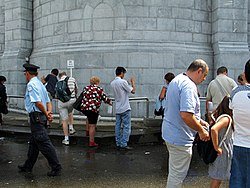
People collecting the miraculous water at Lourdes, France.
Hope is one of the three theological virtues of the Christian religion, along with faith and love. It is one of the steps of the ladder of spiritual growth in Christianity (the Ladder of Peter, whose first step is faith), by which one ascends to God in Christianity. «Hope» in Scripture means a «firm and confident expectation» of a future reward (see Titus 1:2). In modern understanding, hope is akin to trust and confident expectation. The Apostle Paul asserted that Christ was the source of hope for Christians: «For in this hope we were saved» (see Romans 8:24).
According to the Holman Bible Dictionary, hope is «trustful expectation… anticipation of a favorable outcome under God's guidance.» In «The Pilgrim's Progress,» it is Hope who comforts Christian in Doubting Castle; whereas in Dante, by contrast, the words at the entrance to Hell were: «Abandon all hope, ye who enter here.»
In the historical literature of Hinduism, hope is denoted as Pratidhi (Sanskrit: प्रतिधी), or Apeksha (Sanskrit: अपेक्ष). It is discussed in the context of the concepts of desire and striving. In Vedic philosophy, karma was linked to ritual sacrifices (yajna), and hope and success were linked to the correct performance of these rituals. In the Vishnu Smriti, the image of hope, morality, and labor is presented as a virtuous man riding in a chariot guided by his hope-filled mind toward the fulfillment of desires, drawn by his five senses, who keeps the chariot on the path of virtue and thus is not distracted by vices such as anger, greed, and others.
In subsequent centuries, the concept of karma shifted from sacred rituals to actual human actions that build and serve society and human existence – a philosophy embodied in the Bhagavad Gita. Hope, within the structure of beliefs and motivations, is a long-term karmic concept. In the Hindu faith, actions have consequences, and although a person's efforts and work may or may not bear fruit in the short term, they will serve the good, so that the path of our diligent efforts (karma) and the way we follow that path will sooner or later lead to bliss and moksha.
The teaching of Buddhism is based on the idea of hope. It guides those who suffer toward a path to a more harmonious world and greater well-being. Hope serves as a light for those who are lost or suffering. The factors of saddha (faith), wisdom, and aspiration together form practical hope. Practical hope is the foundation that helps those who suffer set out on the path to inner freedom and holistic well-being. It instills belief in a positive outcome even amid suffering and adversity.

Comments