
Lecture
Traffic psychology (Traffic psychology; German: Verkehrspsychologie) is a psychological discipline that studies the relationships between the behavior of road users and the mental processes that drive this behavior. The main goal of traffic psychology is to apply theoretical concepts from psychology to improve people's movement and mobility by developing and implementing various measures to prevent road traffic accidents, as well as to shape road users' behavior (in accordance with traffic rules) through education and motivation , .
The behavior of road users is often studied in the context of an accident that has occurred, in order to investigate the possible causes of the traffic accident as well as the psychological characteristics of the people involved in it. Traffic psychologists distinguish three different types of driver motivation: reasoned or planned behavior; impulsive or emotional behavior; and habitual (standard) behavior. In addition, knowledge from fields such as social and cognitive psychology is used in traffic psychology for various educational campaigns in the field of road safety, as well as for therapeutic and rehabilitation programs.
Various concepts from cognitive theories, the psychology of movement, and neurophysiology are also applied in traffic psychology. To better understand the driver's perception of a situation and their actions on the road, factors such as attention, memory, spatial orientation, level of experience, stress, exposure to psychoactive substances, the influence of distracting stimuli, fatigue , as well as the performance of secondary tasks (talking on the phone, using a navigator, etc.) are studied , .
Traffic psychology addresses not only the cognitive and personality-related aspects of vehicle operation, but also its sensorimotor aspects, as well as the interaction of the person with other road users. By identifying what the driver feels and what their thoughts are, traffic psychology makes it possible to understand what the outcome of the driver's actions will be, which in turn provides grounds for changing the way they behave behind the wheel.
Traffic psychology can be regarded as a «tool» that, through subjective analysis, helps improve quality of life by observing behavior and identifying techniques and patterns of behavior and its change. Thus, the task of traffic psychology is to understand and predict behavior in road traffic conditions in order to ensure the necessary safety measures and minimize the harmful effects of participating in road traffic.
Behavior research in traffic psychology is linked to the study of such subject areas as motivation, individual psychological and gender differences, habits, overconfidence, age and occupational differences, attention, and traffic violations.
Classifying the behavioral characteristics that reduce driving ability and predispose a person to risky driving, and further dividing them according to short-term and long-term impact, helps to make sense of how behavior on the road is formed and contributes to the process of changing/modifying that behavior.
Road and transport fields of scientific knowledge and practice focus their attention on researching, explaining, and predicting everything related to the movement of people and objects. These fields of knowledge include several aspects of the functioning of transport systems together with their technical capabilities. Thus, within this functioning process, reliable and valid methods are developed that make it possible to better understand and predict the consequences of changes in human behavior through their interaction with the external road traffic environment.
The transport system consists of road, rail, sea, and air infrastructure. It includes various opportunities and constraints arising from its economics and the laws and rules that create barriers to individual and mass car use. For example, speed of travel can be regarded as a «means» of travel (by car, plane, train, or ship) in accordance with the financial means that allow one to use a particular type of vehicle (a sailboat or a speedboat, a sedan or a luxury sports car). At the same time, speed can be regarded as an «attribute» of movement, limited by traffic rules, for example, the speed limit in rural areas compared to the speed limit in the city or on the highway.
The road traffic environment for travel takes into account location, time constraints, population, and a number of hazards that motorists may be exposed to. It is precisely these factors of the road traffic environment that are risk factors for drivers and can lead to death on the road. Thus, driving on a wet and/or narrow road, in conditions of poor visibility, poses considerably greater danger than driving on a sunny day in open space. But this is just one «type» of road traffic environment factor that can lead to a traffic accident, which Sullman goes on to describe in more detail:
… accidents arise from poor visibility or road obstacles, dirt, materials scattered on the road, poor road conditions, substandard road markings, road curves, and so on. Various natural factors, such as cold or heat, noise, and surface vibration, all increase the likelihood of developing stress or a state of fatigue.
Age-related changes in the driver, personality traits, temperamental properties, and vehicle-operating experience all affect the speed of travel, control, and decision-making. Drivers under the influence of alcohol tend to underestimate risk, as well as engage in various forms of compensatory behavior while driving. In general, alcohol and drugs provoke increased vigilance, fatigue, and distraction of attention, and represent exactly those factors that cause driver errors leading to traffic accidents.
In addition to behavior research, the study of road traffic accidents is also within the «subject field» of traffic psychology. This includes examination of vehicle-handling techniques and methods, individual differences, personality and character traits, health limitations both of the driver, including their perception of information and reactions on the road, and of the pedestrian, and the reasons for their vulnerability. Studying road traffic accidents makes it possible to understand their causes and contributes to accident prevention.
Research within the «human–vehicle operator» system also plays a major role in traffic psychology. Alongside external factors, including the safety of the road traffic environment, internal factors are also important. These include:
The search for relationships between behavioral patterns of vehicle operation and specific brain regions responsible for shaping these patterns is one of the most important subject areas of traffic psychology. Studies of intoxication and changes in neural processes have demonstrated a greater tendency toward a several-fold increase in travel speed and a lack of willingness to comply with speed limits.
Assessing driver reliability includes many aspects. Clinical assessment includes a review of the medical record and medical history, driving history, and the driver's various needs. Visual and perceptual assessment includes the range of maneuvering on the road, smoothness when starting and braking, overall coordination of movement, sensitivity, reaction time, and so on.
Counseling is a complex process consisting of separate, independent stages. A driver rehabilitation specialist is someone who designs, develops, coordinates, and implements mobility solutions for individuals with limited abilities. A driver rehabilitation specialist may use various methods:
The main goal of the rehabilitation process is to enable the individual to realize their capabilities and to ensure their ability to travel in road traffic conditions without posing any threat to the movement of others.
Traffic psychology began to develop actively from the 1980s onward and gradually acquired the character of an interdisciplinary field of psychological research. Today it is connected with medicine, ergonomics and engineering sciences, economics, and human factors research. The positive and negative consequences of travel ultimately originate in people's decisions and behavior. Therefore, studying human behavior in road traffic conditions can today be regarded as a basis for preventing traffic accidents and ensuring road safety , , .
In Russia, the tasks of traffic psychology are traditionally linked to tasks in such branches of psychology as transport psychology or motor transport psychology , , . However, in recent years, within research on traffic psychology, individual fragmentary reviews on this subject have begun to appear.
Transport psychology developed rapidly from the 1980s onward and from the very beginning followed an interdisciplinary approach, sharing common themes with other fields, in particular medicine (e.g., driving skills), engineering (e.g., ergonomics and human factors), and economics (e.g., travel demand management). Mobility, including its positive and negative consequences, stems from people's decisions and behavior, and these can be influenced. The main causes of traffic accidents are errors resulting from maladaptive behavior when interacting with the roadway or other vehicles.
An important feature of the development of modern motor transport is the constant improvement of its technical characteristics, contributing to increased active and passive safety and operational reliability. The quality of roads is gradually improving. However, this has not led to substantial positive changes in road safety.
Statistics show that the drivers of vehicles have a decisive influence on the accident rate. More than 75% of all road incidents arise from driver errors in decision-making on the road.
Several definitions of the concept of «road safety» exist in the scientific literature. In my view, the most precise is the definition given by D. Klebelsberg. This researcher defines it as the absence of «regular hazardous conditions and actions leading to traffic accidents. This does not exclude the random occurrence of some unexpectedly arising hazards, or even accidents. However, typical hazardous conditions and actions that arise even according to random patterns are included here in the category of regular ones, and they are also taken into account when determining road safety.
Statistics show that the role of the human factor in accident rates is increasing over the years, while that of the technical factor is decreasing.
The following factors affecting the accident rate apply:
the driver's professional unsuitability in terms of psychophysiological qualities,
poor professional training, leading to incorrect actions in a critical situation,
the driver's lack of readiness to work,
physiological fatigue, and other factors.
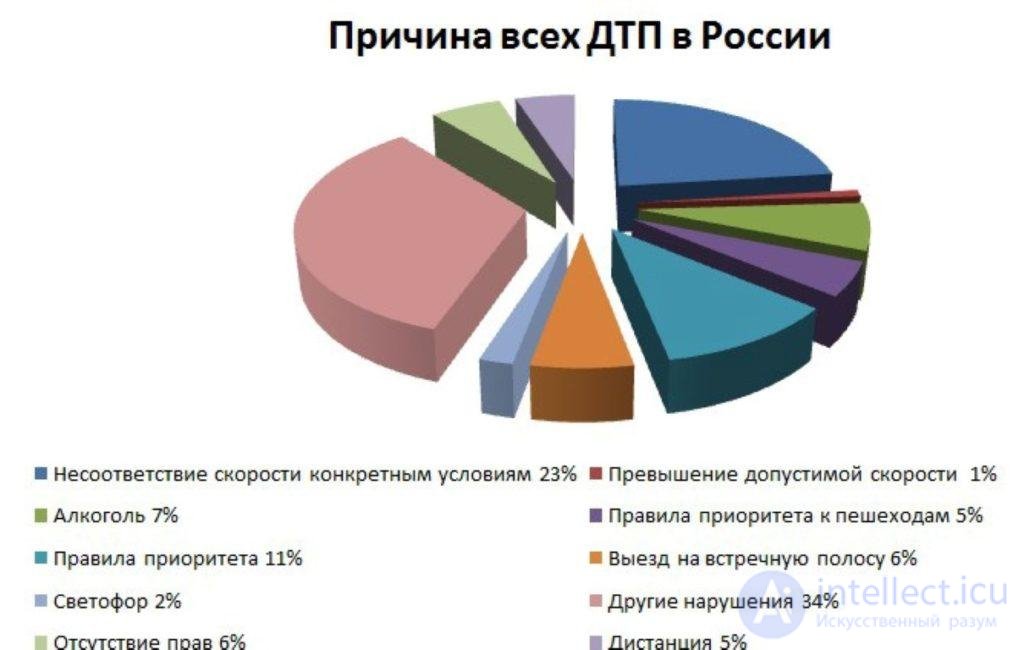
The diagram shows the causes of all road accidents in Russia.
Diagram 1
Road safety depends on the fault-free operation of all links in the «driver — vehicle — road — environment» complex.
DIAGRAM 1
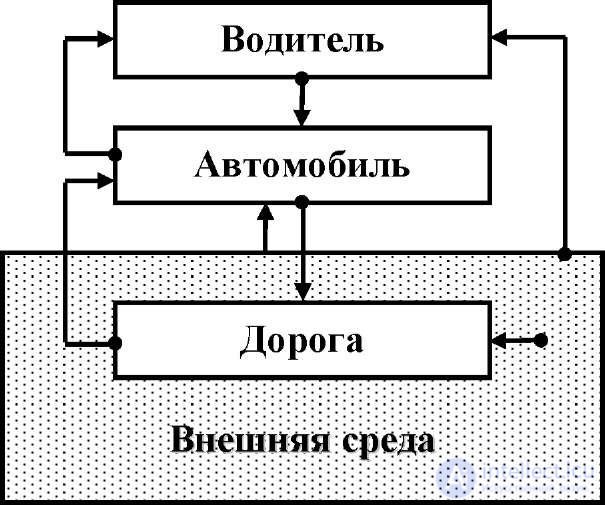
The reliable operation of this complex must be ensured, on the one hand, by the technical reliability of the vehicle and the technical quality of the road, and on the other hand, by the reliability of the driver's actions in various road traffic situations.
The key link in this system is the driver, whose reliability refers to their ability to correctly and promptly assess the situation and choose the optimal driving mode. The highest reliability of the driver as an operator of the «driver — vehicle — road — environment» system corresponds to an optimal level of informational load. Otherwise, a driver compensates for low informational load on low-traffic highways with high speed. In this case, the level of emotional tension (at a speed of 100–110 km/h) corresponds to the level observed in drivers traveling on a two-lane road at a speed of 60–70 km/h.
The danger lies in the fact that the driver perceives high speed as ordinary, and their work rhythm automatically adjusts to correspond to that ordinary speed.
Studies have shown that the highest driver reliability is achieved not when a single vehicle is traveling, and not on an overloaded road, but at traffic-load levels of 0.15–0.60 for two-lane roads, and 0.05–0.40 for four-lane roads.
Analysis of traffic accident statistics also gives grounds to believe that the greatest number of accidents is observed on road sections where the driver experiences considerable nervous and psychological strain. This confirms that driver reliability is consistent with one of the fundamental principles of psychophysiology — the success of task performance as a function of mental tension.
Fig. 1
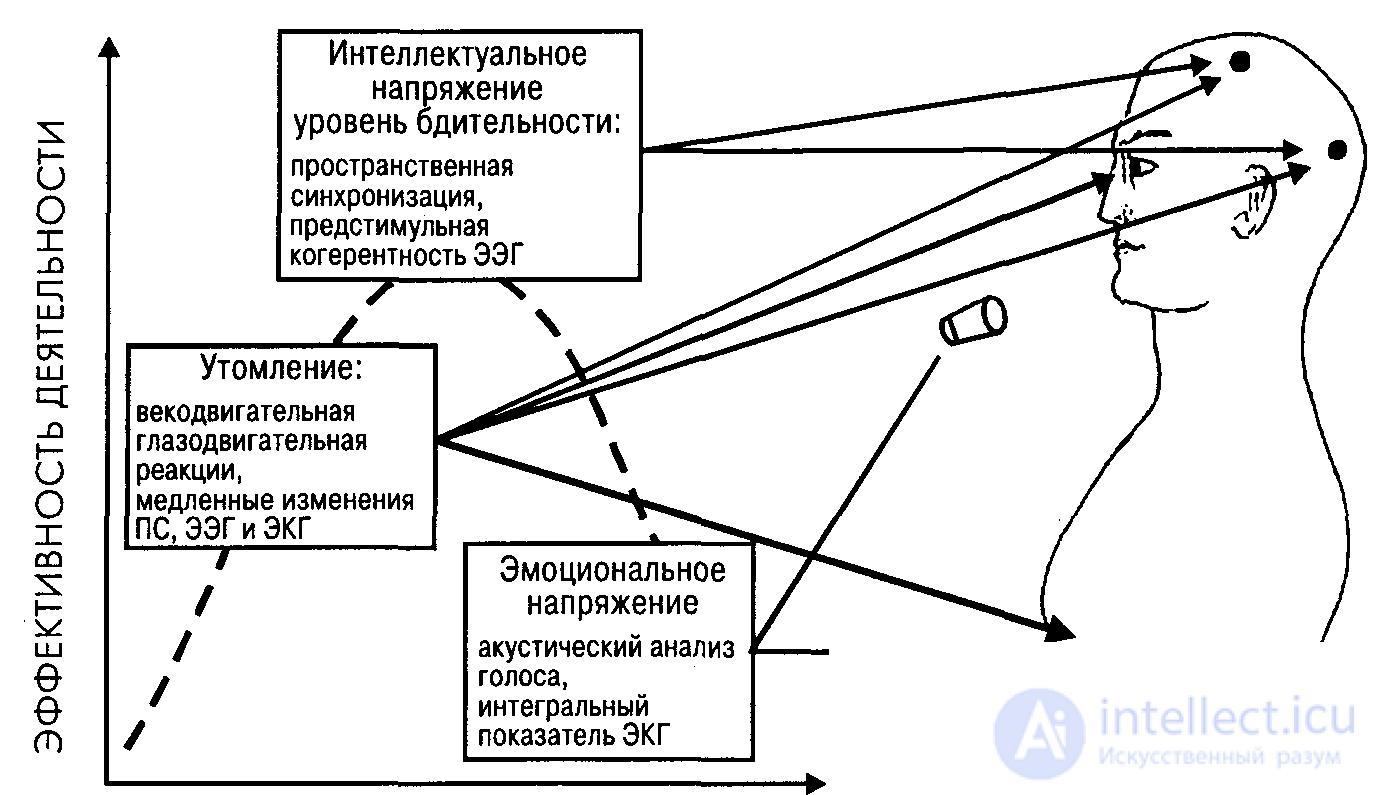
According to this principle, there is a certain integral of a person's emotional tension at which they perform work with the greatest efficiency. Exceeding this optimal level, as well as falling below it, is accompanied by a deterioration in performance indicators.
In psychophysiological studies, the criteria for assessing the influence of various road conditions on the driver are the values of psychophysiological indicators corresponding to the optimal level of emotional tension. Based on this, the degree of reliability of the driver's actions is determined.
To keep the driver's emotional tension within optimal limits, a constant inflow of a certain amount of new information about driving conditions and the surrounding space is necessary.
The driver's ability to receive and process information plays a significant role in ensuring the reliability of their actions. The quality of information assimilation depends mainly on its quantity. The entire volume of information reaching the driver can be divided into the following groups, each of which characterizes one of the elements of the «driver — vehicle — road — environment» complex:
1. the road route,
2. road traffic situations,
3. traffic control devices,
4. sources of increased danger (pedestrians, roadside obstacles restricting the clearance of the carriageway, animals),
5. the intensity of oncoming and same-direction traffic,
6. information about weather conditions and the surrounding space. The value of information in each of these groups is determined by the influence that an element of that group can have on driving mode and safety. The driver's emotional tension is determined accordingly. Of all the elements of the roadside space, only information about the movement of vehicles carries constant novelty for the driver. All other information is tied to the road and is unfamiliar to drivers traveling along it for the first time. The driver perceives information selectively, singling out only what is significant from the overall stream. They do not distribute their attention evenly across the visual field, but concentrate it on the area providing the most valuable information.
However, in cases where the load exceeds the permissible level, the driver may fail to notice a traffic light signal or a prohibitory road sign if their attention is focused on complex lane changes by other vehicles. This is explained by the fact that the reliability of the driver's decoding of information decreases as an object moves further from the central part of the eye's retina.
Psychophysiological characteristics show the driver's ability to perceive road information, make sense of it, make decisions, and respond promptly to changes in the road situation. A person's psychophysiological properties determine the characteristics of the mental and physiological processes of their body.
These properties include perception (sensation), attention, thinking, memory, emotions, will, as well as personal qualities. There are visual, auditory, olfactory, cutaneous, vibrational, kinesthetic, and other types of sensation. While driving, the visual analyzer is the main source of information about the environment surrounding the person. If the ability to see the road ahead is reduced, this can lead to an increase in the number of traffic accidents. Improving driver reliability can be achieved through better professional training and skills practice, which is one of the tasks of organizing professional selection and training.

Comments